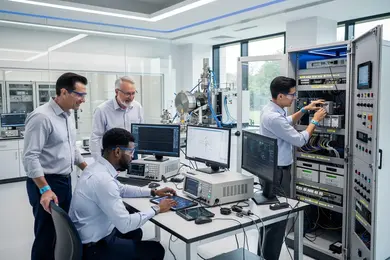
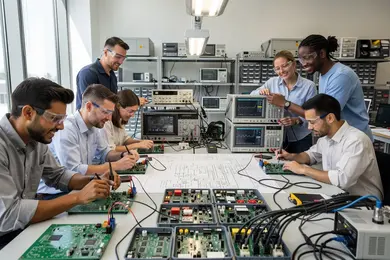
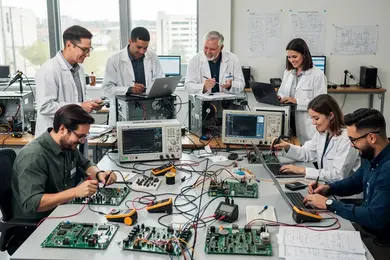
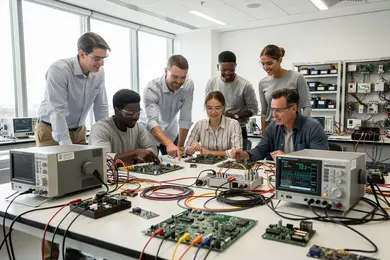
2027 Best Online Bachelor's in Electrical Engineering for Adults Over 40

Co-Founder and Chief Data Scientist
Choosing an online electrical engineering bachelor's after 40 is usually a career-risk decision, not just a school decision. The field matters because U. S. employers continue hiring engineers for power systems, semiconductors, automation, defense, and connected devices; the Bureau of Labor Statistics projects electrical and electronics engineer employment to grow 9% from 2024 to 2034.
This guide is for working adults comparing flexible, accredited options. You will learn how online programs work, what ABET accreditation means, how much to budget, and how to choose a degree that fits your schedule, experience, and career goal.
Key Things You Should Know
- For adults over 40, the strongest online electrical engineering bachelor's programs are usually ABET-accredited, transfer-friendly, and designed with asynchronous or low-residency coursework so students can keep working while studying.
- Cost varies widely, but College Board's 2024 pricing data shows average published tuition and fees of $11,610 for in-state public four-year colleges, $30,780 for out-of-state public colleges, and $43,350 for private nonprofit colleges, making residency status and transfer credit major ROI factors.
- The BLS reported a May 2024 median annual wage of $111,910 for electrical engineers, but outcomes depend on industry, location, prior technical experience, internships or projects, and whether the program meets employer expectations for engineering accreditation.
What makes an online electrical engineering bachelor's a strong choice for adults over 40?
An online bachelor's in electrical engineering can be a strong choice for adults over 40 when it solves a specific career problem: moving from technician to engineer, formalizing years of hands-on experience, changing into a more technical role, or qualifying for positions that require an engineering degree.
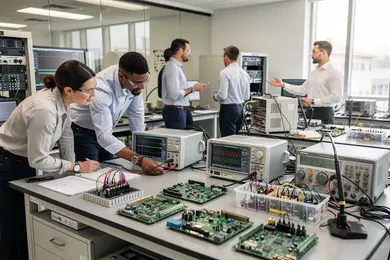
Electrical engineering focuses on the design, analysis, testing, and improvement of electrical systems, including circuits, power equipment, control systems, communications hardware, embedded devices, and electronics.
The degree is especially practical for adults who already work around manufacturing systems, utilities, maintenance, aerospace, electronics, IT infrastructure, defense contracting, or industrial automation. In those cases, the student may already understand the workplace context and can use the degree to build the theory, math, design, and documentation skills employers expect from engineers.
Adults comparing online engineering degrees should pay close attention to whether the program is a true engineering degree, an engineering technology degree, or a related applied technical degree.
The biggest advantage for mid-career learners is that online study can reduce the need to relocate or quit a job. That matters because opportunity cost is often higher after 40: students may have mortgages, caregiving responsibilities, health insurance needs, or seniority they do not want to lose. A well-designed online program lets them phase into a new credential while continuing to earn income.
For adults over 40, the best-fit indicators are usually the following features because they directly affect completion, cost, and career usefulness:
- ABET accreditation or a clearly explained accreditation path: This is important for employer recognition, graduate school options, and professional engineering licensure eligibility in many states.
- Generous transfer credit policies: Prior college coursework, military training, associate degrees, and technical credits can shorten the timeline and lower total cost.
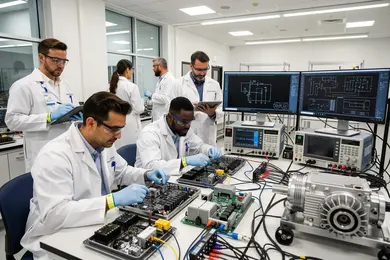
- Flexible lab delivery: Strong online programs explain how students complete labs through remote lab kits, simulation tools, local proctoring, short campus visits, or hybrid intensives.
- Adult learner support: Look for evening advising, predictable course rotations, part-time pacing, tutoring in calculus and circuits, and career services that understand mid-career transitions.
However, this path is not right for everyone. Electrical engineering is math-heavy, time-intensive, and project-based. Adults who dislike calculus, physics, programming, or troubleshooting may be happier in project management, engineering technology, operations management, cybersecurity, or technical sales. The degree is most worthwhile when the reader can connect it to a clear target role and is prepared for several years of rigorous study.
How do online electrical engineering degrees compare to campus programs for working adults?
Online and campus electrical engineering programs can lead to similar academic outcomes when they share the same curriculum, faculty standards, assessment methods, and accreditation. The real difference for working adults is delivery. Campus programs provide more face-to-face lab access and spontaneous networking, while online programs reduce commuting and relocation barriers.
The comparison below focuses on decision factors that matter most to adults balancing work, family, and a demanding engineering curriculum.
| Factor | Online electrical engineering bachelor's | Campus electrical engineering bachelor's | Best fit |
| Schedule control | Often stronger, especially with asynchronous lectures and part-time pacing | Usually tied to fixed class and lab times | Online fits adults with full-time jobs or caregiving duties |
| Lab access | May use simulation, mailed kits, remote instrumentation, or limited residencies | Typically offers regular access to physical lab facilities | Campus fits students who want frequent in-person lab work |
| Networking | Often depends on virtual teams, online faculty access, and intentional outreach | More spontaneous peer, faculty, and employer interaction | Campus can help students who need local recruiting access |
| Cost control | Can reduce relocation, parking, commuting, and lost-work costs | May offer lower tuition for local public university students | Either can be cheaper depending on residency and transfer credits |
| Learning style | Requires self-direction, written communication, and strong time management | Provides more routine, in-person accountability | Online fits independent learners; campus fits students needing structure |
Adults should not assume online means easier. In electrical engineering, the academic expectations remain demanding because students still need calculus, differential equations, physics, circuit analysis, electronics, signal processing, and design experience. The best online programs make the workload more accessible, not lighter.
A practical way to compare formats is to estimate your weekly study capacity before applying. Many adult learners underestimate the time required for engineering problem sets and labs, especially in calculus, physics, and circuits. If you can protect consistent study blocks each week and communicate early with instructors, online study can be realistic. If your schedule changes unpredictably every day, a slower part-time plan may be safer than an accelerated one.
Which accredited online electrical engineering bachelor's programs are best suited to mid-career adults?
The best online electrical engineering bachelor's for adults over 40 is not always the highest-ranked school overall. It is the program that combines recognized accreditation, flexible scheduling, transparent lab requirements, transfer pathways, and career relevance. Because accreditation status and delivery formats can change, applicants should verify each program directly with the school and with ABET before enrolling.
The programs below are commonly considered by U.S. online engineering students because they offer online or substantially online pathways in electrical engineering or a closely related electrical engineering technology field.
| School and program | Credential type | Why it may fit adults over 40 | Important caution |
| Arizona State University Online, Bachelor of Science in Engineering in Electrical Engineering | Electrical engineering | Large online infrastructure, broad engineering course availability, and a curriculum aligned with traditional engineering preparation | Confirm current ABET status, lab format, and course sequencing before applying |
| University of North Dakota, online Bachelor of Science in Electrical Engineering | Electrical engineering | Often attractive to working adults because of distance delivery experience and engineering-specific online support | Ask about any required campus visits, lab arrangements, and term-by-term availability |
| Florida International University Online, Bachelor of Science in Electrical Engineering | Electrical engineering | May appeal to students seeking a public university option with online delivery and a broad technical curriculum | Check prerequisites, transfer rules, and whether every upper-division course is available online when needed |
| Stony Brook University, online electrical engineering degree-completion pathway | Electrical engineering degree completion | Can fit transfer students who already completed substantial lower-division math, science, and engineering coursework | May be less suitable for students starting from scratch; verify admission prerequisites carefully |
| Old Dominion University, online Bachelor of Science in Electrical Engineering Technology | Engineering technology | Can fit technicians and technologists seeking applied advancement in electronics, systems, or technical operations | Engineering technology is not identical to electrical engineering; PE licensure and employer preferences may differ |
For adults over 40, a "best" program should be judged against personal constraints. A student with an associate degree in electronics may benefit from a transfer-friendly public university.
A student already in a utility or manufacturing job may prioritize power systems coursework. A student seeking professional engineer licensure should prioritize ABET Engineering Accreditation Commission accreditation for electrical engineering rather than a technology-focused credential unless the state licensing board accepts that pathway.
Before applying, request a written degree plan showing exactly how your previous credits apply. This is one of the most important adult-learner safeguards because a program that looks affordable can become expensive if many prior credits do not transfer into the major.
What accreditation should an online electrical engineering bachelor's have in the United States?
Accreditation is one of the highest-stakes issues in electrical engineering education. At the institutional level, the college or university should hold recognized regional or national institutional accreditation accepted by the U.S. Department of Education. At the program level, electrical engineering applicants should look closely for ABET accreditation, especially from the Engineering Accreditation Commission.
ABET accreditation matters because it signals that a program has been evaluated for curriculum quality, faculty qualifications, student outcomes, continuous improvement, and engineering design preparation. Many employers prefer or require ABET-accredited engineering degrees for entry-level engineering roles. ABET accreditation can also matter for Professional Engineer licensure, although state boards set their own rules.
Applicants should understand the difference between engineering and engineering technology accreditation because the distinction can affect career options.
| Accreditation or credential type | What it usually means | Why adults should care |
| Institutional accreditation | The college or university meets broad academic and administrative standards | Often affects financial aid eligibility, transfer credit, and employer recognition |
| ABET Engineering Accreditation Commission | The program is evaluated as an engineering program | Often preferred for electrical engineer roles, graduate study, and PE licensure pathways |
| ABET Engineering Technology Accreditation Commission | The program is evaluated as an applied engineering technology program | Can fit technical operations roles, but may not be treated the same as an engineering degree by all employers or licensing boards |
| Unaccredited program-specific status | The institution may be accredited, but the specific engineering program lacks ABET recognition | May limit licensure options or employer acceptance for engineering titles |
The safest approach is to check the ABET program search tool and the university catalog, then ask the department to confirm the exact accreditation name, commission, and campus or online modality covered. Do not rely only on marketing language such as "ABET-aligned," "modeled after ABET standards," or "engineering-focused." Those phrases are not the same as ABET accreditation.
What are the typical admission requirements for online electrical engineering programs for adult learners?
Admission requirements vary by school, but online electrical engineering programs are usually more prerequisite-heavy than many other online bachelor's degrees. This is because upper-division engineering courses depend on math, physics, and foundational engineering concepts. Adults returning to school after a long break should expect the admissions process to evaluate both general college readiness and technical preparation.
Most programs ask for some combination of the following materials and prerequisites because they help the school determine whether the applicant can start immediately or needs bridge coursework first:
- High school diploma, GED, or prior college transcripts: Transfer students must usually submit official transcripts from every college attended.
- College algebra, precalculus, or calculus readiness: Some programs require placement testing if the applicant has not taken math recently.
- Physics and chemistry prerequisites: Calculus-based physics is especially common for engineering majors.
- Minimum GPA: Requirements vary, and engineering departments may use a higher threshold than the university's general admission standard.
- Transfer evaluation: Adults with associate degrees, military training, or technical coursework should request a major-specific credit review.
- English or composition requirements: Engineering students still need strong technical writing skills for reports, documentation, and design communication.
Adults over 40 should not be discouraged if they need refresher coursework. In fact, taking precalculus, calculus, or physics before full admission can prevent expensive withdrawals later. The smarter question is not "Can I get admitted?" but "Can I start at the right math level without derailing my schedule?"
One common mistake is assuming years of technical work automatically replace academic prerequisites. Work experience may help with context and motivation, but most ABET-style engineering programs still require formal math and science sequences. Another mistake is enrolling before confirming whether credits from an associate of applied science degree will count toward engineering requirements or only as electives.
How long does it take to finish an online electrical engineering bachelor's and what does it cost?
A bachelor's in electrical engineering usually requires about 120 to 130 credits, but the real timeline for adults depends on transfer credit, math placement, course availability, and weekly study time. A student entering with a highly aligned associate degree may finish much faster than a student starting with no calculus or physics background. Part-time adult learners often take longer, but they may reduce debt and maintain career stability while studying.
College Board's 2024 data shows average published tuition and fees of $11,610 for in-state students at public four-year colleges, $30,780 for out-of-state students at public four-year colleges, and $43,350 at private nonprofit four-year colleges for the 2024-25 academic year. Those figures are not online-program prices, but they help adults understand why residency classification, public versus private pricing, and transfer credits can change the economics dramatically.
The table below summarizes common timeline and cost drivers so adults can estimate the likely commitment before applying.
| Scenario | Typical timeline | Main cost drivers | Best suited to |
| Starting with no prior college credit | About four to six years depending on full-time or part-time pace | Full credit load, general education, math sequence, books, lab materials, and fees | Career changers who need the complete foundation |
| Entering with general transfer credits | About three to five years depending on how credits apply | Loss of credits that transfer only as electives, prerequisite gaps, and retaken courses | Adults with prior college but no engineering-specific associate degree |
| Entering with an aligned engineering or pre-engineering associate degree | About two to four years depending on upper-division availability | Upper-division engineering tuition, labs, software, and senior design requirements | Technicians, military-trained students, and community college graduates |
| Accelerated or heavy full-time plan | Potentially shorter, but academically intense | Higher near-term tuition load and possible reduced work hours | Students with strong math preparation and flexible employment |
Adults should calculate total cost, not just tuition. Electrical engineering students may pay for lab kits, calculators, simulation software, proctoring, textbooks, exam fees, and occasional travel if the program has campus intensives. They should also account for income changes if they reduce work hours during difficult terms.
To reduce cost without weakening the degree, consider these steps before enrollment:
- Ask for an official transfer evaluation before committing to the program.
- Complete lower-division math, physics, and general education courses at an accredited community college if the target university confirms they will transfer.
- Compare in-state online tuition, out-of-state online rates, employer tuition assistance, military benefits, and scholarship availability.
- Avoid overloading the first term; withdrawing from engineering courses can cost more than taking a realistic part-time schedule.
- Ask whether required courses are offered every term or only once per year, because limited course rotation can extend the timeline.
What core courses and specializations are included in online electrical engineering bachelor's curricula?
Online electrical engineering curricula are built around math, science, engineering fundamentals, labs, and design. Students learn not only how electrical systems work, but also how to model, measure, test, and improve them. The coursework is usually more theoretical than electrical engineering technology, with stronger emphasis on calculus-based analysis and engineering design.
Adults who are comparing engineering with computing pathways should understand the overlap and distinction. Electrical engineering covers hardware, signals, circuits, devices, and power; computer science focuses more on software, algorithms, systems, and computation. For readers drawn more to software than circuits, an affordable online computer science degree may be worth comparing before committing to an engineering curriculum.
The table below shows common curriculum areas and how they connect to practical engineering work.
| Curriculum area | Common courses | Why it matters professionally |
| Mathematics | Calculus, differential equations, linear algebra, probability | Supports circuit modeling, signals, controls, electromagnetics, and system analysis |
| Science foundation | Calculus-based physics, chemistry, materials basics | Builds understanding of energy, motion, fields, materials, and device behavior |
| Electrical fundamentals | Circuits, electronics, digital logic, microprocessors | Prepares students to analyze and design electrical and electronic systems |
| Systems and signals | Signals and systems, communications, controls, signal processing | Applies to automation, telecommunications, robotics, sensing, and embedded systems |
| Power and energy | Power systems, machines, renewable energy, power electronics | Supports utility, grid modernization, energy storage, and electrification careers |
| Design experience | Engineering design, labs, senior capstone | Demonstrates the ability to solve open-ended engineering problems and document results |
Specializations vary by school, but adult learners often see options such as power systems, electronics, communications, embedded systems, controls, robotics, renewable energy, and computer engineering. The best specialization depends on the target job market. For example, power systems may fit utility and energy roles, while embedded systems may fit electronics, medical device, automotive, or aerospace employers.
AI and automation are also changing what employers value. Electrical engineers increasingly work with simulation tools, sensor data, machine learning-enabled devices, digital twins, automated testing, and software-defined systems. Students do not need to become data scientists to benefit, but they should be comfortable learning programming and data tools.
What electrical engineering careers can adults pursue after earning an online bachelor's degree?
An online bachelor's in electrical engineering can prepare adults for engineering, technical design, testing, systems, and operations roles, especially when the program is ABET-accredited and supported by strong projects or relevant work experience. Career outcomes vary because employers look at the degree, prior experience, internships or co-ops, technical portfolio, security clearance eligibility, industry certifications, and location.
Adults over 40 may have an advantage when they combine the degree with existing workplace knowledge. A maintenance supervisor who understands industrial equipment, for example, may transition toward controls engineering. A military electronics technician may move toward systems testing or defense engineering. A utility worker may pursue power distribution or grid modernization roles.
The table below connects common roles with the kind of work they involve and the background that may help adults compete.
| Career path | Typical responsibilities | Helpful background |
| Electrical engineer | Designs, tests, analyzes, and improves electrical systems, components, or equipment | ABET-accredited degree, circuit analysis, design projects, internships, or technical work experience |
| Power systems engineer | Works on generation, transmission, distribution, protection, or grid modernization projects | Power coursework, utility experience, energy systems knowledge, and strong safety awareness |
| Controls engineer | Develops or maintains control systems for manufacturing, robotics, process equipment, or automation | PLC familiarity, programming, instrumentation, manufacturing experience, and controls coursework |
| Electronics design or test engineer | Builds, evaluates, troubleshoots, and documents electronic circuits and devices | Electronics labs, PCB exposure, test equipment skills, and documentation experience |
| Embedded systems engineer | Works with microcontrollers, firmware, sensors, and hardware-software integration | C/C++ or Python, digital logic, microprocessors, and project portfolio |
| Systems engineer | Coordinates technical requirements, integration, testing, and documentation across complex systems | Prior technical leadership, defense or aerospace experience, and strong communication skills |
Some adults may discover that a neighboring field fits better than electrical engineering. For example, students interested in wearable sensors, rehabilitation technology, biomechanics, or health-related device applications may still value engineering, but they might also compare pathways such as exercise science degrees online if their long-term goal is closer to human performance or clinical support than electrical design.
To improve employability, adult students should build evidence of skill while enrolled. Good options include a senior design project connected to the target industry, a GitHub or portfolio page for embedded systems work, documented circuit simulations, employer-sponsored projects, IEEE participation, internships, or part-time technical roles. For mid-career adults, a portfolio can help translate prior experience into engineering language.
What salary ranges and job outlook can electrical engineering graduates expect in the U.S.?
The Bureau of Labor Statistics reported a May 2024 median annual wage of $111,910 for electrical engineers in the United States. A median is not a starting salary and not a guarantee; it means half of workers in the occupation earned more and half earned less. Adults should use it as a labor-market benchmark, then adjust expectations based on region, industry, experience, clearance requirements, and technical specialization.
The job outlook is also favorable compared with many occupations. BLS projections for 2024 to 2034 show 9% growth for electrical and electronics engineers. For readers, this suggests that electrical engineering remains tied to durable areas of demand such as electrification, communications infrastructure, semiconductor development, automation, defense systems, and energy modernization.
The table below summarizes how salary expectations can vary by career context rather than presenting one number as a universal outcome.
| Career context | Salary influence | What adults should consider |
| Entry-level engineering role after degree completion | Often influenced by internships, projects, location, and ABET recognition | Prior technical experience may help, but employers still evaluate engineering fundamentals |
| Utilities and power systems | Can be shaped by regional infrastructure investment, union environments, and licensing pathways | Power coursework and interest in PE licensure may be valuable |
| Defense, aerospace, and advanced manufacturing | May be affected by security clearance eligibility and systems documentation skills | Adults with military or regulated-industry experience may have transferable strengths |
| Embedded systems and electronics | Often rewards hardware-software integration and demonstrable project work | Programming and portfolio projects can strengthen applications |
| Engineering management track | Depends on leadership experience, technical credibility, and business needs | Adults over 40 may already have supervisory experience that supports advancement |
Salary research should be local and role-specific. Before enrolling, compare job postings in your target commuting area or remote-friendly market. Look for required degree language, ABET preferences, software tools, clearance requirements, travel expectations, and whether the employer distinguishes between electrical engineering and electrical engineering technology.
Licensure can also affect long-term options. Not every electrical engineer needs a Professional Engineer license, but it can matter in power, consulting, public infrastructure, and roles involving sign-off on engineering work. Requirements vary by state, so students interested in licensure should contact their state board before choosing a non-ABET or engineering technology pathway.
Those who want to move deeper into analytics later may eventually compare graduate options such as data science master's online programs after building an engineering foundation.
How can adults over 40 evaluate and choose a reputable online electrical engineering program?
Adults over 40 should choose an online electrical engineering program by working backward from the target career, not by starting with rankings alone. A reputable program should be accredited, transparent about labs and costs, realistic about workload, and able to show how adult learners move through the curriculum.
Use the following steps to narrow your options before submitting applications:
- Define the target role first: Decide whether you want electrical engineering, power systems, controls, embedded systems, technical management, or engineering technology work.
- Verify accreditation independently: Check institutional accreditation and ABET program accreditation, including whether the listed program name matches the online program you plan to enter.
- Request a written transfer plan: Ask how each prior course applies to general education, prerequisites, and major requirements.
- Map the math sequence: Confirm where you will start in algebra, precalculus, calculus, physics, and differential equations.
- Ask how labs work: Get details about equipment kits, simulations, remote labs, proctored exams, campus visits, and extra fees.
- Check course rotation: Make sure required upper-division courses are offered often enough for your preferred graduation timeline.
- Compare total cost: Include tuition, fees, software, books, lab materials, travel, transfer-credit loss, and potential reduction in work hours.
- Evaluate career support: Ask about engineering-specific advising, internship support, employer connections, senior design projects, and alumni outcomes.
Red flags deserve serious attention. Be cautious if a school avoids direct answers about ABET, cannot explain lab delivery, advertises unusually fast completion for a full engineering degree, pressures you to enroll before a transfer review, or blurs the difference between engineering and engineering technology. Also be careful with programs that provide only generic online student support rather than engineering-specific advising.
The best choice may not be the cheapest or fastest program. For a mid-career adult, the strongest return often comes from a degree that preserves current income, minimizes repeated coursework, meets employer expectations, and builds a credible project record. If your comparison process shows that electrical engineering is not aligned with your interests, it is better to pivot early than to force a difficult degree that does not match your work goals.
Other Things You Should Know About Electrical Engineering
Yes, but you may need to refresh math and physics before taking upper-division engineering courses. Many successful adult learners start with precalculus or calculus review, then build gradually into circuits, electronics, and design courses.
Often, yes. Some programs use mailed lab kits, circuit boards, meters, software, or remote lab platforms. Ask the school for a complete list of required equipment and fees before enrolling.
Most programs require high school algebra, trigonometry, and physics, plus college-ready placement in calculus. Adults over 40 who lack this background often complete 1 to 3 prerequisite courses before upper-division engineering work. A strong GPA in math and science helps with admission and transfer credit evaluation.
It can, especially if the program is academically rigorous and properly accredited. Graduate admissions vary by university, so students considering a master's degree should maintain a strong GPA, complete advanced math and technical electives, and confirm that the bachelor's program meets prerequisite expectations.
References
- Best Online Colleges for Working Adults [2026] https://www.straighterline.com/blog/degree-completion-best-online-colleges-for-working-adults
- Online Electrical Engineering Degree | Programs And Career Options https://www.learnhowtobecome.org/best-online-bachelors-in-electrical-engineering-degree-programs/
- WELCOME TO BRADLEY UNIVERSITY ONLINE https://info.online.bradley.edu/
- Inside the Best Online Bachelor's in Electrical Engineering Degrees https://www.onlinecolleges.me/engineering-degrees/bachelors/electrical-engineering/
- Electrical Engineer Salary in the United States 2026 | Cake https://www.cake.me/resources/industry-job-overview/electrical-engineer-salary
- Bachelor of Science (B.S.) Major in Electrical Engineering (Computer Engineering Concentration) | Texas State University https://mycatalog.txstate.edu/undergraduate/science-engineering/ingram-school/electrical-engineering-computer-specialization-bs/
- 6 Best Online Electrical Engineering Degree Programs for Future Engineers https://www.myprivatetutor.com/blog/best-online-electrical-engineering-degree-programs
- Best Online Electrical Engineering Degrees 2025 https://www.onlineu.com/degrees/electrical-engineering