2027 BS in Business Administration Math Planning: Accommodations for Quantitative Assessments
Audited and Verified:
Our Editorial and Data Verification Process
Research.com uses government datasets, official education statistics and primary institutional information to support its career and degree guides. Our review process checks factual accuracy, occupational definitions, source dates and the requirements associated with the credentials discussed.
How This Article Was Fact-Checked
Our editorial team verifies salary estimates, employment projections, education requirements and program information against original data providers and official organizations. Salary figures are checked against the relevant occupational definitions and reporting periods. Information about licensure, accreditation and required in-person training is reviewed separately.
Fact-checked and verified on:

Co-Founder and Chief Data Scientist
A statistics exam, timed accounting test, or inaccessible spreadsheet assignment can affect progress through a BS in Business Administration. If you have a disability, the useful question is not whether you can avoid quantitative work, but how to access the course and demonstrate its required skills fairly.
This guide explains typical math requirements, how college accommodations work, what to check before an online or proctored assessment, and how to plan courses without creating avoidable delays. It is for prospective, transfer, and current students comparing programs or preparing for their next quantitative course.
Key Things You Should Know
- Start with the program's degree audit: statistics, accounting, finance, and analytics may each involve quantitative assessments, even when only one course is labeled "math."
- Contact the college's disability services office before your first assessment. Approval, instructor notification, and proctoring setup can be separate steps.
- Accommodations can change access or testing conditions, but they generally do not remove an essential quantitative learning outcome. Ask for an individualized review if a proposed adjustment is denied.
What Math Requirements Does a BS in Business Administration Typically Include?
Requirements vary by institution and catalog. A BS in Business Administration may include college algebra or quantitative reasoning, business calculus, statistics, accounting, economics, and quantitative work within finance or operations. An analytics, finance, or supply chain concentration may add prerequisites and more demanding applications. A BBA is not automatically less quantitative; compare actual course requirements rather than degree initials.
The table separates course names from the skills students may need to demonstrate. It can help you identify assessments to discuss with disability services before registration.
| Course area | Common quantitative work | Assessment to check |
| Algebra or quantitative reasoning | Equations, rates, and applied calculations | Timed problem sets and calculator rules |
| Statistics or analytics | Data summaries, probability, and interpretation | Software, spreadsheets, and exam format |
| Accounting and finance | Financial statements, budgets, and time-value calculations | Multi-step problems and permitted reference materials |
| Operations or economics | Models, graphs, and decisions using numerical evidence | Graphing tools and required explanations |
For admission or transfer planning, compare the school's catalog with its credit and eligibility rules for business administration admission. A course accepted as transfer credit does not necessarily satisfy a specific math or business-core requirement.
How Can Students Request Accommodations for Quantitative Assessments?
In US colleges, students generally initiate the process through disability services rather than relying on an instructor to arrange everything. The office reviews the disability-related barrier, considers appropriate accommodations, and explains how approved adjustments are communicated and implemented. A high school accommodation plan can be useful background, but college arrangements are not necessarily identical.
Use this sequence early enough to resolve technical and scheduling issues before a graded assessment:
- Request the course syllabus and identify timed exams, spreadsheet assignments, group work, and proctoring requirements.
- Contact disability services, describe the functional barrier, and ask what documentation or intake meeting is needed.
- Review the approved accommodation notice and confirm how each instructor will apply it to the actual assessment.
- Book testing or remote proctoring arrangements by the school's deadline and test any required technology.
If employment makes appointment times difficult, ask about remote intake and evening testing availability. When comparing degree options for working business administration students, check those services separately from the advertised class schedule. An asynchronous lecture does not make every exam asynchronous.
Which Math Accommodations Are Available for Business Administration Students?
Possible accommodations depend on the documented barrier and the skills an assessment is designed to measure. Common examples include extended exam time, a reduced-distraction setting, scheduled breaks, accessible digital materials, assistive technology, or an alternative way to access visual information. A student may also need accessible spreadsheet controls or a readable version of a graph. None is automatic for every student or every exam.
The distinction is between access to a task and changing the task's essential skill. For example, screen-reader-compatible data can make a budgeting exercise accessible while preserving the requirement to interpret the budget. A calculator or formula sheet may be appropriate in one course but require review where unaided calculation or recall is itself being assessed. Ask disability services and the department to identify the learning outcome before deciding that a tool is permitted or prohibited.
Support also includes ordinary instruction: tutoring, practice problems, office hours, and accessible software training. If you are considering a more specialized track, supply chain bachelor's programs with compressed schedules warrant a close look at their quantitative workload and assessment calendar; a shorter schedule does not replace an accommodation plan.
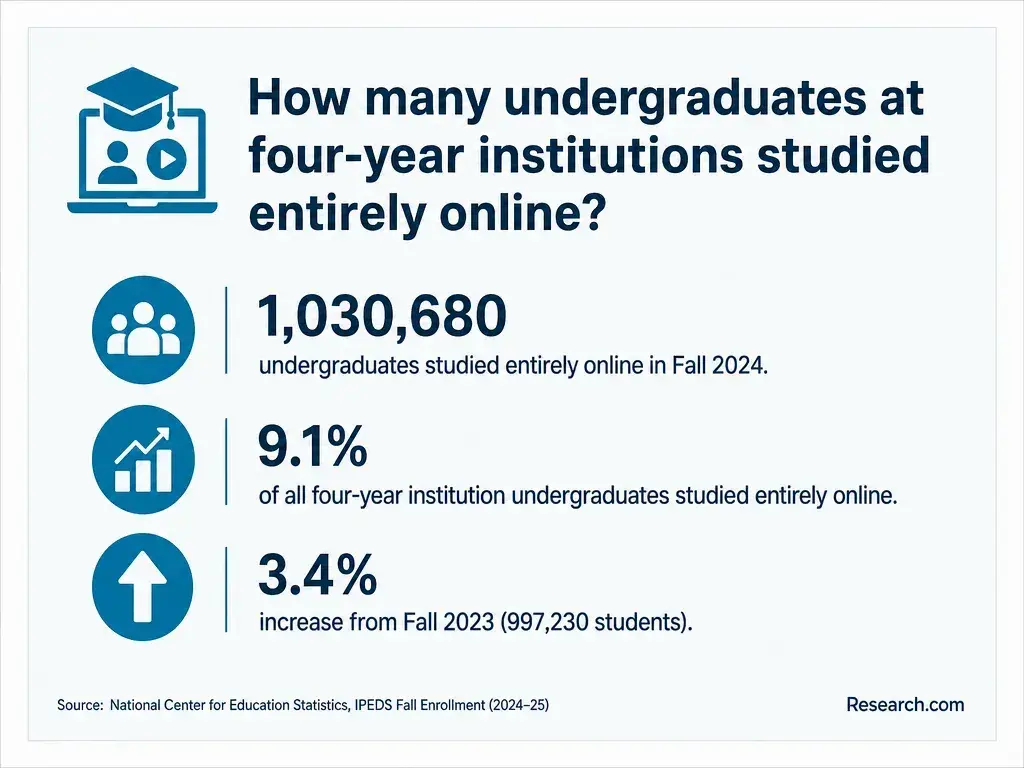
Online students can request disability-related access and accommodations, but the practical arrangements may differ from campus testing. A school may use its learning platform, a separate publisher's homework system, live video proctoring, or a testing center. Ask which organization controls each tool and who can extend a timer, provide an accessible graph, or address an incompatibility with assistive technology.
Before enrolling, request a demonstration or written explanation of how accommodations work in an actual online statistics or accounting course. Confirm whether exams have fixed windows, whether a remote proctor is available at usable times, and what happens if an approved setting is not configured correctly. These details matter more than a general promise of "online flexibility." You can compare leading American online business degree schools to build a shortlist, then verify each school's current course-level practices directly.
Colleges set their own intake procedures within applicable disability law. Disability services may ask for a student account of the barrier, prior accommodations, and records or an evaluation from an appropriate professional. The relevant information is usually how a condition affects access to a particular academic task - not simply a diagnostic label. Do not assume every school requires a new evaluation, or that an old document will answer every question; ask the office what information it needs and why.
Keep accommodation records separate from transfer-credit records. If you completed a quantitative course elsewhere, the receiving school may need a syllabus or course description to evaluate equivalency; disability documentation does not establish that the credit fulfills a requirement. This matters when considering project management undergraduate transfer pathways or another business-related major: obtain a written degree audit before assuming a previous math course applies.
Approval alone may not configure a timed test. For each exam, confirm who enters extended time into the learning platform, who reserves a suitable testing space or remote proctor, and whether breaks stop the exam clock. Check permitted calculators, scratch paper, assistive software, identity-verification steps, and any restrictions on leaving the camera view. A practice check can reveal conflicts before the graded exam.
If a timer, proctor, or accessible file fails, promptly document what happened and contact the instructor and disability services through the school's stated process. Do not assume an exam can be changed after completion; report the problem as soon as it occurs. Ask whether proctoring carries a student fee when comparing total program costs. This check is relevant across business specializations, including when you compare total costs of project management programs.
An accommodation generally changes how a student accesses instruction or demonstrates knowledge, not whether the student must meet an essential requirement. A school should consider a requested adjustment individually rather than assume that every calculator, deadline change, or alternative format would alter academic standards. If it concludes that a request would fundamentally alter an essential outcome, ask for its reasoning and whether another effective option is available.
A course substitution is a different decision from a testing accommodation. The academic department determines whether another course meets degree requirements, while disability services addresses access. A substitution may be possible under a school's policies, but students should not plan on one without written approval and an updated audit. If an approved change affects enrollment intensity or graduation timing, review financial-aid eligibility with the aid office; even when exploring project management bachelor's scholarship options, eligibility depends on the particular award's rules.
Build the schedule backward from the most advanced required course. Statistics may precede analytics, and introductory accounting may precede finance. Check prerequisites, term availability, tutoring hours, and the timing of disability-services setup. Taking several unfamiliar quantitative courses together may save calendar time on paper but leave too little time for practice and problem resolution.
A practical plan is to obtain the official degree audit, mark each quantitative prerequisite, and ask an adviser which courses are offered in each term. Then review syllabi with disability services before registration, especially if an assessment uses unfamiliar software. If you are comparing US fast-track undergraduate business degree options, verify that the sequence leaves enough time to arrange accommodations and master the material. Acceleration is useful only if required courses remain accessible and available when needed.
Check that the institution holds recognized institutional accreditation, then examine the specific BS in Business Administration curriculum. AACSB, ACBSP, or IACBE accreditation, where applicable, has its own scope; it does not by itself tell you whether a statistics platform works with your assistive technology. The disability services office, academic department, and online-learning staff may each hold part of the answer.
Ask shortlisted schools for the quantitative degree map, sample assessment formats, accommodation-request timeline, remote proctoring procedures, tutoring access, and an escalation route for inaccessible materials. Compare written answers using the same questions. If cost is a constraint, use financial aid planning for low-cost business administration degrees alongside, not instead of, an accessibility review. A lower advertised price may be poor value if a required course cannot be completed under workable conditions.
What Career Skills Do Business Administration Math Courses Develop?
Quantitative courses prepare students to read financial statements, build and question budgets, interpret business data, and explain uncertainty in a decision. Statistics supports evaluating whether a pattern is meaningful; accounting distinguishes revenue from profit and cash flow; spreadsheets help test assumptions. These are useful foundations for entry-level analytical and coordination work, not proof of specialist expertise or automatic qualification for management.
Look for assignments that require an explanation alongside the calculation: what the numbers measure, which assumptions could be wrong, and what a manager should verify before acting. A de-identified class project can demonstrate those habits without exposing employer or customer data. When you compare cost-to-finish for shorter business administration programs, assess whether the curriculum gives you enough practice to show these skills - not just a faster route through required credits.
Other Things You Should Know About Business Administration
You generally request college accommodations through disability services rather than using an admissions essay to seek them. If you choose to disclose information during admission, ask how it will be used and who will receive it.
Instructors typically receive information about approved accommodations, not a complete medical record. Ask disability services about its confidentiality practices and what the instructor needs to implement your arrangements.
No. Tutoring can strengthen course skills, but it does not authorize a testing adjustment. Students may benefit from both.
Contact disability services for a reassessment and explain the new barrier or course demands. Ask when any revised arrangement can take effect, particularly if an exam is approaching.
- ADA Requirements: Testing Accommodations https://www.ada.gov/resources/testing-accommodations/
- Accommodation Decision-Making for Postsecondary Students with ADHD: Treating the Able as Disabled - PMC https://pmc.ncbi.nlm.nih.gov/articles/PMC9437389/
- Student Portal Instructions | Student Disability Services https://sds.utk.edu/student-portal-instructions/
- Why Testing Accommodations - UCI Disability Services Center https://dsc.uci.edu/testing/why-testing-accommodations/
- Determining fundamental alterations and essential requirements | University of Maryland https://accessibility.umd.edu/faculty-teaching-resources/determining-fundamental-alterations-and-essential-requirements
- Getting Started with Digital Accessibility in Teaching and Learning - UCLA Teaching & Learning Center https://teaching.ucla.edu/resources/teaching-guides/getting-started-with-digital-accessibility-in-teaching-and-learning/
- Digital Accessibility in STEM: Math - - IT Service Desk https://itsupport.umd.edu/itsupport/
- Accommodated Testing Instructions for Students and Instructors | University of Kentucky https://studentsuccess.uky.edu/disability-resource-center/accommodated-testing-instructions-students-and-instructors
- Reasonable Accommodations in Higher Education | harvard.edu https://accessibility.harvard.edu/accessible-teaching/intro-to-accessible-teaching/accessible-accommodations
- Differences | Student Access & Accommodations | Methodist University https://www.methodist.edu/academics/one-stop/accessibility/differences/