2027 BS in Business Administration: Comparing a General Business Degree with a Specialized Major
Audited and Verified:
Our Editorial and Data Verification Process
Research.com uses government datasets, official education statistics and primary institutional information to support its career and degree guides. Our review process checks factual accuracy, occupational definitions, source dates and the requirements associated with the credentials discussed.
How This Article Was Fact-Checked
Our editorial team verifies salary estimates, employment projections, education requirements and program information against original data providers and official organizations. Salary figures are checked against the relevant occupational definitions and reporting periods. Information about licensure, accreditation and required in-person training is reviewed separately.
Fact-checked and verified on:

Co-Founder and Chief Data Scientist
Choosing a general business degree instead of a specialized major can preserve career options, but it can also leave you needing deeper skills for a particular job. That trade-off matters whether you are entering college, transferring credits, or returning to finish a bachelor's degree. This guide compares what each path teaches, where it can lead, and what to check before enrolling. You will be able to judge which option fits your target role, existing experience, time, and budget - not just which degree title sounds more versatile.
Key Things You Should Know
- A general BS in Business Administration fits students who want exposure to several business functions; a specialized major is usually stronger preparation when the target function is already clear and requires deeper coursework.
- Compare the courses and credits that apply to graduation, not just the degree titles: a concentration, elective cluster, and separately awarded major are different credentials.
- Career outcomes depend on the role and experience. For example, U.S. employment of logisticians is projected to grow 18% from 2025 to 2035, but that occupation's outlook is not a promise of employment for supply chain graduates.
What Is a BS in Business Administration?
A BS in Business Administration is an undergraduate degree built around several business functions, commonly accounting, finance, marketing, management, operations, and quantitative decision-making. General education and electives sit alongside the business core. The exact balance varies by school: the letters "BS" do not guarantee more analytics or mathematics than a BBA or BA in Business.
Some programs offer a formal concentration within the BS. Others let students choose electives without recording a concentration on the academic record. Check the catalog and a sample degree audit to see what credential you would actually earn and whether required classes are offered when you need them. If finishing quickly is a priority, compare the credit and scheduling rules behind quick online bachelor's pathways rather than assuming an accelerated label reduces the work required.
How Does General Business Compare With a Specialized Major?
Choose general business for breadth; choose a specialized major for relevant depth. The deciding factor is the work you hope to do next. A student exploring operations, sales, and administration may value a shared business foundation. Someone committed to accounting or supply chain work should examine whether a dedicated major provides a stronger sequence of courses and applied assignments.
The comparison below describes common curricular differences, not a rule that applies to every school.
| Path | Typical advantage | Potential limitation | Best fit |
| General BS in Business Administration | Room to study several functions and adapt electives | Less advanced study in any one function | Students exploring roles or combining business study with existing industry experience |
| BS in Business Administration with a formal concentration | Broad core plus a defined area of study | May offer fewer specialist courses than a separate major | Students who want both breadth and a documented focus |
| Specialized bachelor's major | More function-specific coursework and potentially a clearer course sequence | Less elective room; some required courses may not accept general business substitutions | Students with a well-defined target function |
For example, compare the actual HR course sequences in a general business program and a dedicated program using a human resources program selection guide as a starting point. Then ask each school whether the specialized path adds courses, changes transfer-credit applicability, or affects graduation timing. Neither path replaces relevant work experience.
What Careers Can You Pursue With a Business Administration Degree?
A business administration graduate might pursue coordinator or specialist-track work in operations, marketing, HR, sales support, purchasing, or project administration. A general degree can help when a role spans functions; a specialized major can be more useful when postings consistently ask for particular methods or software skills. Neither degree makes a new graduate a manager by itself.
Start with job tasks rather than titles. An operations coordinator may track schedules and improve handoffs; an HR assistant may maintain records and support recruiting; a marketing coordinator may help execute campaigns and interpret basic results. Compare postings in your location, then match their recurring tasks to your coursework, work samples, internships, and prior employment. If supply chain roles are your goal, supply chain degree duration and salary considerations can help frame the education trade-off, but occupation-wide pay should not be treated as a starting offer.
Most business administration curricula include introductory accounting, economics, marketing, management, finance, business law, statistics or quantitative reasoning, and operations. Later work may include strategy, a capstone, or applied projects. What matters for this decision is how far the courses go: an introductory accounting class is not the same preparation as an accounting major's upper-level sequence.
Compare course descriptions and prerequisites side by side. For an analytics goal, look for work with data preparation, spreadsheets, statistics, and interpretation - not simply a course with "analytics" in its title. For supply chain work, examine operations, procurement, and logistics courses and when they are offered. Students considering supply chain bachelor's options focused on completion speed should check prerequisite chains and required-course availability before relying on an advertised timeline.
Admission requirements vary by institution and by entry route. First-year applicants may need a secondary-school credential and transcripts; transfer applicants generally submit previous college records. Some schools admit students directly to the business major, while others require introductory courses or a separate major application. A non-business background does not automatically prevent admission.
If you have prior college work, request an official evaluation showing which credits satisfy general education, business core, concentration, electives, and residency requirements. Accepted credit is not necessarily credit that advances your chosen major. That distinction is especially important when comparing general business with a specialized path. Students considering HR can use information on HR bachelor's completion with transferred coursework to identify questions for the transfer office, but only the enrolling school can approve equivalencies and a final degree plan.
A bachelor's degree is commonly planned as a four-year, full-time course of study, but completion time depends on accepted credits, remaining requirements, enrollment pace, and course availability. A specialized major may take longer if prior business electives do not satisfy its required sequence; a general degree may take longer if a needed core course is unavailable. Neither outcome can be assumed without a degree audit.
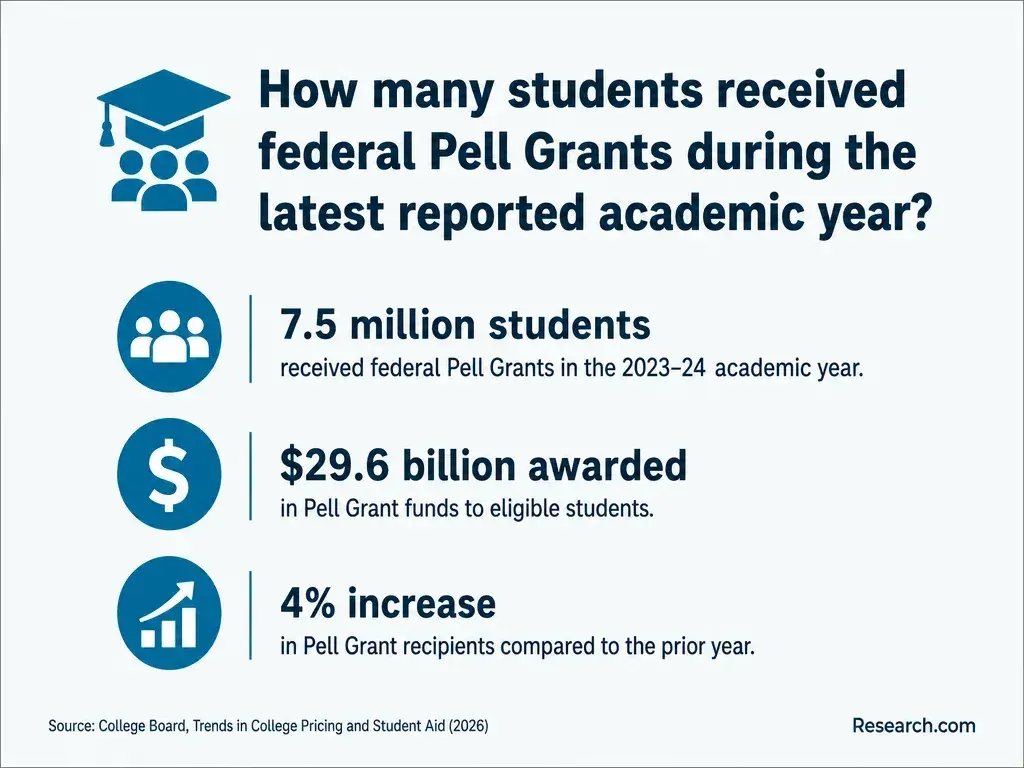
Compare total remaining cost, not advertised tuition alone. Include required credits, fees, books or software, travel where applicable, financing costs, and income you may forgo while studying. Ask each school for a term-by-term completion plan and a written estimate based on your evaluated credits. A business degree tuition comparison guide can help identify programs to investigate, but the least expensive published rate is not necessarily your lowest-cost route to graduation.
Neither format is universally better. Online study can remove a commute, while campus study may offer easier access to in-person activities and local recruiting. In either format, the decisive questions are whether required courses fit your schedule and whether you can complete group assignments, presentations, exams, internships, or a capstone.
If you will keep working, ask for sample schedules from both the general and specialized paths. Confirm live attendance, exam-proctoring rules, required campus visits, course rotation, and part-time options. An online program can still have fixed deadlines and group meetings. Compare business administration programs supporting continued employment against those specific obligations rather than relying on a general claim of flexibility.
Verify the institution's recognized accreditation first, then check whether any claimed AACSB, ACBSP, or IACBE accreditation covers the relevant business school or program. These are different checks: institutional accreditation does not mean every business program has specialized accreditation, and a school's accreditation claim does not tell you which courses will transfer or what graduates earn.
Ask for the current catalog, the exact degree title, a sample degree plan, advising access, required-course availability, and any published outcomes with their cohort and response-rate definitions. If financing matters, compare program charges and confirm aid eligibility directly with the school's financial-aid office; this overview of business administration tuition and FAFSA eligibility is a research starting point, not confirmation of your personal aid award.
There is no single salary or growth rate for "business administration graduates." U.S. Bureau of Labor Statistics figures describe occupations containing workers with different degrees and experience levels. They are most useful after you identify a target role and assess its entry requirements.
These occupation-specific figures illustrate why the job target matters more than the breadth or specialization of the degree title.
| U.S. occupation | Median annual pay, May 2025 | Projected employment growth, 2025-2035 |
| Human resources specialist | $75,940 | 6% |
| Market research analyst | $78,760 | 7% |
| Logistician | $82,320 | 18% |
These are occupation-wide medians, not expected starting salaries. Experience, location, industry, and job duties affect pay and access to a role. A specialized major may align more closely with one occupation, but evidence of practical skills still matters. Use national online business program rankings to find programs to examine, not as evidence that their graduates receive a particular salary.
Do Business Administration Careers Require Licenses or Certifications?
Many general business roles do not require a license, but some targeted occupations do. A BS in Business Administration does not itself establish eligibility for CPA licensure, a financial-services license, or a professional designation. Rules may depend on state requirements, specific coursework, examinations, and experience. Voluntary credentials in HR or project management have their own eligibility criteria.
Before choosing a major for a credential goal, check the current rules with the licensing board or certifying organization and have the school identify the courses that meet them. If your immediate goal is simply to finish a bachelor's degree for an employer requirement, compare ranked accelerated undergraduate business schools for scheduling and credit fit - but do not mistake faster degree completion for professional credential eligibility.
Other Things You Should Know About Business Administration
Often, but the school controls the change. Request a revised degree audit first; new prerequisites or required courses could delay graduation.
That varies. Ask whether it appears on the diploma, transcript, or both, and distinguish it from an elective focus that is not formally awarded.
It can complement industry knowledge with finance, operations, and management fundamentals. Compare it with targeted training if you need only one specific skill.
Not automatically. Review actual job postings and course outcomes; some roles value broad business experience, while others call for deeper functional or technical preparation.
- Chapter 5 - Advanced Degree or Exceptional Ability https://www.uscis.gov/policy-manual/volume-6-part-f-chapter-5
- Accreditation in the U.S. | ed.gov http://www.ed.gov/laws-and-policy/higher-education-laws-and-policy/college-accreditation/accreditation-in-the-us
- CPA Certification - Texas State Board of Public Accountancy https://www.tsbpa.texas.gov/candidates/certification/
- Department Expectations: Curriculum | New York State Education Department https://www.nysed.gov/college-university-evaluation/department-expectations-curriculum
- Experiential Learning Requirements - College Of Business https://business.oregonstate.edu/programs/admission-aid/advising/academic-planning/experiential-learning-requirements
- Internship and Co-op Support - Careers | Coles College of Business https://campus.kennesaw.edu/offices-services/careers/students/internships-co-ops.php
- Ten Types of Business Degree Specializations | AIU https://www.aiuniv.edu/degrees/business/articles/10-types-of-business-degree-specializations-you-can-pursue
- Frequently Asked Questions: Center for Experiential Learning | Judd Leighton School of Business and Economics https://business.iusb.edu/academic-centers/center-for-experiential-learning/faq.html
- Regional vs. National Accreditation: Which is Better? | Drexel University Online https://www.online.drexel.edu/news/national-vs-regional-accreditation.aspx
- How Can a Bachelor's Degree in Business Administration Help Me? | University of Wisconsin Flexible Option https://flex.wisconsin.edu/stories-news/how-can-a-bachelors-degree-in-business-administration-help-me/