2027 BS in Business Administration: Timed Exams Versus Applied Business Projects
Audited and Verified:
Our Editorial and Data Verification Process
Research.com uses government datasets, official education statistics and primary institutional information to support its career and degree guides. Our review process checks factual accuracy, occupational definitions, source dates and the requirements associated with the credentials discussed.
How This Article Was Fact-Checked
Our editorial team verifies salary estimates, employment projections, education requirements and program information against original data providers and official organizations. Salary figures are checked against the relevant occupational definitions and reporting periods. Information about licensure, accreditation and required in-person training is reviewed separately.
Fact-checked and verified on:

Co-Founder and Chief Data Scientist
A BS in Business Administration may assess what you know through timed exams, applied projects, or both. That difference affects how you study, fit coursework around a job, and show employers what you can do.
This guide is for prospective students comparing programs and current students planning their coursework. It explains what each assessment measures, where each can create unexpected demands, and how to check a program's actual requirements before choosing it.
Key Things You Should Know
- Timed exams test individual performance under a deadline; applied projects test how you frame a business problem, use evidence, and explain a recommendation. Neither method alone demonstrates every business skill.
- Ask for sample syllabi and grading rubrics: an "online" course may still require proctored exams, fixed meeting times, group presentations, or employer-approved project work.
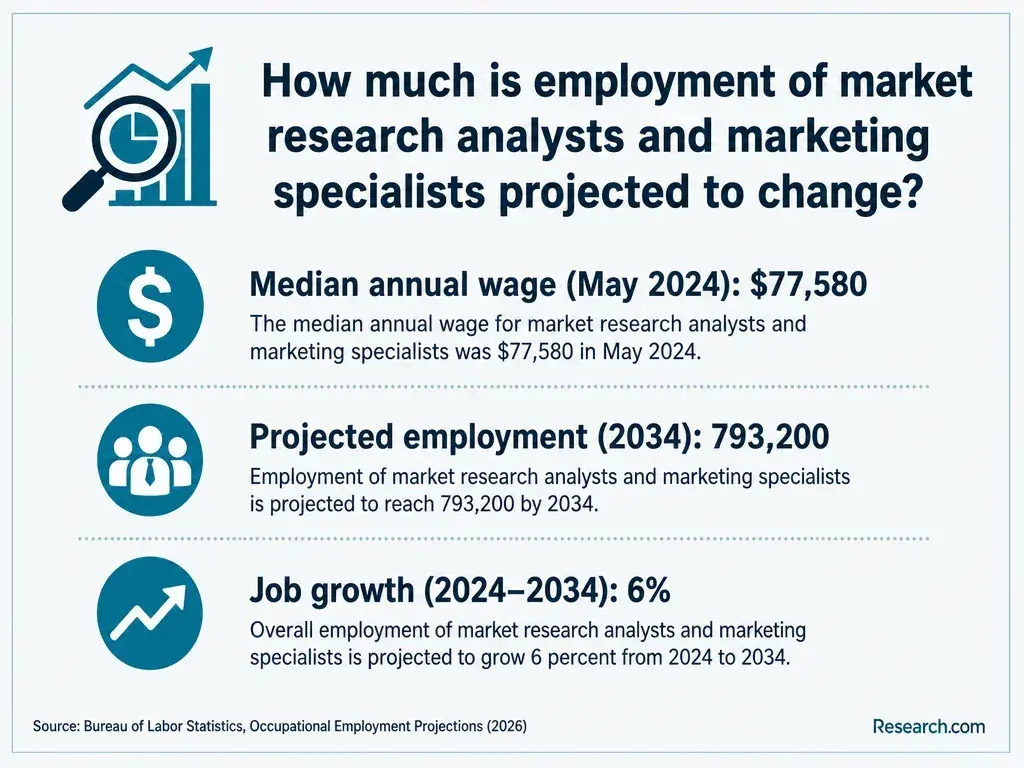
- Project evidence may help with job applications, but it is not a hiring guarantee. For context, the US Bureau of Labor Statistics reports a May 2025 median annual wage of $78,760 for market research analysts across experience levels - not for new business graduates specifically.
What Is a BS in Business Administration?
A Bachelor of Science in Business Administration is an undergraduate degree built around business functions such as accounting, finance, marketing, management, and operations. A school may also require quantitative work, general education, electives, and a capstone. The BS label does not guarantee more mathematics or applied coursework than a BBA or BA in Business; compare the actual course requirements and assessments.
The degree can provide broad preparation if you are still exploring business roles. If you already know you want a specialized field, compare its required coursework with a focused degree before committing. An accelerated business college program guide can help you identify shorter-format options, but a faster calendar does not tell you whether exams, group work, or projects will fit your schedule.
How Do Timed Exams Compare With Applied Business Projects?
Timed exams typically ask students to solve problems or explain concepts within a set period. Applied business projects ask them to produce a deliverable - such as a budget, market analysis, process map, or recommendation - using stated assumptions and evidence. Both can be rigorous. The better fit depends on the skills you need to develop and the conditions under which you can do your best work.
This comparison shows what each assessment can reveal - and what to verify before treating a course description as a promise about how you will be graded.
| Decision factor | Timed exams | Applied projects |
| Skills demonstrated | Individual recall, calculation, and judgment under time limits | Problem definition, research, analysis, revision, and communication |
| Scheduling pressure | A fixed exam window may conflict with work or caregiving | Multiple deadlines and team meetings may spread the workload across weeks |
| Evidence for employers | A grade shows course performance but rarely provides a shareable work sample | A permitted, appropriately redacted deliverable may support an interview |
| Main limitation | Time pressure may obscure skills used well in less constrained settings | Team contributions, data quality, and outside assistance can be harder to assess |
For accounting calculations or foundational terminology, exams can check whether you can work independently. For operations or marketing decisions, a project can show how you handle incomplete information and justify trade-offs. A strong program may use both. Projects are not automatically easier: a credible analysis needs a defined decision-maker, accessible data, clear assumptions, and a rubric that distinguishes individual work from team output.
Before choosing a project-heavy course, ask what data students may use. Public or instructor-supplied data may be safer than workplace records; employer permission does not necessarily replace school approval or resolve privacy and intellectual-property restrictions. If your goal is specifically to develop project-management skills rather than earn a broad business degree, you can also compare affordable project management schools and examine their required deliverables.
Use these questions to test whether the advertised assessment style will work in practice:
- What share of the course grade comes from timed exams, individual projects, and group work?
- Are exams proctored, and what are their time windows, technology requirements, and retake policies?
- Who approves project topics and data sources, and how is each student's contribution graded?
- Can students revise a project after feedback, and may they retain a shareable version?
Is an Online or Campus-Based Business Degree Better?
Neither format determines whether you will take timed exams or complete applied projects. Online courses can require live presentations, remote proctoring, and scheduled team meetings. Campus courses can assign substantial independent project work. Compare syllabi for the courses you must take, not just the program's delivery label.
If you work changing shifts or care for family, ask when exams open and close, whether group meetings are mandatory, and how often required courses run. Campus study may make face-to-face collaboration easier; online study may remove commuting while adding technology and coordination demands. The best format is the one whose actual assessment schedule you can sustain. You can compare nationally ranked online business programs as a starting point, then verify each program's current course policies directly.
Requirements vary, but a business core commonly includes accounting, economics, finance, marketing, management, operations, statistics or analytics, and business communication. General education, electives, and a strategy or capstone course may also be required. Check the catalog for prerequisites: a project-focused capstone may still require earlier courses assessed mainly through exams.
Match assignments to the skills you want to demonstrate. An aspiring operations coordinator might value a process-analysis project; a prospective financial analyst needs sound accounting and quantitative preparation, not just a polished presentation. A concentration is official only if the school awards it under its published rules. If supply chain is your target, supply chain degree cost and duration comparisons can help frame the choice between broad business study and a more focused curriculum.
Schools set their own undergraduate admission rules, and entry to the university may be separate from entry to the business major. Applicants may need school or college transcripts; transfer applicants should also ask whether previous mathematics, accounting, or economics courses satisfy specific major requirements. Admission does not mean every accepted credit applies to the degree.
If you hope to enter an applied-project sequence quickly, request a preliminary course plan showing prerequisites and when those courses are offered. The business administration admissions preparation guide can help you organize questions, but the institution must confirm your eligibility and credit applicability.
A bachelor's degree commonly takes about four years of full-time study, but the remaining time for a transfer or returning student depends on the official degree audit, course availability, and enrollment pace. Assessment style can affect your costs indirectly: fixed exams may require proctoring or technology, while projects may involve software, travel, or time away from paid work. Do not assume an accelerated schedule reduces total tuition.
Compare a school's tuition and mandatory fees against the courses you still need, then add likely materials, assessment expenses, and any extra terms caused by course sequencing. Ask the financial-aid office about eligibility before changing pace. For a narrower look at aid-supported options, use FAFSA planning for affordable business administration study; confirm your own award and out-of-pocket cost with each school.
First verify the institution's accreditation through the school's published information and the accreditor's current directory. Then, if a school advertises business accreditation from AACSB, ACBSP, or IACBE, check that organization's directory for the institution and the scope of its recognition. Institutional accreditation and business-school or programmatic accreditation answer different questions; neither proves that a particular course uses applied assessments or produces a particular career outcome.
Ask the school to identify the exact degree covered and provide current syllabi for required courses. The distinction matters when comparing a broad business program with a specialized option, including affordability checks for accredited project management programs: verify both the credential and its accreditation claims rather than assuming similar names mean equivalent coverage.
Graduates may pursue entry-level or early-career work in operations coordination, marketing support, sales operations, procurement, or human resources, depending on their experience and the employer's requirements. These roles call for different evidence. A process map can help explain operations thinking; a market analysis can demonstrate research judgment. Neither substitutes for workplace experience, and a management course does not make someone a manager on graduation.
Choose projects that resemble tasks in your target role, and describe your own contribution, methods, and limitations in interviews. If you have prior college study and want a more specific HR route, guidance on applying prior college coursework toward an HR bachelor's may be more relevant than assuming a general business degree is the shortest path.
There is no single salary for a BS in Business Administration. Pay depends on the occupation, location, industry, and your responsibilities and experience. The US Bureau of Labor Statistics reports a May 2025 median annual wage of $78,760 for market research analysts. That is an occupation-wide midpoint, not an expected starting salary or an earnings estimate for everyone with this degree.
Use occupation-specific pay as context only after identifying jobs you could realistically qualify for. A project portfolio may help you discuss relevant skills, but it does not establish a salary premium. If you are employed and considering a degree for a defined next role, career advancement study options in business administration may help you compare study demands; also check your employer's actual promotion criteria before estimating a return.
What Certifications Improve Business Administration Career Prospects?
A certification is most useful when it matches a specific role and you meet the issuing organization's eligibility rules. Project management, HR, and other functional credentials differ in required education, experience, exams, and renewal obligations. A BS, concentration, or class project does not automatically confer one of them.
Start with job postings for your target role: note which credentials employers require, prefer, or do not mention. Then compare the credential's official requirements with a course, supervised project, or entry-level job that addresses your current skill gap. For an HR-focused goal, a human resources program selection guide can help you weigh specialized education against a general business degree and later certification.
Other Things You Should Know About Business Administration
Only if the instructor and school policy permit it. Ask before enrolling; an alternative assessment or course substitution may require formal approval.
Retake rules vary by course. Check the syllabus for missed-exam procedures, deadlines, and whether a second attempt replaces or supplements the first grade.
Follow the course's AI and academic-integrity rules. If use is allowed, verify calculations and claims yourself, document assistance as required, and do not enter confidential business data into an unapproved tool.
Keep records of assigned tasks and completed work, raise concerns promptly with the instructor, and use the course's stated peer-evaluation or grade-appeal process.
- Four Empirically Based Reasons Not to Administer Time-Limited Tests - PMC https://pmc.ncbi.nlm.nih.gov/articles/PMC7314377/
- ADA Requirements: Testing Accommodations https://www.ada.gov/resources/testing-accommodations/
- Applied Management vs Business Administration | Missouri Baptist University (Mobap) https://www.mobap.edu/news/applied-management-vs-business-administration/
- BA vs. BS in Business Administration | New England College https://www.nec.edu/news/ba-vs-bs-business-administration
- Business Administration Bachelor's Degree Online | The Pennsylvania Institute of Technology https://www.pit.edu/programs/b-s-business-administration/
- Formative and Summative Assessment | Northern Illinois University https://www.niu.edu/citl/resources/guides/instructional-guide/formative-and-summative-assessment.shtml
- Online Bachelor's Degree in Business Administration | Purdue Global https://www.purdueglobal.edu/degree-programs/business/bachelor-business-administration/
- 11 Types of Business Degrees and Career Pathways | National University https://www.nu.edu/blog/types-of-business-degrees/
- Business Administration vs. Business Studies: Key Differences | JWU Online https://online.jwu.edu/blog/business-administration-vs-business-studies-which-degree-is-right-for-you/
- Prove It! Measuring Gen Z's Career Readiness | AACSB https://www.aacsb.edu/insights/articles/2025/04/prove-it-measuring-gen-zs-career-readiness