2027 Choosing an Online BS in Business Administration Around Caring for an Older Relative
Audited and Verified:
Our Editorial and Data Verification Process
Research.com uses government datasets, official education statistics and primary institutional information to support its career and degree guides. Our review process checks factual accuracy, occupational definitions, source dates and the requirements associated with the credentials discussed.
How This Article Was Fact-Checked
Our editorial team verifies salary estimates, employment projections, education requirements and program information against original data providers and official organizations. Salary figures are checked against the relevant occupational definitions and reporting periods. Information about licensure, accreditation and required in-person training is reviewed separately.
Fact-checked and verified on:

Co-Founder and Chief Data Scientist
Caring for an older relative can make a fixed class schedule impossible, but an online degree is not necessarily flexible when care needs change without warning. This guide is for prospective and returning students considering a BS in business administration while managing eldercare. It explains which course policies matter most, how online and campus options differ, and what to verify about credits, costs, and career preparation. The goal is to help you choose a program you can realistically finish—not just one you can enroll in.
Key Things You Should Know
- Prioritize courses with recorded instruction, workable deadlines, and a documented plan for missed exams or group meetings; "online" alone does not establish flexibility.
- Ask for a degree audit and a term-by-term schedule before committing. Accepted transfer credits may not satisfy business core requirements, and a shorter calendar does not necessarily mean less work.
- Use career figures as context, not a return-on-investment promise: U.S. human resources specialists had a $75,940 median annual wage in May 2025, but that occupation-wide figure is not a starting salary for business graduates.
What is an online BS in business administration for family caregivers?
An online BS in business administration is a bachelor's degree covering multiple business functions, usually through online courses. It is not a separate caregiver credential. Its potential advantage is access to coursework without a routine commute, which may help someone who must remain available for an older relative.
A BS may be worth considering if a bachelor's degree would open a specific employment or advancement path and you want broad preparation in finance, operations, marketing, and management. If your goal is one narrow skill—or if caregiving leaves little predictable study time—a targeted course or a later start may be more practical. When you compare leading American online business degree schools, use program listings to identify possibilities, then confirm the exact degree and delivery rules with each school.
How can an online business administration degree fit around eldercare responsibilities?
The best fit is a program whose required attendance and assessment rules match your care schedule. Asynchronous instruction lets you choose when to watch lectures, but assignments, live presentations, proctored exams, and team projects may still have fixed times. An accelerated course can concentrate the same work into fewer weeks, leaving less room for an unexpected appointment or hospital stay; that trade-off also applies when considering leadership bachelor's degrees with accelerated pacing.
Before enrolling, test a proposed course schedule against a typical week and a disrupted one. These checks expose obligations that an "online" label may conceal:
- Block out care, work, sleep, and reliable study periods; identify who could cover care during an exam or presentation.
- Request sample syllabi for upcoming required courses and check live sessions, group meetings, exam windows, and late-work rules.
- Ask the adviser how part-time enrollment affects course sequencing, how often required courses run, and how withdrawal or a leave would affect your return.
- Confirm access to recordings, tutoring, technical support, and any required proctoring equipment before the term begins.
If reliable study time varies sharply from week to week, a lighter initial course load may provide better evidence of fit than an ambitious completion estimate. Ask the financial aid office how that load affects your eligibility before changing it.
How do online and campus business administration programs compare for caregivers?
The meaningful distinction is not convenience in the abstract; it is where each format places its nonnegotiable time commitments. The comparison below shows common possibilities, not guarantees about a particular school:
| Format | Potential caregiver advantage | Constraint to investigate |
| Asynchronous online | No routine trip to class; some study time can move around care | Fixed deadlines, exam windows, and team assignments |
| Live online | Attend from home while maintaining real-time contact | Required sessions may conflict with appointments or evening care |
| Campus or hybrid | Scheduled study time and in-person services | Travel, parking, care coverage, and required attendance |
A nearby campus program could be the better choice if you have dependable respite care and learn best with scheduled, in-person instruction. Conversely, online study may be essential if you cannot travel regularly. Compare the actual business curriculum as well as format: a specialized option, such as budget-friendly supply chain degrees with shorter schedules, makes sense only if its subject and attendance demands suit your goal and care obligations.
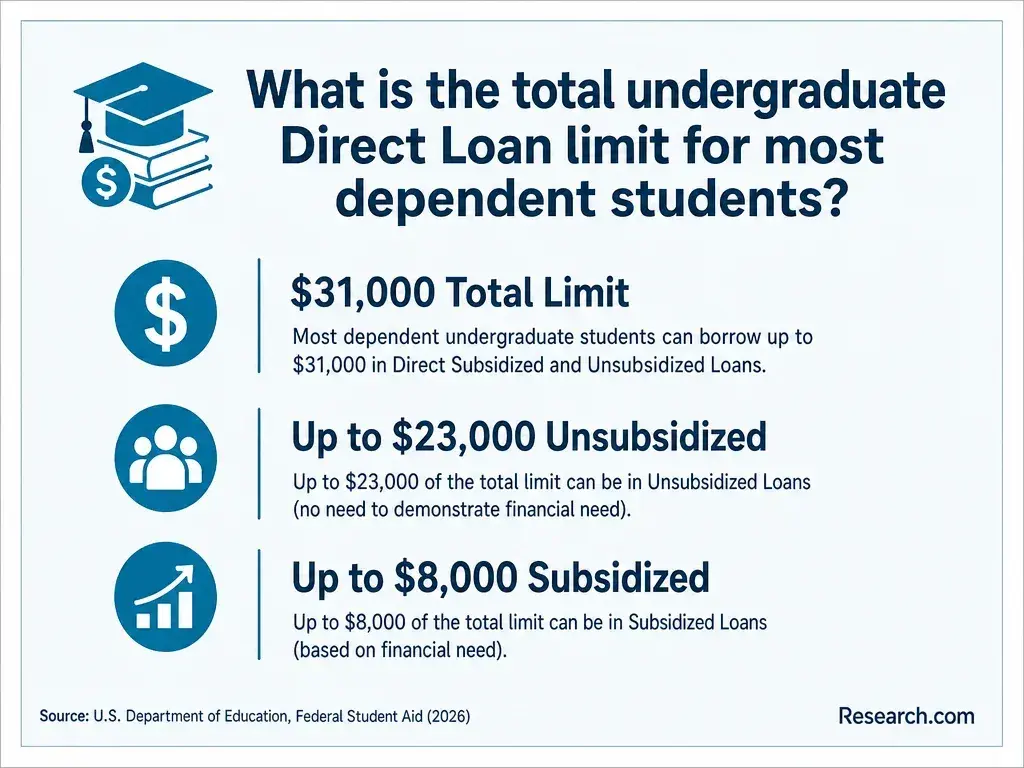
Verify that the institution holds recognized institutional accreditation and that the credential you intend to earn is offered by that institution. Institutional accreditation matters when assessing degree legitimacy and federal-aid eligibility; the school's current status and your program's eligibility should be confirmed directly rather than inferred from an advertisement. A starting point for comparing cost-conscious possibilities is FAFSA planning for affordable business administration study, followed by a check with each school's financial-aid office.
AACSB, ACBSP, and IACBE are business-focused accreditors, but their recognition does not replace institutional accreditation. If a school cites one, check the accreditor's listing for the covered business unit or programs; do not assume every degree or concentration is included. Accreditation also does not establish whether exams are flexible, required courses are available part-time, or graduates secure particular jobs.
Programs commonly combine general education with accounting, economics, finance, marketing, management, operations, statistics or quantitative reasoning, and business law. Requirements differ by school. For a caregiver, the important curriculum question is not only what you study but how courses assess it: accounting may require scheduled tests, while management courses may rely on team presentations or a capstone.
Check whether an internship is required and whether a capstone can be completed through a case study or an approved workplace project. Current employment does not automatically satisfy either requirement, and workplace records require appropriate permission. If project coordination is your goal, compare business electives with a specialized pathway and investigate applying previous coursework to a project management degree before assuming the two degrees will use your credits in the same way.
Schools generally ask first-year applicants for evidence of secondary-school completion and transfer applicants for prior college transcripts. A business major may have additional entry or progression rules involving grades or introductory courses. These policies vary, so a previous enrollment gap or a non-business background should prompt a school-specific review, not an assumption that you are ineligible.
For returning students, request both an admissions decision and an evaluation showing where accepted credits apply—general education, business core, electives, or other requirements. Ask whether needed quantitative or accounting courses have prerequisites and when they are offered online. A guide to required credits before entering business administration study can help frame those questions, but the receiving institution makes the final credit and degree-audit decisions.
Completion time depends on remaining requirements, enrollment pace, prerequisites, and how frequently required courses run. An accelerated term shortens the calendar for an individual course; it does not remove its assignments or guarantee an earlier graduation. For someone managing eldercare, a sustainable part-time plan may be less costly than repeatedly withdrawing from an unrealistic one.
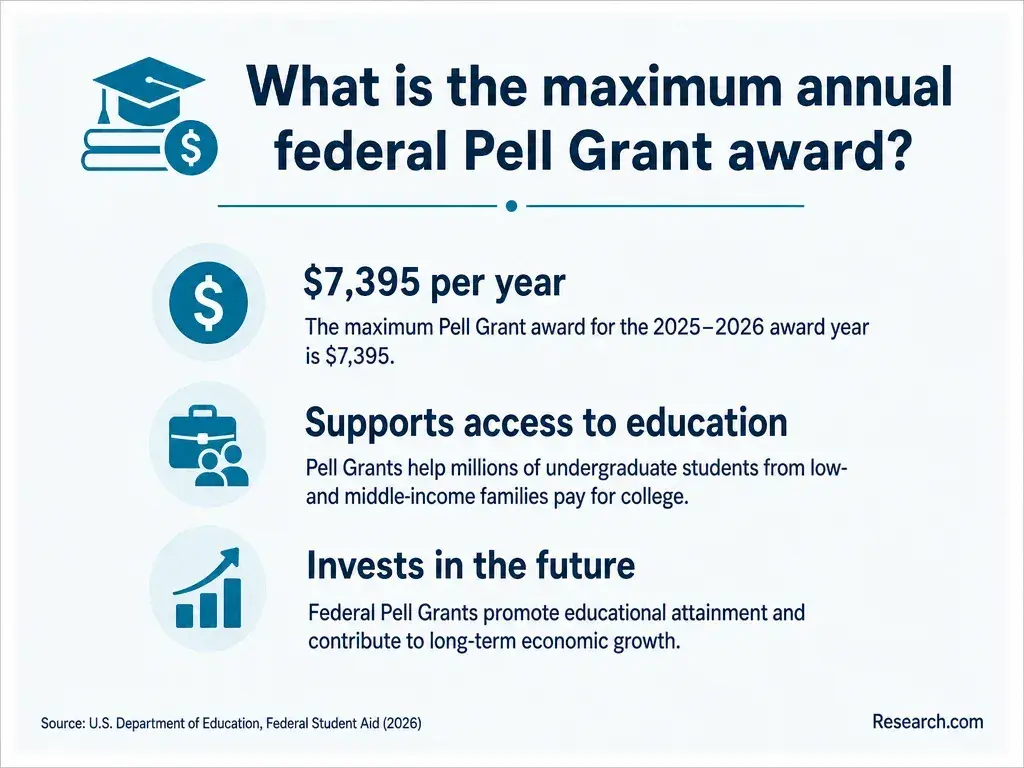
Compare schools using the same proposed degree audit and course load. Include tuition, mandatory and technology fees, books or software, proctoring, any travel, and the possibility of extra terms. Also ask when charges are due and whether grants, loans, or employer reimbursement would cover them. Resources to compare business administration tuition and completion time can narrow your search, but only a school-specific aid offer and remaining-course plan can support a personal cost estimate.
A broad business degree can support applications for roles such as operations coordinator, administrative specialist, HR assistant, marketing coordinator, or project coordinator. The realistic entry point depends on your previous work: someone who has handled scheduling, purchasing, budgets, or customer communication may already have relevant evidence, even if that work was outside a formal business title. Caregiving can demonstrate organization and communication, but it should not be presented as professional management experience by itself.
Choose courses and feasible work samples around the tasks of a target role. For project coordination, that might mean a permitted, anonymized project schedule or process map—not private information about the person you care for. If a dedicated project management degree fits better, compare its curriculum and total funding options, including paying for project management bachelor's study with grants. A business degree alone does not qualify a new graduate to manage staff or major budgets.
There is no single salary or growth rate for a BS in business administration: employers hire into occupations, not a degree-wide pay category. For one possible pathway, the U.S. Bureau of Labor Statistics reports a May 2025 median annual wage of $75,940 for human resources specialists and projects 6% employment growth from 2025 to 2035. The median covers workers across experience levels, industries, and locations; it is not an offer a new graduate should expect.
Evaluate a degree against jobs you could plausibly pursue, their local requirements, and your remaining education cost—not an occupation-wide median alone. That approach is especially important when comparing economical college choices for business administration majors: a lower advertised tuition rate has limited value if necessary courses are unavailable at a pace you can manage.
Do business administration careers require licenses or professional certifications?
Many general business coordination roles do not require an occupational license, though employers may prefer particular software skills or experience. Other paths have separate rules: a business administration degree does not itself grant CPA eligibility, a financial services license, or a project management certification. Requirements depend on the occupation, jurisdiction, credentialing organization, and sometimes the employer.
If a credential is central to your goal, check its eligibility rules before choosing electives or a degree. Compare the expense of a broad business program with a specialized one—including information on comparing project management tuition and mandatory fees if that is your target field. Do not pay for extra coursework solely because a program suggests it may be useful for certification; confirm what the certifying body actually requires.
Other Things You Should Know About Business Administration
Possibly, but tell the school where you will study. State authorization, placement requirements, exam arrangements, and some aid rules may depend on your location.
Not automatically. Some schools assess documented prior learning, but they - not the student - decide whether it meets a course requirement. Ask what evidence and fees the assessment requires.
Accommodations generally address a student's own disability. For caregiving-related scheduling needs, ask the instructor or student-support office about available flexibility and applicable policies.
Ask whether the school has an adult-learner or student-caregiver office. A local area agency on aging may also help identify community respite and caregiver services, which can make a study plan more dependable.
- Cost of Attendance (Budget) | 2025-2026 Federal Student Aid Handbook https://fsapartners.ed.gov/knowledge-center/fsa-handbook/2025-2026/vol3/ch2-cost-attendance-budget
- Half-Time Enrollment | studentaid.gov https://studentaid.gov/help-center/answers/article/half-time-enrollment
- Bachelor of Science in Business Administration Online | SDSU Global Campus https://globalcampus.sdsu.edu/program/business/bachelor-science-business-administration-online-degree-completion-program/
- How Do Online Classes Work? - NMSU Global Campus https://global.nmsu.edu/blog/general/how-do-online-classes-work/
- Synchronous vs. Asynchronous Classes: What You Need to Know - Boston University Questrom https://www.bu.edu/questrom/blog/synchronous-vs-asynchronous-classes-what-you-need-to-know/
- Cost of Attendance - Texas One Stop https://onestop.utexas.edu/managing-costs/cost-tuition-rates/cost-of-attendance/
- Undergraduate Students: Fall & Spring | iastate.edu https://financialaid.iastate.edu/getting-started/cost/cost-of-attendance/undergraduate-students/
- Credit for Prior Learning - The City University of New York https://www.cuny.edu/academics/academic-policy/credit-prior-learning/
- Choosing the Right Online MBA Program | Gies College of Business https://giesbusiness.illinois.edu/news/2025/10/03/choosing-the-right-online-mba-program--a-comprehensive-guide-to-asynchronous--synchronous--and-hybrid-programs
- Absence and Readmission | ucla.edu https://catalog.registrar.ucla.edu/Policies-and-Regulations/Academic-Policies/Absence-and-Readmission