2027 BS in Business Administration Decision Guide: Starting Before a Promotion or Waiting for Employer Funding
Audited and Verified:
Our Editorial and Data Verification Process
Research.com uses government datasets, official education statistics and primary institutional information to support its career and degree guides. Our review process checks factual accuracy, occupational definitions, source dates and the requirements associated with the credentials discussed.
How This Article Was Fact-Checked
Our editorial team verifies salary estimates, employment projections, education requirements and program information against original data providers and official organizations. Salary figures are checked against the relevant occupational definitions and reporting periods. Information about licensure, accreditation and required in-person training is reviewed separately.
Fact-checked and verified on:

Co-Founder and Chief Data Scientist
A promotion may be close, but your employer's education benefit may not be available until afterward. Starting a BS in Business Administration now could help you meet a degree requirement sooner; waiting could reduce what you pay yourself.
For experienced employees considering a supervisory or business operations role, the choice depends on the promotion's actual requirements, the benefit's written terms, and how much coursework you can afford to begin. This guide shows how to compare those factors without assuming the degree, or the promotion, will pay for itself.
Key Things You Should Know
- Start before the promotion if a bachelor's degree is a documented eligibility requirement, the deadline is near, and you can afford the initial coursework without relying on unapproved reimbursement.
- Wait or start slowly if funding begins after promotion, reimbursement rules are uncertain, or the target role values demonstrated results more than immediate enrollment.
- Do not use occupation-wide pay as a promised return: the May 2025 median for project management specialists was $102,320, but that figure includes experienced workers and does not predict your promotion or salary.
What Is a Bachelor's Degree in Business Administration?
A BS in Business Administration is an undergraduate degree combining general education with a broad business core. Schools differ in how much quantitative work, specialized coursework, and applied learning they require.
A BBA or BS in Management may overlap substantially, but the degree title alone does not establish which is better for an employer's promotion policy.
For an experienced employee, the first question is whether the target position requires any accredited bachelor's degree, a business-related degree, or particular capabilities. If the requirement is only a bachelor's degree, finishing an eligible degree with the best use of existing credits may matter more than its title.
If the goal is specifically organizational leadership, compare completion times for organizational leadership degrees alongside business administration, but obtain an official credit evaluation before treating an advertised timeline as your own.
Should You Start a Business Degree Before a Promotion or Wait for Employer Funding?
Start now when the degree is a verified gate to consideration and delaying enrollment could make you miss the relevant promotion window. Waiting is more defensible when the employer will fund a substantial share after promotion, the promotion does not require a completed degree, and the benefit's eligibility date is reasonably clear.
If neither condition is settled, limited initial enrollment can preserve progress without committing to an unaffordable full course load.
The comparison below separates three situations that are easy to confuse. "Employer funding" may mean advance payment or reimbursement after you have paid the school; those create different cash-flow risks:
| Situation | Likely better approach | Reason to reconsider |
| Completed bachelor's required before promotion consideration | Explore starting promptly with an affordable completion plan | The deadline may still be too close for the remaining required courses |
| Promotion can occur before degree completion; education benefit starts afterward | Consider waiting or taking a modest initial load | Funding may have caps, exclusions, or a service commitment |
| Degree preferred, but advancement depends chiefly on demonstrated responsibility | Build evidence of results while evaluating the degree's longer-term value | Another future role may have a firm degree requirement |
Before deciding, get answers in writing from HR and the hiring manager. A practical sequence is:
- Confirm whether enrollment, degree progress, or graduation is required for the specific promotion - and by what date.
- Ask HR when education benefits begin, which programs qualify, whether payment is upfront or reimbursed, and what happens if you change roles or leave.
- Request a degree audit showing how prior credits apply, then compare the coursework you could finish before and after the promotion decision.
- Set a maximum amount you can pay without reimbursement; choose a start date and course load that stay within it.
Enrollment can signal initiative, but it is not a substitute for evidence that you can handle the next role. Document relevant budgeting, process improvement, team coordination, and stakeholder work while you study.
For program formats designed around employment, see business administration degree planning for employed applicants, then confirm the actual schedule and benefit eligibility with your school and employer.
How Much Does a Business Administration Degree Cost and Take to Complete?
Your useful price is the cost of remaining requirements, not an advertised degree price. Ask each school for a written audit separating accepted credits from credits that satisfy general education, the business core, electives, and any residency requirement.
Then request its current charges and a course-by-course completion plan; neither transferred credit nor an accelerated calendar guarantees a lower final bill.
These cost categories belong in the same comparison because employer reimbursement can lower eventual net cost without solving the need to pay tuition upfront:
| Cost or timing factor | What to verify | Why it changes the decision |
| Tuition and required fees | Charges per credit, course, or term; technology and assessment fees | The cheapest advertised rate may not produce the cheapest completion plan |
| Remaining coursework | Official audit, course prerequisites, residency rules, and offering schedule | Extra required courses can extend both enrollment and cost |
| Employer assistance | Eligible expenses, annual limits, payment timing, grades, and repayment terms | A benefit may not cover the bills due before promotion |
| Personal financing and time | Aid eligibility, borrowing terms, work-schedule changes, and travel | Interest or reduced earnings can outweigh apparent tuition savings |
Compare an early-start scenario with a wait-for-funding scenario using the same approved degree audit. For each, total the charges you would owe, subtract only funding for which you have confirmed eligibility, and note when every payment comes due.
If the promotion date or reimbursement approval is uncertain, show that uncertainty rather than counting future assistance as cash in hand.
If project management is your more specific academic goal, information about funding sources for a bachelor's in project management can help identify aid categories to investigate; confirm eligibility and costs for the program you actually choose.
Common subjects include accounting, finance, marketing, management, operations, economics, business law, and quantitative analysis.
For someone seeking a promotion, the value lies in matching coursework to a documented gap: interpreting budgets, evaluating a process, communicating recommendations, or managing a project's constraints. An introductory course teaches concepts; it does not by itself demonstrate readiness to supervise staff or control a major budget.
Check the catalog for prerequisites and when required courses are offered. Business degree options with shorter sessions may offer earlier start points, but a short session does not remove group work, deadlines, or a prerequisite sequence.
Ask whether an approved assignment can draw on a real workplace problem, and obtain employer permission before using internal financial, employee, or customer information.
Neither format is automatically better. Online study may eliminate commuting, while campus classes may provide a predictable meeting time and easier in-person contact.
The decisive issue is whether you can reliably complete the required work alongside your present job and the responsibilities a promotion could add.
Before enrolling, request a sample term schedule and ask about live attendance, group meetings, exam proctoring, presentations, campus visits, and leave policies. Asynchronous courses can still have fixed weekly deadlines.
Accelerated study formats for bachelor's students may shorten the calendar, but they can also concentrate work into weeks when overtime or a new supervisory role makes attendance difficult.
Requirements vary by institution and by entry route. Applicants may need secondary-school records or prior college transcripts; transfer students may also face minimum academic-standing rules, and admission to the university may be separate from admission to the business major.
Some programs require particular mathematics or introductory business courses before advanced study.
If you have previous college work, ask admissions how to apply and ask the registrar or transfer office for an official evaluation of how credits satisfy the degree. Prior employment can strengthen an application without automatically earning credit.
Application cost is a smaller consideration than total completion cost, though you can explore fee-free online university applications before confirming each school's current policy.
Check the institution's accreditation status with its recognized institutional accreditor and confirm that the status covers the campus or online offering you intend to attend.
Separately, if a school advertises AACSB, ACBSP, or IACBE accreditation, check the business accreditor's own directory for its scope and whether the relevant degree is covered. Institutional and business-program accreditation are different claims; neither guarantees promotion or employment.
Reputation is most useful when tied to your needs. Compare required-course availability, advising for working adults, transfer-credit decisions, career support, and any published outcomes with clear cohort definitions.
US business college rankings for online learners can supply comparison candidates, but verify the underlying policies directly before paying a deposit.
A business administration degree can support applications for roles in operations, project coordination, HR, marketing, procurement, and administrative services. Which move is realistic depends heavily on what you already do.
An employee who has tracked vendor performance, for example, may have a stronger case for an operations or procurement role than for an unrelated specialist position.
For a promotion, compare the job posting's tasks with specific evidence from your work: budgets handled, processes documented, stakeholders coordinated, or improvements evaluated. A degree can address an education requirement, but a manager opening may also require supervisory results and industry knowledge.
If the target is HR rather than broad management, compare the degree audit with using existing credits in a human resources degree; a more focused path may fit better if it does not add substantial time or cost.
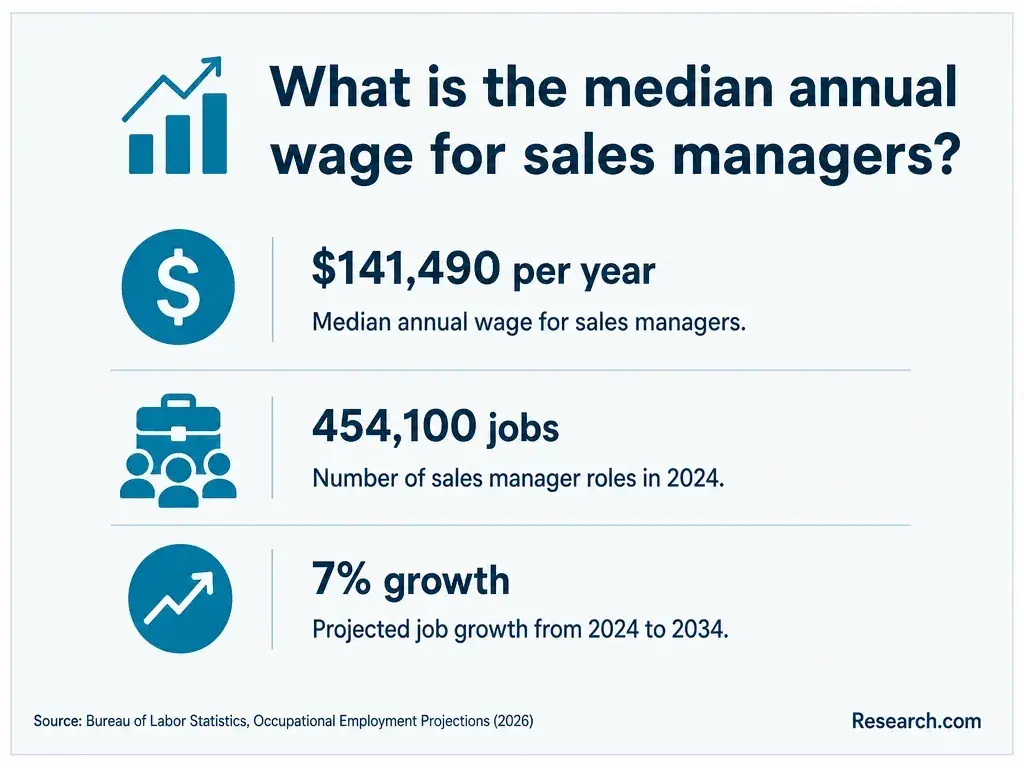
There is no reliable salary figure for the degree itself: employers pay for positions, locations, responsibilities, and experience. The U.S. Bureau of Labor Statistics reports a May 2025 median annual wage of $102,320 for project management specialists.
That occupation-wide midpoint is useful context if project work is your target, but it includes workers at different career stages and is not a starting salary or a predicted raise for earning a BS.
BLS projects 7% employment growth for project management specialists from 2025 to 2035. Growth can indicate demand for the occupation, not the likelihood that your employer will promote you.
For a personal return-on-investment estimate, use your employer's actual pay range and promotion criteria against your verified net degree cost. Comparing affordable colleges for online business degrees is a useful starting point, but apply your own transfer evaluation and employer benefit rules before drawing a cost conclusion.
What Certifications or Licenses Do Business Administration Graduates Need?
A general business administration degree does not carry a universal professional license. A particular job may call for a separate certification or license, and eligibility rules come from the credentialing organization, regulator, or employer, not from the degree title.
A project management course, for example, does not automatically establish eligibility for a project management certification.
If the promotion calls for one defined skill rather than a bachelor's degree, ask whether employer training, a targeted course, or a relevant credential would meet that requirement sooner. If it explicitly requires a bachelor's degree, a short certificate is unlikely to replace it.
For a project-focused career path, online project management degrees with lower tuition offer another degree option to compare - not a substitute for checking certification eligibility separately.
Other Things You Should Know About Business Administration
Usually, yes - if you can have a constructive conversation about the role. Ask which qualifications matter and whether your planned coursework would support specific responsibilities. Keep the conversation separate from any assumption that enrollment secures the promotion.
Possibly. The school must approve the academic work, and your employer must permit the use of workplace information. A current job does not automatically satisfy a capstone or internship requirement.
Before committing, decide whether the degree still supports other roles you would pursue. Check withdrawal dates, aid consequences, and whether reducing your course load would preserve progress without creating financial strain.
Review the amount you might owe, the circumstances that trigger repayment, and when the obligation ends. Ask HR to explain unclear terms in writing before relying on the benefit.
- Accreditation in the U.S. | ed.gov http://www.ed.gov/laws-and-policy/higher-education-laws-and-policy/college-accreditation/accreditation-in-the-us
- Frequently asked questions about educational assistance programs | Internal Revenue Service https://www.irs.gov/newsroom/frequently-asked-questions-about-educational-assistance-programs
- Fact Sheet: Promotions | U.S. Office of Personnel Management https://www.opm.gov/policy-data-oversight/pay-leave/pay-administration/fact-sheets/promotions/
- Transfer college credits toward an associate degree | Franklin University https://www.franklin.edu/transferring-credit/transfer-associate-credit
- 26 U.S. Code § 127 - Educational assistance programs - LII | LII / Legal Information Institute https://www.law.cornell.edu/uscode/text/26/127
- and Ask For - Employer Tuition Reimbursement Benefits | Harvard Extension School https://extension.harvard.edu/blog/how-to-use-and-ask-for-employer-tuition-reimbursement-benefits/
- Business Administration Bachelor's Degree Online | The Pennsylvania Institute of Technology https://www.pit.edu/programs/b-s-business-administration/
- Employer Tuition Reimbursement: How It Works and How to Pay for College | Winston-Salem State University https://ramsonline.wssu.edu/blog/employer-education-benefits/
- Online Bachelor's Degree in Business Administration | Purdue Global https://www.purdueglobal.edu/degree-programs/business/bachelor-business-administration/
- Chapman University Transfer Credit Policies and Guidelines https://www.chapman.edu/students/academic-resources/registrar/student-services/transfer-credit-policies-and-guidelines.aspx