2027 Best Online Bachelor's in Electrical Engineering With Career Services

Co-Founder and Chief Data Scientist
Choosing an online electrical engineering degree is a high-stakes decision because the program must deliver rigorous labs, accreditation value, and real career support-not just flexible classes. The U.S. Bureau of Labor Statistics projects employment for electrical and electronics engineers to grow 9% from 2023 to 2033, which makes program quality and employability especially important.
This guide is for working adults, transfer students, military learners, and first-time undergraduates comparing online options. You will learn how to judge accreditation, cost, curriculum, career services, and outcomes before enrolling.
Key Things You Should Know
- For licensure-oriented students, ABET accreditation is usually the safest choice because many state engineering boards rely on ABET-accredited engineering degrees when evaluating eligibility for the FE and PE pathways.
- Online electrical engineering programs commonly take about four years for first-time full-time students, but transfer credit, part-time pacing, and required lab formats can significantly change the timeline.
- The BLS reported a May 2024 median annual wage of $111,910 for electrical engineers, but actual pay varies by industry, location, experience, security clearance, and specialization.
What is an online bachelor's in electrical engineering?
An online bachelor's in electrical engineering is an undergraduate engineering degree focused on designing, testing, and improving systems that use electricity, electronics, signals, power, and embedded computing. Students usually study circuit analysis, electromagnetics, digital logic, signals and systems, control systems, microprocessors, power systems, engineering design, and advanced mathematics.
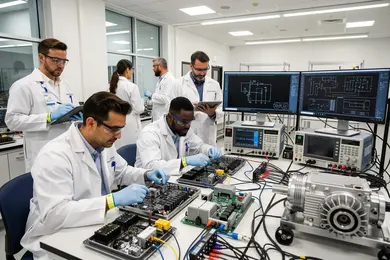
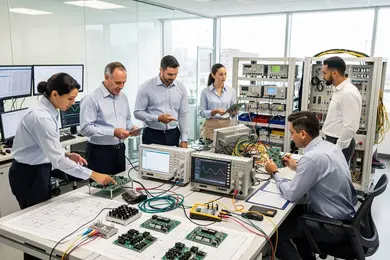
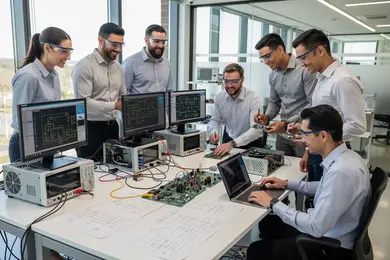
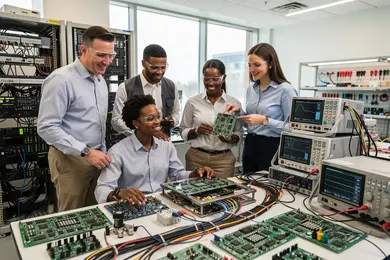
The word "online" usually describes how lectures, assignments, discussions, and some simulations are delivered. It does not always mean the entire degree is remote. Strong programs still need hands-on work, so students may use mailed lab kits, remote lab platforms, simulation software, local proctoring, or short campus residencies depending on the school.
This degree is a good fit for students who want engineering roles in power, electronics, aerospace, manufacturing, defense, telecommunications, renewable energy, robotics, semiconductors, or embedded systems. It is less ideal for students who mainly want software development, IT support, or data analytics roles unless they specifically want the hardware, systems, or signal-processing side of technology. Students who later move toward research-heavy AI, signal analytics, or advanced computational work may eventually compare graduate options such as an online doctorate data science, but the bachelor's degree is still the foundation for most electrical engineering roles.
When evaluating "best" programs, do not focus only on brand name. For electrical engineering, the strongest online option is the one that matches your intended career path, provides credible lab experiences, has transparent accreditation status, offers faculty access, and connects online learners with engineering-specific career support.
How do online and campus electrical engineering programs compare?
Online and campus electrical engineering programs can cover similar academic material, but the student experience can differ sharply. The right choice depends on how you learn best, whether you can travel for labs, how much schedule flexibility you need, and whether you want daily access to campus facilities.
The table below summarizes the practical differences that matter most when comparing formats. Use it to identify which format better supports your learning style and career goals.
| Factor | Online electrical engineering bachelor's | Campus electrical engineering bachelor's | What to ask before enrolling |
| Schedule | Often better for working adults, military students, caregivers, and transfer students who need asynchronous coursework. | Often better for students who want a fixed academic routine and in-person class structure. | Are lectures live, recorded, asynchronous, or a mix? |
| Labs | May use lab kits, simulations, remote instrumentation, partner sites, or short residencies. | Typically uses on-campus labs and direct access to equipment. | How are circuits, electronics, and design labs completed? |
| Faculty access | Can be strong if the program offers virtual office hours, responsive teaching assistants, and small project groups. | Can be easier for students who benefit from spontaneous in-person help. | How quickly do instructors respond to online students? |
| Peer networking | Depends heavily on cohort design, online project teams, and student engineering groups. | Often easier through clubs, labs, tutoring centers, and events. | Can online students join IEEE chapters, design teams, or employer events? |
| Career services | Best when career coaching, resume review, interview prep, and employer events are fully remote-friendly. | Often includes in-person recruiting and employer visits. | Are internships, co-ops, and employer connections available to online students? |
Online learning makes the most sense if you need flexibility and can stay disciplined through advanced math, lab work, and project deadlines. Campus learning may be better if you want daily in-person engineering community, easier access to specialized equipment, or a traditional residential experience.
A common mistake is assuming "online" means easier. Electrical engineering is math-intensive in any format. Before choosing an online program, ask for sample syllabi, lab requirements, proctoring rules, software requirements, and examples of senior design projects completed by online students.
Is electrical engineering program accreditation required for licensure?
Accreditation is one of the most important decision points for an online electrical engineering bachelor's. In the United States, institutional accreditation confirms that the college or university meets broad academic standards. Programmatic engineering accreditation, most commonly from ABET, evaluates whether an engineering program meets discipline-specific standards.
ABET accreditation is not always legally required to study electrical engineering or get an engineering-related job. However, it is often important for students who may want to become licensed Professional Engineers. State licensing boards set their own rules, but many use graduation from an ABET-accredited engineering program as the most straightforward education pathway toward the Fundamentals of Engineering exam, Engineer-in-Training status, qualifying experience, and the Principles and Practice of Engineering exam.
Use this sequence before you apply, especially if licensure, government work, power systems, public infrastructure, or consulting could be part of your future:
- Confirm that the institution is accredited by a recognized institutional accreditor.
- Check whether the specific electrical engineering bachelor's program is ABET-accredited, not just the university or engineering school.
- Verify whether the online version, campus version, or both are covered by the accreditation listing.
- Review your state engineering board's education requirements for FE and PE eligibility.
- Ask the program how recent online graduates have handled FE exam preparation, internships, and licensure planning.
The biggest red flag is vague language such as "ABET-aligned," "designed around ABET standards," or "seeking accreditation" without a clear current accreditation status. Those phrases may indicate useful quality goals, but they are not the same as being accredited.
What courses are included in an online electrical engineering curriculum?
An online electrical engineering curriculum usually builds from math and physics into circuits, electronics, systems, and design. The best programs do not simply offer technical theory; they also require lab work, engineering communication, team projects, and a senior capstone.
The table below shows common curriculum areas and why they matter for career readiness. Course names vary by school, but these categories are typical in a rigorous bachelor's program.
| Curriculum area | Common topics | Why it matters |
| Mathematics and science | Calculus, differential equations, linear algebra, physics, probability, and statistics. | Provides the analytical foundation for modeling circuits, signals, fields, and systems. |
| Circuits and electronics | DC and AC circuits, semiconductor devices, analog electronics, and instrumentation. | Prepares students to design, test, and troubleshoot electronic hardware. |
| Digital and embedded systems | Digital logic, microcontrollers, computer organization, and embedded programming. | Supports careers in devices, automation, robotics, aerospace, and connected systems. |
| Signals, controls, and communications | Signal processing, feedback control, communications systems, and frequency analysis. | Connects electrical engineering to wireless systems, autonomous systems, sensors, and industrial controls. |
| Power and energy systems | Power electronics, electric machines, transmission, renewable integration, and grid concepts. | Supports work in utilities, energy storage, electrification, and infrastructure. |
| Engineering design | Lab methods, technical writing, teamwork, ethics, project management, and capstone design. | Shows employers that students can apply theory to real constraints, budgets, safety issues, and performance goals. |
Current technology trends are changing what students should look for in electives. Power electronics, semiconductor systems, embedded AI, renewable energy integration, cybersecurity for connected devices, and automation are increasingly relevant across engineering employers. A strong program should update electives and capstone options as industry tools change.
Before enrolling, ask whether students use industry-standard tools for circuit simulation, printed circuit board design, embedded systems, numerical computing, and technical documentation. Software access can affect both learning quality and total cost.
What admission requirements do online electrical engineering programs usually have?
Admission requirements vary by institution, but electrical engineering programs tend to be more selective about math and science preparation than many other online bachelor's degrees. Schools want evidence that applicants can handle calculus-based engineering coursework.
Most applicants should expect some combination of the following requirements. These items matter because missing prerequisites can delay entry into engineering-major courses even after admission to the university.
- High school diploma, GED, or equivalent credential for first-time undergraduate admission.
- Official transcripts from high school and any colleges previously attended.
- College algebra, trigonometry, precalculus, calculus, physics, or chemistry prerequisites, depending on placement level.
- Minimum GPA standards for general admission and sometimes higher standards for direct admission into engineering.
- Placement testing or prior college credit to determine the correct starting math course.
- Application materials such as a personal statement, resume, or proof of professional experience for adult learners.
- English language proficiency documentation for applicants whose prior education was not in English.
Transfer students should pay special attention to articulation rules. A course called "circuits" or "physics" at one institution may not automatically satisfy an engineering requirement at another, especially if it was not calculus-based or did not include the required lab.
Military-affiliated students should also ask how the school evaluates Joint Services Transcript credit, deployment interruptions, residency requirements, and tuition assistance. Readers comparing military-friendly options can use this guide to electrical engineering programs online for veterans as a starting point for questions about benefits and support.
How long does an online electrical engineering degree take?
A bachelor's in electrical engineering commonly requires about 120 to 130 credits, though exact totals vary by school. A first-time student studying full time should generally plan for about four academic years, while part-time students often need longer because engineering courses follow strict prerequisite sequences.
Timeline is not determined only by credit count. Electrical engineering has course chains: calculus leads to physics, physics supports circuits, circuits support electronics, and those courses may be prerequisites for labs and capstone design. Missing one math course can sometimes push major coursework back by a term.
Students can use the following steps to estimate a realistic completion timeline before they commit:
- Request a degree plan that shows every prerequisite sequence from the first math course through senior design.
- Ask which required courses are offered every term and which are offered only once per year.
- Confirm whether labs require campus visits, mailed kits, synchronous sessions, or local proctoring.
- Submit transcripts for an official transfer evaluation before assuming prior credits will apply.
- Compare full-time, part-time, summer, and accelerated pacing against work and family obligations.
Accelerated completion can be helpful for students with strong transfer credit and recent math preparation. It can be risky for students who are returning to school after a long break from calculus or physics. In that case, a slower first year may protect GPA, reduce burnout, and improve long-term persistence.
How much does an online electrical engineering bachelor's cost?
The cost of an online bachelor's in electrical engineering depends on tuition, fees, residency status, transfer credits, textbooks, software, lab kits, proctoring, and travel for any required residencies. Engineering degrees can also have course fees that are higher than general education courses because of labs and specialized technology.
College Board's 2024 pricing data reported average published tuition and fees of $11,610 for in-state students at public four-year institutions, $30,780 for out-of-state students at public four-year institutions, and $43,350 at private nonprofit four-year institutions for one academic year. These are not online-engineering-specific prices, but they provide a useful benchmark when judging whether a quoted program cost is unusually low, typical, or expensive.
When comparing programs, list the full cost rather than only the per-credit tuition. Important cost categories include the following:
- Tuition per credit and the total number of credits required after transfer evaluation.
- Online learning fees, engineering course fees, technology fees, and graduation fees.
- Lab kits, electronics components, measurement tools, simulation software, and computer hardware.
- Travel, lodging, and time away from work if the program requires campus intensives.
- Books, digital access codes, exam proctoring, and professional certification or FE exam preparation materials.
- Lost income or reduced work hours if the course load is too heavy for full-time employment.
The lowest tuition is not always the best value. A slightly more expensive program may be the better investment if it has ABET accreditation, stronger transfer acceptance, better lab delivery, employer-connected projects, and career services that actively support online learners. Cost comparison methods are useful across many fields; for example, affordability-focused degree research such as masters of library science online comparisons can show how fees, pacing, and transfer policies affect total price beyond the headline tuition.
To reduce cost, complete transferable general education courses carefully, file the FAFSA if eligible, ask about employer tuition assistance, compare in-state online tuition rules, and avoid repeating math or science courses because of poor placement planning.
What jobs can you get with an electrical engineering degree?
An electrical engineering bachelor's can lead to roles in hardware, power, electronics, embedded systems, testing, manufacturing, aerospace, defense, energy, telecommunications, automation, and technical consulting. Some graduates work under the title "electrical engineer," while others enter closely related roles that emphasize systems, controls, applications, or product testing.
The table below outlines common career paths and the type of work each role typically involves. Use it to match programs and electives to the work you actually want to do.
| Role | Typical responsibilities | Helpful preparation |
| Electrical engineer | Designs, analyzes, and tests electrical systems, components, or equipment. | Circuits, electronics, power, labs, design projects, and engineering documentation. |
| Electronics engineer | Develops electronic devices, control boards, instrumentation, or communications hardware. | Analog electronics, digital systems, PCB design, embedded programming, and testing. |
| Power systems engineer | Works on generation, transmission, distribution, renewable integration, or grid reliability. | Power systems, machines, power electronics, protection, and possible PE licensure planning. |
| Controls engineer | Designs and maintains automation, robotics, process control, or feedback systems. | Control theory, sensors, PLCs, embedded systems, and industrial communication protocols. |
| Test engineer | Builds test plans, validates products, analyzes failures, and improves quality. | Instrumentation, statistics, lab experience, scripting, and technical reporting. |
| Field applications engineer | Helps customers apply technical products and solves implementation problems. | Strong communication, electronics knowledge, troubleshooting, and customer-facing experience. |
Students who enjoy both hardware and software should look for programs with embedded systems, digital design, signal processing, and programming electives. If your main goal is software engineering rather than electrical systems, comparing a best online computer science degree may make more sense than choosing electrical engineering and trying to turn it into a software-only path.
Career outcomes depend heavily on internships, co-ops, projects, location, and clearance eligibility in defense-related sectors. A strong portfolio can include circuit designs, simulation files, microcontroller projects, lab reports, capstone documentation, GitHub repositories for embedded code, and short videos demonstrating working prototypes.
What salary can electrical engineering graduates expect?
Salary expectations should be based on role, industry, region, experience, and skill depth-not just the degree title. The BLS reported a May 2024 median annual wage of $111,910 for electrical engineers. That median is a useful national benchmark, but entry-level compensation may be lower and specialized roles in high-cost regions or advanced industries may pay more.
The table below provides a practical salary-context view rather than a promise. It helps students understand how different job targets may influence elective choices, internship strategy, and licensure planning.
| Career direction | Salary context | What can influence pay |
| Electrical engineering design | Often benchmarked against the national electrical engineer median. | Industry, CAD and simulation skills, design ownership, location, and project complexity. |
| Power and utilities | Can be stable and licensure-relevant in many settings. | PE pathway, field experience, grid modernization knowledge, and safety-critical responsibility. |
| Electronics and hardware | May vary widely by semiconductor, defense, consumer electronics, or instrumentation sector. | PCB design, lab testing, embedded systems, and product development experience. |
| Controls and automation | Often tied to manufacturing, robotics, energy, and industrial systems demand. | PLC experience, controls software, plant-floor experience, and troubleshooting speed. |
| Technical sales or applications | May combine base pay with variable compensation depending on employer structure. | Communication skills, product expertise, travel requirements, and customer relationships. |
Students should evaluate salary alongside total education cost. A program with strong internship access, career coaching, employer recognition, and relevant labs may improve job readiness, but no school can guarantee a specific salary. Ask programs for transparent outcomes data, including graduate job titles, internship participation, FE exam support, and employers that recruit online students.
How do career services support online electrical engineering students?
Career services are especially important in online electrical engineering programs because remote students may not naturally benefit from campus recruiting, lab networking, or informal faculty referrals. The best programs intentionally extend engineering-specific career support to online learners.
Look for services that go beyond generic resume templates. For electrical engineering students, career support should connect coursework, projects, internships, and employer expectations.
- Engineering resume reviews that highlight technical tools, lab methods, capstone projects, and measurable design outcomes.
- Internship and co-op advising for students who work full time, live far from campus, or need local placements.
- Virtual employer events with companies hiring for power, electronics, embedded systems, controls, manufacturing, aerospace, defense, or telecommunications roles.
- Mock technical interviews that include circuits, systems thinking, troubleshooting, and project explanation.
- Portfolio guidance for GitHub repositories, design reports, simulation files, schematics, and prototype demonstrations.
- FE exam awareness for students considering licensed engineering work.
- Alumni mentoring that includes online graduates, not only campus students.
Before enrolling, ask direct questions: How many online electrical engineering students completed internships last year? Are career fairs virtual or campus-only? Can online students join engineering clubs or employer information sessions? Does the program help students prepare for security-clearance-sensitive industries? Are capstone projects reviewed by industry partners?
A common mistake is assuming university-wide career services are enough. General career offices can be useful, but engineering students need technical recruiting knowledge. The strongest programs combine academic advising, faculty mentorship, project-based learning, and employer connections into one career pathway.
Other Things You Should Know About Electrical Engineering
Often, yes. Some programs require lab kits, breadboards, multimeters, components, webcams, or specific software. Ask for a complete technology and lab-cost list before enrolling so you can budget accurately.
Most programs use MATLAB, Multisim, and AutoCAD or similar engineering software for circuit analysis and design. Students often also need a reliable computer, webcam, and broadband internet. Some courses require remote lab kits, while others use virtual simulation platforms for assignments and exams.
Yes, but you may need prerequisite courses before starting major requirements. If your algebra, trigonometry, or calculus background is weak, choose a program with placement support, tutoring, and a realistic first-year math plan.
References
- What can you do with an electrical engineering degree? - People of Pacific https://www.pacific.edu/blog/2025/01/24/what-can-you-do-with-an-electrical-engineering-degree/
- Online Electrical Engineering Degrees https://www.affordablecollegesonline.org/degrees/engineering-programs/electrical-engineering/
- ABET Accreditation for Engineering Programs Explained https://engineeringsauthority.com/abet-accreditation-engineering-programs/
- Licensure, Registration & Certification - ABET https://www.abet.org/accreditation/what-is-accreditation/licensure-registration-certification/
- Applying to Electrical Engineering Programs: Graduate School Admissions Overview https://blog.accepted.com/applying-to-electrical-engineering-programs-graduate-school-admissions-overview/
- Career Services | University of Manitoba - Career Compass: Electrical Engineering https://www.umanitoba.ca/career-services/career-planning/career-compass-electrical-engineering