2027 Online Electrical Engineering Degrees That Help Build Career-Ready Technical Skills

Co-Founder and Chief Data Scientist
Choosing an online electrical engineering degree is a high-stakes decision because the field is technical, regulated in some roles, and closely tied to industries such as energy, semiconductors, robotics, communications, and defense.
The U. S. Bureau of Labor Statistics reported a May 2024 median annual wage of $111,910 for electrical engineers, which makes program quality and accreditation especially important. This guide is for prospective bachelor's and master's students who want to compare online formats, costs, admissions, skills, career outcomes, and red flags before enrolling.
Key Things You Should Know
- An online electrical engineering bachelor's degree should usually be ABET-accredited if you want the broadest access to engineering jobs, graduate school options, and Professional Engineer licensure pathways.
- The BLS reported a May 2024 median annual wage of $111,910 for electrical engineers, but outcomes vary by industry, location, security clearance eligibility, internships, portfolio quality, and degree level.
- College Board's 2024 pricing data shows published tuition and fees can range widely, from about $11,610 for in-state public four-year tuition to $43,350 at private nonprofit four-year institutions, so total cost matters more than tuition alone.
What is an online electrical engineering degree and how does it compare to a campus program?
An online electrical engineering degree is a college program that teaches circuit theory, electronics, digital systems, signals, power systems, control systems, embedded computing, and engineering design through a distance-learning format. At the bachelor's level, it is meant to prepare students for entry-level engineering or engineering-adjacent roles. At the master's level, it usually helps working engineers specialize in areas such as power, communications, microelectronics, robotics, or systems engineering.
The biggest difference from a campus program is not necessarily the curriculum. In a strong online program, the academic expectations, exams, projects, and faculty standards should be comparable to the on-campus version. The real differences are in lab delivery, scheduling, peer interaction, and access to local recruiting.
The table below compares the practical trade-offs. Use it to decide whether online study fits your learning style and career plan, not just your schedule.
| Factor | Online electrical engineering degree | Campus electrical engineering degree |
| Best fit | Working adults, military students, transfer students, and learners who need geographic flexibility | Students who want daily in-person labs, campus recruiting, clubs, and structured schedules |
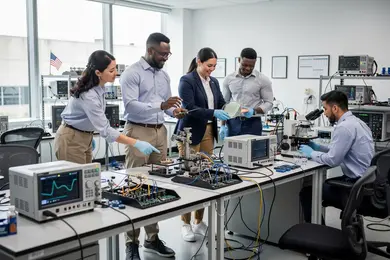
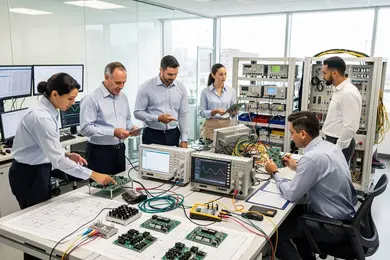
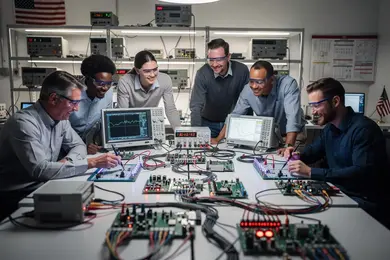
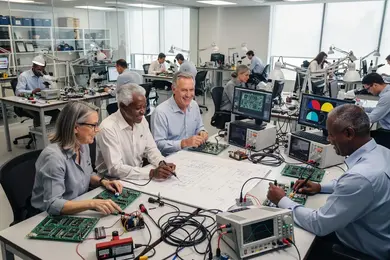
| Labs | May use mailed lab kits, simulation software, remote labs, or short campus residencies | Usually offers frequent in-person lab access and hands-on equipment time |
| Networking | Depends heavily on virtual teamwork, faculty access, employer partnerships, and student initiative | Often easier through engineering clubs, career fairs, research labs, and informal peer contact |
| Flexibility | Often asynchronous or hybrid, with fewer location constraints | More fixed class times and campus attendance requirements |
| Risk to check | Weak lab support, limited accreditation, or few engineering-specific career services | Higher relocation, housing, transportation, or opportunity costs |
An online program makes the most sense if you are self-directed, comfortable learning with simulation tools, and able to create your own internship or project opportunities. A campus program may be better if you are new to engineering, need more academic structure, or want frequent access to physical labs, research groups, and employer events.
Online engineering is also more lab-intensive than many other remote degrees. For example, online library science programs often rely more on reading, research, field experiences, and digital information systems, while electrical engineering programs must prove that students can design, test, troubleshoot, and document technical systems.
How do I know if an online electrical engineering program is properly accredited and respected?
Accreditation is one of the most important quality checks for an online electrical engineering degree. It helps confirm that a school or program has been reviewed against recognized academic standards. For engineering students, there are two separate levels to understand: institutional accreditation and programmatic accreditation.
Institutional accreditation applies to the college or university as a whole. Programmatic accreditation applies to a specific engineering program. In electrical engineering, the key programmatic accreditor is ABET, especially through its Engineering Accreditation Commission for bachelor's programs.
Before enrolling, verify accreditation directly rather than relying only on marketing language. These checks help you avoid programs that may limit employment, transfer, graduate school, or licensure options.
- Confirm the school has institutional accreditation from an agency recognized by the U.S. Department of Education or the Council for Higher Education Accreditation.
- Search ABET's public program database for the exact degree name, campus or online location, and accreditation dates.
- Ask whether the online program is the same accredited program as the campus version or a separate program with different status.
- Check whether the diploma or transcript identifies the delivery mode, especially if you are concerned about employer perception.
- Ask employers, state licensing boards, or graduate programs in your target field whether the degree meets their requirements.
A respected online electrical engineering program should be transparent about accreditation, faculty credentials, lab requirements, graduation expectations, and student outcomes. A red flag is a school that uses vague phrases such as "ABET-aligned" or "designed around ABET standards" without actual ABET accreditation for the specific program you are considering.
For master's programs, ABET is less commonly used as a deciding factor because many graduate engineering programs are not ABET-accredited. In that case, reputation, faculty expertise, research areas, employer recognition, admissions standards, and alignment with your technical specialization become more important.

What career paths and entry-level jobs can an online electrical engineering degree lead to?
An online electrical engineering degree can lead to roles in power generation, renewable energy, electronics, aerospace, defense, automation, telecommunications, automotive systems, medical devices, and semiconductor-related industries. The best entry point depends on your degree level, internship experience, lab portfolio, software skills, and whether the employer requires a security clearance or licensure path.
The table below summarizes common paths. It is meant to help you connect degree choices with real job functions rather than choosing a program based only on a broad major name.
| Career path | Typical responsibilities | Helpful preparation |
| Electrical design engineer | Designs circuits, electrical layouts, components, and technical specifications | Bachelor's degree, circuit design projects, CAD tools, simulation experience |
| Power systems engineer | Works on power distribution, grid reliability, renewable integration, and protection systems | Power systems coursework, utility internships, FE exam interest |
| Controls engineer | Develops automation, feedback systems, and industrial control logic | Control systems, PLC exposure, MATLAB, Python, robotics projects |
| Electronics or hardware engineer | Tests and improves electronic devices, boards, sensors, and embedded systems | Electronics labs, PCB design, embedded programming, testing experience |
| Test engineer | Builds test procedures, validates performance, analyzes failures, and documents results | Lab instrumentation, data analysis, quality methods, technical writing |
| Field applications engineer | Supports customers using technical products and helps troubleshoot implementation issues | Engineering fundamentals, communication skills, product knowledge |
Entry-level job titles do not always include "engineer." Graduates may start as engineering assistants, test technicians, applications specialists, systems analysts, or junior design engineers while building experience. This can be a practical route if you are changing careers or completing an online degree while working.
Students who should be cautious are those who want a purely theoretical or software-only career and dislike physics, math, hardware, and troubleshooting. If your strongest interest is software engineering, data analytics, or information systems, a different degree may provide a more direct route.
What courses and technical skills are typically taught in online electrical engineering programs?
Online electrical engineering programs typically combine math, physics, computing, engineering fundamentals, laboratory work, and design projects. The strongest programs do not just teach formulas; they train students to model systems, interpret measurements, design under constraints, and communicate technical decisions.
The table below shows common subject areas and the practical skills they are meant to build. Reviewing this list can help you compare curricula across schools and identify gaps before you apply.
| Course area | What students learn | Career-ready skill |
| Circuit analysis | Voltage, current, resistance, impedance, transient response, and network theorems | Diagnosing and designing electrical systems |
| Electronics | Diodes, transistors, amplifiers, filters, and analog components | Building and testing device-level circuits |
| Digital logic | Boolean logic, combinational circuits, sequential circuits, and hardware description concepts | Understanding digital hardware and embedded systems |
| Signals and systems | Time-domain and frequency-domain analysis, filtering, sampling, and transforms | Working with communications, audio, sensors, and control applications |
| Power systems | Three-phase power, transformers, motors, protection, and grid fundamentals | Supporting utilities, manufacturing, renewables, and facilities engineering |
| Control systems | Feedback, stability, controllers, modeling, and system response | Designing automation, robotics, and industrial control systems |
| Embedded systems | Microcontrollers, sensors, firmware, interfaces, and real-time constraints | Connecting hardware and software in practical devices |
| Senior design or capstone | Team-based design, testing, documentation, and presentation | Demonstrating applied engineering judgment to employers |
Software tools matter more than many new students expect. Depending on the program and specialization, you may use MATLAB, Python, SPICE-based circuit simulation, CAD tools, FPGA or microcontroller environments, and lab data acquisition tools. AI-assisted design and automation are also becoming more visible, but employers still expect graduates to understand the engineering assumptions behind any software output.
If your long-term goal is research in AI-heavy technical systems, signal processing, autonomous systems, or large-scale analytics, you may eventually compare engineering graduate study with a data science doctorate online. Electrical engineering is usually the better foundation for hardware, power, communications, and embedded systems, while data science is more focused on statistical modeling, machine learning, and data infrastructure.
What are the admission requirements for online bachelor's and master's degrees in electrical engineering?
Admission requirements vary by school and degree level, but electrical engineering is usually more sequential than many majors. Math readiness matters because calculus, physics, circuits, and signals build on each other. If you are missing prerequisites, you may need bridge courses before taking upper-division engineering classes.
The table below compares typical bachelor's and master's admissions expectations. Use it to identify what you may need to complete before applying.
| Requirement | Online bachelor's degree | Online master's degree |
| Prior education | High school diploma, GED, or transfer credits | Bachelor's degree, usually in electrical engineering or a closely related field |
| Math preparation | Algebra, trigonometry, precalculus, and readiness for calculus | Calculus, differential equations, linear systems, and engineering math background |
| Science preparation | Physics and sometimes chemistry are expected or required | Physics and engineering fundamentals are usually assumed |
| Application materials | Transcripts, application form, possible test scores, and placement exams | Transcripts, statement of purpose, resume, recommendations, and sometimes GRE scores |
| Work experience | Usually optional, but technical work can strengthen motivation | Often helpful, especially for professional master's programs |
| Bridge options | Community college transfer pathways or prerequisite courses | Preparatory courses in circuits, signals, electronics, or programming |
Transfer students should pay close attention to course equivalencies. General education credits may transfer easily, but engineering, math, and lab courses are often reviewed more carefully. A course with the right title may still fail to transfer if the lab hours, prerequisites, or learning outcomes do not match.
Common mistakes include applying before completing calculus readiness, assuming technician experience automatically replaces engineering prerequisites, and choosing a master's program without checking whether your undergraduate background is sufficient. If you are unsure, ask the admissions office for a written prerequisite review before you commit.
How long do online electrical engineering degrees take and how flexible are the formats?
A full online bachelor's degree in electrical engineering commonly takes about four years of full-time study for first-time students, while transfer students may finish sooner depending on accepted credits. An online master's degree often takes one and a half to three years, depending on course load, thesis or non-thesis format, and whether the student is working full time.
Flexibility varies widely. Some programs are mostly asynchronous, meaning you can watch lectures and complete assignments around your schedule. Others require live class sessions, proctored exams, group design meetings, or short in-person lab residencies. Engineering programs also tend to be less flexible than many non-lab online degrees because courses must be taken in sequence.
Before choosing a format, compare the schedule against your actual weekly capacity. These questions can prevent burnout and delayed graduation.
- How many hours per week does the program expect for each three-credit engineering course?
- Are labs completed through mailed kits, remote equipment, simulation software, campus visits, or local partner sites?
- Are exams live, proctored, open-book, project-based, or scheduled in narrow time windows?
- Can part-time students take all required courses often enough to avoid waiting a full year for prerequisites?
- Does the program allow summer enrollment, accelerated terms, or stop-out options if work or family obligations change?
Accelerated formats can be useful for students with strong preparation and available time, but they are risky if you are working full time or returning to math after several years away. A slower plan may cost more in time, but it can produce better learning, stronger projects, and less course repetition.
How much do online electrical engineering programs cost and what financial aid is available?
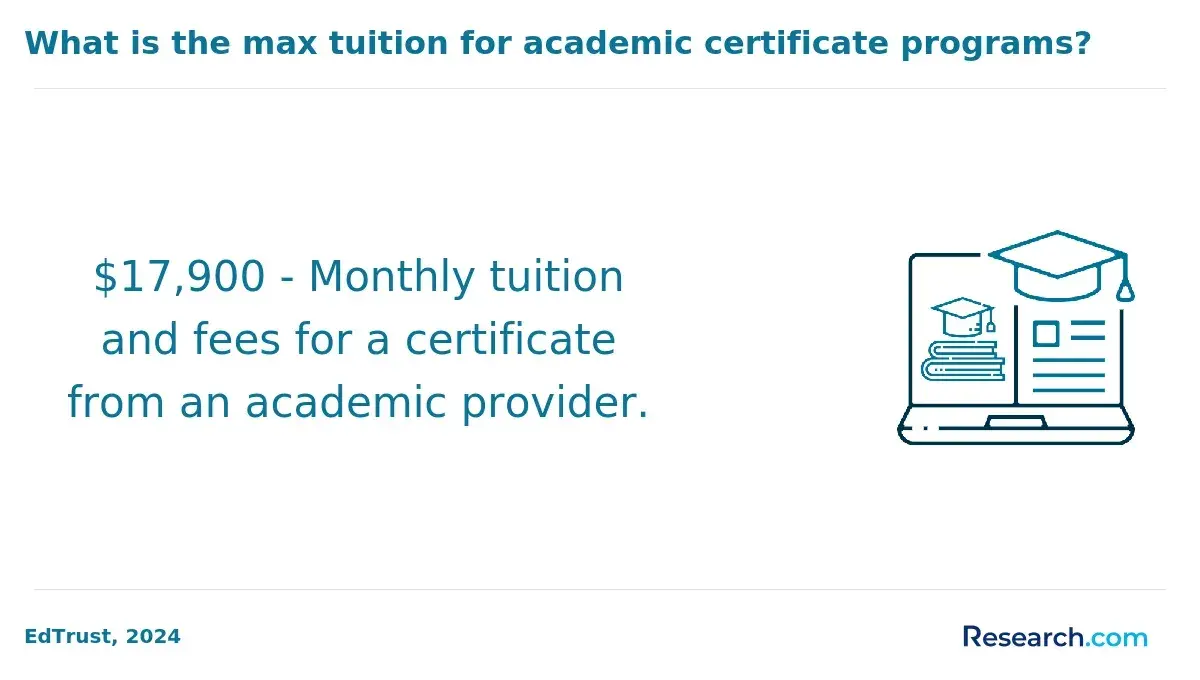
Online electrical engineering program costs depend on residency status, public or private institution type, transfer credits, fees, lab kits, textbooks, software, proctoring, and travel for any required residencies. Tuition alone is not enough to compare programs because engineering students may also pay for equipment, computing resources, and extra prerequisite courses.
College Board's 2024 Trends in College Pricing data reported average published tuition and fees of $11,610 for in-state students at public four-year institutions and $43,350 at private nonprofit four-year institutions for the 2024-25 academic year. For online students, this means the best-value option is often the program that combines recognized accreditation, generous transfer credit, reasonable fees, and strong completion support, not simply the lowest advertised per-credit rate.
Typical cost categories to compare include the following. Ask each school for a full cost sheet before applying so you can estimate the total price of completion.
- Tuition per credit or per term
- Mandatory online, technology, engineering, or distance-learning fees
- Lab kits, electronics components, calculators, and testing equipment
- Software licenses or required computer specifications
- Proctoring fees, graduation fees, and transcript fees
- Travel and lodging for any campus labs, orientations, or exams
- Extra prerequisite courses that do not count toward the degree
Students comparing programs can review electrical engineering online tuition costs alongside accreditation, curriculum, and student support. Cost data is most useful when you connect it to your remaining credits, employer reimbursement, financial aid eligibility, and likely time to graduation.
Financial aid may include federal grants, federal student loans, state grants, scholarships, military education benefits, employer tuition assistance, and payment plans. The maximum Federal Pell Grant for the 2024-25 award year was $7,395, but eligibility depends on financial need, enrollment status, and program participation in federal aid. Graduate students should be especially careful with borrowing because master's programs may rely more heavily on loans and employer support.
What are the salary expectations and job outlook for electrical engineers in the United States?
Electrical engineering salaries vary by industry, geography, experience, degree level, and technical specialization. The BLS reported a May 2024 median annual wage of $111,910 for electrical engineers in the United States. This figure is a national median, not a promise of what any individual graduate will earn, but it is useful for judging whether the field can justify the cost and effort of a rigorous degree.
The BLS also projects employment for electrical and electronics engineers to grow 9% from 2024 to 2034. That outlook reflects demand across areas such as power infrastructure, electronics, communications, automation, and advanced manufacturing, but competition can still be strong for the most desirable employers and locations.
The table below shows how salary and job-market expectations should be interpreted at different career stages. It can help you think about return on investment realistically.
| Career stage | Typical focus | What affects earnings and mobility |
| Student or intern | Building projects, lab skills, and workplace exposure | Internships, co-ops, GPA for early screening, and portfolio quality |
| Entry-level engineer | Testing, documentation, junior design tasks, and troubleshooting | ABET degree, technical interviews, software tools, and hands-on experience |
| Mid-career engineer | Owning designs, systems, projects, or specialized technical areas | Specialization, industry, leadership ability, PE license where relevant, and security clearance eligibility |
| Senior or lead engineer | Architecture, mentoring, project leadership, client decisions, or technical strategy | Track record, advanced degree, patents or publications, management skills, and business impact |
To improve your odds of a strong outcome, look for programs that help you produce evidence of skill: design reports, code repositories, circuit simulations, lab notebooks, capstone presentations, and internship references. Employers hiring engineers often want proof that you can solve ambiguous technical problems, not just complete coursework.
Are any licenses, certifications, or professional exams required for electrical engineering careers?
Many electrical engineering jobs do not require a license, especially in electronics, embedded systems, manufacturing, telecommunications, defense, and private-sector product development. However, licensure can matter for engineers who offer services to the public, sign off on engineering plans, work in utilities, or pursue certain consulting and infrastructure roles.
The main U.S. licensure pathway is the Professional Engineer pathway, which is regulated by state licensing boards. Requirements vary, but the process commonly includes an engineering degree, the Fundamentals of Engineering exam, qualifying work experience, and the Principles and Practice of Engineering exam.
If licensure might be part of your future, review the steps early. Waiting until graduation can limit your options if your degree does not meet state board expectations.
- Check whether your target state licensing board prefers or requires an ABET-accredited bachelor's degree.
- Ask the program whether graduates are eligible to sit for the FE exam in the states where students commonly live.
- Take the FE exam near graduation or soon after, when core engineering topics are still fresh.
- Work under qualified engineering supervision if your state requires documented experience for PE licensure.
- Confirm whether your desired PE discipline aligns with electrical and computer engineering, power, controls, or another specialization.
Certifications can also help in specific niches, but they usually do not replace a degree for engineering roles. Examples include credentials related to project management, systems engineering, cybersecurity, reliability, energy management, or vendor-specific automation platforms. Choose certifications only after you know your target industry; otherwise, you may spend money on credentials employers do not value.
How can I choose the best online electrical engineering program for my goals and background?
The best online electrical engineering program is the one that matches your career target, academic background, budget, schedule, and need for accreditation. A highly ranked program may still be a poor fit if it lacks your specialization, requires labs you cannot attend, or accepts too few of your transfer credits.
Use a structured process instead of choosing based on ads or tuition alone. These steps can help you narrow your list to programs that are realistic and career-relevant.
- Define your target outcome first, such as power systems, electronics, controls, embedded systems, graduate study, or licensure.
- Verify institutional accreditation and, for bachelor's programs, ABET accreditation for the exact degree you plan to complete.
- Map every required course against your completed credits, prerequisites, and expected graduation date.
- Review lab delivery carefully and confirm whether you need equipment, local proctors, or campus travel.
- Compare total cost to completion, not just tuition per credit.
- Ask for engineering-specific career support, internship resources, employer relationships, and examples of capstone projects.
- Speak with an advisor about part-time sequencing if you plan to work while enrolled.
- Look for student support in math, physics, programming, and writing because these are common barriers to completion.
Watch for red flags: unclear accreditation, no meaningful lab plan, vague career outcomes, aggressive enrollment pressure, unusually large transfer promises without transcript review, or a curriculum that looks more like electrical engineering technology than electrical engineering. Engineering technology can be a valid path, but it may lead to different roles and licensure considerations.
You should also be honest about fit. If you are drawn to information organization, archives, digital collections, or research services rather than circuits and systems, a library science degree may be a better match. The smartest education investment is the one aligned with the work you actually want to do every week.
Other Things You Should Know About Electrical Engineering
Sometimes, but not always. Some programs are fully online with remote labs or mailed lab kits, while others require short campus residencies, in-person exams, or approved local lab arrangements. Always ask how each required lab is completed before enrolling.
Most online electrical engineering programs require at least one hands-on lab component, often 1 to 3 credit hours per course, completed through home lab kits, virtual simulators, or short on-campus residencies. ABET-accredited programs also require laboratory work that supports design, testing, and analysis skills.
Requirements vary, but students often need a reliable laptop or desktop capable of running simulation, programming, and design software. Some programs specify operating system, memory, processor, webcam, calculator, or lab equipment requirements, so review the technical specifications before classes start.
References
- Explore Electrical Engineering https://www.learnelectricalengineering.com/explore.php
- Job Outlook: Electrical Engineering | Progressive https://www.progressiverecruitment.com/en-us/knowledge-hub/industry-insights/job-outlook-electrical-engineering/
- Find Programs - ABET https://www.abet.org/accreditation/find-programs/
- Electrical and Electronic Engineering (Top-up) (Online) BEng Tech (Hons) https://www.tees.ac.uk/undergraduate_courses/engineering_&_construction/beng_tech_(hons)_electrical_and_electronic_engineering_(top-up)_(online).cfm
- Electrical Engineer Salary in the United States 2026 | Cake https://www.cake.me/resources/industry-job-overview/electrical-engineer-salary
- Online Electrical Engineering Degrees https://www.affordablecollegesonline.org/degrees/engineering-programs/electrical-engineering/
- Electrical Engineering Job Market: 2026 Outlook & Pay https://pathwise.io/electrical-engineering-job-market/
- What Can You Do With an Electrical Engineering Degree? https://www.onlineu.com/resources/college-planning/what-can-you-do-with-electrical-engineering-degree