
2027 Most Affordable Online Entrepreneurship Degree Programs

Co-Founder and Chief Data Scientist
Choosing an affordable online entrepreneurship degree is not just a question of finding the lowest tuition. The better question is whether a program can help you build practical business skills, understand markets, manage money, test ideas, and make smarter decisions as a founder, small business owner, consultant, or business professional. In 2024, the United States had the world’s largest economy, with a Gross Domestic Product (GDP) of just under $29 trillion, creating a large and competitive environment for new ventures and business innovation.
This guide is for students who want a flexible business degree with an entrepreneurship focus, working adults considering a career pivot, and aspiring founders who want structured training before launching or growing a venture. You will learn what online entrepreneurship programs teach, how much they cost, how long they take, what careers they may support, how to compare online and campus options, and how to avoid costly mistakes when selecting a school.
Quick answer: Is an online entrepreneurship degree worth considering?
An online entrepreneurship degree can be worthwhile if you want a flexible business education that covers venture creation, finance, marketing, management, innovation, and business planning. It is especially useful for students who need to study while working or managing family responsibilities. However, it is not a guarantee of startup success or a high salary. The value depends on program quality, accreditation, total cost, transfer credit policies, career support, mentorship, and how actively you apply what you learn through projects, internships, consulting work, or your own business ideas.
What are the main benefits of earning an entrepreneurship degree online?
- Career flexibility: Graduates may pursue roles such as startup founder, business consultant, project manager, financial manager, operations manager, or small business leader.
- Business foundation: Students typically study strategy, accounting, marketing, finance, business law, innovation, and venture planning—skills that apply across many industries.
- Online convenience: Distance learning can make it easier to continue working while completing a degree, especially when courses are asynchronous or offered in short terms.
- Potential earning pathways: According to Data USA, business majors have an average salary of $105,798, with common occupations including Accountants, Auditors, and Financial Managers.
- Lower disruption: Online programs can reduce relocation, commuting, and schedule barriers, although students should still compare fees, technology requirements, and time commitments.
What can I expect from an online entrepreneurship degree program?
An online entrepreneurship degree is a business program focused on identifying opportunities, testing ideas, building business models, managing operations, and making financially sound decisions. Most programs combine broad business courses with entrepreneurship-specific topics such as new venture creation, product development, market research, funding strategies, innovation management, and growth planning.
Students should expect a mix of readings, recorded lectures, live sessions, case studies, team projects, business plan assignments, discussion boards, presentations, and applied simulations. Strong programs do more than teach theory. They ask students to analyze customers, estimate costs, evaluate competitors, build financial projections, pitch ideas, and revise business plans based on evidence.
| Program feature | What it means for students | Why it matters |
| Asynchronous coursework | Students complete weekly assignments on their own schedule. | Helpful for working adults and students in different time zones. |
| Live online sessions | Classes, workshops, or presentations happen in real time. | Useful for networking, discussion, pitching, and feedback. |
| Business plan projects | Students develop or evaluate a venture concept. | Connects classroom learning to real entrepreneurial decisions. |
| Capstone or practicum | Students complete a final applied project or consulting-style assignment. | Can become a portfolio piece for jobs, investors, or graduate school. |
| Mentorship or incubator access | Students may receive guidance from faculty, alumni, or entrepreneurs. | Can help bridge the gap between coursework and real venture execution. |
Where can I work with an online entrepreneurship degree?
Entrepreneurship graduates are not limited to starting companies. Many use the degree in established organizations that need employees who can spot opportunities, manage uncertainty, improve processes, and lead new initiatives. Common settings include startups, small businesses, corporations, nonprofit organizations, consulting firms, healthcare organizations, retail companies, technology firms, and financial services employers.
The degree may also support self-employment. Graduates who launch ventures can use their training to research markets, create pricing models, manage cash flow, build teams, communicate with customers, and make decisions under risk. The most realistic path is often gradual: many students start with freelancing, side businesses, family businesses, intrapreneurship roles, or consulting projects before building a full-time venture.
How much can I make with an online entrepreneurship degree?
Income after an online entrepreneurship degree varies widely because graduates may work in salaried business roles, operate small businesses, consult independently, or build startups with uncertain revenue. According to Data USA, Business majors earn $105,798 annually on average. The U.S. Bureau of Labor Statistics (BLS) reports a median salary of $71,000 for professionals in business-related fields.
Entrepreneurs may earn far less or far more than a salaried employee depending on revenue, profit margins, debt, market demand, and business execution. For that reason, students should not judge a program only by headline salary figures. A better approach is to compare total program cost, debt burden, graduation outcomes, alumni roles, employer connections, and whether the curriculum builds skills that can be used immediately.
- Most Affordable Online Entrepreneurship Degree Programs for 2027
- How long does an online entrepreneurship degree take?
- Online vs. on-campus entrepreneurship degrees
- Average cost of an online entrepreneurship degree
- Financial aid options for online entrepreneurship students
- Admissions requirements and prerequisites
- Typical entrepreneurship degree courses
- Common entrepreneurship degree specializations
- When an advanced business degree may be worth it
- How to estimate ROI before enrolling
- Trends affecting online entrepreneurship education
- Challenges of online entrepreneurship programs
- How an accelerated MBA can build on entrepreneurship training
- How to choose the best online entrepreneurship degree
- How to verify accreditation and program quality
- Career support, mentorship, and incubator access
- Career paths for entrepreneurship graduates
- Why financial management matters in entrepreneurship programs
- Job market outlook for entrepreneurship graduates
- Advanced degree options after an entrepreneurship degree
- When to consider an affordable online executive MBA
- Certifications and complementary credentials
- Strategies for succeeding in an online program
- Key insights
Most Affordable Online Entrepreneurship Degree Programs for 2027
How do we rank schools?
Research.com created this ranking to help students compare affordable online entrepreneurship programs using a transparent, data-informed process. Affordability is important, but it should be considered alongside accreditation, academic quality, degree requirements, and whether the curriculum fits your goals as a founder, business professional, or future graduate student.
Our ranking methodology uses trusted education data sources, including the IPEDS database, Peterson’s database, specifically their Distance Learning Licensed Data Set, the College Scorecard database, and the National Center for Education Statistics.
1. Amberton University
Amberton University offers an online Bachelor of Business Administration in Entrepreneurship for students who want a practical business degree focused on launching, operating, and evaluating ventures. The curriculum highlights competitive business analysis, management foundations, and emerging technologies, making it a strong fit for adult learners who want applied business training at a comparatively low per-credit cost.
- Program Length: Four years
- Tracks/Concentrations: Management fundamentals, competitive business analysis, emerging technologies
- Cost per Credit: $300
- Required Credits to Graduate: 120
- Accreditation: Southern Association of Colleges and Schools Commission on Colleges (SACSCOC)
2. American Military University
The online Bachelor of Arts in Entrepreneurship from American Military University is designed for learners who want to start a business, contribute to growing organizations, or strengthen their management knowledge. Coursework includes business law, strategic growth, and management topics. Transfer credit options may help eligible students reduce both completion time and total cost.
- Program Length: Four years
- Tracks/Concentrations: Management, business law, strategic growth
- Cost per Credit: $350
- Required Credits to Graduate: 120
- Accreditation: Higher Learning Commission (HLC)
3. Arizona State University
Arizona State University offers two online entrepreneurship-related bachelor’s options: a BS in Health Entrepreneurship and Innovation and a BS in Technological Entrepreneurship and Management. These programs are best suited for students who want to connect entrepreneurial thinking with healthcare, technology, product development, and innovation-focused organizations.
- Program Length: Four years
- Tracks/Concentrations: Health entrepreneurship, technological entrepreneurship
- Cost per Credit: $252.57 to $275.90
- Required Credits to Graduate: 120
- Accreditation: HLC
4. Central Michigan University
Central Michigan University offers a Bachelor of Applied Arts in Entrepreneurship with coursework that addresses digital entrepreneurship, legal issues, and new venture development. The program may appeal to students who want a modern entrepreneurship curriculum with practical business applications and exposure to faculty with professional experience.
- Program Length: Four years
- Tracks/Concentrations: Digital entrepreneurship, legal aspects of new ventures
- Cost per Credit: $458 to $498
- Required Credits to Graduate: 120
- Accreditation: HLC
5. Grand Canyon University
Grand Canyon University offers a Bachelor of Science in Entrepreneurial Studies that emphasizes business innovation, consumer behavior, planning, and ethical decision-making. Students who want a structured business curriculum with an entrepreneurship lens may find this program relevant to startup, management, and innovation roles.
- Program Length: Four years
- Tracks/Concentrations: Entrepreneurship and innovation, business statistics
- Cost per Credit: $485
- Required Credits to Graduate: 120
- Accreditation: HLC
6. Liberty University
Liberty University offers an online Bachelor of Science in Business Administration in Entrepreneurship that combines business administration coursework with entrepreneurship-focused study. Students may transfer up to 75% of credits, which can be helpful for learners with previous college coursework who want to reduce time to completion.
- Program Length: Four years
- Tracks/Concentrations: Entrepreneurial opportunities, operations strategy
- Cost per Credit: $390
- Required Credits to Graduate: 120
- Accreditation: SACSCOC
7. Metro State University
The Bachelor of Science in Entrepreneurship and Innovation at Metro State University focuses on venture creation, strategic management, project management, and organizational behavior. It may be a good option for students who want applied entrepreneurship training along with academic support and mentoring for online learners.
- Program Length: Four years
- Tracks/Concentrations: Human resource management, project management
- Cost per Credit: $285.70
- Required Credits to Graduate: 120
- Accreditation: HLC
8. Minot State University
Minot State University offers an online Bachelor of Science in Entrepreneurship with coursework in entrepreneurial finance, project management, and business fundamentals. Its cost structure may appeal to budget-conscious students who want a fully online program with a practical small business and venture management focus.
- Program Length: Four years
- Tracks/Concentrations: Entrepreneurial finance, project management
- Cost per Credit: $278.94 to $283.59
- Required Credits to Graduate: 120 to 122
- Accreditation: HLC
9. Strayer University
Strayer University offers a Bachelor of Business Administration in Entrepreneurship that prepares students to examine business growth, financing, technology, and innovation. The program’s career-oriented structure may fit students who want flexible scheduling and coursework built around applied business scenarios.
- Program Length: Four years+
- Tracks/Concentrations: Financing entrepreneurship, technology and innovation
- Cost per Course: $508.33
- Required Credits to Graduate: 120
- Accreditation: Middle States Commission on Higher Education
10. University of Massachusetts
The University of Massachusetts offers an online Bachelor of Business Administration in Entrepreneurship that covers areas such as market research, product development, leadership ethics, and business planning. The program is designed for students who want a flexible entrepreneurship education grounded in core business administration.
- Program Length: Four years
- Tracks/Concentrations: Leadership ethics, market research
- Cost per Credit: $500
- Required Credits to Graduate: 120
- Accreditation: New England Commission of Higher Education
How long does it take to complete an online entrepreneurship degree?
A full-time online bachelor’s degree in entrepreneurship commonly takes Four years to complete. The actual timeline depends on the number of required credits, transfer credits, prior learning credit, course load, term length, and whether the program uses accelerated sessions. Students with substantial transfer credit may finish faster, while part-time students may need longer.
Students who plan to continue into graduate business education can compare bachelor’s-to-MBA pathways, including an accelerated MBA program that may be completed in as little as 12 to 18 months. If salary potential is a major factor in your long-term plan, reviewing the highest paying MBA specialization can help you compare entrepreneurship with finance, analytics, consulting, management, and other graduate business paths.
| Student situation | Likely timeline | Best strategy |
| First-time full-time student | Four years | Choose a program with strong advising and clear course sequencing. |
| Transfer student | Potentially shorter | Request a transfer evaluation before enrolling. |
| Working adult studying part time | Often longer than Four years | Prioritize flexible course formats and predictable schedules. |
| Student planning graduate school | Bachelor’s plus additional study | Check whether credits, prerequisites, or dual-degree options can shorten the path. |
How does an online entrepreneurship degree compare to an on-campus program?
Online and on-campus entrepreneurship degrees can cover similar academic content, but the student experience differs. The best format depends on your schedule, learning style, need for in-person networking, budget, and access to local business opportunities.
| Factor | Online entrepreneurship degree | On-campus entrepreneurship degree |
| Flexibility | Usually better for students balancing work, family, or location constraints. | More structured and often tied to fixed class times. |
| Networking | Requires active participation in virtual events, discussion boards, mentorship, and alumni platforms. | Offers easier access to in-person events, clubs, pitch competitions, and informal peer interaction. |
| Cost | May reduce commuting, relocation, and housing expenses, though fees vary. | May involve housing, transportation, and campus-based fees. |
| Learning environment | Uses learning platforms, recorded lectures, virtual simulations, and online collaboration tools. | Provides face-to-face classroom interaction and campus resources. |
| Best fit | Self-directed students who need schedule flexibility. | Students who want campus immersion and frequent in-person engagement. |
Flexibility and access
- Online programs can be completed from almost anywhere, which is valuable for working professionals, military-affiliated students, caregivers, and students without a nearby campus option.
- On-campus programs may provide a more traditional college experience, including in-person faculty interaction, student organizations, and live networking events.
Cost considerations
- Online students may avoid costs tied to commuting and campus housing, but they should still check technology fees, online course fees, books, and residency-based tuition policies.
- Campus students may pay for services and facilities that are useful if they actively use them, such as libraries, maker spaces, business incubators, or entrepreneurship centers.
Learning experience
- Online learning technologies can support video instruction, collaborative assignments, virtual advising, simulations, and real-time feedback.
- Campus learning may be stronger for students who thrive in live discussions, in-person presentations, and local internship or startup ecosystems.
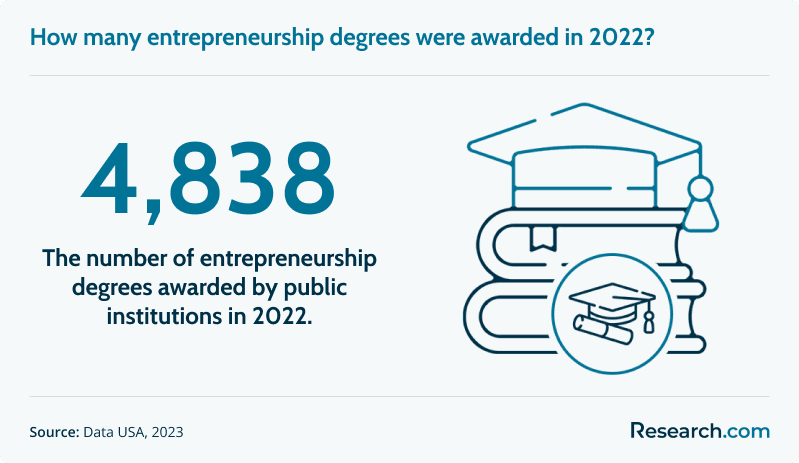
What is the average cost of an online entrepreneurship degree program?
Costs vary by institution, residency status, transfer credits, fees, and whether the school is public or private. According to Data USA, the median in-state public tuition is $7,070, while the median out-of-state public tuition is approximately $29,000. For private institutions, median in-state private tuition is $30,000, and median out-of-state private tuition reaches $35,620.
Students should compare total cost, not just tuition. Books, technology fees, graduation fees, proctoring costs, prior learning assessment fees, and repeated courses can change the final price. If you plan to continue into graduate study, the cost of online MBA programs can range from $20,000 to $50,000, depending on the institution and program features. Students who want a lower-cost starting point may also consider an online associates business degree before transferring into a bachelor’s program.
| Cost item | What to check before enrolling |
| Tuition | Confirm whether rates are charged per credit, per course, per term, or by residency status. |
| Transfer credits | Ask how many credits will apply to the degree before committing. |
| Fees | Review online learning fees, technology fees, graduation fees, and course material costs. |
| Time to completion | A cheaper per-credit price may not be cheaper overall if more credits are required. |
| Graduate plans | Consider whether you may later need an MBA, certificate, or specialized master’s degree. |
What are the financial aid options for students enrolling in an online entrepreneurship degree program?
Online entrepreneurship students may qualify for many of the same aid options as campus students if they attend an eligible accredited institution and meet enrollment requirements. Always confirm aid eligibility with the school’s financial aid office before enrolling.
- Federal Student Aid: Completing the Free Application for Federal Student Aid (FAFSA) can help determine eligibility for federal loans, grants, and work-study programs.
- Scholarships and grants: Schools, states, nonprofits, employers, and professional associations may offer merit-based, need-based, or field-specific awards.
- Employer tuition assistance: Some employers reimburse tuition or pay for job-related coursework, especially when the degree supports leadership, operations, or business development roles.
- Military and veteran benefits: Eligible students should ask how benefits apply to online tuition, fees, books, and enrollment status.
- Payment plans: Monthly payment options can reduce the need for large upfront payments, but students should check fees and deadlines.
If you expect to pursue graduate study later, comparing cheap masters programs online can help you plan beyond the bachelor’s degree. Students comparing entrepreneurship with other career routes may also explore specialized options such as a forensic science degree online or research service-focused healthcare careers by asking what do you need to be a military nurse. These alternatives are very different from entrepreneurship, but comparing them can clarify whether business ownership or another professional path is the better fit.
What are the prerequisites for enrolling in an online entrepreneurship degree program?
Admissions requirements vary by school, but most online bachelor’s programs require evidence that applicants are prepared for college-level work. Transfer students may need to submit transcripts from every institution previously attended.
- High school diploma or equivalent: Most bachelor’s programs require a high school diploma, GED, or approved equivalent.
- Transcripts: Schools typically ask for official high school and college transcripts.
- Standardized test scores: Some institutions may request SAT or ACT scores, although many online programs have made them optional or do not require them.
- Application materials: Applicants may need to submit a personal statement, resume, or short explanation of academic and career goals.
- Letters of recommendation: Some programs request recommendations from teachers, supervisors, or professional contacts.
- Technology access: Online students need reliable internet, a suitable computer, and the ability to use learning platforms, video tools, and productivity software.
What courses are typically in an online entrepreneurship degree program?
Entrepreneurship programs usually combine general education, core business requirements, and major courses focused on venture creation and innovation. Students should look for a curriculum that builds financial literacy, market analysis, communication, leadership, and evidence-based decision-making.
Common core courses
- Principles of Entrepreneurship: Introduces opportunity recognition, business models, startup planning, and the realities of launching or managing ventures.
- Business Law and Ethics: Covers contracts, liability, intellectual property, compliance, and ethical decision-making.
- Financial Management: Teaches budgeting, forecasting, capital planning, financial statements, and investment decisions.
- Marketing: Explores customer research, segmentation, positioning, branding, pricing, and promotion.
- Operations Management: Focuses on processes, supply chains, quality, logistics, and efficiency.
- Strategic Management: Helps students analyze competition, growth options, risks, and long-term positioning.
Common electives
- Digital Marketing Strategies: Examines search, social media, analytics, content, paid campaigns, and customer acquisition.
- Innovation and Product Development: Focuses on designing, testing, improving, and launching new products or services.
- Global Business Practices: Introduces international markets, trade considerations, and cross-cultural management.
- Entrepreneurial Finance: Covers funding sources, valuation basics, cash flow, investor expectations, and financial risk.
- Project Management: Builds skills in planning, scheduling, resource allocation, and execution.
Students who want advanced management training after graduation can compare flexible graduate options, including self-paced online MBA programs.
What types of specializations are available in online entrepreneurship degree programs?
Specializations allow students to tailor the degree toward a specific market, business model, or career goal. According to the US Bureau of Labor Statistics (BLS), 28% of entrepreneurship students in 2022 focused on Business Management and Administration.
| Specialization | Best for students interested in | Skills emphasized |
| Small Business Management | Owning, buying, or managing a small company | Operations, local marketing, staffing, cash flow, customer service |
| Social Entrepreneurship | Mission-driven ventures and social impact organizations | Impact measurement, nonprofit models, sustainability, stakeholder engagement |
| Technology Innovation | Tech-enabled products, platforms, or digital services | Product development, innovation strategy, digital transformation |
| Business Management and Administration | Management roles in established organizations | Leadership, planning, organizational behavior, process improvement |
| Entrepreneurial Finance | Funding, budgeting, valuation, and growth planning | Financial modeling, investor communication, risk analysis |
Is an advanced degree a worthwhile investment for entrepreneurial success?
An advanced degree can be valuable when it clearly adds skills you do not already have, such as strategic leadership, advanced finance, analytics, executive decision-making, or industry-specific management knowledge. It may be less useful if it repeats undergraduate content or increases debt without a clear professional purpose.
Before committing, compare tuition, time away from business or work, expected career benefits, network access, and the quality of applied projects. Students considering executive-level education should benchmark costs using resources on executive MBA cost so they understand the financial commitment before enrolling.
What is the return on investment of an online entrepreneurship degree?
The return on investment of an online entrepreneurship degree depends on total cost, debt, transfer credits, career goals, salary growth, business outcomes, and whether the program helps you build usable skills. A low-cost program with strong transfer credit policies may offer better ROI than a more expensive program with limited support, even if both lead to the same credential.
To estimate ROI, calculate total tuition and fees, subtract grants and scholarships, estimate loan payments, and compare the cost with realistic career outcomes. Include non-salary benefits such as mentorship, business plan development, alumni connections, and applied portfolio work. Students who want a lower-cost credential before a bachelor’s degree can compare how much is an associate degree and whether associate-level credits will transfer.
What emerging trends are reshaping online entrepreneurship education?
Online entrepreneurship education is changing as business schools integrate more digital tools, applied projects, and market-relevant topics. Students may encounter artificial intelligence tools for research and productivity, data analytics for decision-making, virtual collaboration platforms, and coursework on digital transformation, sustainability, agile business models, and innovation strategy.
These trends matter because founders and business professionals now need to evaluate markets quickly, use data responsibly, communicate across distributed teams, and adapt to changing customer expectations. Students who want broader graduate-level business training can compare related options such as cheap online MBA programs.
What are the common challenges of pursuing an online entrepreneurship degree?
Online learning can be effective, but it requires discipline. Entrepreneurship students must manage deadlines, contribute to group projects, practice pitching ideas, seek feedback, and build networks without relying on casual campus interaction.
| Common challenge | Why it matters | Better approach |
| Weak time management | Online courses can fall behind quickly when deadlines are flexible. | Block weekly study hours and treat them like work meetings. |
| Limited networking | Entrepreneurship often depends on relationships, referrals, mentors, and partners. | Attend virtual events, contact faculty, join alumni groups, and participate in pitch opportunities. |
| Choosing only by tuition | The cheapest program is not always the best value. | Compare accreditation, graduation requirements, support services, and transfer credits. |
| Passive learning | Reading about entrepreneurship is not the same as testing a business idea. | Use assignments to research real customers, competitors, pricing, and feasibility. |
| Technology problems | Unreliable access can disrupt group work, exams, and presentations. | Confirm platform requirements and technical support before classes begin. |
Students who want additional graduate-level exposure after an online entrepreneurship degree may compare the top remote MBA programs, especially if they want more advanced training in leadership, finance, analytics, or operations.
Can an accelerated MBA complement an online entrepreneurship degree?
An accelerated MBA can complement an entrepreneurship degree when you already have foundational business knowledge and want a faster route to advanced management training. This path may be useful for founders preparing to scale, professionals moving into leadership, or students who want a stronger credential for corporate roles.
The trade-off is intensity. Accelerated programs often move quickly and may leave less time for reflection, networking, or venture development. If speed is your priority, compare options such as the shortest MBA program, but evaluate accreditation, workload, faculty access, and career services before choosing.
How do you choose the best online entrepreneurship degree program?
The best online entrepreneurship degree is the one that fits your goals, budget, learning style, and career plan. Do not rely on rankings alone. Use them as a starting point, then verify details directly with each school.
- Accreditation: Confirm institutional accreditation and, when relevant, business school accreditation. Students planning graduate business study may also compare affordable AACSB-accredited online MBA programs to understand business accreditation standards.
- Curriculum fit: Review whether the program emphasizes startup development, small business management, innovation, finance, technology, or corporate entrepreneurship.
- Total cost: Compare tuition, fees, books, transfer credit rules, and expected time to completion.
- Online format: Ask whether classes are asynchronous, synchronous, accelerated, self-paced, or cohort-based.
- Applied learning: Look for business plan projects, capstones, simulations, consulting assignments, pitch events, or incubator access.
- Student support: Check advising, tutoring, library access, technology help, career coaching, and alumni networks.
- Transfer policies: Request a written credit evaluation before enrolling if you have prior college credits.
Questions to ask before enrolling
- Is the institution regionally or nationally accredited by a recognized accreditor?
- How many of my transfer credits will apply to the entrepreneurship major?
- What is the total estimated cost through graduation?
- Are courses mostly live, asynchronous, or a mix of both?
- Does the program include a capstone, business plan, practicum, or portfolio project?
- Can online students access the same career services and mentorship opportunities as campus students?
- What kinds of roles do recent graduates pursue?
- Are there startup competitions, incubators, alumni mentors, or local business partnerships?
How can I verify the accreditation and overall quality of an online entrepreneurship degree program?
Accreditation is one of the most important checks before enrolling. It affects transfer credit, employer recognition, graduate school eligibility, and access to certain forms of financial aid. Students should verify accreditation through recognized sources rather than relying only on marketing materials.
Start by checking the school’s accreditor, then review program details such as faculty credentials, course requirements, graduation outcomes, student services, and complaint history. Ask whether online students receive the same academic advising, library access, career support, and tutoring as on-campus students. If you want a faster business pathway, compare quality indicators with options such as an accelerated business degree online.
How do career support services and mentorship programs enhance entrepreneurial success?
Career support can make an online entrepreneurship degree more practical. Mentors, faculty advisors, alumni networks, incubators, startup competitions, and employer partnerships can help students test ideas, refine pitches, find internships, and connect with business communities.
When comparing programs, ask whether online students can access mentorship, resume coaching, mock interviews, venture advising, business plan reviews, and networking events. Students who want to strengthen leadership and strategy after completing an entrepreneurship degree may later consider one year online MBA programs.
What career paths are available for graduates of online entrepreneurship degree programs?
Graduates with entrepreneurship training may pursue self-employment, startup roles, small business management, or traditional business careers. According to Data USA, common occupations include Accountants and Auditors, Financial Managers, and Other Managers.
| Career path | How entrepreneurship training helps | Important note |
| Startup founder | Supports opportunity analysis, business planning, funding research, and market testing. | Income is uncertain and depends on venture performance. |
| Small business manager | Builds skills in operations, staffing, finance, marketing, and customer strategy. | Experience in the target industry is often valuable. |
| Business consultant | Helps with problem-solving, market analysis, process improvement, and strategy. | Credibility may depend on experience, results, and specialization. |
| Project manager | Develops planning, coordination, budgeting, and execution skills. | Additional training may help; compare the project management degree cost if this path interests you. |
| Financial manager | Uses budgeting, forecasting, investment analysis, and business performance skills. | Some roles may require significant experience or additional credentials. |
| Corporate innovation specialist | Applies entrepreneurial thinking inside established organizations. | Strong communication and change management skills are important. |
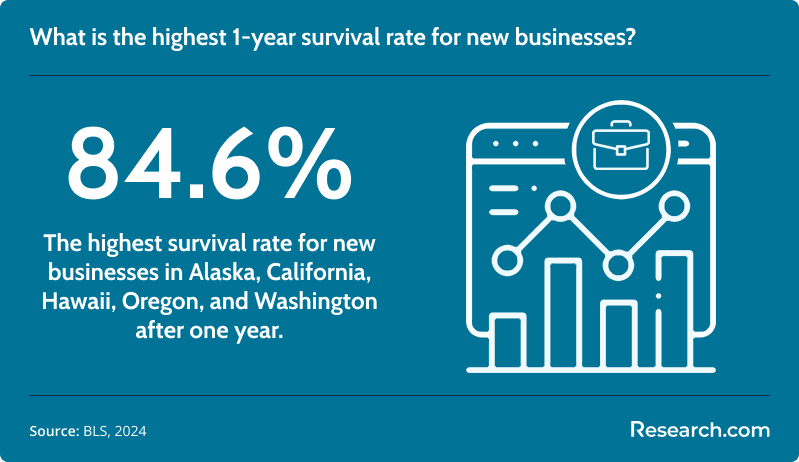
For aspiring entrepreneurs, the Pacific division—including Alaska, California, Hawaii, Oregon, and Washington—has the highest one-year survival rate for new businesses at 84.6%.
Does the online entrepreneurship degree adequately integrate financial management skills?
A strong entrepreneurship degree should include financial management, not treat it as an optional add-on. Founders and business managers need to understand cash flow, pricing, margins, budgeting, debt, capital allocation, taxes, financial statements, and investment decisions. Weak financial training can lead to poor pricing, unrealistic growth plans, funding mistakes, and preventable business failure.
Students who want deeper preparation in financial analysis may compare an online bachelor degree finance with an entrepreneurship program. A finance degree may be better for students who want investment, banking, corporate finance, or analyst roles, while entrepreneurship may be better for those focused on venture creation and business development.
What is the job market for graduates with an online entrepreneurship degree?
The job market for entrepreneurship graduates is broad because the degree connects to many business functions rather than one licensed occupation. According to Data USA, the workforce of entrepreneurship graduates grew by 2.36% from 11.7M in 2021 to 11.9M in 2022.
Businesses continue to adapt to changing economic landscapes, digital tools, new customer expectations, and competitive pressure. That can create demand for people who can evaluate opportunities, manage projects, improve processes, and lead innovation. Still, outcomes vary. Students should evaluate local job markets, industry experience, internships, networking, and additional credentials rather than assuming the degree alone will secure a specific role.
What do graduates say about earning an entrepreneurship degree online?
-
: "
The online format gave me enough flexibility to keep working while developing business ideas for class projects. The most useful assignments were the ones that forced me to research customers and test assumptions before building a plan. Mel
"
-
: "
I needed a program that worked around family and work obligations. The coursework in market research, strategy, and business planning helped me connect school assignments directly to my career goals. Emma
"
-
: "
I expected online learning to feel isolated, but the discussions, instructor feedback, and peer projects made the experience more engaging than I anticipated. The degree helped me pivot into a more business-focused role. Liam
"
What advanced degree opportunities can complement an online entrepreneurship degree?
After earning an online entrepreneurship degree, students may pursue graduate study in business administration, finance, analytics, economics, management, marketing, project management, or organizational leadership. The right option depends on whether you want to build a company, move into executive leadership, consult, teach, conduct research, or specialize in a business function.
Students interested in doctoral-level business study can compare cost-conscious options such as the cheapest online PhD in business administration. Before enrolling in any advanced program, compare curriculum depth, research expectations, faculty expertise, dissertation or capstone requirements, and whether the credential aligns with your career goals.
Should an affordable online executive MBA be considered after an online entrepreneurship degree?
An affordable online executive MBA may make sense after an entrepreneurship degree if you already have professional experience and want more advanced preparation for leadership, strategic decision-making, scaling operations, or executive roles. It can also be useful for founders who need stronger skills in finance, governance, organizational leadership, and competitive strategy.
However, an executive MBA is usually best for experienced professionals, not students who simply want another credential immediately after a bachelor’s degree. Compare admissions expectations, cohort experience, networking access, total cost, and schedule demands. To review options, see affordable online executive MBA programs.
Should I pursue complementary certifications to strengthen my online entrepreneurship degree?
Targeted certifications can add practical skills to an entrepreneurship degree, especially in areas employers and founders use every day: digital marketing, project management, accounting software, data analytics, sales, product management, ecommerce, or customer relationship management. The best certifications are specific, recognized by employers or platforms, and connected to your intended role.
Students who want stronger quantitative and market analysis skills may also consider graduate study such as an affordable online masters economics. This path may be useful for students interested in policy, forecasting, market research, consulting, or data-informed strategy.
What strategies ensure success in an online entrepreneurship degree program?
Success in an online entrepreneurship program depends on active participation. The students who benefit most usually treat assignments as opportunities to build real business tools: customer interview scripts, market maps, pitch decks, financial projections, competitor analyses, and operating plans.
- Create a weekly study system: Set fixed time blocks for readings, lectures, discussions, assignments, and group meetings.
- Use one business idea across courses: When allowed, apply multiple assignments to the same venture concept so your work becomes deeper over time.
- Ask for feedback early: Share drafts, financial assumptions, and pitch ideas with instructors, mentors, and peers before deadlines.
- Build a portfolio: Save business plans, pitch decks, market research, dashboards, and capstone projects as evidence of your skills.
- Network intentionally: Join virtual events, alumni groups, entrepreneurship clubs, and professional communities.
- Strengthen execution skills: If project leadership is a priority, an accelerated project management degree may provide additional preparation.
Common mistakes to avoid when choosing an online entrepreneurship degree
- Choosing a school without verifying accreditation: Always confirm accreditation before applying or accepting financial aid.
- Comparing only tuition: Total cost includes fees, books, transfer credit loss, time to completion, and potential loan interest.
- Assuming online means easy: Flexible programs still require weekly effort, deadlines, writing, presentations, and group work.
- Ignoring career support: Entrepreneurship depends heavily on feedback, networks, mentors, and applied experience.
- Skipping financial management: A founder who cannot read financial statements or manage cash flow is at a serious disadvantage.
- Expecting guaranteed startup success: A degree can build skills, but business outcomes depend on market demand, execution, capital, timing, and persistence.
- Not checking transfer policies: Students with prior credits should request a written evaluation before enrolling.
Key Insights
- An online entrepreneurship degree is best for students who want flexible business training in venture creation, finance, marketing, innovation, and management.
- Affordability should be judged by total cost, not tuition alone. Transfer credits, fees, course load, and time to completion can significantly affect value.
- According to Data USA, the median in-state public tuition is $7,070, while median out-of-state private tuition reaches $35,620.
- Business majors have an average salary of $105,798 according to Data USA, but entrepreneurship outcomes vary widely because many graduates enter different roles or self-employment.
- Students should verify accreditation, review curriculum quality, and confirm online access to advising, tutoring, career services, mentorship, and networking.
- Specialization matters. Small business management, social entrepreneurship, technology innovation, business management and administration, and entrepreneurial finance lead to different skill sets.
- In 2022, 28% of entrepreneurship students focused on Business Management and Administration, according to the US Bureau of Labor Statistics (BLS).
- The workforce of entrepreneurship graduates grew by 2.36% from 11.7M in 2021 to 11.9M in 2022, according to Data USA.
- The best programs help students produce usable work: business plans, pitch decks, financial forecasts, market research, and capstone projects.
- An advanced degree, MBA, executive MBA, or certification can add value, but only when it fills a clear skills gap and supports a realistic career or venture goal.
References:
- BLS. (2024, August 29). Field of degree: Business. BLS.
- BLS. (2024, March 4). 1-year survival rates for new business establishments by year and location: The Economics Daily. BLS.
- Data USA. (2023). Entrepreneurial Studies. datausa.io.
- ResearchFDI. (2024, December 13). Why the US Leads the World in Entrepreneurship and Innovation - ResearchFDI. ResearchFDI. researchfdi.com.
- Statista. (2025, January 14). Countries with the largest gross domestic product (GDP) 2024. statista.com.
Other Things You Should Know About the Most Affordable Online Entrepreneurship Degree Programs
Yes. Most credible affordable online entrepreneurship degrees are offered by institutions accredited by a U.S. regional accreditor such as the Higher Learning Commission, Southern Association of Colleges and Schools Commission on Colleges, or Middle States Commission on Higher Education. Program-level accreditation is less common in entrepreneurship.
The most affordable online entrepreneurship degree programs in 2027 typically include public institutions offering in-state tuition rates and universities with generous financial aid packages. Schools like Western Governors University and University of Florida Online often feature on such lists, combining quality education with low tuition costs.
Most affordable online entrepreneurship degree programs in 2027 typically require a high school diploma or GED, a minimum GPA of 2.5, and submission of standardized test scores like SAT or ACT. Some programs may also request letters of recommendation and a personal statement.
To finance an online entrepreneurship degree affordably in 2027, explore scholarships, grants, and work-study options. Federal aid through FAFSA, employer tuition reimbursement, and low-interest private loans are effective strategies. Consider enrolling in schools with affordable tuition rates or flexible payment plans to reduce the financial burden.


