2027 What Can You Do With a Master’s in Finance Degree?

Co-Founder and Chief Data Scientist
A master’s in finance is often considered by people who want to move into investment analysis, corporate finance, risk management, asset management, financial planning, or senior finance leadership. The harder question is not whether finance is a respected field, but whether this degree is the right credential for your target role, budget, timeline, and career stage.
That decision matters because graduate finance programs can be intensive, competitive, and expensive. At the same time, the labor market continues to reward advanced financial, quantitative, and strategic decision-making skills. According to the U.S. Bureau of Labor Statistics, employment for financial managers is projected to grow by 16% from 2022 to 2032, which is much faster than the average for all occupations.
This guide explains what you can do with a master’s in finance in 2027, which jobs offer the strongest salary potential, how the degree compares with an MBA or accounting master’s, what certifications may help, and how to judge whether a program is worth the cost.
Quick Answer: What Can You Do With a Master’s in Finance?
With a master’s in finance, you can pursue roles such as financial analyst, senior financial analyst, portfolio manager, investment banker, risk manager, corporate finance manager, financial consultant, finance director, and, with significant experience, chief financial officer. The degree is most useful for careers that require financial modeling, valuation, investment analysis, risk assessment, forecasting, and strategic financial planning.
The strongest fit is usually someone who wants a specialized finance career rather than a broad general-management degree. If your goal is marketing, operations, entrepreneurship, or general executive leadership, an MBA may be a better match. If your goal is auditing, tax, or CPA preparation, a master’s in accounting may be more practical.
Key Things You Should Know About a Master’s in Finance Degree
- Employment for financial managers is projected to grow by 16% from 2022 to 2032, according to the U.S. Bureau of Labor Statistics, signaling strong demand for professionals who can guide financial strategy.
- Median annual pay reaches $161,700 for financial managers, while financial and investment analysts report a median annual salary of $101,910, showing why many students evaluate this degree through a return-on-investment lens.
- Many finance master’s students use the degree to move into a new industry or job function, making it a practical option for career changers who need technical finance credibility.
- What careers can you pursue with a master's in finance?
- How does a master’s in finance compare to other graduate degrees?
- What industries are hiring finance graduates in 2027?
- What certifications and licenses pair well with a finance master’s?
- What is the salary potential with a master's in finance?
- What are the best graduate programs in finance?
- Can you switch careers with a master’s in finance?
- How should you evaluate and select a master’s in finance program?
- What is the return on investment of a master’s in finance?
- Can a master’s in finance help you excel in project management?
- Can an online MBA complement your master's in finance?
- What advanced roles require a master’s in finance?
- What skills will you develop in a finance master’s program?
- What are the alternatives to a master's in finance?
What careers can you pursue with a master's in finance?
A master’s in finance can lead to technical, analytical, advisory, and leadership roles across banking, corporate finance, investment management, consulting, fintech, healthcare, energy, and government. The best role for you depends on whether you prefer markets, company strategy, client advising, data-heavy analysis, or risk oversight.
Before choosing the degree, compare it against your actual career target. A finance master’s is not interchangeable with every graduate credential. For example, someone researching the most affordable online library science master’s programs is preparing for a very different labor market, credential structure, and professional skill set. Finance students should do the same kind of career-path analysis before enrolling.
Common career tracks include:
- Investment banking: Supporting capital raising, mergers and acquisitions, valuation, deal analysis, and client presentations.
- Corporate finance: Managing budgets, forecasts, capital allocation, financial planning, and performance analysis inside an organization.
- Asset management: Building and monitoring portfolios for institutions, funds, or private clients.
- Financial planning and wealth management: Advising individuals or families on investments, retirement, taxes, insurance, and long-term goals.
- Risk management: Identifying market, credit, operational, liquidity, or regulatory risks and developing controls to reduce financial exposure.
The U.S. Bureau of Labor Statistics projects financial analyst employment to grow by 8% from 2022 to 2032, faster than the average for all occupations. That growth reflects continued demand for professionals who can interpret data, evaluate investments, and help organizations make better financial decisions.
| Career path | What the work involves | Best fit for | Typical next step |
| Financial analyst or senior financial analyst | Budgeting, forecasting, financial statements, performance tracking, valuation, and management reporting | Professionals who like data, business strategy, and structured analysis | Finance manager, FP&A manager, corporate finance manager |
| Portfolio manager | Investment selection, asset allocation, portfolio monitoring, risk balancing, and client or committee reporting | Students interested in markets, investment research, and long-term portfolio performance | Senior portfolio manager, director of investments, chief investment officer |
| Corporate finance manager | Capital budgeting, strategic planning, cash flow management, and financial decision support | People who want to influence business operations from inside a company | Finance director, vice president of finance, CFO track |
| Risk manager | Risk modeling, compliance coordination, scenario analysis, controls, and risk reporting | Analytical professionals who enjoy regulation, uncertainty, and prevention-focused work | Enterprise risk manager, chief risk officer, compliance leadership |
| Investment banker | Financial modeling, deal execution, capital markets work, mergers and acquisitions, and client advisory | High-drive candidates comfortable with long hours, deadlines, and competitive hiring | Associate, vice president, managing director |
Financial Analyst or Senior Financial Analyst
Financial analysts turn business and market information into recommendations. They may evaluate company performance, prepare forecasts, build models, study investment opportunities, or help leadership decide where to allocate capital. A master’s in finance can help candidates move beyond entry-level reporting work into senior analyst roles that involve decision support and strategic recommendations.
Portfolio Manager
Portfolio managers make investment decisions for individuals, institutions, funds, or other clients. Their work requires market research, risk management, asset allocation, and performance measurement. A finance master’s can strengthen the quantitative and investment-analysis skills needed for this path, but candidates should expect strong competition and an emphasis on results.
Corporate Finance Manager
Corporate finance managers help companies plan, fund, and evaluate business decisions. They may oversee budgets, forecasts, cash flow, capital projects, internal financial reporting, and performance targets. This path is often a strong choice for finance graduates who want stable advancement inside corporations rather than client-facing investment roles.
Risk Manager
Risk managers evaluate events or decisions that could damage an organization financially. They may focus on credit risk, market risk, operational risk, regulatory risk, or enterprise-wide risk management. The role is especially relevant in banking, insurance, fintech, consulting, and heavily regulated industries.
How does a master’s in finance compare to other graduate degrees?
A master’s in finance is usually more specialized than an MBA and more investment-focused than a master’s in accounting. It is built around topics such as valuation, portfolio management, capital markets, risk analysis, derivatives, corporate finance, and financial modeling. The right choice depends on whether you need technical finance depth, broader management training, accounting eligibility, or economics and policy expertise.
| Graduate option | Main focus | Often best for | Potential limitation |
| Master’s in Finance | Finance theory, investment analysis, valuation, risk, markets, modeling, and corporate finance | Investment banking, asset management, corporate finance, risk, fintech, and analytical finance roles | Less broad management coverage than an MBA |
| MBA | General business leadership, strategy, operations, marketing, finance, and management | Career switchers targeting management, consulting, entrepreneurship, or executive roles | May not provide the same technical finance depth unless finance concentration is strong |
| Master’s in Accounting | Auditing, tax, financial reporting, accounting standards, and CPA-related preparation | Accounting, audit, tax, controllership, and some CFO-track roles | Less suited for portfolio management or capital markets careers |
| Master’s in Economics | Economic theory, econometrics, policy, markets, and quantitative research | Economic research, policy analysis, consulting, banking research, and data-heavy roles | Can be less directly tied to corporate finance practice |
Students comparing business graduate options often look at topics such as the difference between a master’s in accounting and an MBA. The same decision logic applies here: choose the credential that matches the job descriptions you want, not just the title that sounds most prestigious.
An MBA may provide broader networking and leadership preparation, while a master’s in finance can be more targeted for investment analysis, risk, asset management, or corporate finance. If you already know you want a technical finance career, the specialized degree may be the cleaner fit.
What industries are hiring finance graduates in 2027?
Finance graduates are hired well beyond banks and Wall Street firms. Any organization that raises capital, manages risk, forecasts revenue, invests reserves, evaluates acquisitions, controls costs, or reports financial performance needs finance talent.
Students sometimes compare degrees across entirely different fields, such as APA-accredited PsyD programs for psychology careers. That comparison illustrates an important point: graduate programs should be evaluated by the industries they connect to, the credentials employers expect, and the day-to-day work graduates actually perform.
- Technology: Finance teams support growth planning, acquisitions, pricing strategy, international expansion, capital allocation, and investor reporting.
- Healthcare: Hospitals, health systems, insurers, biotech companies, and medical technology firms rely on finance professionals for cost analysis, budgeting, compliance-related planning, and investment decisions.
- Energy: Traditional and renewable energy companies need financial analysts for capital-intensive projects, risk analysis, commodity exposure, and long-term planning.
- Government and public sector: Agencies use finance expertise for budgeting, auditing, public finance, grants, forecasting, and economic analysis.
- Fintech and startups: High-growth companies need finance professionals for forecasting, valuation, fundraising, investor materials, and cash management.
| Industry | Why finance graduates are needed | Examples of suitable roles |
| Banking and financial services | Credit, investments, risk, lending, capital markets, compliance, and client advisory all require financial expertise. | Financial analyst, risk analyst, investment associate, portfolio analyst |
| Technology and fintech | Companies need help managing rapid growth, valuations, acquisitions, pricing, and investor expectations. | FP&A analyst, strategic finance associate, fintech risk analyst |
| Healthcare | Organizations must manage costs, reimbursement complexity, capital projects, and regulatory pressure. | Healthcare financial analyst, revenue analyst, finance manager |
| Energy | Large projects, commodity price shifts, and long investment timelines require careful financial planning. | Project finance analyst, risk analyst, corporate finance associate |
| Government and nonprofits | Public and mission-driven organizations need budgeting, grant management, financial reporting, and economic analysis. | Budget analyst, public finance analyst, grants finance manager |
What certifications and licenses pair well with a finance master’s?
A master’s in finance can help you qualify for analytical and managerial roles, but certifications and licenses can signal specialized expertise. The best credential depends on your target career: investment management, risk, accounting, financial planning, or securities sales.
| Credential | Best aligned with | Why it may help |
| CFA | Asset management, investment research, portfolio management, hedge funds, and investment analysis | It is widely recognized in investment-focused careers and emphasizes ethics, analysis, and portfolio management. |
| CPA | Accounting, audit, tax, controllership, financial reporting, and some corporate finance roles | It can be valuable for finance professionals whose roles overlap with reporting, accounting standards, or executive finance leadership. |
| FRM | Risk management, banking, insurance, and financial risk analysis | It demonstrates focused knowledge of risk measurement, risk controls, and financial uncertainty. |
| CFP | Personal financial planning, wealth management, and advisory careers | It is useful for professionals who advise individuals and families on financial goals. |
| Series 7 and Series 63 licenses | Brokerage, advisory, and securities-related client roles | These licenses are commonly required when a role involves selling securities or investment products. |
Some finance professionals also build industry-specific knowledge. For example, someone working in healthcare finance may benefit from understanding clinical operations and patient-care economics. While affordable online patient care technician certification programs are designed for healthcare support roles rather than finance roles, the comparison shows how specialized sector knowledge can strengthen decision-making in industries such as hospitals, biotech, or medical technology.
Most finance credentials require exams, experience, ethics requirements, or continuing education. The CFA exam pass rate has been around 40% in recent years, so candidates should treat credential planning as a serious time commitment rather than a simple resume add-on.
What is the salary potential with a master's in finance?
A master’s in finance can support access to well-paid roles, but salary outcomes depend on your role, employer, location, industry, experience, performance, and whether compensation includes bonuses or incentives. The degree can strengthen your qualifications, but it does not guarantee a specific salary.
According to the U.S. Bureau of Labor Statistics, median annual salaries for selected finance roles include:
- Financial and Investment Analysts: $101,910
- Financial Risk Specialists: $118,950
- Financial Managers: $161,700
Financial managers often earn more because they carry broader responsibility for an organization’s financial health, planning, controls, and strategic decisions. Financial analysts working in securities, commodity contracts, and other financial investments and related activities had a median annual wage of $124,050.
Salary comparisons are most useful when tied to a specific career plan. A student comparing finance with a different professional route, such as online colleges with nutrition majors, should compare not only salary but also licensure requirements, working conditions, education cost, advancement pathways, and job-market structure.
| Factor | How it affects earning potential |
| Industry | Investment, securities, consulting, and corporate leadership roles may pay differently from public sector or nonprofit finance roles. |
| Location | Major finance hubs and high-cost metro areas may offer higher compensation, but living costs can reduce the advantage. |
| Experience | A master’s degree can help you compete, but senior compensation usually requires proven work history and measurable results. |
| Role type | Client-facing, revenue-generating, and leadership positions may include bonuses or incentives not reflected in base salary alone. |
| Credentials | CFA, CPA, FRM, CFP, or securities licenses may improve fit for specific roles, depending on employer expectations. |
What are the best graduate programs in finance?
The best finance graduate program is not always the highest-ranked name. A strong program should match your target career, provide rigorous technical training, offer access to internships or employer networks, and make financial sense for your budget.
Well-known finance graduate programs include:
- University of Pennsylvania (Wharton): Recognized for quantitative finance, investments, and a deep business network.
- University of Chicago (Booth): Known for finance research strength and connections to major financial employers.
- Massachusetts Institute of Technology (MIT Sloan): Strong fit for students who want analytical, data-driven finance training.
- London Business School: A prominent international option for students seeking global finance exposure.
- Columbia University: Noted for finance, corporate finance, markets, and New York City employer access.
Use rankings as a starting point, not the final answer. A lower-cost program with strong placement in your region or target field may be a better investment than a prestigious option that requires heavy debt and offers limited access to the roles you want.
Questions to Ask Before Choosing a Finance Master’s Program
- Is the institution properly accredited?
- Does the curriculum include valuation, financial modeling, statistics, investments, risk, and corporate finance?
- Which employers recruit from the program?
- What internship, practicum, or experiential learning options are available?
- Do graduates enter the roles and industries you are targeting?
- How much debt would you need to take on?
- Can you complete the program while working, or would you lose income during enrollment?
- Does the program support CFA, FRM, CFP, CPA, or securities-licensing preparation if relevant?
Can you switch careers with a master’s in finance?
Yes. A master’s in finance can help career changers move into finance when they need structured training, employer credibility, and a portfolio of technical skills. The transition is usually easier for candidates who can connect their previous experience to finance work, such as data analysis, operations, engineering, sales, accounting, compliance, or project leadership.
Career changers should be realistic. The degree can open doors, but employers still look for internships, projects, modeling ability, communication skills, and evidence that you understand finance roles. Some students exploring a major career pivot compare very different fields, such as accessible online MSW programs. The better approach is to compare required credentials, role expectations, field placements or internships, cost, and long-term fit.
- Engineering to investment banking or fintech: Technical problem-solving can transfer well when paired with valuation, financial modeling, and market knowledge.
- Education to corporate finance: Budgeting, communication, planning, and stakeholder management can support a move into finance operations or FP&A.
- Operations to risk management: Process knowledge can be useful in operational risk, controls, compliance, and enterprise risk functions.
- Marketing to financial consulting: Client communication and business strategy experience may pair well with financial analysis and advisory work.
According to a recent Graduate Management Admission Council survey, over 40% of finance master’s students pursue the degree to change industries or job functions. That makes career switching a common reason for enrollment, not an unusual exception.
Professionals with military or public-service backgrounds often ask transferable-skills questions similar to what you can do with a military science degree. In finance, leadership, logistics, budgeting, risk awareness, and operational discipline can be useful assets when combined with technical finance training.
How Should You Evaluate and Select a Master’s in Finance Program?
Start with career fit, then evaluate quality, cost, format, and outcomes. A good finance program should help you reach a specific employment goal, not simply add another credential to your resume.
| Selection factor | Why it matters | What to check |
| Accreditation | Accreditation affects institutional credibility, transferability, employer recognition, and financial aid eligibility. | Confirm institutional accreditation and any relevant business-school accreditation. |
| Curriculum | Course content determines whether you gain the technical skills employers expect. | Look for modeling, valuation, investments, corporate finance, analytics, statistics, and risk coursework. |
| Career outcomes | Employment data is more useful than marketing language. | Review job titles, employers, placement support, internships, and alumni outcomes. |
| Cost | Total cost affects ROI and how much salary growth you need to justify the degree. | Compare tuition, fees, books, travel, lost income, and interest on loans. |
| Format | Online, hybrid, and campus programs serve different needs. | Decide whether you need flexibility, campus recruiting, cohort networking, or local employer access. |
| Time to completion | Program length changes opportunity cost and career timing. | Check full-time, part-time, accelerated, and working-professional options. |
If affordability is a major concern, compare program costs carefully and review options such as affordable online master’s in finance programs. Do not choose only by sticker price, however. A lower-cost program with weak career services may be less valuable than a moderately priced program with strong employer connections.
What is the return on investment of a master’s in finance?
The ROI of a master’s in finance depends on how much you pay, how much income you give up while studying, and how much the degree improves your career options. The strongest ROI usually occurs when the degree helps you qualify for a role you could not realistically access otherwise, or when it accelerates movement into management, investment, risk, or advisory positions.
To evaluate ROI, calculate both direct and indirect costs. Direct costs include tuition, fees, materials, technology, travel, and loan interest. Indirect costs include lost wages if you stop working, delayed promotions, and reduced work hours if you study part time.
| ROI question | Why it matters |
| What role am I targeting after graduation? | A vague goal makes ROI hard to measure. Tie the degree to specific job titles. |
| What salary range is realistic for my experience level? | Median salary data does not guarantee individual outcomes, especially for career changers. |
| How much debt will I need? | Loan payments can reduce the financial benefit of a higher salary. |
| Will I work while enrolled? | Keeping income during school can improve ROI, but may extend the timeline. |
| Does the school have employer access in my target market? | Recruiting strength can matter as much as coursework. |
Some students compare finance programs against broader business options, including the fastest online MBA programs. That comparison can be useful if you are deciding whether speed, specialization, networking, or leadership breadth matters most for your goals.
Can a master’s in finance help you excel in project management?
Yes, especially when projects involve budgets, capital allocation, risk, investments, financial controls, or cross-functional decision-making. Finance professionals often manage or support projects that require cost estimates, timeline trade-offs, stakeholder communication, risk evaluation, and performance measurement.
A finance master’s is not a substitute for dedicated project management training, but it can make you more effective on financial initiatives such as system implementations, capital projects, mergers, process redesigns, compliance programs, and strategic planning efforts. If your work is becoming more project-based, you may also compare finance training with a fast-track online project management degree.
Can an online MBA complement your master's in finance?
An online MBA can complement a master’s in finance when your next goal is broader leadership. The finance degree builds technical expertise; the MBA can add strategy, operations, organizational leadership, marketing, entrepreneurship, and general management.
This combination may make sense for professionals who began in analytical finance roles and now want to manage teams, lead business units, work in consulting, or move toward executive leadership. It may not be necessary if your goal is highly technical investment analysis, risk modeling, or portfolio research.
Before enrolling in a second graduate program, compare the cost against the career benefit. If you need broader management training, an online MBA program may be worth considering. If your gap is narrower, a certification, executive course, or employer-sponsored training may be more efficient.
What advanced roles require a master’s in finance?
Few senior finance roles require only one specific degree, but a master’s in finance can strengthen your profile for roles that involve strategic financial decisions, investment judgment, risk oversight, and leadership. Experience remains essential. Advanced roles are typically earned through a combination of education, measurable results, industry knowledge, and leadership ability.
Chief Financial Officer
A CFO oversees the financial direction of an organization, including forecasting, capital strategy, internal controls, reporting, and financial operations in an organization. A finance master’s can help build technical depth, but CFO roles usually also require years of progressive leadership experience.
Investment Banker
Investment bankers advise organizations on capital raising, mergers, acquisitions, restructuring, and major financial transactions. A master’s in finance can be valuable because the work depends heavily on valuation, financial modeling, negotiation, and market analysis.
Financial Consultant
Financial consultants help companies evaluate growth strategies, restructuring options, acquisitions, profitability issues, or investment decisions. This role rewards analytical skill, communication, business judgment, and the ability to turn financial findings into actionable recommendations.
| Advanced role | How a finance master’s helps | What else employers usually expect |
| CFO | Provides advanced knowledge of corporate finance, capital planning, risk, and performance analysis. | Leadership history, industry experience, accounting or reporting fluency, and executive communication skills. |
| Investment banker | Builds modeling, valuation, capital markets, and transaction-analysis skills. | Internships, deal exposure, stamina, client skills, and competitive recruiting performance. |
| Financial consultant | Strengthens analytical frameworks and financial decision-making ability. | Client-facing experience, problem-solving ability, presentation skills, and sector knowledge. |
What skills will you develop in a finance master’s program?
A master’s in finance is designed to build technical fluency and decision-making judgment. The most valuable programs combine quantitative training with communication, ethics, applied projects, and exposure to real financial data.
Students considering related specializations, such as an affordable online master’s in taxation, should compare the skill set carefully. Taxation, accounting, finance, and business analytics overlap, but they prepare graduates for different types of decisions and roles.
Financial Analysis and Modeling
You learn to read financial statements, evaluate business performance, build forecasts, estimate value, and model how different assumptions affect outcomes.
Risk Management
You study how organizations identify, measure, monitor, and reduce financial risk across markets, credit exposure, operations, liquidity, and regulation.
Corporate Finance
You examine capital budgeting, working capital, financing decisions, corporate strategy, valuation, and how companies allocate resources.
Investment Strategy
You build knowledge of securities, asset allocation, portfolio construction, diversification, market behavior, and performance evaluation.
Data Analysis and Quantitative Methods
You strengthen your ability to use statistics, financial datasets, modeling tools, and analytical software to support decisions.
Communication and Negotiation
You practice explaining complex financial findings to executives, clients, committees, and non-finance stakeholders in clear business language.
| Skill | Why employers value it |
| Financial modeling | Helps organizations test assumptions, value opportunities, and forecast results. |
| Analytical reasoning | Supports better decisions under uncertainty. |
| Market awareness | Connects company-level decisions to broader economic and investment conditions. |
| Risk thinking | Helps prevent losses and strengthen controls. |
| Business communication | Turns technical analysis into recommendations leaders can act on. |
What are the alternatives to a master's in finance?
A master’s in finance is not the only path into finance. Depending on your goals, an MBA, accounting master’s, economics degree, professional certification, or employer-based training may be more efficient.
MBA With a Finance Concentration
An MBA with a finance focus may be better if you want broader leadership training along with finance coursework. If you are asking what an MBA in finance is, the short answer is that it blends management education with finance-focused study, making it useful for future managers, consultants, executives, or entrepreneurs.
CFA Certification
The CFA credential is a well-known option for investment management, portfolio analysis, and research-oriented finance careers. It may be a strong alternative or complement for candidates focused on asset management or securities analysis.
Master’s in Accounting
A master’s in accounting is often more appropriate for students who want auditing, tax, financial reporting, controllership, or CPA-oriented careers. It can also support some finance leadership paths where accounting expertise is essential.
FRM Certification
The FRM credential focuses on risk management and can be useful for roles in banking, insurance, compliance, risk controls, and financial risk analysis.
Master’s in Economics
An economics master’s may be a better fit for students interested in policy, econometrics, market research, economic forecasting, or the broader forces that shape financial systems.
| Option | Choose it when... | Consider a different path when... |
| Master’s in Finance | You want specialized finance roles in investments, risk, corporate finance, or analytics. | You need broad management training more than technical finance depth. |
| MBA | You want leadership, consulting, strategy, entrepreneurship, or general management. | You want highly technical investment or quantitative finance training. |
| Master’s in Accounting | You want accounting, audit, tax, CPA preparation, or controllership. | You prefer markets, valuation, portfolio work, or capital strategy. |
| CFA | You want investment management or portfolio-analysis credibility. | You need a full graduate degree for career switching or employer requirements. |
| FRM | You want a focused risk-management credential. | You need broader corporate finance or investment training. |
Common Mistakes to Avoid When Pursuing a Master’s in Finance
- Choosing a school based only on rankings: Rankings can be helpful, but employer access, curriculum fit, cost, and placement outcomes matter more for your specific goals.
- Ignoring accreditation: Always verify institutional accreditation before enrolling, especially in online or accelerated programs.
- Assuming the degree guarantees a high salary: Salaries vary by role, location, employer, experience, and performance. A degree improves qualifications but does not replace job-market strategy.
- Overlooking internships and projects: Applied experience can be critical, especially for career changers and students without prior finance work.
- Taking on debt without an ROI plan: Estimate total cost, expected salary range, and repayment timeline before committing.
- Choosing a program without checking employer outcomes: Ask where graduates work, not just what the school says the program prepares you to do.
- Adding certifications without a goal: CFA, CPA, FRM, CFP, and securities licenses serve different career paths. Pick credentials based on target roles.
Here’s What Graduates Say About Their Master’s in Finance Degree
-
: "
My finance master’s helped me move from a broad accounting position into investment banking. The biggest change was technical confidence: I became much stronger in valuation, modeling, and presenting recommendations to clients. — Aaron
"
-
: "
The degree changed how I understood global markets and gave me access to a network of ambitious classmates. It was not only a career move; it helped me see finance as an international discipline. — Elena
"
-
: "
I came from engineering, so I already had quantitative training. The master’s program helped me translate that background into finance and move into a fintech strategy role after graduation. — Jason
"
Key Insights
- A master’s in finance is best for students who want specialized roles in investment analysis, corporate finance, asset management, risk, fintech, or financial leadership.
- The degree differs from an MBA because it emphasizes technical finance depth rather than broad business management.
- Salary potential can be strong, with BLS median annual pay of $101,910 for financial and investment analysts, $118,950 for financial risk specialists, and $161,700 for financial managers.
- Job growth data is favorable: financial managers are projected to grow 16% from 2022 to 2032, and financial analysts are projected to grow 8% from 2022 to 2032.
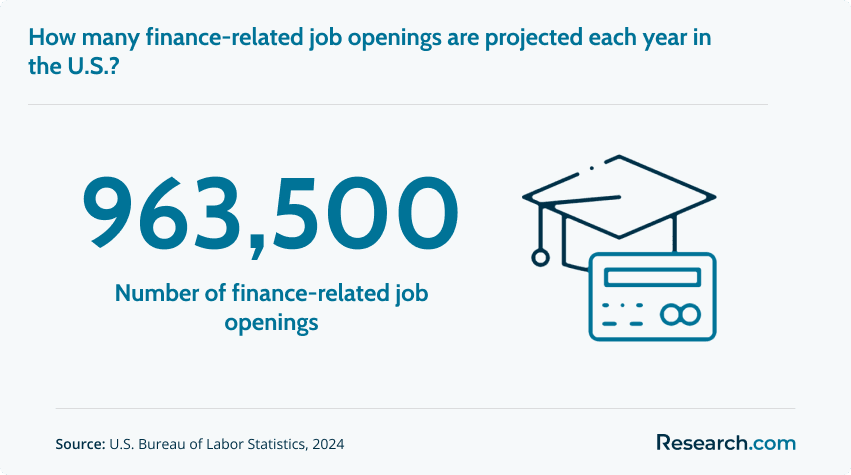
- The U.S. sees approximately 963,500 finance-related job openings projected each year, reflecting sustained demand in the sector.
- Job postings in tech and healthcare for financial analysts increased by over 20% between 2023 and 2024.
- Workplace flexibility in finance jobs shows 59% on-site, 25% hybrid, and 16% remote roles.
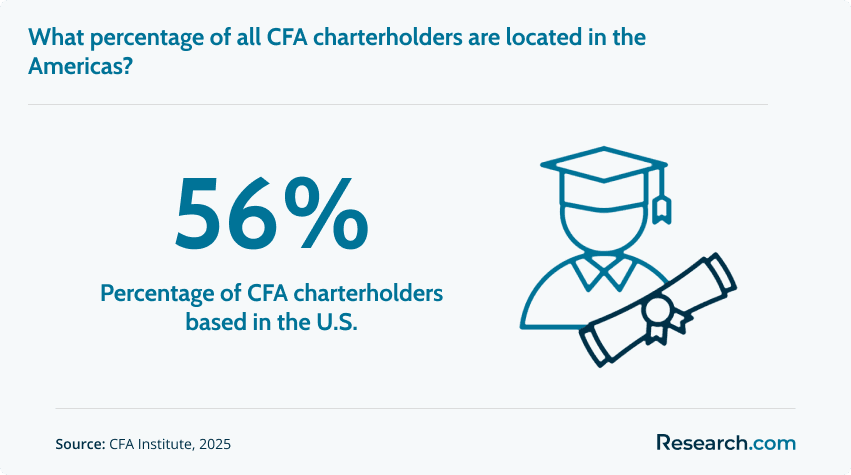
- 56% of all CFA charterholders are located in the Americas, with the majority based in the U.S.
- Certifications such as CFA, CPA, FRM, CFP, Series 7, and Series 63 can strengthen your profile, but only when they match your intended career path.
- The smartest program choice is the one with the right accreditation, curriculum, cost, employer access, and graduate outcomes for your target role.
References:
- BuiltIn. (2025). Finance director salary. BuiltIn.
- CFA Institute. (2025). CFA program. CFA Institute.
- Robert Half. (2025). Data reveals which finance and accounting roles are in highest demand. Robert Half.
- U.S. Bureau of Labor Statistics. (2024). Business and financial occupations. Occupational Outlook Handbook. U.S. Bureau of Labor Statistics.
- U.S. Bureau of Labor Statistics. (2024). Financial analysts. Occupational Outlook Handbook. U.S. Bureau of Labor Statistics.
- U.S. Bureau of Labor Statistics. (2024). Financial managers. Occupational Outlook Handbook. U.S. Bureau of Labor Statistics.
- U.S. Bureau of Labor Statistics. (2024). Occupational employment and wages, May 2023: Financial and investment analysts (13-2054). U.S. Bureau of Labor Statistics.
Other Things You Should Know About Master's in Finance Degree
Many finance master’s programs still ask for GMAT or GRE scores, but some waive them for applicants with strong GPAs, professional certifications, or relevant work experience. Schools set their own rules, and waiver policies are usually listed in the admissions requirements for each program.
In 2027, a Master’s in Finance degree can lead to roles in investment banking, financial analysis, portfolio management, risk management, and fintech. These positions are increasingly vital due to evolving global financial markets and technological advancements in the industry.
A Master’s in Finance program in 2027 typically requires completing 30 to 36 credit hours. These programs often include core subjects like financial analysis, investment strategies, and risk management to ensure comprehensive understanding and practical skills in finance.