2027 Most Affordable Online Patient Care Technician Certification Programs

Co-Founder and Chief Data Scientist
Choosing an online patient care technician certification program is usually a cost, time, and career-readiness decision. You want training that is affordable, flexible enough to fit around work or family responsibilities, and strong enough to prepare you for direct patient care in hospitals, clinics, long-term care facilities, rehabilitation centers, or home health settings.
Healthcare remains one of the largest employment sectors in the U.S., with about 1.9 million job openings expected each year across healthcare occupations (Bureau of Labor Statistics, 2025a). Patient care technician, or PCT, training can be a practical entry point because many programs are short, skills-based, and do not require a four-year degree. This guide explains what online PCT certification programs include, how much they cost, how long they take, what jobs they can lead to, and how to compare affordable options without overlooking accreditation, clinical requirements, certification eligibility, or total out-of-pocket costs.
Quick answer: Is an online patient care technician certification worth it?
An online patient care technician certification can be worth it if you want a faster route into allied healthcare and are comfortable completing academic coursework online while meeting any required hands-on training or clinical requirements. The best programs prepare students for core patient care duties such as taking vital signs, assisting with mobility, supporting hygiene and daily living needs, performing basic diagnostic procedures, and communicating with nurses and other members of the care team.
The main trade-off is that “online” does not always mean fully remote. Because PCTs work directly with patients, some programs require in-person labs, externships, clinical rotations, or proof of prior healthcare experience. Before enrolling, confirm the program’s accreditation, certification exam preparation, clinical placement process, total cost, and whether the credential is recognized by employers in your area.
What are the main benefits of an online patient care technician certification program?
- Flexible scheduling: Many online PCT programs use asynchronous lessons or self-paced modules, which can help students continue working while completing training.
- Shorter training timeline: PCT certificates are commonly designed for workforce entry, making them faster than associate or bachelor’s degree pathways.
- Lower education barrier: Many programs accept students with a high school diploma or GED, though some require CNA certification, healthcare experience, CPR certification, or clinical clearance.
- Direct patient care experience: PCT training can help students build hands-on skills that may support later advancement into nursing, medical assisting, phlebotomy, EKG, dialysis, or other healthcare roles.
- Entry-level healthcare income potential: Healthcare support workers have a median annual wage of $37,180, while nursing assistants and aides have a median annual salary of $39,530 and an average income of $41,270.
What can I expect from an affordable online patient care technician certification program?
An affordable online patient care technician certification program usually focuses on job-ready clinical support skills rather than broad general education. Most are offered through continuing education, workforce development, community college, career school, or allied health training divisions. The goal is practical preparation: helping students learn how to assist patients safely, follow infection control procedures, document observations, communicate with care teams, and perform basic procedures within the PCT scope of practice.
Expect online lessons to cover theory and procedures, while hands-on skills may be taught through labs, simulations, clinical placements, or employer-based training. Some programs include exam vouchers for recognized certification exams; others require students to pay for certification separately.
| Program feature | What it means for students | What to verify before enrolling |
| Online coursework | Lectures, readings, quizzes, and assignments may be completed remotely, often at a flexible pace. | Ask whether deadlines are self-paced or fixed and whether instructor support is available. |
| Skills training | Programs commonly teach vital signs, patient mobility, hygiene assistance, safety, infection control, and communication. | Confirm whether skills practice is virtual, in-person, or completed through a clinical site. |
| Clinical or lab requirements | Some programs require hands-on hours because PCT work involves direct patient care. | Ask who arranges clinical placement, where it occurs, and whether extra fees apply. |
| Certification exam preparation | Some programs prepare students for NHA, AMCA, or similar certification exams. | Check whether the exam voucher is included and whether you meet exam eligibility requirements. |
| Career ladder potential | PCT training can introduce students to nursing, medical assisting, phlebotomy, EKG, rehabilitation, and health sciences pathways. | Ask whether credits or continuing education units transfer into another program. |
Where can I work with a patient care technician certificate?
Patient care technicians work in settings where patients need help with basic care, monitoring, mobility, and clinical support. Exact duties vary by employer, state rules, facility policy, and the technician’s additional credentials.
- Hospitals: PCTs may assist nurses by checking vital signs, helping patients move safely, supporting personal care, transporting patients, and reporting changes in condition. Hospitals can offer exposure to different units and patient needs.
- Outpatient clinics: In clinic settings, PCTs may prepare patients for visits, support basic procedures, maintain supplies, and help clinical teams keep appointments moving efficiently. Schedules may be more predictable than hospital shifts.
- Rehabilitation centers: PCTs often help patients recovering from illness, injury, or surgery with mobility, personal care, and progress-related support under clinical supervision.
- Home health care services: PCTs may provide one-on-one assistance in a patient’s home, helping with daily tasks and basic monitoring while supporting comfort and independence.
- Nursing homes and long-term care facilities: These employers need support staff to help older adults or chronically ill residents with hygiene, mobility, meals, observation, and routine care.
How much can I make with a patient care technician certificate?
The Bureau of Labor Statistics does not maintain a separate occupational category specifically for patient care technicians, so PCT earnings are often interpreted through related healthcare support categories. Healthcare support workers have a median annual wage of $37,180. Nursing assistants and aides, a related category under which PCTs may be classified by some employers, report a median annual salary of $39,530 and an average income of $41,270. Reported earnings for that occupation range from $31,390 in the 10th percentile to $50,140 in the 90th percentile.
PayScale reports annual wages for patient care technicians at around $38,700, with workers in the 90th percentile reaching $54,000 yearly. The National Healthcareer Association (NHA, 2025) estimates PCT pay at $22.69 per hour, or approximately $47,195 per year based on full-time employment.
These figures should be treated as benchmarks rather than guarantees. Your actual pay may depend on local labor demand, employer type, shift differentials, union agreements, certifications, clinical experience, and whether you add skills such as phlebotomy, EKG, telemetry, dialysis, or medical administration. PCT work can also serve as a foundation for higher-paying healthcare paths such as registered nursing, clinical medical assisting, medical billing and coding, or health information management, where workers can earn between $45,000 and $90,000 or more depending on the role, education level, credentials, and location.
| Salary source or role category | Reported wage figure | How to interpret it |
| Healthcare support workers | $37,180 median annual wage | Broad BLS category that includes many entry-level healthcare support roles. |
| Nursing assistants and aides | $39,530 median annual salary; $41,270 average income | Related role category that may overlap with some PCT job classifications. |
| Nursing assistants and aides salary range | $31,390 in the 10th percentile to $50,140 in the 90th percentile | Shows how experience, employer, location, and credentials may affect income. |
| PayScale patient care technician report | Around $38,700 annually; $54,000 yearly in the 90th percentile | Useful as an employer-market estimate, but not a guaranteed outcome. |
| NHA estimate | $22.69 per hour; approximately $47,195 per year full time | Reflects NHA’s reported estimate for PCT compensation. |
- Most Affordable Online Patient Care Technician Certification Programs for 2027
- How long does it take to complete an affordable online patient care technician certification program?
- How does an online patient care technician certification program compare to an on-campus program?
- What is the average cost of an affordable online patient care technician certification program?
- What are the financial aid options for students enrolling in an online patient care technician certification program?
- What are the prerequisites for enrolling in an online patient care technician certification program?
- What courses are typically in an affordable online patient care technician certification program?
- What types of specializations are available in online patient care technician certification programs?
- What accreditation standards ensure quality in online patient care technician certification programs?
- Can a patient care technician certification lead to advanced healthcare degrees?
- How can complementary certifications enhance my patient care technician career?
- Can an online degree in kinesiology complement my patient care technician certification?
- How is technology integrated into online patient care technician certification programs?
- How to choose the best online patient care technician certification programs?
- What career paths are available for graduates of online patient care technician certification programs?
- What is the job market for graduates with a patient care technician certificate?
Most Affordable Online Patient Care Technician Certification Programs for 2027
How do we rank schools?
Affordability matters when choosing a short-term healthcare credential, especially for students who need to enter the workforce quickly without taking on unnecessary debt. Research.com developed this list of affordable PCT options using a defined Research.com ranking methodology and information from trusted data sources, including the Integrated Postsecondary Education Data System, Peterson’s database and its Distance Learning Licensed Data Set, College Scorecard, and the National Center for Education Statistics (NCES). Students should still confirm current tuition, fees, clinical requirements, and certification exam eligibility directly with each school before applying.
| School | Program length | Cost | Format or focus | Accreditation |
| St. Louis Community College | 9 to 11 weeks | $122 in-state, $125 out-of-state per credit hour | Short-term patient care training with lab, online activities, and paid clinical training | Higher Learning Commission (HLC) |
| University of Florida Professional and Workforce Development | 6 months | $349 | Remote Patient Care Technician course focused on telehealth and remote monitoring | Southern Association of Colleges and Schools Commission on Colleges (SACSCOC) |
| U.S. Career Institute School | 5 months | $979 | Self-paced online Patient Care Certificate Program | Distance Education Accrediting Commission (DEAC) |
| Texas State University | 4 to 6 months | $1,218.24–$1,624.32 | 100% online, self-paced PCT course with exam voucher | SACSCOC |
| Howard Community College | 8 weeks | $1,335 | Hybrid advanced patient care skills course for certified nursing assistants | Middle States Commission on Higher Education (MSCHE) |
| Lehman College CUNY | 4 to 10 months | $1,920 | Hybrid continuing education certificate with EKG and phlebotomy coursework | MSCHE |
| CT State Community College | 4 to 12 months | $2,525–$4,724 | Two PCT tracks, including an option with Phlebotomy Tech and EKG Tech | New England Commission of Higher Education (NECHE) |
| Jefferson Community College SUNY | 12 months | $2,795 | Online, self-paced PCT course with textbook and certification exam voucher | MSCHE |
| Lanier Technical College | 4 to 6 months | $2,795 | Fully online continuing education non-credit patient care training | SACSCOC |
| Sentara College of Health Sciences | 16 weeks | $3,163 | Hybrid program with online learning, in-person instruction, labs, and 180 clinical hours | Accrediting Bureau of Health Education Schools (ABHES) |
1. St. Louis Community College
The Patient Care Technician program at St. Louis Community College is built as a short workforce training route that blends classroom instruction, lab practice, and online learning activities. Students develop practical skills in vital signs, patient hygiene, mobility support, communication, and safe teamwork. The program includes paid clinical training through a partner hospital and Basic Life Support certification from the American Heart Association. Graduates move into full-time employment with the sponsoring healthcare partner for one to two years after completing the program.
- Program Length: 9 to 11 weeks
- Tracks/Concentrations: Patient Care
- Cost per Credit Hour: $122 (in-state), $125 (out-of-state)
- Required Credits to Graduate: N/A
- Accreditation: Higher Learning Commission (HLC)
2. University of Florida Professional and Workforce Development
The University of Florida Professional and Workforce Development Remote Patient Care Technician course is a 13-module online program for learners interested in telehealth and remote patient monitoring. Through virtual lectures, readings, and quizzes, students study remote care tools, communication practices, legal responsibilities, and ways to support both real-time and delayed telehealth services. Students receive a certificate after completion.
- Program Length: 6 months
- Tracks/Concentrations: Patient Care
- Cost: $349
- Required Credits to Graduate: 13 modules
- Accreditation: Southern Association of Colleges and Schools Commission on Colleges (SACSCOC)
3. U.S. Career Institute School
The U.S. Career Institute School online Patient Care Certificate Program is designed for students who need a fully self-paced format. Coursework begins with topics such as anatomy and medical terminology before moving into core clinical skills. The program also uses interactive virtual labs to help students apply patient care concepts through scenario-based learning.
- Program Length: 5 months
- Tracks/Concentrations: Patient Care
- Cost: $979
- Required Credits to Graduate: N/A
- Accreditation: Distance Education Accrediting Commission (DEAC)
4. Texas State University
Texas State University offers an open-enrollment, 100% online, self-paced PCT course that includes a certification exam voucher. Students study patient care foundations, medical terminology, healthcare law, infection prevention, therapeutic exercise, mobility assistance, wound management, and related patient care skills.
- Program Length: 4 to 6 months
- Tracks/Concentrations: Patient Care
- Cost: $1,218.24–$1,624.32
- Required Credits to Graduate: N/A
- Accreditation: SACSCOC
5. Howard Community College
The Howard Community College hybrid Patient Care Technician course is intended for certified nursing assistants who want to expand into hospital and advanced patient care work. The curriculum includes online and classroom instruction and covers acute and chronic care skills, including phlebotomy, EKGs, glucose checks, IV therapy, wound treatment, and catheter care.
- Program Length: 8 weeks
- Tracks/Concentrations: Patient Care
- Cost: $1,335
- Required Credits to Graduate: 92 hours (9.2 CEUs)
- Accreditation: Middle States Commission on Higher Education (MSCHE)
6. Lehman College CUNY
The Lehman College CUNY Continuing Education Certificate Program supports Certified Nursing Aides/Assistants who want to prepare for Patient Care Technician or Patient Care Associate roles. The hybrid program is organized around three short courses: Electrocardiography, Phlebotomy I, and Phlebotomy II. Each course lasts between 10 and 12 sessions, and graduates are prepared to take the NHA Certified Patient Care Technician (CPCT) exam.
- Program Length: 4 to 10 months
- Tracks/Concentrations: Patient Care
- Cost: $1,920
- Required Credits to Graduate: N/A
- Accreditation: MSCHE
7. CT State Community College
CT State Community College gives students two PCT training tracks. The 128-hour option covers patient care with core EKG and phlebotomy skills, while the 238-hour option provides deeper training and leads to added certifications in Phlebotomy and EKG Technology. Both tracks emphasize clinical responsibilities, safety, professionalism, and practical patient care competence.
- Program Length: 4 to 12 months
- Tracks/Concentrations: Patient Care Technician, PCT with Phlebotomy Tech and EKG Tech
- Cost: $2,525–$4,724
- Required Credits to Graduate: 130–238 lecture hours
- Accreditation: New England Commission of Higher Education (NECHE)
8. Jefferson Community College SUNY
Jefferson Community College SUNY offers an online, self-paced Patient Care Technician course through Ed2Go. The program includes textbooks and a voucher for the NHA or AMCA certification exam, pending eligibility. Students study medical terminology, communication, healthcare systems, ethical and legal responsibilities, basic patient care, critical thinking, and teamwork in clinical environments.
- Program Length: 12 months
- Tracks/Concentrations: Patient Care
- Cost: $2,795
- Required Credits to Graduate: 325 course hours
- Accreditation: MSCHE
9. Lanier Technical College
The fully online Patient Care Technician program at Lanier Technical College is a continuing education non-credit course that prepares students to support patients in hospitals, clinics, long-term care facilities, and home health settings. The program covers communication, healthcare systems, basic nursing care, and care for diverse patient populations. Eligible students receive a free exam voucher for certification through either the NHA or AMCA.
- Program Length: 4 to 6 months
- Tracks/Concentrations: Patient Care
- Cost: $2,795
- Required Credits to Graduate: N/A
- Accreditation: SACSCOC
10. Sentara College of Health Sciences
The Patient Care Technician program at Sentara College of Health Sciences prepares graduates to provide direct patient care under nurse supervision in hospitals and other clinical settings. Students learn patient communication, family and care-team interaction, specialized equipment use, and clinical support skills. The hybrid format combines online coursework, in-person instruction, skills labs, and 180 hours of clinical training.
- Program Length: 16 weeks
- Tracks/Concentrations: Patient Care
- Cost: $3,163
- Required Credits to Graduate: N/A
- Accreditation: Accrediting Bureau of Health Education Schools (ABHES)
How long does it take to complete an affordable online patient care technician certification program?
Most affordable PCT certificate programs are designed to be completed quickly. Many students finish in four to six months when studying consistently, while programs with more extensive clinical, lab, or multi-certification components may take up to a year.
Self-paced programs can shorten or extend the timeline depending on how much time a student can dedicate each week. Hybrid programs may move on a fixed schedule because labs or clinical placements must be coordinated with instructors, healthcare partners, or local facilities. Students who already hold CNA certification or relevant healthcare experience may be able to move into advanced PCT training more efficiently than students starting from scratch.
| Training route | Typical timeline from listed programs | Best fit |
| Fast short-term training | 9 to 11 weeks or 8 weeks | Students who can commit to an intensive schedule and meet clinical or employer requirements. |
| Standard online certificate | 4 to 6 months or 5 months | Students who want a balance of flexibility and steady completion. |
| Hybrid or expanded skills program | 4 to 10 months, 4 to 12 months, or 16 weeks | Students who want stronger hands-on preparation or added skills such as phlebotomy and EKG. |
| Longer self-paced course | 12 months | Students who need maximum flexibility or prefer a slower pace. |
Students considering other fast healthcare credentials may also compare PCT training with a 4 week online course for medical coding and billing, though medical coding and billing is more administrative and does not provide the same direct patient care preparation.
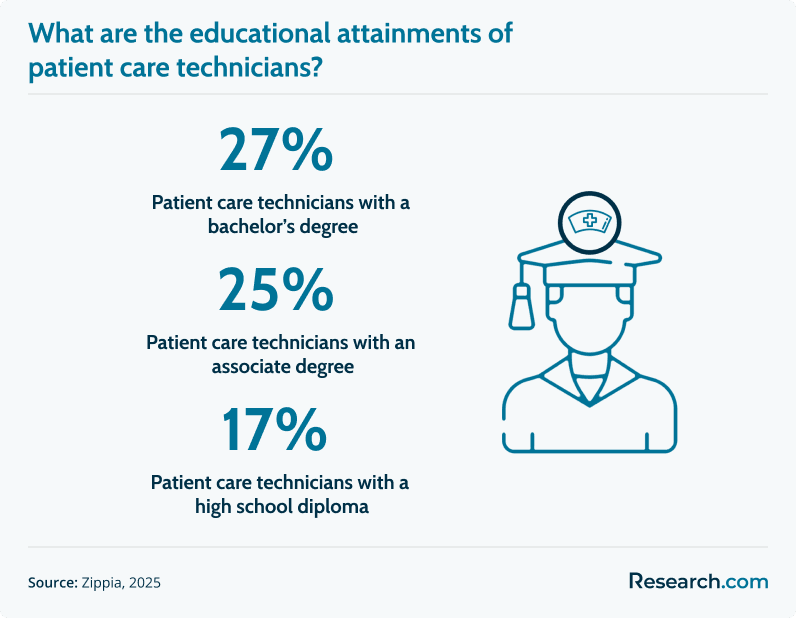
Zippia reports that 27% of patient care technicians hold a bachelor’s degree, while 17% have only a high school diploma, which is the minimum educational requirement for entry into the field. It also reports that 40% of employers specifically seek applicants with a high school diploma or GED. These figures show that students enter PCT work through different education paths, but the certificate route is often intended for faster workforce entry than a four-year degree.
How does an online patient care technician certification program compare to an on-campus program?
Online and on-campus PCT programs can both prepare students for entry-level patient care work, but the learning experience is different. The best choice depends on your schedule, access to local clinical sites, comfort with online learning, and need for in-person coaching.
| Factor | Online or hybrid PCT program | On-campus PCT program | Decision tip |
| Schedule | Often asynchronous, self-paced, or partly remote. | Usually follows a fixed class and lab schedule. | Choose online if flexibility is essential; choose campus if structure helps you stay on track. |
| Skills practice | May use videos, simulations, virtual labs, local clinicals, or in-person skills sessions. | Typically provides scheduled lab practice with instructors and classmates. | Ask exactly how hands-on skills are taught and evaluated. |
| Instructor access | Support may occur through email, learning platforms, video calls, or discussion boards. | Students may receive immediate in-person feedback during labs and class. | If you learn best through direct correction, campus or hybrid training may be stronger. |
| Clinical placement | Students may need to coordinate a local placement or meet program-arranged requirements. | Schools may use established local hospital or clinic partners. | Never assume an online program automatically finds a clinical site for you. |
| Cost and commuting | May reduce transportation and campus-related expenses. | May involve commuting, parking, uniforms, lab fees, or fixed attendance costs. | Compare total cost, not tuition alone. |
The same decision logic applies to other hands-on allied health fields, including online sonography programs: flexibility is useful only if the program still delivers the clinical preparation employers and credentialing bodies expect.
What is the average cost of an affordable online patient care technician certification program?
Affordable online PCT certification programs can vary significantly in price. Budget-friendly options commonly range from $1,000 to $3,500, while shorter continuing education courses may cost from $300 to $2,500. More extensive programs may cost between $3,600 and $6,000, especially when they include extra clinical requirements, equipment, insurance, uniforms, or bundled certification preparation.
Price alone does not show the true cost. A program listed at a low tuition rate may not include textbooks, background checks, immunizations, CPR certification, scrubs, exam vouchers, technology fees, lab supplies, or clinical placement expenses. Before enrolling, request a written cost breakdown and compare what is included.
| Cost item | Why it matters | Question to ask |
| Tuition | This is the advertised program price, but it may not include required extras. | Is tuition charged as a flat rate, per course, per module, or per credit hour? |
| Certification exam voucher | Some programs include the exam fee; others make students pay separately. | Is the NHA or AMCA exam voucher included, and am I eligible to use it? |
| Books and learning materials | Textbooks, digital access codes, or lab materials can raise the final cost. | Are all materials included in the tuition price? |
| Clinical requirements | Background checks, drug screening, health forms, and immunizations may be required before patient contact. | Who pays for clearance requirements, and when are they due? |
| Transportation and scheduling | Even online students may need to travel for clinicals or labs. | Where are clinical hours completed, and can I meet the schedule? |
What are the financial aid options for students enrolling in an online patient care technician certification program?
Financial aid for PCT certificate programs is not automatic. Some short-term, non-credit, or continuing education programs may not qualify for traditional federal financial aid. However, students may still be able to reduce costs through state workforce funding, employer support, payment plans, institutional aid, or exam fee assistance.
- State grants and workforce scholarships: Some states fund short healthcare training programs to address local workforce needs.
- Institutional scholarships or grants: Community colleges, workforce divisions, and career schools may offer limited aid for allied health certificate students.
- Employer tuition reimbursement: Students already working in healthcare may qualify for partial or full reimbursement through an employer.
- Payment plans: Some schools allow students to divide tuition into scheduled installments rather than paying all costs upfront.
- Exam fee support: Certain programs include certification vouchers or reimburse exam costs after students pass.
Students evaluating healthcare training costs can also review how financial aid works in related pathways such as low cost LVN programs online. LVN programs are different from PCT certificates and may have different aid rules, but the same cost-review principle applies: verify eligibility before enrolling.
What are the prerequisites for enrolling in an online patient care technician certification program?
PCT program requirements vary widely. Some programs accept students with a high school diploma or GED and basic readiness for clinical training. Others are designed for current Certified Nursing Assistants or applicants who already have healthcare experience.
- Minimum age: Many programs require students to be at least 18 years old, especially when clinical placement is involved.
- High school diploma or GED: A completed secondary credential is typically the baseline academic requirement.
- Healthcare work experience: Some PCT programs or certification exams expect prior hands-on experience. One to three years of relevant work experience may be considered adequate for this requirement.
- CNA certification: Some programs require CNA status before enrollment, particularly if they build on nursing assistant skills. According to the NHA, 51% of employers specifically look for PCT candidates with CNA certification.
- Health screening and immunizations: Clinical sites often require proof of immunizations and basic health clearance.
- Background check and drug screening: Patient-facing roles commonly require clearance before clinical participation.
- CPR certification: Current CPR certification may be required before students begin clinical work.
Prior clinical experience can make students more competitive and better prepared, a pattern also seen in bridge pathways such as best value online EMT to RN bridge programs, where earlier patient care experience strengthens readiness for advanced training.
Before applying, review both the school’s admission requirements and the certification exam’s eligibility rules. A program may allow enrollment even if the exam has separate requirements.
This chart displays the hiring qualifications for patient care technicians.
What courses are typically in an affordable online patient care technician certification program?
PCT coursework usually combines basic medical knowledge, patient safety, communication, and core clinical skills. Programs with broader preparation may also include phlebotomy, EKG, or advanced patient care topics.
| Course or skill area | What students learn | Why it matters in the workplace |
| Patient positioning, mobility, and care | Safe transfer techniques, positioning, body mechanics, and support for patients with limited mobility. | These skills reduce injury risk and support comfort. The NHA notes that 77% of patient care technicians are skilled in this essential basic care area. |
| Patient care and clinical skills | Vital signs, observation, hygiene assistance, daily living support, infection control, and care-team communication. | PCTs often serve as the frontline support staff who notice and report changes in patient condition. |
| Anatomy, ethics, and safety | Basic body systems, healthcare ethics, patient dignity, safety procedures, and emergency awareness. | Foundational knowledge helps technicians provide respectful, safe, and accurate care. |
| Electrocardiography | EKG preparation, electrode placement, basic rhythm recognition, and when to alert clinical staff. | EKG skills can improve employability in hospitals, cardiac units, and diagnostic settings. |
| Phlebotomy | Blood draw procedures, patient preparation, specimen handling, sterile technique, and communication. | Phlebotomy training may qualify PCTs for roles that include lab specimen collection duties. |
Students who plan to continue into nursing should understand how education levels affect future options. A comparison such as RN vs BSN can help PCT students map how entry-level patient care experience may fit into longer-term nursing goals.
This chart reveals the main tasks of PCTs.
What types of specializations are available in online patient care technician certification programs?
Most PCT certificate programs train students as general patient care support workers. Specialization usually comes through additional coursework, employer training, clinical placement, or certification in a specific procedure or care environment.
- Hospital patient care: PCTs may work on medical-surgical units, specialty floors, or other inpatient departments, assisting nurses with daily care, observation, mobility, and documentation support.
- Emergency room support: ER PCTs work in fast-moving settings where they may support urgent procedures, help with patient flow, assist with triage-related tasks, and respond quickly to care team needs.
- Rehabilitation support: In rehabilitation environments, PCTs may help patients with mobility exercises, personal care, and progress-related documentation under the supervision of therapists and nurses.
- Phlebotomy: PCTs with phlebotomy training can draw blood, prepare specimens, and support diagnostic testing processes.
- Telemetry or EKG: PCTs with cardiac monitoring skills may help record or observe heart rhythm data in clinical environments.
- Dialysis support: Dialysis-focused training can prepare technicians to assist patients receiving treatment for kidney failure, operate equipment within role limits, and monitor patients during sessions.
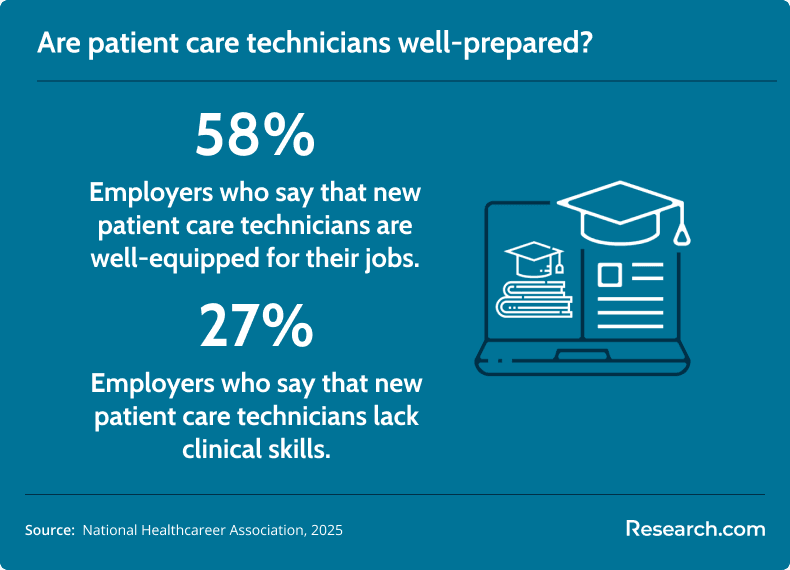
The NHA (2025) reports that 58% of employers believe newly certified PCTs are ready for daily job duties, while 27% believe they still need to strengthen clinical skills. That finding makes hands-on training, externship quality, and add-on certifications especially important when comparing programs.
What accreditation standards ensure quality in online patient care technician certification programs?
Accreditation helps students distinguish legitimate training from programs that may not meet recognized educational standards. At minimum, confirm that the institution is accredited by an agency recognized by the U.S. Department of Education or the Council for Higher Education Accreditation. Some healthcare-focused schools may also hold accreditation from specialized agencies such as the Accrediting Bureau of Health Education Schools (ABHES).
Accreditation can affect credibility, financial aid eligibility, employer acceptance, transfer opportunities, and confidence in curriculum quality. It does not guarantee employment or certification, but it is one of the first checks students should complete before paying tuition. Students considering a broader allied health route may also compare PCT training with an online medical assistant degree option, since medical assistant programs may offer a wider mix of administrative and clinical training.
Can a patient care technician certification lead to advanced healthcare degrees?
Yes, PCT certification can support future healthcare education, but it is not usually a direct substitute for degree prerequisites. The main value is practical patient care exposure. PCTs learn how healthcare teams work, how patients respond to illness and treatment, and what daily clinical support looks like. That experience can help students decide whether to pursue nursing, health sciences, public health, pharmacy, healthcare administration, or other advanced pathways.
Students with long-term clinical ambitions should ask whether their PCT coursework carries credit, whether experience hours can strengthen future applications, and whether the school has pathways into associate or bachelor’s programs. For a much more advanced example of healthcare education planning, students can review the quickest online PharmD program options, while remembering that PharmD admission and professional requirements are substantially different from PCT certification.
How can complementary certifications enhance my patient care technician career?
Complementary credentials can make a PCT more versatile. Phlebotomy, EKG, dialysis, telemetry, CPR, and basic life support credentials may align closely with clinical technician work. Administrative skills can also help PCTs understand documentation, billing workflows, coding systems, and the revenue cycle in healthcare organizations.
For students who want to move toward administrative healthcare roles rather than bedside care, affordable medical billing and coding classes may be a useful comparison. Billing and coding does not replace hands-on PCT training, but it can expand career options for workers who want to transition away from physically demanding patient care roles later.
Can an online degree in kinesiology complement my patient care technician certification?
An online kinesiology degree can complement PCT experience for students interested in movement science, rehabilitation, exercise, mobility, or physical function. PCTs who work in rehabilitation centers, long-term care, or mobility-support roles may find kinesiology concepts useful because they deepen understanding of body mechanics, movement limitations, and recovery support.
However, a kinesiology degree and a PCT certificate serve different purposes. PCT certification is a workforce credential for direct patient support. Kinesiology is an academic pathway that may support future roles in rehabilitation, wellness, therapy preparation, or health science. Students should choose based on whether they want immediate entry-level patient care work, longer-term academic study, or both.
How is technology integrated into online patient care technician certification programs?
Online PCT programs often use technology to teach theory and reinforce clinical decision-making. Common tools include video demonstrations, virtual labs, telehealth modules, learning management systems, quizzes, digital assessments, and scenario-based simulations. These tools can help students practice sequencing, communication, and safety decisions before entering a lab or clinical setting.
Technology is also changing patient care itself. Remote monitoring, telehealth communication, electronic documentation, and digital diagnostic tools are increasingly part of healthcare workflows. PCT students should be comfortable learning new platforms and following digital documentation procedures. Those who want to move from direct care into operations or management may eventually compare clinical training with a healthcare administration degree online.
How to choose the best online patient care technician certification programs?
The best online PCT certification program is not automatically the cheapest one. It is the program that fits your schedule, prepares you for certification or employment, provides credible hands-on training, and clearly discloses all costs and requirements.
| Selection factor | Why it matters | What to ask the school |
| Accreditation | Accredited institutions are more likely to meet recognized academic and administrative standards. | Who accredits the institution, and is the accreditor recognized? |
| Certification exam alignment | Employers may prefer or require certification from organizations such as NHA or AMCA. | Which exam does the program prepare for, and is the exam voucher included? |
| Clinical training | PCT work requires safe hands-on patient care skills. | Are labs or clinical hours required, and who arranges placement? |
| Total cost | Low tuition can become expensive if fees are not included. | What is the full cost, including books, screenings, supplies, and exam fees? |
| Schedule flexibility | Students balancing work or caregiving may need asynchronous coursework. | Are lessons self-paced, and are there fixed clinical or lab dates? |
| Student support | Career advising, tutoring, and instructor access can affect completion and job readiness. | What support is available online, and how quickly do instructors respond? |
| Career outcomes | Programs with employer connections may help students transition into jobs more smoothly. | Does the program offer externships, employer partnerships, resume help, or job placement support? |
If speed is important, compare program length with other allied health training options, such as accelerated medical assistant programs. If you are comparing short certification pathways across industries, you may also look at how credential-focused programs are structured in other fields, such as affordable online Microsoft Azure dual certification bootcamps, while recognizing that healthcare credentials have different clinical and patient safety requirements.
Common mistakes to avoid when choosing a PCT program
- Assuming “online” means no in-person requirements: Many programs still require labs, clinical hours, health screenings, or local externships.
- Choosing only by tuition price: A low advertised price may exclude textbooks, exam fees, background checks, uniforms, or CPR certification.
- Ignoring accreditation: Unaccredited or poorly recognized programs may create problems with employer acceptance, aid eligibility, or transfer options.
- Not checking certification eligibility: Completing a course does not always mean you automatically qualify for a certification exam.
- Overlooking CNA requirements: Some PCT programs are intended for students who already hold CNA certification.
- Assuming salary outcomes are guaranteed: Wages vary by employer, region, experience, shift, and additional credentials.
- Failing to ask about clinical placement: If the school does not place students, you may need to find an approved site yourself.
What career paths are available for graduates of online patient care technician certification programs?
PCT graduates typically begin in direct patient support roles, but the credential can also serve as a starting point for related healthcare careers. Advancement usually requires additional certification, experience, licensure, or a degree.
| Career path | Salary figure listed | How it connects to PCT training |
| Home Health Aides | $34,990 | Provide support in patients’ homes, including daily living assistance and basic monitoring. |
| Certified Nursing Assistants | $41,270 | Assist with bathing, dressing, feeding, mobility, and patient observation under nursing supervision. |
| Phlebotomists | $44,390 | Draw blood, label specimens, follow sterile procedures, and support diagnostic testing. |
| Medical Assistants | $44,720 | Combine clinical and administrative duties such as triage support, exam assistance, and office workflows. |
| Medical Billing and Coding Specialists | $55,970 | Manage patient data, claims, and coding systems; this path may lead toward health informatics career options with further education. |
| Paramedics | $60,610 | Provide emergency medical care, perform interventions, transport patients, and communicate with hospital staff. |
| Physical Therapist Assistants | $67,160 | Help patients improve mobility, manage pain, and complete treatment activities under a licensed physical therapist. |
| Electrocardiograph (EKG) Technicians | $72,890 | Record heart electrical activity, prepare patients for testing, and support cardiac diagnostic workflows. |
| Diagnostic Medical Sonographers | $92,550 | Use imaging equipment to create internal body images for diagnosis and monitoring. |
| Registered Nurses | $98,430 | Provide comprehensive nursing care, administer medications, coordinate care plans, and meet licensure requirements after completing the required degree and exam process. |
Many PCTs use direct care experience as a stepping stone into nursing or advanced clinical roles. For example, nurses who continue beyond initial licensure may later explore online MSN to FNP programs, which are designed for registered nurses moving toward advanced practice. That is a much later-stage pathway, but it shows how entry-level patient care can fit into a longer healthcare career ladder.
Students should also budget realistically for career preparation. The Assistant Secretary for Planning and Evaluation’s 2024 Health Care Workforce Report notes that learners often cover upfront costs for certification, transportation, and child care themselves, and may not receive compensation for required overtime. These pressures can be especially difficult when entry-level wages are modest.
This chart reveals the salaries of various healthcare careers in comparison to the income of patient care technicians.
What is the job market for graduates with a patient care technician certificate?
Job prospects for PCT-related roles appear strong because patient care needs continue across hospitals, long-term care, home health, and rehabilitation settings. The BLS occupational group that includes home health and personal care aides, nursing assistants, orderlies, and psychiatric aides—roles that overlap with PCT work—has a job outlook of 16.2% from 2023 to 2033 and about 940,300 annual job openings during the decade. The NHA also projects PCT employment to grow 8% over the same period.
Demographic trends help explain this demand. As the U.S. population ages, more patients need assistance with mobility, self-care, monitoring, and daily living activities. According to America’s Health Rankings 2025 Senior Report, falls among older adults were most common among those with self-care difficulties (58%), challenges living independently (52%), cognitive impairments (51%), and mobility issues (46%). These are areas where trained patient care support workers can play an important role under clinical supervision.
Students comparing entry-level healthcare paths often weigh PCT training against nursing assistant or practical nursing routes. A detailed LPN and CNA job comparison can help clarify differences in education time, scope of practice, cost, and advancement potential. PCT training may offer a quicker entry route than licensed nursing, but long-term earning growth often depends on additional credentials, degree completion, or licensure.
Questions to ask before enrolling in an online PCT certification program
- Is the school accredited, and by which agency?
- Does the program prepare students for NHA, AMCA, or another recognized certification exam?
- Is the certification exam voucher included in the listed price?
- Are clinical hours, labs, or externships required?
- If clinical placement is required, does the school arrange it or must I find a site?
- Do I need CNA certification before enrolling?
- What background check, drug screening, immunization, CPR, or health documentation requirements apply?
- What is the total cost after tuition, books, supplies, fees, and exam costs?
- Are payment plans, employer reimbursement, grants, or scholarships available?
- What career support does the program provide after completion?
Key Insights
- An online patient care technician certification can be a practical entry point into healthcare, but students should expect some form of hands-on skills validation, clinical practice, or prior experience requirement in many programs.
- Affordable programs in this guide range from $349 to $4,724, but total cost can change once books, exam fees, health screenings, supplies, and clinical expenses are included.
- Program timelines vary widely, from 8 weeks or 9 to 11 weeks for intensive options to 12 months for longer self-paced training.
- Accreditation, certification exam alignment, clinical placement support, and employer recognition are more important than choosing the lowest advertised tuition.
- 27% of patient care technicians have a bachelor’s degree, while 17% have only a high school diploma; 40% of employers specifically seek applicants with a high school diploma or GED.
- CNA certification can matter: 51% of employers specifically look for PCT candidates with CNA certification.
- Core patient care skills remain central to the role. The NHA reports that 77% of patient care technicians are skilled in basic patient care.
- Newly certified PCTs may still need workplace development. The NHA reports that 58% of employers believe newly certified PCTs are ready for daily duties, while 27% say they need stronger clinical skills.
- The broader occupational group that includes PCT-related roles has a 16.2% job outlook from 2023 to 2033, with about 940,300 annual job openings during the decade.
- PCT certification is often best viewed as a first step. Additional credentials in phlebotomy, EKG, dialysis, medical assisting, nursing, or health information can improve career mobility and long-term earning potential.
References:
- National Healthcareer Association. (2025). 2025 Industry Outlook. https://info.nhanow.com/outlook
- Payscale. (2025, May 14). Average Patient Care Technician Hourly Pay. Retrieved May 26, 2025, from https://www.payscale.com/research/US/Job=Patient_Care_Technician/Hourly_Rate
- U.S. Bureau of Labor Statistics. (2024). Nursing assistants [Interactive data]. May 2024 OEWS Profiles, Occupational Employment and Wage Statistics (OEWS) Profiles. Retrieved May 26, 2025, from https://data.bls.gov/oesprofile
- U.S. Bureau of Labor Statistics. (2025a, April 18). Healthcare Occupations. Occupational Outlook Handbook. https://www.bls.gov/ooh/healthcare
- U.S. Bureau of Labor Statistics. (2025b, April 18). Occupational projections, 2023–33, and worker characteristics, 2023 (Numbers in thousands). Employment Projections. https://www.bls.gov/emp/tables/occupational-projections-and-characteristics.htm
- Zippia. (2025, January 8). Patient Care Technician Education Requirements. Retrieved May 26, 2025, from https://www.zippia.com/patient-care-technician-jobs/education
Other Things You Should Know About Affordable Online Patient Care Technician Certification Programs
To become a Patient Care Technician, you typically need to obtain a certification from an accredited program such as the National Healthcareer Association's Certified Patient Care Technician/Assistant (CPCT/A) credential. This certification is widely recognized and helps validate your skills in patient care.
Managing expenses for an online Patient Care Technician Certification can involve seeking scholarships specific to healthcare, finding programs that offer flexible payment plans, or taking advantage of employer reimbursement plans. Additionally, selecting community colleges or state schools can reduce tuition costs compared to private institutions.