
2027 Most Affordable EMT to RN Online Bridge Programs

Co-Founder and Chief Data Scientist
EMTs who want more clinical responsibility, stronger long-term career mobility, and higher earning potential often look at EMT to RN bridge programs. The challenge is that “online” can be misleading: nursing bridge programs usually deliver theory courses online or in a hybrid format, but they still require in-person labs, simulations, and supervised clinical hours before graduates can qualify for RN licensure.
This guide explains how EMT, paramedic, and other healthcare-to-RN bridge pathways work, what they cost, which affordable programs are worth comparing, and how to avoid choosing a program that will not meet licensure, accreditation, or clinical placement requirements. It is designed for working EMTs and paramedics who want a practical route to becoming a registered nurse without stepping away from healthcare employment longer than necessary.
Quick Answer: Are Online EMT to RN Bridge Programs Worth It?
An online EMT to RN bridge program can be worth it if you already have emergency care experience, meet the program’s licensure and prerequisite requirements, and choose an accredited program that qualifies graduates for the NCLEX-RN. The strongest options are usually hybrid programs that combine online coursework with required in-person clinical training. Many programs labeled “EMT to RN” are actually paramedic-to-RN or healthcare-professional-to-RN tracks, so applicants should confirm whether basic EMT certification alone is accepted.
| Decision Factor | What It Means for EMTs | What to Verify Before Enrolling |
| Eligibility | Some bridge programs require paramedic licensure, LPN licensure, or other advanced healthcare credentials rather than EMT-B certification alone. | Ask whether your current EMT credential qualifies you for bridge admission or whether you need additional training first. |
| Online Format | Most nursing bridge programs are not fully online because RN preparation requires hands-on clinical practice. | Confirm where labs, simulations, and clinical rotations take place. |
| Licensure | Graduation must lead to NCLEX-RN eligibility in the state where you plan to practice. | Check state board approval and whether the program meets your state’s RN licensure rules. |
| Cost | Tuition varies widely by residency status, credit load, school type, and fees. | Compare total program cost, not only per-credit tuition. |
| Career Return | RNs generally earn more than EMTs and have access to broader clinical roles. | Review NCLEX pass rates, graduation rates, employer connections, and local RN hiring demand. |
Why EMTs consider an online EMT to RN bridge program
- Broader scope of practice: RN licensure allows clinicians to move beyond emergency response into comprehensive nursing assessment, medication administration, care planning, patient education, and ongoing care coordination.
- Higher earning potential: The U.S. Bureau of Labor Statistics reported a median annual salary of $86,070 for RNs in 2023, compared to $44,780 for EMTs.
- Work-compatible scheduling: Hybrid and online coursework can make it more realistic for EMTs and paramedics to continue working while completing nursing prerequisites, theory courses, and clinical requirements.
What can I expect from an online EMT to RN Online Bridge Program?
An EMT to RN bridge program builds on emergency care experience but does not simply “upgrade” an EMT license. It prepares students for the full responsibilities of registered nursing, including ongoing patient management, clinical documentation, medication safety, interdisciplinary communication, and preparation for the NCLEX-RN.
- Accelerated nursing coursework: Bridge programs may recognize prior healthcare training, particularly for paramedics, LPNs, respiratory therapists, or other licensed professionals.
- Hybrid delivery: Expect online lectures or assignments combined with in-person skills labs, simulations, and supervised clinical rotations.
- Core RN content: Programs commonly cover pathophysiology, pharmacology, health assessment, mental health nursing, pediatric nursing, medical-surgical nursing, and maternal-child care.
- Clinical decision-making: EMTs are used to rapid stabilization; RN education expands that skill set into care planning, reassessment, discharge preparation, and patient advocacy.
- NCLEX-RN preparation: Quality programs align coursework, testing, and clinical practice with the competencies needed for RN licensure.
Where can I work with an online EMT to RN Online Bridge Program qualification?
After graduating from an approved nursing program and passing the NCLEX-RN, former EMTs can pursue RN roles in many healthcare settings. Emergency experience can be especially valuable in fast-paced units, but RN opportunities are not limited to emergency departments.
| Work Setting | Why EMT Experience Helps | Possible RN Roles |
| Hospitals | EMTs are accustomed to patient handoffs, urgent assessment, and high-pressure environments. | Emergency department nurse, medical-surgical nurse, telemetry nurse, pediatric nurse, obstetrics nurse |
| Emergency and trauma units | Pre-hospital care experience supports rapid triage, situational awareness, and crisis communication. | ER nurse, trauma nurse, critical care nurse |
| Outpatient clinics | EMTs often bring strong patient assessment and communication skills. | Urgent care nurse, specialty clinic nurse, primary care nurse |
| Long-term care facilities | RN practice requires ongoing monitoring, care coordination, and medication management. | Charge nurse, resident care nurse, rehabilitation nurse |
| Home health agencies | Field experience can help nurses work independently and recognize changes in patient condition. | Home health RN, case management nurse |
| Public health and community settings | EMTs understand community-level emergency needs and access-to-care challenges. | Public health nurse, school nurse, community health nurse |
| Specialized transport | Combining EMS background with RN licensure can support advanced transport pathways. | Flight nurse, transport nurse, pre-hospital specialty nurse |
How much can I make with an online EMT to RN Online Bridge Program for 2025 qualification?
Moving from EMT to RN can substantially change earning potential, but salary depends on state, employer, shift, specialty, experience, degree level, and local labor market conditions. No program can guarantee a specific wage.
- RN median salary: The BLS reported an $86,070 median annual salary for RNs in 2023.
- Higher-paying settings: RNs in government or hospital roles had median salaries of $99,840 and $88,430, respectively in 2023.
- Typical new RN range: New RNs might start between $60,000 and $75,000 annually.
- Experienced RN potential: With experience and specialization, salaries can exceed $90,000 to over $100,000.
- Top earners: Highly experienced or advanced practice nurses can earn over $130,000 annually.
- Most Affordable EMT to RN Online Bridge Programs for 2027
- How to choose the right EMT to RN bridge program
- Prerequisites and application steps
- Skills you will develop in an EMT to RN bridge program
- Career prospects after an EMT to RN bridge program
- Program costs and financing options
- Salary expectations after RN licensure
- Online versus in-person bridge programs
- Accreditation and licensing considerations
- Graduation and NCLEX outcomes
- Challenges of online EMT to RN bridge programs
- Career support and networkingonline program challengesNCLEX success indicatorslicensing standardsprogram format comparison
- Subspecialties and advancement paths
- RN job market for EMT bridge graduates
- Current trends affecting EMT to RN graduates
Most Affordable EMT to RN Online Bridge Programs for 2027
How do we rank schools?
Affordable nursing education is not only about the lowest tuition number. A strong bridge program should combine reasonable cost with recognized accreditation, clear licensure alignment, accessible clinical placements, and student outcomes that show graduates are prepared for RN practice.
Our review draws from established education data sources, including the IPEDS database, Peterson's database including the Distance Learning Licensed Data Set, the College Scorecard database, and the National Center for Education Statistics.
Use the list below as a starting point, not a final decision. Program availability, clinical locations, state authorization, admissions rules, and tuition can change, so applicants should confirm details directly with each school.
Affordable EMT, Paramedic, and Healthcare Professional to RN Bridge Programs
| School | Bridge Track | Program Length | Credits | Published Cost Information | Accreditation or Approval Listed |
| Abraham Baldwin Agricultural College | LPN/Paramedic/RT to RN (ASN) | Three semesters after prerequisites | 70 semester credit hours | Georgia Resident, 15 or more hours: $1,602.00; Nonresident, 15 or more hours: $5,918.00; eCampus classes: $199.00/semester hour; eCore classes: $159.00/semester hour | ACEN; Georgia State Board of Nursing |
| Albany State University | Healthcare-Professional-to-RN (ASN) | Six semesters | 60 credits | $11,100.00 total cost | ACEN; SACSCOC; Georgia Board of Nursing |
| Chattanooga State Community College | Paramedic to RN (AAS) | 12 months | 66 credits | In-state total: $9450.50; Out-of-state total: $26002.00 | ACEN |
| Herzing University | Paramedic to RN (AAS) | 20-28 months | 72-120 credits | Not specified | CCNE |
| Hutchinson Community College | Paramedic to RN (ADN); Sociology/Nutrition Options | Three semesters after prerequisites | 69 credits | $$128 per credit hour (in-state); $159 per credit hour (out-of-state) | ACEN; Kansas State Board of Nursing |
| Mesa Community College | Paramedic to RN (AAS) | Not explicitly stated; typically 3–4 semesters for bridge programs | Not explicitly stated for the bridge program; AAS in Nursing typically 60–72 credits | $97 per credit (Maricopa County residents); $372 per credit (non-residents) | ACEN |
| Pacific Union College | EMT-P to RN (Associate Degree in Nursing) | 18 months after completion of the Bridge Course | 115 credit hours | $36,150/year | California Board of Registered Nursing (BRN); ACEN |
| Parkland College | Paramedic to ADN (A.A.S.) | Three semesters after prerequisites | 68 credit hours | Total estimated cost of attendance $20,364.00 (in-state), $23,844.00 (out-of-state) | ACEN |
| Wallace State Community College | Paramedic to RN (ADN Mobility Option) | Three semesters after prerequisites | 72 credits | Total program cost - In-State $16,623.49; Out-of-State:$20,622.49 | ACEN |
1. Abraham Baldwin Agricultural College
Abraham Baldwin Agricultural College offers a One-Year Registered Nurse Bridge track for LPNs, paramedics, and respiratory therapists who want to earn an Associate of Science in Nursing. The pathway is intended for licensed healthcare professionals who already have patient care knowledge and can complete the required core academic courses before beginning the bridge sequence. The curriculum includes anatomy, microbiology, pharmacology, medical-surgical nursing, mental health nursing, pediatric nursing, observation hours, and clinical experiences. Graduates may sit for the NCLEX-RN, and the program is approved by the Georgia State Board of Nursing for nursing practice requirements in Georgia.
- Program Length: Three semesters after prerequisites
- Tracks/Concentrations: LPN/Paramedic/RT to RN (ASN)
- Tuition Cost: Georgia Resident, 15 or more hours: $1,602.00; Nonresident, 15 or more hours: $5,918.00; eCampus classes: $199.00/semester hour; eCore classes: $159.00/semester hour
- Required Credits to Graduate: 70 semester credit hours including prerequisites and nursing courses
- Accreditation: Accreditation Commission for Education in Nursing (ACEN); Georgia State Board of Nursing
2. Albany State University
The Healthcare Professional to RN Bridge program at Albany State University is an accelerated Associate Degree Nursing option for licensed paramedics and LPNs. A new cohort is accepted every five semesters, and applications open for Spring, Summer, and Fall admissions. Students attend one day each week through a mix of classroom instruction, online activities, and clinical rotations. Coursework is mainly delivered on the East and West Campuses, with some online or hybrid elements, and clinical experiences take place at Phoebe Putney Memorial Hospital and other healthcare facilities. Graduates earn an Associate of Science in Nursing and become eligible for the NCLEX-RN.
- Program Length: Six semesters, including two for core courses and four for nursing
- Tracks/Concentrations: Healthcare-Professional-to-RN (ASN)
- Tuition Cost: $11,100.00 total cost
- Required Credits to Graduate: 60 credits
- Accreditation: Accreditation Commission for Education in Nursing (ACEN); Southern Association of Colleges and Schools Commission on Colleges (SACSCOC); Georgia Board of Nursing
3. Chattanooga State Community College
Chattanooga State Community College provides a Paramedic to RN Bridge option leading to an Associate of Applied Science in Nursing. The program is built for working adults and uses hybrid coursework with clinical assignments at local healthcare facilities. Accepted LPNs and paramedics receive credit for the first two semesters after completing a summer transition course. Nursing courses include mental health, medical-surgical nursing, pediatrics, women’s health, and professional practice. Applicants must hold current licensure, document 400 hours of recent employment, and complete prerequisites.
- Program Length: 12 months (three semesters)
- Tracks/Concentrations: Paramedic to RN (AAS)
- Tuition Cost: In-state total: $9450.50; Out-of-state total: $26002.00
- Required Credits to Graduate: 66 credits including prerequisites and nursing courses
- Accreditation: Accreditation Commission for Education in Nursing (ACEN)
4. Herzing University
Herzing University offers a Paramedic to RN Bridge pathway that can lead to an ASN or BSN, depending on the selected route. The program combines online, hybrid, and in-person components, with clinical experiences arranged at local hospitals. Students may transfer up to 90 approved credits. Coursework includes nursing fundamentals, health assessment, evidence-based practice, and patient care management. Herzing also offers academic advising, tutoring, and lifelong career coaching, with rolling admissions for applicants.
- Program Length: 20-28 months
- Tracks/Concentrations: Paramedic to RN (AAS)
- Tuition Cost: Not specified
- Required Credits to Graduate: 72-120 credits including prerequisites and nursing courses
- Accreditation: Commission on Collegiate Nursing Education (CCNE)
5. Hutchinson Community College
Hutchinson Community College offers an online Paramedic to RN bridge program leading to an Associate of Applied Science in Nursing. Students complete prerequisites such as anatomy, microbiology, and psychology before beginning nursing coursework. The curriculum addresses health maintenance, complex care, family nursing, leadership, clinical judgment, collaboration, and culturally competent patient-centered care. Graduates are prepared to take the NCLEX-RN and may continue their education at baccalaureate institutions.
- Program Length: Three semesters after prerequisites
- Tracks/Concentrations: Paramedic to RN (ADN); Sociology/Nutrition Options
- Tuition Cost: $$128 per credit hour (in-state); $159 per credit hour (out-of-state)
- Required Credits to Graduate: 69 credits including prerequisites and nursing courses
- Accreditation: Accreditation Commission for Education in Nursing (ACEN); Kansas State Board of Nursing
6. Mesa Community College
Mesa Community College’s Paramedic to RN Bridge Program gives certified paramedics an accelerated route into the Maricopa Nursing RN program. Theory courses include online components, while in-person sessions and clinical experiences take place in hospitals and medical centers. Admission is non-competitive and first-come, first-served until seats are filled. Students must provide proof of current licensure and paramedic work experience. Completion of the bridge component allows advanced placement into the nursing program and supports eligibility for the NCLEX-RN after completing degree requirements.
- Program Length: Not explicitly stated; typically 3–4 semesters for bridge programs
- Tracks/Concentrations: Paramedic to RN (AAS)
- Tuition Cost: $97 per credit (Maricopa County residents); $372 per credit (non-residents)
- Required Credits to Graduate: Not explicitly stated for the bridge program; AAS in Nursing typically 60–72 credits
- Accreditation: Accreditation Commission for Education in Nursing (ACEN)
7. Pacific Union College
Pacific Union College offers an EMT-P to RN Bridge Program for paramedics in California’s Napa Valley and Bay areas. The format is designed for working adults, and students complete the EMT-P to RN Bridge Course (NURS 213), which includes seven full 8-hour days of instruction in Fall 2024. EMT-P students must pass the PN Comprehensive Exam with a minimum score of 71.3% to enter the nursing curriculum. After the bridge course, students join an LVN/Med-Tech to RN cohort for three nursing sessions, with theory instruction delivered in core weeks of four consecutive 8-hour days. Cohorts are limited to nine students.
- Program Length: 18 months after completion of the Bridge Course
- Tracks/Concentrations: EMT-P to RN (Associate Degree in Nursing)
- Tuition Cost: $36,150/year
- Required Credits to Graduate: 115 credit hours
- Accreditation: California Board of Registered Nursing (BRN); Accreditation Commission for Education in Nursing, INC. (ACEN)
8. Parkland College
Parkland College’s Paramedic to ADN Bridge Program is a three-semester hybrid track for licensed paramedics. Most classes are face-to-face, with selected online components, and clinical experiences are held at area hospitals. Students complete nursing coursework after prerequisites in anatomy, psychology, and composition. Bridge courses address communication, medication administration, and physical assessment. Nursing Assistant certification is not required, though students must meet math placement and background check requirements.
- Program Length: Three semesters after prerequisites
- Tracks/Concentrations: Paramedic to ADN (A.A.S.)
- Tuition Cost: Total estimated cost of attendance $20,364.00 (in-state), $23,844.00 (out-of-state)
- Required Credits to Graduate: 68 credit hours
- Accreditation: Accreditation Commission for Education in Nursing (ACEN)
9. Wallace State Community College
The Mobility Nursing program at Wallace State Community College offers an accelerated route for licensed Practical Nurses and healthcare professionals with an AAS degree who want to become RNs. Applicants must hold an active Alabama license and complete prerequisites in areas such as anatomy, psychology, and math. Students complete three semesters of nursing coursework covering healthcare transition, advanced nursing concepts, microbiology, and evidence-based clinical reasoning. Graduates earn an Associate in Applied Science and qualify to take the NCLEX-RN.
- Program Length: Three semesters after prerequisites
- Tracks/Concentrations: Paramedic to RN (ADN Mobility Option)
- Tuition Cost: Total program cost - In-State $16,623.49; Out-of-State:$20,622.49
- Required Credits to Graduate: 72 credits including prerequisites and nursing courses
- Accreditation: Accreditation Commission for Education in Nursing (ACEN)
How do I choose the best EMT to RN online bridge program for my specific needs and career goals?
The best bridge program is the one that fits your credential level, state licensure plan, work schedule, budget, and long-term nursing goals. Do not choose solely because a program is described as “online” or “accelerated.” In nursing education, speed and convenience only matter if the program also meets clinical, accreditation, and NCLEX-RN requirements.
| Question to Ask | Why It Matters | Best Evidence to Request |
| Am I eligible with my current EMT credential? | Many bridge options are designed for paramedics, not EMT-B applicants. | Written admissions policy showing accepted licenses or certifications |
| Is the program ACEN or CCNE accredited? | Accreditation can affect licensure, employer recognition, transfer credits, financial aid, and future BSN or graduate study. | Accreditation listing from ACEN, CCNE, or the school’s nursing accreditation page |
| Does the program meet my state’s RN licensure requirements? | State authorization and board approval are essential for NCLEX-RN eligibility. | State board approval documentation and NCLEX eligibility statement |
| Where are clinicals completed? | Online coursework does not remove in-person clinical obligations. | Clinical site list, placement policy, and travel expectations |
| What is the total cost? | Fees, books, uniforms, immunizations, background checks, and testing can add to tuition. | Itemized cost sheet and financial aid estimate |
| What are the NCLEX-RN pass and graduation rates? | Outcomes help show whether students complete the program and pass licensure exams. | Recent cohort outcomes published by the school or state board |
- Match the degree to your goal: An ADN may be the faster route to RN licensure, while a BSN may offer stronger long-term mobility in some healthcare systems.
- Review prerequisite policies: Anatomy, physiology, microbiology, chemistry, psychology, and general education courses can affect your timeline. Students who need lower-cost prerequisites can compare the cheapest online nursing prerequisites before applying.
- Check transfer credit rules: Prior EMT, paramedic, military, or college coursework may shorten your path, but policies vary significantly.
- Evaluate student support: Look for advising, tutoring, simulation support, NCLEX-RN preparation, and clinical placement coordination.
- Compare alternatives carefully: Some EMTs also explore the most affordable online associate's degree in surgical tech, but surgical technology does not lead to RN licensure.
Emergency medical technicians held approximately 169,700 jobs in 2023. According to the U.S. Bureau of Labor Statistics, 2025, ambulance services employed the largest share at 46%. Local government, excluding education and hospitals, employed 25%. Private general medical and surgical hospitals employed 15%, local general medical and surgical hospitals employed 4%, and outpatient care centers accounted for 2%.
This employment pattern shows why many EMTs are drawn to RN bridge options: EMT work is concentrated heavily in pre-hospital and transport-based care, while RN licensure can open access to hospital, outpatient, long-term care, public health, and advanced clinical pathways.
What are the prerequisites and application process for EMT to RN online bridge programs?
Admission requirements differ by school, and the biggest issue is whether the program accepts EMTs, paramedics, LPNs, or a broader group of healthcare professionals. Some applicants may find that they need a standard ADN, BSN, or other online nursing degree for non nurses rather than a true EMT-to-RN bridge.
- Current healthcare credential: Programs commonly require an active, unencumbered EMT, paramedic, LPN, or other approved healthcare license or certification.
- High school diploma or GED: This is a standard baseline requirement for college admission.
- Minimum GPA: Many nursing programs use a minimum cumulative GPA from previous college coursework, often around 2.5 or higher.
- Science prerequisites: Anatomy & Physiology I & II, Microbiology, Chemistry, Psychology, and other general education courses are commonly required, often with a minimum grade such as C+ or higher.
- Entrance testing: Some schools require TEAS, HESI, PAX, Kaplan, or another nursing admissions exam.
- College credit requirements: ADN and BSN bridge tracks may require different numbers of completed credits before nursing admission.
- Application materials: Expect to submit an application, official transcripts, proof of credential, and sometimes a résumé or employment documentation.
- Recommendations: Some programs request letters from supervisors, instructors, or clinical professionals.
- Personal statement: Applicants may need to explain why they are moving from EMS into nursing and how their experience has prepared them.
- Interview: Competitive programs may include an interview with nursing faculty or admissions staff.
Application timeline for working EMTs
- Confirm whether your current credential qualifies for the bridge track.
- Request transcripts from every prior college or training provider.
- Complete missing prerequisites before the nursing application deadline.
- Prepare for any required entrance exam.
- Verify clinical location requirements and work-schedule conflicts.
- Submit financial aid documents, scholarship applications, and employer reimbursement paperwork early.
- Ask the school to confirm NCLEX-RN eligibility in writing before enrollment.
What essential skills will I learn in a top EMT to RN online bridge program?
EMT experience gives students a strong base in assessment, urgency, and patient stabilization. RN education expands that foundation into broader, longer-term, and more legally accountable nursing care.
| Skill Area | How It Expands on EMT Experience | Why It Matters in RN Practice |
| Advanced patient assessment | Moves beyond immediate stabilization to full physical, psychosocial, and ongoing assessment. | Supports accurate care planning and early recognition of deterioration. |
| Pharmacology | Deepens medication knowledge, dosage safety, routes, adverse effects, and patient education. | Medication administration is a major RN responsibility. |
| Pathophysiology | Connects symptoms to disease processes and body system changes. | Helps nurses anticipate complications and choose appropriate interventions. |
| Nursing process | Reframes emergency assessment into assessment, diagnosis, planning, implementation, and evaluation. | Creates a structured approach to individualized care. |
| Care planning | Adds discharge planning, continuity of care, and interdisciplinary coordination. | RNs manage care across shifts, departments, and settings. |
| Clinical judgment | Builds on rapid decision-making under pressure. | Supports safe decisions in complex, changing patient situations. |
| Electronic health records | Develops accurate documentation and digital care coordination. | EHR proficiency is expected in most healthcare environments. |
| Leadership and ethics | Expands professional accountability and patient advocacy. | RNs often coordinate care teams and protect patient rights. |
After RN licensure, former EMTs who want to keep progressing may compare cheapest RN to BSN program options. Students who need broader science preparation may also review affordable applied sciences programs online to strengthen their background in anatomy, pharmacology, and healthcare systems.
What are some career prospects after completing an EMT to RN online bridge program?
RN licensure can move EMTs into a much larger clinical labor market. Your emergency background may be especially useful in acute care, but many graduates eventually move into specialty, leadership, education, transport, or advanced practice pathways.
- Emergency room nurse: Uses triage, rapid assessment, crisis communication, and emergency response experience in hospital emergency departments.
- Critical care nurse: Provides intensive monitoring and complex interventions in ICU or CCU settings.
- Trauma nurse: Cares for patients with severe injuries in trauma centers and emergency systems.
- Flight or transport nurse: Combines EMS experience with RN-level critical care during air or ground patient transport.
- Medical-surgical nurse: Delivers broad inpatient care for adults with medical and surgical needs.
- Telemetry nurse: Monitors cardiac patients, interprets rhythms, and manages cardiac-focused care.
- Home health nurse: Provides skilled nursing care in patients’ homes, often for chronic illness or post-acute recovery.
- Community health nurse: Supports prevention, education, outreach, and public health programs.
- Outpatient clinic nurse: Works in physician offices, urgent care centers, specialty clinics, and ambulatory settings.
- Case manager: Coordinates services, transitions of care, and patient advocacy across healthcare settings.
Applicants comparing fast healthcare-to-nursing pathways can also review the cheapest accelerated nursing programs online to understand how other accelerated options differ from EMT or paramedic bridge tracks.
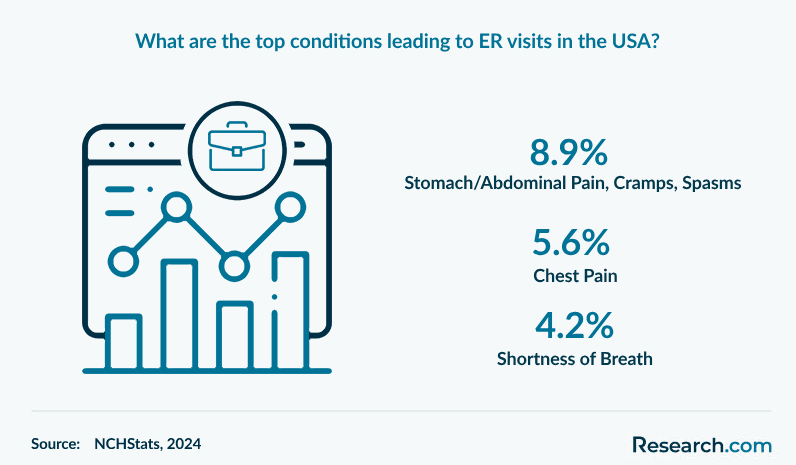
In 2025, several conditions consistently drove U.S. emergency room use. Stomach and abdominal pain, cramps, and spasms accounted for 8.9% of ER visits, while chest pain and related symptoms represented 5.6%. Other common reasons included shortness of breath at 4.2%, cough at 3.3%, headaches or head pain at 2.8%, and generalized pain not tied to a specific body system at 2.4%. Fever, back symptoms, vomiting, and psychological and mental health concerns were also common reasons for ER visits.
For EMTs entering nursing, these ER patterns matter because emergency departments require clinicians who can evaluate broad and sometimes ambiguous symptoms quickly while still following structured nursing protocols.
How much do EMT to RN online bridge programs cost and what financing options are available?
EMT to RN bridge program costs vary by school, state residency status, degree level, number of transfer credits, clinical requirements, and fees. The cheapest published tuition is not always the cheapest total pathway, especially if prerequisites, travel, uniforms, testing, and clinical expenses are excluded.
| Cost Category | What to Include | How to Reduce the Cost |
| Tuition | Program tuition may range from approximately $10,000 to $40,000 or more for an ADN, and potentially $30,000 to $80,000+ for a BSN. | Compare in-district, in-state, out-of-state, and employer-partner rates. |
| Fees | Application, technology, lab, clinical, graduation, background check, and immunization fees may apply. | Ask for a complete itemized fee schedule before applying. |
| Books and supplies | Textbooks, uniforms, stethoscope, software, and clinical supplies can add several hundred to a few thousand dollars. | Use approved used materials when allowed and budget before the first term. |
| Licensure and testing | The NCLEX-RN exam fee is separate from tuition. | Include exam preparation and licensure costs in your ROI estimate. |
| Clinical travel | Fuel, parking, lodging, and schedule changes may be needed for labs or clinical rotations. | Choose a program with realistic local clinical access. |
- Federal student aid: Eligible students can complete the FAFSA to be considered for federal grants such as Pell Grants and federal student loans.
- Scholarships: Nursing scholarships may be available through schools, foundations, hospitals, and professional organizations.
- Employer tuition reimbursement: Ambulance services, hospitals, and healthcare employers may help pay for nursing education if the degree supports workforce needs.
- Private loans: Bank or credit union loans may cover remaining costs, but interest rates and repayment terms require caution.
- Payment plans: Some schools allow students to divide tuition into semester or term installments.
- Military benefits: Veterans and active-duty personnel may be able to use GI Bill or related education benefits.
How much can you earn after obtaining an EMT to RN online bridge qualification?
RN licensure usually creates a significant wage increase compared with EMT or paramedic roles, but earnings vary by region, employer, specialty, shifts, overtime, and education level. Salary data should be used for planning, not as a promise of individual outcomes.
- Entry-level RN salary: New graduate RNs can expect a starting salary that can range from $60,000 to $75,000 annually, depending on region and employer.
- Average RN salary: The median annual wage for registered nurses in May 2024 was approximately $93,600 per year, or about $45.00 per hour.
- EMT comparison: EMTs and paramedics had a median annual wage of around $46,350 per year in May 2024.
- Experience impact: Experienced RNs often earn well over $100,000 annually, particularly in high-demand locations or specialized units.
- Location variation: Metropolitan areas and higher-cost states may offer higher wages, but living expenses can also be higher.
- Specialty differences: Emergency, critical care, and advanced practice roles may offer higher earning potential.
- Shift differentials: Evening, night, weekend, and holiday shifts may add extra pay.
- Overtime: Facilities with staffing shortages may offer overtime opportunities.
- Education level: ADN graduates can qualify for RN licensure, while BSN completion may improve advancement opportunities in some systems.
- Benefits: RN compensation often includes health insurance, retirement benefits, paid time off, and continuing education support.
Even cheap accelerated nursing programs can lead to rigorous RN preparation when they are accredited, clinically sound, and aligned with licensure requirements.
Based on May 2025 PayScale data, the emergency medical services industry average salary is reported as $72,000. An emergency medical technician (EMT) - basic earns an average annual salary of $35,048, while an emergency medical technician (EMT)/paramedic earns $37,544. A registered nurse (RN) earns an average annual salary of $74,048, and a registered nurse (RN) specializing in the emergency room earns $75,948.
Other related roles show different wage levels: a medical technician earns $41,600, a patient care technician earns $40,872, a hospital services technician earns $47,840, a medical assistant earns $40,560, and an emergency department technician earns $41,600. A travel emergency department patient care tech earns an average of $60,112. At the higher end, a physician assistant specializing in emergency medicine earns $192,400 per year, while an emergency medicine physician earns $312,000.
The salary pattern is clear: moving from EMT work into registered nursing can substantially improve earning potential, while advanced roles requiring graduate or medical education command much higher salaries.
RNs who want to move beyond bedside nursing can later pursue graduate nursing education. For example, accelerated NP programs may help licensed RNs prepare for nurse practitioner roles while maintaining a more flexible study schedule.
What are the key benefits of online versus in-person EMT to RN online bridge programs?
The right format depends on how you learn, where you live, how much schedule control you have, and whether you can travel for required clinical experiences. “Online” is useful for theory courses, but nursing still requires direct patient care training.
| Format | Best For | Main Advantages | Main Trade-Offs |
| Online or hybrid bridge program | Working EMTs or paramedics who need schedule flexibility | Less commuting, more flexible coursework, access to schools outside the immediate area | Requires self-discipline; clinicals and labs are still in person; placement logistics can be difficult |
| Campus-based bridge program | Students who prefer structure and direct faculty contact | Immediate access to labs, simulation centers, instructors, classmates, and campus resources | Less schedule flexibility; commuting and fixed class times may conflict with EMS shifts |
Advantages of online or hybrid programs
- Flexible coursework: Online modules can make it easier to study around EMS shifts, family responsibilities, and commuting limits.
- Access beyond your local area: Students may compare programs in other regions if state authorization and clinical placement rules allow it.
- Reduced travel for lectures: Less time on campus can lower commuting time and transportation costs.
- Multiple learning tools: Video lectures, interactive assignments, discussion boards, and digital simulations can support different learning styles.
Advantages of in-person programs
- More structure: Fixed class schedules can help students who need external accountability.
- Direct faculty access: Face-to-face interaction can make complex nursing concepts easier to clarify quickly.
- Hands-on practice: Campus labs and simulation spaces may provide more guided skill development.
- Peer network: In-person classes can create stronger local study groups and professional connections.
For EMTs who eventually want leadership roles in community health or healthcare nonprofits, clinical education can be paired later with management training such as an affordable master's in nonprofit management online.
How Do Accreditation and Licensing Standards Impact Online EMT to RN Bridge Programs?
Accreditation and state approval are non-negotiable in nursing education. They affect whether your credits transfer, whether employers recognize your education, whether you can receive certain types of financial aid, and most importantly, whether you can qualify for the NCLEX-RN in your state.
- Programmatic accreditation: Look for nursing accreditation from the Accreditation Commission for Education in Nursing (ACEN) or Commission on Collegiate Nursing Education (CCNE), depending on the degree type.
- State board approval: Confirm that the nursing program is approved or accepted by the state board where you plan to apply for RN licensure.
- State authorization: Online programs must be authorized to serve students in your state, and clinical placement rules may vary.
- Future education: If you plan to continue into a BSN, MSN, DNP, or APRN pathway, accreditation can affect admission eligibility.
Students who already know they want advanced clinical leadership may eventually compare fast track DNP programs, but the immediate priority is choosing an RN bridge program that meets licensure standards first.
What are the graduation and NCLEX success rates for online EMT to RN bridge programs?
Graduation rates and NCLEX-RN pass rates are practical quality indicators. A program may be affordable and flexible, but weak outcomes can signal poor academic support, inadequate clinical preparation, or admissions practices that leave students underprepared.
- Ask for recent NCLEX-RN pass rates: Compare the school’s outcomes with state averages when available.
- Review graduation or completion rates: Low completion may indicate scheduling, academic, or clinical placement barriers.
- Look for retention support: Tutoring, remediation, simulation labs, faculty access, and test-prep resources can affect success.
- Confirm cohort-level transparency: Strong programs are usually willing to discuss outcomes clearly.
Students comparing post-licensure options may also review outcome expectations in easy RN to BSN programs, but RN bridge applicants should focus first on NCLEX-RN eligibility and pass-rate preparation.
What challenges should I consider before enrolling in an EMT to RN online bridge program?
Online bridge programs can be convenient, but they are not easier than campus programs. Nursing coursework is demanding, clinical expectations are strict, and EMS shift schedules can make consistency difficult.
| Common Mistake | Why It Creates Problems | Better Approach |
| Assuming “online” means no campus or clinical attendance | RN programs require hands-on training and direct patient care hours. | Get a written list of all in-person requirements before applying. |
| Choosing based only on tuition | Fees, travel, prerequisites, books, uniforms, and testing may change the true cost. | Compare total cost of attendance and lost work time. |
| Ignoring accreditation | Non-accredited or unapproved programs may create licensure and transfer problems. | Verify ACEN, CCNE, and state board information independently. |
| Assuming all EMTs qualify | Many bridge tracks are designed for paramedics or LPNs, not EMT-B applicants. | Confirm credential eligibility with admissions and nursing faculty. |
| Underestimating time demands | EMS shifts, clinical schedules, exams, and care plans can conflict. | Map your weekly schedule before enrollment. |
| Overlooking clinical placement | Some online students must arrange or travel to clinical sites. | Ask who secures placements and what happens if a site falls through. |
Applicants comparing bridge models may also look at the top 6 month LPN to RN program online to understand how eligibility, acceleration, and clinical requirements differ across healthcare-to-RN pathways.
Do online EMT to RN bridge programs offer career support and networking opportunities?
Some online and hybrid bridge programs provide meaningful career support, while others focus mainly on academic completion. Working EMTs should ask about support services before enrollment because clinical placement, NCLEX preparation, and employer connections can influence the transition into RN practice.
- Academic advising: Helps students sequence prerequisites, nursing courses, and clinical requirements.
- NCLEX-RN preparation: Practice exams, remediation plans, and test-taking support can be important for licensure success.
- Career counseling: Resume help, interview preparation, and specialty guidance can support the first RN job search.
- Clinical partnerships: Strong local healthcare relationships may improve clinical access and employer visibility.
- Alumni networks: Graduates can provide insight into local hiring, unit culture, and early RN transition challenges.
Students evaluating where to work after licensure may find it useful to compare states that pay nurses the most, while remembering that cost of living, licensure compact rules, and specialty demand also matter.
What subspecialties and career paths are available for online EMT to RN online bridge graduates?
EMT-to-RN graduates often enter bedside nursing first, then move into specialty areas as they gain experience. Emergency experience can be an advantage, but specialty roles may require additional certifications, unit experience, and employer-specific training.
- Emergency Nursing (CEN): Focuses on rapid assessment and intervention for acute illness or injury.
- Critical Care Nursing (CCRN): Supports patients in intensive care settings who need advanced monitoring and life support.
- Trauma Nursing: Centers on patients with severe injuries and complex stabilization needs.
- Flight/Transport Nursing: Provides critical care during air or ground transport, often in challenging environments.
- Cardiac Nursing: Cares for patients with heart disease, heart attacks, surgery recovery, or chronic cardiac conditions.
- Pediatric Nursing: Provides nursing care for infants, children, and adolescents.
- Oncology Nursing: Supports patients with cancer through treatment, symptom management, and education.
- Perioperative Nursing (OR/PACU): Works in operating rooms or post-anesthesia recovery settings.
- Public Health Nursing: Focuses on prevention, community education, and population health programs.
- School Nursing: Provides student health services and education in school settings.
- Forensic Nursing: Applies nursing care in cases involving violence, trauma, and legal proceedings.
- Nurse Educator: Requires experience and often further education to teach future nurses.
- Nurse Manager/Administrator: Moves into staffing, unit leadership, policy, and operations.
- Advanced Practice Registered Nurse (APRN): With further graduate education such as an MSN or DNP, RNs may pursue Nurse Practitioner, Clinical Nurse Specialist, Certified Nurse Midwife, or Certified Registered Nurse Anesthetist roles.
As of 2023, there were 522,756 nationally certified Emergency Medical Services clinicians, according to the National Registry of Emergency Medical Technicians. EMTs were the largest group, with 342,264 individuals, or 65.5% of the total. Paramedics accounted for 137,084 certified clinicians, or 26.2%. Advanced Emergency Medical Technicians totaled 26,648, or 5.1%, while Emergency Medical Responders totaled 16,760, or 3.2%.
These numbers show the breadth of the EMS workforce and why bridge pathways can matter: many clinicians begin with emergency medical certification, but only some move into advanced nursing roles without a clear education plan.
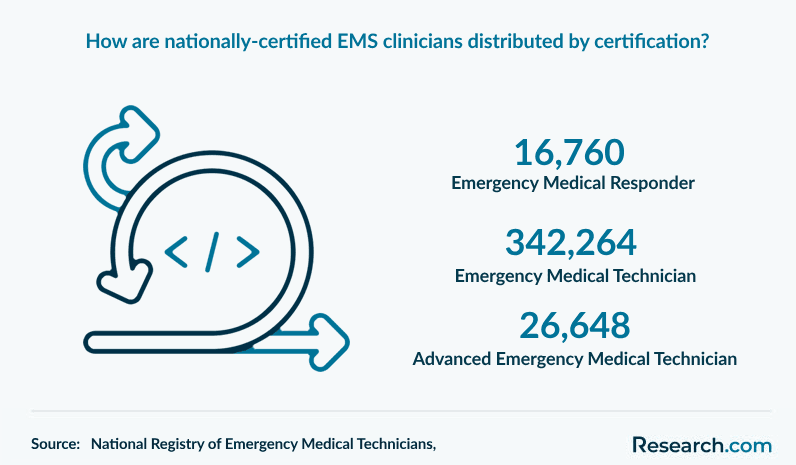
The tiered EMS certification structure plays a critical role in public safety and emergency response, but RN licensure can expand a clinician’s role into sustained care, specialty practice, leadership, and advanced education.
What is the job market like for EMT to RN online bridge graduates?
The RN labor market is much larger than the EMT and paramedic labor market, and both professions are projected to grow faster than the average for all occupations. Former EMTs may have a hiring advantage in emergency, trauma, transport, and critical care settings because they already understand urgent assessment and patient stabilization.
- RN demand: Employment of registered nurses is projected to grow 6 percent from 2023 to 2033, faster than the average for all occupations.
- Projected openings: Approximately 194,500 openings for registered nurses are projected each year, on average, over the decade.
- Healthcare demand drivers: Population aging and chronic disease management continue to increase the need for nursing care.
- EMT background: Prior EMS work can strengthen skills in assessment, prioritization, calm communication, and fast response.
- Work settings: RNs work in hospitals, ambulatory care, government, nursing and residential care, home health, schools, and community settings.
- BSN preference: Some employers prefer or require BSN-prepared nurses, even when ADN graduates are eligible for RN licensure.
- Specialty mobility: Emergency, critical care, transport, and travel nursing may appeal to former EMTs.
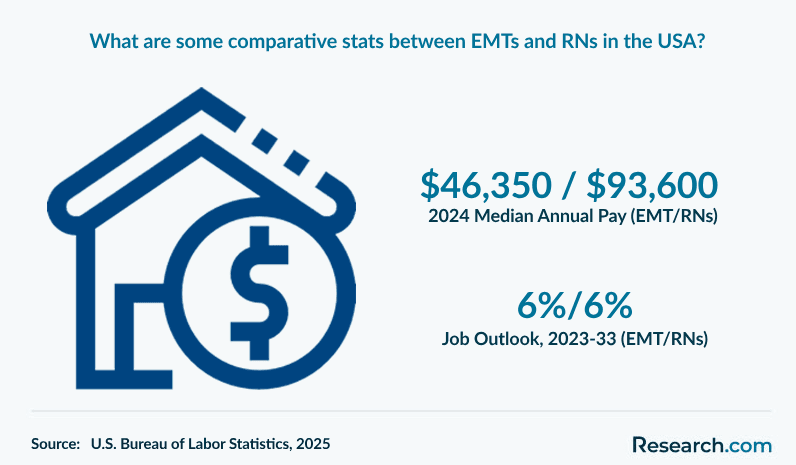
In 2024, the Bureau of Labor Statistics reported that emergency medical technicians and paramedics earned a median pay of $46,350 per year, or $22.28 per hour. The typical entry-level education was a postsecondary non-degree award, with no on-the-job training generally reported. In 2023, there were 270,400 EMT and paramedic jobs, with a projected employment change of 16,200 new jobs from 2023 to 2033, representing 6% growth.
Registered nurses had a median pay of $93,600 per year, or $45.00 per hour, in 2024. The typical entry-level education was a bachelor's degree, with no reported work experience in a related occupation or on-the-job training required. In 2023, there were 3,300,100 RN jobs, with a projected employment change of 197,200 new jobs from 2023 to 2033, also representing 6% growth.
The comparison shows two important points: both occupations are growing, but RN employment is much larger and RN median pay is substantially higher.
What are the current industry trends and future outlook for EMT to RN online bridge graduates?
Several healthcare trends make EMT-to-RN pathways relevant for working clinicians who want broader career options. The best-prepared graduates will be comfortable with technology, interdisciplinary care, patient education, and complex clinical decision-making.
- Telehealth and remote monitoring: Nurses are increasingly involved in virtual care, remote patient education, and follow-up support.
- Preventive and community care: Healthcare systems are placing greater emphasis on chronic disease management and care outside the hospital.
- Digital documentation: EHRs, medical devices, and data tools are part of routine nursing practice.
- Aging population: Older patients often require complex medication management, chronic care coordination, and long-term support.
- Specialty demand: Emergency, critical care, geriatrics, informatics, and other specialty areas continue to need skilled nurses.
- Team-based care: RNs work closely with physicians, therapists, pharmacists, social workers, and other professionals.
- Value of healthcare experience: EMTs often enter nursing school with real patient exposure and crisis-response skills.
- Flexible education: Hybrid and online nursing formats continue to support working adults, but clinical training remains essential.
- Advanced nursing pathways: RNs who pursue graduate education can move into APRN, leadership, education, or systems roles.
Some nurses also combine clinical practice with broader organizational or policy interests. For example, RNs interested in environmentally responsible healthcare operations may later consider the cheapest online master's in sustainability as a complement to clinical experience.
Key Insights
- Most “online” EMT to RN programs are hybrid: You may complete theory online, but RN preparation requires in-person labs, simulations, and supervised clinical hours.
- Eligibility is the first filter: Many bridge programs are actually paramedic-to-RN, LPN-to-RN, or healthcare-professional-to-RN tracks, so EMT-B applicants must confirm whether they qualify.
- Accreditation and state approval matter more than speed: Choose a program that supports NCLEX-RN eligibility in the state where you plan to practice.
- Total cost is bigger than tuition: Include prerequisites, fees, books, uniforms, clinical travel, background checks, immunizations, and NCLEX-RN costs.
- RN licensure can significantly improve career mobility: RNs had a median pay of $93,600 per year in 2024, compared with $46,350 for EMTs and paramedics, according to the Bureau of Labor Statistics.
- The RN job market is much larger: Registered nurses held 3,300,100 jobs in 2023, while EMTs and paramedics held 270,400 jobs.
- Outcomes should guide your decision: Ask every school for recent NCLEX-RN pass rates, graduation rates, clinical placement support, and state licensure documentation.
- EMT experience is valuable, but nursing is different: EMTs bring strong assessment and emergency response skills, while RN education adds care planning, medication management, documentation, patient education, and long-term clinical judgment.
References:
- Bureau of Labor Statistics, U.S. Department of Labor. (2025, April 18). EMTs and paramedics. Occupational Outlook Handbook. Bureau of Labor Statistics.
- Bureau of Labor Statistics, U.S. Department of Labor. (2025, April 18). Registered nurses. Occupational Outlook Handbook. Bureau of Labor Statistics.
- McAllister, R. (2024, October 30). Top 10 conditions that lead to ER visits in the U.S. for 2025. North American Community Hub Statistics. NCHStats.
- Payscale. (2025, March 25). Emergency Medical Technician (EMT) / Paramedic Hourly Pay in 2025. PayScale.
- Payscale. (2025, April 17). Registered Nurse (RN), Emergency Room Hourly Pay in 2025. PayScale.
- Payscale. (2025, May 14). Emergency Medical Technician (EMT) - Basic Hourly Pay in 2025. PayScale.
- Payscale. (2025, May 14). Registered Nurse (RN) Hourly Pay in 2025. PayScale.
- Payscale. (2025, April 21). Salary for Industry: Emergency Medical Services - Payscale. PayScale.
Other Things You Should Know About EMT to RN Online Bridge Programs
Yes, most affordable EMT to RN online bridge programs in 2027 are accredited by the National Council of State Boards of Nursing (NCSBN). Accreditation ensures graduates meet nursing standards and are eligible for the NCLEX-RN exam, a requirement for RN licensure.
Most EMT to RN bridge programs require about 500 to 700 supervised clinical hours before graduation. These hours usually include medical-surgical, pediatrics, obstetrics, and acute-care rotations, plus hands-on skills validation in a nursing lab. State boards of nursing may set additional hour minimums.


