2027 Online Electrical Engineering Degrees With Scholarships for Working Professionals

Co-Founder and Chief Data Scientist
Choosing an online electrical engineering degree while working means balancing accreditation, lab access, tuition, schedule, and career return. The decision matters because the U. S. Bureau of Labor Statistics projects employment for electrical and electronics engineers to grow 9% from 2024 to 2034, faster than the average for all occupations. This guide is for adults who want to finish a bachelor's degree, earn a master's, or move into power, electronics, controls, communications, or semiconductor roles. You'll learn how programs work, what they cost, where scholarships fit, and how to compare options confidently.
Key Things You Should Know
- Accreditation is the first filter: for bachelor's programs, ABET accreditation is often the most important quality signal for engineering employers, graduate schools, and some professional licensure paths.
- Working adults should compare total cost, not just tuition; College Board's 2024-25 pricing shows average published tuition and fees of $11,610 for in-state public four-year colleges and $43,350 for private nonprofit four-year colleges.
- Scholarships, transfer credits, military benefits, and employer tuition assistance can materially reduce out-of-pocket cost; many employers can provide up to $5,250 per year in tax-free educational assistance under current federal tax rules.
What is an online electrical engineering degree for working professionals, and how does it work?
An online electrical engineering degree is a bachelor's or master's program delivered mostly through a learning platform rather than daily campus attendance. Students study circuits, electronics, signals, power systems, electromagnetics, control systems, embedded systems, and design. For working professionals, the main value is that lectures, homework, simulations, advising, and collaboration can often happen during evenings, weekends, or asynchronous study blocks.
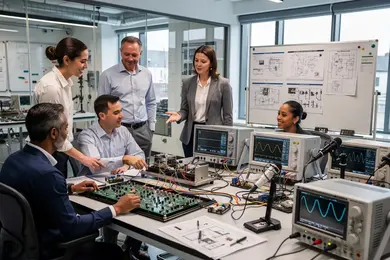
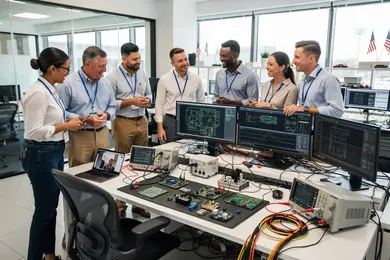
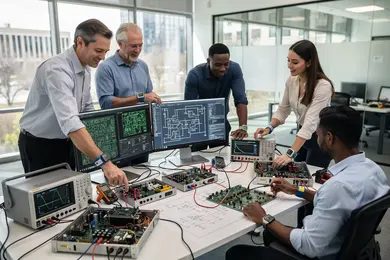
Online does not mean "hands-off." Electrical engineering is math-heavy and design-focused, so reputable programs still require labs, proctored exams, team projects, and sometimes short campus residencies or approved local lab arrangements. Some programs ship lab kits; others use remote instrumentation, circuit simulation software, or scheduled in-person labs.
The best fit depends on where you are starting. A first-time undergraduate, an associate-degree transfer student, and an experienced engineer seeking a master's degree need different program structures. The table below summarizes the major online degree routes and when each one typically makes sense.
| Online degree route | Best fit | Typical academic focus | Key decision factor |
| Bachelor of Science in Electrical Engineering | Adults seeking entry into engineering roles or a formal engineering credential | Calculus, physics, circuits, electronics, signals, controls, power, design projects | ABET accreditation and lab delivery model |
| Bachelor completion pathway | Students with transfer credits, an associate degree, or prior college coursework | Upper-division engineering courses plus remaining general education requirements | Transfer credit evaluation before enrollment |
| Master of Science in Electrical Engineering | Engineers or technical professionals seeking specialization or advancement | Power systems, signal processing, communications, microelectronics, controls, machine learning applications | Prerequisite alignment and employer relevance |
| Graduate certificate | Professionals who need a focused skill update without a full degree | Specialized coursework in areas such as power electronics, RF, embedded systems, or semiconductors | Whether credits can later stack into a master's program |
A working professional should choose a full degree when the target role requires an engineering credential, a promotion path depends on graduate education, or licensure may matter later. A certificate may be enough when the goal is to fill a narrow skills gap, such as learning power electronics for an internal mobility move.
Are online electrical engineering degrees accredited and respected by U.S. employers?
Accredited online electrical engineering degrees can be respected by U.S. employers when the institution is legitimate, the curriculum is rigorous, and the program matches the credential expected for the role. For undergraduate electrical engineering, ABET accreditation is especially important because it evaluates engineering curriculum, faculty qualifications, student outcomes, continuous improvement, and institutional support.
ABET accredits programs, not just schools, so students should confirm the exact online electrical engineering program name in ABET's public database or on the school's official accreditation page. Regional or institutional accreditation also matters because it affects federal financial aid eligibility, transferability, and employer tuition reimbursement policies.
Employer acceptance usually depends less on whether courses were online and more on whether the degree is from a recognized, accredited university with evidence of hands-on learning. Many transcripts and diplomas do not label the degree as "online," but students should not rely on that alone. The stronger question is whether the program prepares students to design, test, document, and troubleshoot real electrical systems.
Before applying, use this checklist to avoid accreditation mistakes that can be expensive to fix later:
- Confirm institutional accreditation through the U.S. Department of Education-recognized accreditor listed by the school.
- For bachelor's programs, verify whether the specific electrical engineering program is ABET-accredited, not merely whether the university has other ABET-accredited programs.
- Ask whether the online format has the same curriculum, faculty oversight, and degree title as the campus program.
- If you may pursue Professional Engineer licensure, check your state licensing board's education rules before enrolling.
- Review employer tuition reimbursement rules because some companies require accreditation, minimum grades, or preapproval before the course starts.
A common red flag is a program that emphasizes speed and convenience while being vague about labs, accreditation, faculty credentials, or engineering design outcomes. Electrical engineering is not a field where a weak credential is easy to overcome, especially for safety-critical industries such as power, aerospace, medical devices, and defense.
How do online electrical engineering programs compare to campus-based programs in flexibility and quality?
Online electrical engineering programs can match campus-based programs in academic quality when they use the same faculty standards, accredited curriculum, lab expectations, and assessment methods. The main difference is delivery. Online students need more self-direction, while campus students often get easier access to physical labs, peer study groups, and spontaneous faculty interaction.
Flexibility is the strongest advantage for working professionals. Asynchronous lectures, recorded demonstrations, and remote office hours can make it possible to keep a job while studying. However, flexibility does not remove workload. Engineering courses often require long problem sets, multi-step projects, software tools, and scheduled exams.
The table below compares the practical differences that matter most for adults deciding between online and campus electrical engineering programs.
| Factor | Online electrical engineering | Campus-based electrical engineering | Best choice when |
| Schedule | Often asynchronous or evening-friendly, with some fixed exam or lab times | Usually follows daytime class and lab schedules | Online is better if work hours are hard to change |
| Labs | May use shipped kits, simulations, remote labs, or short residencies | Usually uses physical lab facilities on campus | Campus is better if you need frequent hands-on equipment access |
| Networking | Depends on virtual teams, online advising, employer connections, and optional residencies | Often stronger for local internships, student clubs, and research labs | Campus is better if you are early-career and need local recruiting access |
| Cost control | Can reduce relocation, commuting, and lost wages | May offer more campus employment and research assistant opportunities | Online is better if staying employed is central to affordability |
| Learning style | Requires strong time management and comfort with digital tools | Provides more in-person structure and immediate classroom feedback | Campus is better if you struggle to learn independently |
Online quality also varies by discipline. Engineering programs must solve lab and design challenges differently than some science fields; for comparison, students exploring earth systems, mapping, or field-based resource work may find that a geology online degree has different fieldwork and lab expectations than electrical engineering.
The trade-off is straightforward: online study is often better for employed adults who cannot relocate, while campus study may be better for students who want daily lab access, undergraduate research, or a highly structured learning environment. Neither format is automatically superior; the delivery model must fit how you learn and what your target employers expect.
What admission requirements do online electrical engineering bachelor's and master's programs typically have?
Admission requirements vary by school and degree level, but electrical engineering programs usually look for evidence that the applicant can handle advanced math, physics, programming, and technical problem-solving. Working professionals should pay close attention to prerequisites because missing calculus or physics can add time and cost before major coursework begins.
Bachelor's programs typically require a high school diploma or equivalent, transcripts from all prior colleges, and readiness for calculus. Transfer-friendly programs may also expect completed lower-division courses such as calculus I and II, calculus-based physics, chemistry, introductory programming, and circuit analysis. Some universities require a minimum GPA for direct admission into the engineering major after general admission to the institution.
Master's programs usually require a bachelor's degree in electrical engineering, computer engineering, or a closely related field. Applicants from physics, mechanical engineering, applied math, or computer science may be considered but may need bridge courses in circuits, signals, or electromagnetics. GRE requirements have become more flexible at many schools, but students should verify current rules rather than assuming tests are waived.
The following requirements are the ones working adults most often need to prepare before applying:
- Official transcripts showing prior coursework, grades, and degree completion where applicable.
- Prerequisite math and science courses, especially calculus, differential equations, linear algebra, probability, and calculus-based physics.
- Programming experience in languages or tools such as Python, C, MATLAB, or similar engineering software.
- Statement of purpose explaining career goals, technical interests, and why the online format fits the applicant's schedule.
- Letters of recommendation, often from supervisors, professors, or technical leads who can evaluate analytical ability.
- For international or multilingual applicants, proof of English proficiency if required by the institution.
Avoid applying only to the fastest program without checking prerequisites. If a school admits you but requires several deficiency courses, the real timeline may be much longer than the advertised degree length. Ask for a written degree plan before committing.
How long do online electrical engineering degrees take, and what do they cost working adults?
Online electrical engineering bachelor's degrees commonly take about four years for first-time full-time students, but working adults often take longer because they study part time. Transfer students may finish faster if prior credits apply cleanly to general education, math, science, and lower-division engineering requirements. Master's programs often take one to three years depending on course load, thesis requirements, and employer schedule.
Cost varies widely because public universities, private nonprofit universities, private for-profit institutions, residency rules, transfer credit policies, and technology fees differ. College Board reported average published tuition and fees of $11,610 for in-state public four-year institutions and $43,350 for private nonprofit four-year institutions for 2024-25. Those figures are not online electrical engineering prices, but they show why comparing net cost after aid is more useful than comparing sticker price alone.
The table below shows cost categories working adults should include when estimating the real price of an online electrical engineering degree.
| Cost factor | Why it matters | What to ask before enrolling |
| Tuition per credit | Engineering degrees require many credits, so small per-credit differences can become significant | Is online tuition charged by residency, program, or flat rate? |
| Engineering and technology fees | Online labs, software access, proctoring, and simulation tools may carry extra fees | Are required software, lab kits, and exam fees included? |
| Transfer credit | Accepted credits can reduce both time and tuition | Will the school provide a course-by-course transfer evaluation before admission? |
| Residency or campus visits | Some online engineering programs require short in-person labs or orientations | How many visits are required, and what travel costs should I expect? |
| Lost wages or reduced hours | A cheaper full-time program may still be costly if it forces you to cut work hours | Can I complete the program part time without losing course availability? |
| Financial aid and employer benefits | Scholarships, grants, and reimbursement can lower net cost | Which aid applies to online students and part-time enrollment? |
Working adults should also compare pace. A part-time schedule can protect income and reduce burnout, but it may delay career mobility. An accelerated schedule can shorten time to completion, but it can be risky for students taking circuits, physics, and calculus-heavy courses while working full time.
A practical approach is to build three budgets before enrolling: a minimum-cost plan using transfer credits and part-time study, a balanced plan using employer tuition assistance each year, and a faster plan that shows the cost of heavier course loads. This makes the trade-off visible before you sign loan documents.
What scholarships, tuition discounts, and employer tuition benefits exist for online electrical engineering students?
Scholarships and tuition benefits for online electrical engineering students come from universities, employers, professional associations, military education programs, state grant agencies, and private foundations. The most important point is that online students are not automatically excluded, but eligibility depends on enrollment status, accreditation, GPA, citizenship or residency, and whether the program is degree-seeking.
Employer tuition assistance can be especially valuable for working professionals. Under current federal tax rules, employers may provide up to $5,250 per year in educational assistance that can be excluded from taxable income. For readers whose companies support engineering education, that benefit can make part-time study more affordable than paying out of pocket first and hoping for a raise later.
Common funding options include the following, each with different timing and documentation rules:
- University merit scholarships for admitted online students with strong academic records or technical experience.
- Need-based institutional grants that may require the FAFSA and satisfactory academic progress.
- Departmental engineering scholarships funded by alumni, industry partners, or college-level endowments.
- Professional association scholarships from engineering, power, electronics, semiconductor, and communications organizations.
- Employer tuition reimbursement or direct billing programs tied to approved majors, grades, and continued employment.
- Military and veteran education benefits, including GI Bill benefits and tuition assistance where applicable.
- State workforce grants for residents entering high-demand technical fields, depending on state rules.
To improve your chances, apply early and treat scholarship deadlines like admissions deadlines. Many awards close before the semester begins, and some require essays, recommendation letters, proof of enrollment, or a declared engineering major.
Working adults should also look beyond scholarships. Transfer credits, credit for prior learning where appropriate, in-state online tuition, cohort discounts, union education benefits, and employer partnerships can reduce net cost even when scholarship awards are limited. The mistake to avoid is waiting until after enrollment to ask about funding; by then, some benefits may no longer be available for that term.
What core courses, specializations, and projects are included in online electrical engineering curricula?
Online electrical engineering curricula are built around math, physics, circuits, electronics, signals, systems, and engineering design. Bachelor's programs emphasize broad foundations and ABET-style outcomes, while master's programs allow deeper specialization in areas such as power systems, communications, controls, embedded systems, photonics, signal processing, or microelectronics.
Most bachelor's students should expect a sequence that becomes progressively more applied. Early courses build mathematical and scientific fluency. Middle courses introduce devices, circuits, and systems. Upper-division courses require design decisions, modeling, testing, teamwork, and documentation.
The table below summarizes common curriculum areas and how they connect to workplace skills.
| Curriculum area | Common course examples | Workplace skill developed |
| Mathematics and science | Calculus, differential equations, linear algebra, probability, physics | Modeling electrical behavior and solving engineering problems |
| Circuits and electronics | Analog circuits, digital logic, semiconductor devices, electronics lab | Designing, testing, and troubleshooting hardware |
| Signals and systems | Signal processing, communications, control systems | Analyzing data, feedback, noise, and system behavior |
| Power and energy | Power systems, machines, power electronics, renewable integration | Supporting grids, industrial systems, utilities, and electrification projects |
| Computing and embedded systems | Microcontrollers, programming, digital systems, real-time systems | Building intelligent devices, automation systems, and connected hardware |
| Capstone or thesis | Senior design, applied project, thesis, or industry-sponsored project | Demonstrating integrated design, teamwork, communication, and testing |
Specialization should follow career intent. Power systems fit utilities, renewable energy, industrial facilities, and grid modernization. Embedded systems fit robotics, automotive electronics, consumer devices, and aerospace. Signal processing and communications fit wireless, defense, radar, audio, imaging, and data transmission. Microelectronics and semiconductors fit chip design, fabrication support, testing, and device engineering.
Students drawn to software-heavy hardware roles should compare electrical engineering with a computer science degree online. Electrical engineering is usually stronger for circuits, devices, power, and physical systems, while computer science is usually stronger for algorithms, software architecture, databases, and application development.
Projects matter because they prove you can apply theory. When evaluating programs, ask to see examples of recent online capstone projects, lab kits, simulation platforms, and industry-sponsored design work. A strong project portfolio can help working adults show career readiness even if they did not complete a traditional campus internship.
Which electrical engineering careers can online degree graduates pursue, and in which industries?
Online electrical engineering graduates can pursue roles in power, electronics, automation, telecommunications, aerospace, defense, semiconductor manufacturing, transportation, medical devices, robotics, renewable energy, and industrial controls. The degree is broad, but the first job or promotion often depends on specialization, projects, prior experience, and software tool proficiency.
Electrical engineers typically design, test, analyze, and improve electrical systems or electronic devices. A power engineer may model grid equipment, review protection schemes, and support renewable integration. An electronics engineer may design circuit boards, test prototypes, and troubleshoot performance issues. A controls engineer may program automation systems and tune feedback loops in manufacturing or energy facilities.
The table below connects common career paths with the type of work students should prepare for while in school.
| Career path | Typical responsibilities | Helpful academic focus | Industries hiring |
| Power systems engineer | Analyze generation, transmission, distribution, protection, and grid reliability | Power systems, machines, power electronics, renewable energy | Utilities, energy developers, consulting firms, industrial facilities |
| Electronics engineer | Design and test analog, digital, or mixed-signal circuits and devices | Circuits, electronics, semiconductor devices, PCB design | Consumer electronics, defense, medical devices, manufacturing |
| Controls engineer | Develop automation, feedback, instrumentation, and process control systems | Control systems, programming, sensors, industrial networks | Manufacturing, robotics, energy, automotive, aerospace |
| Communications or RF engineer | Work on wireless systems, antennas, signal transmission, and network performance | Signals, electromagnetics, communications, RF design | Telecommunications, defense, aerospace, satellite systems |
| Embedded systems engineer | Integrate hardware and software for connected devices and real-time systems | Microcontrollers, programming, digital systems, computer architecture | Automotive, robotics, IoT, medical technology, aerospace |
| Semiconductor or test engineer | Support device design, fabrication, validation, yield improvement, or automated testing | Microelectronics, semiconductor physics, statistics, test systems | Chip manufacturers, electronics firms, research labs |
Current hiring trends are shaped by electrification, renewable energy, grid resilience, semiconductor investment, automation, and AI-enabled systems. AI is not replacing the need for electrical engineering fundamentals; instead, it is changing the tools engineers use for simulation, optimization, testing, documentation, and design verification.
Professionals interested in sustainability infrastructure should also compare related engineering routes, including an environmental engineer degree online, which may align better with water systems, pollution control, compliance, and environmental remediation than circuit- or power-focused electrical engineering.
This degree is a strong fit for people who enjoy math, systems thinking, troubleshooting, and technical design. It may not be the best fit for students who want minimal math, purely managerial coursework, or a quick credential without labs and rigorous problem solving.
What salary ranges and job outlook can electrical engineers expect across U.S. regions?
Salary potential varies by role, region, industry, experience, clearance requirements, and specialization. The U.S. Bureau of Labor Statistics reported a median annual wage of $118,780 for electrical and electronics engineers in May 2024. That figure is a national median, not a promise; early-career workers, technicians transitioning into engineering, and engineers in lower-cost regions may see different compensation than experienced specialists in high-demand industries.
Job outlook is also favorable but not uniform. BLS projects 9% employment growth for electrical and electronics engineers from 2024 to 2034. For working adults, this means the field has a stronger-than-average demand signal, but local opportunities will still depend on regional employers, infrastructure investment, manufacturing activity, and federal contracting.
The table below provides a practical way to think about regional salary context without treating any number as guaranteed.
| Region type | Typical market characteristics | Salary context for electrical engineers | Decision implication |
| High-cost technology hubs | Concentrations of semiconductor, electronics, aerospace, software-hardware, and advanced manufacturing employers | Compensation may be higher, but housing and commuting costs can reduce real purchasing power | Compare salary offers against cost of living and remote or hybrid options |
| Energy and utility regions | Strong demand for power systems, grid modernization, renewables, transmission, and industrial reliability | Pay may be stable and benefits can be strong, especially for experienced power engineers | Power specialization and PE licensure planning may improve long-term options |
| Defense and aerospace corridors | Employers often value RF, controls, embedded systems, electronics testing, and systems engineering | Compensation may reflect clearance requirements, specialized tools, and contract funding cycles | Citizenship, clearance eligibility, and documentation skills can matter |
| Manufacturing-heavy regions | Controls, automation, instrumentation, robotics, and maintenance engineering are common | Pay varies by industry, shift demands, and plant complexity | Hands-on lab and PLC or automation experience can be valuable |
| Smaller or rural markets | Fewer employers but possible opportunities in utilities, facilities, manufacturing, and consulting | Salary may be lower than national tech hubs, but cost of living may also be lower | Online programs can help students study without relocating immediately |
To evaluate return on investment, compare net program cost with realistic target roles in your region, not only national salary headlines. A student already working for a utility with tuition support may have a different ROI than a career changer paying full tuition and seeking an entry-level role in a competitive market.
Professional growth can also depend on credentials after graduation. Some engineers pursue the Fundamentals of Engineering exam and eventually Professional Engineer licensure, especially in power, consulting, public infrastructure, and safety-related work. Requirements vary by state, so licensure planning should begin before choosing a non-ABET or nontraditional program.
How can working professionals choose a reputable online electrical engineering program that fits their goals?
Choosing a reputable online electrical engineering program starts with the job you want. A low-cost program is not a bargain if it lacks the accreditation, labs, prerequisites, or specialization needed for your target role. Likewise, a prestigious program may not be practical if the schedule conflicts with full-time work or requires travel you cannot manage.
Use a structured comparison process before applying. The following steps can help working professionals avoid common enrollment mistakes:
- Define your target outcome: entry-level engineering role, internal promotion, graduate specialization, PE licensure path, or technical management transition.
- Verify institutional accreditation and, for bachelor's programs, whether the exact electrical engineering program is ABET-accredited.
- Request a written transfer credit evaluation and a term-by-term degree plan before committing.
- Ask how labs work online, including equipment, software, proctoring, residencies, and safety requirements.
- Compare net cost after scholarships, employer tuition benefits, military benefits, grants, and required fees.
- Review faculty expertise, specialization options, capstone examples, and industry partnerships.
- Check student support for online learners, including tutoring, advising, career services, library access, disability services, and technical help.
- Ask admissions advisors direct questions about course rotation so you know whether part-time students can progress without waiting extra semesters.
Red flags include unclear accreditation language, pressure to enroll immediately, no transparent lab plan, vague total cost estimates, weak transfer policies, and promises of guaranteed jobs or salaries. A reputable school should be willing to explain requirements in writing and give you time to compare options.
Students who are unsure whether engineering is the right direction should compare adjacent paths before committing. If you prefer data systems, archives, digital information access, or knowledge organization rather than hardware design and calculus-heavy engineering, reviewing whether is library science a good degree may help clarify whether a technical engineering route is truly the best fit.
The best program is the one that aligns accreditation, schedule, specialization, cost, and support with your professional goal. For many working adults, that means choosing a slightly slower but better-supported program over the fastest advertised option.
Other Things You Should Know About Electrical Engineering
Yes, if the degree is from a legitimate, accredited institution and gives you the technical preparation employers expect. For bachelor's students, ABET accreditation is often the strongest signal of engineering-program quality.
Some programs are fully online, while others require short residencies, in-person labs, orientations, or proctored exams. Always ask for the exact on-campus requirements before enrolling.
Eligibility criteria for scholarships in 2027 often include maintaining a minimum GPA, demonstrating financial need, or showcasing leadership skills. Some programs may require proof of work experience or employer endorsement to qualify. Always check specific scholarship requirements of the online program you are considering.
Yes, but the degree must meet the education requirements set by your state licensing board, and graduation from an ABET-accredited program is the standard route. Most states also require the FE and PE exams, plus at least four years of qualifying work experience under a licensed engineer.
References
- Electrical Engineer Salary in the United States 2026 | Cake https://www.cake.me/resources/industry-job-overview/electrical-engineer-salary
- Best Electrical Engineering Master's Degrees Online 2026 https://www.onlineu.com/degrees/masters-electrical-engineering
- Inside the Best Online Bachelor's in Electrical Engineering Degrees https://www.onlinecolleges.me/engineering-degrees/bachelors/electrical-engineering/
- Electrical and Electronic Engineering (Top-up) (Online) BEng Tech (Hons) https://www.tees.ac.uk/undergraduate_courses/engineering_&_construction/beng_tech_(hons)_electrical_and_electronic_engineering_(top-up)_(online).cfm
- Companies That Pay for Your Degree | ComputerScience.org https://www.computerscience.org/resources/companies-that-pay-for-college/
- Online Electrical Engineering Degrees - BSEE, MSEE https://www.onlineengineeringprograms.com/electrical
- 6 Best Online Electrical Engineering Degree Programs for Future Engineers https://www.myprivatetutor.com/blog/best-online-electrical-engineering-degree-programs
- Enroll for the Best Courses for Electrical Engineers with ChipEdge https://chipedge.com/best-courses-for-electrical-engineers
- Electrical Engineering Job Market: 2026 Outlook & Pay https://pathwise.io/electrical-engineering-job-market/