2027 Fastest Way To Become a Counselor in Arizona

Co-Founder and Chief Data Scientist
If you want to become a counselor in Arizona as quickly as possible, the main decision is not whether to “speed through” training. It is how to choose the shortest legitimate path that still qualifies you for the credential, clinical supervision, exam, and job setting you want. Arizona offers several counseling routes, but the fastest option depends on whether you are aiming for licensed professional counseling, substance abuse counseling, school counseling, behavioral health support, or a related human services role.
This guide explains the fastest practical ways to enter counseling work in Arizona, what you can do with a bachelor’s degree, how accelerated and online programs compare, what employers look for, and when a faster pathway is worth the trade-off. It is designed for career changers, psychology and human services students, educators moving into counseling, and working adults who need a realistic plan for 2026.
Quick answer: the fastest path to counseling work in Arizona
- The quickest route into paid counseling-related work is usually a bachelor’s-level behavioral health, case management, or substance abuse support role, but full independent counseling licensure typically requires graduate education and supervised experience.
- Arizona counselor salaries are reported at an average of about $70,251 annually, although pay varies widely by license level, specialty, employer, city, and experience.
- The fastest responsible path is to choose a licensure-aligned program, complete supervised hours without documentation gaps, prepare early for required exams, and avoid programs that do not clearly meet Arizona requirements.
What this guide covers
- Fastest legitimate route to licensed counseling in Arizona
- Bachelor’s-level counseling and behavioral health jobs in Arizona
- Accelerated counseling degree options in Arizona
- Online versus campus-based counseling programs
- Risks and challenges in fast-track counseling programs
- How Arizona employers evaluate accelerated-program graduates
- Cost considerations for online and fast-track counseling programs
- Substance abuse counseling as a faster career pathway
- School counseling requirements in Arizona
- Continuing education after licensure
- Using social work credentials to expand counseling opportunities
- Counselor demand in Arizona
- Counselor salary expectations in Arizona
- Whether the accelerated route is worth it
What is the fastest way to become a licensed counselor in Arizona?
The fastest way to become a licensed counselor in Arizona is to follow a licensure-ready plan from the start: complete a qualifying graduate counseling program, document supervised clinical experience correctly, pass the required examination, and submit application materials as soon as you are eligible. Skipping steps is not an option. The time savings come from avoiding delays, choosing the right program format, and planning supervision early.
After earning a bachelor’s degree, full licensure commonly takes three to four years. A master’s program usually takes two to three years, followed by at least one year of supervised post-graduate experience. Students comparing counseling fields may also want to review counseling psychology career and program options to understand how counseling, psychology, therapy, and related mental health roles differ.
| Step | How to move faster without risking eligibility | What to verify before you commit |
| Choose the right graduate program | Prioritize programs designed around Arizona counseling licensure requirements and clinical training. | Confirm coursework, practicum, internship, and accreditation expectations before enrolling. |
| Prepare documents early | Collect transcripts, supervised experience records, background check materials, and application forms before the final deadline. | Make sure every hour and supervisor signature is documented in the format Arizona requires. |
| Plan supervised clinical hours | Line up supervision before graduation or immediately after becoming eligible so you do not lose months searching. | Use supervisors who understand Arizona rules and can verify your work accurately. |
| Study for the licensing exam | Begin review while coursework is still fresh instead of waiting until after graduation. | Arizona applicants may prepare for the National Counselor Examination (NCE), National Clinical Mental Health Counseling Examination (NCMHCE), or Certified Rehabilitation Counselor (CRC) Exam, depending on the credential pathway. |
| Use local professional networks | Attend workshops, meet supervisors, and look for internships through Arizona counseling and behavioral health organizations. | Ask whether the network offers exam preparation, ethics training, or clinical supervision leads. |
A fast plan should still be a defensible plan. If a program promises unusually quick completion, ask how it handles practicum placement, internship scheduling, exam preparation, and licensure documentation. A shorter academic calendar does not help if you graduate without the experience records needed to move forward.
What counseling careers can you pursue in Arizona with only a bachelor’s degree?
A bachelor’s degree can help you enter Arizona’s behavioral health workforce, but it usually does not qualify you for independent clinical counseling practice. For many students, the smarter strategy is to use a bachelor’s-level role to gain experience, confirm the field is a good fit, and build hours or skills that support graduate study later.
| Career option | Typical bachelor’s-level entry point | Best fit for |
| Substance Abuse Counselor through the Licensed Associate Substance Abuse Counselor pathway | A relevant bachelor’s degree plus at least 30 credit hours of counseling coursework, more than 3,200 hours of supervised clinical experience, and a licensing exam. | Students who want client-facing recovery work and are willing to complete supervised experience requirements. |
| Behavioral Health Technician | Support roles in residential treatment, community behavioral health, nonprofit programs, and crisis-related service settings. | Applicants who want hands-on exposure before pursuing a master’s degree or licensure. |
| Case Manager | Client coordination, referral support, benefits navigation, treatment plan support, and communication with service providers. | People who are organized, comfortable with documentation, and interested in social services or public health systems. |
These roles can be meaningful, but they are not interchangeable with licensed professional counselor roles. Before accepting a job, ask whether the position provides supervised clinical experience, training in ethical documentation, and exposure to the population you want to serve. If you are still mapping out the overall timeline, Research.com’s guide on how long it can take to become a counselor can help you compare broader counseling pathways.
Are there accelerated counseling degree programs in Arizona?
Arizona students can find intensive and flexible counseling programs, but they should be cautious with the word “accelerated.” In counseling, faster does not always mean fewer requirements. It often means year-round coursework, shorter course terms, full-time enrollment, heavier reading loads, and earlier practicum planning.
| Program example | Format and structure | Important details for fast-track students |
| Arizona State University | Online Master of Counseling with full-time, year-round study; 20 classes lasting between 7.5 to 15 weeks. | The curriculum covers assessment, trauma response, case management, and culturally responsive clinical skills. Tuition is approximately $682 per credit hour for residents, totaling about $40,920 for all 60 credits. |
| Northern Arizona University | CACREP-accredited Master’s in Clinical Mental Health Counseling with 60 credits and face-to-face learning across multiple campuses. | The program is not necessarily branded as accelerated, but students may shorten time-to-completion by taking maximum course loads consecutively when permitted. |
At the time described here, Arizona programs do not clearly advertise a 12 to 18 month fastest online counseling master’s Arizona route. That matters because counseling licensure depends on both coursework and supervised practice. A program that compresses classes but creates delays in practicum placement may not be faster in real life.
Graduate certificates can sometimes strengthen a counseling résumé or add focused training after a degree, but they usually do not replace the master’s degree needed for full counseling licensure. If you already have graduate education and want targeted specialization, compare online graduate certificate programs in counseling carefully against Arizona credential requirements.
The following chart provides context on the ethnicity of master’s students in CACREP-accredited programs and helps show who is moving through the counseling education pipeline.
Are online counseling programs in Arizona faster than traditional ones?
Online counseling programs can be faster for some Arizona students, but not because online education removes clinical requirements. The advantage is usually logistical: fewer commutes, more flexible scheduling, multiple start dates, and the ability to complete coursework while working. The clinical portion still requires approved field experiences and proper supervision.
| Factor | Online counseling program | Campus-based counseling program |
| Schedule flexibility | Often easier for working adults because lectures and assignments may be available outside fixed classroom hours. | More structured, which can help students who need in-person accountability. |
| Commute and relocation | Can reduce travel time and make graduate study possible for students outside Phoenix, Flagstaff, or other campus areas. | May require regular travel or relocation, but also provides direct access to campus resources. |
| Start dates | Some online programs offer several entry points during the year. | Traditional cohorts may begin less frequently. |
| Practicum and internship | May be arranged near the student’s community, but placement support varies by school. | Campus programs may have established local placement relationships. |
| Best choice when | You need to keep working, live far from campus, or need a more adaptable weekly schedule. | You learn better in person, want frequent faculty interaction, or need structured networking. |
The key question is not simply “Is online faster?” It is whether the program can help you secure field placements on time. A student who finishes online coursework quickly but waits months for an internship site may lose the expected time savings.
What challenges do fast-track counseling students face?
Accelerated counseling study can work well for disciplined students, but it compresses academic, clinical, administrative, and personal demands into a shorter window. The biggest risks are not only heavy coursework; they are burnout, weak supervision planning, and incomplete licensure documentation.
- Heavy academic pacing: Shorter terms and larger course loads can leave less time to absorb counseling theories, ethics, assessment methods, and case conceptualization.
- Clinical placement pressure: Required supervised experience can be difficult to schedule if practicum or internship sites are limited or competitive.
- Exam preparation gaps: Moving too quickly from coursework to the NCE, NCMHCE, or CRC Exam can increase pressure if students have not built review time into the plan.
- Work and family strain: Many fast-track students are employed adults. Without a realistic weekly schedule, the program can crowd out rest, income stability, and family responsibilities.
- Less time for networking: Students in compressed programs may miss mentoring, professional association events, and informal referrals that often lead to supervision and jobs.
- Administrative mistakes: Background checks, transcripts, supervisor forms, and Arizona-specific requirements such as the Statutes/Regulations tutorial can slow candidates who wait until the end.
- Greater consequences for setbacks: A failed course, delayed placement, missed exam window, or documentation problem can erase the benefit of an accelerated calendar.
| Common fast-track mistake | Better approach |
| Choosing the shortest program without checking licensure alignment. | Confirm the program’s coursework, practicum, internship, and accreditation fit your Arizona credential goal. |
| Assuming online automatically means easier. | Evaluate workload, faculty access, field placement support, and exam preparation resources. |
| Waiting to find a supervisor after graduation. | Start networking for supervision during the program and ask faculty where recent graduates completed hours. |
| Focusing only on tuition. | Compare fees, books, travel, lost work time, exam costs, background checks, and unpaid internship demands. |
| Ignoring self-care and clinical readiness. | Build a sustainable schedule that protects sleep, study time, supervision quality, and ethical practice. |
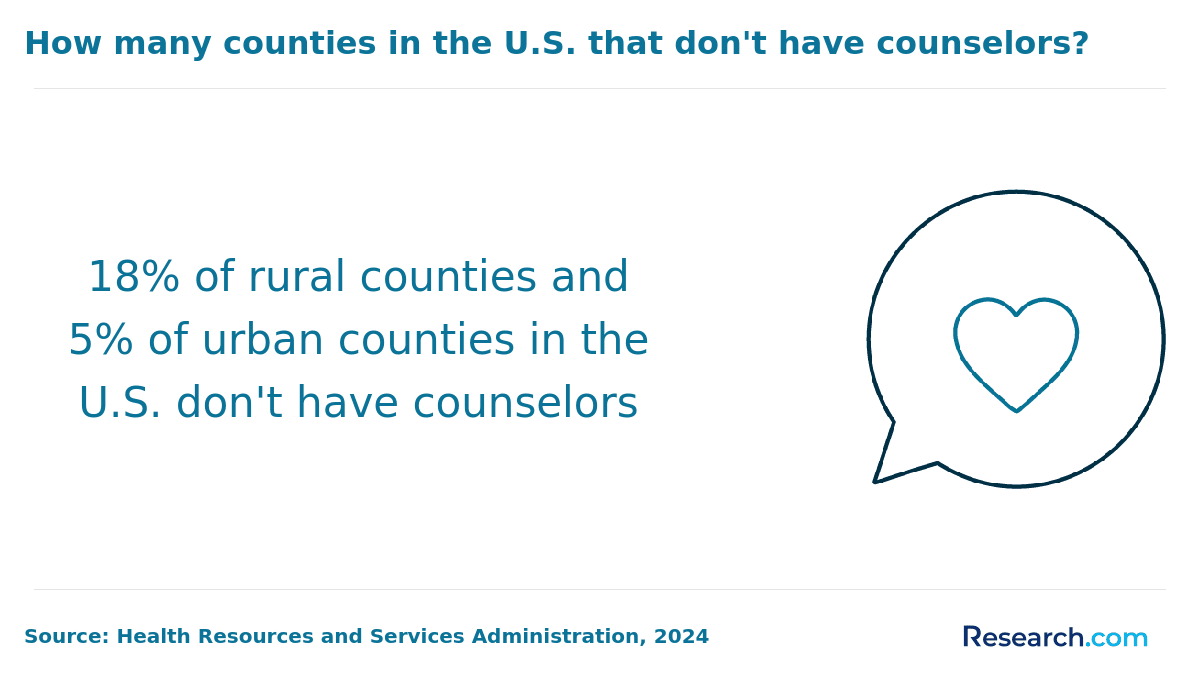
The image below shows the broader access problem by highlighting how many U.S. counties currently have no counselors at all.
How do employers in Arizona view fast-track counselors?
Arizona employers may be open to accelerated-program graduates, but they still evaluate the same core question: can this person provide safe, ethical, and effective care under the role’s requirements? A fast degree can help you enter the applicant pool sooner, but it does not replace clinical judgment, supervision quality, cultural competence, or documentation skills.
- Adaptability can be an advantage: Graduates who completed intensive programs often show discipline, time management, and comfort with changing demands.
- Prior work experience matters: Career changers from education, social work, healthcare, public service, or human services may bring communication and crisis-response skills that employers value.
- Clinical depth is closely reviewed: Hiring managers may examine practicum quality, internship settings, supervisor feedback, and client population experience.
- Technology readiness is increasingly relevant: Counseling workplaces often use telehealth tools, electronic records, digital scheduling, and outcome tracking, so comfort with technology can help.
- Licensure progress still carries weight: Employers want to know where you are in the credentialing process and whether your supervision plan is realistic.
To make a fast-track background stronger, be ready to explain your field placement experience, supervision model, crisis training, ethical decision-making process, and familiarity with Arizona practice expectations. Employers are less concerned with whether a program was fast and more concerned with whether the graduate is prepared.
Are fast-track and online counseling programs in Arizona more affordable?
Fast-track and online counseling programs can reduce some costs, but affordability depends on the full price of attendance, not just tuition. Students should compare tuition, fees, books, technology requirements, travel, clinical placement costs, exam fees, background checks, and the income they may lose while completing internships or supervised experience.
- Tuition can be lower in some public options: In-state students at institutions such as Northern Arizona University may pay up to $2,600 less than the average tuition for comparable CACREP-accredited counseling master’s programs, with total expenses around $18,480.
- Working while enrolled may be easier online: Flexible coursework can help students keep income, especially those already employed in education, social services, or behavioral health support.
- Fewer semesters may reduce indirect costs: A shorter program can limit time spent paying school-related costs, provided the student can handle the pace and fieldwork schedule.
- Commuting and relocation costs may fall: Online study can be especially helpful for students outside major campus areas or those with family responsibilities.
- Financial aid access still requires verification: Many online and hybrid programs may qualify for in-state tuition and state or federal financial aid, but students should confirm eligibility directly with the school.
| Cost question to ask | Why it matters |
| What is the total program cost, not just the price per credit? | Fees, books, placement expenses, and exam costs can change the real budget. |
| Can I work while enrolled? | Lost wages can make a “cheaper” full-time option more expensive in practice. |
| Are internships paid or unpaid? | Clinical training may require schedule flexibility that affects income. |
| Does the program help find local placements? | Poor placement support can delay graduation and increase costs. |
| Will transfer credits or prior graduate work apply? | Accepted credits can shorten the path, but policies vary by institution. |
Students who need a lower-cost route should compare accredited, licensure-aligned programs rather than selecting the cheapest option automatically. A practical starting point is Research.com’s list of affordable online counseling degree programs, especially if you need flexibility while preparing for Arizona’s counseling workforce.
Can specializing in substance abuse counseling accelerate my career in Arizona?
Substance abuse counseling can be a faster and more focused route into client-facing behavioral health work because Arizona has a defined bachelor’s-level pathway through the Licensed Associate Substance Abuse Counselor option. This path may appeal to students who want to work in recovery, treatment centers, community programs, or behavioral health agencies before or instead of pursuing broader professional counselor licensure.
The trade-off is specialization. Substance abuse counseling can build valuable clinical experience quickly, but it may not qualify you for every role available to licensed professional counselors. Before choosing this route, compare the required coursework, supervised experience, exam expectations, and long-term scope of practice. For a more detailed path, review Research.com’s guide on how to become a substance abuse counselor in Arizona.
How can I become a school counselor in Arizona?
School counseling is a separate pathway from general clinical mental health counseling. In Arizona, candidates typically need graduate preparation focused on school counseling, school-based supervised practicum experience, background checks, and state certification requirements. This career is best for people who want to support students academically, socially, emotionally, and developmentally within K–12 settings.
If your goal is to work in schools, do not assume that any counseling master’s degree will meet school counselor requirements. Ask whether the program is designed for school counseling certification and whether its practicum placements occur in appropriate school settings. For a step-by-step overview, see how to become a school counselor in Arizona.
What are the continuing education requirements for counselors in Arizona?
Licensure is not the final step in a counseling career. Arizona counselors must keep their knowledge current through continuing education tied to ethics, clinical practice, legal updates, cultural responsiveness, and other professional responsibilities. Continuing education helps protect clients and keeps counselors aligned with changing practice expectations.
Because renewal rules can change, counselors should verify current requirements before each renewal cycle rather than relying on old program materials or informal advice. Research.com’s overview of LPC license requirements in Arizona can help you understand the post-licensure responsibilities that come after the initial credential.
Can social work credentials enhance my counseling career in Arizona?
Social work credentials can broaden your career options in Arizona, especially if you want to work in community mental health, hospitals, public agencies, crisis services, child and family programs, or integrated care settings. Social work and counseling are distinct fields, but they overlap in assessment, advocacy, case coordination, client support, and behavioral health services.
This option makes the most sense if you want a broader systems-based career, not only individual or group counseling. Compare accreditation, field placement expectations, licensure routes, and scope of practice before choosing between counseling and social work. To compare education requirements, review Arizona social worker degree requirements.
Is there a demand for counselors in Arizona?
Yes. Arizona has a strong need for counseling and behavioral health professionals, particularly in underserved communities and high-need specialties. Demand alone, however, does not guarantee a job or a specific salary. Employers still evaluate licensure status, specialization, supervised experience, cultural competence, and ability to work with the populations they serve.
- Mental health access gaps remain significant: As of 2025, only about 8.5% of Arizona’s mental health needs are adequately addressed, leaving many communities without enough care.
- Older adults are increasing service needs: More than 18% of Arizona residents are now age 65 or older, which increases the need for emotional, behavioral, grief, family, and adjustment-related support.
- Workforce shortages affect multiple regions: Counselors and other mental health professionals may serve as key frontline providers where physicians, psychiatrists, or specialty care are limited.
- Specialties can influence opportunity: Substance abuse counseling, behavioral disorder treatment, marriage and family therapy, and school counseling are among the areas described as especially needed.
- Schools continue to need support professionals: School counselor roles are projected to grow in line with national averages, creating ongoing opportunities in K–12 settings.
Current practice trends also affect demand. Employers increasingly expect counselors to understand telehealth, electronic health records, coordinated care, trauma-informed practice, and culturally responsive services. AI and digital tools may assist with documentation and scheduling, but they do not replace the human clinical judgment required for counseling.
The chart below shows top-paying industries for counselors and helps place Arizona career planning in a broader labor market context.
How much do counselors get paid in Arizona?
Counselor pay in Arizona depends heavily on licensure level, location, specialty, employer type, and years of experience. Reported average earnings range between $69,892 and $75,948 annually, while licensed professional counselors in some settings may earn more. In Phoenix, reported salaries can reach as high as $90,756, reflecting stronger demand and larger employer markets in urban areas.
| Role or setting | Reported Arizona salary information | What can affect pay |
| Licensed Professional Counselors | LPC earnings are reported from $76,000 up to $101,000, especially in metro areas such as Scottsdale and Chandler. | Independent licensure, clinical specialization, private practice, telehealth work, and experience can influence compensation. |
| Entry-level counselors in Phoenix | Entry-level counselor salary starts at about $61,280 per year and may rise toward $61,822 with experience. | Supervision status, employer type, schedule, and role responsibilities matter. |
| Behavioral health and substance abuse specialties | Reported salaries often fall between $57,500 and $63,500. | Demand is strong, but pay can vary by nonprofit, residential, outpatient, public agency, or private employer setting. |
Urban areas such as Phoenix and Scottsdale may offer higher compensation than rural communities, but rural roles may provide valuable experience, broader responsibilities, or mission-driven work. Private practice and telehealth can offer higher earning potential for some counselors, but they also involve business, documentation, insurance, and client acquisition responsibilities.
Salary should not be the only factor in choosing a counseling path. Compare the cost of the degree, time to licensure, supervision availability, personal fit, and long-term advancement. If you are considering marriage and family therapy as a related option, Research.com’s ranking of shortest online MFT programs can help you compare another counseling-adjacent route.
Is taking the fast route to become a counselor in Arizona worth it?
The fast route can be worth it if the program is properly aligned with Arizona requirements, you can manage the workload, and you have a clear supervision and career plan. It is not worth it if speed causes you to choose a weak program, miss clinical documentation requirements, take on unsustainable debt, or graduate without enough practical preparation.
| Fast-track counseling may be a good fit if... | Consider a slower or different route if... |
| You already have strong academic habits and can handle compressed coursework. | You need more time to build foundational counseling, writing, research, or clinical skills. |
| You can reduce work hours or protect study and practicum time. | You must maintain a full-time schedule that conflicts with internship or supervision demands. |
| You have identified Arizona-appropriate supervision and field placement options. | You are unsure whether your program can place you in qualifying clinical settings. |
| You are clear on whether you want LPC, school counseling, substance abuse counseling, MFT, or social work. | You are still deciding between mental health careers and need exploratory experience first. |
| You have compared total costs and financial aid. | You are choosing mainly because the program sounds fast or convenient. |
Arizona workforce initiatives such as Talent Ready AZ may support training, employer connections, and skill development in high-need sectors. Still, your best protection is due diligence: verify the credential pathway, talk with recent graduates, ask about placement outcomes, and understand the supervision rules before enrolling.
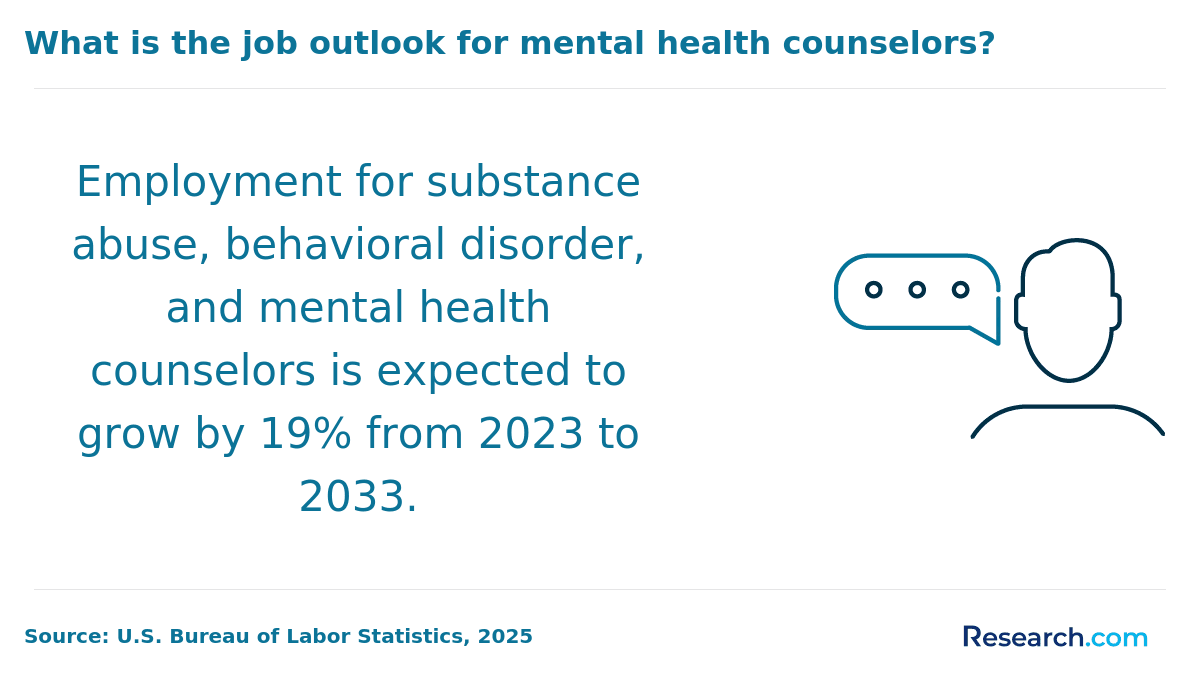
The image below provides additional context on counselor job outlook and employment trends relevant to Arizona career planning.
What Arizona counselors often highlight about the career
- Moving quickly into counseling was the right choice for me because I had already worked in a helping profession. The demand in Arizona gave me confidence, but the real difference came from strong supervision and careful exam preparation. – Karla
- Working with Arizona’s urban and rural communities taught me that speed alone is not enough. The accelerated training helped me start sooner, but cultural humility and practical experience mattered every day. – Shin
- Entering the field through an intensive route pushed me to build a professional network early. Workshops, supervisors, and local contacts helped me grow faster than coursework alone could have. – Merrin
Related Articles for Nearby States
- 2027 Fastest Way To Become a Counselor in New Mexico
- 2027 Fastest Way To Become a Counselor in Nevada
- 2027 Fastest Way To Become a Counselor in California
- 2027 Fastest Way To Become a Counselor in Utah
- 2027 Fastest Way To Become a Counselor in Colorado
- 2027 Fastest Way To Become a Counselor in Texas
- 2027 Fastest Way To Become a Counselor in Oklahoma
- 2027 Fastest Way To Become a Counselor in Kansas
- 2027 Fastest Way To Become a Counselor in Wyoming
- 2027 Fastest Way To Become a Counselor in Idaho
Sources used
- Arizona State University. (n.d.). Online Master of Counseling | ASU Online. https://asuonline.asu.edu/online-degree-programs/graduate/master-counseling
- CACREP. (2024). CACREP VITAL STATISTICS 2023. https://www.cacrep.org/wp-content/uploads/2024/06/CACREP-2023-Vital-Statistics-Report.pdf
- International Journal of Research and Innovation in Social Science. (n.d.). Exploring the challenges faced by Bachelor of Education with Guidance and Counselling students during practicum. https://rsisinternational.org/journals/ijriss/articles/exploring-the-challenges-faced-by-bachelor-of-education-with-guidance-and-counselling-students-during-practicum
- Marquette University. (n.d.). Advancements and challenges in counseling practices. https://online.marquette.edu/education/blog/advancements-challenges-counseling-practice
- Norden. (2023). Employers’ perspectives on hiring immigrants and refugees. https://pub.norden.org/nord2023-043/3-literature-review-employers-perspectives-on-and-experiences-with-hiring-immigrants.html
- Online Counseling Programs. (n.d.). How to become a licensed counselor (LPC) in Arizona. https://onlinecounselingprograms.com/become-a-counselor/counseling-licensure/how-to-become-a-counselor-in-arizona
- PNAS. (n.d.). The Fast Track intervention’s impact on behaviors of despair in adolescence and young adulthood. https://www.pnas.org/doi/10.1073/pnas.2016234117
- Prevention Science. (2024). Fast Track intervention effects and mechanisms of action through established adulthood. https://link.springer.com/article/10.1007/s11121-024-01736-0
- Talkspace. (n.d.). 11 challenges that counselors & therapists face. https://www.talkspace.com/blog/counselor-challenges
- University of Phoenix. (n.d.). Masters in Clinical Mental Health Counseling | MS in Counseling. https://www.phoenix.edu/online-behavioral-sciences-degrees/counseling-clinical-mental-health-masters-degree.html
- US BLS. (2024). Strong growth projected in mental health-related employment. Bureau of Labor Statistics. https://www.bls.gov/opub/ted/2024/strong-growth-projected-in-mental-health-related-employment.htm
- ZipRecruiter. (2025). Licensed Mental Health Counselor Salary in Arizona. https://www.ziprecruiter.com/Salaries/Licensed-Mental-Health-Counselor-Salary--in-Arizona
Key Insights
- The fastest legitimate path to full counseling licensure in Arizona still requires graduate education, supervised clinical experience, exam preparation, and complete documentation.
- A bachelor’s degree can lead to behavioral health technician, case management, or substance abuse counseling-related roles, but it usually does not qualify someone for independent professional counseling practice.
- Online and accelerated programs can save time when they provide strong field placement support; they can slow you down if practicum or supervision planning is weak.
- Substance abuse counseling may offer a more focused and potentially faster entry into client-facing behavioral health work, but it has a narrower scope than broader counseling licensure.
- Arizona demand is strong, but job outcomes depend on license level, specialty, location, clinical readiness, and employer setting.
- The best fast-track decision is not the shortest program on paper. It is the shortest program that meets Arizona requirements, supports supervised training, fits your finances, and prepares you to serve clients safely.
Other Things You Need to Know About the Fastest Way to Become a Counselor in Arizona
The Arizona Board of Behavioral Health Examiners issues counselor licenses in 2027. It regulates professional counseling, marriage and family therapy, social work, and substance abuse counseling, and it reviews education, supervised experience, and exam requirements before granting licensure.
To become a counselor in Arizona in 2027, you must have at least a master's degree in counseling or a closely related field. Accredited programs should include coursework in ethics, human growth, and counseling techniques to meet state licensing requirements.