2027 Best Online Electrical Engineering Degrees for Control Systems Careers

Co-Founder and Chief Data Scientist
Choosing an online electrical engineering degree is a high-stakes decision if your goal is control systems work in automation, robotics, power, manufacturing, or embedded systems. The field matters because the U.S. Bureau of Labor Statistics reported a May 2024 median annual wage of $111,910 for electrical engineers, but outcomes depend heavily on accreditation, labs, math depth, and hands-on controls experience.
This guide helps prospective students, working technicians, and career changers compare degree options, costs, timelines, admissions, and career paths before enrolling.
Key Things You Should Know
- The strongest online path for control systems careers is usually an ABET-accredited bachelor's in electrical engineering or an online master's in electrical engineering with controls, robotics, power systems, or embedded systems electives.
- For cost planning, the College Board's 2024-25 benchmark shows average published tuition and fees of $11,610 for in-state public four-year students and $30,780 for out-of-state public four-year students, before aid and engineering fees.
- The BLS projects 9% employment growth for electrical and electronics engineers from 2024 to 2034, with demand supported by automation, electric infrastructure, semiconductors, transportation electrification, and advanced manufacturing.
What are the best online electrical engineering degrees for control systems careers?
The best online electrical engineering degrees for control systems careers are programs that combine rigorous electrical engineering fundamentals with applied work in feedback control, signals, sensors, embedded computing, automation, and power electronics. "Best" does not always mean the most selective or expensive program; it means the program fits your entry point, career goal, licensure needs, schedule, and budget.
Control systems engineering focuses on designing and improving systems that automatically regulate behavior. Examples include a robotic arm holding position, a manufacturing line maintaining speed, a power converter stabilizing voltage, or an HVAC system responding to sensor data. Because control systems sit between hardware, software, and mathematics, students should look for programs that do more than offer general electronics courses.
The table below compares the degree types most relevant to online learners pursuing control systems work. Use it to identify the credential level that matches your current education and target role.
| Degree option | Best fit | Control systems value | Important caution |
| Online Bachelor of Science in Electrical Engineering | First-time engineering students, transfer students, technicians moving into engineering roles | Builds the full math, circuits, signals, electronics, programming, and design foundation employers expect for entry-level engineering work | Verify ABET accreditation, lab delivery, proctoring rules, and whether campus visits are required |
| Online Bachelor of Science in Engineering Technology | Hands-on technicians, automation specialists, military or community college transfers | Can be strong for PLCs, instrumentation, applied electronics, and industrial controls | May not satisfy every employer's engineering-degree preference or PE licensure pathway |
| Online Master of Science in Electrical Engineering | Engineers who already hold an engineering or closely related bachelor's degree | Useful for advanced controls, robotics, power electronics, machine learning for systems, and signal processing roles | May require prerequisite math, circuits, and programming if your bachelor's degree is not in engineering |
| Online Graduate Certificate in Control Systems or Automation | Working engineers who need targeted upskilling | Shorter route to strengthen PLC, controls theory, model-based design, or automation knowledge | Usually not a substitute for an engineering degree when a job posting requires one |
For most students without an engineering degree, the safest long-term option is an ABET-accredited online bachelor's in electrical engineering. For current engineers, an online master's with a controls concentration can be more efficient because it targets advanced modeling, optimization, robotics, and automation without repeating undergraduate fundamentals.
How do online and campus electrical engineering programs compare?
Online and campus electrical engineering programs can lead to similar academic outcomes when the curriculum, accreditation, faculty expectations, exams, and labs are comparable. The main difference is how students access labs, collaborate with classmates, and manage time around work or family obligations.
The comparison below highlights the practical trade-offs that matter most for control systems students. Pay special attention to lab access, because controls careers require confidence with sensors, motors, instrumentation, and real-time troubleshooting.
| Factor | Online electrical engineering | Campus electrical engineering | Decision point |
| Flexibility | Often asynchronous or hybrid, better for working adults | Fixed class and lab schedule | Online is stronger if you need to keep working while studying |
| Labs | May use mailed lab kits, remote labs, simulations, or short residencies | Direct access to campus equipment and lab staff | Campus can be better if you learn best through supervised hands-on work |
| Networking | Depends on online cohorts, faculty access, career services, and employer partnerships | More spontaneous access to clubs, labs, career fairs, and research groups | Online students should intentionally seek projects, internships, and professional groups |
| Pace | May offer part-time, accelerated, or transfer-friendly formats | Usually follows a traditional semester sequence | Online can shorten or stretch the timeline depending on transfer credits and course availability |
| Cost structure | May reduce relocation and commuting costs, but technology, lab, and proctoring fees can apply | May include housing, transportation, and campus fees | Compare total cost, not tuition alone |
Online is usually a better fit for disciplined students who can schedule weekly problem-solving time and who already have access to a professional or home workspace. Campus may be better for students who need daily structure, intensive undergraduate research access, or extensive physical lab supervision.
Students comparing engineering subfields should also consider whether mechanical systems, robotics hardware, or mechatronics are a better fit than electrical engineering alone. A resource on the cheapest online master's mechanical engineering options can be useful for learners drawn to motion control, thermal systems, or mechanical design alongside automation.
Is electrical engineering accreditation required for control systems jobs?
Accreditation is not always legally required for every control systems job, but it is one of the most important quality signals when choosing an electrical engineering program. For engineering degrees in the U.S., ABET accreditation is the key programmatic standard many employers, graduate schools, and licensing boards recognize.
ABET accreditation matters because it indicates that a program has been reviewed for engineering fundamentals, faculty qualifications, student outcomes, continuous improvement, and design experience. For online students, it also helps reduce the risk of enrolling in a program that sounds like engineering but lacks the depth expected for professional engineering work.
The strongest reasons to prioritize accreditation are practical, not just academic. Consider ABET especially important if any of the following apply to you:
- You want entry-level roles with "electrical engineer," "controls engineer," "automation engineer," or "systems engineer" in the job title.
- You may pursue the Fundamentals of Engineering exam, Professional Engineer licensure, or public-sector engineering work later.
- You plan to enter a graduate engineering program that expects a recognized undergraduate engineering background.
- You want the widest transferability if you change schools before finishing the degree.
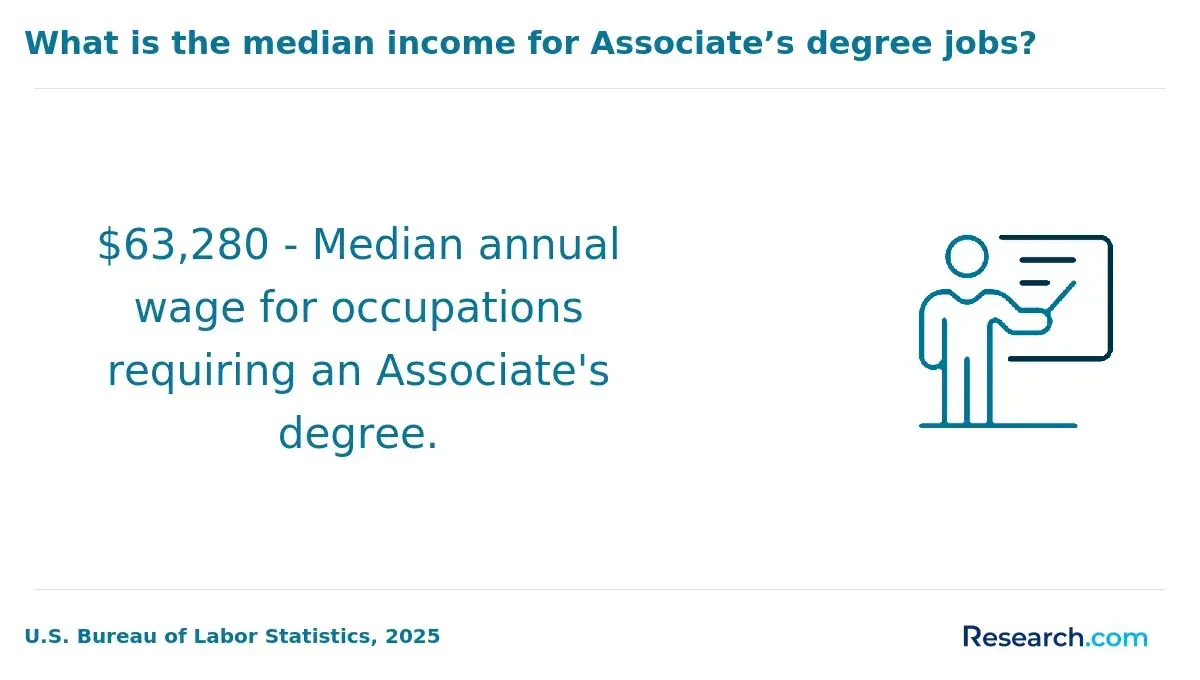
There are exceptions. Some industrial automation roles hire candidates with engineering technology degrees, military technical training, associate degrees, or strong PLC and instrumentation experience. However, if you want maximum mobility across employers and states, an ABET-accredited electrical engineering degree is usually the safer investment.
What coursework do control systems electrical engineering programs include?
Control systems programs are built on a sequence: mathematics first, electrical engineering fundamentals next, then systems modeling, control theory, and applied automation. Students who skip the fundamentals may learn tools but struggle to diagnose why a system behaves unpredictably.
The table below summarizes common coursework and how each area connects to control systems careers. Course titles vary by school, so compare learning outcomes rather than relying on names alone.
| Course area | What students learn | Why it matters in control systems |
| Calculus, differential equations, and linear algebra | Mathematical models, dynamic systems, matrices, and rates of change | Controls work depends on predicting how systems respond over time |
| Circuit analysis and electronics | Voltage, current, filters, amplifiers, semiconductors, and power devices | Controllers interact with real electrical hardware, not just software models |
| Signals and systems | Frequency response, transforms, filtering, sampling, and system behavior | Helps engineers analyze sensors, feedback loops, and noise |
| Feedback control systems | Stability, PID control, root locus, state space, and compensator design | This is the central theory behind automated regulation and tracking |
| Embedded systems and programming | Microcontrollers, C or Python, real-time constraints, and interfacing | Many controllers run on embedded hardware connected to sensors and actuators |
| Power systems or power electronics | Motors, converters, drives, grid systems, and energy flow | Useful for manufacturing, electric vehicles, renewable energy, and motor control |
| Industrial automation and instrumentation | PLCs, SCADA, sensors, calibration, and process control | Connects engineering theory to factories, utilities, and process industries |
Current programs increasingly include simulation, digital twins, AI-assisted diagnostics, and cybersecurity for industrial control systems. These topics matter because employers need engineers who can work with connected equipment while understanding the risks of automation failures and networked devices.
If your interest leans toward model training, predictive maintenance, or AI-based optimization rather than hardware design, compare electrical engineering with the best data science masters pathway. Data science can be a stronger fit for analytics-heavy roles, while electrical engineering remains stronger for hardware-connected control and automation design.
What admission requirements do online electrical engineering programs have?
Admission requirements vary by degree level, but online electrical engineering programs are usually more prerequisite-heavy than many other online majors. Schools need evidence that students can handle calculus-based problem solving, lab work, and sequential technical courses.
Prospective students should review requirements early because missing prerequisites can add semesters and cost. Most programs ask for some combination of the following:
- High school diploma, GED, or prior college credits for bachelor's admission.
- College algebra, precalculus, calculus readiness, physics, and sometimes chemistry for engineering-track applicants.
- Official transcripts from every institution attended, especially for transfer credit evaluation.
- Minimum GPA requirements that may be higher for upper-division engineering admission than for general university admission.
- Programming or engineering prerequisite courses for master's applicants without an electrical engineering background.
- Statement of purpose, resume, letters of recommendation, or GRE scores for some graduate programs.
- Reliable computer, approved software access, webcam-based proctoring capability, and sometimes lab kit purchases.
Transfer students should ask whether calculus, physics, circuits, and engineering design courses transfer as direct equivalents. A course that transfers only as a general elective may not shorten the engineering sequence.
Career changers should be especially cautious with master's programs that admit non-engineers conditionally. This can be a good opportunity, but only if the school clearly explains bridge courses, added cost, expected workload, and whether graduates will be competitive for engineering roles rather than only technical support roles.

How long does an online electrical engineering degree take and cost?
An online bachelor's in electrical engineering commonly takes about four years of full-time study, but many online learners take longer because they study part time or enter with transfer credits. An online master's often takes two to three years part time, while graduate certificates may be completed faster if courses are available year-round.
Cost depends on residency, public or private tuition, transfer credits, lab fees, technology fees, books, software, and whether you can keep working while enrolled. The College Board's 2024-25 benchmark lists average published tuition and fees of $11,610 for in-state public four-year students, which shows why residency and transfer planning can substantially affect affordability before financial aid is applied.
The table below shows the main cost and time variables to compare before enrolling. It is more useful than comparing advertised tuition alone because engineering programs often include extra requirements that affect total cost.
| Factor | How it affects time or cost | What to ask the school |
| Transfer credits | Can shorten the degree if math, physics, and engineering courses transfer directly | Will I receive a course-by-course engineering transfer evaluation before enrolling? |
| Course sequencing | Calculus, physics, circuits, and controls often must be taken in order | Are required courses offered every term or only once per year? |
| Lab requirements | May require lab kits, remote equipment fees, or short campus residencies | What equipment, travel, or proctoring costs should I budget for? |
| Enrollment pace | Part-time study reduces weekly workload but can extend graduation | What is the realistic course load for students working full time? |
| Employer tuition support | Can reduce out-of-pocket cost for working technicians and engineers | Does the program align with employer reimbursement rules? |
To reduce cost, start by maximizing transferable community college credits in calculus, physics, and general education, but do not take technical courses without confirming equivalency. Engineering curricula are tightly sequenced, and one non-transferable prerequisite can delay graduation.
Students comparing online education costs across fields can also learn from how programs disclose fees, practicums, and total cost in library science degrees online. The discipline is different, but the same consumer habit applies: compare the full degree plan, not just the per-credit price.
Which control systems careers can electrical engineering graduates pursue?
Electrical engineering graduates with control systems preparation can work in industries where machines, power, processes, vehicles, and devices must behave predictably. Common employers include manufacturers, utilities, aerospace companies, defense contractors, robotics firms, semiconductor companies, building automation firms, and energy companies.
The table below connects common career paths with typical responsibilities. Titles vary by employer, so read job descriptions for required tools, industry experience, and degree expectations.
| Career path | Typical responsibilities | Relevant preparation |
| Controls engineer | Designs, tunes, tests, and troubleshoots feedback control systems for equipment or processes | Control theory, signals, instrumentation, MATLAB or Python, PID tuning |
| Automation engineer | Develops automated production systems, integrates sensors and actuators, and improves reliability | PLCs, SCADA, industrial networks, robotics, electrical safety |
| Embedded systems engineer | Builds software and hardware interfaces for microcontroller-based devices | C programming, microcontrollers, electronics, real-time systems |
| Power systems or power electronics engineer | Works on drives, converters, grid equipment, renewable systems, or electrified transportation | Power electronics, motors, energy systems, control of converters |
| Robotics engineer | Develops motion control, sensing, path planning, and integration for robotic systems | Controls, kinematics, embedded systems, sensors, programming |
| Systems engineer | Coordinates requirements, testing, integration, and performance across complex technical systems | Modeling, verification, interdisciplinary communication, requirements analysis |
Entry-level graduates often start in test engineering, applications engineering, automation support, field engineering, or junior controls roles. Advancement usually depends on building a portfolio of projects, learning industry-specific tools, documenting safety-aware design decisions, and developing communication skills for cross-functional teams.
This path is a good fit if you enjoy math, troubleshooting, systems thinking, programming, and hands-on technology. It may be a poor fit if you dislike sequential technical coursework, want a low-math degree, or prefer work with minimal hardware responsibility.
What salary can control systems electrical engineers expect?
Salary for control systems electrical engineers varies by role, industry, region, security clearance, travel requirements, overtime expectations, and experience. The best way to use salary data is as a benchmark, not a promise.
The BLS reported a May 2024 median annual wage of $111,910 for electrical engineers. For readers, that means the occupation sits well above the overall U.S. median wage, but individual offers can be lower for entry-level roles or higher in specialized industries such as semiconductors, energy, aerospace, or advanced manufacturing.
The table below provides salary context for occupations that commonly overlap with control systems work. These are national medians, so local labor markets and employer requirements can shift compensation significantly.
| Occupation | May 2024 median annual wage | How it relates to control systems |
| Electrical engineers | $111,910 | Core benchmark for electrical engineering roles involving controls, power, electronics, and systems |
| Electronics engineers, except computer | $124,590 | Relevant for embedded systems, instrumentation, communications hardware, and advanced electronics |
| Industrial engineers | $101,140 | Relevant for manufacturing optimization, automation workflows, and process improvement |
| Architectural and engineering managers | $171,420 | Relevant long-term advancement path for engineers who move into technical leadership |
To improve earning potential, focus on demonstrable skills rather than degree title alone. Employers often value experience with PLCs, MATLAB/Simulink, Python, C, LabVIEW, motor drives, SCADA, industrial networking, safety standards, and documented projects that show you can move from model to working system.
What is the job outlook for control systems engineers?
The job outlook for control systems engineers is favorable because automation is spreading across manufacturing, energy, transportation, logistics, buildings, and infrastructure. The BLS projects 9% growth for electrical and electronics engineers from 2024 to 2034, which suggests demand should remain stronger than the average for all occupations during that period.
Several trends are shaping hiring. Industrial employers are modernizing older equipment, utilities are integrating renewable generation and storage, manufacturers are adding robotics, and companies are using predictive maintenance to reduce downtime. At the same time, connected industrial systems create cybersecurity and reliability concerns, so employers increasingly need engineers who understand both control behavior and system risk.
AI will not remove the need for control systems engineers, but it is changing the work. Engineers may use AI-assisted modeling, anomaly detection, code generation, and digital twins, while still needing to validate designs, understand physical constraints, document assumptions, and protect safety-critical systems.
Students who want resilient career options should build a skill mix that crosses software and hardware. The most portable profile combines control theory, embedded or industrial programming, instrumentation, communication protocols, safety awareness, and the ability to explain technical trade-offs to non-engineers.
How do you choose a reputable online electrical engineering program?
Choosing a reputable online electrical engineering program requires more than scanning rankings. A strong program should prove that it can deliver rigorous engineering education online while supporting labs, advising, career preparation, and progression through a demanding course sequence.
Use the following steps before applying:
- Confirm the exact degree name and whether the program is electrical engineering, electrical engineering technology, systems engineering, or a related field.
- Check ABET accreditation for the specific program and delivery format, not just the university.
- Ask how labs are completed, including lab kits, remote labs, simulations, residencies, safety requirements, and added fees.
- Review the controls-related curriculum, including feedback control, signals, embedded systems, power electronics, PLCs, robotics, or automation electives.
- Request a transfer evaluation before enrolling if you have prior college credit.
- Compare total cost, including tuition, fees, software, equipment, travel, books, and proctoring.
- Ask about career services for online students, internships, employer partnerships, capstone projects, and alumni outcomes.
- Verify whether the program supports FE exam preparation or future PE licensure if that may matter to your career.
Watch for red flags: unclear accreditation language, no meaningful lab plan, vague course descriptions, pressure to enroll before a transfer review, unrealistic salary claims, and programs that advertise engineering careers while awarding a non-engineering credential. A lower-cost program can be a smart choice, but only if it preserves the academic and professional requirements you need.
The same due diligence applies outside engineering. For example, students comparing an MLIS degree online should also verify accreditation, field requirements, total cost, and career alignment before enrolling; engineering students simply need to add lab quality and licensure considerations to that checklist.
Other Things You Should Know About Electrical Engineering Degrees
Yes. Many controls engineers begin with a bachelor's degree in electrical engineering, electrical engineering technology, mechanical engineering, or a related field. A master's degree can help with advanced modeling, robotics, or research-heavy roles, but it is not always required for entry-level industrial controls work.
Yes, at least at a practical level. Python, C, MATLAB, ladder logic, and scripting are common depending on the role. You do not need to become a software engineer, but you should be able to read, modify, test, and document code that interacts with hardware or system models.
They can be useful if you want industrial automation roles, especially in manufacturing, utilities, or process control. A PLC certificate is strongest when combined with an engineering degree, hands-on projects, and understanding of sensors, actuators, safety, and troubleshooting.
Most programs require algebra, trigonometry, pre-calculus, calculus I and II, differential equations, and calculus-based physics before upper-division control systems courses. Some also expect basic chemistry and a minimum GPA of 2.5 to 3.0 for admission or transfer.
References
- What can you do with an electrical engineering degree? - People of Pacific https://www.pacific.edu/blog/2025/01/24/what-can-you-do-with-an-electrical-engineering-degree/
- What do electrical control system engineers do? | Banelec https://www.banelec.com/what-do-electrical-control-system-engineers-do/
- Control Systems Job Market - Control Systems https://automationexperts.co.uk/control-systems-engineering-job-market/
- What does an Electrical Controls Engineer do? Career Overview, Roles, Jobs | IES https://careercenter.ies.org/career/electrical-controls-engineer