2027 Best Career Paths After a Communication Disorders Bachelor's Degree

Co-Founder and Chief Data Scientist

Reviewed by Rhea Paul, PhD
SLP Education & Research Expert
A bachelor’s degree in communication disorders gives you a strong foundation in speech, language, hearing, swallowing, development, and human communication. The harder question is what to do with that foundation. Some careers are available right after graduation, while others require a master’s degree, doctoral degree, supervised clinical hours, certification, or state licensure.
This decision matters because the field is expanding, but not every path offers the same pay, autonomy, flexibility, or advancement. With nearly 17% employment growth projected in speech-language pathology and related support roles through 2035, graduates can find opportunities in schools, hospitals, rehabilitation centers, research settings, social services, telehealth support, and communication-focused industries.
This guide explains the strongest career options after a communication disorders bachelor’s degree, including entry-level roles, higher-paying paths, advanced-degree careers, certification requirements, remote options, and alternative careers that use your communication, analytical, and client-support skills.
Key Things to Know About the Best Career Paths After a Communication Disorders Bachelor's Degree
- Common entry-level roles include speech-language pathology assistants, audiology aides, and rehabilitation technicians, which require practical skills gained during undergraduate studies.
- Aligning academic specialization, such as speech pathology or audiology basics, with career goals enhances employability and informs graduate study options essential for advancement.
- Long-term career progression depends on certifications, graduate education, clinical experience, and networking, as the Bureau of Labor Statistics projects 17% growth in related healthcare occupations through 2035.
What Are the Top Career Paths by Industry for Communication Disorders Graduates?
Communication disorders graduates can work in several industries because the degree combines science, human development, communication, observation, and service delivery. Employment in this field is expected to grow 17% from 2025 to 2035, but the best path depends on whether you want direct client contact, school-based work, healthcare exposure, research experience, or a route toward graduate study.
The most common industries include healthcare, education, research, and social services. Each offers different responsibilities and advancement potential.
- Healthcare: Graduates may work as speech-language pathology assistants, audiology aides, rehabilitation aides, or patient support staff in hospitals, outpatient clinics, skilled nursing facilities, and rehabilitation centers. These roles provide exposure to assessment, treatment planning, documentation, patient communication, and interdisciplinary care. They are especially useful for graduates considering a future master’s degree in speech-language pathology or doctoral study in audiology.
- Education: Schools hire communication disorders graduates for roles such as special education aides, speech therapy assistants, classroom support staff, and communication intervention assistants. These jobs often involve helping children with language delays, articulation difficulties, social communication needs, or learning-related communication challenges. Graduates who enjoy structured schedules, child development, and team-based support often find this industry a strong fit.
- Research and academia: Research assistant and lab coordinator roles allow graduates to support studies on speech development, hearing science, language processing, assistive communication, or intervention methods. These positions are valuable for students considering graduate school because they build research literacy, data management, writing, and evidence-based practice skills.
- Social services and community programs: Graduates may work in early intervention programs, disability services, nonprofit outreach, case coordination, or family support programs. These roles focus less on clinical treatment and more on access, advocacy, referrals, and helping families navigate communication-related services.
When comparing industries, pay attention to supervision requirements, state rules for assistant roles, population served, and whether the job provides documented experience that can strengthen graduate school applications. Students still completing prerequisites or looking for flexible education options may also compare programs through an online school that accepts FAFSA.
What Are the Future-Proof Careers After a Communication Disorders Bachelor's Degree?
Future-proof careers after a communication disorders bachelor’s degree are those tied to human care, aging populations, child development, disability support, education services, and assistive technology. These areas are less vulnerable to automation because they require empathy, clinical judgment, adaptation, relationship-building, and individualized support.
Employment for speech-language pathologists, a central role in this field, is projected to grow 17% from 2025 to 2035. For bachelor’s graduates, that growth matters because many entry-level roles support licensed professionals and can become stepping stones to graduate education.
- Speech-language pathology: Speech-language pathologists diagnose and treat speech, language, voice, fluency, cognitive-communication, and swallowing disorders. This career is durable because services are needed across the lifespan, from early childhood intervention to adult rehabilitation and geriatric care. A bachelor’s degree alone is usually not enough for independent practice, but it is a common starting point.
- Human-centered care roles: Jobs that involve direct support, coaching, observation, and family communication remain valuable because clients need individualized attention. Assistants, aides, and care coordinators help translate treatment goals into daily routines and provide continuity between clinicians, families, and institutions.
- Technology-supported communication services: Assistive communication devices, telepractice platforms, and speech-language apps are expanding the field. These tools do not eliminate the need for trained professionals; instead, they create demand for people who understand both communication needs and user support.
- Educational support services: Schools continue to need staff who can support students with communication delays, disabilities, autism-related communication needs, language-based learning challenges, and social communication differences. Bachelor’s-level graduates can contribute in paraprofessional, assistant, and intervention support roles.
The most future-resistant path is usually one that combines communication disorders knowledge with a credential, technical skill, or supervised experience. If you want long-term advancement, plan early for graduate school prerequisites, assistant licensure rules, clinical observation hours, and references from supervisors. Students at the beginning of the path may also review options for the least expensive online bachelor's degree in Communication Disorders.
What Are the Highest-Paying Careers After a Communication Disorders Bachelor's Degree?
The highest-paying careers connected to a communication disorders bachelor’s degree usually require additional education, certification, licensure, management experience, or specialized technical knowledge. A bachelor’s degree can open the first door, but the largest salary gains typically come after graduate training or movement into leadership, research, or assistive technology roles.
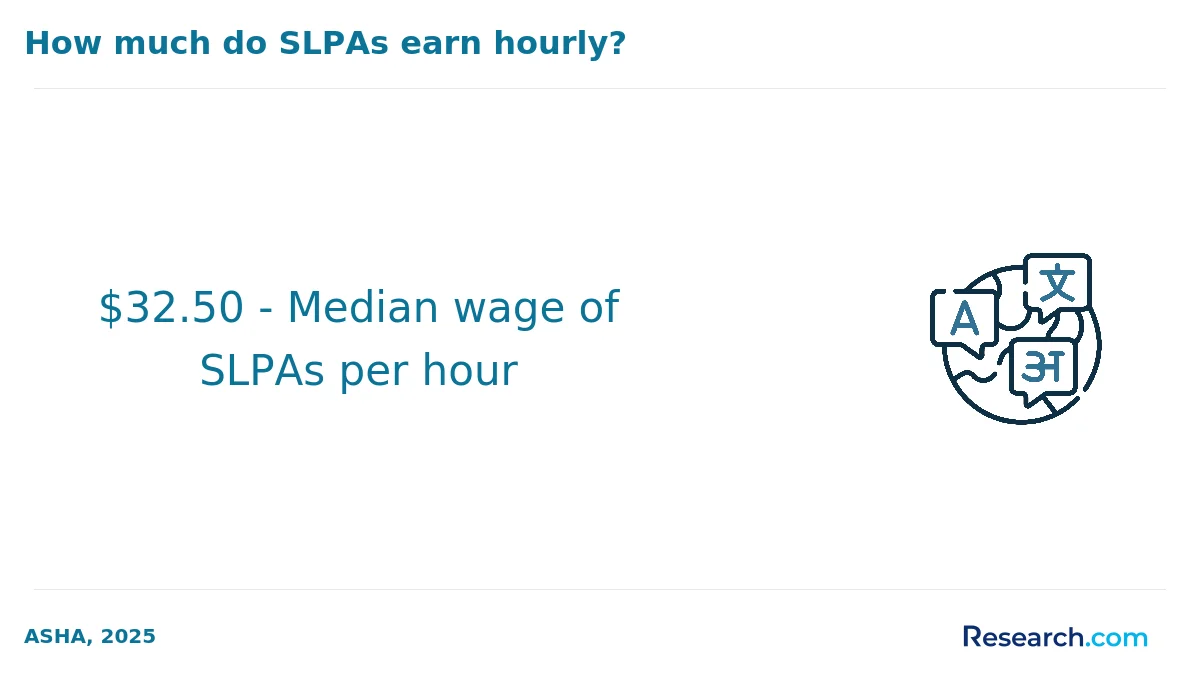
For example, speech-language pathologists earn a median income near $97,870 annually. However, graduates should be careful not to assume that every bachelor’s-level job pays at that level. Many assistant and aide roles pay less because they do not carry the same scope of practice or licensure responsibilities.
- Speech-Language Pathologist: Earning between $70,000 and $110,000 each year, speech-language pathologists assess and treat communication and swallowing disorders in schools, hospitals, clinics, private practices, and long-term care settings. The role usually requires a master’s degree and certification, so it is best viewed as a high-paying advanced path rather than an immediate bachelor’s-level job.
- Audiologist: With annual salaries from $75,000 to $120,000, audiologists diagnose and manage hearing and balance disorders. This path generally requires doctoral-level education, clinical training, and state licensure.
- Speech Therapy Manager: Typically making $80,000 to $130,000 annually, speech therapy managers oversee programs, staffing, compliance, scheduling, service quality, and clinical operations. These roles usually require clinical experience first, and many are held by licensed clinicians.
- Clinical Researcher: Researchers in communication sciences earn roughly $65,000 to $100,000 yearly by studying assessment methods, interventions, speech and hearing technologies, or patient outcomes. Bachelor’s graduates may begin as research assistants before moving into higher-level research roles through graduate study.
- Assistive Technology Specialist: With pay ranging from $60,000 to $95,000 per year, assistive technology specialists help match individuals with communication devices, software, and adaptive tools. This path rewards graduates who combine communication disorders knowledge with technical skill, training ability, and user-centered problem-solving.
A graduate who reached a higher-paying role described the process as demanding because certification requirements and clinical experience were not optional. He explained, "Balancing coursework and internships was tough, especially knowing I had to meet stringent licensing standards to qualify for higher-paying roles."
The lesson is straightforward: higher pay in this field is usually tied to higher responsibility. Before choosing a path, compare the total cost of graduate school, time to licensure, supervised experience requirements, expected debt, and the type of work you actually want to do every day.
What Are the Entry-Level Jobs for Communication Disorders Bachelor's Degree Graduates?
Entry-level jobs after a communication disorders bachelor’s degree are often support roles in schools, clinics, hospitals, rehabilitation centers, private practices, and community programs. These positions help graduates build practical experience before applying to graduate school or deciding whether clinical work is the right long-term direction.
Demand for these early-career roles remains strong, with speech-language pathology assistant jobs expected to grow 17% from 2025 to 2035. Requirements vary by state and employer, so graduates should confirm whether a role requires registration, certification, specific coursework, supervision, or a state-approved assistant credential.
- Speech-Language Pathology Assistant: Speech-language pathology assistants work under licensed speech-language pathologists. They may help implement therapy activities, prepare materials, document progress, and support clients during sessions. They do not independently diagnose disorders or create treatment plans. This is one of the most directly relevant entry-level options for graduates considering speech-language pathology.
- Audiology Aide: Audiology aides support audiologists with equipment preparation, hearing screening assistance, appointment flow, patient communication, and administrative tasks. This role can help graduates decide whether they want to pursue audiology or hearing healthcare.
- Rehabilitation Aide: Rehabilitation aides support therapy teams in clinics, hospitals, and long-term care settings. While the role may not focus only on communication disorders, it offers exposure to patient care, therapeutic routines, safety procedures, documentation, and interdisciplinary teamwork.
- Special Education Paraprofessional: Special education paraprofessionals work with teachers, therapists, and school teams to support students with disabilities. Graduates may assist with classroom communication strategies, behavior supports, learning accommodations, and social interaction routines.
These jobs can strengthen a résumé, but they are not all equal. The best entry-level role is one that provides supervised experience, contact with the population you want to serve, strong references, and clarity about whether you enjoy clinical, school-based, or support-focused work. Graduates interested in broadening management or operations skills may also consider business administration courses online as a complement to communication disorders training.
What Career Paths Align With Your Skills After a Communication Disorders Bachelor's Degree?
A communication disorders degree builds more than clinical awareness. It develops communication, observation, analysis, documentation, collaboration, and problem-solving skills that can transfer to healthcare, education, research, technology, advocacy, and administrative roles. These skills matter because 80% of hiring managers emphasize abilities like communication, teamwork, and problem-solving when recruiting recent graduates.
To choose a path that fits, start with your strongest skills rather than only a job title. The same degree can lead to very different daily work depending on whether you prefer people-facing support, data-focused research, technology, education, or coordination.
- Analytical thinking: If you enjoy interpreting information, reviewing patterns, and working with evidence, consider research assistant roles, clinical documentation support, healthcare data roles, program evaluation, or graduate study. Communication disorders coursework often trains students to think carefully about language samples, developmental milestones, assessment results, and intervention outcomes.
- Communication: If your strength is explaining ideas clearly and adapting to different audiences, consider special education support, patient advocacy, family services, training, admissions advising, nonprofit outreach, or corporate communication roles. The ability to translate complex information into practical guidance is valuable across industries.
- Leadership: If you like organizing people and processes, consider program coordination, clinic administration, case management support, disability services, or social service management pathways. Leadership in this field often involves coordinating care, improving access, and keeping teams aligned around client needs.
- Problem-solving: If you like adapting tools and strategies to individual needs, consider assistive technology, educational consulting support, rehabilitation services, or healthcare technology roles. Communication disorders graduates are often trained to notice barriers and adjust supports to improve participation.
One alumna described the transition after graduation as both exciting and uncertain. She found that the degree did not force her into one narrow path; instead, it gave her a skill set she could apply in several settings.
"The ability to think critically and communicate effectively has been invaluable," she explained. Her experience reflects a common reality: graduates often make better career choices when they test different environments through internships, assistant roles, research work, volunteering, or part-time positions before committing to graduate school.
What Jobs Require an Advanced Degree After a Communication Disorders Bachelor's Degree?
Many of the most recognized careers in communication disorders require graduate education because they involve diagnosis, treatment planning, clinical decision-making, and legal responsibility for client care. A bachelor’s degree is a strong foundation, but it does not usually qualify graduates for independent clinical practice.
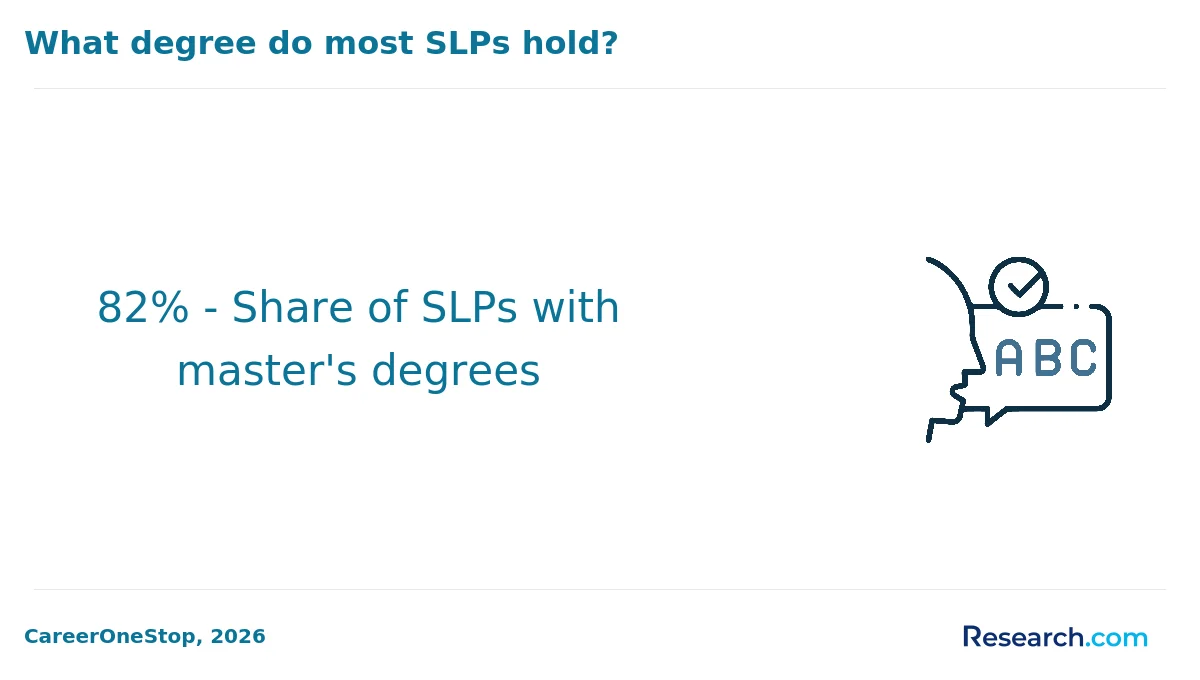
For example, more than 70% of speech-language pathology positions mandate a master's degree or higher. Graduate programs provide advanced coursework, supervised clinical experience, and preparation for certification or licensure requirements that undergraduate programs generally cannot complete on their own.
- Speech-Language Pathologist: Most speech-language pathologists hold a master’s degree in speech-language pathology. They evaluate and treat speech, language, voice, fluency, cognitive-communication, and swallowing disorders. If your goal is this career, compare prerequisites, accreditation expectations, clinical placement support, and total program cost across online masters in speech pathology programs before applying.
- Audiologist: Audiologists usually earn a Doctor of Audiology (Au.D.) degree. Their training prepares them to assess hearing and balance disorders, recommend hearing technology, provide rehabilitation support, and work with patients across the lifespan.
- University Researcher: Researchers who lead studies in speech, language, hearing, cognition, or communication science often need a Ph.D. This path is best for graduates who are interested in producing new knowledge, publishing research, designing studies, and contributing to evidence-based practice.
- Academic Educator: Teaching future clinicians at the university level typically requires a doctoral degree. Faculty roles often combine teaching, mentoring, scholarship, grant work, and service to the profession.
Before committing to an advanced degree, verify admission prerequisites, clinical hour expectations, accreditation status, licensure alignment in your state, and whether the program supports the population or setting you want to serve. Graduate school can be the right investment, but only when it connects clearly to a required credential or career goal.
What Careers Require Certifications or Licensure After a Communication Disorders Bachelor's Degree?
Careers that involve clinical assessment, treatment, device fitting, or regulated patient care often require certification or licensure after a communication disorders bachelor’s degree. These requirements exist to protect clients and ensure that professionals meet defined education, supervision, ethics, and competency standards.
Demand for certified professionals is growing, with employment for speech-language pathologists expected to rise 17% from 2025 to 2035, according to the U.S. Bureau of Labor Statistics. However, the specific credential pathway depends on the role and state.
- Speech-Language Pathologist: This role typically requires a master’s degree, certification from the American Speech-Language-Hearing Association (CCC-SLP), and state licensure. Speech-language pathologists assess, diagnose, and treat communication and swallowing disorders. Requirements can also include supervised clinical fellowship experience and passing a national examination.
- Audiologist: Audiologists usually complete a doctoral degree, pass a national certification exam, and obtain state licensure. They evaluate hearing and balance disorders, recommend hearing aids or other interventions, and provide hearing healthcare services.
- Hearing Instrument Specialist: Hearing instrument specialists often complete certification programs and secure state licenses, which vary by location. Their work focuses on fitting and dispensing hearing aids, counseling clients on device use, and ensuring appropriate calibration and follow-up care.
Graduates should never assume that a job title has the same requirements in every state. Before applying, check the state licensing board, employer requirements, supervision rules, renewal requirements, continuing education expectations, and whether the credential allows independent practice or only supervised work.
What Are the Alternative Career Paths for Bachelor's in Communication Disorders Graduates?
A communication disorders bachelor’s degree can lead outside traditional speech-language pathology and audiology pathways. About 35% of these graduates find themselves working in fields unrelated to their primary area of study, which shows how widely the degree’s skills can transfer.
Alternative careers are a good fit for graduates who like the subject matter but do not want graduate clinical training, direct therapy, or licensure. They can also serve as interim roles while preparing for graduate school.
- Healthcare Administration: Graduates can work in scheduling, patient coordination, program support, clinic operations, intake, or rehabilitation administration. Their understanding of communication needs can improve patient experience and coordination between families, providers, and support teams.
- Educational Technology Design: Graduates may contribute to learning tools, accessibility products, speech and language apps, or communication-support platforms. This path works best for those who can combine subject knowledge with writing, usability testing, instructional design, or product support.
- Public Relations and Corporate Communications: Training in language, audience awareness, and interpersonal communication can translate into roles involving messaging, internal communications, customer education, or community relations.
- Research Support and Data Analysis: Graduates with research-methods experience can support neuroscience, psychology, linguistics, education, or health science labs. Tasks may include literature reviews, participant coordination, data entry, transcription, coding, and study documentation.
- Advocacy and Social Services: Nonprofits, disability organizations, early intervention programs, and government agencies may hire graduates for outreach, resource navigation, family support, and program coordination roles.
The best alternative path is one that uses your strongest abilities while keeping future options open. If you may return to school later, choose roles that produce strong references, relevant experience, and a clearer sense of the population you want to serve. Those considering related graduate study might explore an accelerated masters in psychology to expand opportunities within human services, behavioral health, or research-adjacent roles.
What Remote and Flexible Career Options Are Available With a Communication Disorders Bachelor's Degree?
Remote and flexible options have grown for communication disorders graduates because telehealth, digital education, online research operations, and virtual care coordination are now more common. A 2023 study revealed that 30% of healthcare-related roles now offer remote work opportunities, benefiting many communication disorders graduates.
Still, graduates should understand the limits. Bachelor’s-level professionals generally cannot provide independent clinical diagnosis or treatment remotely unless they meet the relevant credential and supervision rules. Many remote roles are support, coordination, research, education, or content-focused.
- Telepractice Assistant: Telepractice assistants may help licensed clinicians prepare digital materials, coordinate virtual sessions, manage schedules, troubleshoot basic technology issues, and support clients or families under appropriate supervision. State and employer rules determine what tasks are allowed.
- Remote Research Support: Graduates can assist with literature reviews, participant communication, transcription, coding, data organization, survey management, and research documentation. This option is useful for those considering graduate study or research careers.
- Care Coordination: Care coordinators help clients, families, providers, schools, and clinics stay connected. Tasks may include appointment scheduling, records management, referral follow-up, intake support, and communication between service providers.
- Content Creation and Consultation: Graduates with strong writing or instructional skills can create educational materials, family resources, training content, accessibility guides, or communication-focused articles. This path is flexible but may require portfolio development and subject-matter boundaries, especially when discussing clinical topics.
For graduates considering further specialization beyond a bachelor’s degree, reviewing the best masters degree to get can help clarify whether speech-language pathology, audiology, psychology, education, healthcare administration, or another field better supports their goals.
When evaluating remote work, look closely at supervision, privacy requirements, telehealth policies, pay structure, work hours, and whether the role builds experience that moves you toward your long-term career plan.
How Do You Choose the Best Career Path After a Communication Disorders Bachelor's Degree?
The best career path after a communication disorders bachelor’s degree depends on your preferred work setting, willingness to pursue graduate education, desired income, tolerance for licensure requirements, and interest in direct client care. Research shows that nearly 70% of graduates experience greater job satisfaction when their work aligns closely with their personal values and interests.
Use the degree as a decision point, not a finish line. Some graduates should move toward graduate school quickly; others benefit from one or two years in assistant, education, research, or healthcare support roles before committing.
- Clarify your population of interest: Decide whether you are most drawn to young children, school-age students, adults recovering from injury, older adults, people with hearing loss, individuals using assistive communication, or broader community populations.
- Compare education requirements: If your target job requires a master’s degree, doctorate, certification, or state license, map the full pathway before applying. Include prerequisites, supervised hours, examinations, clinical placements, and renewal requirements.
- Test the work environment: Schools, hospitals, outpatient clinics, research labs, nonprofits, and telehealth teams feel very different day to day. Shadowing, volunteering, internships, and entry-level roles can prevent expensive missteps.
- Evaluate job market demand: Look at hiring trends in your state or region, not only national projections. Some areas may have stronger school-based demand, while others may offer more healthcare, early intervention, or telepractice support roles.
- Consider lifestyle and flexibility: School roles may offer predictable calendars, healthcare roles may involve faster-paced patient care, research roles may be project-based, and remote roles may require strong self-management. Choose a path that fits both your goals and your daily working style.
- Calculate return on investment: Higher-paying roles may require expensive graduate education. Compare expected salary, debt, time out of the workforce, licensure costs, and the likelihood that you will enjoy the role long term.
A practical next step is to list three possible paths: one immediate job, one graduate-level clinical path, and one alternative career. Then compare each by required education, expected responsibilities, supervision, pay potential, flexibility, and how well it matches your strengths.
What Graduates Say About the Best Career Paths After a Communication Disorders Bachelor's Degree
- : "Choosing a communication disorders bachelor's degree was a turning point for me because I wanted to make a tangible difference in people's lives through speech therapy. After graduation, I quickly realized the variety of career paths available, including school-based therapy and private practice. This degree gave me both the clinical skills and confidence to pursue a remote teletherapy role, which has offered incredible flexibility without sacrificing the quality of care I provide. — Axton"
- : "Reflecting on my journey, the reason I pursued communication disorders was rooted in a passion for helping children with speech delays in my community. The degree opened doors to alternative career options beyond traditional therapy, such as working in assistive technology and communication device development. It's fulfilling to know that my background allows me to contribute to innovative solutions that improve communication access for diverse populations. — Jaime"
- : "My communication disorders bachelor's degree provided a strong foundation for a career as a clinical audiologist, a path I had not initially considered. The program cultivated a professional mindset and an understanding of various communication challenges, which proved essential in my work with both adults and children. Earning this degree has been instrumental in shaping my approach to patient care and interdisciplinary collaboration within healthcare teams. — Roco"
Other Things You Should Know About Communication Disorders Degrees
Yes, graduates with a bachelor's degree in communication disorders can work in educational settings, often as teacher assistants, aides, or support staff working with speech-language pathologists or special education teachers. However, to practice independently as a speech-language pathologist in schools, a master's degree and appropriate certification are typically required.
Graduates aiming to become speech-language pathologists must complete a master's degree, gain 400 clinical hours, and pass the Praxis exam by 2027. Additionally, they need to fulfill the state's licensing board requirements, which may include specific coursework and a supervised clinical fellowship year.
Building strong interpersonal skills, cultural competence, and proficiency in technology can enhance career paths after earning a communication disorders degree. These skills are crucial for roles such as speech-language pathology assistants or auditory processing technicians, where effective communication and the use of digital tools are key.
References
- U.S. Bureau of Labor Statistics - Speech-Language Pathologists https://www.bls.gov/ooh/healthcare/speech-language-pathologists.htm
- ASHA EdFind - Accredited Speech-Language Pathology Programs https://find.asha.org/ed/
- ETS Praxis - Speech-Language Pathology (5331) https://praxis.ets.org/test/speech-language-pathology-5331.html
- Maryville University - Master of Science in Speech-Language Pathology https://www.maryville.edu/masters/speech-language-pathology/
- Baylor University - Master of Science in Speech-Language Pathology (Online) https://csd.robbins.baylor.edu/graduate/online-csd-graduate-program
- Idaho State University - Master of Science in Speech-Language Pathology (Online/Distance Education) https://www.isu.edu/slp/programs-offered/slp-graduate-program/
- Emerson College - Master of Science (M.S.) in Communication Disorders (Speech@Emerson, online) https://speech.emerson.edu/
- Delaware Valley University - Master of Science in Speech-Language Pathology (M.S.) https://delval.edu/programs/graduate-programs/speech-language-pathology