
2027 Highest Paying Careers With a Communication Disorders Bachelor's Degree

Co-Founder and Chief Data Scientist

Reviewed by Rhea Paul, PhD
SLP Education & Research Expert
A bachelor's degree in communication disorders can lead to entry-level roles in speech-language support, rehabilitation, education, healthcare administration, research assistance, and related communication-focused work. The key career decision is whether to use the degree for immediate employment or treat it as the first step toward graduate-level clinical licensure, which is required for many of the highest-paying roles in speech-language pathology and audiology.
This guide explains what communication disorders bachelor's degree jobs typically pay, which roles tend to offer stronger earning potential, what industries and remote options are available, and which skills, certifications, and graduate pathways may improve long-term income. It also helps clarify an important reality: a bachelor's degree can open useful doors, but salary growth in this field often depends on supervision rules, state requirements, employer setting, graduate education, and specialized experience.
According to the U. S. Bureau of Labor Statistics, employment for related speech and hearing occupations is projected to grow 17% through 2035, faster than average. That demand can create opportunities, but students should compare job titles carefully because pay, scope of practice, and advancement options vary widely.
Key Benefits of the Highest Paying Careers With a Communication Disorders Bachelor's Degree
- Graduates with a bachelor's in communication disorders can access strong earning potential, with median salaries exceeding $60,000 in entry-level roles and growth in specialized fields.
- These careers often offer clear pathways to leadership, with many professionals advancing to supervisory or clinical management positions within 5-7 years.
- Long-term financial stability is supported by consistent industry demand and opportunities for continued education, enhancing professional growth and graduate school eligibility.
How Much Do Communication Disorders Bachelor's Degree Jobs Pay on Average?
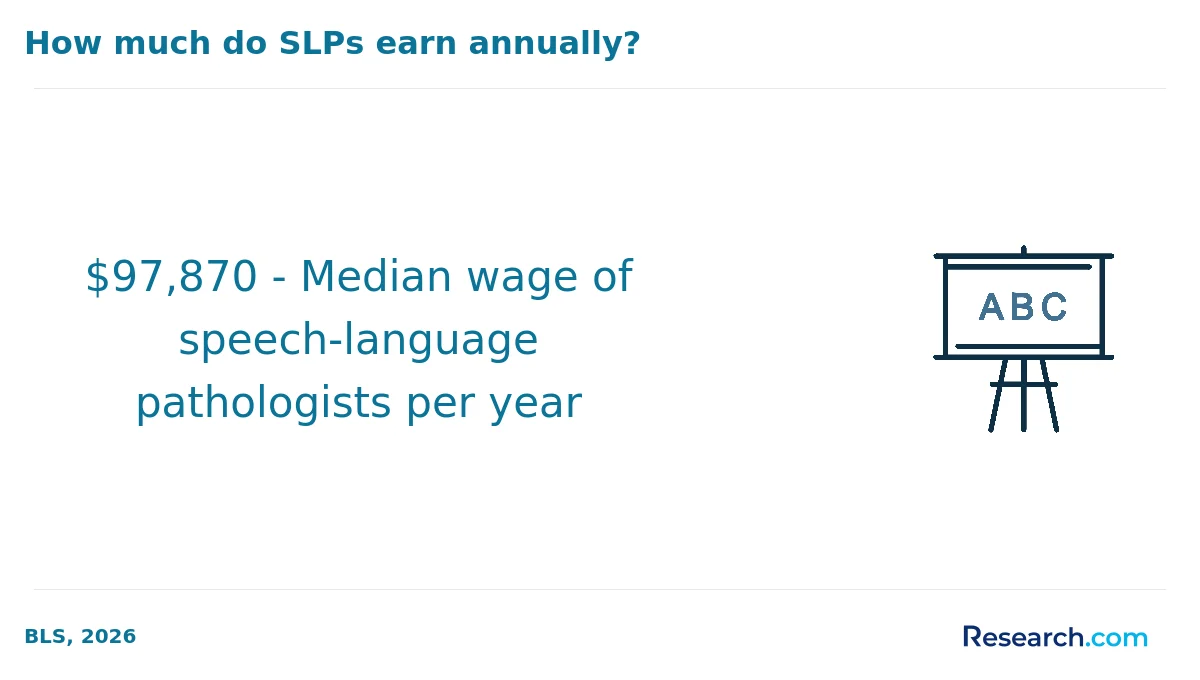
Jobs available to graduates with a Communication Disorders bachelor's degree typically pay between $40,000 and $60,000 annually. Labor and education research organizations place the median salary for individuals with this degree at around $97,870 per year.
That average is useful, but it needs context. The U.S. Bureau of Labor Statistics notes that the median wage for all bachelor's degree holders across fields is about $65,000, which means communication disorders bachelor's degree earnings often fall below the broader bachelor's-level median unless the graduate moves into a higher-paying setting, gains specialized experience, or continues into graduate study. Students comparing degree value may want to review the best majors in college to see how different programs connect to salary and career mobility.
Salary outcomes depend heavily on the job title. A graduate working as a speech-language pathology assistant, rehabilitation technician, early intervention aide, or healthcare administrative assistant may have similar academic preparation but different daily responsibilities, supervision requirements, and pay ceilings. In some states, speech-language pathology assistant roles require registration, specific coursework, clinical hours, or a licensed supervisor.
Experience also changes the picture. Entry-level workers usually start closer to the lower end of the $40,000 to $60,000 range, while those with several years of experience, strong documentation skills, bilingual ability, technology fluency, or healthcare-setting experience may move closer to the upper end. Location matters as well: major metro areas and high-cost regions often pay more, though higher wages do not always translate into greater purchasing power.
Employer type is another major factor. Public schools, hospitals, clinics, rehabilitation centers, nonprofits, government programs, and private companies may all hire communication disorders graduates, but they do not compensate the same way. Benefits, tuition assistance, predictable schedules, and supervision quality should be weighed alongside base salary.
What Are the Highest-Paying Jobs With a Communication Disorders Bachelor's Degree?
The highest-paying jobs available with a communication disorders bachelor's degree are usually support, coordination, administrative, research, or technology-adjacent roles rather than fully licensed clinical positions. Graduates can earn competitive early-career wages, but they should verify state rules before assuming a title such as speech-language pathology assistant is available without additional requirements.
These roles tend to pay more when they combine communication disorders knowledge with healthcare operations, documentation, client support, data management, or employee training.
- Speech-Language Assistant: Speech-language assistants support licensed speech-language pathologists by helping carry out therapy activities, preparing materials, documenting sessions, and reinforcing communication goals. With an average salary around $48,000 annually, this can be one of the stronger bachelor's-level options, especially in clinics, schools, and pediatric service settings. Requirements vary by state and employer.
- Healthcare Administrative Assistant: These professionals manage patient records, schedule appointments, coordinate referrals, and communicate with patients, families, and providers. A communication disorders background can be useful in speech, hearing, rehabilitation, and developmental clinics. Average pay is approximately $45,000 per year.
- Human Resources Assistant: Communication disorders graduates can apply their interpersonal, training, and documentation skills in recruiting coordination, onboarding, employee relations support, and workplace communication programs. The average salary is near $47,000 annually.
- Rehabilitation Technician: Rehabilitation technicians support clinicians in speech, hearing, occupational therapy, or physical rehabilitation settings by preparing treatment materials, maintaining equipment, assisting with patient flow, and tracking basic information. This role pays around $44,000 per year and can be a practical pathway for graduates who want direct patient-care exposure before graduate school.
- Medical or Clinical Transcriptionist: Medical or clinical transcriptionists convert voice-recorded medical reports into written records and must understand terminology, accuracy, confidentiality, and formatting. Salaries are near $40,000, although automation trends have reduced job growth and made specialized accuracy more important.
Students who want to broaden their understanding of behavior, development, and mental health may also compare related pathways such as the best online psychology degree programs, especially if they are considering work with children, schools, or behavioral health teams.
What Are the Highest-Paying Entry-Level Jobs With a Communication Disorders Degree?
Entry-level communication disorders jobs usually pay best when they place graduates close to clinical, educational, or behavioral services while still operating under supervision. These roles can also help applicants build the observation hours, references, and practical experience that may strengthen future graduate school applications.
- Speech-Language Pathology Assistant: Working under licensed pathologists, these assistants help carry out treatment plans for individuals with speech and language needs. Duties may include leading structured practice activities, preparing materials, recording progress, and communicating observations to the supervising clinician. The average starting salary is near $42,000.
- Rehabilitation Specialist: Rehabilitation specialists support people with physical, cognitive, or communication-related impairments as they build daily living and work-related skills. They may assist with therapy activities, goal tracking, and client support plans. Starting pay is about $40,000 annually.
- Behavioral Health Technician: These technicians support patients with developmental, emotional, or behavioral needs by helping implement behavioral interventions and observing patient responses under supervision. Entry-level salaries typically hover around $38,000.
- Early Intervention Specialist: Early intervention specialists work with young children with developmental delays and collaborate with families, educators, and service providers to support communication development. They earn approximately $39,000 at the outset.
- Educational Aide in Special Education: Special education aides assist teachers and service teams in classrooms serving students with communication, learning, behavioral, or developmental differences. They provide individualized support and help implement tailored instructional activities. Starting pay averages around $35,000.
When comparing these roles, look beyond the starting salary. A lower-paying job in a strong clinical setting may provide better mentorship and graduate school preparation than a higher-paying role with limited exposure to communication disorders practice. Ask about supervision, caseload type, documentation expectations, training, and whether the position aligns with your long-term plan.
One recent graduate described the first months in a speech-language pathology assistant role as both challenging and rewarding. She said the range of client needs and the responsibility of following treatment plans accurately felt overwhelming at first. Over time, daily practice and seeing client progress helped her build confidence. "It's a role where you see the immediate impact of your work, which made the starting salary feel well-earned," she noted.
What Are the Highest-Paying Industries for Communication Disorders Majors?
The highest-paying industries for communication disorders majors are typically those that use communication expertise in regulated, specialized, or high-demand environments. Healthcare and technology may offer stronger pay for certain roles, while education and government can provide stability, benefits, and structured advancement.
- Healthcare: Hospitals, outpatient clinics, rehabilitation centers, pediatric therapy practices, and specialty medical offices often value graduates who understand speech, language, swallowing, hearing, and patient communication. Pay can be stronger when the role involves clinical support, care coordination, documentation, or patient-facing services.
- Education: Schools need support staff who can work with students with speech, language, learning, and developmental differences. Specialized private schools and institutions of higher learning may offer better pay than general public schools, though schedules, benefits, and school-year contracts vary.
- Corporate Business: Corporations may hire communication-focused graduates for human resources, training coordination, accessibility support, employee communication, or wellness-related roles. These positions can pay well when the graduate can translate communication expertise into measurable workplace outcomes.
- Government: Federal, state, and local agencies may offer roles in social services, rehabilitation programs, public health, disability services, veterans' affairs, and education support. Government roles may not always have the highest starting salary, but they can offer stable employment and comprehensive benefits.
- Technology: Companies developing assistive communication tools, accessibility software, speech-related applications, and digital health products may need employees who understand communication disorders and user needs. Technology roles are often most competitive for graduates who also bring data, usability, documentation, product support, or customer training skills.
The best industry choice depends on whether you value salary growth, clinical exposure, schedule predictability, benefits, remote flexibility, or preparation for graduate school. A healthcare role may offer stronger clinical learning, while a corporate or technology role may offer broader advancement outside traditional therapy settings.
What High-Paying Remote Jobs Can I Get With a Communication Disorders Bachelor's Degree?
Remote work is possible with a communication disorders bachelor's degree, but the most realistic high-paying options are usually support, coordination, consulting, research, education, and health communication roles. Direct telepractice duties may be limited by state rules, employer policies, privacy requirements, and supervision standards.
- Telepractice Speech-Language Pathology Assistant: This role may involve supporting licensed speech therapists with virtual session preparation, digital materials, documentation, and supervised client activities. It is suited to remote work when regulations and employer systems allow it. Salaries typically range from $45,000 to $65,000 annually.
- Remote Clinical Research Coordinator: Coordinators help manage research studies related to communication disorders, including participant communication, scheduling, data tracking, consent documentation, and virtual assessments. The remote-friendly workload offers an estimated salary between $50,000 and $75,000.
- Health Communications Specialist: These specialists create patient education materials, digital campaigns, outreach content, and provider communications on speech, hearing, development, or rehabilitation topics. Remote roles in this area earn around $55,000 to $80,000 yearly.
- Remote Educational Consultant: Consultants may advise schools, families, or organizations on communication-support strategies through video conferencing, training materials, and program guidance. This role allows flexible hours and pays between $60,000 and $85,000.
- Virtual Audiology Assistant: Virtual audiology assistants may support audiologists by scheduling telehealth visits, managing patient communications, preparing records, and assisting with follow-up processes. Salaries generally range from $40,000 to $60,000 per year.
Remote job seekers should highlight skills that employers can evaluate quickly: electronic health record experience, HIPAA-aware communication, telehealth etiquette, documentation accuracy, data tracking, accessibility tools, and comfort working with families or clients online. Graduates who want to pair communication knowledge with stronger technical skills may also explore online data science programs for broader remote career options.
What Factors Affect Salary With a Communication Disorders Bachelor's Degree?
Salary differences among communication disorders bachelor's degree holders are often significant because the degree can lead to many types of roles. Two graduates with the same major may earn different salaries if one works in a school support position and the other works in healthcare operations, research coordination, or assistive technology.
- Experience Level: Entry-level graduates typically earn less because they need training, supervision, and workplace experience. Pay can increase as they demonstrate reliability, documentation accuracy, client communication skills, and the ability to work independently within their role.
- Industry Demand: Employers pay more when communication disorders knowledge is hard to find or directly tied to service delivery, compliance, research, or revenue. Healthcare, specialized education, assistive technology, and remote health communication roles may offer stronger opportunities depending on location and employer need.
- Job Role Complexity: Roles involving data management, case coordination, patient communication, behavioral support, technology tools, or team leadership often pay more than roles limited to general clerical or classroom support duties.
- Company Size and Resources: Larger hospitals, school systems, universities, government agencies, and private companies may have more structured salary bands and benefits. Smaller clinics and nonprofits may offer valuable experience but more limited compensation.
- Geographic Location: Salaries vary by state, region, and local labor market. Major metropolitan centers and high-cost areas often pay more, while rural areas may offer fewer employers but sometimes provide stronger need for flexible support staff.
Benefits should be part of the salary calculation. Health insurance, retirement contributions, tuition assistance, paid training, supervision, predictable hours, and graduate school flexibility can make one offer more valuable than another even when the base pay is similar.
What Skills Increase Salary for Communication Disorders Bachelor's Degree Holders?
The skills that increase salary for communication disorders bachelor's degree holders are the ones that make them more useful across clinical, educational, administrative, research, and technology settings. Recent data shows that professionals with advanced interpersonal and technical skills can earn up to 20% more than their peers.
Graduates should focus on skills that help employers solve practical problems: communicating with families, documenting accurately, supporting service teams, using digital tools, and interpreting information responsibly.
- Effective Communication: Clear spoken and written communication is central to this field. Graduates who can explain information to patients, families, teachers, clinicians, and administrators are more valuable because they reduce confusion and improve follow-through.
- Data Analysis: Basic data skills help graduates track progress, summarize outcomes, manage spreadsheets, support research, and contribute to evidence-based programs. Even nonclinical roles increasingly require comfort with data.
- Problem-Solving: Employers value workers who can adapt materials, identify barriers, manage scheduling issues, and respond calmly when client or classroom needs change. Strong problem-solvers often become trusted team members more quickly.
- Technological Literacy: Familiarity with electronic health records, telehealth platforms, assistive communication tools, scheduling systems, documentation software, and accessibility technology can make a graduate more competitive.
- Collaboration and Teamwork: Communication disorders work often involves speech-language pathologists, audiologists, teachers, occupational therapists, physicians, behavior specialists, families, and administrators. Graduates who collaborate well can contribute across settings and may qualify for higher-responsibility roles.
A professional with a communication disorders bachelor's degree described technology fluency as a turning point in his salary growth. "Learning to navigate complex software and adapting quickly was frustrating at first," he recalled. "But once I gained that fluency, it made me more confident and valuable in meetings and daily tasks."
He added that technical ability was only part of the equation. "It's not just what you know, but how well you connect with colleagues and clients that really makes a difference," he said. That balance of competence and communication is often what separates entry-level support work from better-paid coordination and specialist roles.
What Certifications Increase Salary After a Communication Disorders Bachelor's Degree?
Certifications can improve salary potential after a communication disorders bachelor's degree, but graduates should distinguish between credentials available at the bachelor's level and credentials that require graduate education, supervised practice, or licensure. Research indicates that certified professionals in communication-related fields can earn up to 20% more than those without such credentials.
The right certification depends on your intended career path. Some credentials support assistive technology, behavioral intervention, autism services, or rehabilitation work, while others are tied to advanced clinical practice and require more education.
- Certificate of Clinical Competence in Speech-Language Pathology (CCC-SLP): Offered by the American Speech-Language-Hearing Association, this credential is associated with professional clinical practice in speech-language pathology and typically requires graduate-level preparation, supervised clinical experience, and examination requirements. It is not a simple post-bachelor's add-on, but it can lead to higher pay and broader professional recognition for those who complete the full pathway.
- Assistive Technology Professional (ATP): This certification demonstrates expertise in assistive devices and technology used by people with communication and functional needs. It can be valuable for graduates interested in accessibility, AAC tools, rehabilitation technology, and product-support roles.
- Board Certified Behavior Analyst (BCBA): The BCBA credential focuses on applied behavior analysis and can be useful for professionals working with behavioral interventions and developmental needs. Eligibility requirements should be reviewed carefully because graduate-level coursework and supervised experience are commonly part of the pathway.
- Augmentative and Alternative Communication (AAC) Certification: AAC-focused training shows specialized knowledge in communication methods and tools used by individuals who do not rely primarily on spoken language. This specialization can support roles in schools, clinics, assistive technology, and disability services.
- Certified Rehabilitation Counselor (CRC): The CRC emphasizes counseling and rehabilitation services for people with disabilities. It can broaden career options in rehabilitation, case management, and vocational support, though eligibility requirements may extend beyond a bachelor's degree.
Additional credentials such as the Certified Autism Specialist (CAS) may also support salary growth by demonstrating focused knowledge of autism spectrum communication and support needs. Before paying for any certification, confirm employer recognition, eligibility rules, renewal costs, and whether the credential is respected in your state or target industry.
Graduates who want to combine communication disorders knowledge with management responsibilities may also review MBA programs in operations management, especially if they are interested in healthcare administration, clinic operations, education program management, or service delivery leadership.
Which High-Paying Jobs Require a Master's After a Communication Disorders Bachelor's Degree?
Many of the highest-paying and most independent careers in communication disorders require graduate education after the bachelor's degree. Nearly 70% of professionals in this field hold a master's degree, which reflects how important advanced clinical training is for licensed or specialized roles.
A master's degree is especially important for students who want to diagnose, treat, manage caseloads independently, qualify for licensure, or pursue recognized clinical credentials. Students comparing graduate pathways can review online speech pathology programs masters if they need a flexible route toward advanced preparation.
- Speech-Language Pathologist: Speech-language pathologists diagnose and treat speech, language, communication, cognitive-communication, voice, fluency, and swallowing disorders. A master's degree is crucial because it provides advanced coursework, supervised clinical practicum, and preparation for state and national requirements.
- Audiologist: Some audiology support roles may be available before graduate-level preparation, but becoming a licensed audiologist requires specialized advanced education. Graduate study covers areas such as acoustics, anatomy, diagnostics, hearing technology, and hearing and balance assessment.
- Educational Therapist: Educational therapists design interventions for learners with communication, language, and related learning needs. Graduate study can deepen knowledge in cognitive, linguistic, developmental, and instructional strategies.
- Health Communication Specialist: In clinical and public health settings, health communication specialists may focus on patient education, health literacy, advocacy, outreach, and communication strategy. A master's degree can strengthen skills in counseling, research interpretation, program design, and interdisciplinary collaboration.
- Research Coordinator: Research coordinators in communication disorders may help design studies, manage participant data, support assessments, and apply evidence-based methods to improve intervention outcomes. A master's degree can improve competitiveness for roles involving study design, analysis, and specialized populations.
Some students explore flexible admissions options such as online colleges that accept 2.0 GPA when planning the next step toward graduate education. However, applicants should verify accreditation, prerequisite coursework, clinical placement support, licensure alignment, and state requirements before enrolling. A master's can be a strong investment, but only when the program supports the career credential the student actually needs.
Which Communication Disorders Fields Are Future-Proof and High Paying?
The most future-proof communication disorders fields are those connected to aging populations, early childhood intervention, disability services, assistive technology, telehealth, neurological conditions, and evidence-based care. These areas are likely to remain relevant because they address persistent human needs rather than short-term employment trends.
- Speech-Language Pathology Support: Demand is supported by awareness of speech and language challenges, school-based service needs, medical rehabilitation, and an aging population. Telepractice may also expand access, although remote service roles depend on regulation and supervision.
- Augmentative and Alternative Communication (AAC): AAC is strengthened by advances in communication devices, apps, accessibility tools, and adaptive technology. Professionals who understand both user needs and technology can be valuable in clinics, schools, nonprofits, and product environments.
- Early Intervention Services: Early support for children with developmental delays receives ongoing attention from families, schools, healthcare providers, and public programs. This field can offer stability because early communication development has long-term educational and social importance.
- Hearing and Vestibular Rehabilitation: Developments in hearing technology and a growing patient base for auditory services contribute to continued demand. Bachelor's degree holders may work in support, coordination, education, or technology-adjacent roles, while higher-level clinical roles require advanced preparation.
- Neurological Communication Disorders: Brain injury, stroke, dementia, Parkinson's disease, and other neurodegenerative conditions create ongoing need for communication support and rehabilitation services. This area is often best suited to graduates who plan to pursue advanced clinical training.
Future-proof does not mean risk-free. Automation, funding changes, state regulations, and employer budgets can affect specific job titles. Graduates improve resilience by building transferable skills in documentation, technology, data, family communication, accessibility, and interdisciplinary teamwork.
What Graduates Say About the Highest Paying Careers With a Communication Disorders Bachelor's Degree
- Axton: "Graduating with a bachelor's degree in communication disorders opened doors I hadn't anticipated, especially given the strong earning potential in specialized roles. The increasing industry demand means job security, which has allowed me to focus on honing my skills without worry. I'm excited about the opportunities for career advancement that continue to grow as I gain experience in the field."
- Jaime: "Reflecting on my journey, the communication disorders program prepared me incredibly well for a high-demand job market where stability is key. I appreciate how the degree not only equips you with valuable knowledge but also positions you for positions of greater responsibility over time. Knowing there's a clear path to leadership roles has been a huge motivator for my continued growth."
- Roman: "From a professional standpoint, a communication disorders bachelor's degree provided a firm foundation that leads to rewarding, well-compensated careers. The steady industry demand gives peace of mind, making it easier to plan my future. What stands out most are the diverse opportunities for upward mobility, allowing me to take on challenges and leadership roles I had only dreamed of before."
Other Things You Should Know About Communication Disorders Degrees
In 2027, graduates with a communication disorders bachelor's degree find opportunities in various settings including hospitals, rehabilitation centers, schools, private clinics, and research institutions. Employers value their skills for roles in assisting speech-language pathologists, managing therapy programs, and conducting research support.
While a bachelor's degree can provide entry-level job opportunities, further education is typically required for advanced roles, such as becoming a licensed speech-language pathologist or audiologist. Many professionals pursue master's or doctoral degrees to increase their job prospects, responsibilities, and earning potential within the field.
Practical experience such as internships, clinical observations, and volunteer work in relevant settings significantly enhances employability. Experience working with diverse populations including children, the elderly, or individuals with special needs can demonstrate valuable skills and commitment to the profession. Hands-on training often complements academic knowledge in real-world environments.
Most high-paying and professional roles in communication disorders require licensure or certification beyond the bachelor's level, especially for clinical practice. However, some entry-level or assistant positions may require basic certifications or state-specific credentials. Staying informed about state regulations and continuing education is essential for career growth.
References
- U.S. Bureau of Labor Statistics - Speech-Language Pathologists https://www.bls.gov/ooh/healthcare/speech-language-pathologists.htm
- ASHA EdFind - Accredited Speech-Language Pathology Programs https://find.asha.org/ed/
- O*NET OnLine - Speech-Language Pathologists https://www.onetonline.org/link/summary/29-1127.00
- West Virginia University - Speech-Language Pathology, M.S. - Online https://medicine.hsc.wvu.edu/communications-sciences-and-disorders/speech-language-pathology-ms/future-students/curriculum/online-slp-program/
- Baylor University - Master of Science in Speech-Language Pathology (Online) https://csd.robbins.baylor.edu/graduate/online-csd-graduate-program
- Maryville University - Master of Science in Speech-Language Pathology https://www.maryville.edu/masters/speech-language-pathology/
- University of Scranton - Master of Science (M.S.) in Speech-Language Pathology https://www.scranton.edu/academics/pcps/health-and-human-performance/programs/speech-language-pathology/index.shtml
- Emerson College - Master of Science (M.S.) in Communication Disorders (Speech@Emerson, online) https://speech.emerson.edu/


