
2027 Online Communication Disorders Bachelor's Degrees for Adults Over 30

Co-Founder and Chief Data Scientist

Reviewed by Rhea Paul, PhD
SLP Education & Research Expert
Returning to college after 30 is usually not a question of ability; it is a question of fit. Adults considering an online bachelor’s degree in communication disorders need to know whether the program can work around employment, caregiving, finances, and the realities of studying after time away from school.
A communication disorders bachelor’s degree can prepare students for support roles in speech, language, hearing, education, rehabilitation, and human services. It can also serve as a foundation for graduate study in speech-language pathology or related fields. The U.S. Bureau of Labor Statistics projects a 17% growth in speech-language pathology roles through 2035, which is one reason many adults view this field as a practical path toward more stable, mission-driven work.
This guide explains what adults over 30 should expect from online communication disorders programs: flexibility, weekly workload, cost, time to completion, common challenges, adult-friendly program features, career options, and how age may affect hiring after graduation.
Key Benefits of Online Communication Disorders Bachelor's Degrees for Adults Over 30
- Online communication disorders programs offer flexible learning options that help adult learners balance studies with work and family life, with research showing that about 45% of adult students choose fully online courses to accommodate their schedules.
- These degrees support entry into a high-demand healthcare field, as speech-language pathology-related careers consistently report strong employment outcomes, with some programs showing near 100% graduate employment within one year of completion in the profession.
- Adults over 30 benefit from structured pathways toward advanced clinical careers, since communication disorders bachelor’s degrees are commonly designed as preparation for graduate study, where most speech-language pathology roles require a master’s degree for licensure and full professional practice.
Is 30 too old to start a communication disorders bachelor's degree?
No. Age 30 is not too old to start a communication disorders bachelor’s degree. Many adults begin or return to college in their 30s because they want a more stable career path, a stronger academic foundation, or a degree that can lead to graduate study in a health- or education-related field.
For adult learners, the bigger question is not whether they are “too old,” but whether the program structure matches their life. A student with a full-time job, children, military obligations, or caregiving responsibilities may need part-time enrollment, asynchronous classes, generous transfer-credit policies, and advising that understands nontraditional timelines.
Adults over 30 often bring strengths that younger students are still developing: workplace discipline, clearer career goals, stronger communication habits, and more experience working with people. Those qualities can be especially useful in communication disorders, where patience, observation, empathy, and professionalism matter.
Before enrolling, adults should check three practical issues:
- Transfer credit: Prior college courses may shorten the degree, but each institution sets its own rules.
- Graduate-school planning: Students who may later pursue speech-language pathology should confirm whether the bachelor’s curriculum covers common prerequisites.
- Licensure limits: A bachelor’s degree alone does not qualify someone to work independently as a licensed speech-language pathologist.
Adults who are thinking beyond the bachelor’s degree may also compare future academic pathways, including options such as the shortest doctoral programs, but the immediate priority should be choosing an accredited undergraduate program that fits their current responsibilities and long-term goals.
Why do adults over 30 choose online degree programs?
Adults over 30 often choose online communication disorders bachelor’s programs because they need a degree format that can coexist with work, family, and financial responsibilities. Nearly 35% of all postsecondary students taking at least one online course belong to this age group, which shows that online learning is no longer a niche option for nontraditional students.
The main reasons are practical:
- Career change or advancement: Some adults want to move into healthcare, education, rehabilitation, or child development. Others already work in schools, clinics, or social services and want stronger credentials.
- Schedule control: Online courses can reduce the need to commute or attend class at fixed times. This matters for adults with shift work, childcare, or unpredictable responsibilities.
- Access to programs outside the local area: Students who live far from a campus can compare accredited programs without relocating.
- Better use of prior experience: Adults may connect coursework to work they already do, such as assisting children, supporting older adults, coordinating services, or working in health-related settings.
- Lower indirect costs: Online study can reduce transportation, parking, and relocation expenses, although tuition and fees still require careful comparison.
Online learning is not automatically easier. It usually requires consistent self-management, reliable technology, and the ability to complete reading, projects, discussions, and exams without the structure of daily in-person classes. Adults who succeed tend to choose programs that offer clear course calendars, responsive instructors, tutoring, advising, and realistic part-time options.
Some adults also compare related graduate pathways when planning a long-term career shift. For example, flexible online masters psychology programs may appeal to students interested in counseling, development, behavior, or human services alongside communication-focused work.
What challenges do adults over 30 face in online communication disorders programs?
Adults over 30 can succeed in online communication disorders programs, but they often face constraints that traditional full-time students may not have. The most common difficulties involve time, academic adjustment, technology, and competing responsibilities.
- Returning to academic work: Students who have been away from college may need time to rebuild study habits, citation skills, test preparation routines, and confidence with research-based writing.
- Heavy reading and science-based content: Communication disorders coursework may include anatomy, language development, phonetics, audiology, speech science, and assessment concepts. These subjects can be demanding even in an online format.
- Time management: Working adults must protect study time before deadlines arrive. Waiting until weekends can create stress when family, work, or health issues interrupt plans.
- Technology and online systems: Students may need to use a learning management system, video platforms, digital libraries, proctoring tools, and specialized software. Small technical problems can become major barriers if support is slow.
- Role overload: Being an employee, parent, partner, caregiver, and student at the same time can lead to fatigue. Burnout is a real risk if students overload their schedule.
A practical way to reduce these challenges is to start with a manageable course load, especially during the first term. Adults should also ask admissions or advising staff how quickly instructors respond, whether tutoring is available online, how exams are administered, and whether courses require any synchronous meetings.
One adult graduate described the first term as the hardest part of the transition: “I underestimated how much I needed to refresh my writing and research skills.” He said full-time work, family duties, and weekly deadlines often collided. Learning the university’s online portal also took several weeks. His advice was simple: “Persistence and setting small, achievable goals helped me stay on track and eventually build confidence in my abilities.”
How flexible are online communication disorders bachelor's degrees for adults over 30?
Online communication disorders bachelor’s degrees can be highly flexible, but flexibility varies by institution. Data from the National Center for Education Statistics shows that more than 40% of undergraduate students pursuing online education are 30 or older, which helps explain why many programs now build schedules around adult learners.
Students should look beyond the word “online” and examine how the program actually runs. Key flexibility features include:
- Asynchronous classes: Students can watch lectures, complete assignments, and participate in discussions within weekly deadlines rather than attending at a fixed class time.
- Evening or weekend options: These help students whose programs include live sessions, group work, advising appointments, or presentations.
- Accelerated pacing: Shorter course terms may help motivated students finish faster, but they can be intense for adults with demanding jobs or caregiving duties.
- Part-time enrollment: This is often the safest option for students balancing multiple responsibilities, though it may extend the time to graduation.
- Self-paced or flexible enrollment: Some formats allow students to move through coursework with fewer fixed semester constraints, but students should confirm how financial aid and academic progress rules apply.
The best format depends on the student’s weekly capacity. A full-time worker with young children may benefit from asynchronous part-time study. A student with transfer credits, strong academic preparation, and predictable work hours may be able to handle accelerated courses. Adults comparing online tuition models may also find it useful to review broader affordability examples, such as cheapest online accounting degree options, to understand how online programs can differ in cost structure and fees.
How many hours per week do online communication disorders students study?
Adults over 30 in online communication disorders bachelor’s programs generally spend about 12 to 15 hours per week studying, though the exact workload depends on course load, term length, assignment design, and the student’s academic background. Research shows the average undergraduate online student studies roughly 14 hours per week, making that a useful planning benchmark.
Study time usually includes more than watching lectures. Students may need to read textbook chapters, review anatomy or phonetics concepts, complete discussion posts, write papers, prepare presentations, take quizzes, and meet group-project deadlines. Science-heavy courses may require more review time than general education courses.
Adults should plan their week before the term begins. A realistic schedule might include shorter study blocks on weekdays and longer sessions on weekends. The goal is consistency, not perfection. Students who wait for large uninterrupted blocks of time often fall behind because adult life rarely stays predictable.
One adult learner said, “Finding the right rhythm was challenging at first.” She used evening study sessions after work and longer weekend blocks, but it took “a lot of trial and error to see what really worked.” She found that motivation improved when she divided large assignments into smaller tasks. Over time, the ability to control when she studied became one of the biggest advantages of the online format.
How long does it take to earn a communication disorders degree online after 30?
Adults over 30 often complete an online communication disorders bachelor’s degree in three to five years. The timeline depends on how many credits they transfer, whether they attend full time or part time, and whether they remain continuously enrolled.
The most important timeline factors are:
- Course load: Full-time students who can take the maximum recommended credits may finish closer to three years. Part-time students may need up to five years or longer.
- Transfer credits: Prior college coursework can reduce the number of remaining credits. Students should request an official transfer evaluation before assuming how much time they will save.
- Program pacing: Accelerated terms can shorten completion time, but they also compress assignments and exams into a tighter schedule.
- Continuous enrollment: Taking breaks can be necessary, but interruptions often extend the degree timeline and may affect financial aid or course sequencing.
- Prerequisites and sequencing: Some communication disorders courses must be taken in order. Missing one course offering may delay the next step.
Adults should ask each program for a personalized degree plan showing how long completion would take with their transfer credits and preferred course load. This is more useful than relying on the advertised timeline, which may assume full-time enrollment and no interruptions.
How much do online communication disorders bachelor's degrees cost for adults over 30?
Online communication disorders bachelor’s degree programs for adults over 30 typically charge tuition by credit hour, with total costs averaging between $15,000 and $45,000. The final amount depends on the institution, number of required credits, transfer-credit acceptance, residency status, and fees.
Students should compare the full cost of attendance, not just tuition. Important cost factors include:
- Required credits: Most programs require 120 to 130 credits for completion. Students with accepted transfer credits may pay for fewer credits at the new institution.
- Tuition rate: Public universities may charge lower rates for in-state students, while private institutions may have higher tuition but different scheduling or transfer policies.
- Fees: Online programs may charge technology, student service, proctoring, graduation, or course-specific fees.
- Books and materials: Some courses use digital resources included in tuition, while others require separate textbook or software purchases.
- Prerequisite needs: Adults who lack required foundational courses may need additional credits, which can increase both cost and time.
- Financial aid and employer support: Federal aid, scholarships, grants, payment plans, and employer tuition reimbursement can reduce out-of-pocket costs for eligible students.
Before enrolling, adults should ask for a written estimate that includes tuition, fees, materials, and expected transfer credits. They should also confirm whether part-time enrollment changes financial aid eligibility, employer reimbursement timing, or scholarship requirements.
What features make an online communication disorders bachelor's program adult-friendly?
An adult-friendly online communication disorders program is not just a program that happens to be online. It is a program designed for students who may be working, parenting, caregiving, paying their own tuition, and returning to academics after a long break. Nearly 40% of undergraduate students enrolled exclusively in online courses are aged 30 or older, so adult-centered design is increasingly important.
Look for these features when comparing programs:
- Clear asynchronous structure: Weekly modules, predictable deadlines, and recorded lectures help adults plan around work and family responsibilities.
- Responsive advising: Adult students need guidance on transfer credits, degree sequencing, graduation timelines, graduate-school prerequisites, and career planning.
- Online tutoring and writing support: These services are especially valuable for students refreshing academic writing, research, statistics, or science skills.
- Transparent transfer-credit policies: Programs should clearly explain which credits count toward major requirements, electives, and general education.
- Accessible technology: The learning platform should be easy to use, mobile-friendly when possible, and supported by reliable technical help.
- Reasonable group-work expectations: Group projects can be useful, but adult learners need clear scheduling expectations when classmates live in different time zones or work different shifts.
- Career and graduate-school alignment: Students should know whether the degree prepares them for support roles, graduate study, or both.
- Community without forced availability: Discussion boards, virtual study groups, and peer networks can reduce isolation, but they should not require constant real-time participation.
Students considering later graduate study may also compare related fields. For example, an online masters in psychology may complement interests in behavior, development, counseling, or human services, depending on career goals and licensure requirements.
The strongest adult-friendly programs make expectations visible before enrollment. Adults should be able to answer three questions before committing: How many hours will I study each week, how long will the degree take with my transfer credits, and what jobs or graduate programs will this degree realistically support?
What jobs can you get with a communication disorders bachelor's degree after 30?
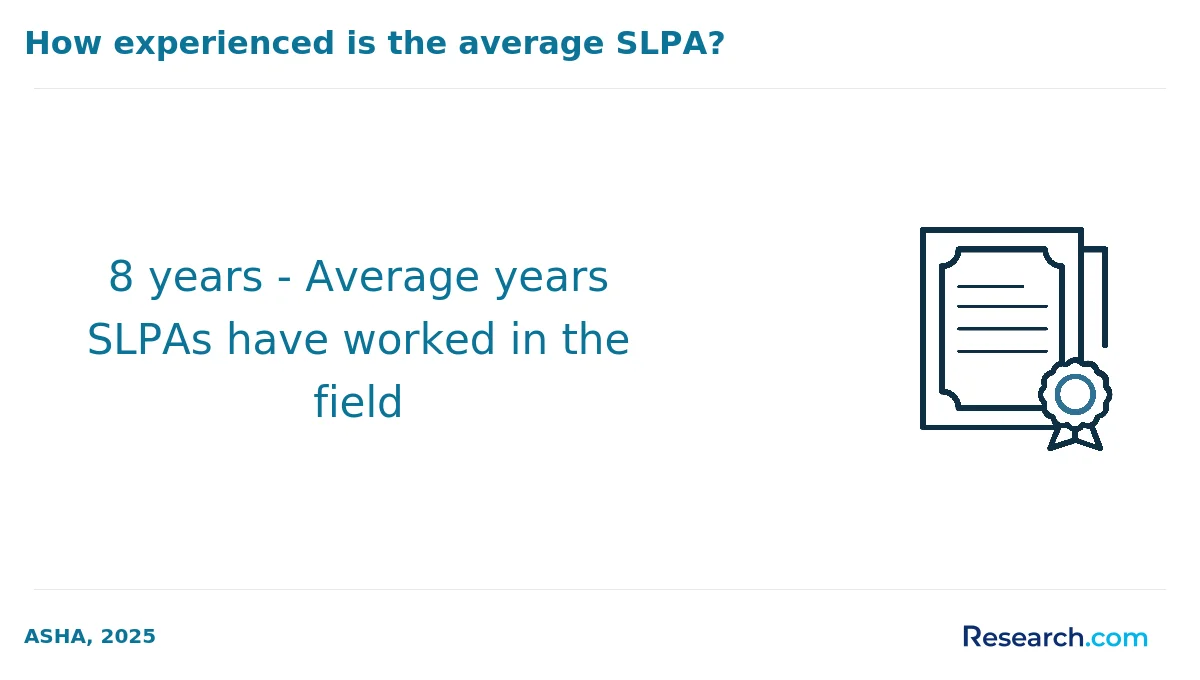
A communication disorders bachelor’s degree can lead to support and entry-level roles in education, healthcare, rehabilitation, early intervention, and social services. Employment in speech-language pathology and related fields is expected to grow by 17% through 2035, but job titles and requirements vary by state, employer, and setting.
Common career paths include:
- Speech-Language Pathology Assistant: Supports licensed speech-language pathologists with therapy activities, documentation, materials, and client practice under required supervision. State rules determine whether this role is available and what credentials are required.
- Rehabilitation Specialist: Assists individuals recovering from brain injuries, strokes, or other conditions that affect communication, often as part of a broader care team.
- Early Intervention Specialist: Supports young children with speech and language delays, often working with families, educators, and other service providers.
- Communication Disorders Educator: Provides education about speech, language, hearing, and communication development in school, community, or support-service settings.
- Social Services Coordinator: Helps clients and families connect with therapy resources, disability services, educational supports, or community programs.
Adults should understand one important limitation: becoming a licensed speech-language pathologist typically requires graduate education and supervised clinical preparation, not just a bachelor’s degree. If that is the goal, students should compare prerequisite alignment, clinical expectations, and future options such as slp master's programs online before choosing an undergraduate program.
For adults exploring broader graduate options, resources on the most worthwhile masters degrees can help frame how additional education may affect career mobility, specialization, and long-term earning potential.
Does age affect hiring after earning an online communication disorders degree?
Age is generally not the main factor employers consider after someone earns an online communication disorders bachelor’s degree. Employers are more likely to focus on qualifications, relevant experience, communication skills, professionalism, technology comfort, and whether the applicant understands the population the organization serves.
A survey by the Society for Human Resource Management found that 78% of hiring managers are open to employing candidates over 40 who meet job requirements. For adults returning to school, that matters because the degree can signal current training, persistence, and commitment to a career transition.
Adults can reduce age-related concerns by presenting their background strategically. Instead of emphasizing years away from school or a late career change, applicants should connect prior experience to the role. Customer service, teaching, caregiving, healthcare support, administration, case coordination, coaching, and nonprofit work can all demonstrate transferable strengths.
Online degree graduates should also be ready to show that their education was rigorous and current. Useful proof points include relevant coursework, projects, field-related volunteer work, internships if available, technology skills, and familiarity with ethical boundaries and supervised practice requirements.
What Graduates Say About Online Communication Disorders Bachelor's Degrees for Adults Over 30
-
: "Choosing an online communication disorders bachelor’s degree after 30 gave me the flexibility I needed while I was changing careers. Balancing coursework with family responsibilities was not easy, but it made me more disciplined with my time. The degree helped me see a clearer path forward professionally.
Axton"
-
: "Studying communication disorders online later in life gave me a different perspective. My work experience helped me understand the course material in a practical way, and the online format connected me with classmates who had different backgrounds. The program strengthened my interest in helping people communicate more effectively.
Jaime"
-
: "Earning this degree after 30 was a strategic decision for my healthcare career. The schedule fit around my job, and working through the early technology challenges gave me more confidence. Completing the program helped me feel more prepared and more credible in my field.
Roman"
Other Things You Should Know About Communication Disorders Degrees
Most accredited online communication disorders bachelor's programs require students to complete clinical practicum or fieldwork experiences. These components are essential for hands-on skill development and must be arranged locally, often in healthcare or educational settings near the student's residence. Adults over 30 typically coordinate these experiences with program advisors to ensure compliance with accreditation and certification requirements.
Many online communication disorders bachelor's programs offer credit for prior learning, including work experience or related coursework, through assessments or portfolios. This recognition can shorten the time needed to graduate and is particularly advantageous for adults over 30 who may have relevant professional backgrounds. However, acceptance of such credits varies by institution and often requires documentation or evaluation.
Students typically need a reliable computer, high-speed internet access, and software compatible with the program's learning management system. Many programs also require video conferencing capabilities for interactive seminars, supervision, and collaboration. Familiarity with digital tools is important, but most schools provide technical support to assist adult learners.
References
- U.S. Bureau of Labor Statistics - Speech-Language Pathologists https://www.bls.gov/ooh/healthcare/speech-language-pathologists.htm
- ASHA EdFind - Accredited Speech-Language Pathology Programs https://find.asha.org/ed/
- ETS Praxis - Speech-Language Pathology (5331) https://praxis.ets.org/test/speech-language-pathology-5331.html
- University of North Carolina at Greensboro - Speech-Language Pathology, M.A. (Online) https://csd.uncg.edu/graduate/masters-of-arts-online/
- California State University-San Marcos - Online MS in Speech-Language Pathology https://www.csusm.edu/slp/programs/mastersonline/index.html
- Auburn University, Montgomery - Master of Science in Speech-Language Pathology https://www.aum.edu/degree/ms-speech-language-pathology/
- Abilene Christian University - Master of Science in Speech-Language Pathology (Online) https://acu.edu/academics/graduate/master-of-science-in-speech-language-pathology/
- California State University-Northridge - Master of Science in Communicative Disorders (Online) https://tsengcollege.csun.edu/programs/CDS


