2027 Online Electrical Engineering Degrees That Help Build Hardware Testing Skills

Co-Founder and Chief Data Scientist
Choosing an online electrical engineering degree is harder when your goal is hands-on hardware testing, not just theory. Employers need graduates who can validate circuits, sensors, embedded systems, power electronics, and test equipment as AI, electric vehicles, semiconductors, and connected devices expand. The U.S. Bureau of Labor Statistics reports a $111,910 median annual wage for electrical engineers in May 2024, making program quality and lab access important financial decisions.
This guide helps prospective students compare accredited online options, understand lab formats, estimate cost and time, and choose a program aligned with hardware-focused careers.
Key Things You Should Know
- For hardware testing careers, prioritize ABET-accredited online bachelor's programs or reputable graduate programs with circuit labs, instrumentation, embedded systems, power electronics, and capstone testing requirements.
- College Board data for 2024-25 shows average published tuition and fees of $11,610 at public four-year in-state institutions, $30,780 for public out-of-state students, and $43,350 at private nonprofit institutions, so residency and transfer credit can significantly affect ROI.
- BLS 2024-34 projections show 9% job growth for electrical and electronics engineers, but outcomes vary by location, industry, internships, lab experience, security clearance needs, and the student's ability to document test projects.
What is an online electrical engineering degree focused on hardware testing skills?
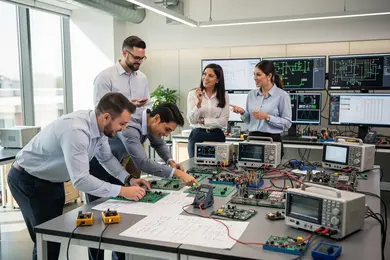
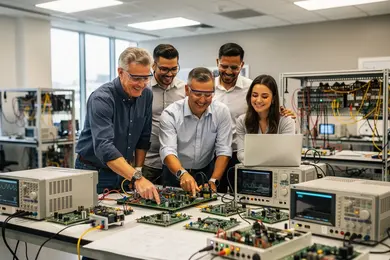
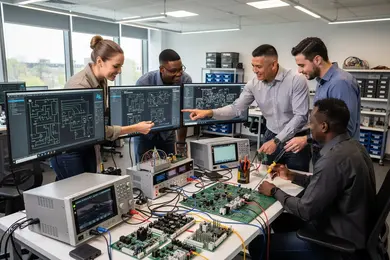
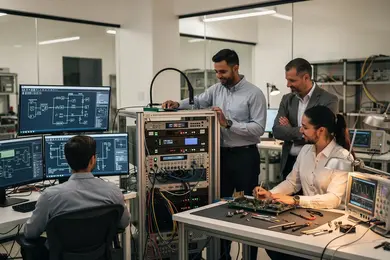
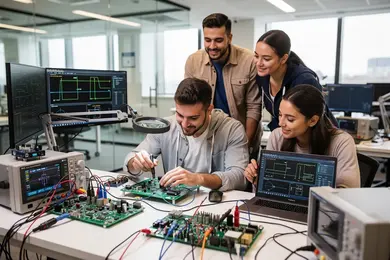
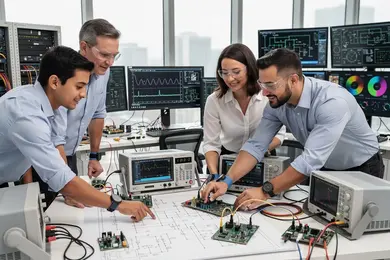
An online electrical engineering degree focused on hardware testing teaches students how to design, measure, debug, verify, and document electrical and electronic systems. "Hardware testing" usually means working with real or simulated circuits, oscilloscopes, digital multimeters, logic analyzers, signal generators, programmable power supplies, data acquisition systems, microcontrollers, sensors, printed circuit boards, and automated test equipment.
The degree can be a bachelor's in electrical engineering, a bachelor's in electrical engineering technology, a master's in electrical engineering, or a closely related engineering program with electrical, electronics, embedded systems, controls, or power coursework. For students who want to become licensed professional engineers later, an ABET-accredited engineering bachelor's degree is often the safest route because state licensing boards commonly look for ABET engineering accreditation when evaluating education.
The table below compares the most common online degree paths for students who want hardware testing skills. It is useful because "electrical engineering" and "electrical engineering technology" sound similar, but they often lead to different mixes of design theory, applied lab work, and licensure flexibility.
| Program type | Best fit | Hardware testing emphasis | Key limitation to check |
| Online BS in Electrical Engineering | Students seeking engineering design, testing, systems, and possible PE licensure pathways. | Circuits, electronics, signals, power, controls, embedded systems, design projects, and measurement labs. | Some programs require in-person labs, proctored exams, or strict course sequencing. |
| Online BS in Electrical Engineering Technology | Students seeking applied roles in testing, field engineering, manufacturing, and technical support. | Instrumentation, troubleshooting, PLCs, electronics labs, equipment operation, and applied design. | May not meet every employer's or licensing board's definition of an engineering degree. |
| Online MS in Electrical Engineering | Working engineers who already hold an engineering or technical bachelor's degree. | Advanced topics such as RF, power electronics, semiconductor devices, embedded systems, and signal processing. | Graduate programs may assume students already have undergraduate lab foundations. |
| Graduate certificate in electrical or embedded systems | Professionals who need targeted upskilling without a full degree. | Focused coursework in testing, embedded systems, controls, or power systems. | Usually not a substitute for a bachelor's degree in engineering. |
Students comparing engineering disciplines should also be clear about the type of systems they want to test. Electrical engineering usually centers on circuits, signals, electronics, power, and embedded hardware, while a mechanical engineering degree online is more likely to emphasize materials, thermal systems, machine design, fluids, and mechanical product testing.
How do online electrical engineering programs build practical hardware testing and lab skills?
Strong online electrical engineering programs do not treat labs as optional videos. They use a mix of mailed lab kits, remote instrumentation, simulation software, virtual lab environments, local lab requirements, and design projects to help students practice measurement and troubleshooting. The best format depends on whether the course is teaching fundamentals, safety-sensitive equipment, or advanced systems testing.
The table below shows common online lab models and how each supports hardware testing. Use it to ask specific questions before enrolling, because two online programs with the same course title may deliver very different lab experiences.
| Lab format | How it works | Hardware testing value | What to verify |
| Mailed electronics kits | Students receive components, breadboards, microcontrollers, sensors, and measurement tools. | Builds practical circuit assembly, debugging, and test documentation habits. | Whether students keep the kit and what equipment is included in fees. |
| Remote labs | Students access real instruments or equipment through a web interface. | Supports measurement practice when equipment is expensive or safety-sensitive. | Whether lab access is available outside business hours. |
| Simulation software | Students model circuits, signals, controls, or power systems before testing. | Teaches prediction, tolerance analysis, and failure investigation. | Whether simulation is paired with physical validation. |
| Short campus residencies | Students complete intensive labs on campus over several days. | Provides supervised access to oscilloscopes, power labs, motors, and advanced equipment. | Travel cost, scheduling, and whether attendance is mandatory. |
| Capstone projects | Students design, test, and document a system or subsystem. | Creates portfolio evidence for hardware, validation, and test engineering roles. | Whether projects require real measurements, test plans, and final reports. |
To build job-ready hardware skills online, students should actively turn assignments into a portfolio instead of completing labs only for grades. A practical approach is to save schematics, test procedures, raw measurements, plots, code repositories, failure notes, revised designs, and final technical reports.
Students can strengthen online lab learning by following a consistent process for each project:
- Predict circuit or system behavior before testing so measurements have a clear purpose.
- Record the test setup, instrument settings, component values, and environmental conditions.
- Compare measured results with simulation or design expectations and explain any mismatch.
- Document failures, troubleshooting steps, corrective actions, and retest results.
- Summarize the test in a concise engineering report that can be shown to faculty, internship supervisors, or employers.
This process matters because hardware test roles often require more than "it worked." Employers want candidates who can write test procedures, isolate faults, interpret noisy data, communicate risk, and prove that a product meets requirements.
Which accredited online electrical engineering schools offer strong hardware testing coursework?
Accreditation should come before convenience when comparing online electrical engineering schools. For U.S. engineering bachelor's programs, ABET accreditation is the most important program-level signal because it indicates that the curriculum, faculty qualifications, student outcomes, and continuous improvement processes have been externally reviewed.
The following examples are useful starting points for researching online electrical engineering programs with hardware-relevant coursework. Always confirm current accreditation, modality, residency requirements, tuition, and course availability directly with the school and the ABET public search tool before applying.
| School | Online electrical engineering option | Accreditation note to verify | Hardware testing strengths to look for |
| Arizona State University | Online Bachelor of Science in Engineering in Electrical Engineering | Verify current ABET Engineering Accreditation Commission status. | Circuits, electronics, signals, embedded systems, design projects, and lab-based engineering coursework. |
| University of North Dakota | Online Bachelor of Science in Electrical Engineering | Verify current ABET Engineering Accreditation Commission status. | Electrical circuits, electronics, power, controls, measurements, and required lab experiences. |
| Florida International University | Online Bachelor of Science in Electrical Engineering | Verify current ABET Engineering Accreditation Commission status. | Electronics, energy systems, communications, embedded systems, and senior design. |
| Stony Brook University | Online Bachelor of Science in Electrical Engineering | Verify current ABET Engineering Accreditation Commission status. | Circuits, electronics, signals, microelectronics, systems, and technical electives. |
| Penn State World Campus | Online graduate electrical engineering options | Graduate engineering programs are usually not ABET-accredited in the same way as bachelor's programs. | Advanced electrical engineering coursework for students who already have technical foundations. |
A strong program is not automatically the cheapest or fastest one. The better question is whether the curriculum gives you repeated opportunities to measure, test, debug, and explain real systems. If a school's course descriptions mention circuits but not labs, instrumentation, design projects, or measurement tools, ask for sample syllabi before committing.
Students who are still deciding whether engineering is the right field may also compare related science paths. For example, someone drawn to environmental monitoring, sensors, and sustainability policy might research what can you get with an environmental science degree before choosing a more hardware-intensive electrical engineering route.
What admission requirements do online electrical engineering programs with hardware testing have?
Admission requirements vary by degree level, but online electrical engineering programs are usually more math-intensive than many online majors. Schools commonly expect readiness for calculus, physics, and programming because these subjects support circuit analysis, signals, electromagnetics, controls, and embedded systems.
Most applicants should be prepared for the following requirements or prerequisites:
- High school diploma, GED, or prior college credit for bachelor's applicants.
- College algebra, trigonometry, precalculus, or calculus readiness, depending on placement rules.
- Physics and chemistry background, especially for engineering bachelor's programs.
- Official transcripts from all previously attended institutions.
- Minimum GPA requirements that may differ for first-year, transfer, and upper-division admission.
- Programming or computing experience, especially for embedded systems, controls, and signal processing tracks.
- For master's programs, a bachelor's degree in electrical engineering or a closely related technical field, plus possible prerequisite bridge courses.
Transfer students should ask how calculus, physics, circuits, and lab courses will apply. A common mistake is assuming that general education credits transfer easily but technical courses will also transfer one-for-one. Engineering departments often review lab science and engineering courses more strictly because accreditation and sequencing matter.
Students changing careers should also compare prerequisite intensity across online fields. A nutritionist degree, for example, may include chemistry and biology, but it does not usually require the same depth of calculus-based circuit theory, electronics labs, and engineering design review expected in electrical engineering.
How does studying electrical engineering online compare to campus programs for hardware work?
Online electrical engineering can work well for motivated students, working technicians, military learners, and adults who cannot relocate. The trade-off is that hardware work requires planning: you need reliable workspace, equipment access, time for troubleshooting, and a program that treats labs as real engineering practice.
The comparison below summarizes when online or campus study may be the better fit for hardware-focused students. It does not mean one format is always superior; the stronger choice is the format that gives you the most consistent access to quality labs, faculty feedback, and project opportunities.
| Decision factor | Online electrical engineering | Campus electrical engineering |
| Lab access | Can be strong with kits, remote labs, simulation, and residencies. | Usually easier access to physical lab spaces and specialized equipment. |
| Schedule flexibility | Often better for working adults and part-time students. | More fixed class and lab schedules. |
| Peer collaboration | Requires intentional use of forums, video meetings, and project tools. | Often easier through lab partners, clubs, and informal study groups. |
| Hardware troubleshooting | Can take longer without immediate in-person help. | Faculty or lab assistants may be available during scheduled lab periods. |
| Internship access | Depends heavily on the student's local market and networking effort. | Campus career fairs may provide more direct employer contact. |
Online study makes the most sense if you are disciplined, comfortable asking for help remotely, and willing to document projects carefully. Campus study may be better if you learn best through in-person labs, want frequent access to advanced equipment, or are seeking research assistantships tied to physical laboratories.
Online students should avoid the mistake of waiting until senior year to build hardware experience. Joining IEEE student activities, completing personal test projects, applying for internships early, and asking instructors for feedback on lab reports can narrow the experience gap between online and campus formats.
What core courses and specializations develop hardware testing expertise in these degrees?
Hardware testing expertise grows from a sequence of courses, not from a single "testing" class. The strongest programs connect theory to measurement repeatedly: students learn what a circuit should do, how to measure what it actually does, and how to explain the difference.
The table below connects common courses to the hardware testing skills they support. Use it when reviewing degree plans so you can spot programs that are too theoretical for your goals or too narrow for long-term engineering growth.
| Course or specialization | Hardware testing skill developed | Why it matters |
| Circuit analysis | Voltage, current, impedance, transient response, and network measurement. | Forms the foundation for diagnosing almost every electrical system. |
| Electronics | Testing diodes, transistors, amplifiers, filters, and analog circuits. | Prepares students for board-level debugging and component-level validation. |
| Digital logic and embedded systems | Microcontroller testing, firmware-hardware interaction, sensors, and timing. | Supports roles involving IoT devices, robotics, automotive electronics, and consumer hardware. |
| Signals and systems | Frequency response, filtering, sampling, noise, and data interpretation. | Important for communications, sensors, audio, medical devices, and test automation. |
| Power electronics and energy systems | Testing converters, inverters, motors, and power supplies. | Useful for EVs, renewable energy, grid equipment, and industrial systems. |
| Control systems | Stability testing, feedback loops, sensors, actuators, and system response. | Relevant to automation, aerospace, robotics, and manufacturing equipment. |
| Electromagnetics or RF | Transmission lines, antennas, shielding, interference, and high-frequency behavior. | Supports wireless, defense, aerospace, and high-speed electronics testing. |
| Senior design or capstone | Test planning, prototype validation, documentation, and presentation. | Creates the clearest portfolio evidence for employers |
Current technology trends make some specializations especially valuable. AI-assisted test automation is changing how engineers analyze large test datasets, but it does not replace the need to understand instruments, circuits, failure modes, and safety. Semiconductor reshoring, EV charging infrastructure, renewable energy systems, and connected industrial devices are also increasing the value of engineers who can validate hardware under real operating conditions.
If you are choosing electives, prioritize courses that require measurable outputs rather than only exams. Useful signs include lab reports, design reviews, printed circuit board work, firmware integration, power measurements, noise analysis, compliance testing, or a final prototype that must meet written requirements.
How long do online electrical engineering degrees take and what do they cost?
Online electrical engineering degrees usually take about the same number of credits as campus programs, but the calendar can differ. A first-time bachelor's student commonly needs four years of full-time study, while transfer students, working adults, and master's students may follow shorter or longer timelines depending on accepted credits and course load.
Cost varies widely by school type, residency, online fees, lab kits, transfer credits, and whether the student attends full time or part time. College Board's 2024-25 national averages put published tuition and fees at $11,610 for public four-year in-state students, $30,780 for public out-of-state students, and $43,350 for private nonprofit four-year institutions; online engineering students should treat these as broad benchmarks, not program-specific quotes.
The table below summarizes common time and cost patterns. It helps separate the sticker price from the practical enrollment decisions that affect total cost.
| Path | Typical time | Main cost drivers | Best fit |
| First-time online bachelor's student | About 4 years full time | Tuition, fees, lab kits, software, books, proctoring, and possible residency travel. | Students starting an engineering pathway from the beginning. |
| Transfer bachelor's student | About 2 to 3 years after accepted credits | How many calculus, physics, general education, and engineering credits transfer. | Community college students or adults with prior college work. |
| Part-time bachelor's student | Often 5 or more years | Longer enrollment period and fewer credits per term. | Working adults who need schedule flexibility. |
| Online master's student | About 1.5 to 3 years | Graduate tuition rate, employer assistance, prerequisite courses, and course load. | Engineers seeking advanced specialization. |
| Graduate certificate student | Often less than 1.5 years | Per-credit graduate tuition and limited financial aid options. | Professionals needing targeted upskilling. |
Before comparing tuition, calculate the total cost of attendance. Hardware-focused online programs may require equipment, software licenses, shipping, local lab supplies, or travel for intensive labs.
Use these steps to estimate affordability more accurately:
- Ask for the per-credit tuition rate and whether online students pay the same rate regardless of residency.
- Request a list of required lab kits, instruments, software, proctoring fees, and residency expenses.
- Confirm how many transfer credits apply specifically to engineering degree requirements.
- Compare financial aid, scholarships, military benefits, and employer tuition assistance.
- Estimate the opportunity cost of full-time versus part-time study based on your work schedule.
Students comparing online degrees outside engineering should be careful not to assume all online programs have similar costs. For instance, a masters in library science online program may have different lab, software, and accreditation cost factors than an electrical engineering program that requires technical equipment.
What entry-level and advanced careers use hardware testing skills from these programs?
Hardware testing skills can support both entry-level and advanced roles. The strongest opportunities usually go to candidates who can combine electrical theory, measurement tools, documentation, troubleshooting, coding, and cross-functional communication with design, manufacturing, quality, or field teams.
The table below maps common roles to the way they use hardware testing. Use it to decide whether you need a full engineering degree, an engineering technology degree, a master's specialization, or additional certifications.
| Career path | Typical responsibilities | Education commonly expected | Hardware testing connection |
| Electrical engineer | Design, analyze, test, and improve electrical systems or components. | Bachelor's in electrical engineering; master's for some advanced roles. | Validates circuits, power systems, electronics, and design requirements. |
| Electronics test engineer | Develop test plans, automate measurements, debug boards, and report failures. | Electrical engineering, computer engineering, or related degree. | Directly centered on lab instruments, failure analysis, and production validation. |
| Validation engineer | Confirm that products meet technical, safety, reliability, and customer requirements. | Engineering bachelor's; industry-specific experience often valued. | Runs verification procedures, environmental tests, and system-level checks. |
| Field applications engineer | Support customers using electronic components, tools, or systems. | Engineering or engineering technology degree. | Uses testing skills to reproduce issues and recommend design fixes. |
| Power systems engineer | Work on generation, distribution, renewable systems, protection, or power electronics. | Electrical engineering degree; PE licensure may help in some roles. | Tests loads, converters, relays, controls, and system performance. |
| Embedded systems engineer | Develop and test hardware-software systems using microcontrollers and sensors. | Electrical, computer, or embedded systems background. | Debugs timing, interfaces, firmware behavior, and device reliability. |
| Engineering technician or technologist | Build prototypes, run tests, maintain equipment, and support engineers. | Associate or bachelor's in engineering technology, depending on employer. | Highly hands-on role involving instruments, test fixtures, and troubleshooting. |
Entry-level candidates should look for job titles such as test engineer, associate electrical engineer, hardware validation engineer, electronics engineer, lab engineer, applications engineer, quality engineer, and electrical engineering technician. Advanced roles may require specialization in RF, power electronics, semiconductor testing, aerospace systems, medical devices, automotive electronics, or defense systems.
Career fit matters. If you enjoy debugging ambiguous problems, reading schematics, writing procedures, and explaining results, hardware testing can be a strong match. If you prefer purely theoretical analysis or software-only work, choose electives and internships carefully so the degree leads toward the roles you actually want.
What salary ranges and job outlook can graduates with hardware testing skills expect?
Salary potential depends on occupation, industry, region, degree level, experience, security clearance, and the complexity of the systems being tested. Hardware testing skills can be valuable in aerospace, semiconductors, power, automotive, defense, medical devices, telecommunications, and manufacturing, but no degree guarantees a specific income.
The table below uses U.S. labor market data from BLS wage and outlook releases available for 2024-era planning. Treat the figures as occupation-level benchmarks rather than school-specific graduate outcomes.
| Occupation | Relevant salary or outlook benchmark | How to interpret it |
| Electrical engineers | May 2024 median annual wage: $111,910 | This is the closest broad benchmark for graduates entering design, test, power, electronics, or systems roles. |
| Electronics engineers, except computer | May 2024 median annual wage: $127,080 | Hardware-heavy industries such as communications, aerospace, and instrumentation may align with this category. |
| Computer hardware engineers | May 2024 median annual wage: $155,020 | Relevant for students combining electrical engineering, digital systems, embedded hardware, and computer architecture. |
| Electrical and electronic engineering technologists and technicians | May 2024 median annual wage: $77,390 | Useful benchmark for more applied testing, lab support, manufacturing, and field roles. |
| Electrical and electronics engineers | Projected 2024-34 job growth: 9% | A positive outlook supports demand, but competition and hiring needs still vary by specialization and location. |
For students evaluating ROI, the key is not only the median salary. Compare the total cost of the degree with the roles you can realistically pursue, the local or remote job market, internship availability, and whether the program helps you produce portfolio evidence. A lower-cost program with strong ABET status, transfer credit, and real labs may be a better investment than a more expensive program with weak hardware access.
AI and automation are changing test engineering in practical ways. Many employers now value Python, MATLAB, LabVIEW, data analysis, automated test scripts, and familiarity with production test systems. However, automated testing still depends on engineers who understand the circuit, the instrument, the failure mode, and the consequences of bad data.
How can students evaluate accreditation, industry alignment, and lab resources before enrolling?
Before enrolling, evaluate the program like an engineer would evaluate a system: define the requirement, inspect the evidence, identify risk, and compare alternatives. A school's marketing page is not enough for a hardware-focused decision.
Start with these practical checks because they affect accreditation, employability, cost, and your ability to build real testing skills:
- Confirm institutional accreditation through a recognized U.S. accreditor and programmatic ABET status for any bachelor's engineering program you are considering.
- Ask whether the degree title is electrical engineering, electrical engineering technology, electronics engineering, computer engineering, or another related field, because employers and licensing boards may treat them differently.
- Request sample syllabi for circuits, electronics, embedded systems, power, controls, and capstone courses to see whether labs require actual measurement and documentation.
- Ask what hardware, software, lab kits, instruments, remote lab tools, and campus residencies are required.
- Check whether online students can join engineering clubs, design teams, research projects, career fairs, and internship pipelines.
- Ask how the program supports transfer students, working adults, military students, and students who need prerequisite math support.
- Review graduate outcomes carefully, but avoid assuming that reported salaries apply to every student or specialization.
Several red flags deserve extra attention. Avoid programs that are vague about ABET status, advertise engineering careers without explaining lab requirements, hide total fees until late in the process, provide no clear faculty access, or rely entirely on simulations for hardware-heavy courses. Simulations are useful, but hardware testing careers require experience with measurement uncertainty, faulty parts, instrument setup, and imperfect real-world data.
A final decision should connect your target role to the program's evidence. If you want test engineering, choose a program where you can graduate with lab reports, test plans, capstone results, code, schematics, and a clear explanation of how you solved hardware problems.
Other Things You Should Know About Electrical Engineering
In 2027, online electrical engineering programs often utilize virtual labs and simulation software to teach hardware testing skills. Additionally, some programs may require short on-campus residencies or partnerships with local facilities where students can apply hands-on techniques, ensuring they gain practical experience.
Many online programs require lab kits or basic tools, and some include them in course fees. Ask for an itemized list of required equipment before comparing costs.
Most programs require circuit simulation and measurement software such as NI Multisim, LTspice, MATLAB, and LabVIEW. Students also need a webcam-equipped computer and, in many courses, a virtual lab login or remote access to department test instruments for graded experiments and reports.
Choose electrical engineering if you want broader work in circuits, power, electronics, signals, and systems. Choose computer engineering if your main interest is digital hardware, processors, embedded systems, and hardware-software integration.
References
- Electrical Engineering Course with Practical Training https://stepinengineering.com/blog/electrical-engineering-course/
- Electrical Engineering Careers | How To Become An Electrical Engineer https://www.learnhowtobecome.org/engineering-careers/electrical-engineer/
- What doeas Junior QA Engineer do? | Work in IT | NFJ Log https://nofluffjobs.com/log/work-in-it/junior-qa-engineer-required-skills-potential-earnings-and-development-prospects/
- The Higher Education Accreditation Guide for Small and Mid-Sized Schools https://corecampus.com/higher-education-accreditation-guide/
- Hardware Test Engineer - Entry Level - Foxconn Industrial Internet - FII - Career Page https://foxconnassemblyllc.applytojob.com/apply/78sc2JlnIz/Hardware-Test-Engineer-Entry-Level
- Inside the Best Online Bachelor's in Electrical Engineering Degrees https://www.onlinecolleges.me/engineering-degrees/bachelors/electrical-engineering/
- Practical Learning : EIT https://www.eit-za.com/why-eit/practical-learning/
- Computer Hardware Engineers Career Guide: Salary, Skills, Education & Outlook https://www.assessment.com/architecture-and-engineering/computer-hardware-engineers
- test engineer https://www.randstadusa.com/job-seeker/career-advice/job-profiles/test-engineer/
- How to Become a Hardware Engineer | CSU Global https://csuglobal.edu/blog/how-to-launch-a-career-as-a-hardware-engineer