2027 How to Become a Certified Medical Coder and Biller From Home: Salary & Career Paths

Co-Founder and Chief Data Scientist
Remote medical billing and coding is one of the few healthcare career paths that can often be done from home without direct patient care or a four-year degree. The work is not casual data entry, though. Employers expect accuracy, knowledge of medical terminology, familiarity with coding systems, and usually a recognized certification.
This guide explains how to become a certified medical coder and biller from home, what training and credentials matter, how long the process can take, what remote work actually involves, and how to compare programs before spending money. It is designed for career changers, parents, military spouses, entry-level healthcare workers, and anyone evaluating whether remote medical coding and billing is a realistic work-from-home career.
Quick answer: How do you become a certified medical coder and biller from home?
To become a certified medical coder and biller from home, you typically need a high school diploma or GED, online training in medical terminology, anatomy, ICD-10, CPT, HCPCS, claims processing, and healthcare compliance, followed by a certification exam from a recognized organization such as AAPC or AHIMA. A college degree is not always required, but certification and practical coding experience are often the difference between being eligible and being competitive for remote jobs.
Key things to know before choosing this path
- A degree is not mandatory for many entry-level roles, but employers commonly prefer candidates with a recognized credential such as CPC, CCA, CCS, COC, or CIC.
- Much of the training, certification preparation, and job search can be completed online, which makes the field appealing to people seeking a structured healthcare role they can perform remotely.
- The core technical foundation includes medical terminology, anatomy, documentation review, ICD-10, CPT, HCPCS, payer rules, and claims workflows.
- Certification can help you qualify for entry-level openings, but employers may still look for practical coding labs, internships, prior healthcare experience, or strong billing software skills.
- Long-term growth may come from specialization, auditing, clinical documentation improvement, revenue cycle management, or leadership roles.
- What is a medical coder and biller?
- What does a medical coder and biller do?
- What are the steps to become a certified medical coder and biller from home?
- Do I need a degree to qualify for medical billing and coding from home jobs?
- How long does it take to get medical coding and billing from home training?
- What are the prerequisites for medical coding and billing from home certification programs?
- What are the different types of medical coding and billing from home credentials available online?
- What are the common challenges faced by remote medical coders and billers?
- How can an advanced degree support a remote medical coding and billing career?
- Can healthcare administration education help remote coders and billers?
- How do remote coders protect data security and compliance?
- Can business management studies improve career mobility?
- What are the career paths for certified medical coders and billers from home?
- What is the average salary for medical coders and billers from home?
- How do I find medical coding and billing from home jobs?
What is a medical coder and biller?
A medical coder and biller is a healthcare business professional who turns clinical information into standardized codes and uses those codes to support accurate claims, payment, and patient billing. Coders review provider documentation and assign code sets such as ICD-10, CPT, and HCPCS. Billers use those coded records to prepare claims, submit them to payers, monitor payment status, correct errors, and help resolve denials.
Although coding and billing are closely connected, they are not identical. Coding focuses on translating diagnoses, procedures, services, and supplies into accepted code formats. Billing focuses on the revenue cycle: claim creation, payer submission, reimbursement follow-up, patient balances, and claim corrections. In smaller practices, one person may handle both. In larger health systems, the duties may be separated.
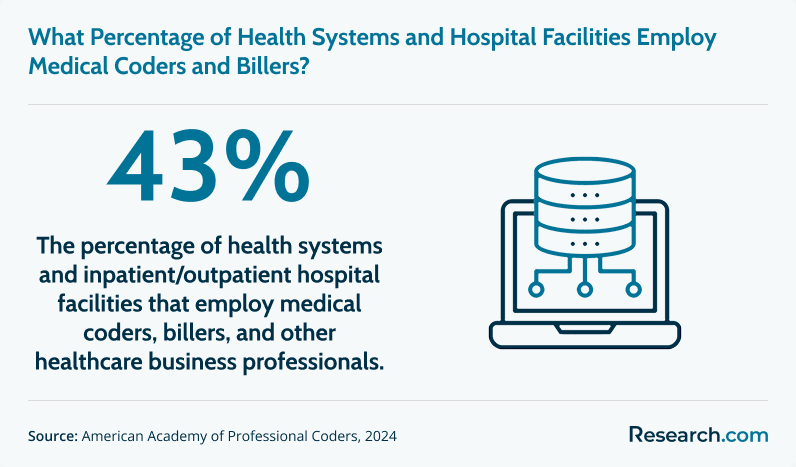
Health systems and inpatient/outpatient hospital facilities are the primary employers for over 43% of medical coders, billers, and other healthcare business professionals. Remote work is possible because coders and billers can access electronic health records, billing systems, payer portals, and team communication tools securely online. For readers asking whether this path is a smart fit, this guide to the pros and cons of being a medical biller and coder can help clarify the trade-offs.
| Role | Main focus | Typical remote work tasks | Best fit for |
| Medical coder | Clinical documentation and code assignment | Review charts, interpret provider notes, select diagnosis and procedure codes, check compliance rules | Detail-oriented workers who enjoy analysis, guidelines, and medical terminology |
| Medical biller | Claims, payment, and account follow-up | Submit claims, monitor denials, communicate with payers, correct rejected claims, review balances | People who like process management, problem-solving, and payer communication |
| Coder-biller | Combined coding and billing workflow | Code encounters, prepare claims, resolve billing issues, support revenue cycle operations | Workers in smaller organizations or those who want broader healthcare administration skills |
What does a medical coder and biller do?
A remote medical coder and biller performs the same core work as an onsite employee, but through secure digital systems. A typical day may begin with logging in to an electronic health record system, reviewing assigned charts, checking physician notes, lab reports, diagnoses, procedures, and treatment documentation, then selecting the appropriate ICD-10, CPT, or HCPCS codes.
After codes are assigned, the billing side of the workflow begins. Claims may be prepared and submitted to insurers directly or through clearinghouses. If a claim is denied, delayed, or rejected, the biller investigates the reason, updates missing or incorrect information, communicates with payers, and resubmits the claim when appropriate.
Remote coders and billers need more than coding knowledge. They must follow privacy rules, protect patient information, meet productivity standards, document their work, and communicate clearly with providers, billing teams, auditors, and sometimes patients. The work is independent, but it is not isolated; revenue cycle teams depend on timely and accurate information from remote staff.
Common responsibilities
- Read provider documentation and identify the services, diagnoses, and procedures that must be coded.
- Apply the correct medical code sets and payer rules.
- Prepare, submit, and track insurance claims.
- Research denied or unpaid claims and make corrections when supported by documentation.
- Maintain compliance with healthcare privacy, billing, and documentation standards.
- Use EHR platforms, billing software, coding references, payer portals, email, and secure communication tools.
What are the steps to become a certified medical coder and biller from home?
The 2025 AAPC Medical Coding and Billing Salary Report highlights a significant shift in work arrangements for medical records specialists, with 65.7% now working remotely. This marks a considerable change from pre-2020 trends when remote opportunities, historically limited to seasoned professionals, were held by only 30% to 33% of these specialists.
The path is straightforward, but each step matters. The biggest mistake beginners make is rushing into the cheapest or fastest course without checking whether it prepares them for a recognized certification exam and real employer expectations.
Step 1: Confirm you meet the basic education requirement
Most programs and entry-level employers require a high school diploma or GED. If you already have healthcare experience, that can help, but it usually does not replace the need to learn coding systems and billing rules.
Step 2: Choose an online medical billing and coding program carefully
A strong program should cover medical terminology, anatomy and physiology, ICD-10, CPT, HCPCS, claims processing, insurance fundamentals, compliance, and certification exam preparation. Program length varies, but many certificate options take four to 12 months. If speed is your priority, compare whether a 4 week online course for medical billing and coding is enough preparation for your target credential and job market.
Step 3: Build hands-on coding practice before applying
Employers want evidence that you can code real documentation, not just pass quizzes. Look for programs that include coding cases, coding manuals, simulated charts, billing exercises, or practicum-style assignments.
Step 4: Select the credential that matches your goal
CPC is commonly associated with physician and outpatient coding, while CCA can be a broad entry-level option. CCS, COC, and CIC align with more specific or advanced coding environments. Your choice should match the type of employer you want: physician practice, outpatient facility, inpatient hospital, payer, billing company, or health system.
Step 5: Prepare for and pass the certification exam
Use official exam outlines, practice tests, coding manuals, and timed review sessions. Some exams may be available online or in person depending on the certifying organization and exam rules.
Step 6: Apply for remote jobs, hybrid jobs, internships, or contract roles
Many new coders want a fully remote job immediately, but remote entry-level openings can be competitive. Consider remote billing roles, onsite or hybrid first jobs, apprenticeships, internships, contract projects, or revenue cycle support roles that help you gain experience.
Step 7: Keep your certification active
Certification is not a one-time achievement. Credentialing organizations generally require continuing education units, so plan for ongoing learning as codes, payer policies, and compliance expectations change.
| Stage | What to do | What to verify before moving on |
| Education entry point | Meet the high school diploma or GED requirement | The program accepts your background and prepares you for your intended credential |
| Training | Complete online coursework in coding, billing, anatomy, terminology, and compliance | The curriculum includes ICD-10, CPT, HCPCS, and claims workflow |
| Practice | Work through coding cases and billing scenarios | You can explain why you selected each code and how documentation supports it |
| Certification | Choose and pass a recognized exam | The credential matches the type of job you want |
| Job search | Apply to remote, hybrid, contract, internship, or entry-level revenue cycle roles | Your resume highlights certification, software familiarity, productivity, accuracy, and remote-work readiness |
| Growth | Earn CEUs and consider additional credentials | Your next credential supports a clear specialty or promotion goal |
This chart shows how medical coders and billers are distributed across remote, onsite, and hybrid work settings. It helps readers understand how common remote work has become in this healthcare business field.
Do I need a degree to qualify for medical billing and coding from home jobs?
You do not always need a four-year degree to qualify for remote medical billing and coding jobs. Many candidates enter through a certificate program plus certification. However, a degree can strengthen your application, especially if you want supervisory, auditing, compliance, health information management, or healthcare administration roles later.
- High school diploma or GED: This is usually the minimum baseline for training programs and many entry-level job postings.
- Certificate training: A focused certificate program can be the fastest route into the field if it prepares you for a respected credential and includes practical coding work.
- Associate degree: This option usually provides broader training in health information, medical law, ethics, anatomy, billing, coding, and healthcare systems.
- Bachelor’s degree: A bachelor’s degree is more relevant for people aiming for health information management, compliance, operations, or leadership roles.
Education can affect opportunity and earnings over time. Studies and salary surveys often show that people with an associate's or bachelor's degree in a related field tend to earn higher salaries than those with only a certificate, although individual outcomes depend on experience, credentials, employer type, specialty, and location.
| Education option | Typical purpose | When it may make sense | Potential drawback |
| Certificate | Fast preparation for entry-level coding or billing work | You want the shortest practical path to certification preparation | May offer less depth than a degree program |
| Associate degree | Broader health information and coding foundation | You want stronger academic preparation and more employer flexibility | Takes longer than a certificate |
| Bachelor’s degree | Preparation for management, compliance, or health information leadership | You already know you want advancement beyond entry-level coding | May be more education than needed for a first coding job |
How long does it take to get medical coding and billing from home training?
Online medical billing and coding training can take a few months to several years depending on the credential, school format, and how much time you can study each week. A highly accelerated, self-paced certificate may be completed in as little as three to four months, while many certificate programs take six to twelve months. An associate degree generally requires approximately two years of study.
Program type
- Certificate programs: These are usually the fastest route and may range from four months to one year. Some accelerated options are shorter, but students should check whether the course includes enough coding practice and exam preparation. If you are comparing certificate options, review the best medical certificate programs online to understand common formats.
- Associate degree programs: These typically take around two years and offer a wider foundation in medical terminology, anatomy, physiology, coding, billing, healthcare law, and healthcare systems.
- Bachelor’s degree programs: These can take approximately four years and may include healthcare administration, leadership, and management topics in addition to billing and coding. If you are comparing credentials, this overview of a medical coding degree vs certificate can help clarify the difference.
Study pace
Self-paced programs can be faster for students who can study consistently. Structured programs may take longer, but fixed deadlines can help learners stay accountable. If you are working, caring for family, or changing careers gradually, part-time study may be more realistic.
Prior knowledge
People with healthcare experience, medical terminology background, or prior anatomy coursework may move through the early material more quickly. Still, coding guidelines and payer rules are specialized, so even healthcare workers need focused coding practice.
Certification preparation
Training time and exam preparation time are not always the same. A course may end before you feel ready for the exam. Build extra time for review, practice tests, and timed coding exercises.
What are the prerequisites for medical coding and billing from home certification programs?
Requirements vary by program and credential, but most online medical coding and billing programs expect students to have basic academic readiness, computer access, and the discipline to study independently.
- High school diploma or GED: This is the standard minimum requirement for many programs and certification pathways.
- Computer literacy: Students should be comfortable using online learning platforms, email, document tools, web browsers, and software systems.
- Reliable internet access: Online coursework, remote testing, coding resources, and virtual communication require stable internet service.
- Medical terminology readiness: You do not always need prior coursework, but you should expect to learn prefixes, suffixes, root words, abbreviations, and clinical language.
- Anatomy and physiology foundation: Coders must understand body systems, procedures, disease processes, and provider documentation well enough to assign codes accurately.
- Attention to detail: Small documentation differences can change the correct code, claim outcome, and compliance risk.
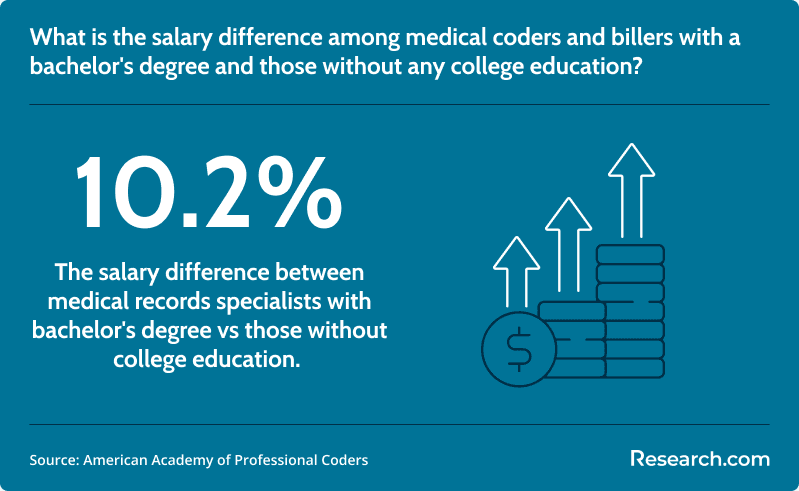
Holding a bachelor's degree significantly boosts the earning potential of medical records specialists, who average $33.01 per hour compared to the $29.63 hourly wage for those without a college education—a notable 10.2% increase that underscores the value of academic credentials in this field.
If you are also comparing neighboring healthcare support roles, review the cost of medical assistant certification to understand how medical assisting differs from coding and billing in training, patient contact, and career direction.
What are the different types of medical coding and billing from home credentials available online?
The best credential depends on the setting where you want to work. A physician practice, outpatient facility, hospital inpatient department, insurance payer, and coding audit team may value different credentials. Before enrolling in a program, confirm which exam it prepares you for and whether that credential appears in job postings for your target role.
| Credential | Organization | Best aligned with | Good choice if you want to work in |
| Certified Professional Coder (CPC) | AAPC | Professional fee and outpatient physician coding | Clinics, physician practices, outpatient-focused remote coding teams |
| Certified Coding Associate (CCA) | AHIMA | Entry-level coding knowledge across settings | Early-career coding roles or a broad first credential |
| Certified Coding Specialist (CCS) | AHIMA | More advanced coding, often hospital-focused | Health systems, hospital coding, specialized coding roles |
| Certified Outpatient Coder (COC) | AAPC | Outpatient hospital coding | Emergency departments, outpatient surgery, facility outpatient services |
| Certified Inpatient Coder (CIC) | AAPC | Inpatient hospital coding | Hospital inpatient coding using ICD-10-CM and ICD-10-PCS |
Certified Professional Coder (CPC) – AAPC
The CPC is one of the most recognized credentials for physician and outpatient coding. It is often a strong fit for people targeting clinics, medical groups, professional services, or remote coding roles tied to provider documentation. CPC-P credential holders saw a significant 21.8% salary jump between 2023 and 2024.
Certified Coding Associate (CCA) – AHIMA
The CCA is an entry-level credential that signals foundational coding knowledge. It may be appropriate for students new to the field who want a broad starting point before specializing.
Certified Coding Specialist (CCS) – AHIMA
The CCS is generally more advanced and is often associated with hospital-based coding knowledge. It may suit coders who already have experience or who plan to move toward more complex coding work.
Certified Outpatient Coder (COC) – AAPC
The COC focuses on outpatient hospital coding, including settings such as emergency departments and outpatient surgery centers. It can be useful for coders who want facility outpatient work rather than physician-office coding alone.
Certified Inpatient Coder (CIC) – AAPC
The CIC is designed for inpatient hospital coding and emphasizes ICD-10-CM and ICD-10-PCS. It is a more specialized route for coders who want hospital inpatient roles.
If you are still deciding whether to pursue a certificate or a broader degree, compare the BS medical billing and coding vs certificate pathway before enrolling.
What are the common challenges faced by remote medical coders and billers?
Remote work can make this career more flexible, but it also creates specific risks. New coders sometimes underestimate the difficulty of staying productive without onsite supervision, protecting patient data at home, and keeping up with coding changes while working independently.
| Challenge | Why it matters | Better approach |
| Limited entry-level remote openings | Some employers prefer experienced coders for fully remote work | Apply to remote, hybrid, internship, billing, and revenue cycle support roles to build experience |
| Accuracy pressure | Coding errors can delay payment or create compliance problems | Use official guidelines, coding references, quality checks, and feedback from audits |
| Data security at home | Patient information must be protected outside the office | Use approved devices, secure networks, multi-factor authentication, and employer protocols |
| Work-life boundaries | Home-based work can blur personal and professional time | Create a dedicated workspace, fixed schedule, and productivity routine |
| Changing rules and technology | Codes, payer policies, compliance requirements, and software tools evolve | Complete CEUs, attend webinars, follow credentialing updates, and practice continuously |
Some professionals broaden their healthcare knowledge through related training. For example, affordable medical assistant programs online may be relevant for people comparing patient-facing and administrative healthcare careers, though medical assisting is a different path from coding and billing.
How can an advanced degree support a remote medical coding and billing career?
An advanced degree is not required for most entry-level coding jobs, but it can help professionals who want to move beyond production coding into operations, compliance, revenue cycle leadership, or healthcare administration. Advanced coursework can strengthen knowledge in organizational management, policy, finance, and regulatory oversight. If your long-term goal is leadership rather than only coding production, an affordable healthcare administration degree online may be worth comparing with additional coding credentials.
Can healthcare administration education help remote coders and billers?
Healthcare administration education can add value when a coder or biller wants to understand the larger business side of healthcare. It may support movement into team lead, supervisor, compliance, claims operations, or revenue cycle roles. For professionals who already have coding experience and want a faster academic route, the quickest healthcare administration online programs may be useful to review.
How do remote coders protect data security and compliance?
Remote coders and billers handle protected health information, so security is part of the job. A secure setup may include employer-approved hardware, strong passwords, multi-factor authentication, encrypted connections, locked workspaces, updated software, and careful handling of printed or downloaded records. Remote staff should never use public Wi-Fi, personal email, shared family computers, or unsecured storage for patient information.
Compliance also depends on documentation discipline. Coders should code only what the documentation supports, follow official guidelines, and escalate unclear records rather than guessing. Professionals who want to combine compliance, operations, and management may consider the quickest MBA in healthcare management online as a possible long-term route.
Can business management studies improve career mobility?
Business training can be helpful if your goal is to manage teams, analyze workflows, supervise billing operations, or move into broader healthcare administration. Coding expertise teaches accuracy and compliance; business coursework can add budgeting, leadership, project management, and strategic planning. While not specific to healthcare coding, sports management MBA programs show how management-focused curricula can build transferable leadership skills for professionals exploring broader administrative roles.
What are the career paths for certified medical coders and billers from home?
Remote medical coding and billing can start with entry-level claims or coding work and develop into specialized, quality-focused, or leadership positions. The 2024 AAPC Salary Survey revealed a strong correlation between the number of certifications and salary, with medical records specialists holding three or more AAPC credentials earning $84,414 on average, 22.5% more than the overall average of $65,401.
| Career path | What the role does | Remote potential | How to grow into it |
| Remote medical coder | Reviews documentation and assigns diagnosis and procedure codes | Strong, especially with experience | Earn a coding credential, practice real cases, and build accuracy |
| Remote medical biller | Submits claims, follows up with payers, and resolves billing issues | Strong | Learn claims workflows, payer rules, denial management, and billing software |
| Coding auditor | Reviews coded records for accuracy, documentation support, and compliance | Often available remotely | Gain coding experience, learn audit methods, and build specialty knowledge |
| Clinical documentation improvement specialist | Works to improve provider documentation quality and completeness | Some roles are remote | Develop strong clinical documentation, coding, and provider communication skills |
| Coding supervisor or manager | Oversees coding teams, workflow, quality, compliance, and training | Remote or hybrid depending on employer | Add leadership experience, multiple credentials, and operations knowledge |
Specialty areas can include oncology coding, surgical coding, inpatient coding, outpatient facility coding, payer-side coding, and audit work. If specialization is your goal, compare accredited medical billing and coding schools and check whether the curriculum aligns with your target credential.
This chart shows how professional credentials may affect the earning potential of medical coders and billers. It highlights why recognized certifications can matter when planning a long-term career strategy.
What is the average salary for medical coders and billers from home?
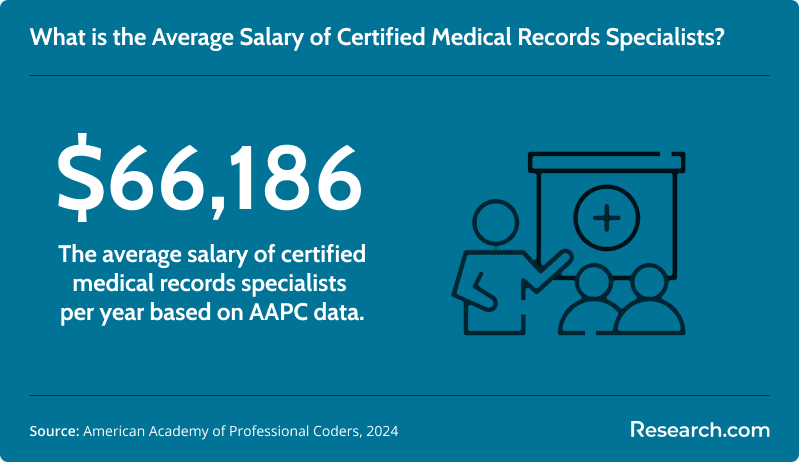
The average salary for medical coders working from home in the United States is approximately $55,000 to $65,000 per year, depending on experience, certification, location, employer type, and specialty. On average, certified medical records specialists make $66,186 per year, a significant 8.5% more than the $61,022 average for non-certified specialists, according to the AAPC survey.
Entry-level remote coder salary typically start closer to $40,000 to $45,000, but salaries can rise with experience, additional credentials, specialty knowledge, auditing responsibility, or management duties. Remote coders working for large healthcare systems, insurance companies, or specialized inpatient and audit teams may have stronger earning potential than beginners in general billing support roles.
Cost also affects return on investment. Before enrolling, compare tuition, exam fees, coding manuals, software access, and retake policies. If affordability is your main concern, review the cheapest medical billing and coding program options, but do not choose on price alone.
| Factor | How it can affect earnings |
| Certification | Certified medical records specialists average $66,186 per year compared with $61,022 for non-certified specialists in the cited AAPC survey |
| Number of credentials | Medical records specialists with three or more AAPC credentials earn $84,414 on average, according to the cited survey |
| Education level | Medical records specialists with a bachelor's degree average $33.01 per hour compared with $29.63 per hour for those without a college education |
| Specialty | Inpatient coding, auditing, payer roles, and management may offer stronger advancement opportunities |
| Experience | New remote coders may start lower and increase earnings as accuracy, productivity, and specialty knowledge improve |
How do I find medical coding and billing from home jobs?
Finding a legitimate remote medical coding or billing job takes more than searching “work from home coding.” You need the right credential, a resume that proves remote readiness, and a job search strategy that includes employers beyond traditional hospitals.
Prepare your qualifications before applying
- Complete relevant training: Many employers prefer applicants who finished a certificate or associate-level program in billing and coding. If you are still choosing a school, compare medical billing and coding online programs based on curriculum, exam preparation, and practical coding work.
- Earn a recognized credential: Certification helps employers verify that you understand coding guidelines and professional standards.
- Build experience creatively: If you lack paid coding experience, highlight coding labs, practicum assignments, internships, prior healthcare work, claims experience, administrative work, or software skills.
- Set up a secure remote workspace: Employers may expect a reliable computer, high-speed internet, quiet workspace, and ability to follow privacy protocols.
Search in the right places
- Healthcare systems: Large hospitals and health systems often hire remote coders, especially for experienced or specialized roles.
- Physician groups and clinics: These employers may need professional fee coders, billers, and revenue cycle staff.
- Billing companies: Third-party revenue cycle vendors frequently hire remote billing and coding professionals.
- Insurance companies: Payers may hire coders for claims review, risk adjustment, audit, and compliance-related roles.
- Staffing agencies and contract platforms: Contract work can help new professionals build experience, but review pay terms, productivity expectations, and privacy requirements carefully.
Make your resume remote-ready
- Lead with certification and code sets: List your credential, training program, ICD-10, CPT, HCPCS, and any software exposure.
- Show accuracy and accountability: If you have audit scores, productivity metrics, coursework results, or practicum experience, include them honestly.
- Emphasize independent work habits: Remote employers value time management, written communication, follow-through, and secure handling of information.
- Tailor each application: A billing job, outpatient coding job, inpatient coding job, and audit role require different keywords and evidence.
As you compare job descriptions, pay attention to whether the employer requires prior experience, a specific credential, certain EHR systems, state residency, productivity quotas, or onsite training. For broader salary and career context, this medical coder salary resource can help you evaluate expectations.
Common mistakes to avoid
- Choosing a program only because it is fast: A short course is useful only if it prepares you for recognized certification and real coding work.
- Ignoring accreditation and employer recognition: Check whether the school, curriculum, and credential are respected by employers in your target setting.
- Assuming remote jobs are easy to get with no experience: Remote roles can be competitive, and some employers prefer coders who have already proven accuracy and productivity.
- Focusing only on tuition: Exam fees, books, coding manuals, software access, retakes, and continuing education can affect total cost.
- Using personal devices or unsecured networks for patient data: Remote healthcare work requires strict privacy and security habits.
- Picking the wrong credential for your target job: A credential suited to physician coding may not be the best fit for inpatient hospital coding, and vice versa.
- Expecting salary outcomes to be guaranteed: Pay depends on employer, experience, location, specialty, certification, education, and performance.
Questions to ask before enrolling in an online medical billing and coding program
- Which certification exam does the program prepare students for?
- Does the curriculum include ICD-10, CPT, HCPCS, anatomy, medical terminology, billing, compliance, and payer rules?
- Are coding manuals, exam vouchers, practice exams, or software tools included in the price?
- Does the program include real-world coding cases or only lecture-based coursework?
- What support is available for exam preparation and job search?
- Do local or remote employers recognize the credential this program prepares students to earn?
- What is the total cost after books, fees, exam costs, and retakes?
- Can credits transfer into an associate or bachelor’s program later?
- Does the program clearly explain refund policies, completion expectations, and technology requirements?
Current trends affecting remote medical coding and billing
Remote work is now a major part of the medical records and revenue cycle workforce, but it comes with higher expectations for security, productivity, and independent problem-solving. Employers increasingly want coders who can work accurately without constant supervision, adapt to payer rules, and use digital systems efficiently.
AI-assisted tools and automation are also changing parts of the workflow. These tools may help flag documentation issues, suggest codes, or streamline claims review, but they do not eliminate the need for trained professionals who understand guidelines, compliance, and clinical context. Coders who can verify technology-assisted output, communicate documentation questions, and maintain accuracy will be better positioned than those who rely only on software suggestions.
Key Insights
- Remote medical billing and coding is a real healthcare career, but it requires formal training, coding knowledge, privacy discipline, and usually certification.
- A college degree is not always necessary for entry-level work, but a certificate or associate degree plus a recognized credential can improve job competitiveness.
- The most important technical foundations are medical terminology, anatomy, ICD-10, CPT, HCPCS, billing workflows, payer rules, and compliance.
- Training may take as little as three to four months in an accelerated format, six to twelve months for many certificate programs, and approximately two years for an associate degree.
- Certification can affect earnings: certified medical records specialists make $66,186 per year on average, compared with $61,022 for non-certified specialists in the cited AAPC survey.
- Remote jobs are common but competitive. New coders should consider billing roles, hybrid positions, internships, contract work, and entry-level revenue cycle jobs to build experience.
- Long-term advancement often comes from specialization, multiple credentials, auditing, clinical documentation improvement, healthcare administration, or management.
References:
- American Academy of Professional Coders (2025). Remote work.
- American Academy of Professional Coders (2025). Salary by credential. AAPC.
- Bureau of Labor Statistics. (2023). Medical records and health information technicians: Pay. U.S. Department of Labor.
- National Opinion Research Center at the University of Chicago (2025). AHIMA Workforce Survey Report.
- O*NET OnLine. (2025). 29-2072.00 - Medical Coders and Billers.
Other Things You Should Know About Becoming a Certified Medical Coder and Biller From Home
In 2027, certified medical coders and billers working from home can expect an average annual salary between $45,000 and $65,000. Salaries are influenced by experience, certification, and geographic location, offering potential increases for specialization in fields like oncology or cardiology coding.
In 2027, prerequisites include a high school diploma or GED. Some programs may require prior coursework in biology or anatomy. Basic computer skills are essential, as the programs often involve online coursework and software use specific to coding and billing.
Most medical coding credentials require annual continuing education units to stay active. AAPC credentials usually require 36 CEUs every two years, while AHIMA certifications typically require 20 or 30 hours every two years, plus annual dues. Certified professionals must also follow the certifying body’s code of ethics.
In 2027, the Certified Professional Coder (CPC) from AAPC and the Certified Coding Specialist (CCS) from AHIMA are highly recognized. These certifications validate expertise and can enhance career prospects for those pursuing coding and billing work from home.