2027 Bluebook: Complete Student Guide

Co-Founder and Chief Data Scientist
Choosing a college program now means comparing cost, format, accreditation, and career payoff before you apply. College Board reported average published tuition and fees of $11,610 for in-state public four-year students and $43,350 for private nonprofit four-year students in 2024-25, so small differences in program fit can have major financial consequences. This guide explains how to use the Bluebook to compare U. S. college programs, whether you are a first-time student, transfer student, online learner, career changer, or parent helping with decisions.
Key Things You Should Know
- The Bluebook is most useful when you use it as a comparison tool, not just a school list: check accreditation, program format, admissions fit, total cost, transfer policy, curriculum, and career alignment before applying.
- Cost comparisons should include more than tuition: College Board's 2024-25 figures show published tuition and fees ranging from $4,050 at public two-year colleges to $43,350 at private nonprofit four-year institutions, before housing, books, fees, and aid.
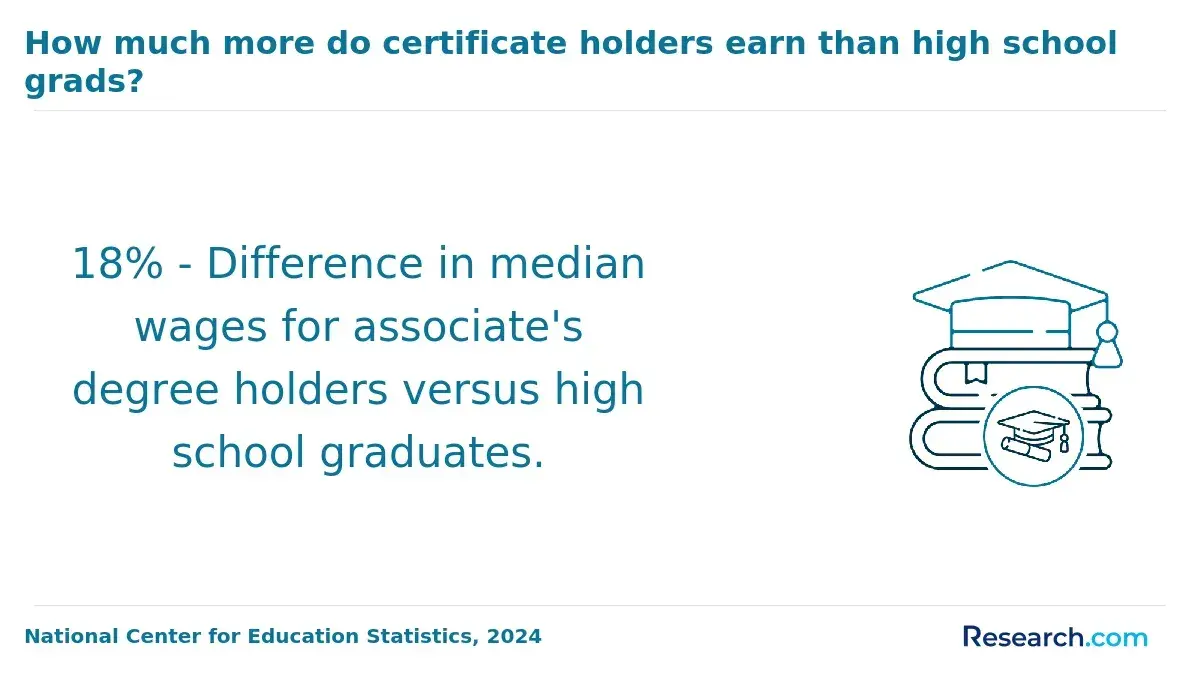
- Career fit matters as much as school fit: BLS 2024 education data shows workers with bachelor's degrees had median weekly earnings of $1,493 in 2023, compared with $1,058 for associate-degree holders, but outcomes vary by major, location, experience, and licensure.
What is the Bluebook and how does it help students compare U.S. college programs?
The Bluebook is a structured reference for comparing U.S. college and university programs. Instead of looking at one school at a time, students can use it to review programs across common decision points: accreditation, degree level, delivery format, cost, admissions requirements, curriculum, timelines, and career connections.
Think of it as a decision-support guide rather than a promise of outcomes. A strong Bluebook entry should help you answer three practical questions: Is this program legitimate, can I realistically get in and complete it, and does it connect to the career or transfer goal I want?
The table below summarizes the main types of information students should expect to compare. Use it to separate basic school marketing from details that actually affect enrollment decisions.
| Bluebook information area | What it tells you | Why it matters |
| Accreditation | Whether the institution or program has recognized quality review | It can affect credit transfer, federal aid eligibility, employer acceptance, and licensure preparation |
| Program format | Whether coursework is online, hybrid, on campus, synchronous, asynchronous, full time, or part time | It determines whether the program fits your work schedule, location, and learning style |
| Admissions requirements | GPA, transcripts, test scores, prerequisites, essays, interviews, portfolios, or work experience | It helps you avoid applying to programs where you are not yet a competitive or eligible applicant |
| Costs and aid | Tuition, fees, estimated expenses, scholarships, grants, employer benefits, and loan options | It helps you compare total price, not just advertised tuition |
| Career alignment | Mapped job roles, common industries, licensing notes, and salary research prompts | It connects the degree to realistic next steps after graduation |
A common mistake is treating a Bluebook listing as a final recommendation. Use it as a starting point, then verify details directly with the school, the accreditor, state licensing boards, and official financial aid resources before you enroll.
How can the Bluebook guide my choice between online and campus-based degree options?
The Bluebook can help you compare online and campus-based programs by showing how delivery format affects flexibility, cost, support, networking, and hands-on learning. This matters because the best format is not the same for every student: an online program may be ideal for a working adult, while a campus program may be better for a student who needs labs, studios, clinical placements, or daily in-person structure.
NCES reported in 2024 that more than half of undergraduate students took at least one distance education course in fall 2022. That means online learning is no longer a niche option, but students still need to check whether the program's design matches their goals and responsibilities.
The comparison below shows how to think about format trade-offs before choosing a program. It is especially useful if the same major is offered in multiple delivery modes.
| Program format | Best fit | Potential trade-off |
| Fully online asynchronous | Working students, caregivers, military students, and learners in rural areas | Requires strong self-management and may offer fewer live networking opportunities |
| Fully online synchronous | Students who want remote access with scheduled class meetings | Less flexible across time zones and work shifts |
| Hybrid | Students who want online flexibility but still need labs, clinicals, fieldwork, or campus support | Travel may be required, sometimes on evenings or weekends |
| Campus-based | Students who learn best in person or need extensive facilities, advising, research access, or cohort interaction | May involve commuting, relocation, or reduced work flexibility |
If you are comparing graduate options, use the Bluebook to look beyond the word "online." A program marketed as flexible can still have live class requirements, practicum hours, or residency weekends. Students seeking an easiest online master's degree should still confirm accreditation, workload, capstone expectations, and whether the curriculum fits their career plan.
Before choosing online or campus-based study, review these practical checks:
- Ask whether online and campus students receive the same diploma, faculty access, advising, library access, and career services.
- Confirm whether exams, labs, internships, student teaching, or clinical placements require in-person attendance.
- Check whether the program is self-paced, term-based, cohort-based, or competency-based.
- Compare student support hours with your actual schedule, especially if you work nights or weekends.
- Ask how the school helps online students find placements if the degree requires supervised experience.
How do I use the Bluebook to find accredited and reputable colleges and universities?
Accreditation is one of the most important Bluebook filters because it affects whether a school is recognized for federal financial aid, credit transfer, graduate admissions, employer review, and many licensure pathways. The Bluebook should make it easier to identify accredited institutions, but students should always verify accreditation with official sources before enrolling.
Institutional accreditation applies to the college or university as a whole. Programmatic accreditation applies to specific fields such as nursing, business, education, counseling, social work, engineering, public health, and allied health. Some careers require or strongly prefer programmatic accreditation, so both levels can matter.
Use the following steps when evaluating a school's legitimacy and reputation. These checks help you avoid diploma mills, nontransferable credits, and programs that do not qualify for your intended career path.
- Confirm the institution's accreditation status through the U.S. Department of Education or the Council for Higher Education Accreditation databases.
- Check whether the specific program has programmatic accreditation if your field commonly requires it.
- Review whether the school is eligible for federal student aid if you plan to use grants or loans.
- Ask admissions how credits transfer in and out, then request the policy in writing.
- Look for transparent graduation, retention, placement, licensure exam, and student outcome disclosures when available.
- Be cautious if a school pressures you to enroll immediately, avoids accreditation questions, or cannot explain career licensure limitations.
Institution type can also shape your comparison, but it should not be the only factor. For example, a nonprofit university may appeal to students looking for mission-driven governance, yet you should still compare accreditation, program quality, completion support, net price, and outcomes program by program.
A common red flag is assuming that "accredited" automatically means "right for my goal." A regionally accredited school may still offer a program that does not meet a state licensing board's requirements, and a well-known university may still be too expensive or too inflexible for your situation.
What degree levels and program types are included in the Bluebook for students?
The Bluebook can cover a wide range of academic options, from short certificates to doctoral programs. The right level depends on your starting point, career target, budget, timeline, and whether you need a credential for entry, advancement, transfer, or licensure.
The table below compares common program types students may find in the Bluebook. Use it to decide whether you need a full degree or a shorter credential first.
| Program type | Typical purpose | Good fit for | Decision caution |
| Certificate | Focused skill development or career preparation | Students seeking faster entry, reskilling, or a stackable credential | May not replace a degree for careers requiring formal education or licensure |
| Associate degree | Entry-level employment preparation or transfer to a bachelor's program | Cost-conscious students and transfer planners | Transfer agreements and credit acceptance vary by school |
| Bachelor's degree | Broad undergraduate preparation for professional roles or graduate study | Students targeting roles where a four-year degree is commonly expected | Major choice and internships can strongly influence career outcomes |
| Master's degree | Advanced professional, technical, leadership, or licensure preparation | Career changers, professionals seeking advancement, and students in regulated fields | ROI depends on field demand, employer expectations, and total debt |
| Doctoral or professional degree | Research, clinical practice, advanced leadership, or specialized professional entry | Students pursuing academia, advanced practice, law, medicine, psychology, or high-level research | Often requires major time, cost, and licensing commitments |
Certificates can be smart when you need targeted skills quickly, especially in fields such as IT, project management, bookkeeping, healthcare support, digital marketing, and data analytics. Students who are not ready for a full degree can compare certificates online with associate or bachelor's programs to see which credential best matches the job requirements they are targeting.
A practical way to choose a level is to start with the job posting, not the school brochure. If most entry-level postings in your target field ask for a bachelor's degree, a short certificate may help but may not be enough. If postings emphasize a portfolio, vendor certification, or technical skill test, a certificate plus experience may be a more efficient first step.
How does the Bluebook present admission requirements and application timelines for programs?
The Bluebook should make admissions requirements easier to compare by showing what each program expects before enrollment. This includes academic documents, prerequisites, test policies, essays, recommendations, interviews, portfolios, work experience, and deadlines.
Admissions requirements often vary by degree level. Undergraduate programs usually focus on transcripts, GPA, placement, transfer credits, and readiness for college-level coursework. Graduate and professional programs may also require a bachelor's degree in a related field, prerequisite courses, a resume, licensure, clinical hours, or a statement of purpose.
Application timing is just as important as eligibility. A program with a low tuition rate may not help if you miss the cohort start date, financial aid priority deadline, clinical placement deadline, or scholarship window. Adult learners and returning students should pay close attention to rolling admissions, transfer evaluations, and prior learning assessment; programs marketed as degrees for older adults may be especially worth reviewing for advising, pacing, and credit-for-experience policies.
Use this application sequence to stay organized and avoid missed requirements:
- List your target programs and record each start date, application deadline, financial aid deadline, and transcript deadline.
- Request official transcripts early, especially if you attended multiple colleges or need international credential evaluation.
- Check prerequisites before applying so you do not pay an application fee for a program you cannot enter yet.
- Ask whether transfer credits are evaluated before or after admission and whether the estimate is binding.
- Prepare essays, recommendations, portfolios, or resumes around the program's stated outcomes, not generic personal goals.
- Confirm whether admission to the university also guarantees admission to the major, clinical sequence, teacher preparation track, or upper-division program.
One common mistake is assuming that "open admission" means "no academic planning required." Open-access colleges may still require placement tests, prerequisite sequences, program-specific admission, background checks, immunizations, or minimum grades before students can enter selective programs such as nursing, radiography, education, or dental hygiene.
How can I compare program length, tuition costs, and financial aid using the Bluebook?
The Bluebook can help you compare program length, tuition, fees, and aid by putting cost and time in the same decision frame. A cheaper program is not always the better value if it takes longer, offers fewer transfer credits, or does not lead to the credential your career requires.
Published tuition gives only a starting point. College Board's 2024-25 data lists average published tuition and fees of $4,050 for public two-year in-district students, $11,610 for public four-year in-state students, $30,780 for public four-year out-of-state students, and $43,350 for private nonprofit four-year students. These figures are useful benchmarks, but your net price may be lower after grants, scholarships, tuition discounts, employer benefits, or transfer credits.
The table below shows cost factors the Bluebook can help you compare. Use it to estimate the full investment, not just the per-credit price.
| Cost factor | Why it changes the total price | What to verify |
| Tuition model | Programs may charge by credit, term, flat rate, cohort, or competency subscription | Whether taking more credits lowers or raises your total cost |
| Mandatory fees | Technology, lab, online, graduation, student service, or clinical fees can add to the bill | Whether fees differ for online and campus students |
| Transfer credits | Accepted credits can shorten time to completion | Maximum transfer credits and whether major courses must be completed in residence |
| Books and materials | Textbooks, software, uniforms, tools, and exam fees vary by major | Whether digital materials are included in tuition |
| Living and commuting costs | Housing, transportation, childcare, and lost work hours can exceed direct tuition differences | Whether online, evening, or hybrid scheduling reduces indirect costs |
| Financial aid eligibility | Enrollment intensity and program type can affect grants, loans, and scholarships | Whether the credential qualifies for federal aid and institutional aid |
Federal aid can materially affect affordability. The maximum Pell Grant for the 2024-25 award year is $7,395, but eligibility depends on financial need, enrollment status, program eligibility, and federal rules. Treat aid estimates as preliminary until the school provides an official financial aid offer.
Use these steps to compare cost and time accurately:
- Calculate total credits required after transfer evaluation, not before.
- Multiply tuition by the number of credits or terms you actually expect to complete.
- Add mandatory fees, books, supplies, transportation, childcare, exam fees, and technology requirements.
- Subtract grants, scholarships, tuition reimbursement, military benefits, and employer assistance that you are reasonably eligible to receive.
- Compare the monthly and long-term effect of loans using the official interest rate for the year you borrow.
- Ask whether accelerated terms increase workload enough to affect your job, grades, or financial aid status.
Accelerated options can be useful, but they are not automatically easier or cheaper. If you are considering 6 week courses, confirm weekly workload, refund deadlines, pacing, academic support, and whether compressed courses are appropriate for difficult subjects such as anatomy, statistics, accounting, or programming.
In what ways does the Bluebook show curriculum, coursework, and learning outcomes for majors?
The Bluebook should help students look beyond a major name and examine what they will actually learn. Two programs with the same title, such as "business administration" or "computer science," may differ significantly in math intensity, internship access, software tools, concentrations, capstones, and career preparation.
Curriculum details are especially important because employers increasingly look for demonstrable skills. AI and automation are changing expectations in many fields, so students should check whether programs teach current tools, ethical technology use, data literacy, communication, problem-solving, and applied projects rather than only broad theory.
The table below shows curriculum elements to compare across programs. It can help you identify whether a program is practical, current, and aligned with your intended outcome.
| Curriculum element | What to look for | Why it matters |
| Core courses | Required foundation courses in the discipline | They show the academic depth and technical expectations of the program |
| Concentrations | Specialized tracks such as cybersecurity, healthcare management, analytics, finance, or early childhood education | They help align the degree with a specific career direction |
| Applied projects | Capstones, case studies, labs, simulations, research, portfolios, or client-based work | They create evidence of skills for employers or graduate admissions |
| Experiential learning | Internships, practicums, clinicals, student teaching, fieldwork, or co-ops | They may be required for licensure or strongly valued in hiring |
| Learning outcomes | Statements describing what students should know or be able to do after completion | They help you judge whether the program matches your goals |
| Assessment methods | Exams, papers, projects, presentations, skills checks, or competency demonstrations | They reveal how your learning will be measured |
When comparing curricula, read the course catalog instead of relying only on the program landing page. Catalogs usually show prerequisites, course sequencing, credit requirements, grade minimums, residency rules, and whether courses are offered every term.
A common mistake is choosing a major because the title sounds career-friendly. For example, a general "technology" degree may not prepare you for the same roles as a computer science, information systems, cybersecurity, or data analytics program. The Bluebook is most helpful when you compare course-level evidence against job requirements.
How does the Bluebook map degree programs to specific careers and job roles?
The Bluebook can map degree programs to careers by connecting majors with typical job roles, industries, credentials, and skills. This helps students avoid the mistake of assuming that one degree title leads to only one job or that any degree in a field qualifies them for every role in that field.
Career mapping is not the same as guaranteeing placement. It is a structured way to ask whether the program includes the coursework, projects, experience, and credentials that employers or licensing boards commonly expect.
The table below shows how students can think about degree-to-career alignment. Use it to compare whether a program prepares you for entry, advancement, licensure, or graduate study.
| Field of study | Possible career directions | Alignment questions to ask |
| Business | Operations, marketing, human resources, finance, entrepreneurship, management | Does the program include analytics, communication, internships, and a concentration linked to your target role? |
| Computer and information technology | Software development, IT support, cybersecurity, systems analysis, data roles | Does the curriculum include current programming, cloud, security, databases, projects, and industry tools? |
| Healthcare | Nursing, health administration, public health, allied health, clinical support | Does the program meet accreditation, clinical, certification, or state licensure requirements? |
| Education | Teaching, instructional design, school leadership, early childhood, special education | Does the program lead to the correct state endorsement, student teaching placement, or certification pathway? |
| Social and behavioral sciences | Case management, research support, counseling pathways, human services, policy | Does the intended role require graduate study, supervised hours, or licensure after the degree? |
| Skilled and technical programs | Advanced manufacturing, automotive, welding, HVAC, electrical, logistics | Does the credential include hands-on training, safety standards, apprenticeships, or industry certification preparation? |
To use the Bluebook for career mapping, compare program outcomes with actual job postings in your target location. Look for repeated requirements such as software tools, certifications, portfolios, clinical hours, security clearances, bilingual ability, or licensure. If the program does not help you build those requirements, ask the school how students close the gap.
Students should also distinguish entry-level roles from advancement roles. A bachelor's in business may support entry into analyst or coordinator positions, while senior management may require years of experience. A psychology bachelor's may support human services or research assistant work, while licensed counseling typically requires graduate study and supervised practice.
How can I use the Bluebook to research salary ranges and job outlook by field?
The Bluebook can guide salary and job outlook research by showing which occupations are connected to a program, then prompting you to verify wages and employment projections through reliable labor market sources. Salary research should always be role-specific, location-specific, and credential-specific.
BLS projected total U.S. employment to grow by 4% from 2023 to 2033 in data released in 2024. Use that overall benchmark carefully: some occupations are projected to grow much faster, while others may grow slowly or decline due to automation, outsourcing, demographic shifts, or industry change.
For salary ranges, avoid relying on a school's highest reported outcome or a single graduate testimonial. Median wage data is more useful because it shows the midpoint for an occupation, but it still does not account for your city, employer type, experience, internships, certifications, or economic conditions.
Use this process to research salaries and job outlook with the Bluebook:
- Identify the exact job titles the program claims to prepare students for, such as registered nurse, software developer, accountant, paralegal, teacher, data analyst, or medical assistant.
- Check whether each job title usually requires a degree, certificate, license, portfolio, experience, or industry exam.
- Review national wage data, then compare it with state and metro-area data for where you plan to work.
- Look at job growth projections and job openings, not just salary, because a high-paying role may have limited entry-level openings.
- Compare entry-level postings with mid-career postings so you understand the likely path from first job to advancement.
- Ask the school for transparent outcome data, including response rates and how employment was measured.
A practical rule is to compare debt with realistic early-career earnings, not long-term executive or senior-level salaries. A program can still be worthwhile if it is affordable, accredited, and aligned with a high-demand field, but the Bluebook should help you test that assumption before committing.
What steps does the Bluebook recommend for verifying licensing or certification requirements?
The Bluebook should flag whether a degree may connect to licensing or certification, but students must verify requirements independently. Licensure rules are set by state boards or professional authorities, and they can vary by state, occupation, program format, supervised hours, exam requirements, and background check standards.
This is especially important in fields such as nursing, teaching, counseling, social work, psychology, accounting, law, real estate, public health, dental hygiene, radiography, and other healthcare or public-service professions. A program that is acceptable in one state may not automatically satisfy another state's requirements.
Follow these steps before enrolling in any program tied to licensing or certification:
- Identify the exact license, certification, endorsement, or exam required for the job you want.
- Find the official state board or credentialing body that controls that requirement.
- Check whether the program's accreditation, coursework, clinical hours, fieldwork, or student teaching meets that authority's rules.
- Ask the school for a written professional licensure disclosure for your state.
- Confirm whether online students can complete required placements in their state or must travel.
- Review exam pass-rate disclosures when available, but do not treat past pass rates as a guarantee of your own result.
- Check whether criminal background, residency, citizenship, health, immunization, or supervised experience rules could affect eligibility.
- Reconfirm requirements before graduation because licensing rules can change during your program.
The biggest red flag is vague language such as "prepares students for careers in" without stating whether the program satisfies licensing requirements. If the school cannot clearly explain how the program aligns with your state's rules, pause your application until you receive a documented answer.
Other Things You Should Know About
No. A ranking usually orders schools by selected criteria, while the Bluebook is better understood as a comparison guide. Use it to evaluate fit, accreditation, cost, format, admissions, curriculum, and career alignment.
No. It can help you narrow options, but you should verify accreditation, tuition, transfer credit, financial aid, admissions deadlines, and licensure requirements directly with official school and government sources.
Not automatically. The cheapest program may be the best choice if it is accredited, transferable, supportive, and aligned with your goal. Compare total cost, time to completion, aid, outcomes, and whether the credential meets career or licensing requirements.
Compare at least three to five serious options when possible: one affordable option, one strong career-aligned option, one flexible option, and one backup. This gives you a clearer view of trade-offs before you apply.
References
- Reconsidering How We Present and Grade Bluebook Citation https://www.lwionline.org/article/reconsidering-how-we-present-and-grade-bluebook-citation
- Explore salaries – SEEK https://au.seek.com/career-advice/explore-salaries
- Navigating the New System of College Pricing and Financial Aid https://www.collegemoneymethod.com/family/the-bay-school-of-san-francisco/navigating-the-new-system-of-college-pricing-and-financial-aid/
- The Joint Commission’s Primary Source Verification Requirements https://www.certiphi.com/resource-center/background-screening/the-joint-commissions-primary-source-verification-requirements/
- Tutorial on Bluebook applications | Skills and Capacity Building Office https://www.coleurope.eu/tutorial-bluebook-applications-skills-and-capacity-building-office
- Where Do College Degrees Still Matter in a “Skills-First” Job Market? - Indeed Hiring Lab https://www.hiringlab.org/2026/01/28/where-do-college-degrees-still-matter-in-a-skills-first-job-market/
- The Importance of Primary Source Verification for Practitioner Credentials - Verisys https://verisys.com/blog/primary-source-verification/
- How to Choose the Right Online College https://www.straighterline.com/blog/goodie-how-to-choose-the-right-online-college
- Untitled https://catalog.bluecc.edu/preview_program.php
- DISA | Healthcare License Verification: Compliance Guide https://disa.com/news/healthcare-license-verification-compliance-guide/