2027 Cheapest Online Degrees at George Mason University

Co-Founder and Chief Data Scientist
For students balancing financial constraints with the need for flexible education, finding affordable online degree programs can feel like navigating a maze. With remote enrollment rates hitting over 40% nationwide, tuition disparities have grown more apparent, often leaving students to weigh steep costs against long-term debt risks and uncertain returns. This economic volatility complicates decisions for those who must maximize educational value without compromising financial stability.
George Mason University offers several online degree options at lower-than-average prices, attracting individuals seeking budget-conscious choices without sacrificing program quality. This article examines George Mason University's online degrees, tuition structure, and the practical outcomes graduates experience to help readers decide if this institution fits their academic and financial goals.
Key Points About the Cheapest Online Degrees at George Mason University
- The total tuition cost for completing an online degree at George Mason University is $40,260, categorizing it as a moderately priced choice relative to other public institutions.
- Available affordable online programs emphasize practical fields with high employer demand, enhancing the potential for return on investment despite upfront expenses.
- Graduates show an earnings to debt ratio of 3.92x, suggesting financial outcomes generally surpass debt, but candidates should align programs with career goals for optimal value.
Why is George Mason University emerging as a top choice for cost-effective online education?
George Mason University emerges as a leading option for cost-effective online education due to its strategic balance of affordability, quality, and practical outcomes. For example, a working adult aiming to upskill without jeopardizing financial stability finds Mason's online programs especially viable. The ability to maintain employment while studying is enhanced by flexible course delivery paired with significant financial aid.
According to a 2024 national survey, over 40% of college students are now enrolled remotely, reflecting a growing demand for credentials that directly translate into workplace value. George Mason's earnings to debt ratio of 3.92x signals that graduates tend to recover their education costs efficiently, an important consideration for students wary of long-term debt burdens.
Key reasons for this institution's appeal include the following benefits for budget-conscious online learners:
- Substantial Enrollment and Program Availability: Serving 39,527 online students, Mason offers diverse, career-relevant programs that meet demand and provide multiple pathways without geographic constraints, which allows learners to choose programs that fit their schedules and career goals.
- Strong Earnings to Debt Ratio: Graduates earn almost four times their educational debt, indicating the investment in Mason's online degrees often leads to financially sustainable career outcomes, reducing the risk of burdensome repayments for students focused on long-term value.
- High Financial Aid Accessibility: With 80% of students receiving aid averaging $10,176, Mason substantially lowers net costs for online learners. This financial support is critical for students managing costs alongside living and work expenses.
- Retention and Economic Mobility Focus: The university prioritizes courses that maintain student momentum, balancing flexibility with completion rates, which is essential for working adults seeking to advance without compromising employment or income.
One graduate shared their experience navigating Mason's online programs with cautious optimism. "I was hesitant at first because I did not want to accumulate debt while juggling a full-time job and family," they said. "Finding out that most students get aid and the earnings outlook was strong made me take the leap. The online format let me study when my schedule permitted, and I finished with minimal debt. That relief allowed me to focus on career growth right after graduation instead of worrying about loan payments." This perspective underscores how Mason's model practically supports students aiming for economic advancement without the penalty of excessive borrowing.
What is the current base cost of online programs at George Mason University?
George Mason University's average total annual cost is approximately $40,260, reflecting on-campus expenses rather than fully online attendance. In-state students living on campus face costs near $26,972, but online learners typically avoid room and board, which significantly lowers their actual base cost compared to traditional students. This difference is crucial for prospective students comparing tuition to other institutions.
Tuition for online undergraduate and graduate courses at George Mason University is charged per credit, usually ranging from $350 to $650 depending on program level and discipline. Recent selective tuition freezes on some undergraduate online courses respond to national efforts to curb tuition inflation, helping maintain relative affordability among online degree options.
Additional fees for technology or course access exist but vary by program and are generally modest. A 2024 study shows increasing national tuition disparities between in-person and distance education, indicating that George Mason University's pricing adjustments align with a broader trend of refining online education costs in response to market competition and delivery expenses.
Students seeking the cheapest online degree programs at George Mason University should consider these variable costs in relation to career outcomes and employer expectations, especially in high-demand sectors. For those interested in accelerated credentials, exploring the university's online doctorate offerings may provide a focused path with potentially lower time and cost investment.
Does George Mason University offer flat-rate tuition for out-of-state distance learners?
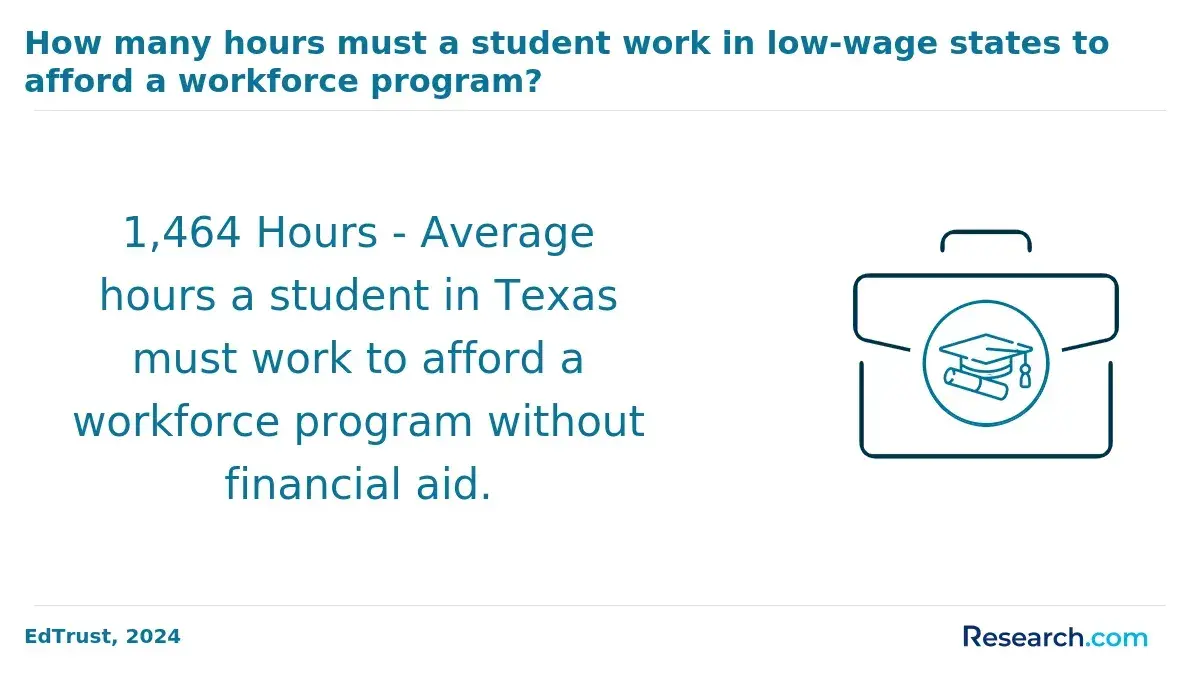
Out-of-state distance learners at George Mason University typically face tuition fees averaging significantly higher than in-state rates, with total attendance costs climbing accordingly. Remote non-residents often encounter financial burdens exceeding $30,000 annually, reflecting traditional residency-based pricing rather than a unified flat-rate model.
Costs vary depending on specific state waivers or regional reciprocity, but Mason limits widespread out-of-state tuition equalization. Unlike some universities that offer reduced rates through digital reciprocity agreements, Mason's pricing structure remains largely segmented by residency, increasing financial barriers for many distant learners.
By contrast, less than 15% of public universities nationally have adopted comprehensive flat-rate tuition for out-of-state online students, a slow trend noted in recent research. Mason's approach aligns with this majority, maintaining a premium for non-residents that often exceeds what other institutions charge for comparable online programs.
For prospective students outside Virginia, this premium impacts the return on investment, especially if comparable credentials are accessible locally at lower costs. The absence of broad geographic tuition equalization at George Mason University creates a practical challenge for affordability among out-of-state online learners.
Which online bachelor's degrees at George Mason University offer the lowest total tuition?
George Mason University offers some of the cheapest online bachelor's degrees by maintaining a consistent tuition rate of approximately $423 per credit for in-state students. This results in a total tuition cost near $50,760 for a typical 120-credit program before additional expenses. A practical example is a student pursuing an online degree who benefits from the university's integration of open educational resources (OER), which significantly lowers ancillary costs like textbooks. Below are specific programs at George Mason with notable tuition-saving attributes worth considering for lower overall investment.
- Interdisciplinary Studies: This degree incorporates OER materials extensively, reducing or eliminating textbook expenses. Its adaptable curriculum suits students seeking cost-effective credits across multiple disciplines, optimizing online learning flexibility and affordability.
- Information Technology: With OER-supported courses, this major limits extra costs while providing strong market demand post-graduation. The fully online format and consistent tuition make it a practical choice for students prioritizing return on investment through faster debt-to-income milestones.
- Public Administration: This program offers a stable tuition baseline with a comprehensive curriculum designed for online accessibility. It avoids premium fees by leveraging digital materials and targets students interested in efficient pathways to public sector roles.
- Psychology: Though slightly more variable in career income outcomes nationally, this program sustains affordable tuition rates and structured online delivery to minimize time and living costs. It suits students aiming at foundational skills without extensive material expenses.
- Environmental Science: This degree balances rigorous technical content with cost-saving digital resources. Its online structure supports extended learning without geographic constraints, appealing to students seeking affordability alongside sustainability knowledge.
Nationally, remote enrollment saturation has reached about 42%, revealing the competitive landscape for online degrees. Humanities fields tend to have lower tuition but higher variability in post-graduation income, unlike technical programs that, despite higher costs, often achieve better debt-to-income ratios. These factors highlight why George Mason University's lowest total tuition for online bachelor's programs must be evaluated with attention to long-term economic outcomes, not just initial cost.
The cheapest online bachelor's degrees at George Mason University reflect strategic use of open-source learning, focused curricula, and consistent pricing to help students manage their financial investment. Prospective students can compare these options with other programs, including those tagged as the easiest degree to get, to make well-informed decisions based on both affordability and career prospects.
What are the most affordable online master's degree programs at George Mason University?
George Mason University offers some of the most affordable online master's degree programs, balancing cost efficiency with practical career relevance. For professionals managing work and study, choosing a program without residency requirements can reduce expenses and logistical challenges while maintaining competitive pricing for digital materials.
Compared to other public universities, George Mason's rates per credit are competitive enough to position it as a viable option for those seeking the best low-cost online graduate degrees George Mason University provides. Below are several distinct affordable master's programs that demonstrate these cost and delivery advantages.
- Master of Education in Curriculum and Instruction: Priced at $855 per credit, this program delivers its courses fully online with no on-campus residency needed, helping working educators avoid additional relocation or travel costs. The digital material fees align with standard charges, allowing students to focus on skill development that supports steady salary growth without excessive upfront debt.
- Master of Arts in Liberal Studies: At $860 per credit, this interdisciplinary degree offers flexible online learning geared toward self-directed professionals. The accessibility and adaptable format help students pursue graduate education while maintaining employment, reducing the need for costly breaks in income that might slow career advancement.
- Master of Science in Information Technology: With a cost of $865 per credit, this program takes a virtual approach to preparing students for tech roles in a booming job market. It provides the technical competencies demanded by employers today with minimal indirect costs, allowing graduates to leverage their credentials promptly in high-paying jobs.
- Master of Science in Environmental Science and Policy: Costing $870 per credit, this program integrates online coursework suited for professionals interested in sustainability careers. The reduced expense and remote delivery format enable students to upgrade their qualifications without leaving their current positions, promoting long-term earnings improvement.
- Master of Public Administration: For $880 per credit, this degree is designed entirely online and does not require physical attendance, making it ideal for public service workers aiming to increase their impact and compensation. Its structure helps minimize debt while aligning with market needs for leadership skills.
National studies indicate that while graduate debt ratios have stabilized, the advantage of a master's credential persists; those with advanced degrees tend to have higher lifetime earnings and employment stability. This underscores the importance of selecting cost-effective programs like those at George Mason University that provide strong career returns with manageable financial risk. Students seeking the easiest associate degrees or affordable higher degrees should weigh these practical considerations carefully when evaluating their options.
Are digital course materials at George Mason University expensive?
Online students at George Mason University must account for the cost of digital course materials and supplies beyond tuition fees. These expenses can significantly impact the overall affordability of their education. On average, students spend about $1,290 annually on such materials.
National data shows a consistent rise in textbook and digital resource costs, with an average annual spend of $1,300 per student nationwide according to a 2024 study. This trend signals that students should anticipate steady or increasing fees for essential learning tools. Below are key digital resources that contribute to these costs for George Mason University students.
- McGraw-Hill Connect: A platform offering access to digital textbooks and assignments, McGraw-Hill Connect facilitates interactive learning but requires licensing fees that add several hundred dollars annually to student expenses.
- WileyPLUS: This resource supports interactive coursework through digital content and practice exercises, essential for mastering material but often comes with subscription costs included in course fees.
- Cengage MindTap: Known for customizable course materials, MindTap allows tailored learning experiences but contributes to the cumulative digital costs students face, typically in the range of several hundred dollars per year.
- Specialized Software Tools: Programs like MATLAB and SPSS are necessary for data analysis in STEM and social sciences. These tools generally require purchase or license fees that can substantially increase the total cost depending on the discipline.
Does George Mason University offer accelerated term options for online students?
George Mason University typically follows a 15-week semester schedule for online programs but offers accelerated 7- and 8-week course options. These condensed terms allow students to finish courses faster than the traditional timeline. For example, a working professional aiming to minimize disruption might complete a program quicker by leveraging these accelerated terms.
Cost-wise, tuition remains calculated by credit hours rather than a flat rate per term. This means students pay the same per-credit rate regardless of term length. Savings arise primarily from completing the program in fewer semesters, potentially avoiding additional semester-based fees and reducing living or opportunity costs associated with prolonged study.
George Mason University does not provide subscription or competency-based models that some online schools use to offer unlimited credits for a fixed price. Compared with institutions that have these flexible options, George Mason's accelerated terms offer moderate speed advantages but without radical cost reductions per credit hour.
National trends show accelerated academic calendars can boost graduation rates by up to 15%, reflecting greater calendar efficiency and student momentum, according to a recent workforce-focused study. This suggests accelerated terms at George Mason University can benefit determined students, although success depends on managing the increased pace of coursework.
Can online students George Mason University transfer credits to reduce tuition costs?
George Mason University typically accepts up to 90 transfer credits for its fully remote bachelor's programs, allowing students to cut tuition costs from the $40,260 sticker price significantly. For students with substantial prior coursework, this can shorten time to degree completion by several semesters, yielding immediate financial relief.
These savings vary widely depending on the student's previous institution and the existence of formal articulation agreements. Mason also recognizes Prior Learning Assessments, CLEP exams, and military training, which can convert experience into credit. However, without recognized accreditation or compatible curricula, transferred credits may be limited, reducing possible tuition reductions and extending time in the program.
Accreditation plays a critical role in credit acceptance since only credits from regionally accredited schools typically qualify. A 2024 study found that 60% of transfer students nationwide benefit from at least a 25% credit reduction due to articulation agreements, emphasizing how crucial clear credit pathways are for controlling educational costs and timing.
Students must verify their prior credits before enrolling to understand the true cost impact. Without this, they risk unexpected tuition expenses and delayed graduation if credits do not transfer as expected.
One recent graduate sharing their experience explained, "I transferred about 75 credits from my community college, but at first, I was unsure if Mason would accept all of them. There was a tense wait while they reviewed my transcripts. When most credits counted, I saved nearly a year and several thousand dollars. The process wasn't seamless, but confirming each transfer detail upfront made all the difference in planning my budget and timeline."
What financial aid options are available to online students at George Mason University?
Financial aid options at George Mason University critically affect the affordability of its online programs. A student transferring from a community college and balancing work might rely heavily on scholarships that offset tuition costs to manage expenses effectively. About 80% of undergraduates benefit from financial assistance averaging $10,176, which makes targeted funding an essential factor in decision-making. Several scholarships and grants serve different student needs and circumstances. Below is a summary of key funding mechanisms available for online learners at George Mason University.
- Mason Online Scholarship: Designed for high-achieving students, this scholarship can cover up to 50% of tuition costs. Eligibility depends on academic performance and enrollment in online programs.
- Virginia Guarantee Program: This program benefits eligible in-state students pursuing their first undergraduate degree by offering full tuition remission, significantly reducing financial barriers for local learners.
- Online Veterans Grant: Military-affiliated students can receive up to $5,000 through this grant, helping to address the unique challenges faced by veterans returning to education.
- Transfer Scholarship: Students transferring credits from community colleges are eligible for awards ranging between $1,000 and $3,000, allowing smoother financial transition into George Mason University programs.
- Pell Grant: A federal aid program primarily serving low-income students, Pell Grants reduce the overall cost of attendance and lessen reliance on loans.
National trends show a shift in student funding sources, with 59% of students relying more on grants and scholarships than on student loans, according to recent data. This shift is significant because it reduces long-term debt burdens and increases financial flexibility after graduation. For those considering cost-effective online programs at George Mason University, understanding these financial aid options is essential for aligning educational investment with career goals and post-graduation earning potential. Additionally, prospective students can evaluate the ROI of programs by exploring data on the most valuable masters degrees and their workforce demand.
How do you know if the affordable online programs at George Mason University are worth it?
Assessing whether the affordable online programs at George Mason University are worth the investment requires looking beyond tuition costs to outcomes that influence long-term career sustainability. For example, an aspiring engineer weighing options should compare median alumni salaries, graduation likelihood, and program accreditation to gauge practical returns. George Mason's programs in Computer Engineering ($80,254), Systems Engineering ($71,876), and Computer Science ($71,514) demonstrate strong earning potential relative to costs.
In contrast, degrees in Graphic Communications ($26,474) and Drama/Theatre Arts ($25,883) offer limited financial upside, which suggests careful evaluation of personal career objectives is crucial. The following core indicators illustrate how to determine program value and whether George Mason University's affordable online degree programs meet these standards.
- Median Salary Outcomes: Salary data measures economic return and job market relevance. Programs in STEM and technology at George Mason University yield median salaries above $70,000, indicating competitive starting points for graduates.
- Graduation Rates: Completion rate reflects student success and program support. With a 69% average graduation rate, George Mason is slightly below the national average for public institutions, posing a consideration for program commitment and persistence.
- Accreditation Status: Recognition by accrediting bodies ensures degrees are valid and employers recognize them. George Mason University maintains recognized accreditation, which safeguards credential legitimacy.
- Debt-to-Income Ratios: A 2024 trend indicates nearly half of bachelor's degree holders incur debt exceeding 1.5 times their starting salary, underscoring the value of degrees with salaries close to or above $70,000 to avoid financial strain. George Mason's higher-earning programs align well with this principle.
- Program Specialization: Availability of niche, market-driven disciplines accelerates workforce entry. George Mason offers targeted degrees in areas like engineering, providing focused pathways that meet employer demand.
- Employer Expectations: Skills and applied experience increasingly outweigh school prestige. George Mason's emphasis on practical, online education aligns with these workforce realities.
- Program Affordability: Considering cost-effectiveness, George Mason University's affordable online degrees are valuable when balanced against outcomes, supporting a repayable investment aligned with career goals.
Choosing a program also involves recognizing individual priorities within the broader cost-effectiveness of George Mason University online degrees. Prospective students should explore matching these insights with personal career ambitions and leverage resources such as accelerated degree programs for working adults to optimize time and value.
What Graduates Say About the Cheapest Online Degrees at George Mason University
- Gabriel: "Enrolling in an online program at George Mason University was a carefully balanced decision for me, especially when comparing the advertised affordability with the overall expenses. While the lower base tuition saved me from significant debt, I had to factor in some unexpected technology and distance learning fees, which somewhat diluted the upfront savings. Nevertheless, avoiding on-campus costs like housing and commuting provided genuine financial relief, and the flexibility of the program let me maintain a part-time job, accelerating my entry into a stable position within my field post-graduation."
- Colby: "The structure of George Mason University's online degree created a surprisingly smooth transition into my current role in digital marketing. The realistic cost savings versus in-person alternatives were a major factor in my decision, but I stayed alert for the subtle fees that added up-something many overlook when shopping just on sticker price. Ultimately, the trade-off of a well-coordinated online format over a slightly cheaper competitor was worth it, as the quality of coursework and the university's reputation helped me stand out during job interviews and achieve noticeable salary growth quicker than expected."
- Brody: "Choosing George Mason University's cheapest online degree was pragmatic, primarily driven by my need to balance work, family, and study without sinking into excessive debt. What stood out was the program's flexibility, which let me pace my studies according to real work demands, although the hidden fees related to digital delivery were a bit frustrating. I didn't expect a dramatic career leap immediately, but avoiding on-campus overheads and completing a respected degree set a strong foundation for future advancement; I'd say the investment was cautious but justified given the overall professional stability I gained."
Other Things You Should Know About George Mason University Degrees
The cheapest online degree programs at George Mason University in 2027 require a minimum of 120 credit hours for completion. Specific programs may vary, allowing students to complete credits part-time or full-time according to their availability and preferences.
In 2027, students pursuing the cheapest online degrees at George Mason University can apply for federal financial aid, scholarships, and grants. Specific options may vary by degree program, so it's advisable to consult the financial aid office for detailed information and application processes.
Yes. Online undergraduate and graduate students may qualify for Virginia in-state tuition only if they meet the state’s domicile rules, which are reviewed under George Mason’s residency policy. Out-of-state students are charged the higher nonresident rate, even for fully online programs.
References
- George Mason University (GMU) Online MPH Program https://www.mhaonline.com/school-profiles/gmu-mph
- George Mason University - Top 50 Most Affordable Online Master’s in Accounting Programs - Best Colleges Online https://www.bestcollegesonline.org/most-affordable/online-masters-accounting/george-mason-university-top-50-most-affordable-online-masters-in-accounting-programs/
- George Mason University Selects eCampus.com as New Online Bookstore Partner to Support Student Access and Affordability https://finance.yahoo.com/sectors/healthcare/articles/george-mason-university-selects-ecampus-100000898.html
- Sign In https://gmu.academicworks.com/
- George Mason University: Rankings, Courses, Fees https://www.studies-overseas.com/universities/usa/george-mason-university
- George Mason University Tuition and Financial Aid https://www.prepscholar.com/sat/s/colleges/George-Mason-University-tuition-financial-aid
- First Day FAQS | George Mason University Bookstore https://gmu.bncollege.com/first-day-faqs
- George Mason University https://applywave.com/product/george-mason-university-masters-degree/
- The Next Era of Online Learning at George Mason University | Class https://www.class.com/blog/the-next-era-of-online-learning-at-george-mason-university/