
2027 Fastest Online Master’s in Emergency Management Programs

Co-Founder and Chief Data Scientist
Choosing an online master’s in emergency management is usually a timing decision as much as an academic one. You may already work in public safety, healthcare, military service, logistics, cybersecurity, public administration, or nonprofit response, and you may need a graduate credential that can fit around full-time responsibilities. The fastest online programs can help you build advanced crisis leadership skills sooner, but speed should not be the only factor.
Emergency management has become more complex as communities face overlapping risks: severe weather, public health emergencies, cyber incidents, infrastructure failures, geopolitical instability, and long recovery periods after disasters. Data USA reported around 15,800 emergency management directors working across the U.S. in 2022, and the field increasingly requires professionals who can coordinate agencies, interpret risk data, communicate under pressure, and design resilient systems before emergencies happen.
This guide explains what to expect from an online master’s in emergency management, how fast these programs can be completed, what they cost, which schools offer accelerated options, and how to compare programs without relying only on rankings. It is designed for working adults, career changers, public service professionals, veterans, and students who want a practical path into disaster preparedness, emergency operations, homeland security, public health readiness, or business continuity leadership.
Quick answer: Is a fast online master’s in emergency management worth it?
A fast online master’s in emergency management can be worth it if you already have professional experience or a clear target role and need graduate-level training in disaster planning, crisis coordination, risk assessment, and emergency policy. The strongest programs combine flexible online coursework with applied projects, simulations, or field-based learning. However, the best choice is not always the shortest program. You should also verify accreditation, total cost, transfer credit rules, faculty experience, specialization options, and whether the curriculum matches the sector you want to enter.
What are the main benefits of an online master’s in emergency management?
- Flexible study for working professionals: Online programs make it easier to continue working while completing graduate coursework, especially when classes are asynchronous, offered in short terms, or available part time.
- Broad preparation for multiple sectors: Emergency management draws from public policy, logistics, communication, technology, healthcare, security, and leadership, which makes the degree useful across government, hospitals, corporations, colleges, nonprofits, and critical infrastructure organizations.
- Leadership-oriented earning potential: Emergency management directors earn from $51,000 to $160,000 annually, depending on the industry, employer, location, and level of responsibility.
What can I expect from an online master’s in emergency management?
An online master’s in emergency management is a graduate program focused on preparing students to plan for, respond to, recover from, and reduce the impact of disasters and other large-scale disruptions. The degree is usually interdisciplinary because real emergencies do not fit neatly into one discipline. Students study public safety, organizational leadership, hazard mitigation, emergency law, risk communication, homeland security, public health, data analysis, and continuity planning.
Most programs are designed for adults who need flexibility. Some students already work in emergency services, military operations, law enforcement, healthcare administration, environmental safety, information technology, or public administration. Others use the degree to move into emergency preparedness or disaster response from a related field.
Common features of online emergency management master’s programs
- Applied curriculum: Courses usually address disaster preparedness, emergency operations, hazard mitigation, recovery planning, public policy, and interagency coordination.
- Online collaboration: Many programs use case studies, live or recorded discussions, group planning exercises, emergency simulations, and scenario-based assignments to build decision-making skills.
- Capstone, practicum, or final project: Students often complete an applied research project, response plan, policy analysis, or field-based assignment that connects coursework to a real emergency management problem.
| Program feature | Why it matters | What to check before enrolling |
| Accelerated format | Can shorten the time needed to finish the degree | Whether the pace is realistic with your work schedule |
| Asynchronous courses | Allows you to study without attending class at fixed times | Whether exams, group work, or presentations require scheduled participation |
| Specializations | Helps align the degree with careers in public health, cybersecurity, homeland security, environmental hazards, or hospital preparedness | Whether electives are offered regularly enough to finish on time |
| Applied projects | Builds practical evidence of your skills for employers | Whether projects can be completed in your local community or workplace |
| Accreditation | Supports transferability, employer recognition, and academic quality | Whether the institution is regionally accredited and whether the program has field-specific recognition |
Where can I work with an online master’s in emergency management?
Graduates can work anywhere organizations need to prepare for disruption, protect people and assets, coordinate emergency response, and recover operations after a crisis. The degree is especially relevant for roles that require planning across departments, agencies, or jurisdictions.
- Government agencies: Local, state, and federal agencies hire emergency management professionals to write response plans, coordinate drills, manage emergency operations, support public warning systems, and communicate with stakeholders. Examples include FEMA, state emergency management offices, county emergency management departments, and municipal public safety offices.
- Healthcare systems: Hospitals, public health departments, and regional healthcare networks need emergency preparedness leaders who can plan for mass casualty incidents, infectious disease events, supply shortages, evacuations, and continuity of patient care.
- Private companies: Corporations use emergency management professionals for business continuity, risk assessment, crisis communication, workplace safety, incident response, and supply chain resilience. Employers may include utilities, logistics companies, manufacturers, retailers, financial institutions, and technology firms.
- Colleges, universities, and research organizations: Academic institutions hire professionals for campus safety planning, emergency communication, training, disaster research, and instruction in emergency management-related programs.
How much can I make with an online master’s in emergency management?
According to the U.S. Bureau of Labor Statistics (BLS), emergency management directors earn an average annual salary of $97,700. Reported earnings range from $51,260 at the 10th percentile to $160,420 at the 90th percentile. Actual pay depends on the employer, geographic area, years of experience, size of operations, and whether the role involves local, regional, national, or enterprise-wide responsibilities.
Early-career professionals often earn closer to the lower percentiles while they build field experience, manage smaller programs, or move from related roles into emergency management. More experienced directors, senior administrators, and professionals overseeing large jurisdictions or complex systems are more likely to fall near the 75th to 90th percentile.
The BLS also reports that emergency management directors in the federal executive branch earn the highest average salary at $182,990. Washington, D.C. reports an average salary of $173,340, reflecting the concentration of federal agencies and the area’s cost of living.
These salary figures are useful for setting expectations, but they are not guarantees. A master’s degree may strengthen your qualifications, yet employers still weigh experience, certifications, sector knowledge, leadership history, and technical skills.
- Fastest Online Master’s in Emergency Management Programs for 2027
- How long does it take to complete an online master’s in emergency management?
- Can I transfer credits into an online emergency management master’s program?
- What is the average cost of an online master’s in emergency management program?
- What courses are included in an online master's in emergency management?
- Do online master’s in emergency management programs include internships or fieldwork?
- How does accreditation impact the value of an online master’s in emergency management degree?
- What types of specializations are available in online master’s in emergency management programs?
- How can business insights enhance emergency management practices?
- How to choose the best online master’s in emergency management program?
- What skills are needed for emergency management?
- What career paths are available for graduates of online master’s in emergency management programs?
- What emerging trends are shaping the future of emergency management?
- What is the job market for graduates with an online master’s in emergency management?
Fastest Online Master’s in Emergency Management Programs for 2027
How do we rank schools?
A master’s degree requires a meaningful investment of time, money, and effort, so a ranking should help you compare programs clearly rather than simply list schools. Research.com developed this ranking using its own methodology to identify online emergency management master’s programs with accelerated or flexible completion options.
The ranking draws on data from the Integrated Postsecondary Education Data System, Peterson’s database and its Distance Learning Licensed Data Set, College Scorecard, and the National Center for Education Statistics (NCES). Students should use the list as a starting point, then confirm current tuition, course availability, admissions requirements, transfer rules, and program outcomes directly with each school.
1. Arkansas State University
Arkansas State University offers an online MS in Disaster Preparedness and Emergency Management for students who want practical preparation in disaster risk, emergency operations, and community resilience. The curriculum emphasizes identifying hazards, managing risk, reducing vulnerability, and applying response strategies to real-world scenarios. Students also complete FEMA Emergency Management Institute courses during the first seven weeks, giving the program an early applied foundation.
- Program Length: 1 year
- Tracks/Concentrations: Radiological Emergencies; Informatics in Disaster Preparedness and Emergency Management; Epidemiology of Disasters; Multi-Agency in Disaster Preparedness and Emergency Management; Vulnerable Populations in Disasters; Pandemic Planning; Leading Hospital Response to Mass Casualties
- Cost per Credit Hour: $340
- Required Credits to Graduate: 36
- Accreditation: Council for the Accreditation of Emergency Management and Homeland Security Education (CAEMHSE)
2. Embry-Riddle Aeronautical University-Worldwide
The online MS in Emergency Services at Embry-Riddle Aeronautical University-Worldwide is built for students seeking advanced training in emergency services, disaster planning, hazard mitigation, recovery, and homeland security. Coursework develops leadership, analysis, and applied research skills. The program also includes elements that support preparation for Certified Emergency Manager (CEM) and Associate Emergency Manager (AEM) credentials.
- Program Length: 2 years
- Tracks/Concentrations: Emergency Management
- Cost per Credit Hour: $868
- Required Credits to Graduate: 30
- Accreditation: CAEMHSE
3. Arizona State University Online
Arizona State University Online offers an MA in Emergency Management and Homeland Security for students who want graduate preparation in crisis leadership, disaster response, and homeland security issues. The program explores natural and technological threats while helping students learn how to reduce risk, coordinate response, and strengthen community resilience.
- Program Length: 2 years
- Tracks/Concentrations: Emergency Management
- Cost per Credit Hour: $795
- Required Credits to Graduate: 33
- Accreditation: Higher Learning Commission (HLC)
4. CUNY John Jay College of Criminal Justice
The online MS in Emergency Management at CUNY John Jay College of Criminal Justice prepares students for leadership in government, nonprofit organizations, and private-sector settings. The curriculum covers preparedness, response, recovery, and mitigation for natural and human-made disasters, with attention to legal issues, organizational systems, emergency technologies, and the demands of urban crisis management.
- Program Length: 2 years
- Tracks/Concentrations: Emergency Management
- Cost per Credit Hour: $622.50 (resident), $717.50 (non-resident)
- Required Credits to Graduate: 36
- Accreditation: Middle States Commission on Higher Education (MSCHE)
5. Lander University
Lander University offers an MS in Emergency Management for professionals who want to advance in crisis planning, risk management, and emergency response. The program may be especially relevant for students working in insurance, risk assessment, public administration, transportation logistics, IT management, nonprofit leadership, emergency services, or related fields where continuity and resilience are priorities.
- Program Length: 2 years
- Tracks/Concentrations: Emergency Management
- Cost per Six-Hour Load: $3,270 (full-time)
- Required Credits to Graduate: 31
- Accreditation: Southern Association of Colleges and Schools Commission on Colleges (SACSCOC)
6. Georgetown University
Georgetown University delivers an online Master of Professional Studies in Emergency & Disaster Management focused on disaster leadership, risk management, strategic communication, project management, and the use of emerging technologies. Students study response systems and learn how to coordinate teams and stakeholders across local, national, and international contexts.
- Program Length: 2 years
- Tracks/Concentrations: Emergency Management
- Cost per Credit Hour: $1,685
- Required Credits to Graduate: 33
- Accreditation: MSCHE
7. Nova Southeastern University
The online MS in Disaster and Emergency Management at Nova Southeastern University combines graduate-level study with practical experience through community partnerships, public service opportunities, and disaster relief-related activities. Students finish with both academic training and a portfolio that can demonstrate applied learning and leadership preparation.
- Program Length: 2 years
- Tracks/Concentrations: Cyber Security; Criminal Justice; Environmental Hazards; Fire Service Operations; Maritime Safety and Security; Public Health
- Cost per Credit Hour: $687
- Required Credits to Graduate: 36
- Accreditation: SACSCOC
8. Jacksonville State University
Jacksonville State University offers an online MS in Emergency Management that connects emergency management theory with applied skills in planning, hazard analysis, and crisis response. Course topics include Management Systems in Disaster, Crisis Management for Business and Industry, Biosecurity, and Medical Aspects of Emergency Management, preparing students for public and private sector leadership roles.
- Program Length: 2 years
- Tracks/Concentrations: Emergency Management
- Cost per Credit Hour: $410
- Required Credits to Graduate: 30
- Accreditation: SACSCOC
9. Arkansas Tech University
The online MS in Emergency Management and Homeland Security at Arkansas Tech University blends current research, practical training, leadership, ethics, law, politics, social context, and technology. Graduates are prepared to pursue emergency management and homeland security opportunities in government, education, nonprofit organizations, and private employers at local, national, and international levels.
- Program Length: 2 years
- Tracks/Concentrations: Emergency Management
- Cost per Credit Hour: $323.94
- Required Credits to Graduate: 30
- Accreditation: CAEMHSE
10. Columbia Southern University
Columbia Southern University offers an online MS in Emergency Services Management that focuses on leadership, communication, legal frameworks, disaster cycle management, and coordination among emergency management stakeholders. The program is designed to help students understand how agencies, organizations, and responders work together during natural and human-made emergencies.
- Program Length: 2 years
- Tracks/Concentrations: Emergency Management
- Cost per Credit Hour: $359
- Required Credits to Graduate: 36
- Accreditation: Institute of Hazardous Materials Management (IHMM)
How long does it take to complete an online master’s in emergency management?
Completion time depends on credit requirements, term length, transfer credits, course availability, and whether you enroll full time or part time. Many master’s programs take two to three years, while several online programs can be finished in one to two years. Accelerated formats may allow full-time students to complete the degree in 12 to 18 months, but the workload can be intense.
Part-time students may need three to five years, especially if they take one course at a time or pause during demanding work periods. This flexibility is one reason online degrees appeal to emergency services personnel, public employees, military-affiliated students, and healthcare professionals who may have unpredictable schedules.
| Enrollment option | Typical timeline | Best fit | Trade-off |
| Accelerated full time | 12 to 18 months | Students who can handle a heavy weekly workload | Less room for schedule disruptions |
| Standard full time | One to two years | Students who want speed with a more manageable pace | May still require careful work-life planning |
| Part time | Three to five years | Working professionals with demanding responsibilities | Longer time before graduation |
| Transfer-credit pathway | Varies by school policy | Students with eligible graduate credits | Credits may be limited by age, grade, accreditation, or course match |
Programs with multiple start dates, short course terms, self-paced options, or generous transfer policies may shorten the time to graduation. Requirements such as internships, capstones, fieldwork, or credential preparation may add time, but they can also improve the practical value of the degree.
Students comparing accelerated management degrees may also want to review the shortest sports management MBA online options to understand how condensed graduate formats differ across fields.
Data show that 37% of emergency management directors in the U.S. possess only bachelor’s degrees, while 26% hold master’s degrees. A graduate degree is not the only route into the field, but it can support advancement when paired with experience, technical skills, and sector-specific expertise.
This chart displays the educational level of emergency managers.
Can I transfer credits into an online emergency management master’s program?
Many online emergency management master’s programs allow transfer credits, but each school sets its own rules. Programs commonly accept around six to 12 graduate-level credits from accredited institutions when previous coursework is relevant, recent, and comparable in academic rigor.
Schools often require transfer courses to have been completed within the past five to six years. They may also require a minimum grade, official transcripts, course descriptions, or syllabi. Transfer credit is never automatic, so you should request a formal evaluation before assuming that prior graduate work will reduce your time or cost.
Common admission requirements
- Bachelor’s degree: Applicants generally need a bachelor’s degree from a regionally accredited college or university, along with official transcripts from all previously attended institutions. Students who completed leadership-focused undergraduate study, such as the fastest online bachelor's degree in organizational leadership, may find that some prior coursework supports their graduate goals, though transfer approval depends on the school.
- Minimum GPA: Many programs ask for a minimum undergraduate GPA of 2.75 or 3.0 on a 4.0 scale.
- Recommendation letters: Schools may request one to three letters from faculty, supervisors, or professional contacts who can speak to the applicant’s readiness for graduate work.
- Personal statement: Applicants often submit an essay explaining their career goals, professional background, and reasons for pursuing emergency management.
- Professional experience: Some programs prefer or require experience in emergency management, public service, military service, healthcare, public safety, nonprofit response, or a related field.
- Additional credentials: Some programs may require Core Disaster Life Support (CDLS) or Basic Disaster Life Support (BDLS) certification from the National Disaster Life Support Foundation (NDLSF).
If your long-term goal includes executive leadership, applied research, or doctoral-level management study, you may eventually compare graduate pathways such as a fast-track DBA in management online. For the master’s level, focus first on credit transfer, accreditation, cost, and fit with your target emergency management role.
Before applying, ask each admissions office how credits are reviewed, how many can be accepted, whether transferred credits reduce tuition, and whether transferring credits can affect eligibility for financial aid or program sequencing.
What is the average cost of an online master’s in emergency management program?
Tuition for an online master’s in emergency management varies by school type, residency status, credit requirements, and program length. Ma et al. (2024) reported that tuition and fees for a master’s program average around $9,560 at public institutions and $31,930 at private nonprofit institutions. Some accelerated programs may cost less overall if they require fewer credits or allow students to finish faster, but this is not always the case.
Online learning can reduce some expenses associated with campus study, such as housing, commuting, parking, and relocation. However, online students may still pay technology fees, distance learning fees, digital materials charges, software costs, graduation fees, and sometimes higher nonresident tuition.
| Cost factor | Why it affects total price | Question to ask the school |
| Cost per credit | Small differences multiply across 30 to 36 credits | Is the listed rate the same for online, resident, and nonresident students? |
| Required credits | Programs in this guide require 30 to 36 credits, with one requiring 31 | Can transfer credits reduce the number of credits I must pay for? |
| Fees | Online, technology, course, and graduation fees can raise the final bill | What is the full program cost, not just tuition? |
| Internships or fieldwork | Travel, background checks, insurance, or supervision may create extra costs | Are field experiences optional, required, local, or virtual? |
| Financial aid | Scholarships, grants, loans, military benefits, and employer tuition assistance can reduce out-of-pocket cost | Which funding options are available to online graduate students? |
Students who want leadership training but are still comparing fields may also consider the fastest online master's programs in organizational leadership. Organizational leadership programs are not substitutes for emergency management training, but they can be relevant for students more interested in management, strategy, and organizational change than disaster operations.
To evaluate affordability, calculate the full cost of attendance and compare it with your expected career path. Do not rely only on cost per credit. A lower tuition rate may not be the best value if the program lacks relevant electives, applied learning, experienced faculty, or strong support for online students.
What courses are included in an online master's in emergency management?
Online emergency management master’s programs usually combine policy, planning, leadership, communication, operations, analytics, and specialized risk topics. The goal is to prepare students to make informed decisions before, during, and after emergencies.
Some course areas overlap with homeland security, public administration, environmental safety, and public health. Students comparing security-related programs may also review the cheapest online homeland security degree to understand how homeland security curricula differ from emergency management.
Common graduate courses
- Homeland Security: Students examine homeland security structures, preparedness systems, threat prevention, and coordination across agencies in the U.S.
- Applied Data Analysis: This course teaches students to use data to evaluate emergency plans, response outcomes, resource needs, and crisis-related trends.
- Health Care Issues & Policies: Students study how hospitals, health departments, and public health systems prepare for and respond to emergencies.
- Emergency Management Laws and Policies: Coursework covers the legal and regulatory structures behind preparedness, response, recovery, and mitigation, including the Stafford Act, Homeland Security directives, and FEMA guidance. Students early in their academic pathway may also compare bachelor’s options such as the cheapest emergency management bachelor’s degree online.
- Global Perspectives in Disaster Preparedness: Students compare emergency management models, humanitarian response systems, and disaster coordination practices across countries and cultures.
- Crisis Communication: This course focuses on public messaging, stakeholder communication, misinformation management, transparency, and trust-building during emergencies.
- Technology for Emergency Management: Students evaluate tools such as simulation platforms, mobile applications, early warning systems, and other technologies used in planning and response.
- Climate Change and Environmental Crises: This course addresses how climate-related hazards affect public safety, including wildfires, floods, and extreme heat. Statista reported 2,069 heat-related injuries and fatalities in the U.S. in 2023, the highest since 2011 and 1995 (Statista, 2024), highlighting why environmental risk is increasingly important in emergency planning.
A strong curriculum should help you move beyond theory. Look for courses that require emergency plans, risk analyses, tabletop exercises, after-action reports, policy briefs, GIS or data assignments, communication plans, or continuity plans that can become portfolio materials.
This chart displays the effects of extreme heat in the U.S.
Do online master’s in emergency management programs include internships or fieldwork?
Some online emergency management master’s programs require internships, practicums, fieldwork, simulations, or applied capstone projects. Others make these experiences optional. Even when fieldwork is not required, practical experience can be valuable because employers often want evidence that graduates can apply emergency management concepts in realistic settings.
Online students may complete virtual simulations, tabletop exercises, emergency operations center observations, agency-based projects, internships with local government offices, placements with healthcare systems, or service-learning projects with nonprofit organizations. Some schools help students locate opportunities near their home communities, while others expect students to arrange placements independently with faculty approval.
| Experience type | What it involves | Best for |
| Virtual simulation | Scenario-based decision-making through online platforms | Students who need maximum flexibility |
| Capstone project | Applied research, planning, or policy work tied to a real problem | Students who want a portfolio-ready final product |
| Internship | Supervised work with an agency, hospital, nonprofit, or company | Career changers and students seeking field contacts |
| Workplace-based project | Emergency planning or risk analysis completed through a student’s current employer | Working professionals already in a related role |
Students interested in emergency management roles connected to cybersecurity may also value hands-on training models similar to those used in the cheapest online CompTIA network training bootcamps. While bootcamps and master’s degrees serve different purposes, both can build applied technical confidence when the learning experience includes practice-based work.
When comparing programs, ask whether applied learning is required, how placements are approved, whether you can use your workplace, and whether the school has relationships with emergency management agencies or public safety organizations.
How does accreditation impact the value of an online master’s in emergency management degree?
Accreditation matters because it helps verify that a school or program meets recognized academic standards. For students, accreditation can affect transfer credits, employer recognition, eligibility for certain types of financial aid, and admission to future graduate study.
At a minimum, look for institutional accreditation from a recognized accreditor. Some emergency management and homeland security programs may also hold field-specific recognition, such as CAEMHSE accreditation. Programmatic accreditation is not always required for employment, but it can signal that the curriculum, faculty, and resources have been reviewed against emergency management education standards.
If you later pursue adjacent graduate study, such as affordable MBA programs, attending an accredited institution can make your academic record easier for other schools and employers to evaluate.
Accreditation checklist
- Confirm the institution’s accreditation status through official school and accreditor sources.
- Ask whether the emergency management program has programmatic accreditation or industry recognition.
- Verify that online students earn the same degree as campus students, if both formats exist.
- Check whether accreditation affects financial aid eligibility, transfer credits, and admission to doctoral programs.
- Avoid schools that pressure you to enroll quickly without clearly explaining accreditation and total program cost.
What types of specializations are available in online master’s in emergency management programs?
Specializations allow students to connect emergency management training to a particular risk area, industry, or career goal. The right concentration can make your degree more targeted, especially if you already know whether you want to work in public health, homeland security, environmental hazards, cybersecurity, hospital preparedness, or critical infrastructure protection.
- Environmental Hazards and Disaster Resilience: Students focus on climate-related hazards such as wildfires, floods, and hurricanes, along with mitigation, resilience planning, urban risk, and community preparedness. Students who want to connect environmental issues with business decision-making may also compare the shortest environmental management online MBA.
- Public Health Emergency Preparedness: This track prepares students for crises such as pandemics, bioterrorism, infectious disease outbreaks, healthcare surge events, and public health coordination.
- Cybersecurity and Critical Infrastructure Protection: Students study digital threats, cyber incident response, risk assessment, information security policy, and the protection of essential systems such as energy, transportation, communications, and public safety networks.
- Homeland Security: This concentration emphasizes national safety, counterterrorism, border security, intelligence coordination, threat analysis, public policy, and interagency collaboration.
- Nuclear Emergency: Students prepare for radiological incidents through coursework in radiation safety, emergency planning, regulatory requirements, and coordination among agencies and facilities.
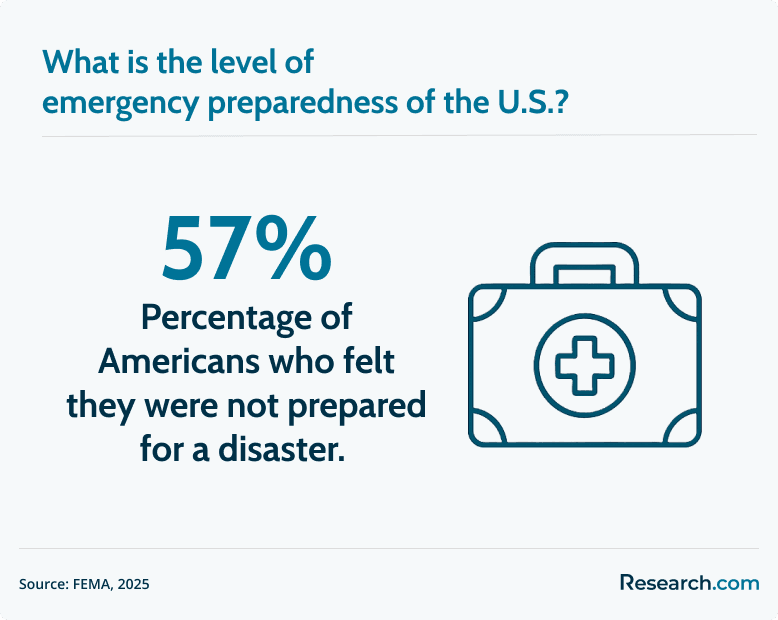
The Federal Emergency Management Agency reported in 2025 that 57% of Americans felt they were not prepared for a disaster. Another 15% had been prepared for less than a year, while 28% had been prepared for more than a year. These findings point to a continued need for professionals who can improve preparedness before emergencies occur.
Choosing a specialization is similar to comparing organizational leadership vs MBA programs: the best option depends on your career target. Select the concentration that matches the hazards, systems, and employers you want to work with.
How can business insights enhance emergency management practices?
Emergency management is not only about response. It also requires budgeting, logistics, staffing, procurement, continuity planning, stakeholder management, performance measurement, and recovery strategy. Business skills can help emergency managers allocate resources, justify preparedness investments, manage vendors, support continuity of operations, and communicate risk to executives or elected officials.
Professionals who want stronger training in finance, operations, organizational leadership, and strategy may compare emergency management degrees with the top MBA online programs. An MBA will not replace emergency management expertise, but business training can be useful for roles in corporate resilience, risk management, consulting, healthcare administration, and critical infrastructure operations.
| Business skill | Emergency management use |
| Budgeting | Planning preparedness investments, grant spending, equipment purchases, and recovery costs |
| Operations management | Maintaining continuity during disruption and improving response workflows |
| Leadership | Coordinating teams, partners, agencies, and stakeholders under pressure |
| Data-informed decision-making | Prioritizing risks, evaluating response performance, and improving plans |
| Strategic communication | Explaining risk, urgency, and resource needs to executives, officials, staff, and the public |
How to choose the best online master’s in emergency management program?
The best online emergency management master’s program is the one that matches your career goal, schedule, budget, and preferred learning style while meeting recognized academic standards. A fast program is helpful only if it is also credible, affordable, and relevant to the work you want to do.
Students comparing public service leadership pathways may also review the fastest online master’s degree in public administration. Public administration programs may be a better fit for students focused on government leadership, budgeting, and policy rather than disaster operations specifically.
Key factors to compare
- Accreditation and faculty background: Prioritize accredited institutions and faculty with experience in emergency management, public health, homeland security, public administration, disaster response, cybersecurity, or related fields.
- Curriculum and specializations: Review required courses and electives to ensure they match your target sector. A student interested in hospital preparedness needs different coursework from one focused on cybersecurity or environmental hazards.
- Flexibility: Compare asynchronous delivery, evening sessions, part-time options, accelerated terms, multiple start dates, and maximum time-to-completion rules.
- Applied learning: Look for simulations, fieldwork, capstones, internships, emergency exercises, or projects that allow you to demonstrate skills to employers.
- Total cost: Compare full tuition, fees, books, software, travel, certification costs, and financial aid options, not just the advertised credit-hour rate.
- Student support: Ask about online advising, career services, library access, technical support, internship support, writing assistance, and networking opportunities.
Questions to ask before enrolling
- How quickly can a working adult realistically complete the program?
- Are courses offered every term, or could limited availability delay graduation?
- Can I transfer graduate credits, and what documentation is required?
- Does the program include FEMA coursework, simulations, fieldwork, or certification preparation?
- What emergency management sectors do graduates typically enter?
- Do online students have access to the same faculty, advising, and career support as campus students?
- What is the total cost after tuition, fees, materials, and any required travel?
The same comparison mindset applies to other accelerated online degrees, including the fastest online bachelor's degree in entrepreneurship programs. Speed is useful, but only when the program still gives you the skills, support, and credential value you need.
What skills are needed for emergency management?
Emergency management professionals need a mix of leadership, communication, technical, analytical, and coordination skills. The work often involves uncertainty, incomplete information, competing priorities, and high public consequences. A strong graduate program should help students practice these skills in realistic scenarios rather than only reading about them.
- Leadership and decision-making: Emergency managers must guide teams, delegate responsibilities, set priorities, and make decisions during high-pressure events. Related leadership and personnel skills are also emphasized in programs such as an MBA HR online, though emergency management applies those skills in crisis contexts.
- Crisis communication: Professionals must deliver accurate, timely, and clear information to the public, responders, executives, elected officials, and partner agencies while managing confusion and misinformation.
- Risk assessment and analysis: Emergency managers identify hazards, evaluate vulnerabilities, interpret data, and design mitigation and preparedness strategies based on community or organizational risk.
- Project and resource management: The field requires planning, budgeting, staffing, logistics, supply management, scheduling, training, and prioritization under constrained conditions.
- Technology and data literacy: Emergency managers increasingly use tools such as GIS, emergency management software, weather information networks, project management platforms, mobile alert systems, dashboards, and data analysis tools.
The long-term effects of COVID-19 also show why communication, trust, and public cooperation matter. Pew Research Center reported that 21% of Americans still see the disease as a major public health threat (Tyson et al., 2025). The same survey noted that while many believed pandemic restrictions were just right, 18% thought there should have been more restrictions.
These findings reinforce the need for emergency managers who can combine technical readiness with empathy, cultural awareness, transparent communication, and the ability to work across divided public opinions.
What career paths are available for graduates of online master’s in emergency management programs?
An online master’s in emergency management can support careers in public safety, disaster recovery, homeland security, hospital preparedness, environmental risk, cybersecurity, public communication, and organizational continuity. The degree is most valuable when paired with experience, certifications, technical skills, or sector-specific knowledge.
| Career path | Average salary listed | Typical responsibilities |
| Public Information Officers | $80,663 | Share timely and accurate information with the public and media, write announcements, coordinate press briefings, and serve as spokespersons during emergencies |
| Business Continuity Managers | $85,055 | Create continuity plans, lead training, assess risks, and help organizations maintain operations during disruptions |
| Disaster Recovery Specialists | $86,378 | Support damage assessments, coordinate restoration efforts, work with FEMA processes, and help communities recover after disasters |
| Environmental Specialists | $88,640 | Evaluate hazards involving pollution, hazardous materials, natural disasters, environmental compliance, and mitigation strategies |
| Safety Directors | $91,610 | Develop workplace safety policies, oversee emergency response planning, conduct risk assessments, and coordinate training |
| Epidemiologists | $94,160 | Study disease patterns, investigate public health threats, and guide emergency interventions and medical resource allocation |
| Homeland Security Analysts | $95,100 | Analyze threats, support policy development, coordinate intelligence, and work across agencies to protect public safety |
| Emergency Management Directors | $97,700 | Lead preparedness and response planning for jurisdictions or organizations, coordinate agencies, update plans, and support funding efforts |
| Hospital Emergency Preparedness Administrators | $98,658 | Prepare healthcare systems for mass casualty events, infectious disease outbreaks, continuity needs, training exercises, and coordination with public health agencies |
| Cybersecurity Analysts | $127,730 | Protect information systems and critical infrastructure from cyber incidents that could disrupt emergency operations |
The role of Disaster Recovery Specialists has become especially visible as the U.S. had 90 Major Disaster declarations in 2024, averaging one every four days (International Institute for Environment and Development, 2025).
Students aiming for homeland security roles may choose to build an undergraduate foundation first through a fast-track online bachelors in homeland security degree, then use graduate study to move toward analyst, coordinator, director, or policy roles.
If you are comparing management careers more broadly and asking how much do managers make, remember that emergency management salaries vary substantially by sector, region, experience, and responsibility level. A graduate degree can improve positioning, but outcomes depend on the full profile you bring to employers.
This chart displays the average wages of positions in the field.
What emerging trends are shaping the future of emergency management?
Emergency management is becoming more data-driven, technology-enabled, and cross-sector. Modern emergency managers are expected to coordinate not only with first responders and government agencies but also with hospitals, utilities, transportation systems, schools, private employers, nonprofit organizations, and community groups.
- More complex disasters: Communities may face overlapping emergencies, such as severe weather combined with power outages, supply chain disruption, public health risks, or cyber incidents.
- Greater use of data and geospatial tools: Programs increasingly emphasize mapping, risk dashboards, real-time monitoring, predictive analytics, and data-informed decision-making.
- Cybersecurity and infrastructure risk: Emergency operations depend on communications, power, healthcare systems, transportation, and digital networks, making cyber resilience part of preparedness planning.
- Climate and environmental hazards: Wildfires, floods, hurricanes, heat events, and other environmental risks continue to shape mitigation and resilience planning.
- Community resilience and equity: Emergency managers must plan for vulnerable populations, accessibility needs, language access, health disparities, transportation barriers, and trust-building before disasters occur.
- Interagency and public-private coordination: Effective response increasingly depends on formal partnerships, shared communication protocols, joint training, and collaborative planning.
Students interested in event operations, crowd safety, venue planning, and risk management may find some complementary concepts in related programs such as the accelerated online bachelor's in sports management, although emergency management master’s programs provide more specialized disaster and crisis training.
What is the job market for graduates with an online master’s in emergency management?
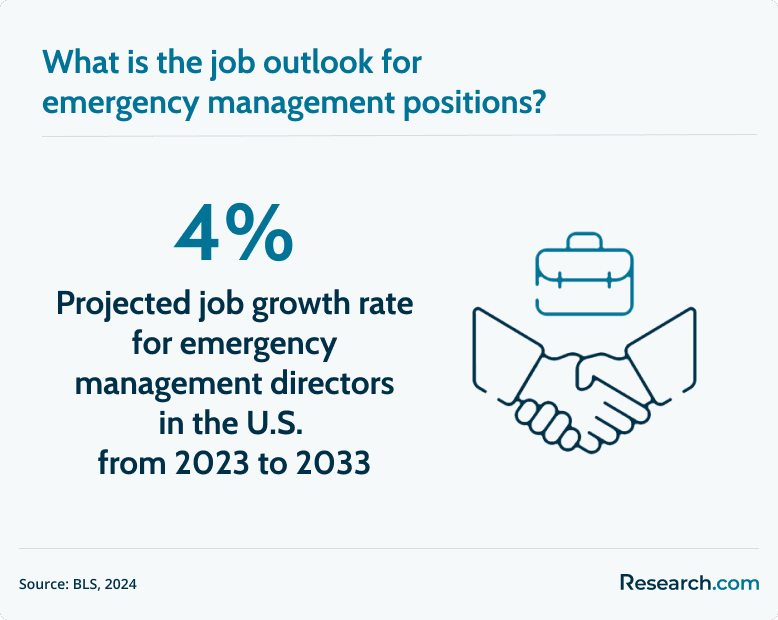
The job market for emergency management professionals is steady and increasingly diverse. The BLS projects employment for emergency management directors to grow 4% from 2022 to 2032, which represents around 1,000 annual new jobs throughout the decade.
This growth rate is average, so students should avoid assuming that the degree alone guarantees a role. The strongest candidates usually combine graduate education with relevant work experience, strong communication skills, technical ability, leadership history, certifications, or sector knowledge in areas such as healthcare, cybersecurity, public safety, logistics, military operations, or public administration.
Demand is not limited to government agencies. Private employers, hospitals, colleges, utilities, nonprofits, and critical infrastructure organizations need professionals who can assess risk, plan continuity, coordinate response, and manage recovery. Urban areas, federal centers, disaster-prone regions, and organizations with complex operations may offer more opportunities and higher salaries.
As climate hazards, public health concerns, cyber threats, and infrastructure vulnerabilities grow more complex, emergency management will continue to require trained leaders who can prepare organizations and communities before a crisis occurs.
Common mistakes to avoid when choosing an online emergency management master’s program
- Choosing only the fastest program: A shorter timeline is useful only if the curriculum, accreditation, support, and workload fit your goals.
- Ignoring accreditation: Always confirm institutional accreditation and check whether the program has relevant field-specific recognition.
- Comparing tuition instead of total cost: Fees, books, software, travel, and fieldwork expenses can change the real price.
- Assuming online means self-paced: Some online programs have weekly deadlines, group work, live sessions, or fixed course sequences.
- Overlooking field experience: Simulations, capstones, internships, and applied projects can help you demonstrate job-ready skills.
- Selecting the wrong specialization: Public health, cybersecurity, homeland security, environmental hazards, and business continuity lead to different career paths.
- Expecting salary outcomes to be automatic: Pay depends on role, employer, region, experience, and responsibilities, not only the degree.
Key Insights
- A fast online master’s in emergency management can help working adults move toward leadership roles, but the best program is not automatically the shortest one.
- Most online emergency management master’s programs take one to two years in accelerated or full-time formats, while part-time students may need three to five years.
- Emergency management directors earn an average annual salary of $97,700, with reported wages ranging from $51,260 to $160,420; federal executive branch roles average $182,990.
- Program costs vary widely. Ma et al. (2024) reported average master’s tuition and fees of around $9,560 at public institutions and $31,930 at private nonprofit institutions.
- Accreditation, curriculum relevance, field experience, transfer credit policies, and specialization options should carry as much weight as completion speed.
- Career opportunities extend beyond government into healthcare, corporations, higher education, nonprofits, cybersecurity, environmental risk, business continuity, and disaster recovery.
- The field is being shaped by data analytics, geospatial tools, climate-related hazards, cyber risk, public health readiness, and the need for stronger community resilience.
References:
- CareerOneStop. (2025). Emergency Management Directors. Retrieved June 24, 2025, from https://www.careeronestop.org/Toolkit/Careers/Occupations/occupation-profile.aspx?keyword=Emergency%20Management%20Directors&location=US&onetcode=11-9161.00
- Data USA. (2022). Emergency Management Directors. Retrieved June 24, 2025, from https://datausa.io/profile/soc/emergency-management-directors
- International Institute for Environment and Development. (2025, March 25). Major disaster in the US declared every four days in 2024, IIED analysis shows. https://www.iied.org/major-disaster-us-declared-every-four-days-2024-iied-analysis-shows
- Ma, J., Pender, M., & Oster, M. (2024). Trends in College Pricing and Student Aid 2024. https://research.collegeboard.org/trends/college-pricing
- Payscale. (2025, April 14). Average Safety Director Salary. Retrieved June 24, 2025, from https://www.payscale.com/research/US/Job=Safety_Director/Salary
- Tyson, A., Lipka, M., & Deane, C. (2025, February 12). 5 Years Later: America Looks Back at the Impact of COVID-19. Pew Research Center. https://www.pewresearch.org/politics/2025/02/12/5-years-later-america-looks-back-at-the-impact-of-covid-19
- U.S. Bureau of Labor Statistics. (2024). Emergency Management Directors [Interactive data]. May 2024 OEWS Profiles, Occupational Employment and Wage Statistics (OEWS) Profiles. Retrieved June 24, 2025, from https://data.bls.gov/oesprofile
- U.S. Bureau of Labor Statistics. (2025, April 18). Occupational projections, 2023–33, and worker characteristics, 2023 (Numbers in thousands). Employment Projections. https://www.bls.gov/emp/tables/occupational-projections-and-characteristics.htm
- ZipRecruiter. (2025, June 17). Hospital Emergency Management Salary. Retrieved June 24, 2025, from https://www.ziprecruiter.com/Salaries/Hospital-Emergency-Management-Salary
Other Things You Should Know About an Online Master’s in Emergency Management
In 2027, the fastest online master's programs in emergency management typically range from $15,000 to $35,000 in total tuition. Costs can vary based on the institution, residency status, and additional fees. Prospective students should explore financial aid opportunities and scholarships to manage expenses effectively.
Admission requirements for the fastest online master's programs in emergency management typically include a bachelor's degree, a minimum GPA, professional recommendations, and a statement of purpose. Some programs may require relevant work experience or standardized test scores, though these vary by institution.
Most accelerated online master’s in emergency management programs require 30 to 36 credits. Some schools allow completion in as little as 12 to 18 months, especially with eight-week courses and year-round enrollment. Programs may also require a capstone or applied project instead of a thesis.
Applicants typically need a bachelor's degree in a related field such as public administration, homeland security, or environmental science. Some programs may also require relevant work experience or certifications in emergency management or public safety to qualify for 2027 enrollment.


