
2027 Fastest Online Corrections Degree Programs

Co-Founder and Chief Data Scientist
Many people are intimidated by careers in corrections, assuming the field is difficult to enter or requires years of advanced training. But the reality is that many positions—such as correctional officers and bailiffs—are accessible with a high school diploma and specialized training, making corrections one of the most reachable paths in criminal justice.
Despite a projected 6% decline in employment from 2023 to 2033, the U.S. Bureau of Labor Statistics reports that about 31,000 correctional officer and bailiff jobs will open each year. In May 2024, correctional officers and jailers earned a median salary of $57,970, while bailiffs earned $57,050.
This article explores the fastest online corrections degree programs at the bachelor’s, master’s, and doctoral levels. Prepared by a team of career planning experts, it will help you understand your options, compare programs, and confidently take the next step toward a fulfilling role in public safety.
What are the benefits of getting an online corrections degree?
- Qualifies you for roles like correctional treatment specialist, probation officer, or jail supervisor.
- Median salaries range from $57,000 to $76,000, depending on specialization.
- Online options let you earn your degree while working or managing other responsibilities.
What can I expect from an online corrections degree?
Online corrections degree programs are designed to deliver real-world skills in a flexible and accelerated format. Students study topics like criminology, correctional management, juvenile justice, and ethics. Most programs require a capstone project, and some include internship hours with local justice or rehabilitation agencies.
Classes are typically delivered asynchronously through online learning platforms, letting you access materials on your schedule. Many programs offer accelerated terms—lasting 7 to 8 weeks—so you can complete a bachelor’s in 2–3 years or a master’s in as little as 12 months.
Tuition varies widely but often ranges from $300 to $700 per credit hour. Online programs also accept transfer credits, allowing students to finish faster than in traditional classroom settings.
Where can I work with an online corrections degree?
An online corrections degree opens career opportunities in public safety, law enforcement, and community-based corrections. Graduates work in state and federal prisons, probation departments, rehabilitation programs, juvenile justice agencies, and private security firms. Because online programs deliver the same curriculum as on-campus degrees, they qualify you for the same job opportunities.
In 2024, there were 34,541 openings for correctional officers and jailers, with probation officers seeing over 7,700 job postings. Supervisory roles, such as correctional supervisors or compliance officers, offer even higher pay and responsibility.
With skills like investigation, report writing, ethical decision-making, and behavioral management, graduates are well-equipped to work across various criminal justice settings—including remote positions in policy or administration.
How much can I make with an online corrections degree?
Graduates of online corrections degree programs can earn competitive salaries across a variety of roles in criminal justice. In May 2024, the median annual wage was $57,970 for correctional officers and jailers, while probation officers and correctional treatment specialists earned $64,522. Those in supervisory positions—such as correctional supervisors or police sergeants—can earn upwards of $70,000 to over $100,000 per year.
Salaries vary based on education, experience, location, and job title. Entry-level professionals typically start near the lower end of the pay scale but can quickly move up with additional certifications or a master’s degree.
Online degrees are fully recognized by employers, and many graduates advance into leadership or specialized roles that offer higher salaries. With flexibility to work while studying, online learners can begin applying their skills in the field even before graduation—helping to boost earnings early on.
- Fastest Online Corrections Degree Programs for 2027 Best Programs
- How long does it take to complete an online corrections degree program? Completion Time
- How does an online corrections degree program compare to an on-campus program? How does an online corrections degree program compare to an on-campus program?
- What is the average cost of an online corrections degree program? Average Cost
- What are the financial aid options for students enrolling in an online corrections degree program? Financial Aid
- What are the prerequisites for enrolling in an online corrections degree program? Requirements
- What courses are typically in an online corrections degree program? What courses are typically in an online corrections degree program?
- What types of specializations are available in an online corrections degree program? What types of specializations are available in an online corrections degree program?
- Is Accreditation a Critical Factor for Online Corrections Degrees? Is Accreditation a Critical Factor for Online Corrections Degrees?
- How to Choose the Best Online Corrections Degree Program How to Choose the Best Online Corrections Degree Program
- What career paths are available for graduates of an online corrections degree program? What career paths are available for graduates of an online corrections degree program?
- What is the job market for graduates with an online corrections degree program? Job Outlook
- How Can an Online Corrections Degree Propel Federal Investigative Careers? How Can an Online Corrections Degree Propel Federal Investigative Careers?
- What supplemental credentials can further elevate your corrections career? What supplemental credentials can further elevate your corrections career?
Fastest Online Corrections Degree Programs for 2027
Choosing an online corrections degree is usually a practical decision: you want a credential that can help you enter, stay competitive in, or move up within corrections, probation, parole, juvenile justice, public safety, or criminal justice administration—without leaving your job to attend campus full time. Speed matters, but it should not be the only factor. A fast program that lacks accreditation, does not accept your transfer credits, or does not match your career goal can cost more time and money than a slower, better-fitting option.
This guide explains the fastest online corrections and corrections-related criminal justice programs in the current list, how long they usually take, what they cost, what to check before enrolling, and which career paths may fit different degree levels. It is written for working adults, transfer students, correctional officers seeking promotion, military learners, and students comparing online criminal justice programs with corrections-focused coursework.
Quick answer: What is the fastest online corrections degree?
The fastest option depends on your current education level. Students with transfer credits may finish some bachelor’s programs in as little as 2 years, while several online master’s programs can be completed in about 1 year or as little as 12 months. Doctoral options generally take 2–3 years or longer and are better suited to experienced professionals pursuing leadership, research, policy, or academic roles.
| Best fit | Typical fastest route | What to verify before enrolling |
| New college students | Online bachelor’s degree with accelerated terms | Total credits, transfer policy, tuition per credit, and whether internships are optional or required |
| Transfer students or academy graduates | Degree-completion bachelor’s program | How many academy, associate degree, military, or prior college credits the school will accept |
| Current corrections or law enforcement professionals | Online master’s in criminal justice or corrections-related concentration | Leadership coursework, schedule flexibility, capstone requirements, and employer tuition benefits |
| Senior professionals | Online D.C.J. or PhD in Criminal Justice | Dissertation or capstone expectations, faculty fit, research support, and time to completion |
How do we rank the programs?
Research.com rankings are built to help students compare programs using consistent, decision-oriented criteria rather than marketing claims alone. For this list of fast online corrections degree options, we review institutional and program information alongside trusted education data sources, including the IPEDS database, Peterson's database, the College Scorecard database, and the National Center for Education Statistics. These sources help evaluate factors such as institutional quality, affordability, student outcomes, and program structure.
You can read more about Research.com's ranking process on our methodology page.
Fastest online corrections degree programs at a glance
| Rank | School and program | Degree level | Fastest stated completion | Credits | Cost per credit |
| 1 | Eastern Kentucky University – BS in Corrections & Juvenile Justice Studies | Bachelor’s | 4 years; accelerated options available | 120 | $443 |
| 2 | Walden University – BS in Criminal Justice: Corrections and Human Services | Bachelor’s | 4 years; accelerated options available | 120 | ~$390 course-based; flat rate for Tempo Learning |
| 3 | William Paterson University – BA in Criminology & Criminal Justice | Bachelor’s | As little as 2 years with transfer credit | 120 | $372.75 |
| 4 | University of Massachusetts Lowell – BS in Criminal Justice and Criminology | Bachelor’s | 4 years; faster with transfer credits | 120 | ~$345–$380 |
| 5 | University of Louisville – MS in Criminal Justice | Master’s | 1 year; three accelerated semesters | 30 | $830; military: $250 |
| 6 | Purdue University Global – Master of Science in Criminal Justice | Master’s | 1 year; average completion | 45; 9 courses | $420 |
| 7 | University of Arkansas at Little Rock – Master of Science in Criminal Justice | Master’s | 2 years; standard completion | 36 | ~$383 |
| 8 | Lamar University – Master of Science in Criminal Justice | Master’s | As little as 12 months | 30 | $360 |
| 9 | PennWest California University – Doctor of Criminal Justice | Doctoral | 2–3 years | 42 | ~$650 |
| 10 | Liberty University – PhD in Criminal Justice | Doctoral | 3 years; average completion | 60+ | $610 full-time; $675 part-time; $375 military rate |
1. Eastern Kentucky University – BS in Corrections & Juvenile Justice Studies
The online BS in Corrections & Juvenile Justice Studies at Eastern Kentucky University is built for students who want a corrections-focused bachelor’s degree with flexibility. The program is 100% online and asynchronous, which can be especially useful for adult learners, shift workers, transfer students, and people already working in criminal justice settings. Coursework covers criminal behavior, professional ethics, offender rehabilitation, juvenile justice, and correctional administration. Internships are not required, although students may be able to arrange local experiential learning opportunities. The free textbook policy is a notable cost-related feature.
- Program length: 4 years (accelerated options available)
- Cost per credit: $443
- Total credits: 120
- Accreditation: Southern Association of Colleges and Schools Commission on Colleges (SACSCOC)
2. Walden University – BS in Criminal Justice: Corrections and Human Services
Walden University offers a fully online BS in Criminal Justice with a Corrections and Human Services focus for students interested in rehabilitation, reentry services, correctional casework, and community-based justice roles. Students can study in a traditional course-based format or use the Tempo Learning option, depending on how they prefer to progress. The curriculum includes restorative justice, alternatives to sentencing, correctional systems, and the connection between criminal justice and human services. A capstone project is required, and field experiences may be useful even when they are not mandatory.
- Program length: 4 years (accelerated options available)
- Cost per credit: ~$390 (course-based); flat rate for Tempo Learning
- Total credits: 120
- Accreditation: Higher Learning Commission (HLC)
3. William Paterson University – BA in Criminology & Criminal Justice (Accelerated Professional Track)
The online BA in Criminology & Criminal Justice at William Paterson University is especially relevant for current or former law enforcement and corrections professionals because the accelerated professional track may accept up to 30 credits from police or corrections academy training. Courses run in accelerated 6–8 week sessions and cover criminal behavior, criminal justice systems, law enforcement, and investigative methods. The program does not require an internship, but applied learning is embedded throughout the curriculum. It may be a strong fit for professionals seeking administrative, supervisory, or advancement opportunities.
- Program length: As little as 2 years with transfer credit
- Cost per credit: $372.75
- Total credits: 120
- Accreditation: Middle States Commission on Higher Education (MSCHE)
4. University of Massachusetts Lowell – BS in Criminal Justice and Criminology
The BS in Criminal Justice and Criminology at UMass Lowell offers online and hybrid study options for students interested in corrections, law enforcement, public safety, homeland security, or crime and mental health. Students receive a broad liberal arts foundation along with applied coursework in criminal law, ethics, criminology, and justice system operations. Optional concentrations include Corrections, Homeland Security, and Crime & Mental Health. Depending on their goals, students may complete a 3-credit internship or 6-credit fieldwork course.
- Program length: 4 years (faster with transfer credits)
- Cost per credit: ~$345–$380
- Total credits: 120
- Accreditation: New England Commission of Higher Education (NECHE)
5. University of Louisville – MS in Criminal Justice
The online MS in Criminal Justice at University of Louisville is designed for professionals who already have a bachelor’s degree and want to move into leadership, corrections administration, law enforcement management, policy, or justice agency roles. Courses are asynchronous and offered in 8-week terms. Topics include leadership, juvenile justice, correctional policy, and cybercrime. The program does not require the GRE and allows up to six transfer credits. There is no required practicum, but students can pursue applied research aligned with their professional interests.
- Program length: 1 year (three accelerated semesters)
- Cost per credit: $830 (military: $250)
- Total credits: 30
- Accreditation: Southern Association of Colleges and Schools Commission on Colleges (SACSCOC)
6. Purdue University Global – Master of Science in Criminal Justice
The online Master of Science in Criminal Justice from Purdue University Global is intended for working adults who want graduate-level preparation for leadership and administrative roles in criminal justice. Coursework addresses criminological theory, ethics, applied decision-making, and justice system leadership. Students complete an applied research project that demonstrates critical thinking and professional problem-solving. The program’s flexible design may appeal to students balancing full-time work, family responsibilities, and graduate study.
- Program length: 1 year (average completion)
- Cost per credit: $420
- Total credits: 45 (9 courses)
- Accreditation: Higher Learning Commission (HLC)
7. University of Arkansas at Little Rock – Master of Science in Criminal Justice
The 100% online MS in Criminal Justice at University of Arkansas at Little Rock serves mid-career professionals in corrections, law enforcement, and related public safety fields. The program is professionally oriented and can function as a terminal degree, although it may also support students considering doctoral study. Coursework emphasizes criminal justice operations, leadership, administrative decision-making, and statistical analysis. A practicum is not required, but the curriculum focuses on skills that are relevant to supervision and agency management.
- Program length: 2 years (standard completion)
- Cost per credit: ~$383
- Total credits: 36
- Accreditation: Higher Learning Commission (HLC)
8. Lamar University – Master of Science in Criminal Justice
The online MS in Criminal Justice at Lamar University may suit professionals seeking advancement in corrections, law enforcement leadership, homeland security, or federal public safety roles. The curriculum combines theory with applied study in crime control, corrections, ethics, homeland security, and law enforcement administration. No internship is required, so students should consider whether they already have enough professional experience or whether they need to seek applied opportunities independently.
- Program length: As little as 12 months
- Cost per credit: $360
- Total credits: 30
- Accreditation: Southern Association of Colleges and Schools Commission on Colleges (SACSCOC)
9. PennWest California University – Doctor of Criminal Justice (D.C.J.)
The online Doctor of Criminal Justice at PennWest is a terminal degree for mid- and senior-level professionals who want to work in criminal justice leadership, policy, research, organizational reform, or advanced corrections administration. The program emphasizes applied research, ethical leadership, policy analysis, and real-world justice system challenges. Instead of a clinical practicum, students complete a capstone dissertation and policy-oriented projects. Admission requires a master’s degree and strong academic standing.
- Program length: 2–3 years
- Cost per credit: ~$650
- Total credits: 42
- Accreditation: Middle States Commission on Higher Education (MSCHE)
10. Liberty University – PhD in Criminal Justice
The fully online PhD in Criminal Justice at Liberty University is designed for experienced professionals pursuing senior leadership, research, policy, consulting, or academic roles. The curriculum includes research methodology, advanced criminal justice practice, teaching strategies, and coursework informed by Christian ethics. Students may specialize in homeland security or leadership. A dissertation is required, and optional residencies can provide faculty mentoring and peer networking.
- Program length: 3 years (average completion)
- Cost per credit: $610 full-time; $675 part-time; $375 military rate
- Total credits: 60+
- Accreditation: Southern Association of Colleges and Schools Commission on Colleges (SACSCOC)
How long does it take to complete an online corrections degree program?
Most online corrections degree programs take one to four years, depending on degree level, enrollment pace, transfer credits, and whether the program uses accelerated terms. A student starting a bachelor’s degree with no prior credits should usually plan for a longer timeline than a working professional entering a master’s program or a transfer student completing the final half of a bachelor’s degree.
| Degree level | Common credit requirement | Typical online completion time | Who this route fits best |
| Associate degree | Varies by school | Often shorter than a bachelor’s degree | Students seeking entry-level preparation or a lower-cost transfer pathway |
| Bachelor’s degree | 120 credits | About four years; accelerated or transfer-friendly options may be faster | New students, correctional officers seeking advancement, and applicants targeting roles that prefer a bachelor’s degree |
| Master’s degree | 30 to 45 credits in the programs listed | 12 to 18 months in faster formats; 2 years in standard formats | Professionals pursuing leadership, policy, administration, or specialized criminal justice roles |
| Doctoral degree | 42 to 60+ credits in the programs listed | 2–3 years or 3 years on average, depending on program type | Senior professionals interested in research, executive leadership, teaching, or policy reform |
Bachelor’s programs commonly require 120 credits and may use 7- or 8-week courses, year-round scheduling, or degree-completion formats to shorten time to graduation. Master’s programs can be faster because they require fewer credits and focus on advanced coursework. Doctoral programs take longer because they often require a dissertation, capstone dissertation, or extended applied research project.
If your main goal is a fast online credential rather than corrections specifically, it can also help to compare timelines across other accelerated fields, such as an accelerated nutrition degree online program.
How does an online corrections degree program compare to an on-campus program?
Online and on-campus corrections programs often cover similar academic content: corrections systems, criminology, juvenile justice, criminal law, ethics, offender rehabilitation, and justice administration. The main differences are delivery format, scheduling, networking style, and how students complete applied learning.
| Factor | Online corrections degree | On-campus corrections degree |
| Schedule | Often more flexible, with asynchronous or accelerated courses | Usually follows fixed class meeting times |
| Location | Students can study from home and may arrange local field experiences | Students attend campus and may use nearby agency partnerships |
| Interaction | Discussion boards, video meetings, recorded lectures, and digital simulations | Face-to-face classroom discussion, campus events, and in-person networking |
| Hands-on learning | Internships, capstones, or fieldwork may be optional or locally arranged | Internships and agency visits may be easier to coordinate through campus offices |
| Best for | Working adults, rural students, military learners, and transfer students | Students who want in-person structure and campus-based networking |
Online learning can be especially useful for students already working in corrections or law enforcement because coursework can often be completed around shifts. However, students who need strong in-person structure, direct campus networking, or school-arranged internships may prefer an on-campus or hybrid program.
The same trade-off applies across many online degree areas. Students comparing flexible education models may find it useful to review how an accelerated health sciences online degree is structured. If you are deciding whether corrections, investigation, or evidence analysis fits you better, compare the academic and career differences between criminal justice vs forensic science.
What is the average cost of an online corrections degree program?
The average cost of an online corrections degree program ranges from $10,000 to $30,000, depending on the school, degree level, tuition model, transfer credits, and fees. Tuition per credit is only one part of the cost. Students should also check technology fees, textbooks, graduation fees, residency expenses if any, and whether accelerated enrollment changes billing.
Public universities often cost less than private institutions, particularly when online students qualify for in-state or reduced tuition. Private institutions or programs with specialized concentrations such as juvenile justice, correctional leadership, cybercrime, or homeland security may charge higher rates. An online associate degree may cost around $10,000, while a master’s program could approach $30,000 in total tuition.
| Cost factor | Why it matters | Question to ask |
| Per-credit tuition | Determines the base cost of the degree | Is the rate the same for online, in-state, out-of-state, military, and part-time students? |
| Transfer credits | Can shorten the program and reduce total tuition | How many prior credits, academy credits, or military credits will count toward the degree? |
| Books and course materials | Can add a meaningful expense each term | Are textbooks included, discounted, or free? |
| Program pace | Accelerated formats may change semester workload and billing | Will taking more courses per term increase fees or affect financial aid? |
| Employer benefits | Corrections agencies and public safety employers may offer support | Does my employer reimburse tuition for job-related coursework? |
Accelerated programs can sometimes lower total costs by reducing the time you spend enrolled, but they may also require a heavier course load. To compare related program pricing, review Research.com's guide to criminal justice degree online cost.
What are the financial aid options for students enrolling in an online corrections degree program?
Online corrections students may qualify for many of the same financial aid options as campus-based students, provided the school and program meet eligibility requirements. Common options include federal grants, federal student loans, state aid, institutional scholarships, employer tuition reimbursement, veterans benefits, and military education benefits such as the GI Bill or Yellow Ribbon Program.
The FAFSA is the usual starting point for federal and many state-based aid programs. Students should also ask the school’s financial aid office whether online learners qualify for the same scholarships as campus students and whether enrollment pace affects aid eligibility. Some scholarships may be available for criminal justice, corrections, public safety, law enforcement, or juvenile justice students.
Private scholarship databases can also be useful. Students can search Criminal Justice Scholarships for awards connected to corrections, juvenile justice, law enforcement, and broader criminal justice study.
If you are comparing fast online programs across multiple career areas, the financial aid questions are similar for other accelerated programs, including an accelerated online nutrition master's degree: confirm accreditation, aid eligibility, total cost, course load, and whether the pace is realistic while working.
What are the prerequisites for enrolling in an online corrections degree program?
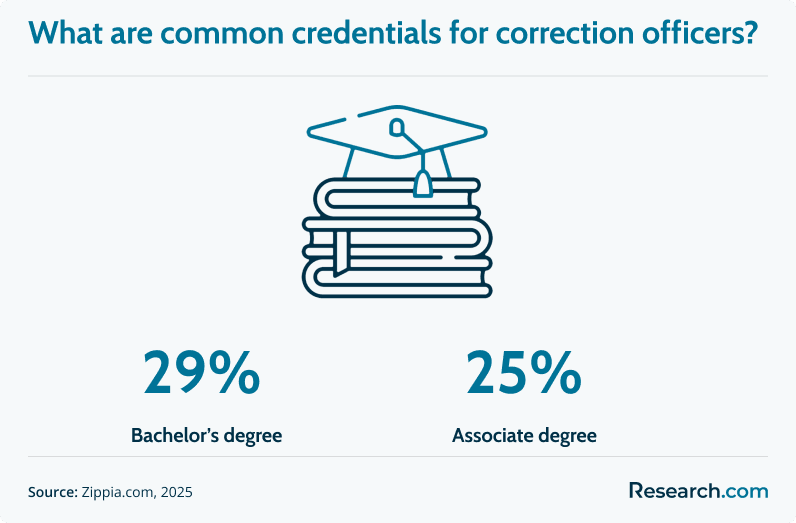
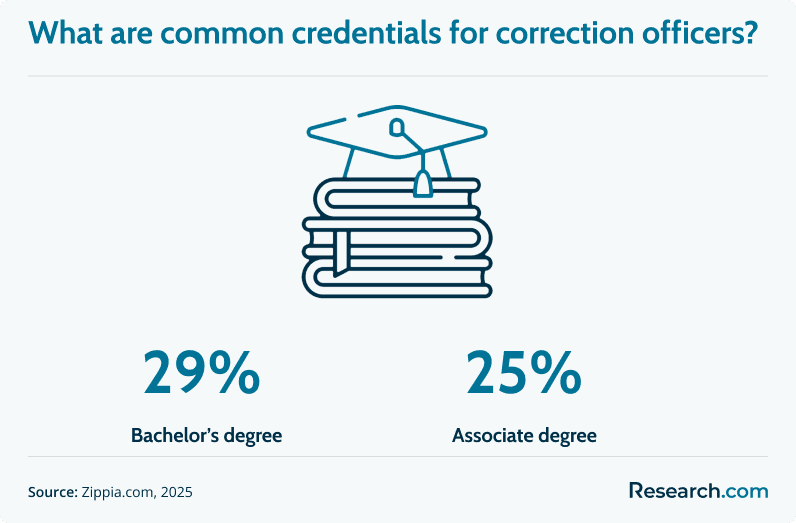
Admissions requirements depend on the degree level. Associate and bachelor’s programs usually require a high school diploma or GED, official transcripts, and sometimes a minimum GPA. Many schools have reduced or removed standardized test requirements, but policies vary.
| Program level | Common prerequisites | Additional items that may be requested |
| Associate or bachelor’s | High school diploma or GED and transcripts | Minimum GPA, transfer credit evaluation, placement requirements, or test scores where required |
| Master’s | Bachelor’s degree, often in criminal justice or a related field | Personal statement, résumé, letters of recommendation, transcripts, and possible transfer credit review |
| Doctoral | Master’s degree and strong academic standing | Writing sample, professional experience, research interests, recommendations, and interview in some cases |
Academic admission is separate from employment eligibility in corrections. Entry-level correctional roles may require U.S. citizenship, being at least 18 or 21 years old depending on the state or employer, passing a background check, and completing medical and psychological exams. Students who plan to work in public safety should ask programs whether any criminal history, licensing rule, or agency policy could affect future employment.
Students exploring adjacent legal support careers may also want to compare these requirements with criminal law paralegal job requirements. If you are still deciding among accelerated online pathways, you can also compare admissions expectations for an accelerated health education online degree.
What courses are typically in an online corrections degree program?
Online corrections programs combine criminal justice theory with practical knowledge about institutions, community supervision, rehabilitation, ethics, and legal procedure. Lower-division courses introduce the justice system, while advanced courses focus on leadership, research, policy, and specialized populations.
Common core courses
- Introduction to Corrections
- Criminology
- Criminal Law and Procedure
- Ethics in Criminal Justice
- Juvenile Justice Systems
Advanced courses in bachelor’s and master’s programs
- Correctional Leadership
- Community Corrections
- Research Methods in Criminal Justice
- Correctional Policy and Rehabilitation
- Juvenile Law and Delinquency
Many programs also include a capstone, research project, internship, fieldwork course, or applied policy assignment. Students interested in juvenile justice may see specialized coursework such as Child Protection Law or Adolescent Psychopathology. If your goal is direct practice with justice-involved youth, reentry services, or treatment programs, ask whether the curriculum includes trauma-informed practice, case management, mental health, and community corrections topics.
What types of specializations are available in an online corrections degree program?
Specializations help students align their degree with a narrower career goal. Not every corrections program offers the same concentrations, so students should compare course catalogs rather than relying only on program titles.
| Specialization | What it emphasizes | Best fit for students interested in |
| Cybercrime | Digital investigations, cyber forensics, online offenses, network security, and cybercrime law | Technology-related criminal justice roles and cyber-enabled investigations |
| Homeland Security | Counterterrorism, emergency response, disaster preparedness, and national security systems | Federal, state, or local public safety and emergency management work |
| Crime Scene Investigation | Evidence handling, forensic procedures, scene documentation, and investigative methods | Forensic support, criminalistics, and investigative work |
| Supervision and Management | Personnel management, leadership, organizational behavior, and correctional administration | Promotion into supervisory, administrative, or facility management roles |
| Business Administration | Human resources, budgeting, organizational operations, and business law | Administrative leadership in agencies, nonprofit programs, or public safety organizations |
Students drawn to forensic work should understand that corrections and forensic science are not the same pathway. A corrections degree is usually more focused on institutions, supervision, rehabilitation, and justice administration, while forensic programs emphasize evidence and scientific analysis. To explore the forensic route, read Research.com's guide on how to become a criminalist.
Is accreditation a critical factor for online corrections degrees?
Yes. Accreditation is one of the first things to verify before enrolling in an online corrections degree program. Institutional accreditation helps show that a college or university meets recognized academic standards, and it can affect federal financial aid eligibility, transfer credit acceptance, graduate school admission, and employer recognition.
Students should confirm that the institution is accredited by a recognized accrediting body and then ask whether the specific online program has any additional approval, professional alignment, or agency partnerships. This is especially important if you plan to transfer credits, apply for federal aid, pursue graduate education, or use employer tuition reimbursement.
Some students combine corrections education with legal studies, compliance, or court-related work. If that describes your goal, a short paralegal certificate program may be worth comparing as a supplemental credential rather than a replacement for a corrections degree.
How to choose the best online corrections degree program
The best online corrections degree is not automatically the fastest or cheapest one. The right choice depends on your current credits, work schedule, career target, budget, and whether you need field experience. Use the program’s admissions, curriculum, accreditation, and student support details to test whether it fits your actual plan.
Factors to compare before applying
- Accreditation: Confirm that the institution is regionally accredited and that the credential will be accepted by employers, graduate schools, and aid programs.
- Transfer credit policy: Ask how many credits the school accepts from prior college coursework, military training, police academy training, or corrections academy training.
- Program pace: Decide whether 6-week, 7-week, or 8-week accelerated courses are manageable with your job and family responsibilities.
- Corrections-specific coursework: Look for classes in institutional corrections, community corrections, juvenile justice, rehabilitation, correctional policy, and ethics.
- Hands-on learning: Determine whether an internship, fieldwork course, capstone, or applied research project is available or required.
- Career services: Ask about résumé support, agency connections, internship guidance, and advising for public safety careers.
- Total cost: Compare tuition, fees, textbooks, transfer credits, military rates, and employer reimbursement—not just the advertised per-credit rate.
Questions to ask an admissions advisor
- How many of my previous credits will transfer into this specific degree?
- Can police, corrections, military, or academy training count for credit?
- Are courses asynchronous, synchronous, or a mix of both?
- How many courses do students usually take while working full time?
- Does the program include a corrections concentration, or is it a general criminal justice degree?
- Are internships available near my location?
- What percentage of the degree can be completed online?
- Does the school offer military, public safety, or employer partnership tuition rates?
- Will this program support graduate school, promotion, or certification goals?
- What happens if I need to slow down or stop out for a term?
If certification is part of your long-term plan, compare the curriculum with the Corrections Certification Program Handbook to understand how academic preparation may align with professional standards.
Common mistakes to avoid when choosing an online corrections degree
| Mistake | Why it can hurt you | Better approach |
| Choosing only the fastest program | A short timeline does not guarantee transfer acceptance, career fit, or affordability | Balance speed with accreditation, curriculum, cost, and support services |
| Ignoring accreditation | Unaccredited study may create problems with aid, transfer credits, and employer recognition | Verify institutional accreditation before applying |
| Looking only at tuition per credit | Fees, textbooks, and lost transfer credits can change the real cost | Calculate total program cost after transfer credit review |
| Assuming online means self-paced | Many online programs still have weekly deadlines and fixed term schedules | Ask whether courses are asynchronous, synchronous, self-paced, or cohort-based |
| Skipping applied experience | Students without corrections experience may need internships or fieldwork to build credibility | Choose a program with optional internship, capstone, or local agency engagement |
| Assuming a degree guarantees promotion | Corrections advancement also depends on agency rules, exams, seniority, performance, and openings | Ask your employer how the degree will be evaluated for promotion or pay steps |
What career paths are available for graduates of an online corrections degree program?
Corrections degree graduates may work in institutional corrections, community supervision, juvenile justice, court services, rehabilitation programs, public safety administration, and related criminal justice roles. Entry-level positions may be available with an associate or bachelor’s degree, while master’s and doctoral degrees are usually more relevant for supervision, policy, research, teaching, and executive leadership.
Common career paths
- Correctional Officers and Jailers
- Probation Officers and Correctional Treatment Specialists
- Juvenile Justice Coordinators
- Parole Officers
- Bailiffs and Court Officers
- Correctional Counselors
- Facility Managers or Wardens
- Private Security Managers
| Career direction | Relevant degree level | Useful preparation |
| Correctional facility operations | Associate or bachelor’s | Corrections procedures, ethics, report writing, safety, and offender management |
| Probation, parole, or reentry | Bachelor’s or master’s | Case management, community corrections, rehabilitation, counseling basics, and legal procedure |
| Juvenile justice | Bachelor’s or master’s | Juvenile law, adolescent development, family systems, and trauma-informed practice |
| Corrections leadership | Master’s or doctoral | Policy, budgeting, supervision, labor relations, ethics, and organizational leadership |
| Research, teaching, or policy reform | Doctoral | Research methods, statistics, policy analysis, writing, and dissertation or capstone work |
Some graduates also pursue federal roles, consulting, training, or criminal justice research. In many agencies, career advancement depends on a combination of education, years of experience, internal testing, background checks, performance reviews, and available positions.
What is the job market for graduates with an online corrections degree program?
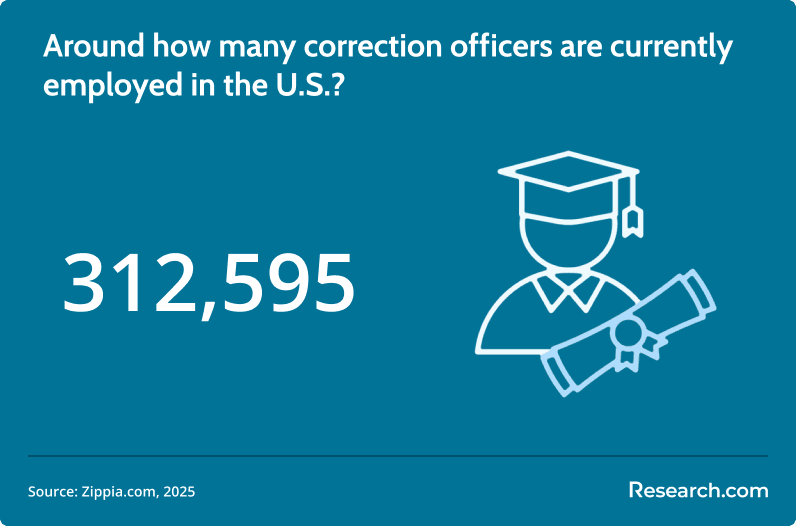
The corrections job market is mixed. Correctional officer employment is projected to decline by 6% from 2023 to 2033, but about 31,000 openings are still expected each year because of workforce turnover. That means demand can remain steady in many locations even when total employment is expected to shrink.
Correctional officers are primarily employed by state (53%) and local (39%) governments. Related roles such as bailiffs, probation officers, and correctional treatment specialists also remain concentrated in the public sector. Graduates who combine education with field experience, strong communication skills, sound judgment, and leadership ability may be better positioned for advancement than applicants relying on a degree alone.
Salary varies by role, employer, location, seniority, and overtime policies. Supervisors of correctional officers earn a median salary of $70,533, while probation officers average $64,522. Bailiffs and correctional officers earn around $57,000 per year. For broader comparisons across the field, review Research.com's guide to criminal justice jobs salary.
How can an online corrections degree support federal investigative career goals?
An online corrections degree can help build a foundation for federal public safety and investigative careers by strengthening knowledge of criminal justice systems, offender behavior, ethics, risk assessment, institutional security, and policy. However, a corrections degree by itself does not automatically qualify someone for federal investigative work. Federal agencies often have separate requirements involving citizenship, background investigations, physical standards, specialized training, experience, and competitive hiring processes.
Students who want to move toward federal roles should use their degree strategically. Choose electives in cybercrime, homeland security, intelligence, research methods, and behavioral analysis when available. Seek internships, agency experience, military experience, language skills, or analytical training that supports the target role. For a closer look at one federal pathway, read Research.com's guide on how to become a CIA agent.
What supplemental credentials can further elevate your corrections career?
Additional credentials can help corrections professionals specialize, but they should be selected with a specific job target in mind. Useful options may include leadership training, cybercrime coursework, forensic investigation certificates, emergency management education, crisis intervention training, or graduate study in intelligence, public administration, or criminal justice.
For professionals interested in federal analysis, security operations, or investigative support, a masters in intelligence online program may broaden skills in data interpretation, risk management, threat assessment, and intelligence operations. The best credential is the one that fills a real gap between your current résumé and the role you want next.
Here’s what people have to say about their online corrections degree
- Lena: "My online corrections degree helped me qualify for a federal position because it gave me a broader view of how courts, supervision, institutions, and rehabilitation connect."
- Marissa: "The online format made it possible to keep working full time while I studied correctional leadership and rehabilitation. After graduation, I felt ready to apply for roles I had previously ruled out."
- Tyrone: "The management and ethics courses changed how I approached supervision. I moved into a leadership role within a year and felt better prepared to lead with consistency and empathy."
References
- U.S. Bureau of Labor Statistics. Correctional officers. Occupational Outlook Handbook.
- Data USA. Correctional officers and jailers.
- OnlineDegrees.com. Corrections degrees and careers.
- All Criminal Justice Schools. Corrections officer career.
- Indeed Career Guide. How to become a correctional officer.
- Zippia. Correction officer jobs.
- Additional source records retained from the source article: Zippia correction officer jobs; Indeed correctional officer guide; All Criminal Justice Schools corrections career guide; OnlineDegrees corrections guide; Data USA corrections profile; BLS correctional officers profile.
Key Insights
- The fastest online corrections pathway depends on your starting point: transfer students may finish some bachelor’s programs in as little as 2 years, while several master’s options can be completed in 1 year or as little as 12 months.
- Do not choose a program based on speed alone. Accreditation, transfer credit policy, total cost, course format, and corrections-specific coursework are just as important.
- Bachelor’s programs are usually best for students seeking entry-level or advancement opportunities in corrections, probation, parole, juvenile justice, and public safety. Master’s and doctoral programs are better aligned with leadership, policy, research, and administrative roles.
- Online programs can be as academically rigorous as campus programs, but students may need to arrange internships or field experiences locally if hands-on learning is important for their career goals.
- The corrections labor market includes both challenges and opportunities: correctional officer employment is projected to decline by 6% from 2023 to 2033, yet about 31,000 openings are still expected annually because of turnover.
- Before enrolling, ask the school how many credits will transfer, whether academy or military training counts, what the real total cost will be, and how the degree supports your specific target role.
Other Things You Should Know About Online Corrections Degree Programs
Admission requirements generally include a high school diploma or GED, transcripts, and meeting minimum GPA criteria. Some programs may request SAT or ACT scores, personal statements, or letters of recommendation.
Yes, many federal corrections jobs—such as those in the Federal Bureau of Prisons—accept applicants with online degrees, especially if they hold a bachelor’s or higher. Some federal roles may also require relevant work experience or advanced training.
Many online corrections programs include optional or required internships, capstone projects, or fieldwork. These components help students gain practical experience and can be arranged locally, even in fully online formats.
Accredited online corrections degrees are generally well-respected, especially if earned from a recognized institution. What matters most to employers is the program’s credibility, your skills, and any related work experience you bring to the table.


