2027 How to Become a Criminalist

Co-Founder and Chief Data Scientist
Becoming a criminalist is a science-focused career decision, not just a criminal justice career choice. Criminalists help investigators understand what physical evidence can—and cannot—prove by examining DNA, firearms, fingerprints, trace materials, toxicology results, and other evidence in a lab or crime scene context.
This guide is for students, career changers, and working criminal justice professionals who want a realistic view of the path into criminalistics. You will learn what criminalists do, which degrees are most useful, how long training can take, what certifications may help, how much the career can cost, and whether the salary and job outlook justify the investment.
Quick answer: Is becoming a criminalist a good career path?
- Criminalists earn a median salary of $68,152, and high earners can make up to $127,000 per year.
- Forensic science technician employment is projected to grow 14% from 2023 to 2033, which is much faster than the average for all occupations.
- Experienced criminalists can move into roles such as forensic laboratory supervisor, forensic lab director, crime scene investigator, specialized forensic analyst, or forensic science educator.
- What is a criminalist?
- How do I become a criminalist for 2027?
- What skills and experience do criminalists need?
- What licenses and certifications do criminalists need?
- What education do you need to become a criminalist?
- How long does it take to become a criminalist?
- How much does it cost to become a criminalist?
- How much can criminalists earn?
- What career paths are available for criminalists?
- Can an online criminal justice degree prepare you for criminalistics?
- Is becoming a criminalist worth it?
- Why does accreditation matter in forensic science education?
- How are specialized law enforcement roles different from criminalist jobs?
- Can legal training support a criminalist career?
- Are there higher-paying options beyond traditional criminalist work?
- Can online forensic science programs help with advancement?
What is a criminalist?
A criminalist is a forensic science professional who uses laboratory methods and scientific reasoning to examine physical evidence connected to crimes. Their work may involve DNA, firearms, controlled substances, fingerprints, blood patterns, trace materials, glass, fibers, or other evidence that can help investigators reconstruct events or link evidence to people, places, or objects.
Although a criminology degree may sound like the obvious route, many criminalist positions require stronger preparation in biology, chemistry, forensic science, or another natural or physical science. Criminology is valuable for understanding crime, justice systems, and social behavior, but criminalistics is usually more lab-centered and evidence-centered.
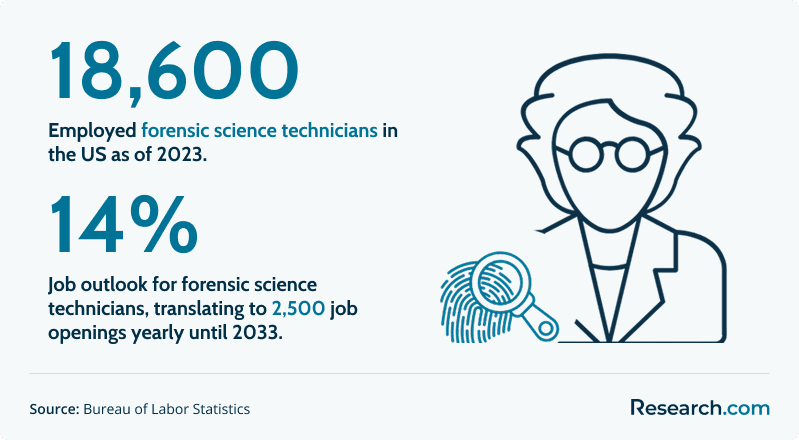
Criminalists may work for state or local forensic laboratories, law enforcement agencies, medical examiner offices, federal agencies, or private forensic consulting firms. According to the Bureau of Labor Statistics, forensic science technicians, a category that includes criminalists, held approximately 18,600 jobs in 2023. Employment is projected to grow 14% from 2023 to 2033, much faster than the average for all occupations.
What do criminalists do day to day?
Criminalists translate physical evidence into scientifically supported findings. Some spend most of their time in laboratories, while others also visit crime scenes, document evidence, or testify in court. The exact duties depend on the employer and specialty.
| Duty | What it involves | Why it matters |
| Evidence collection and preservation | Collecting, packaging, labeling, and protecting materials such as biological samples, fibers, firearms evidence, or trace evidence. | Poor handling can compromise evidence and weaken a case. |
| Laboratory testing | Using methods such as DNA analysis, toxicology testing, drug identification, microscopy, or ballistic examination. | Scientific results can support or challenge investigative theories. |
| Crime scene reconstruction | Interpreting evidence patterns to understand possible sequences of events. | Reconstruction helps investigators evaluate what likely happened and what claims are consistent with the evidence. |
| Documentation and reporting | Writing clear reports that explain methods, findings, limitations, and conclusions. | Reports must be understandable to investigators, attorneys, judges, and juries. |
| Expert testimony | Explaining scientific findings in court and answering questions about methods and conclusions. | Criminalists must communicate accurately without overstating what evidence proves. |
| Collaboration with investigators | Working with detectives, attorneys, and other personnel to clarify evidence questions. | Good communication helps ensure the right tests are performed and interpreted appropriately. |
If you want a laboratory-heavy role, review the steps to become a crime laboratory analyst, since crime lab work overlaps closely with many criminalist responsibilities.
How do I become a criminalist for 2027?
The most reliable path to becoming a criminalist is to build a science-based academic foundation, gain hands-on lab experience, and then meet the hiring standards of forensic laboratories or public agencies. Criminalistics is competitive, so coursework, internships, and technical competence matter.
- Earn a relevant bachelor’s degree. Most employers prefer or require a bachelor’s degree in forensic science, chemistry, biology, or a related physical science. A science-heavy curriculum is usually stronger than a general criminal justice curriculum for laboratory roles.
- Choose courses that match forensic lab requirements. Prioritize chemistry, biology, molecular biology, statistics, instrumental analysis, toxicology, genetics, and quality assurance when available.
- Build laboratory experience before graduation. Look for internships, research assistant roles, forensic lab practicums, or volunteer opportunities with public agencies. Practical evidence-handling experience can separate you from applicants with only classroom training.
- Consider graduate study if you want specialization. A master’s degree may improve your competitiveness for advanced work in DNA, toxicology, forensic chemistry, or leadership roles, though not every entry-level job requires one.
- Pursue certification when it fits your role. Credentials from recognized organizations, such as the American Board of Criminalistics, can demonstrate professional knowledge after you meet eligibility requirements.
- Keep learning after you are hired. Forensic methods, quality standards, digital evidence, laboratory automation, and courtroom expectations continue to evolve, so continuing education is part of the career.
A cheap online criminal justice degree may help students who want broader justice-system knowledge or need a flexible route into related roles. However, for traditional criminalist jobs, online or campus programs with substantial science coursework and laboratory training are generally a better fit.
What skills and experiences are important for criminalists to have?
Criminalists need more than an interest in crime solving. The work requires scientific discipline, careful documentation, ethical judgment, and the ability to explain technical findings without exaggeration. A single error in handling, testing, or reporting evidence can affect an investigation or court proceeding.
| Skill or experience | Why it matters in criminalistics | How to build it |
| Scientific knowledge | Criminalists must understand chemistry, biology, physics, and laboratory methods used to examine physical evidence. | Choose a science-based major and complete lab-intensive courses. |
| Analytical reasoning | Evidence often has limits. Criminalists must interpret results logically and avoid unsupported conclusions. | Take statistics, research methods, and advanced lab courses. |
| Attention to detail | Small mistakes in labeling, measurement, or documentation can compromise evidence. | Practice strict lab note-taking and chain-of-custody procedures. |
| Written communication | Reports must be precise, clear, and defensible in legal settings. | Write lab reports, request feedback, and study forensic report formats. |
| Courtroom communication | Criminalists may need to explain scientific findings to people without technical training. | Take public speaking, mock trial, or expert testimony workshops if available. |
| Technology competence | Digital evidence, lab information systems, and automated tools are increasingly part of forensic work. | Learn database tools, digital evidence basics, and lab software. |
| Field or lab exposure | Employers value candidates who understand real evidence workflows. | Pursue internships, practicums, agency volunteer work, or research roles. |
A computer science major can be useful for students interested in digital forensics, cybercrime investigations, or evidence involving devices and networks. For conventional wet-lab criminalistics, however, biology, chemistry, forensic science, or a related physical science usually provides the more direct preparation.
What licenses and certifications do I need as a criminalist?
Most criminalists do not need a universal national license, but requirements vary by state, employer, laboratory, and evidence discipline. Some jurisdictions require formal licensing for forensic analysts, while many employers use internal qualification standards, proficiency testing, training records, and quality assurance requirements.
Licensing and certification can also support related investigative careers. For example, people exploring the CIA officer career path may find that forensic, analytical, scientific, or cyber-investigative experience strengthens their profile, depending on the role.
Licensing requirements to check first
Texas Forensic Analyst Licensing Program
- Required by: Texas Forensic Science Commission
- Eligibility: Bachelor’s degree in a relevant field
- Application fee: $220
- Exam requirement: General Forensic Analyst Licensing Exam
- Additional requirements: Coursework in statistics and ethics, plus annual proficiency testing
Outside states with formal licensing systems, criminalists commonly qualify through employer standards, documented training, competency tests, and proficiency testing. Always check the state forensic science commission, crime lab, or agency posting before assuming a credential is optional.
Professional certifications that may strengthen your resume
| Credential | Best fit | Costs and renewal details listed |
| American Board of Criminalistics Certification | Criminalists working in biological evidence screening, comprehensive criminalistics, drug analysis, or forensic DNA. | Exam fee: $350; annual maintenance fee: $50; recertification every five years. |
| Certified Financial Crimes Investigator from IAFCI | Investigators focused on financial crimes rather than traditional physical evidence. | Eligibility: three years of financial crimes investigation experience; exam fee: $350; recertification every three years, $150. |
| Certified Cyber Crimes Investigator from IAFCI | Professionals focused on cybercrime investigations and digital evidence. | Eligibility: three years of cybercrime investigations experience; exam fee: $350; recertification every three years, $150. |
| Digital Forensics Certification Board credentials | Digital forensic practitioners and associates working with electronic evidence. | Credentials include Digital Forensics Certified Practitioner and Digital Forensics Certified Associate; exam fee: $350; annual maintenance fee: $40; recertification every three years. |
What are the educational requirements to become a criminalist?
Most criminalist roles require at least a bachelor’s degree in forensic science, chemistry, biology, or a closely related natural or physical science. Employers often look for specific coursework, not just a degree title. For example, San Diego County requires criminalist candidates to hold a bachelor’s degree in chemistry, biology, or a related field, including coursework in general chemistry and quantitative analysis.
Students often ask whether MIS is a good major for criminalist work. For traditional laboratory criminalistics, a Management Information Systems degree usually does not provide enough chemistry, biology, or forensic laboratory preparation. It may be more relevant for digital forensics, cyber investigations, data analysis, and investigative technology roles.
| Degree path | Best for | Limitations to consider |
| Forensic science | Students who want a direct academic path into forensic lab work. | Program quality varies, so check lab requirements, faculty expertise, internships, and accreditation. |
| Chemistry | Drug analysis, toxicology, trace evidence, and forensic chemistry roles. | You may need forensic-specific electives or internships to understand evidence procedures. |
| Biology | DNA analysis, serology, biological evidence screening, and related lab roles. | Forensic DNA roles may require specific genetics, molecular biology, and statistics coursework. |
| Criminal justice or criminology | Students interested in investigations, law enforcement, policy, or justice administration. | Often not science-intensive enough for criminalist laboratory positions unless paired with substantial science coursework. |
| Computer science or MIS | Digital forensics, cybercrime, data systems, and technology-heavy investigations. | Usually not the best standalone preparation for chemistry, DNA, toxicology, or trace evidence labs. |
The safest approach is to start with job postings from the agencies where you hope to work. Compare their required coursework with your degree plan before committing to a program.
How long does it take to become a criminalist?
Becoming a criminalist usually takes four to seven years, depending on the level of education, the competitiveness of the market, and whether you pursue graduate school or specialized training. A bachelor’s degree typically takes four years and is the standard entry point for many forensic science positions.
Some employers may consider candidates with an associate degree for limited technician positions, but most criminalist jobs favor bachelor’s-level science preparation. A master’s degree can add two more years and may help with specialized or advanced roles. After hiring, employer training can last several months to two years, depending on the discipline and laboratory standards.
| Stage | Typical time | What to focus on |
| Associate degree or early college coursework | Two years | May support technician roles, but usually not enough for competitive criminalist positions. |
| Bachelor’s degree | Four years | Complete science courses, labs, statistics, internships, and forensic electives. |
| Master’s degree | Two additional years | Useful for specialization, research, leadership preparation, or competitive forensic labs. |
| On-the-job training | Several months to two years | Build competency in evidence procedures, validated methods, quality systems, and testimony expectations. |
| Certification and continuing education | Ongoing | Maintain professional credibility and stay current with forensic science standards. |
Students considering a CSI career path should compare field-investigation requirements with laboratory criminalist requirements. Crime scene roles may emphasize documentation, photography, scene processing, and law enforcement procedures, while criminalist jobs usually place heavier weight on science and laboratory analysis.
How much does it cost to become a criminalist?
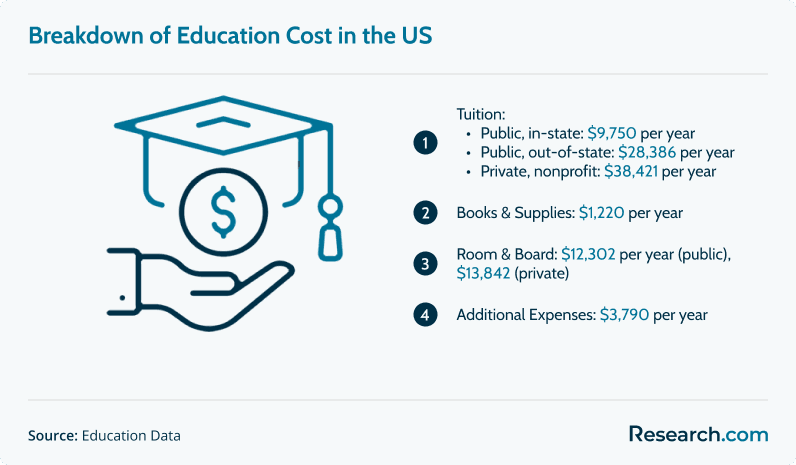
The cost depends mainly on the institution, residency status, living arrangement, degree length, and whether you pursue graduate education. The total cost of a bachelor’s degree in forensic science or a related field averages between $108,584 for a public in-state option and $226,512 for a private nonprofit option over four years. These totals include tuition, books, supplies, and living expenses.
Students comparing forensic careers may also look at forensic nursing. The cost profile can be similar, with undergraduate tuition averaging $26,401 per year and graduate programs averaging $21,140. Forensic nursing students should also consider certification and clinical requirements.
Overall, the cost to become a criminalist can range from $50,000 to $230,000 depending on school type, housing, transfer credits, financial aid, and program length. Scholarships, grants, employer tuition assistance, community college transfer pathways, and in-state public universities can reduce out-of-pocket costs.
| Cost factor | Why it affects total cost | How to manage it |
| School type | Public in-state, public out-of-state, and private nonprofit programs can have very different total costs. | Compare net price after grants and scholarships, not just published tuition. |
| Housing and living expenses | Living on campus or in a high-cost city can increase total debt. | Consider commuting, shared housing, or lower-cost regions when practical. |
| Transfer credits | Accepted credits can shorten the time needed to graduate. | Confirm transfer policies before enrolling or changing schools. |
| Lab and course fees | Science programs may include lab fees, equipment, supplies, and safety materials. | Ask departments for a full fee estimate by year. |
| Certification and licensing | Professional credentials can add exam and renewal costs. | Budget for credentials that are relevant to your target job, not every available certification. |
How much can I make as a criminalist?
Criminalists earn an average annual salary of $68,152, with reported earnings ranging from $36,000 to $127,000 based on factors such as experience, education, employer, specialty, and location. This is slightly higher than the 2023 median wage for forensic science technicians, which was $64,940.
Salary comparison with related fields
| Occupation | Salary figure provided | What to consider |
| Criminalist | Average annual salary of $68,152; range from $36,000 to $127,000. | Pay varies widely by location, agency, specialty, and experience. |
| Forensic science technician | Median wage of $64,940 in 2023. | This broader BLS category includes criminalists and related forensic roles. |
| Police and detectives | Median annual wage of $74,910. | These roles may involve shift work, law enforcement authority, and different risk profiles. |
| Forensic psychologist | Median wage of $83,065, with a range from $56,000 to $121,000. | Higher earnings may require advanced psychology education and licensure-related preparation. |
Some forensic professionals pursue specialized or advanced roles for higher pay. For example, a forensic psychologist salary may be higher, but that path usually requires substantially different graduate training.
Location also matters. Criminalists earn the most in states such as Alaska ($122,688), California ($105,815), and North Dakota ($94,640). Lower reported salaries appear in Oklahoma ($49,908) and Georgia ($50,860). Criminalists working in local and state government agencies often earn more than those in private-sector forensic laboratories.
What are the career paths for criminalists?
Many criminalists begin as bench scientists or forensic science technicians and then specialize, supervise, teach, or move into related investigative roles. Advancement is usually tied to technical competence, courtroom experience, quality assurance knowledge, leadership ability, advanced education, and certifications.
| Career path | Typical responsibilities | Salary information provided |
| Senior criminalist or lead forensic scientist | Handles complex cases, reviews work, supports quality control, and mentors junior analysts. | Salaries can reach up to $96,000 annually. |
| Forensic laboratory supervisor or manager | Coordinates staff, monitors casework, enforces protocols, and supports laboratory quality systems. | Comparable first-line supervisors of police and detectives earn approximately $101,750 per year, which aligns with competitive criminal justice administration salary expectations for leadership roles. |
| Forensic laboratory director | Oversees laboratory operations, budgeting, staffing, compliance, and strategic planning. | Specific salary data varies, but compensation is typically above supervisor-level pay because of broader responsibility. |
| Forensic science educator | Teaches forensic science, criminalistics, or related subjects at a community college or university. | Postsecondary criminal justice and law enforcement teachers average $64,600 annually. |
| Specialized forensic analyst | Focuses on DNA, toxicology, drug analysis, trace evidence, digital forensics, or another specialty. | Forensic scientists in specialized fields earn an average of $63,220 per year. |
The best advancement strategy is to choose a specialty early, document your training carefully, seek proficiency-tested experience, and stay current with the technologies and standards used in your area of evidence analysis.
Can an online degree in criminal justice effectively prepare you for a criminalist career?
An online degree in criminal justice can help students understand courts, policing, corrections, criminal law, ethics, and investigation systems. That background is useful for many justice-related roles. However, it is not always enough for a criminalist position that requires laboratory science.
If your goal is a traditional criminalist job, review whether the online program includes required science coursework, in-person labs, internship access, and courses such as chemistry, biology, statistics, and forensic analysis. A criminal justice program may be a good fit for crime analysis, investigations, law enforcement administration, or policy roles, while a forensic science or natural science degree is usually better aligned with lab-based criminalistics.
Is a criminalist career worth it?
A criminalist career can be worth it for people who want science-based work with direct relevance to investigations and the courts. The financial case is mixed but often reasonable: the average criminalist salary is $68,152 per year, entry-level earnings can start around $36,000, and experienced professionals may earn up to $127,000. Those figures should be weighed against education costs, living expenses, and the time needed to qualify.
Cost and salary factors to weigh
- Education: A bachelor’s degree in forensic science or a related field typically costs $108,584 for a public in-state option to $226,512 for a private option over four years.
- Licensing and certification: Texas forensic analyst licensing costs $220, while American Board of Criminalistics certification costs $350.
- Living expenses: Average monthly expenses for one person in the United States are $1,174.50 without rent, and one-bedroom rent ranges from $1,437 to $1,741 per month.
- Income comparison: Criminalists earn above the median U.S. salary of $4,339 monthly, but salaries are not guaranteed and vary by employer, state, specialization, and experience.
This career may be a strong fit if you enjoy lab work, evidence interpretation, careful documentation, and scientific problem-solving. It may be less appealing if you want fast income growth, dislike repetitive testing, are uncomfortable with legal scrutiny, or prefer a field with many remote-work options.

How Does Choosing an Accredited Forensic Science Program Impact My Career?
Accreditation helps you judge whether a forensic science program meets recognized academic and professional standards. For students pursuing criminalistics, this matters because employers may look closely at coursework, laboratory training, faculty expertise, internship access, and whether the program prepares graduates for forensic laboratory expectations.
Accreditation does not guarantee a job, but it can reduce risk when comparing schools. It is especially important if you plan to apply to competitive forensic laboratories, pursue graduate study, or seek credentials later. To compare academic options, review Research.com’s guide to colleges with the best forensic science programs.
Questions to ask before choosing a forensic science program
- Is the program accredited, and by whom?
- How many chemistry, biology, statistics, and laboratory courses are required?
- Does the program offer internships with forensic laboratories, law enforcement agencies, or medical examiner offices?
- Are courses taught by faculty with forensic laboratory or courtroom experience?
- Does the curriculum align with the job postings you plan to target?
- What are the total costs, including lab fees, housing, books, and supplies?
- How does the program support career placement, resume preparation, and interview readiness?
What distinguishes specialized law enforcement roles from conventional criminalist careers?
Specialized law enforcement roles often combine investigative authority, legal procedures, field operations, and sometimes tactical or security responsibilities. Criminalists, by contrast, are usually focused on scientific evidence analysis, laboratory methods, documentation, and expert testimony.
Some professionals blend both paths. A person with forensic science training may later move into specialized investigative work, while law enforcement professionals may add forensic training to strengthen evidence-based decision-making. For example, people exploring ICE agent qualifications should expect a different mix of legal authority, agency training, fieldwork, and federal hiring standards than a laboratory criminalist would face.
| Path | Main focus | Best fit for |
| Criminalist | Scientific testing and interpretation of physical evidence. | Students who prefer lab analysis, documentation, and expert testimony. |
| Crime scene investigator | Scene documentation, evidence recognition, photography, and collection. | People who want field-based investigative support work. |
| Specialized law enforcement agent | Investigations, enforcement authority, operations, and legal procedures. | Candidates who want agency-based field work and meet law enforcement hiring standards. |
| Digital forensic investigator | Electronic evidence, devices, networks, cyber incidents, and data recovery. | Students with strong technology, computer science, or cyber-investigation interests. |
Can legal education complement a criminalist career?
Legal knowledge can make criminalists more effective, especially when they write reports, maintain chain of custody, explain methods in court, or prepare for cross-examination. Criminalists do not need to become attorneys to benefit from understanding evidence admissibility, courtroom procedure, ethics, and the difference between scientific findings and legal conclusions.
For professionals who want practical legal training without completing a law degree, affordable ABA approved paralegal programs online may provide useful exposure to legal terminology, documentation, and court processes. This can be especially helpful for criminalists who frequently support prosecutors, defense teams, or expert witness work.
What do graduates say about criminalist careers?
- My work feels meaningful because the science can clarify what happened in a case. The lab work is exacting, and the standards are high, but it is rewarding when careful analysis helps move an investigation forward. Soren
- I began in forensic science technician work and later moved toward crime scene reconstruction after gaining experience and earning additional credentials. The field offers room to specialize in areas such as toxicology, DNA analysis, and digital evidence. Clara
- Studying while working was difficult, but the flexibility of online coursework helped me stay employed and still pursue forensic training. Getting internship experience early made the transition into a crime lab much easier. Chris
Are there lucrative career opportunities beyond the traditional criminalist role?
Yes. Criminalists and criminal justice graduates can sometimes move into higher-paying or more specialized work, especially when they combine evidence expertise with leadership, digital forensics, consulting, cybercrime, financial investigations, or advanced education. The strongest opportunities usually go to professionals who can document technical competence and communicate findings clearly to non-scientific audiences.
If you want to compare alternatives, Research.com’s guide to the highest paying jobs you can get with a criminal justice degree can help you evaluate roles that may offer stronger compensation, broader leadership options, or different education requirements.
How is technology transforming criminalist practices?
Technology is changing criminalistics through digital forensics, laboratory automation, artificial intelligence-assisted workflows, improved databases, and more sophisticated analytical instruments. These tools can help laboratories process information more efficiently, but they also raise expectations for technical literacy, validation, quality control, and transparent reporting.
Criminalists should not assume that technology replaces scientific judgment. Instead, modern tools make it more important to understand method limitations, error rates, documentation standards, and how to explain results clearly in court. Students comparing broader criminology degree jobs should note that technology skills are becoming useful across investigations, crime analysis, corrections, and forensic roles.
Can online forensic science programs boost career advancement in forensic science?
Accredited online forensic science programs can support advancement when they match your career goal and include appropriate science coursework, laboratory components, and credible faculty support. They may be especially useful for working professionals who need flexibility while building forensic knowledge.
However, students should be cautious. A fully online program may not satisfy every employer’s laboratory expectations if it lacks hands-on science training. Before enrolling, ask how the program handles labs, internships, transfer credits, career placement, and preparation for certification or licensing requirements in your state.
Common mistakes to avoid when preparing for a criminalist career
- Choosing a degree based only on the title. A program called forensic science is not automatically strong. Review the actual coursework, lab hours, faculty background, and internship access.
- Assuming criminal justice and criminalistics are interchangeable. Criminal justice degrees can be useful, but many criminalist jobs require chemistry, biology, or forensic science preparation.
- Ignoring accreditation and employer requirements. Always compare program requirements with real job postings from forensic labs or agencies.
- Focusing only on tuition. Housing, fees, supplies, transportation, books, and lost income can change the real cost of a degree.
- Waiting too long to get experience. Internships, research, and lab assistant roles can be crucial in a competitive applicant pool.
- Collecting certifications without a strategy. Certifications are most valuable when they match your specialty, experience level, and employer expectations.
- Assuming salary outcomes are guaranteed. Pay depends on location, agency budgets, role type, seniority, education, and specialization.
References
- Bureau of Labor Statistics. Forensic Science Technicians.
- Bureau of Labor Statistics. Life, Physical, and Social Science Occupations.
- Bureau of Labor Statistics. Police and Detectives.
- Bureau of Labor Statistics. OES Criminalist Salary Data.
- Bureau of Labor Statistics. OES Police and Detectives Salary Data.
- College Tuition Compare. Criminology Major Costs.
- Criminalistics.com. ABC Certification.
- Education Data Initiative. Average Cost of College.
- Education Data Initiative. Private vs. Public College Tuition.
- IAFCI. Certifications Overview.
- Numbeo. Cost of Living in the United States.
- Texas Forensic Science Commission. Forensic Analyst Licensing.
- Zippia. Criminalist Salary.
- Zippia. Forensic Psychologist Salary.
Key Insights
- Criminalistics is a science-first career. A bachelor’s degree in forensic science, chemistry, biology, or a related physical science is usually more useful than a general criminal justice degree for lab-based roles.
- The career outlook is favorable: forensic science technician jobs are projected to grow 14% from 2023 to 2033, and criminalists earn an average salary of $68,152, with top professionals making up to $127,000 per year.
- Education costs can be substantial. A four-year forensic science or related bachelor’s degree can cost between $108,584 for a public in-state option and $226,512 for a private option, so comparing net price and transfer options matters.
- Licensing is not universal, but it can matter by state. Texas forensic analyst licensing costs $220, while American Board of Criminalistics certification costs $350.
- Online programs can help, but only if they match the role. For criminalist jobs, verify science labs, internships, accreditation, and employer acceptance before enrolling.
- The best candidates combine lab competence, evidence-handling discipline, clear writing, courtroom communication, and continuing education in forensic technology and quality standards.
Other Things You Should Know About Criminalists
In 2027, aspiring criminalists typically need a bachelor's degree in forensic science, chemistry, biology, or a related field. Additionally, laboratory experience and coursework in criminalistics are highly beneficial. Depending on the role, some positions may require a master's degree or specialized certification in forensic analysis techniques.
In 2027, aspiring criminalists can hold a degree in criminal justice. However, many positions require additional coursework or experience in fields like forensics, chemistry, or biology. Supplementary education or certifications can enhance job prospects and preparedness for specialized roles in forensic science.