2027 Best Online Master’s Degree in Intelligence Programs

Co-Founder and Chief Data Scientist
Despite its global influence, the United States ranks as the 131st safest country in the world, placing near the bottom of international safety indexes (World Population Review, 2025). This highlights the growing complexity of modern threats, from cyberattacks to geopolitical instability.
As security risks continue to evolve, there is a heightened need for intelligence professionals. An online master's in intelligence provides the knowledge and tools needed to meet these challenges. Graduates are trained to assess threats, conduct research, evaluate data, and develop intelligence that informs national and organizational security policies.
To help you explore this discipline, I have broken down the best online master's degree in intelligence programs in this guide. I've also provided insights into job prospects, salary potential, and the career paths available to graduates.
What are the benefits of getting into online master’s in intelligence programs?
- Online intelligence programs are suitable for students who need a flexible learning format that accommodates work, other responsibilities, or geographic limitations while pursuing advanced education.
- Graduates of online master's in intelligence programs may work in fields that rely on both analytical rigor and ethical awareness, like federal agencies, military operations, corporate security, or cybersecurity.
- Professionals with this degree typically earn between $80,000 and $132,000 annually, though salaries can vary based on employer, experience, and geographic location.
What can I expect from an online master’s in intelligence program?
A master's in intelligence is an advanced degree that prepares students for roles in national security, intelligence analysis, cybersecurity, and related fields. These programs explore global security issues, threat assessment, counterintelligence, policy development, and the structure of intelligence organizations. Students typically develop analytical thinking, research, and ethical decision-making skills.
This program is ideal for current professionals in government, military, or security sectors. An online master's in intelligence offers the flexibility to study from anywhere, making it accessible to busy adults. Courses are typically asynchronous, with interactive components, such as virtual discussions or simulations.
Graduates leave these programs with a strong foundation in both theory and applied skills. Whether advancing in your current role or preparing for a new one, this degree can help you meet the growing demand for skilled intelligence professionals.
Where can I work with an online master’s in intelligence?
With an online master’s in intelligence, professionals can pursue roles in government, private industry, defense, and beyond. These careers often involve interpreting complex information, developing security strategies, and advising decision-makers.
- Federal Intelligence Agencies: Graduates may work as analysts or advisors in the CIA, FBI, or NSA. Roles involve collecting and evaluating intelligence, identifying threats, and producing briefings for senior officials.
- Department of Homeland Security: Professionals help identify and mitigate domestic threats. They may focus on infrastructure protection, border security, or emergency response coordination.
- Military Intelligence Units: Graduates can also support mission planning and national defense. Duties include intelligence gathering, strategic analysis, and cyber threat monitoring.
- Private Security and Risk Firms: Analysts assess risks for global companies and recommend protective strategies. Work may involve travel, crisis management, or monitoring geopolitical developments.
- Think Tanks and Research Institutions: Researchers explore policy, international relations, or emerging security challenges. Projects often support public awareness or assist decision-makers.
How much can I make with an online master’s in intelligence?
Graduates with an online master’s in intelligence can earn around $80,000 to $132,500 (ZipRecruiter, 2025). Across various roles, detectives and criminal investigators earn $98,770 yearly (U.S. Bureau of Labor Statistics, 2024).
Meanwhile, FBI and CIA agents can earn anywhere from $45,000 to $150,000, depending on the salary grade level. Those who specialize in cybersecurity earn well above the national average for all careers, at $127,730.
Several other factors can also affect one's salary. For example:
- Intelligence professionals working in major metropolitan areas or national security hubs often earn higher wages due to increased demand and higher cost of living.
- Entry-level analysts typically start on the lower end of the pay scale, while seasoned professionals or those in supervisory roles can command six-figure salaries.
- Private-sector positions, such as those in corporate security or consulting, may also offer performance bonuses or other incentives that raise total compensation. In contrast, public-sector jobs provide more structured pay scales, but they often include generous benefits and retirement packages.
- Educational background, technical skills, and specialized certifications can also influence salary.
Ultimately, an advanced degree in intelligence can lead to financially rewarding opportunities across both government and private industry, especially for those who continue to build their expertise in high-demand areas.
- Best Online Master's Degree in Intelligence Programs for 2027 List of Programs
- How long does it take to complete an online master's in intelligence program? Completion Time
- How does an online master's in intelligence program compare to an on-campus program? How does an online master's in intelligence program compare to an on-campus program?
- What is the average cost of an online master's in intelligence program? Program Cost
- What are the financial aid options for students enrolling in an online master's in intelligence program? Financial Aid
- What are the prerequisites for enrolling in an online master's in intelligence program? What are the prerequisites for enrolling in an online master's in intelligence program?
- What courses are typically in an online master's in intelligence program? What courses are typically in an online master's in intelligence program?
- What types of specializations are available in online master's in intelligence programs? What types of specializations are available in online master's in intelligence programs?
- How to choose the best online master's in intelligence program? How to choose the best online master's in intelligence program?
- What career paths are available for graduates of online master's in intelligence programs? Career Paths
- What is the job market for graduates with an online master's in intelligence? Job Outlook
- How are emerging technologies transforming intelligence education? How are emerging technologies transforming intelligence education?
Best Online Master's Degree in Intelligence Programs for 2027
Choosing an online master’s degree in intelligence is a career-focused decision, not just an academic one. These programs are designed for people who want to analyze threats, interpret complex information, support national security decisions, or move into intelligence-related roles in government, law enforcement, cybersecurity, defense, emergency management, or the private sector.
The right program can help you build advanced skills in intelligence analysis, open-source research, threat assessment, strategic communication, cyber intelligence, policy evaluation, and ethical decision-making. The wrong program can leave you with graduate debt, limited career support, or coursework that does not match your target role.
This guide explains how online master’s in intelligence programs work, how long they take, what they cost, what you can study, how online and campus formats compare, and which career paths may be available after graduation. It also includes Research.com’s ranked list of online intelligence master’s programs and practical criteria for comparing schools.
If you are also exploring adjacent security and strategy fields, you may want to compare intelligence programs with related options such as the shortest space studies degree online, homeland security, cybersecurity, criminal justice, public policy, or international relations programs.
Quick Answer: Is an Online Master’s in Intelligence Worth It?
An online master’s in intelligence may be worth it if you want graduate-level preparation for analytical, security, investigative, emergency management, cyber intelligence, or policy roles and you need a flexible format that can fit around work or military service. The strongest programs combine rigorous analysis training, current security topics, applied projects, faculty with field experience, career support, and regional accreditation.
It may not be the best fit if your goal is a purely technical cybersecurity role, a sworn law enforcement position that requires academy training, or a federal intelligence job for which experience, security clearance eligibility, language ability, or specialized technical skills matter more than the degree alone.
| Best fit for | Potential drawback | What to check before enrolling |
| Working professionals, service members, law enforcement personnel, analysts, and career changers seeking intelligence-focused graduate training | Some roles are highly competitive and may require experience, clearance eligibility, certifications, or agency-specific hiring steps | Regional accreditation, curriculum depth, faculty background, internship options, cost, career services, and whether courses match your target career |
How do we rank schools?
Research.com’s education team evaluates online graduate programs using a structured methodology built around academic quality, program relevance, institutional credibility, and student-focused factors.
The ranking draws from education data sources including the Integrated Postsecondary Education Data System, Peterson's database and its Distance Learning Licensed Data Set, College Scorecard, and the National Center for Education Statistics (NCES). Program details were then reviewed to help readers compare options more clearly.
Best Online Master’s in Intelligence Programs
The programs below offer graduate-level intelligence, security, or national security analysis training in an online format. Use this list as a starting point, then verify current tuition, admissions requirements, course delivery format, and concentration availability directly with each university.
| Rank | School | Program | Credits | Cost per Credit | Accreditation |
| 1 | Georgetown University | Master of Professional Studies in Applied Intelligence | 33 | $1,685 | Middle States Commission on Higher Education (MSCHE) |
| 2 | Citadel Military College of South Carolina | Master of Arts in Intelligence and Security Studies | 36 | $720 | Southern Association of Colleges and Schools Commission on Colleges (SACSCOC) |
| 3 | Northeastern University | Master of Arts in Security and Intelligence Studies | 45 quarter hours | $919 | New England Commission of Higher Education (NECHE) |
| 4 | Mercyhurst University | Master's in Applied Intelligence | 34–36 | $1,094 | MSCHE |
| 5 | American Public University | Master of Arts in Intelligence Studies | 36 | $455 | Higher Learning Commission (HLC) |
| 6 | Augusta University | Master of Arts in Intelligence and Security Studies | 30 | $236 (in-state), $822 (out-of-state) | SACSCOC |
| 7 | University of New Hampshire | Master of Science in National Security Intelligence Analysis | 30 | $800 | NECHE |
| 8 | University of Texas at El Paso | Master of Science in Intelligence and National Security Studies | 36 | $330.82 (in-state), $415.82 (out-of-state) | SACSCOC |
| 9 | University of South Florida | Master of Science in Intelligence Studies | 33 | $431.43 (in-state), $877.17 (out-of-state) | SACSCOC |
| 10 | Bellevue University | Master of Science in Intelligence and Security Studies | 36 | $660 | HLC |
1. Georgetown University
Georgetown University offers an online Master of Professional Studies in Applied Intelligence for students who want to develop professional analysis skills for government, security, and private-sector settings. The program emphasizes applied work, evidence-based reasoning, technical analysis, and the ability to turn complicated information into useful recommendations.
Students study topics such as Psychology of Applied Intelligence, Intelligence Communications, and Ethics. A notable feature is the option to complete a 12-credit Graduate Certificate in Competitive Business Intelligence without adding cost or time to the degree.
- Program Length: 12–36 months
- Tracks/Concentrations: Homeland Security Intelligence, Cyber Intelligence, Law Enforcement Intelligence, or Business Intelligence
- Cost per Credit: $1,685
- Required Credits to Graduate: 33
- Accreditation: Middle States Commission on Higher Education (MSCHE)
2. Citadel Military College of South Carolina
Citadel Military College of South Carolina provides an online Master of Arts in Intelligence and Security Studies for students interested in leadership, national security, policy evaluation, and intelligence-informed decision-making. The curriculum combines academic research, applied security concepts, and communication skills needed in complex operational environments.
Students complete coursework in areas such as Comparative Criminal Justice Systems, International Politics, Privacy and Security Issues, and Communication for Leadership. The program also introduces management approaches that support security planning and policy analysis.
- Program Length: 12–36 months
- Tracks/Concentrations: Cybersecurity or Leadership
- Cost per Credit: $720
- Required Credits to Graduate: 36
- Accreditation: Southern Association of Colleges and Schools Commission on Colleges (SACSCOC)
3. Northeastern University
Northeastern University offers an online Master of Arts in Security and Intelligence Studies with an interdisciplinary focus on law, politics, diplomacy, civil rights, intelligence, and global security. The program is designed for students who want to understand security challenges without losing sight of legal and ethical constraints.
The curriculum helps students examine the tension between protecting public safety and preserving individual freedoms. Graduates develop skills in intelligence collection, threat analysis, research, policy interpretation, and security planning.
- Program Length: 18 months
- Tracks/Concentrations: Corporate Security Management, Homeland Security & Emergency Management, or Strategic Intelligence & Analysis
- Cost per Credit: $919
- Required Credits to Graduate: 45 quarter hours
- Accreditation: New England Commission of Higher Education (NECHE)
4. Mercyhurst University
Mercyhurst University offers an online master's in Applied Intelligence that emphasizes hands-on learning and professional intelligence production. Students work with real intelligence casework before graduation, which can be valuable for learners who want practice applying methods rather than only studying theory.
The program develops critical thinking, open-source research, data evaluation, and intelligence reporting skills. Students may also complete at least 200 hours of internship hours with an intelligence-related agency or organization.
- Program Length: 21 months
- Tracks/Concentrations: Applied Intelligence
- Cost per Credit: $1,094
- Required Credits to Graduate: 34–36
- Accreditation: MSCHE
5. American Public University
American Public University offers an online Master of Arts in Intelligence Studies that examines intelligence processes, strategic analysis, collection practices, national security threats, and ethical questions in intelligence work. The program may appeal to students seeking a broad menu of concentration options.
Coursework addresses counterintelligence, homeland security, terrorism, weapons of mass destruction, and intelligence applications in corporate environments. Students also examine practical and ethical problems that analysts and security professionals may face.
- Program Length: 12–36 months
- Tracks/Concentrations: Terrorism Studies, Criminal Intelligence, Homeland Security, Intelligence Analysis, Intelligence Operations, Cyber Intelligence, Intelligence Collection, or General Intelligence
- Cost per Credit: $455
- Required Credits to Graduate: 36
- Accreditation: Higher Learning Commission (HLC)
6. Augusta University
Augusta University offers an online Master of Arts in Intelligence and Security Studies for students interested in policy development, threat response, and the evaluation of U.S. security strategy. The program connects research-based analysis with practical security problems affecting people, institutions, and infrastructure.
Students study internal and international conflict, counter-terrorism, cybersecurity, and open-source intelligence methods. The curriculum also includes analysis of social media as part of emerging security assessment practices.
- Program Length: 12–36 months
- Tracks/Concentrations: Technical Intelligence Analysis, Social Influence, or General Intelligence
- Cost per Credit: $236 (in-state), $822 (out-of-state)
- Required Credits to Graduate: 30
- Accreditation: SACSCOC
7. University of New Hampshire
The University of New Hampshire offers an online Master of Science in National Security Intelligence Analysis that prepares students to evaluate changing security threats through research, case studies, and applied analysis. The program is designed to strengthen critical thinking and improve students’ understanding of national and global security frameworks.
Students take courses such as Survey Design and Analysis, Intelligence Analysis Case Studies, and National Security Research Design and Methods. The curriculum emphasizes experiential learning and analytical problem-solving.
- Program Length: 12–36 months
- Tracks/Concentrations: National Security Intelligence Analysis
- Cost per Credit: $800
- Required Credits to Graduate: 30
- Accreditation: NECHE
8. University of Texas at El Paso
The University of Texas at El Paso offers an online Master of Science in Intelligence and National Security Studies for students pursuing analytical, operational, policy, or leadership roles in intelligence-related fields. The interdisciplinary design allows students to tailor electives toward a single field or a broader multidisciplinary focus.
Students may strengthen their experience through an internship or study abroad course. The program can support preparation for roles in intelligence operations, security, law enforcement, public policy, or international relations.
- Program Length: 12–36 months
- Tracks/Concentrations: Homeland Security, International Security, Area/Regional Studies, Economics, Public Administration, or Geographic Information Systems
- Cost per Credit: $330.82 (in-state), $415.82 (out-of-state)
- Required Credits to Graduate: 36
- Accreditation: SACSCOC
9. University of South Florida
The University of South Florida offers an online Master of Science in Intelligence Studies with a STEM-focused structure. The program is designed to help students apply strategic concepts, evaluate complex security problems, and communicate findings through written work, presentations, and visual formats.
Students may choose the Strategic Intelligence track, which emphasizes policy and planning at organizational or national levels, or the Cyber Intelligence track, which focuses on identifying and assessing cyber threats through intelligence methods and data analysis.
- Program Length: 12–36 months
- Tracks/Concentrations: Strategic Intelligence or Cyber Intelligence
- Cost per Credit: $431.43 (in-state), $877.17 (out-of-state)
- Required Credits to Graduate: 33
- Accreditation: SACSCOC
10. Bellevue University
Bellevue University offers an online Master of Science in Intelligence and Security Studies focused on analytical tools, intelligence theory, and national and international security assessment. The program is designed for students who want to evaluate threats and develop research-based recommendations in complex environments.
Students examine open-source data, policy questions, and cultural, political, and economic factors that shape security problems. Graduates are prepared to create strategic assessments and communicate intelligence-informed recommendations.
- Program Length: 12–36 months
- Tracks/Concentrations: Comparative Politics or International Relations
- Cost per Credit: $660
- Required Credits to Graduate: 36
- Accreditation: HLC
How Long Does It Take to Complete an Online Master’s in Intelligence?
Most online master’s in intelligence programs can be completed in about two years, especially when students enroll part time while working. Students who take a heavier course load or choose an accelerated structure may finish in 12 to 18 months.
Many programs require between 30 and 36 credit hours, although some use quarter-hour systems or include additional requirements. A thesis, capstone, internship, applied research project, or fieldwork requirement can affect the total timeline. Students balancing military service, full-time work, family responsibilities, or irregular schedules should compare pacing options carefully.
| Program pace | Typical completion range | Best for | Trade-off |
| Accelerated or full time | 12 to 18 months | Students who can devote substantial weekly time to coursework | Less flexibility and a heavier workload |
| Standard part time | About two years | Working professionals and military students | Longer timeline but more manageable scheduling |
| Flexible extended pacing | 12–36 months in many programs | Students with changing work or personal obligations | May delay graduation and total career transition timing |
Speed should not be the only factor. A shorter program is useful only if it still provides the analytical, research, writing, and applied intelligence training you need. If your priority is a faster security-related credential rather than a broad intelligence degree, an accelerated homeland security degree online may be worth comparing.
Online vs. On-Campus Master’s in Intelligence: Which Format Is Better?
Online and on-campus master’s in intelligence programs often cover similar core topics, including intelligence analysis, national security, policy, research methods, ethics, and threat assessment. The main difference is how students learn, collaborate, access resources, and manage their schedules.
| Factor | Online master’s in intelligence | On-campus master’s in intelligence | Best choice when... |
| Course delivery | Uses learning platforms, recorded or live sessions, online assignments, and discussion boards | Uses in-person lectures, classroom discussion, and campus-based collaboration | Choose online for location flexibility; choose campus for face-to-face learning |
| Scheduling | Often asynchronous or partly asynchronous, which helps working students | Usually follows fixed class times and campus schedules | Online works better for irregular work hours or military obligations |
| Interaction | Includes virtual group projects, faculty meetings, and online forums | Offers in-person networking, informal conversations, and campus events | Campus may be stronger if local networking is a priority |
| Resources | Provides digital libraries, online advising, remote databases, and virtual student support | Provides campus libraries, study spaces, events, and physical facilities | Online can be sufficient if remote support is strong |
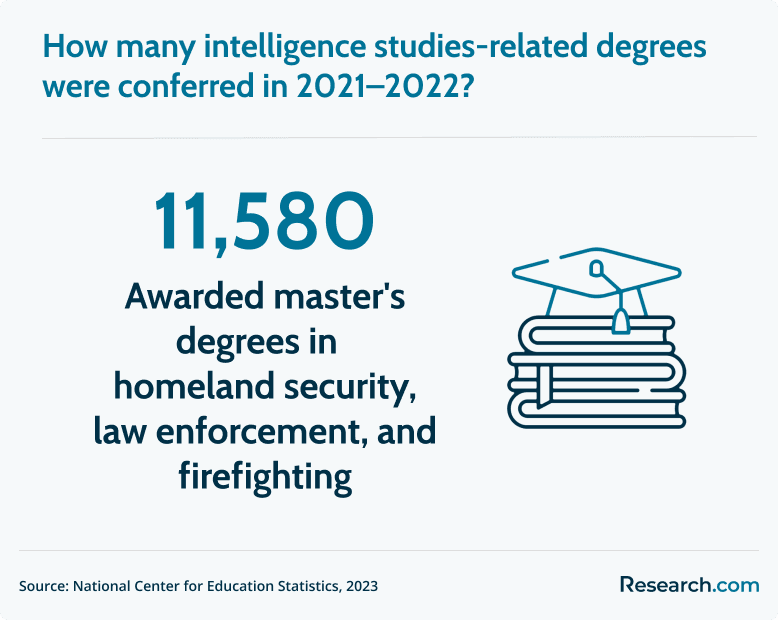
Graduate interest in security-related education remains significant. According to the National Center for Education Statistics, 11,580 master’s degrees were awarded in homeland security, law enforcement, and firefighting programs in 2021–2022.
The better format depends on your learning style, location, employer expectations, and need for flexibility. Students comparing online formats across disciplines often weigh similar issues when looking at options such as the shortest christian studies online degree: time, cost, access, and whether the program structure supports their goals.
What Is the Average Cost of an Online Master’s in Intelligence?
The cost of an online master’s in intelligence depends on the institution, tuition model, residency status, required credits, fees, and whether students enroll full time or part time. According to the College Board (Ma et al., 2024), average tuition and fees for master’s programs at public four-year institutions is approximately $9,560. At private nonprofit four-year institutions, the figure rises to $31,930.
Many online programs charge by the credit. Common per-credit rates range from $400 to $1,200, though individual programs may fall outside that range. Some universities also charge online learning fees, technology fees, graduation fees, or higher rates for out-of-state students.
| Cost factor | Why it matters | Question to ask |
| Per-credit tuition | Small differences add up across 30 to 36 credit hours or more | What is the full tuition cost for the entire degree? |
| Residency pricing | Public universities may charge different in-state and out-of-state rates | Do online students pay in-state, out-of-state, or a separate online rate? |
| Fees | Technology, online learning, course, and graduation fees can increase total cost | What mandatory fees are not included in advertised tuition? |
| Transfer or waived credits | Accepted credits can reduce time and cost | Can graduate credits, military training, or prior coursework reduce the total requirement? |
| Employer or military benefits | Tuition assistance may lower out-of-pocket costs | Does the school participate in the benefits or reimbursement programs you plan to use? |
Affordability matters, but it should be evaluated alongside program quality, career relevance, and support services. Graduates with strong analytical and security training may pursue some of the highest paying criminal justice jobs, as well as specialized opportunities in national security, cyber intelligence, and threat assessment.
Financial Aid Options for Online Master’s in Intelligence Students
Graduate students in online intelligence programs may use several funding sources. Availability varies by school, employer, military status, and individual eligibility, so students should speak with both the program and the financial aid office before enrolling.
- University scholarships and fellowships: Some schools offer merit awards, graduate scholarships, or fellowships for students in intelligence, security, criminal justice, or public service programs.
- Military tuition assistance and GI Bill benefits: Active-duty service members, veterans, and eligible family members may be able to use military education benefits for approved programs.
- Employer tuition reimbursement: Government agencies, defense contractors, cybersecurity firms, and other employers may support graduate education tied to professional development. Reimbursement may require a minimum GPA or continued employment.
- Private scholarships and grants: Professional associations, nonprofits, foundations, and security-related organizations may offer awards for students in national security, intelligence, law enforcement, or cybersecurity fields.
- Federal student aid: Graduate students can complete the Free Application for Federal Student Aid (FAFSA) to determine federal loan eligibility. Some military-connected students may also qualify for the Military Student Loan Repayment Program or Department of Defense loan repayment assistance in certain cases.
Students in other specialized graduate programs, including the shortest MBA in sports management online, often use a similar strategy: combine institutional aid, outside scholarships, employer support, and federal aid instead of relying on one funding source.
Ways to Reduce the Total Cost
- Ask for a complete cost of attendance, not only tuition per credit.
- Confirm whether online students pay additional technology or distance learning fees.
- Apply for school-based scholarships early, because deadlines may come before admission deadlines.
- Check whether your employer reimburses tuition for intelligence, cybersecurity, security management, or public policy coursework.
- If you are military-connected, confirm benefit eligibility before the first term begins.
- Compare program length, required credits, and transfer credit policies because the lowest per-credit rate is not always the lowest total price.
Admissions Requirements for an Online Master’s in Intelligence
Admissions requirements vary, but most online master’s in intelligence programs expect applicants to show academic readiness, professional maturity, and a clear reason for pursuing graduate study in intelligence or security. Some programs welcome applicants from many undergraduate majors, while others prefer backgrounds in criminal justice, political science, international relations, cybersecurity, public administration, military service, or law enforcement.
| Requirement | What it usually shows | How to strengthen your application |
| Bachelor’s degree and transcripts | Completion of undergraduate study, often from a regionally accredited institution | Explain relevant coursework, research, military training, or professional experience |
| Minimum GPA | Academic readiness for graduate-level work | If your GPA is lower, highlight recent coursework, certifications, or professional achievements |
| Prerequisite coursework | Preparation in political science, international relations, security studies, or related fields when required | Ask whether bridge courses are available if your undergraduate major is unrelated |
| Letters of recommendation | Evidence of judgment, discipline, writing ability, leadership, or analytical potential | Choose recommenders who can speak specifically about your readiness for graduate study |
| Statement of purpose | Your goals, fit with the program, and motivation for intelligence study | Connect your background to the program’s concentrations, faculty, or applied opportunities |
| Resume or CV | Work history, education, service, certifications, volunteer experience, and leadership | Use security, analysis, research, writing, leadership, or technical examples where possible |
| Standardized test scores | Additional academic evidence when requested | Check whether the GRE is required, optional, waived, or only requested for some applicants |
Applicants shifting from technical security training into broader intelligence work should compare prerequisites carefully. For example, someone coming from a fast-track online cybersecurity master’s degree pathway may already have technical strengths but may need more preparation in policy, international relations, or intelligence writing.
A strong application does more than satisfy minimum requirements. It explains why the program fits your target role and shows that you understand the demands of intelligence work: accuracy, discretion, ethical judgment, clear communication, and analytical discipline.
Common Courses in an Online Master’s in Intelligence Program
Online master’s in intelligence programs usually combine theory, research, analysis, communication, security policy, and specialized threat topics. The goal is to help students move from collecting information to evaluating evidence, identifying patterns, communicating conclusions, and supporting decisions.
- Intelligence Theories and Applications: Introduces the history, purpose, and conceptual models of intelligence work, including collection, analysis, dissemination, and decision support.
- Applied Intelligence Communications: Builds the ability to write, brief, visualize, and present intelligence findings for different audiences, including policymakers and organizational leaders.
- Threats to Homeland Security: Examines domestic and international security concerns, often through case studies and threat models. Topics may include illicit drug networks, human trafficking, money laundering, and cyber operations, which are among the kinds of issues addressed in the Intelligence Community’s Annual Threat Assessment.
- Research Methods in Intelligence: Teaches qualitative and quantitative research design, source evaluation, analytical methods, and evidence-based reasoning.
- Criminal Justice Systems: Explores law enforcement institutions, procedures, and comparative justice systems. This foundation can be useful for students considering investigative work or the private investigator career path.
- National Security Policy: Studies how U.S. security policy is developed, implemented, and influenced by domestic politics, international events, and intelligence assessments.
- International Laws and Politics: Reviews global legal systems, diplomacy, treaties, geopolitical conflict, and the international rules that affect intelligence operations.
These courses are meant to develop both technical competence and professional judgment. In intelligence work, a poorly supported conclusion can mislead decision-makers, while a well-structured assessment can clarify risk and improve planning.
Public concern also underscores the importance of trained security professionals. In a climate where the majority of Americans name cyberterrorism, nuclear conflict, terrorism, and biological warfare as their top fears (Chapman University, 2024), intelligence education is tied closely to public safety, institutional trust, and national preparedness.
The chart below shows issues that Americans report as causing fear or significant concern.
Specializations in Online Master’s in Intelligence Programs
Specializations help students align graduate study with a specific intelligence career direction. Not every school offers every concentration, so students should compare course lists rather than choosing based on the concentration title alone.
| Specialization | What you study | Careers it may support |
| Homeland Security | Domestic threat prevention, emergency management, infrastructure protection, and preparedness planning | Emergency management, homeland security analysis, public safety planning, federal or state security roles |
| Strategic Intelligence | Long-range analysis, geopolitical trends, scenario planning, and policy-oriented threat assessment | Policy analysis, strategic advisory roles, intelligence analysis, national security planning |
| Cyber Security and Intelligence | Cybercrime, digital espionage, vulnerability analysis, cyber threat assessment, and data-driven security methods | Cyber threat intelligence, security analysis, cyber operations support, digital risk assessment |
| International Security | Foreign intelligence systems, transnational threats, terrorism, nuclear nonproliferation, diplomacy, and international law | International security analysis, defense contracting, government intelligence, global risk analysis |
| Intelligence Leadership | Team management, ethical leadership, interagency coordination, strategic communication, and operational decision-making | Supervisory intelligence roles, security management, law enforcement leadership, organizational risk roles |
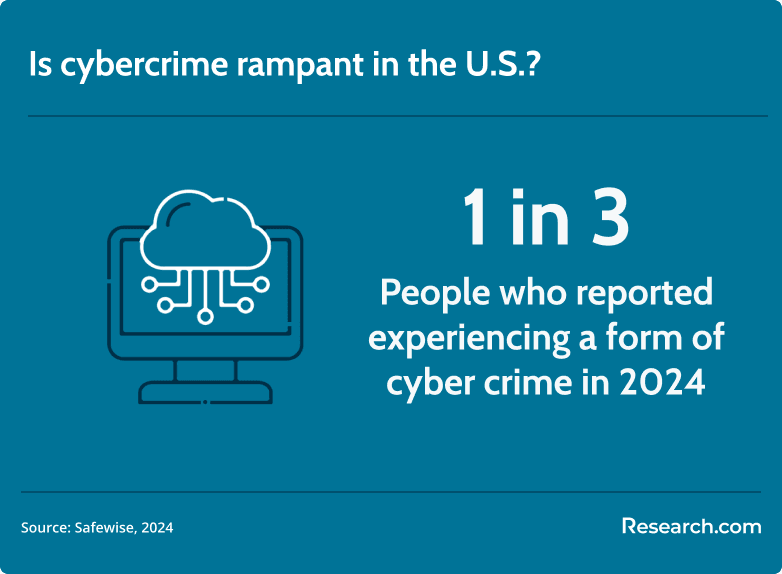
Cyber intelligence is especially relevant as security threats move across digital systems. With one in three individuals reporting that they experienced some form of cybercrime (Edwards, 2024), programs that teach cyber threat intelligence, open-source analysis, and data interpretation can be valuable for students targeting digital security roles.
Students interested in federal enforcement careers can also use intelligence electives to build background knowledge while separately researching agency-specific requirements, including steps involved in learning how to become a US marshal.
How to Choose the Best Online Master’s in Intelligence Program
The best program is not necessarily the most famous or the cheapest. It is the one that fits your career goal, learning style, schedule, budget, and background. Before applying, compare programs using the same criteria an employer or graduate advisor would care about: academic credibility, relevant coursework, practical training, and demonstrated student support.
Key Factors to Compare
- Regional accreditation: Confirm that the university is accredited by a recognized institutional accreditor. Accreditation affects credit transfer, employer recognition, and eligibility for federal student aid.
- Curriculum match: Review actual courses, not just program titles. A program labeled “intelligence” may focus on national security, cyber intelligence, law enforcement, business intelligence, or policy.
- Faculty experience: Look for instructors with practical intelligence, military, law enforcement, cybersecurity, policy, or research backgrounds in addition to academic credentials.
- Applied learning: Prioritize programs with capstones, case studies, simulations, internship options, intelligence writing assignments, or real-world analytical projects.
- Online format: Ask whether courses are asynchronous, synchronous, or hybrid. A program with live evening classes may be difficult if your work schedule changes.
- Total cost: Calculate tuition, fees, books, travel if required, and time away from work. Then compare financial aid, employer reimbursement, military benefits, and scholarship options.
- Career support: Ask about resume help, career advising, alumni networks, agency or contractor connections, internship support, and whether services are available to online students.
- Security clearance realities: A degree does not guarantee a clearance or a federal job. If your target roles require clearance eligibility, learn how background factors, citizenship requirements, and agency hiring processes may affect you.
Questions to Ask Before You Enroll
| Question | Why it matters |
| Is the university regionally accredited? | Accreditation affects credibility, federal aid, and transferability. |
| Does the program focus on intelligence analysis, cybersecurity, homeland security, law enforcement, or policy? | The focus should match your target career. |
| Are there internships, capstones, or applied intelligence projects? | Practical experience can make your resume stronger. |
| Do online students receive the same career services as campus students? | Remote learners need accessible support. |
| Are courses mostly live or self-paced? | The format must fit your schedule. |
| What is the total cost, including fees? | Advertised tuition may not show the full financial commitment. |
| What roles have recent graduates pursued? | Career outcomes can show whether the program aligns with your goals. |
Some students strengthen their intelligence preparation with operational or analytical training from adjacent fields. For example, programs such as the shortest online degrees in logistics and supply chain management may appeal to learners interested in supply chains, infrastructure risk, defense logistics, or operational intelligence.
Career Paths for Graduates of Online Master’s in Intelligence Programs
Graduates may pursue roles in intelligence analysis, law enforcement, emergency management, cybersecurity, homeland security, defense contracting, corporate security, public policy, international risk, or investigative work. Job eligibility depends on more than the degree. Employers may also consider experience, writing samples, technical skills, language skills, citizenship status, clearance eligibility, physical requirements, certifications, and agency-specific hiring processes.
| Career | Average wage or salary listed | What the role does |
| Immigration Officers | $64,520 | Apply immigration law, review visa or asylum matters, identify fraud concerns, and assess cases that may involve public safety or national security issues. |
| Geographic Information Systems Analysts | $75,010 | Use geospatial tools to map and interpret data related to terrain, infrastructure, borders, population movement, response planning, and security operations. |
| CIA Agents | $76,185 | Collect, evaluate, and report intelligence that can support national security decisions. The average salary for agents in the CIA can vary based on role, assignment, and experience. |
| Intelligence Analysts | $82,573 | Review information from multiple sources, assess threats, identify patterns, and produce intelligence products for leaders, investigators, or policymakers. |
| Emergency Management Directors | $97,700 | Prepare for and coordinate responses to disasters, terrorist incidents, and other emergencies through planning, communication, risk assessment, and recovery oversight. |
| Detectives and Criminal Investigators | $98,770 | Investigate crimes, collect evidence, interview witnesses, analyze case information, identify suspects, and support prosecutions. |
| Cyber Threat Intelligence Analysts | $109,848 | Study cyber attackers, malware, threat patterns, and vulnerabilities to inform defensive strategies and security improvements. |
| National Security Policy Advisors | $136,292 | Analyze security risks and advise leaders on domestic or foreign policy decisions, including defense, diplomacy, and strategic planning. |
These salary figures should be treated as reference points, not guarantees. Actual compensation can vary by employer, location, security clearance, experience, technical skill, seniority, and whether the role is federal, state, local, contractor-based, nonprofit, or private-sector.
The chart below illustrates the average wage for careers connected to this field.
Job Market Outlook for Online Master’s in Intelligence Graduates
The intelligence and security job market is shaped by cyber threats, geopolitical instability, domestic security priorities, emergency preparedness, and the growing use of data-driven analysis. Graduates with advanced analytical training may find opportunities across government agencies, defense contractors, cybersecurity teams, law enforcement organizations, risk management firms, and policy institutions.
According to the BLS, information security analysts’ job growth will rise to 32.7% through 2032, reflecting the importance of protecting digital infrastructure in both public and private sectors.
Other intelligence-adjacent occupations show steadier growth. Employment for first-line supervisors of police and detectives is projected to grow by 3.8%, and detectives and criminal investigators by 2.3%. Emergency management directors are expected to see 4% growth, while police and sheriff’s patrol officers have a projected increase of 3.9%.
These figures suggest continuing demand for professionals who can evaluate risk, respond to threats, and support public safety. However, some federal intelligence roles remain highly competitive. A master’s degree can strengthen a candidate’s profile, but it does not replace experience, technical capability, strong writing, sound judgment, clearance eligibility, or specialized training.
This chart shows employment growth for jobs related to intelligence studies.
How Emerging Technologies Are Changing Intelligence Education
Online master’s in intelligence programs are adapting to technologies that now shape analysis, collection, and decision support. Artificial intelligence, machine learning, big data analytics, geospatial tools, cyber threat platforms, open-source intelligence tools, and automated monitoring systems are increasingly relevant to intelligence work.
For students, this means program selection should include a close look at technology exposure. A strong curriculum should not only discuss national security theory; it should also help students evaluate digital information, understand the limits of automated tools, identify misinformation risks, communicate uncertainty, and use analytical methods responsibly.
Students seeking deeper computing preparation may compare intelligence programs with technology-focused options such as the fastest computer science degree. The best choice depends on whether you want to build software and systems, analyze threats and policy, or combine both skill sets.
How Interdisciplinary Study Strengthens Intelligence Training
Intelligence problems rarely fit neatly into one academic field. A strong analyst may need to understand politics, economics, law, cyber systems, language, psychology, geography, emergency management, ethics, and organizational behavior. That is why many intelligence programs draw from multiple disciplines.
Interdisciplinary study can be especially useful for students targeting specialized areas. Public policy supports national security advising. Data analytics supports threat modeling. Cybersecurity supports digital investigations. Geographic information systems support border, infrastructure, and disaster analysis. Even fields such as a space studies online degree can connect to satellite systems, geopolitics, defense strategy, and emerging security domains.
Common Mistakes to Avoid When Choosing a Program
| Mistake | Why it can hurt you | Better approach |
| Choosing a program without checking accreditation | Unaccredited or poorly recognized programs may create problems with aid, transfer credits, or employer acceptance. | Verify institutional accreditation before applying. |
| Focusing only on tuition per credit | A low per-credit rate may still lead to a high total cost if fees or credit requirements are higher. | Compare the full cost of the degree. |
| Assuming all intelligence degrees lead to federal intelligence jobs | Federal hiring can require clearance eligibility, citizenship, experience, language skills, testing, or agency-specific steps. | Research target employers and job postings before choosing a specialization. |
| Ignoring writing and briefing requirements | Intelligence work depends heavily on clear, concise, evidence-based communication. | Choose programs with frequent analytical writing and presentation practice. |
| Selecting a concentration based only on its title | Two programs may use similar concentration names but teach very different content. | Review course descriptions, electives, faculty background, and capstone topics. |
| Assuming online means self-paced | Some online programs require live attendance, group work, or fixed deadlines. | Ask about asynchronous, synchronous, and hybrid requirements. |
| Overlooking career services for online students | Remote learners may need help finding internships, building resumes, and navigating security-related hiring. | Confirm that online students receive full access to advising and career support. |
What Graduates Say About Online Master’s in Intelligence Programs
- : "After leaving military service, I needed a graduate program that connected directly to national security work without requiring me to relocate. The online format let me keep my responsibilities while studying intelligence operations, analysis, and leadership. I was able to apply course concepts to real situations almost immediately. — Jeremy"
- : "I entered my program after several years in the private sector and wanted to move into security-focused work. The coursework was demanding, but it gave me practical exposure to open-source intelligence, analytical writing, and emerging threats. Faculty feedback helped me improve the way I structured and defended my conclusions. — Brian"
- : "Online study made it possible to complete my master’s while working full time. I could attend live sessions when my schedule allowed and use recordings when work got busy. The program strengthened the analytical skills I now use in a government role and gave me more confidence in my professional judgment. — Max"
References
- Chapman University. (2024). The Chapman University survey of American fears has been changing how sociologists think about the impact of fear. https://news.chapman.edu/2024/10/01/what-scares-you/#fear
- Edwards, R. (2025, July 2). The State of Safety in America 2025. Safewise. https://www.safewise.com/state-of-safety
- Ma, J., Pender, M., & Oster, M. (2024). Trends in College Pricing and Student Aid 2024. College Board. https://research.collegeboard.org/trends/college-pricing
- PayScale. (2025, July 7). Average Intelligence Analyst Salary. Retrieved July 31, 2025, from https://www.payscale.com/research/US/Job=Intelligence_Analyst/Salary
- U.S. Bureau of Labor Statistics. (2024). Detectives and Criminal Investigators, May 2024 OEWS Profiles [Interactive data]. Occupational Employment and Wage Statistics (OEWS) Profiles. Retrieved July 31, 2025, from https://data.bls.gov/oesprofile
- U.S. Bureau of Labor Statistics. (2025, April 18). Occupational projections, 2023–33, and worker characteristics, 2023 (Numbers in thousands). Employment Projections. https://www.bls.gov/emp/tables/occupational-projections-and-characteristics.htm
- World Population Review. (2025). Safest Countries in the World 2024. Retrieved July 31, 2025, from https://worldpopulationreview.com/country-rankings/safest-countries-in-the-world
- ZipRecruiter. (2025, July 24). Intelligence Studies Degree Salary. Retrieved July 31, 2025, from https://www.ziprecruiter.com/Salaries/Intelligence-Studies-Degree-Salary
Key Insights
- An online master’s in intelligence is best for students who want advanced training in analysis, threat assessment, national security, cyber intelligence, law enforcement intelligence, or security policy while keeping schedule flexibility.
- Most programs require between 30 and 36 credit hours and may take about two years, though accelerated options can take 12 to 18 months.
- Program fit matters more than name recognition alone. Compare accreditation, curriculum, concentration options, faculty experience, applied projects, cost, and career services.
- Online and campus programs may cover similar material, but online study is usually better for working professionals, military students, and learners who cannot relocate.
- Costs vary widely. Look beyond tuition per credit and calculate fees, required credits, residency pricing, books, and available aid.
- Cyber intelligence, open-source intelligence, AI-supported analysis, geospatial tools, and data analytics are increasingly important in intelligence education.
- A master’s degree can strengthen your qualifications, but it does not guarantee a federal intelligence job, security clearance, or a specific salary. Experience, technical skills, writing ability, judgment, and employer requirements still matter.
Other Things You Should Know About Online Master’s in Intelligence Programs
Most 2027 online master’s degrees in intelligence require 30 to 36 semester credits. Programs usually include core courses in intelligence analysis, collection methods, and national security, plus a capstone or thesis. Part-time students often finish in 18 to 24 months.
For students enrolling in 2027, financial aid for online master’s degrees in intelligence programs includes scholarships specific to intelligence studies, federal grants, and student loans. Prospective students should also explore university-specific funding options such as merit-based scholarships and assistantships.
Admission requirements typically include a bachelor's degree, a minimum GPA of 3.0, and professional references. Some programs may also require GRE scores or relevant work experience, helping to ensure that candidates are well-prepared for the curriculum.