2027 Online SLP Programs That Accept Low GPA Applicants

Co-Founder and Chief Data Scientist

Reviewed by Rhea Paul, PhD
SLP Education & Research Expert
A low undergraduate GPA can make online speech-language pathology admissions feel out of reach, especially because SLP master’s programs are competitive and clinical training standards are strict. Still, a lower GPA does not automatically end the path to becoming a speech-language pathologist. Some accredited programs use holistic review, conditional admission, prerequisite improvement, or postbaccalaureate coursework to evaluate applicants beyond one transcript number.
This guide explains how online SLP programs that consider lower GPAs work, what admissions committees usually look for, how accreditation and licensure affect your choices, and how to compare cost, curriculum, timeline, and career outcomes. It is written for career changers, returning students, and applicants whose academic record does not fully reflect their current readiness for graduate-level clinical training.
Key Things You Should Know
- Many 2026 online slp programs accept applicants with GPAs below 3.0, reflecting a growing trend toward holistic admissions that consider experience and personal statements.
- Applicants with low GPAs can improve admission chances through strong letters of recommendation and relevant clinical or volunteer experience in speech pathology settings.
- Approximately 20% of accredited online SLP programs in 2025 offered conditional admissions or probationary enrollment for students not meeting traditional GPA thresholds.
What Are Online SLP Programs Accepting Low GPAs?
Online SLP programs accepting low GPAs are graduate speech-language pathology programs that may review applicants with undergraduate GPAs below the typical competitive range, often below 3.0 and sometimes as low as 2.5. These programs do not waive academic expectations. Instead, they look for evidence that an applicant can now succeed in a demanding clinical master’s program.
Admissions flexibility can take several forms. A school may offer conditional admission, require additional prerequisite or leveling courses, place a student on probationary enrollment, or give more weight to recent academic performance, clinical exposure, professional experience, recommendations, and the personal statement. According to the ASHA 2025 Academic Program Survey Report, 28% of matriculants to CAA-accredited speech pathology master's programs had an undergraduate GPA below 3.5, which shows that admitted students are not limited to perfect academic profiles.
What “low GPA” usually means in SLP admissions
- Below 3.5: Still common among some admitted students, but applicants need a strong overall file.
- Below 3.0: More difficult, often requiring recent A grades in prerequisites, strong references, and a clear explanation of academic growth.
- As low as 2.5: Possible at some programs, but usually only with conditional review, leveling coursework, or substantial evidence of readiness.
Applicants should look for programs that clearly describe holistic admissions, minimum GPA exceptions, postbaccalaureate pathways, or conditional admission policies. Public universities and programs focused on workforce diversity may consider GPAs as low as 2.75 under certain conditions, but policies vary by school and by application cycle.
Before applying, contact admissions offices directly. Ask whether your GPA meets the minimum screening threshold, whether prerequisite GPA is weighed separately, whether recent coursework can offset older grades, and whether the program offers a portfolio review or conditional pathway. For broader program research, compare speech pathology graduate programs online with attention to accreditation, clinical placement support, and admissions flexibility.
Can You Get Into SLP Programs with Low GPA?
Yes, it is possible to get into SLP programs with a low GPA, but it is not easy. The average undergraduate GPA for accepted students climbed to 3.72, so applicants under 3.0 must show strong evidence that their past academic performance does not represent their current ability. Programs accepting low GPA applicants online usually admit selectively and expect a convincing, well-supported application.
The goal is to reduce the admissions committee’s risk. Your application should answer one question clearly: Why are you prepared to succeed in graduate-level SLP coursework and clinical practice now?
Application strengths that can offset a lower GPA
- Recent academic improvement: A grades in communication sciences and disorders prerequisites, statistics, anatomy, linguistics, or related sciences can show readiness.
- Relevant experience: Work or volunteer service in schools, clinics, hospitals, rehabilitation settings, early intervention, special education, or behavioral health can strengthen your case.
- Strong recommendations: Letters should speak to clinical potential, maturity, communication skills, reliability, and ability to handle rigorous coursework.
- GRE performance, if required: High scores can help at programs that still consider the exam, though many schools now use no-GRE admissions.
- A focused personal statement: Explain academic challenges briefly, take responsibility, and emphasize specific evidence of growth rather than excuses.
- Additional coursework or certifications: Post-baccalaureate courses, leveling programs, or related credentials can demonstrate renewed academic discipline.
Applicants should not rely on passion alone. SLP programs are preparing students for patient care, licensure, and supervised clinical practice, so admissions committees must see academic readiness, ethical judgment, and professional communication. If your GPA is low, apply strategically to programs that publish holistic review criteria and ask admissions staff whether applicants with your profile are considered before paying application fees.
Career outcomes can still be strong after admission, licensure, and certification. Undergraduate GPA is not what determines long-term pay; credentials, setting, location, experience, and specialization matter more. For a career-focused view, review how much does a speech therapist make.
Which Online SLP Programs Accept Low GPAs?
Some online SLP programs consider applicants with lower GPAs, but there is no universal list that stays accurate across admissions cycles. Minimum GPA rules, conditional admission options, and prerequisite requirements can change, so applicants should verify policies directly with each school before applying.
Two examples often discussed by applicants are the University of Northern Colorado and Salus University. The University of Northern Colorado's online master's in speech-language pathology accepts applicants with GPAs as low as 2.7 and may offer conditional admission with additional coursework if necessary. Salus University reviews applicants with GPAs below 3.0 on a case-by-case basis and places meaningful value on clinical experience.
How to identify realistic programs
- Start with accreditation: Choose programs accredited by the Council on Academic Accreditation in Audiology and Speech-Language Pathology (CAA), because accreditation affects licensure and certification eligibility.
- Read the minimum GPA policy carefully: Some programs list a firm cutoff; others describe preferred GPA ranges or allow exceptions.
- Check prerequisite GPA rules: A program may reject a low overall GPA but consider a strong prerequisite GPA.
- Look for leveling or bridge options: These can help applicants prove readiness before full graduate admission.
- Ask about conditional admission: Some schools allow students to begin with performance requirements that must be met to continue.
- Confirm clinical placement support: Online delivery does not remove the need for supervised clinical training.
Applicants comparing affordable online speech pathology programs for low GPA students should look beyond admission odds. A program that is easier to enter but weak in clinical placement support can create problems later. Likewise, an accelerated SLP master's program may save time, but it can be a poor fit if you need academic rebuilding, part-time pacing, or additional prerequisite support.
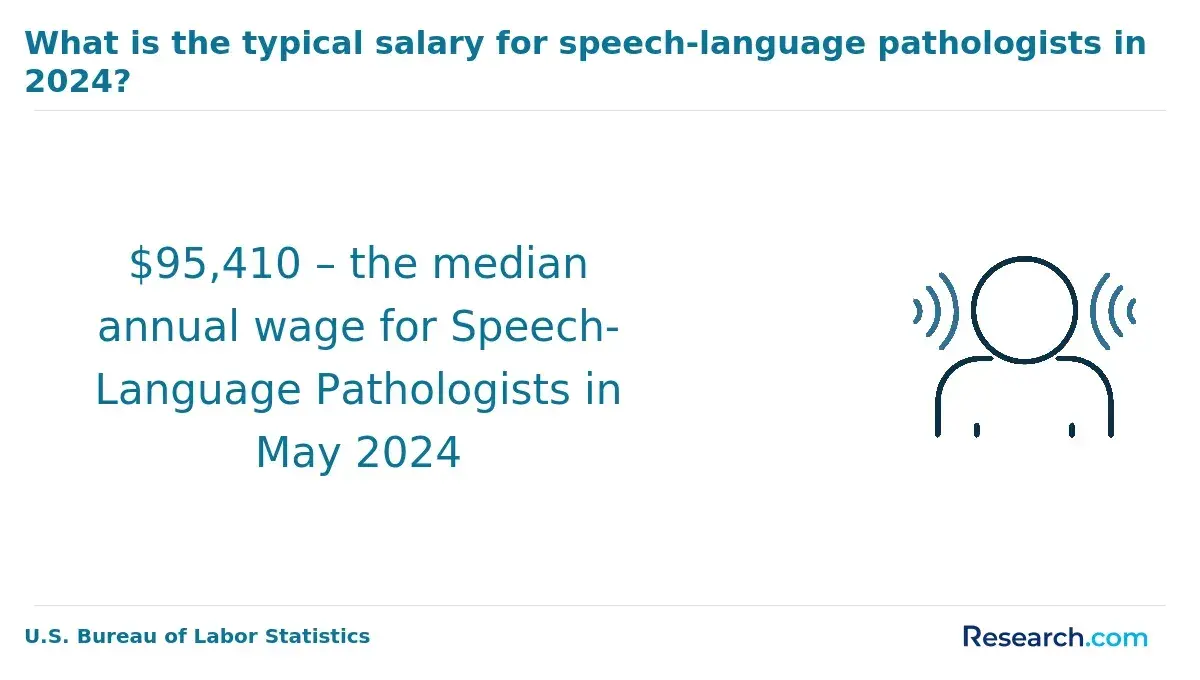
Data from the U.S. Bureau of Labor Statistics shows that SLP professionals with master's degrees earned a median annual wage of $97,870. Once a graduate completes an accredited pathway, earns required credentials, and gains experience, undergraduate GPA generally becomes far less important than licensure, clinical competence, and setting.
SLP program accreditation matters because it connects your degree to certification, licensure, and employer acceptance. Online speech pathology programs are evaluated by the Council on Academic Accreditation in Audiology and Speech-Language Pathology (CAA), which reviews whether programs meet standards for curriculum, faculty qualifications, student support, assessment, clinical education, and professional preparation.
For students with lower GPAs, accreditation is especially important. A program may be more flexible in admissions, but it still must train students to the same professional standard. Admissions accessibility should never come at the expense of licensure eligibility.
What accredited SLP programs must prepare students to complete
- Graduate coursework in foundational and advanced communication sciences
- Training in assessment and treatment of speech, language, voice, fluency, hearing, swallowing, and cognitive-communication disorders
- Professional ethics and culturally responsive care
- Supervised clinical experiences with appropriate populations and disorder areas
- Preparation for certification and state licensure requirements
Accreditation is also tied to the Certificate of Clinical Competence in Speech-Language Pathology (CCC-SLP) from the American Speech-Language-Hearing Association (ASHA). Without a CAA-accredited degree, graduates may face major barriers to state licensure, certification, and employment. Programs that accept students with GPAs as low as 3.0 still need to maintain rigorous academic and clinical expectations.
Typical program requirements include at least 400 clinical clock hours and coursework in areas such as anatomy, phonetics, language development, and neurological communication disorders. Many online programs use hybrid clinical models: lectures and seminars may be online, while practica are completed in approved local or regional sites. Before enrolling, ask how placements are secured, who approves supervisors, and what happens if no suitable site is available near you.
Tuition averages around $45,200 for online SLP master's programs accepting lower GPAs, about 22% less than on-campus counterparts due to reduced overhead without sacrificing standards. When comparing options, review SLP master's programs for accreditation status, clinical requirements, admissions criteria, and student support.
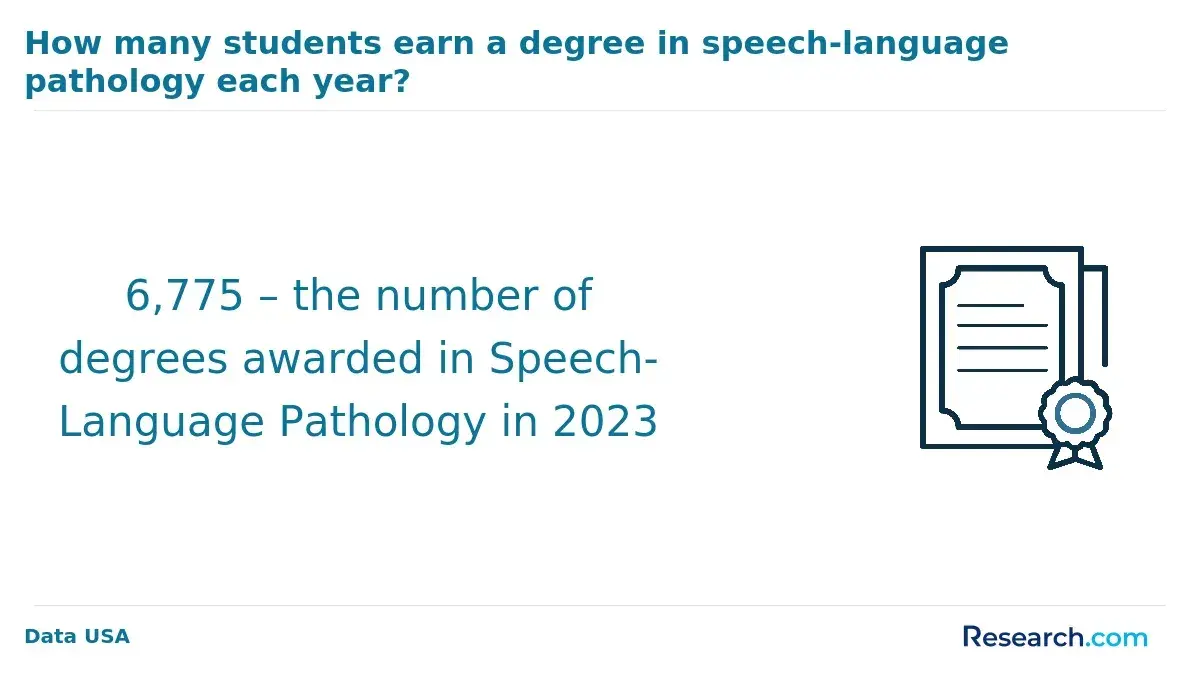
Online SLP degrees lead to licensure when they meet the same academic and clinical standards as campus-based programs. The delivery format can be online, but the licensure pathway still requires an accredited master’s degree, supervised clinical experience, a post-graduate clinical fellowship, and the required national examination.
Typical licensure pathway after an online SLP master’s degree
- Complete a CAA-accredited master’s program. Accreditation confirms that the program meets essential national standards for speech-language pathology preparation.
- Complete supervised clinical clock hours. Students must complete at least 400 supervised clinical clock hours, including observation and direct patient care.
- Graduate and begin the clinical fellowship. Candidates then complete a clinical fellowship lasting approximately 36 weeks, gaining mentored professional experience.
- Pass the Praxis Examination in Speech-Language Pathology. This national standardized test is mandatory for licensure in every state.
- Apply for state licensure. States typically require verification of education, clinical hours, fellowship completion, exam results, and any state-specific requirements.
Some states add extra steps, such as jurisprudence exams covering state laws and professional rules. Because licensure is state-based, students should check requirements in the state where they plan to practice before choosing a program. This is especially important for online students who may live in a different state from the university.
The investment can be substantial, but the SLP pathway may offer a strong return for students who complete licensure. According to the Georgetown University Center on Education and the Workforce, the 10-year ROI averages 285%. That return depends on completing an accredited program, securing clinical placements, passing required exams, and entering the workforce successfully—not on having had a perfect undergraduate GPA.
The curriculum in online SLP programs combines graduate coursework, clinical reasoning, supervised practice, and professional preparation. Students learn how to evaluate and treat communication and swallowing disorders across ages, settings, and cultural backgrounds. Online programs may deliver lectures, discussions, exams, simulations, and case reviews virtually, but clinical practice still requires approved supervision.
Common coursework in online SLP programs
- Anatomy and physiology of speech and hearing mechanisms
- Language development
- Phonetics
- Audiology
- Neuroanatomy
- Speech sound disorders
- Fluency disorders
- Voice and resonance disorders
- Neurogenic communication disorders
- Swallowing disorders
- Assessment methods and intervention planning
- Research methods and evidence-based practice
- Professional ethics and interprofessional collaboration
- Cultural competence and service delivery for diverse populations
Many programs also include telepractice training and digital simulations, which are especially relevant for online students and for clinicians who may later provide remote services. Electives or focused experiences may cover pediatric therapy, augmentative communication, bilingual speech pathology, swallowing disorders, or neurogenic communication disorders.
The clinical practicum is the most important applied component. Students practice diagnostic interviewing, assessment administration, treatment planning, documentation, caregiver counseling, and progress monitoring under supervision. If you are applying with a lower GPA, strong performance in clinical prerequisites and early practicum experiences can help demonstrate that you are ready for the professional demands of the field.
The field is projected to grow by 17% between 2025 and 2035, adding over 30,000 jobs, according to the U.S. Bureau of Labor Statistics. That demand makes program quality important: the right curriculum should prepare students not only to graduate, but also to meet certification expectations and function safely in schools, healthcare facilities, private practice, and community settings.
Online speech pathology master’s programs usually take two to three years full-time and often include around 60 to 75 credit hours. Part-time students commonly need three to four years. Accelerated options can shorten completion time to as little as 18 months, but they are less common and may not be ideal for applicants who need prerequisite repair or a slower academic pace.
Program length depends on more than credit count. Clinical placements, cohort schedules, synchronous class requirements, prerequisite gaps, and practicum availability can all affect the timeline. Some students finish coursework on schedule but experience delays if clinical sites are difficult to secure.
What can extend or shorten the timeline
- Prerequisite or leveling requirements: Missing undergraduate communication sciences coursework can add terms before full graduate study.
- Full-time versus part-time enrollment: Part-time study can make the degree more manageable for working adults but lengthens completion.
- Clinical placement availability: Students in rural or highly competitive placement markets may need extra planning.
- Summer enrollment: Summer courses may help maintain progress, depending on the program sequence.
- Accelerated formats: These can save time but usually require strong preparation and heavy weekly commitment.
Applicants with GPAs between 3.0 and 3.4 might benefit from selecting no-GRE programs. The Speech Pathology Graduate Programs Survey, 2025 Admissions Cycle Report, shows these programs have a 15% higher acceptance rate for such candidates, although this advantage does not typically shorten program length.
Before enrolling, ask for a sample degree plan that includes coursework, practica, comprehensive exams if required, and expected clinical placement windows. A realistic timeline is better than the fastest advertised timeline, especially for students balancing work, family, and academic rebuilding.
Tuition costs for online speech pathology programs range broadly from $20,000 to $70,000 for completion. Public universities typically charge less for in-state students, often around $25,000 to $40,000 total, while private schools can exceed $60,000. The published tuition figure may not include all program-related expenses, so applicants should calculate the full cost before applying.
Costs to include in your budget
- Graduate tuition by credit hour or flat-rate term
- Clinical practicum or placement fees
- Technology and online learning fees
- Textbooks, assessment materials, and software
- Background checks, immunizations, and compliance requirements
- Travel to clinical sites or occasional campus residencies, if required
- Praxis exam, licensure, and certification-related costs after graduation
Additional expenses such as clinical placement fees, technology charges, and textbooks typically add $2,000 to $5,000 over the program duration. Some schools charge flat-rate tuition regardless of credits, while others charge per credit hour, which can affect total cost if you need leveling courses, repeat a course, or extend enrollment.
Applicants with lower GPAs may also want to consider geographic admissions patterns and institutional fit. Based on CAPCSD Regional Admissions Benchmarking, midwestern online programs accepted 35% of applicants with GPAs below 3.2, compared to just 18% at coastal institutions. These programs may also offer competitive tuition or more accessible financial aid, but applicants should verify current admissions and cost data directly with each school.
To control debt, compare total program cost, not just tuition per credit. Ask whether graduate assistantships, scholarships, employer tuition assistance, payment plans, or loan forgiveness options for healthcare and school-based professionals are available. A lower-cost program is only a good value if it is accredited, provides reliable clinical placement support, and prepares students for licensure.
Graduates of accredited SLP programs typically pursue licensed speech-language pathologist roles in schools, hospitals, rehabilitation centers, skilled nursing facilities, outpatient clinics, early intervention programs, private practice, and research or academic settings. Career options depend on licensure, clinical fellowship completion, certification, experience, and local labor demand.
Entry-level SLPs in the U.S. typically earn between $62,900 and $134,160 annually. Experienced clinicians, especially those in specialized medical settings, can earn from $90,000 to $110,000 per year. School-based SLP salaries range from $55,000 to $80,000 and are often shaped by state budgets, district salary schedules, union contracts, and years of service.
Common SLP career paths
- School-based SLP: Works with children and adolescents on speech, language, fluency, social communication, and related educational needs.
- Medical SLP: Serves patients with swallowing, cognitive-communication, voice, language, or motor speech disorders in hospitals and rehabilitation settings.
- Early intervention SLP: Supports infants, toddlers, and families during critical developmental stages.
- Private practice clinician: Provides specialized services and may build a caseload around pediatrics, voice, fluency, bilingual therapy, or other areas.
- Research, administration, or academia: Advanced roles may involve program leadership, teaching, clinical supervision, or research.
Advanced roles in clinical research, administration, or academia often exceed $100,000 but usually require additional qualifications, specialized expertise, leadership experience, or doctoral study. Obtaining state licensure and certifications such as the Certificate of Clinical Competence (CCC) from the American Speech-Language-Hearing Association is essential for maximizing job prospects.
For applicants with lower GPAs, an SLP post-baccalaureate program can be a practical step before applying to graduate school. Completing one can improve credentials, as shown by a 92% graduate school acceptance rate and an average GPA increase of 0.8 points. Once in the profession, employers generally focus more on licensure, clinical skill, experience, and fit for the setting than on undergraduate GPA.
How to Choose Reputable Online SLP Programs?
Choosing a reputable online SLP program requires more than finding one that will consider your GPA. The right program should be accredited, transparent, clinically strong, financially realistic, and aligned with your state licensure goals. A flexible admissions policy is helpful only if the program can support students through graduation, clinical training, certification, and employment.
Use this checklist before applying
- Confirm CAA accreditation: Accreditation by the Council on Academic Accreditation in Audiology and Speech-Language Pathology (CAA) is central to certification and licensure eligibility.
- Review admissions criteria honestly: Look for holistic review, conditional admission, prerequisite GPA consideration, or postbaccalaureate pathways if your GPA is low.
- Ask about clinical placements: Find out whether the school finds placements, whether students must locate their own sites, and what support is available outside major metro areas.
- Check faculty qualifications: Programs led by licensed clinicians who are active in practice, research, or supervision often provide stronger professional preparation.
- Compare outcomes: Graduation rates, Praxis pass rates, certification outcomes, and licensure support can reveal how well students are being prepared.
- Evaluate student support: Advising, tutoring, writing support, clinical remediation, and technology help are especially important for online learners.
- Calculate total cost: Include tuition, fees, clinical costs, travel, books, and licensure-related expenses.
- Verify state authorization: Make sure the program can enroll students in your state and prepare you for licensure where you plan to work.
Admissions policies are also changing. According to a 2025 ASHA Program Directors Survey, 42% of speech pathology programs plan to de-emphasize undergraduate GPA by 2026. That trend may help applicants with lower GPAs, but it does not remove the need to prove academic readiness, professionalism, and clinical potential.
Before submitting applications, speak with admissions staff, attend virtual information sessions, and ask current students or alumni about workload, faculty responsiveness, placement quality, and support for online learners. The best program is not simply the easiest one to enter; it is the one that gives you a credible path to licensure, competent practice, and sustainable debt.
Other Things You Should Know About Speech Pathology
In 2027, several online SLP programs accepting low GPA applicants include the University of St. Augustine for Health Sciences and Emerson College. These programs consider a holistic approach to applications, looking beyond GPA to factors like work experience and personal statements.
Many conditional admission online SLP programs set a minimum GPA of 2.75 for the last 60 undergraduate credits, and some require a 3.0 in prerequisite sciences. Students admitted conditionally often must earn a 3.0 graduate GPA in the first 9 to 12 credits to remain in the program.
Yes, some online SLP programs accepting low GPA applicants may require additional materials like a statement of purpose, letters of recommendation, or relevant work experience documentation to better assess an applicant's potential beyond their academic record.
Yes, most states and licensing boards require speech pathologists to complete continuing education units periodically to maintain certification and licensure. This ongoing education helps professionals stay current with advances in the field and maintain high standards of practice. Online workshops, conferences, and courses are common ways to fulfill these requirements.
- U.S. Bureau of Labor Statistics - Speech-Language Pathologists https://www.bls.gov/ooh/healthcare/speech-language-pathologists.htm
- ASHA EdFind - Accredited Speech-Language Pathology Programs https://find.asha.org/ed/
- O*NET OnLine - Speech-Language Pathologists https://www.onetonline.org/link/summary/29-1127.00
- Pennsylvania Western University - Master of Science in Speech-Language Pathology https://online.pennwest.edu/programs/speech-language-pathology-grad/index.php
- Abilene Christian University - Master of Science in Speech-Language Pathology (Online) https://acu.edu/academics/graduate/master-of-science-in-speech-language-pathology/
- New York University - Online MS, Communicative Sciences and Disorders (Speech@NYU) https://steinhardt.nyu.edu/degree/online-ms-communicative-sciences-and-disorders
- University of Scranton - Master of Science (M.S.) in Speech-Language Pathology https://www.scranton.edu/academics/pcps/health-and-human-performance/programs/speech-language-pathology/index.shtml
- University of North Carolina at Greensboro - Speech-Language Pathology, M.A. (Online) https://csd.uncg.edu/graduate/masters-of-arts-online/