2027 Online Engineering Management Degrees With Strong Professional Writing Training

Co-Founder and Chief Data Scientist
Choosing an online engineering management degree is not just about finding flexible classes; it is about preparing to lead technical teams and communicate decisions clearly. The U. S. Bureau of Labor Statistics reports a 2024 median pay of $167,740 for architectural and engineering managers, making program quality and career fit especially important. This guide is for engineers, STEM graduates, and technical professionals comparing online options. You will learn how programs differ, what writing training should include, what costs to expect, and how to choose a degree that supports your goals.
Key Things You Should Know
- Online engineering management degrees are best suited for working engineers and technical professionals who want leadership roles but still need project, systems, finance, and technical communication skills.
- The strongest programs pair management coursework with writing-intensive assignments such as executive briefs, technical reports, proposals, risk documentation, and capstone presentations.
- BLS data lists a 2024 median annual wage of $167,740 for architectural and engineering managers, but outcomes vary by industry, experience, location, employer, and prior engineering background.
What is an online engineering management degree with strong professional writing training?
An online engineering management degree is a graduate or, less commonly, undergraduate program that blends engineering decision-making with business, leadership, operations, and project management. At the master's level, it is often designed for engineers who want to move from individual technical contribution into team leadership, product development, operations management, systems management, consulting, or program management.
Strong professional writing training means the program does more than require discussion posts. It teaches students how to communicate complex technical and financial information to executives, clients, regulators, vendors, and cross-functional teams. That may include technical reports, project charters, design justifications, business cases, safety documentation, quality plans, executive summaries, and stakeholder presentations.
This type of degree is most useful when the student already has a technical foundation and wants to become the person who can translate engineering analysis into decisions. It may not be the best fit for someone seeking a nontechnical management career with little interest in engineering systems, product constraints, data, operations, or technical risk. If your goal is a broader business-facing management field with less engineering content, a specialized option such as an online sports management degree may be more aligned with your interests.
The writing component matters because many engineering leadership failures are not purely technical. They happen when requirements are unclear, risks are poorly documented, trade-offs are not explained, or stakeholders do not understand why a decision was made. A strong program helps students practice the written communication that engineering managers use every week.
How does an online engineering management degree compare to campus-based programs?
Online and campus-based engineering management programs can lead to similar academic credentials, but they differ in delivery, networking style, scheduling, and the way students build professional relationships. The right choice depends on your work schedule, learning style, location, budget, and need for in-person labs or employer-sponsored study.
The table below compares the major decision points. Use it to identify whether flexibility, campus access, networking format, or hands-on structure should matter most in your program search.
| Comparison factor | Online engineering management degree | Campus-based engineering management degree |
| Best fit | Working professionals who need flexible scheduling and want to apply coursework immediately at work | Students who prefer face-to-face interaction, campus recruiting, and structured weekly routines |
| Class format | Often asynchronous, synchronous, or hybrid, with recorded lectures and online collaboration tools | Usually scheduled in-person classes, labs, seminars, and campus-based group work |
| Professional writing practice | Frequently built into online deliverables such as reports, memos, discussion briefs, and virtual presentations | Often developed through written assignments, presentations, team projects, and faculty feedback |
| Networking | More dependent on virtual cohorts, employer projects, alumni events, and intentional outreach | More organic through campus events, research groups, student organizations, and local employers |
| Trade-off | High flexibility, but students must be self-directed and proactive about faculty contact | More direct campus access, but less convenient for full-time workers or students outside the region |
Online programs are not automatically easier. In many cases, they require more disciplined communication because students must coordinate team projects, written deliverables, and presentations across time zones. That can be an advantage for engineering managers who already work with distributed teams.
If you are still comparing related engineering pathways, reviewing broader online engineering degree programs can help you decide whether you need a management-focused degree now or a more technical engineering credential first.
Which U.S. engineering management programs offer accredited online degrees?
Many reputable U.S. universities offer online engineering management degrees or closely related programs in systems engineering management, engineering leadership, technology management, or operations-focused engineering management. For most master's programs, the key quality check is institutional accreditation from a recognized accreditor; ABET accreditation is more common for undergraduate engineering programs than for engineering management master's degrees.
The table below lists examples of U.S. universities with online engineering management or closely related graduate options. Program names, delivery formats, and curricula can change, so students should verify current details directly with the school before applying.
| University | Example online credential | Writing-related features to look for | Good fit for |
| Arizona State University | Online engineering management or engineering leadership-related graduate study | Project reports, decision memos, leadership communication, and applied team deliverables | Students who want a large public university with broad online infrastructure |
| Johns Hopkins University | Online engineering management graduate options through engineering professional programs | Technical communication, systems thinking, project documentation, and professional presentations | Experienced technical professionals seeking a rigorous professional graduate format |
| Penn State World Campus | Online engineering management master's-level study | Management communication, analytics-based reports, team projects, and strategic recommendations | Working engineers who value an established online campus model |
| University of Massachusetts Lowell | Online graduate engineering management options | Written project plans, quality documentation, operations analysis, and applied communication | Students comparing public university options with career-oriented coursework |
| Ohio University | Online master's in engineering management | Leadership communication, technical management reports, and capstone-style deliverables | Professionals seeking a program built around engineering leadership and management practice |
| Old Dominion University | Online engineering management graduate study | Systems documentation, project communication, technical reports, and management analysis | Students interested in systems, operations, and engineering decision support |
A reputable program should clearly show its accreditation status, curriculum, faculty qualifications, delivery format, tuition model, and student support services. Be cautious if a school emphasizes speed or convenience but provides little detail about course outcomes, assessment methods, writing expectations, or faculty access.
What coursework combines engineering management fundamentals with advanced professional writing skills?
A strong online engineering management curriculum should teach students how to make technical decisions and how to explain those decisions in writing. The best programs do not isolate writing in one course; they require written analysis throughout the degree.
The table below shows how common engineering management subjects can connect to professional writing deliverables. This helps you evaluate whether a curriculum will build practical communication skills rather than only covering management theory.
| Course area | Management skill developed | Professional writing skill developed |
| Engineering project management | Scope, schedule, budget, risk, and stakeholder coordination | Project charters, status reports, risk registers, and change-control memos |
| Systems engineering or systems thinking | Requirements, trade-off analysis, lifecycle planning, and integration | Requirements documents, decision briefs, interface descriptions, and test summaries |
| Engineering economics and finance | Cost estimation, investment analysis, and resource allocation | Business cases, cost-benefit summaries, and executive recommendations |
| Quality, reliability, and process improvement | Process control, root-cause analysis, and continuous improvement | Corrective action reports, audit summaries, and process documentation |
| Leadership and organizational behavior | Team leadership, conflict resolution, and change management | Stakeholder messages, performance feedback, and change communication plans |
| Capstone or applied project | Integration of technical, financial, and leadership decisions | Formal reports, proposals, presentations, and executive summaries |
When reviewing course descriptions, look for verbs such as "write," "present," "justify," "document," "analyze," "recommend," and "defend." These signals suggest students will practice communicating decisions rather than simply taking quizzes or reading case studies.
Before enrolling, ask admissions or program faculty for examples of writing-intensive assignments. Useful questions include:
- Are students required to write technical reports, executive summaries, proposals, or project documentation?
- Do faculty provide feedback on clarity, structure, audience awareness, evidence, and decision logic?
- Does the capstone include both a written report and an oral presentation?
- Are group projects structured to reflect real engineering management communication, including stakeholder updates and final recommendations?
- Does the program use current collaboration tools that mirror remote engineering workplaces?
AI is also changing what "good writing" means in technical workplaces. Engineering managers increasingly need to review AI-assisted drafts, verify technical accuracy, protect confidential information, and ensure written recommendations are defensible. A modern program should teach students how to use digital tools responsibly without outsourcing judgment.
What admission requirements do online engineering management programs typically have?
Most online engineering management master's programs expect applicants to have a bachelor's degree in engineering, computer science, technology, mathematics, physics, or a closely related STEM field. Some programs admit applicants from business or other backgrounds if they have substantial technical work experience, prerequisite coursework, or employer-supported preparation.
Admissions requirements vary, but applicants commonly need to prepare several academic and professional materials. The list below explains what schools often request and why each item matters.
- Bachelor's degree: Programs usually prefer an engineering or STEM background because coursework often assumes comfort with quantitative analysis, systems thinking, and technical problem-solving.
- Transcripts: Schools use transcripts to evaluate preparation in math, science, engineering, computing, and prior graduate study if applicable.
- Minimum GPA: Many programs publish a preferred minimum GPA, though some consider professional experience, certifications, or strong recent coursework when applicants fall below it.
- Resume or CV: Engineering management programs often value work history because students are expected to connect coursework to real technical organizations.
- Statement of purpose: This is an important writing sample because it shows whether the applicant can explain goals, experience, and fit clearly.
- Recommendation letters: Letters from supervisors, engineering leads, faculty, or project managers can help document leadership potential and technical maturity.
- GRE or GMAT status: Many online professional programs have made these tests optional or do not require them, but policies vary by school and applicant profile.
- English proficiency documentation: International applicants and some multilingual applicants may need TOEFL, IELTS, or equivalent evidence depending on school policy.
Applicants without an engineering degree should be especially careful. A program may admit them, but they may need bridge coursework in statistics, calculus, programming, engineering economy, or basic systems concepts. If the curriculum assumes prior engineering experience, entering without that foundation can make the degree harder and may limit access to engineering manager roles later.
A common mistake is treating the statement of purpose as a formality. For a degree that values professional writing, the admissions essay is often your first chance to show that you can communicate like a future technical leader. Use it to explain the kind of engineering problems you want to manage, not just the job title you want.
How long do online engineering management degrees take, and what do they cost?
Most online master's degrees in engineering management require about 30 to 36 graduate credits. Full-time students may finish in about one to two years, while part-time students who continue working often take two to three years. Accelerated formats can be attractive, but they are demanding if courses include writing-heavy projects, team deliverables, and capstones.
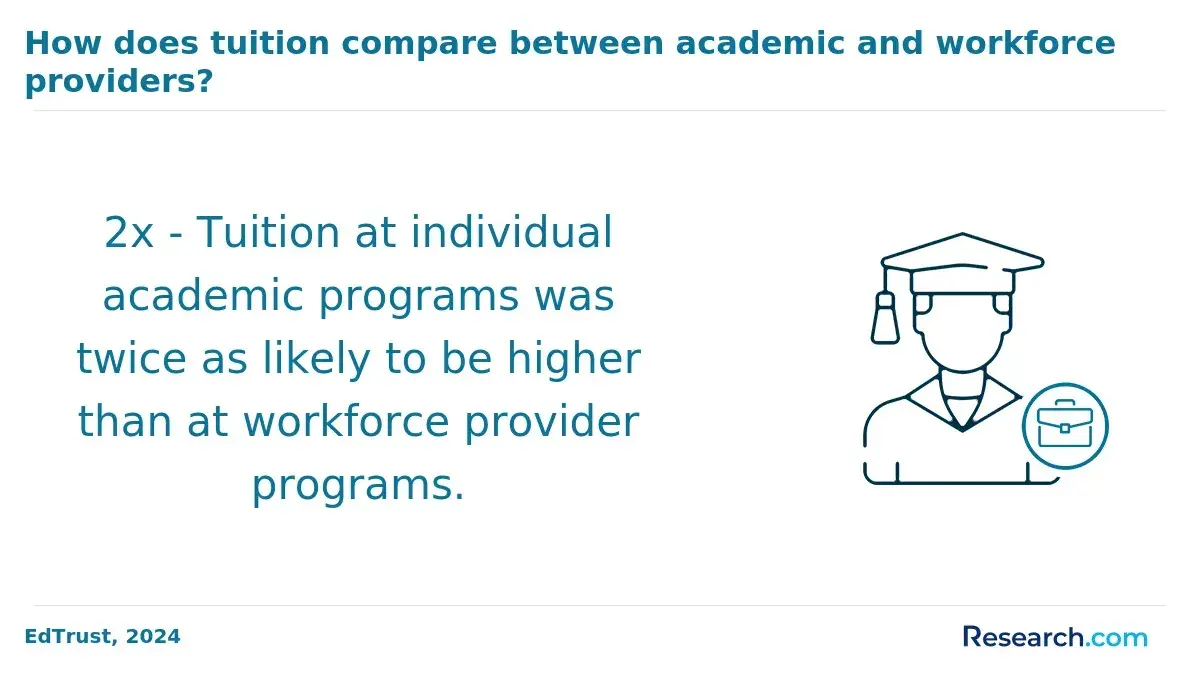
Cost depends on tuition per credit, program length, fees, residency rules, employer tuition assistance, transfer credit, and whether the school is public, private nonprofit, or private for-profit. For context, the National Center for Education Statistics reported in its 2024 Digest that average graduate tuition and required fees are generally lower at public institutions than at private nonprofit institutions, which is why residency and institutional type can materially affect total cost.
When comparing programs, request a full cost estimate rather than looking only at advertised tuition. Common cost categories include:
- Tuition charged per credit or per term
- Mandatory online learning, technology, student service, or graduation fees
- Books, software, simulation tools, and project management platforms
- Residency, orientation, or campus visit costs if the program includes in-person components
- Lost income or reduced hours if the course load is too heavy for full-time work
- Interest cost if loans are used to finance the degree
Because engineering management students are often employed, employer tuition assistance can be a major ROI factor. Before enrolling, ask whether your employer will reimburse graduate credits, whether reimbursement requires a minimum grade, and whether you must remain with the company for a set period after receiving assistance.
The smartest cost comparison is total cost for the credential you actually need. A lower-tuition program may be a poor value if it lacks writing feedback, faculty access, career support, or courses aligned with your target role. A higher-cost program may be justified if it provides strong employer recognition, relevant electives, and a capstone you can use as a professional portfolio piece.
What engineering and leadership careers can this degree prepare you for?
An online engineering management degree can support career movement from technical execution into leadership, coordination, strategy, operations, and decision-making. It is usually most powerful when paired with prior engineering or technical experience, because many employers expect engineering managers to understand the work they supervise.
The table below summarizes common career paths and the type of writing each role uses. This is important because professional writing is not an "extra" skill in these jobs; it is often how decisions are approved, funded, delegated, and defended.
| Career path | Typical responsibilities | Writing-intensive work |
| Engineering manager | Lead engineering teams, allocate resources, coordinate technical work, and evaluate project risks | Performance summaries, project updates, executive briefs, and decision documentation |
| Technical project manager | Manage schedules, budgets, requirements, vendors, and cross-functional communication | Project plans, status reports, risk logs, meeting summaries, and stakeholder updates |
| Product development manager | Coordinate engineering, design, manufacturing, customer feedback, and product lifecycle decisions | Product requirements, launch plans, trade-off analyses, and release documentation |
| Systems engineering manager | Oversee complex systems, requirements, integration, testing, and lifecycle planning | Requirements documents, interface control documents, test reports, and design reviews |
| Operations or manufacturing manager | Improve production processes, quality, safety, staffing, and cost performance | Process improvement reports, corrective action plans, safety documentation, and executive dashboards |
| Engineering consultant | Analyze technical or operational problems for clients and recommend solutions | Proposals, findings reports, client presentations, and implementation plans |
Students interested in built environments, infrastructure, and project delivery may also compare engineering management with a construction management online degree, especially if they want to focus more directly on scheduling, estimating, contractors, codes, and construction project execution.
This degree is less likely to help if you are trying to enter engineering without technical preparation. For roles that require engineering design authority, licensure, or deep discipline-specific expertise, employers may still prioritize an ABET-accredited engineering bachelor's degree, a relevant graduate engineering degree, professional engineering licensure, or specialized technical experience.
What salary ranges and earning potential are common for engineering managers?
Salary potential in engineering management is strongly shaped by industry, experience, geographic market, technical specialty, company size, and management scope. The most relevant national benchmark is the U.S. Bureau of Labor Statistics category for architectural and engineering managers, which reported a 2024 median annual wage of $167,740. This figure is a midpoint, not a promise; some professionals earn less, especially when moving into management for the first time, while senior managers in high-paying industries or high-cost markets may earn more.
The table below shows how to interpret salary potential by career stage. It is not a guarantee of pay; it is a practical way to think about how responsibilities and compensation often expand together.
| Career stage | Typical profile | Compensation factors |
| Early technical professional moving toward leadership | Engineer, analyst, technologist, or project contributor beginning to lead tasks or small teams | Prior technical discipline, certifications, writing ability, and evidence of project ownership |
| First-line engineering manager or technical project manager | Professional responsible for team coordination, schedules, budgets, quality, and stakeholder communication | Management scope, project complexity, industry, and ability to communicate trade-offs clearly |
| Senior engineering manager, program manager, or director | Leader responsible for multiple teams, product lines, systems, facilities, or strategic initiatives | Business impact, budget authority, executive communication, and record of delivering complex technical outcomes |
Professional writing can affect earning potential indirectly. Managers who write clear proposals, business cases, and executive recommendations are often better positioned to secure project funding, lead larger initiatives, and communicate results to senior leadership. However, salary growth still depends on performance, market demand, employer promotion structures, and the value of the technical domain.
Before enrolling, compare the program's cost with the roles you can realistically pursue within three to five years. If you are already an experienced engineer, the degree may support advancement. If you are new to engineering, you may need additional technical experience before the credential translates into management opportunities.
What is the job outlook for engineering management roles in the United States?
The job outlook for engineering management is steady rather than explosive. The U.S. Bureau of Labor Statistics projects employment for architectural and engineering managers to grow 4% from 2024 to 2034, which suggests ongoing demand but also competition for leadership roles. For students, this means the degree should be paired with technical credibility, leadership experience, and strong communication evidence.
Several U.S. trends are shaping the field. AI-assisted design, automation, advanced manufacturing, cybersecurity, energy modernization, infrastructure investment, and data-driven operations are increasing the need for leaders who can coordinate technical teams and explain decisions to nontechnical stakeholders. At the same time, organizations are becoming more careful about cost, compliance, risk, and documentation.
Writing-intensive engineering managers are especially valuable when projects involve multiple disciplines, regulatory exposure, safety considerations, public funding, or high financial risk. In these settings, a poorly written requirement, unclear change order, or weak executive summary can create delays and misunderstandings.
Job outlook also varies by engineering discipline. Software, electronics, manufacturing, energy, construction, aerospace, environmental systems, and infrastructure employers may all use engineering management skills differently. Students interested in sustainability, water systems, remediation, or energy transition may find that an environmental engineering degree online is a better technical match before or alongside management preparation.
How can students evaluate and choose a reputable online engineering management program?
The best online engineering management program is the one that matches your technical background, career target, budget, schedule, and need for writing-intensive leadership preparation. Reputation matters, but it should not be reduced to rankings alone. You need evidence that the program teaches the skills employers expect.
Use the following steps to compare programs in a practical way before applying:
- Confirm institutional accreditation through the school and the U.S. Department of Education or Council for Higher Education Accreditation directories.
- Check whether the degree name, curriculum, and electives align with your target role, such as engineering manager, systems manager, technical project manager, or operations leader.
- Review syllabi or course descriptions for writing-heavy assignments such as technical reports, executive memos, proposals, project documentation, and capstone reports.
- Ask how faculty provide feedback on writing, presentations, teamwork, and applied projects.
- Compare total program cost, not just tuition per credit, including fees, software, travel, and financing costs.
- Ask whether credits can transfer, whether certificates can stack into the degree, and whether prior graduate coursework may reduce time to completion.
- Evaluate student support, including academic advising, library access, writing support, career services, tutoring, and technical help for online learners.
- Look for employer relevance by checking capstone options, industry projects, alumni roles, faculty experience, and professional advisory boards.
- Clarify scheduling expectations, including synchronous sessions, group work, exam proctoring, and deadlines that may affect full-time employment.
- Request outcome information, but treat salary and placement claims carefully unless the school explains how the data was collected.
Common red flags include vague accreditation language, unclear tuition, few details about faculty, limited writing feedback, pressure to enroll quickly, or a curriculum that sounds like a generic MBA with engineering terms added. A strong program should be transparent about what students do, how they are assessed, and how the degree connects to technical leadership.
Finally, compare the degree with alternatives. A graduate certificate may be enough if you only need project management or leadership training. An MBA may fit better if you want broader corporate management. A technical engineering master's may be stronger if you want deep specialization before supervising others.
Other Things You Should Know About Engineering Management
Yes, many online engineering management programs are designed for working professionals. The key is choosing a realistic course load, especially if classes include team projects, writing-heavy assignments, and a capstone.
Yes, many online engineering management degrees in 2027 incorporate professional writing training within their curriculum. This training helps students effectively communicate complex technical information, which is crucial for leadership roles in managing engineering teams and projects.
Many professional engineering management programs use a capstone, applied project, or portfolio instead of a traditional thesis. Research-oriented programs may offer or require a thesis, so students should check the curriculum before applying.
Many programs ask for a resume, transcript, and statement of purpose, but a writing sample is not always required. When it is requested, admissions offices usually want a 2- to 5-page academic or professional sample that shows clear organization, grammar, and technical communication.
References
- Engineering Management https://www.uregina.ca/academics/programs/engineering/master-cert-engineering-management.html
- How to Become an Engineering Manager: Role, Path,… https://rockstardeveloperuniversity.com/engineering-manager-salary/
- Masters in Engineering Management Requirements: Everything You Need to Know https://authory.com/ErinCates/a/Masters-in-Engineering-Management-Requirements-Everything-You-Need-to-Know-a042e88d7bca1448f933a87eb4d386d43
- Best Online Master’s Programs in Engineering Management https://www.onlinemastersdegrees.org/best-programs/engineering/engineering-management/
- engineering manager https://www.randstad.ca/job-seeker/job-profiles/engineering-manager/
- Masters in Engineering Management Online No GRE: 12 Programs You Can Start Today https://engineeringmanagement.org/mem-online-no-gre-required/
- The Best Online Master's in Engineering Management Programs - OnlineMasters.com https://www.onlinemasters.com/best-degree-programs/engineering-management/
- Engineering Management Degrees Online (MSEM, MEM) https://www.onlineengineeringprograms.com/management
- What Can You Do With an Engineering Degree?| University of Bridgeport https://www.bridgeport.edu/news/what-can-you-do-with-an-engineering-degree/
- Engineering Management - Second cycle degree course https://ing.unipg.it/en/courses/engineering-management/second-cycle-degree-course