2027 Online Engineering Management Degrees With Project Leadership Focus

Co-Founder and Chief Data Scientist
Choosing an online engineering management degree is a high-stakes decision because it sits between technical expertise, leadership, and project delivery. The U.S. Bureau of Labor Statistics reports a May 2024 median annual wage of $167,740 for architectural and engineering managers, showing why experienced engineers often consider management training.
This guide is for engineers, technologists, and STEM graduates comparing online programs. You will learn how accreditation, admissions, coursework, cost, schedule, certifications, and career outcomes should shape your decision.
Key Things You Should Know
- An online engineering management degree with project leadership focus is usually a graduate program for engineers or technical professionals who want to lead teams, budgets, schedules, systems, and cross-functional projects rather than move into a purely administrative role.
- Employer recognition depends heavily on institutional accreditation, relevant engineering or business curriculum, faculty credibility, and evidence of applied project work; ABET is common for undergraduate engineering, while graduate engineering management programs are more often evaluated through regional or institutional accreditation.
- The BLS reports $167,740 as the May 2024 median annual wage for architectural and engineering managers and projects 4% job growth from 2023 to 2033, so the degree can support advancement, but salary outcomes still vary by industry, location, experience, and scope of responsibility.
What is an online engineering management degree with project leadership focus?
An online engineering management degree with project leadership focus is a program that combines engineering decision-making with management, finance, operations, risk, quality, and project execution. It is most often offered as a Master of Engineering Management, Master of Science in Engineering Management, or engineering-focused MBA concentration, though some schools also offer bachelor's completion pathways or graduate certificates.
The project leadership focus matters because many engineers reach a point where technical skill alone is not enough. They may need to coordinate product launches, construction schedules, manufacturing changes, software-hardware integration, energy systems, supply chains, or infrastructure work.
In these roles, success depends on translating technical constraints into timelines, budgets, staffing plans, stakeholder communication, and measurable outcomes.
This degree is generally a strong fit for people who want to stay close to technical work while gaining authority over people, resources, and strategic decisions. It may not be the best fit for someone who wants a purely research-oriented engineering career, a highly specialized design role, or a general business role with little connection to engineering systems.
The table below summarizes common program types. Use it to match your background and career target before comparing schools.
| Program type | Best fit | Typical focus | Decision point |
| Master of Engineering Management | Engineers moving into technical leadership | Systems, operations, project delivery, finance, leadership | Best when you want to manage technical teams without leaving engineering contexts |
| MS in Engineering Management | STEM graduates who want analytical management depth | Quantitative methods, data, quality, risk, technology strategy | Best when you want a more technical and analytics-heavy management degree |
| Engineering-focused MBA concentration | Professionals seeking broader business leadership | Strategy, accounting, marketing, operations, leadership | Best when you want mobility into executive or business-unit roles |
| Graduate certificate | Professionals testing the field or filling a skill gap | Project management, leadership, decision analysis | Best when you need a shorter credential before committing to a full degree |
If you are comparing leadership degrees outside engineering-heavy settings, a specialized option such as an MBA in healthcare may make more sense for hospital, payer, or health systems leadership than an engineering management curriculum.
Is the program accredited and recognized by employers?
Employer recognition starts with accreditation. In the United States, the baseline credential to verify is institutional accreditation from an accreditor recognized by the U.S. Department of Education or the Council for Higher Education Accreditation. This matters because it affects federal financial aid eligibility, transfer credit acceptance, graduate school recognition, and employer confidence.
For engineering management, programmatic accreditation is more nuanced. ABET accreditation is highly important for many undergraduate engineering degrees, especially where professional engineering licensure is part of the pathway. Graduate engineering management degrees, however, are often judged more by the university's institutional accreditation, engineering school reputation, curriculum relevance, faculty experience, and alignment with employer needs.
Before applying, check recognition in a practical order. These steps help you avoid programs that look convenient online but may not carry the credibility you need for advancement.
- Confirm that the institution is accredited by a recognized institutional accreditor, not only a state approval body or unrecognized agency.
- Check whether the engineering, technology, or business school has discipline-specific recognition that matters in your target industry.
- Review whether the curriculum includes applied project work, case studies, simulations, capstones, or employer-sponsored projects.
- Ask admissions or career services which employers have hired graduates and whether outcomes are reported for the specific program, not only the university overall.
- If professional engineering licensure is relevant to your goals, ask your state licensing board how it treats your prior degree and the online graduate program.
A common mistake is assuming that "online" automatically means less respected. Many established public and private nonprofit universities offer online engineering management degrees using the same faculty or comparable academic standards as campus programs. The bigger red flag is not the delivery format; it is weak accreditation, vague curriculum, no faculty transparency, limited student support, or unclear total cost.
If you are still finishing an undergraduate pathway, comparing online engineering degree cost options can also help you understand how tuition structures differ before you add a graduate credential.
What admissions requirements do online engineering management programs usually have?
Admissions requirements vary by school, but most online engineering management programs are designed for applicants with an engineering, computer science, math, physics, technology, or closely related STEM background. Some programs admit business or management graduates if they have technical work experience or complete prerequisite coursework.
The most common admissions materials are listed below. Review them early because missing prerequisites can delay enrollment or add cost before you even start the degree.
- Bachelor's degree from an accredited institution, often in engineering, technology, computer science, or another quantitative field.
- Official transcripts showing prior coursework in calculus, statistics, physics, programming, economics, or technical subjects, depending on the program.
- Minimum GPA requirement, commonly evaluated alongside work experience and academic rigor rather than as the only factor.
- Resume showing engineering, technical, operations, construction, manufacturing, product, software, or project-related experience.
- Statement of purpose explaining why you want engineering management and how project leadership connects to your goals.
- Letters of recommendation from supervisors, faculty, technical leads, or project managers who can speak to your analytical and leadership potential.
- GRE or GMAT scores only if required; many online professional master's programs now waive standardized tests for qualified applicants.
- English language proficiency documentation for applicants whose prior education was not completed in English.
Applicants should also ask whether professional experience can strengthen an otherwise average academic profile. A candidate with several years of engineering project responsibility may be evaluated differently from a recent graduate with limited work history. Conversely, a recent STEM graduate with strong quantitative preparation may be competitive even without formal management experience.
The smartest preparation strategy is to compare prerequisites before comparing rankings. If one program requires bridge courses and another does not, the cheaper posted tuition may not be the cheaper total pathway. Ask whether prerequisite courses count toward the degree, whether transfer graduate credits are accepted, and whether a certificate can stack into the master's program later.
How do online and on-campus engineering management programs compare?
Online and on-campus engineering management programs can lead to similar academic credentials, but the learning experience is different. The best choice depends on your work schedule, need for networking, access to labs or employer projects, and how much structure you need to stay on track.
The table below compares the main trade-offs:
| Factor | Online engineering management | On-campus engineering management | When it matters most |
| Schedule | Often asynchronous or evening-based | Class meetings are usually fixed | Online is better if you are working full-time or managing travel |
| Networking | Built through virtual teams, residencies, discussion boards, and alumni platforms | Built through in-person classes, labs, events, and local employers | Campus may help more if you want local recruiting access |
| Applied projects | Often based on workplace problems, simulations, or remote team assignments | May include live labs, local industry projects, or faculty research groups | Check the actual capstone model instead of assuming one format is stronger |
| Cost control | Can reduce relocation and commuting costs | May provide assistantships or campus-based funding in some cases | Total cost depends on tuition, fees, aid, travel, and lost income |
| Student support | Requires strong virtual advising, tutoring, library access, and career coaching | Support may be easier to access face-to-face | Online students should verify response times and dedicated support services |
Online programs work best for self-directed learners who can manage deadlines, communicate clearly in writing, and use collaboration tools. Campus programs may be better for students who want immersive networking, research assistantships, local internships, or a clear separation between school and work.
A useful comparison is to look at online programs in other applied fields. For example, an online sports management degree may rely on internships and field experiences, while engineering management programs often rely on technical case studies, team projects, and workplace-based capstones.
The lesson is the same across fields: do not judge online quality by convenience alone; judge it by how the program creates applied experience.
What coursework is included in project leadership-focused engineering management degrees?
Project leadership-focused engineering management coursework is designed to help technical professionals make better decisions under constraints. Instead of replacing engineering knowledge, the degree adds tools for planning, budgeting, leading people, managing uncertainty, and communicating with nontechnical stakeholders.
Most programs combine a management core, quantitative decision tools, and applied project work. The courses below are common because they map directly to responsibilities in engineering leadership roles:
- Engineering project management, including scope, scheduling, work breakdown structures, cost control, procurement, and change management.
- Systems engineering or systems thinking, including how complex technical, human, and business components interact.
- Engineering economics and financial decision-making, including cost-benefit analysis, capital budgeting, and lifecycle cost evaluation.
- Operations and supply chain management, including process improvement, capacity planning, logistics, and production systems.
- Quality management and continuous improvement, including Lean, Six Sigma, root-cause analysis, and performance measurement.
- Risk analysis and decision modeling, including uncertainty, safety, reliability, scenario planning, and data-informed trade-offs.
- Leadership and organizational behavior, including team dynamics, conflict resolution, negotiation, and change leadership.
- Technology strategy and innovation management, including product development, intellectual property awareness, and commercialization.
- Data analytics for engineering managers, including dashboards, forecasting, statistical thinking, and evidence-based decisions.
- Capstone or applied project, often requiring students to solve a real engineering management problem.
AI and automation are changing the value of this coursework. Engineering managers increasingly need to evaluate AI-assisted design tools, predictive maintenance systems, digital twins, cybersecurity risks, and data quality. The degree should not merely mention technology trends; it should teach you how to evaluate technical tools, manage adoption, and protect project outcomes when teams rely on automated systems.
When comparing programs, look for assignments that mirror real leadership work. A strong project leadership curriculum should require students to justify decisions, manage trade-offs, communicate with stakeholders, and measure results. A weak curriculum may overemphasize generic management theory without showing how decisions change in engineering environments where safety, reliability, technical feasibility, and compliance matter.
How long does an online engineering management degree take and what does it cost?
Program length depends on credit requirements, enrollment pace, transfer credits, and whether the school uses semesters, quarters, or accelerated terms. Many online master's programs are structured for working adults, so part-time study is common. A full-time student may finish faster, but the trade-off is heavier weekly workload and less flexibility if job demands change.
Cost is more than tuition. You should calculate the full price of attendance because online programs may still charge technology fees, distance learning fees, graduation fees, books, software, proctoring, travel for residencies, and prerequisite coursework.
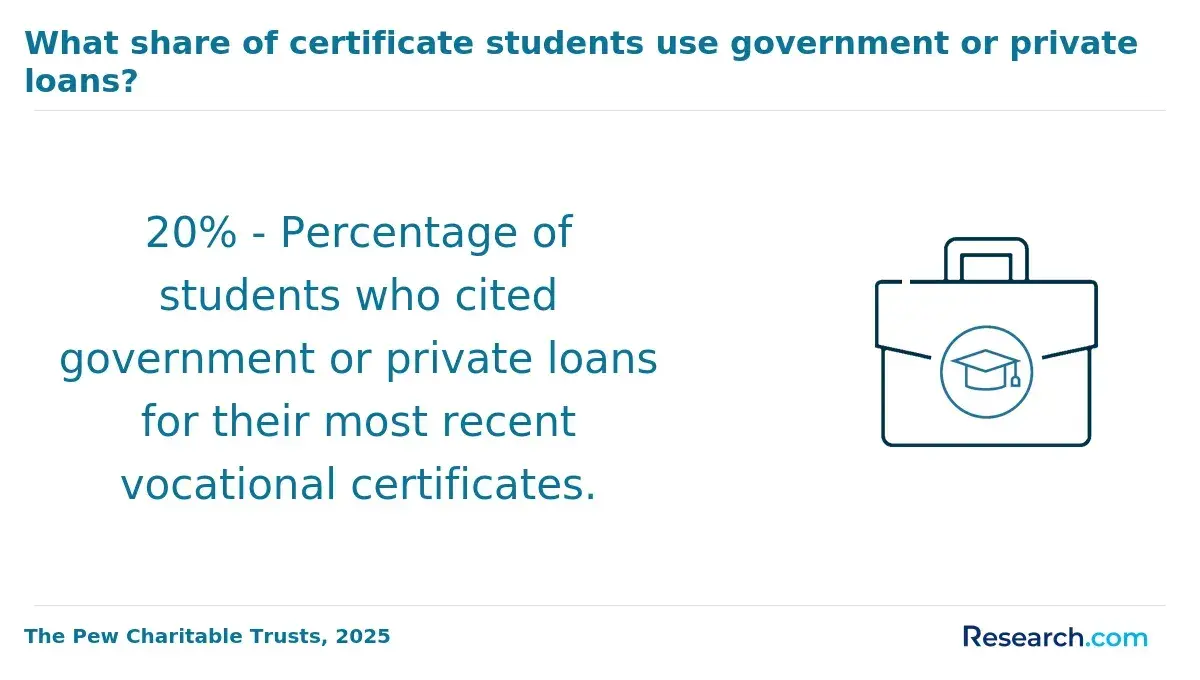
For graduate students using federal loans, the annual Direct Unsubsidized Loan limit is $20,500, so high-cost programs may require Graduate PLUS loans, employer sponsorship, savings, or payment plans.
The table below shows major cost and timeline variables to compare. It is not a price quote; it is a checklist for estimating the real investment across schools.
| Variable | Why it changes total cost | Question to ask |
| Credit requirement | More credits usually mean more tuition and a longer timeline | How many credits are required to graduate, and can prior graduate credits transfer? |
| Tuition model | Some schools charge per credit, while others use flat-rate terms or program pricing | Is tuition different for in-state, out-of-state, and online students? |
| Fees | Online, technology, library, graduation, or course fees can raise the final bill | What is the total estimated cost, including mandatory fees? |
| Enrollment pace | Part-time study spreads cost over time but may delay promotion benefits | Can I switch between part-time and full-time if my work schedule changes? |
| Employer assistance | Tuition benefits can reduce out-of-pocket costs but may require service commitments | Does my employer reimburse graduate engineering management coursework? |
| Residency or travel | Short campus visits can add transportation and lodging costs | Are any campus sessions required, and how often? |
To control cost, compare total program cost instead of advertised tuition alone. Also ask whether the school offers employer partnership discounts, military benefits, graduate assistantships for online students, scholarships, or stackable certificates.
If your interests overlap with infrastructure, building systems, or project delivery, reviewing construction management degree cost can provide a helpful benchmark for adjacent project-focused technical programs.
What careers can you pursue with an engineering management degree?
An engineering management degree can support advancement into roles where technical judgment and leadership intersect. It is not limited to one industry. Graduates may work in manufacturing, construction, aerospace, energy, software, electronics, transportation, defense, consulting, biomedical technology, logistics, utilities, or product development.
The table below connects common roles with their typical responsibilities. Use it to identify whether your target job requires deeper technical authority, broader business management, or stronger project leadership credentials.
| Career path | Typical responsibilities | Who it fits |
| Engineering project manager | Plans schedules, coordinates technical teams, manages budgets, controls scope, reports project risks | Engineers who want to lead delivery while staying close to technical execution |
| Engineering manager | Supervises engineers, sets priorities, allocates resources, reviews technical work, supports hiring and performance | Experienced professionals ready for people management and technical accountability |
| Product development manager | Coordinates design, testing, manufacturing, user requirements, and launch decisions | Professionals interested in innovation, market needs, and cross-functional collaboration |
| Operations manager in technical settings | Improves processes, manages production systems, tracks quality, reduces downtime, oversees workflow | Engineers drawn to efficiency, logistics, and continuous improvement |
| Systems engineering lead | Manages requirements, integration, trade studies, reliability, and lifecycle planning | Professionals who enjoy complex technical systems and stakeholder coordination |
| Technical program manager | Oversees multiple related projects, aligns teams, manages dependencies, and communicates with executives | Professionals moving from single-project responsibility to portfolio-level coordination |
The degree is most valuable when paired with experience. Many employers expect engineering managers to have already demonstrated technical competence before leading teams. If you are early in your career, target roles such as project engineer, associate project manager, process improvement analyst, quality engineer, systems analyst, or operations engineer before pursuing senior management titles.
Common mistakes include assuming the degree alone will replace technical experience, choosing a program without a capstone aligned to your industry, or ignoring soft skills. Engineering leadership requires credibility with technical staff and clarity with nontechnical decision-makers.
The strongest candidates can explain engineering trade-offs in business terms without oversimplifying safety, reliability, or technical constraints.
What salaries can engineering management graduates expect?
Salary potential depends on role, industry, location, years of experience, supervisory scope, and the complexity of the systems being managed. The most relevant federal benchmark is the BLS category for architectural and engineering managers, which reported a May 2024 median annual wage of $167,740.
This figure is not a guaranteed outcome for degree holders; it reflects the midpoint for workers already employed in that occupational category.
Use salary data as a planning tool, not a promise. Someone moving from individual contributor to first-time project manager may earn less than the median for architectural and engineering managers, while a senior leader in aerospace, software, energy, or advanced manufacturing may exceed it. Location also matters because high-cost labor markets often pay more but may reduce net financial gain after living expenses.
The table below explains how different factors can affect compensation. It can help you assess whether a degree is likely to support the type of move you want.
| Factor | How it can influence salary | What to evaluate |
| Industry | Pay often rises in sectors with complex systems, high capital costs, or regulated technical risk | Compare outcomes for your target sector, not only overall averages |
| Experience | Management pay usually reflects prior technical credibility and leadership history | Document projects, budgets, team size, and measurable results |
| Role scope | Managing multiple teams or programs usually carries more responsibility than coordinating a single project | Clarify whether the job is project, program, department, or portfolio leadership |
| Location | Regional labor markets and the cost of living can change the real value of compensation | Compare salary with housing, taxes, commuting, and relocation costs |
| Certifications | Project, quality, and systems credentials can strengthen evidence of job-ready skills | Choose certifications that match your target role rather than collecting credentials broadly |
To evaluate return on investment, compare the total program cost with realistic career scenarios. Ask whether the degree helps you qualify for roles your current resume cannot reach, whether your employer rewards the credential, and whether the curriculum produces work samples you can discuss in interviews. A lower-cost program with strong industry alignment may be a better investment than a more expensive program with limited relevance to your field.
What is the job outlook for engineering management professionals?
The job outlook for engineering management professionals is steady but competitive. The BLS projects 4% growth for architectural and engineering managers from 2023 to 2033, which means opportunities are expected to grow about as fast as the overall labor market. For readers, the key takeaway is that the degree can support advancement, but it should be paired with technical specialization, project results, and leadership evidence.
Several trends are shaping demand. Companies are investing in automation, AI-enabled design, advanced manufacturing, renewable energy, infrastructure modernization, cybersecurity, supply chain resilience, and data-driven operations. These changes create a need for leaders who understand both technical risk and organizational execution.
At the same time, competition can be strong because management roles are fewer than individual contributor roles. Employers often promote people who have already led projects informally, managed stakeholder expectations, or solved cross-functional problems. A degree can make that transition easier, but it is strongest when it helps you demonstrate applied leadership, not just academic completion.
To improve your outlook while enrolled, take practical steps that create evidence of readiness. The actions below are especially useful because they connect coursework to workplace outcomes:
- Volunteer for project coordination, requirements gathering, quality improvement, budget tracking, or risk documentation at work.
- Use class projects to solve real problems in your industry, then convert the results into portfolio examples or interview stories.
- Ask your manager which leadership skills are required for promotion and choose electives that fill those gaps.
- Build fluency with project management software, data dashboards, collaboration platforms, and AI-enabled productivity tools.
- Track measurable outcomes, such as reduced delays, improved quality, lower rework, safer processes, or better stakeholder communication.
The biggest red flag is enrolling without a career plan. If you cannot name the roles you want, the skills those roles require, and the employers that value the degree, pause and gather more information before committing.
Which certifications help project leadership roles in engineering management?
Certifications can strengthen project leadership roles in engineering management, especially when they validate skills that a degree may cover more broadly. They are not always required, but they can help employers quickly understand your capabilities in project delivery, agile work, quality improvement, systems thinking, or risk management.
The table below compares certifications commonly considered by engineering management professionals. Requirements can change, so always confirm eligibility, exams, renewal rules, and experience requirements with the issuing organization before paying fees.
| Certification | Best for | How it supports engineering management |
| Project Management Professional | Experienced project leaders | Signals formal knowledge of scope, schedule, cost, risk, stakeholders, and project governance |
| Certified Associate in Project Management | Early-career professionals | Provides a project management foundation before meeting higher experience thresholds |
| Professional Scrum Master or similar agile credential | Software, product, and iterative development teams | Supports leadership in agile environments where priorities and requirements change quickly |
| Lean Six Sigma Green Belt or Black Belt | Manufacturing, operations, quality, logistics, and process improvement roles | Shows ability to reduce defects, improve processes, and use data for operational decisions |
| Certified Systems Engineering Professional | Complex systems, aerospace, defense, transportation, energy, and technology integration | Validates systems lifecycle thinking, requirements, integration, and technical coordination |
| Professional Engineer license | Engineers in regulated fields where responsible charge matters | Supports credibility and legal authority in certain engineering roles, depending on state rules and discipline |
Choose certifications based on role fit. A PMP may be useful for capital projects or program leadership, while Lean Six Sigma may matter more in manufacturing and process improvement. Agile credentials are more relevant for software, product development, and technology teams. A PE license is different from a management certification because it is tied to engineering practice requirements that vary by state.
A common mistake is collecting certifications without a coherent career story. Employers are more likely to value a credential when you can connect it to measurable project results, team leadership, technical judgment, or process improvement. If your degree includes project management coursework, ask whether it helps satisfy education hours or prepares you for certification exams.
Other Things You Should Know About Engineering Management
Many programs require a capstone or practicum in the final term, usually 3 to 6 credit hours. Students typically apply project management tools, team leadership methods, and engineering decision-making to a real or simulated case, with faculty approval and a final presentation or report.
Many professional programs use a capstone, applied project, or portfolio instead of a traditional thesis. A thesis may be better if you are considering doctoral study, while a capstone may be more useful if your goal is workplace advancement.
It is possible, especially between technical industries with similar project, operations, or systems challenges. The transition is easier when you can show transferable results, such as managing budgets, reducing risk, improving quality, leading teams, or coordinating complex technical work.
References
- Accredited Learning Programs - Alkademy Blog https://alkademy.com/blog/glossary/accredited-learning-programs/
- Best Online Master’s Programs in Engineering Management https://www.onlinemastersdegrees.org/best-programs/engineering/engineering-management/
- Accredited Global Bachelor Degree for Career and Immigration - Cornerstone Canadian Institute https://cornerstoneedu.ca/what-is-global-accreditation-how-an-accredited-global-bachelor-degree-boosts-your-career-and-immigration-prospects/
- Masters in Engineering Management Requirements: Everything You Need to Know https://authory.com/ErinCates/a/Masters-in-Engineering-Management-Requirements-Everything-You-Need-to-Know-a042e88d7bca1448f933a87eb4d386d43
- Accredited vs Non-Accredited Training: Understanding Your Options https://www.qahe.org/article/accredited-vs-non-accredited-training-understanding-your-options/
- Why Pursue an Online Engineering Management Degree? https://engineeringmanagement.org/online-engineering-management-degree/
- What Employers Should Look for in Accredited Qualifications https://www.internationaleducationboard.co.uk/post/what-employers-should-look-for-in-accredited-qualifications
- Master of Engineering Management (online) | Faculty of Engineering https://www.uottawa.ca/faculty-engineering/online-programs/master-engineering-management
- Engineer to Project Manager: Skills, Certifications & MBA Path https://www.mywestford.com/blog/how-to-transition-from-an-engineer-to-a-project-manager/
- What are the job opportunities after a Master’s in Engineering Management in the USA? https://mentr-me.com/question/what-are-the-job-opportunities-after-a-masters-in-enginee