
2027 Best Online Bachelor's in Engineering Management With the Best Balance of Flexibility and Rigor

Co-Founder and Chief Data Scientist
Choosing an online bachelor's in engineering management means balancing two priorities: enough flexibility to keep working and enough technical rigor to be taken seriously by employers. The stakes are real: the U. S. Bureau of Labor Statistics reported a May 2024 median annual wage of $167,740 for architectural and engineering managers, making preparation and program quality important. This guide is for working adults, transfer students, military learners, and first-time undergraduates comparing online options. You'll learn how programs differ, what accreditation matters, what they cost, and how to choose a degree that supports your career goals.
Key Things You Should Know
- Fully online bachelor's programs specifically titled engineering management are limited, so the strongest shortlist often includes engineering management, engineering management technology, applied engineering management, and closely aligned technical management degrees.
- For rigor, look first for institutional accreditation and, when relevant to your goals, ABET accreditation; ABET is especially important if you want a more engineering-heavy curriculum or may later pursue licensure-sensitive roles.
- Cost and ROI vary widely: College Board's 2024-25 data lists average published tuition and fees at $11,610 for in-state public four-year colleges and $43,350 for private nonprofit four-year colleges, before online fees, transfer credits, grants, or employer tuition assistance.
What is an online bachelor's in engineering management and who is it best for?
An online bachelor's in engineering management combines technical coursework with business, operations, project management, quality systems, and leadership training. It is designed for students who want to coordinate engineering work, improve production systems, manage technical teams, or move from hands-on technical roles into supervisory positions.
The degree is not the same as a traditional engineering major. A conventional engineering degree usually goes deeper into design theory, advanced math, and discipline-specific engineering analysis. Engineering management focuses more on applying technical knowledge to budgets, processes, people, schedules, risk, and performance.
This degree is usually a good fit if you want to stay close to engineering or technology but do not want a career built only around design calculations. It can be especially useful for technicians, military personnel, manufacturing workers, project coordinators, and associate degree graduates who want a bachelor's credential for advancement.
It may not be the best fit if your primary goal is to become a licensed professional engineer, work in highly technical design roles, or specialize deeply in civil, mechanical, electrical, chemical, or aerospace engineering. In those cases, an ABET-accredited engineering bachelor's in a specific discipline may be a better starting point.
Some students comparing this path are also considering construction leadership. If your career target is estimating, site supervision, scheduling, or contractor-side project delivery, an online construction management degree may align more directly than engineering management.
How do online engineering management bachelor's programs compare with on-campus options?
Online and on-campus engineering management programs can lead to similar academic credentials, but the experience is different. The right format depends on how much structure, lab access, peer interaction, and schedule control you need.
The table below compares the main trade-offs. Use it to identify whether an online program's flexibility is worth the extra self-management it requires.
| Factor | Online bachelor's in engineering management | On-campus bachelor's in engineering management |
| Schedule flexibility | Best for working adults, military students, caregivers, and transfer students who need asynchronous or evening coursework. | Best for students who can attend classes at fixed times and want a traditional college schedule. |
| Academic rigor | Can be rigorous when the curriculum includes calculus, statistics, systems analysis, quality engineering, capstone projects, and faculty-led assessment. | Often offers more structured weekly accountability and easier access to faculty office hours, labs, and student teams. |
| Hands-on learning | May rely on simulations, virtual labs, remote software, local projects, or workplace-based assignments. | Usually provides more direct access to physical labs, makerspaces, and in-person design teams. |
| Networking | Works best when the program includes cohort discussions, group projects, industry speakers, and career services for online learners. | Stronger for students who want campus clubs, research teams, in-person recruiting events, and local internships. |
| Best fit | Students who need flexibility but can manage deadlines independently. | Students who learn best through face-to-face instruction and frequent in-person collaboration. |
Online education has also become more accepted as universities invest in better learning platforms, analytics, remote proctoring, simulation tools, and industry software. However, flexibility is not the same as ease. A strong online engineering management program should still require quantitative work, team-based projects, technical documentation, and a serious capstone.
Which accredited schools offer the best online engineering management bachelor's degrees?
The best online engineering management bachelor's programs are not always identical in title. Some are engineering-focused, while others are applied, technology-focused, or designed for transfer students with technical associate degrees. That makes accreditation, curriculum depth, transfer policy, and career fit more important than the name alone.
The table below highlights accredited schools commonly worth comparing if you want an online or online-friendly bachelor's pathway in engineering management or a closely related applied technical management field. Always confirm current delivery format, tuition, ABET status, and state authorization directly with the school before applying.
| School | Online or related program | Accreditation profile to verify | Best balance of flexibility and rigor for |
| Arizona State University Online | Bachelor of Science in Engineering in Engineering Management | Institutionally accredited by the Higher Learning Commission; verify current program-level ABET listing for the specific online degree. | Students who want a more engineering-centered curriculum from a large research university with strong online infrastructure. |
| University of Arizona Online | Bachelor of Applied Science in Applied Science: Applied Engineering Management emphasis | Institutionally accredited by the Higher Learning Commission; applied degree structure may be especially relevant for transfer students. | Associate degree graduates who want to build on technical credits and move toward supervision, operations, or systems roles. |
| University of Arkansas Grantham | Bachelor of Science in Engineering Management Technology | Institutionally accredited; verify current programmatic accreditation and transfer-credit treatment before enrollment. | Working adults seeking an applied technology-management curriculum with online flexibility. |
| American Public University | Bachelor of Science in Engineering Management | Institutionally accredited by the Higher Learning Commission; confirm whether the program has programmatic engineering accreditation if that matters for your goals. | Military-affiliated learners and working adults who value flexible starts, online delivery, and applied management coursework. |
A practical ranking should not rely only on brand name. A program with a stronger match to your transfer credits, schedule, and career target may be a better choice than a better-known school that adds time or cost.
What accreditation should an online engineering management program have and why does it matter?
Accreditation is one of the most important quality checks for an online engineering management degree. It affects credit transfer, federal financial aid eligibility, graduate school recognition, employer confidence, and, in some cases, eligibility for engineering-related credentials.
There are two main accreditation layers to understand. Institutional accreditation evaluates the college or university as a whole. Programmatic accreditation evaluates a specific program or discipline. For engineering and engineering technology programs, ABET is the best-known programmatic accreditor in the U.S.
Here is how to think about accreditation before you enroll:
- Start with institutional accreditation because it is usually required for federal financial aid and is often expected for transfer and graduate admission.
- Check whether the exact program, not just the university, is ABET-accredited if you want a more technically rigorous engineering pathway or may pursue licensure-sensitive work later.
- Distinguish ABET Engineering Accreditation Commission programs from ABET Engineering Technology Accreditation Commission programs because they may support different career expectations.
- Ask whether the online version has the same accreditation status as the campus version; do not assume it automatically does.
- Confirm state authorization if you live outside the school's home state, especially if the program includes internships, practicums, or proctored exams.
Accreditation does not guarantee a job or salary, but it reduces avoidable risk. A low-cost program without appropriate recognition can become expensive if credits do not transfer or employers question the credential.
What courses and concentrations are typically included in an engineering management bachelor's?
An engineering management bachelor's usually blends engineering fundamentals, applied statistics, business management, quality systems, project management, and operations. The strongest programs require students to solve technical and organizational problems rather than only study management theory.
The table below summarizes common course areas and why each matters. This can help you judge whether a curriculum is rigorous enough for your goals.
| Course area | What you may study | Why it matters |
| Engineering fundamentals | Physics, engineering graphics, materials, circuits, systems, or discipline-specific technical foundations. | Builds credibility with technical teams and helps managers understand design and production constraints. |
| Mathematics and analytics | Calculus, statistics, data analysis, decision modeling, forecasting, or operations research. | Supports evidence-based decisions in quality, scheduling, process improvement, and cost control. |
| Project management | Scope, schedule, budgeting, risk, procurement, stakeholder communication, and project documentation. | Prepares students to coordinate technical work across teams, vendors, and deadlines. |
| Quality and process improvement | Lean methods, Six Sigma concepts, quality assurance, root-cause analysis, and production systems. | Useful in manufacturing, logistics, construction, energy, healthcare technology, and product operations. |
| Business and leadership | Finance, accounting, organizational behavior, supervision, ethics, and technical communication. | Helps technical professionals translate engineering decisions into business outcomes. |
| Capstone or applied project | Workplace improvement project, systems analysis, product/process proposal, or team-based technical management plan. | Shows whether students can integrate technical, financial, and leadership skills in a realistic scenario. |
Concentrations vary by school, but common options include project management, operations management, manufacturing systems, quality management, supply chain, information systems, and technical leadership. Students more interested in jobsite delivery, estimating, and contractor operations may want to compare construction management degrees online before choosing an engineering management curriculum.
Current technology trends are also changing what "rigor" looks like. Programs that include data analytics, automation, AI-assisted decision tools, digital twins, cybersecurity awareness, and enterprise software can be more useful than programs that rely only on older management coursework.
What are the typical admission requirements for online engineering management bachelor's programs?
Admission requirements vary by school, but online bachelor's programs in engineering management usually follow one of two models: first-year admission for new undergraduates or degree-completion admission for students who already have college credit or an associate degree.
Before applying, review the requirements below because they affect how quickly you can start and how many credits you may need to complete.
- High school diploma or GED for first-year applicants, usually with transcripts showing math and science preparation.
- College transcripts for transfer applicants, including evaluation of prior technical, military, or associate degree credits.
- Minimum GPA, often higher for engineering-focused programs than for general management programs.
- Prerequisite coursework such as algebra, pre-calculus, calculus, physics, statistics, or computer applications, depending on program rigor.
- English proficiency documentation for applicants whose prior education was not in English.
- Resume, statement of goals, or work history for adult-focused and degree-completion programs.
- Technology requirements such as reliable internet, webcam, spreadsheet software, CAD or simulation tools, and access to proctored testing.
A common mistake is applying before checking prerequisites. If you are missing calculus or physics, you may still be admitted, but you could add time and cost through preparatory courses. Transfer students should also request an unofficial credit review before committing to a program.
How long does an online engineering management bachelor's take and what does it cost?
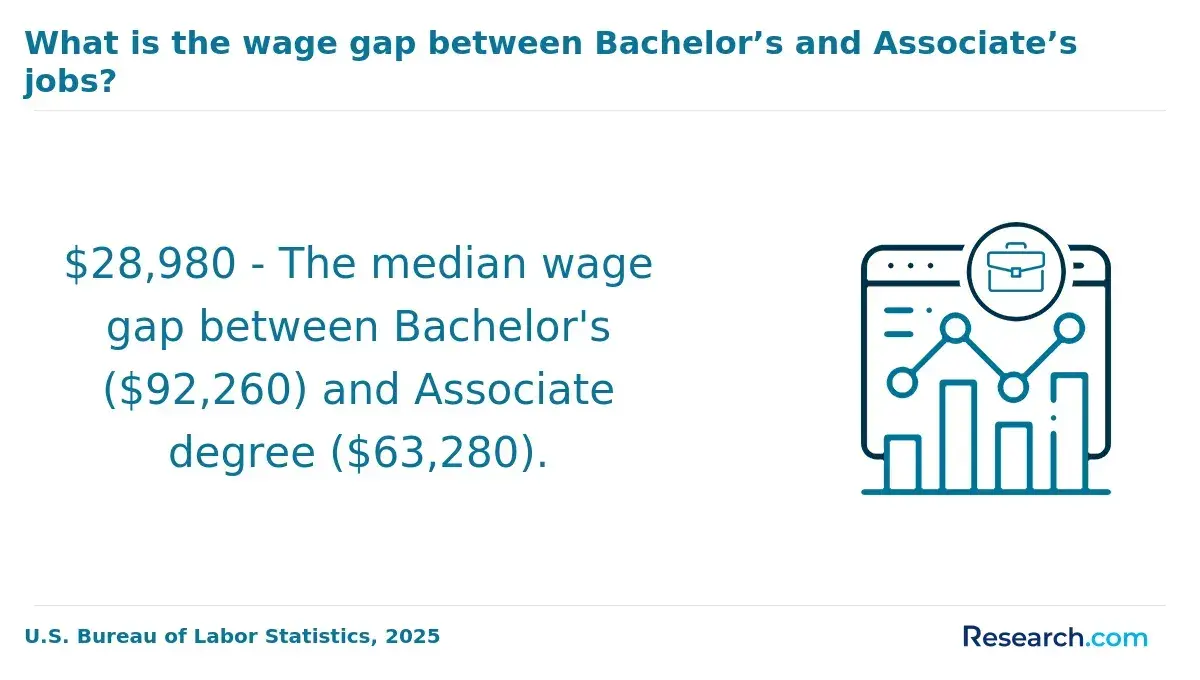
Most bachelor's degrees require about 120 credits. A full-time student entering with no transfer credit commonly needs about four years, while a transfer student with an associate degree may finish faster if credits apply cleanly to major, general education, and elective requirements.
Cost depends on tuition rate, fees, transfer credits, residency rules, course load, textbooks, software, and whether you qualify for employer assistance, military benefits, grants, or scholarships. College Board's 2024-25 data gives a useful national benchmark for published tuition and fees, though your actual online cost may be higher or lower.
- Public four-year, in-state average published tuition and fees: $11,610 for 2024-25.
- Public four-year, out-of-state average published tuition and fees: $30,780 for 2024-25.
- Private nonprofit four-year average published tuition and fees: $43,350 for 2024-25.
Online students should not compare tuition alone. Some schools charge online program fees, technology fees, proctoring fees, graduation fees, lab-kit fees, or higher tuition for upper-division engineering courses. Others offer flat-rate online tuition regardless of state residency, which can help out-of-state students.
Federal loan costs also matter. For 2024-25, the fixed interest rate for federal Direct Subsidized and Unsubsidized Loans for undergraduate students was 6.53%. That rate does not mean borrowing is always a bad choice, but it does mean students should estimate monthly payments before enrolling rather than focusing only on the first term's bill.
To control total cost, take these steps before you choose a program:
- Ask for a written transfer-credit evaluation that shows exactly which credits apply to degree requirements.
- Calculate total tuition using remaining credits, not just the advertised per-credit rate.
- Confirm whether online students pay the same fees as campus students.
- Compare accelerated terms with workload expectations; faster is not better if it forces you to withdraw or repeat courses.
- Check whether your employer reimburses engineering, project management, operations, or leadership coursework.
What careers can you pursue with an online bachelor's in engineering management?
An online bachelor's in engineering management can support roles that sit between technical execution and business leadership. Graduates often pursue positions in manufacturing, logistics, utilities, technology operations, construction-adjacent firms, energy, defense contracting, product operations, and healthcare technology environments.
The table below shows common career directions and the type of work associated with each. Job titles vary by employer, and some management roles require experience beyond the bachelor's degree.
| Career path | Typical responsibilities | Good fit for students who like |
| Project coordinator or project manager | Tracking schedules, budgets, risks, vendors, deliverables, and technical documentation. | Organizing people and timelines under pressure. |
| Manufacturing or production supervisor | Improving throughput, safety, staffing, equipment use, quality, and shift performance. | Hands-on operations and measurable process improvement. |
| Quality assurance or quality systems analyst | Auditing processes, analyzing defects, documenting corrective actions, and supporting compliance. | Root-cause analysis and precision. |
| Operations analyst | Using data to improve workflows, inventory, capacity, cost, and service levels. | Analytics, spreadsheets, dashboards, and systems thinking. |
| Technical sales engineer or applications specialist | Explaining technical products, matching solutions to customer needs, and coordinating with engineering teams. | Communication, problem-solving, and customer-facing work. |
| Engineering manager track | Leading engineers or technical staff, managing budgets, aligning projects with business goals, and evaluating performance. | Long-term leadership growth after building technical and supervisory experience. |
The degree can also be a stepping stone to graduate study in engineering management, systems engineering, MBA programs, operations, project management, or industry-specific leadership. For example, professionals who later move into hospital technology operations or clinical systems leadership may eventually compare advanced options such as a PhD in healthcare management, although that is a very different path from early-career engineering management.
AI and automation are reshaping these careers. Employers increasingly value managers who can interpret data, improve workflows, evaluate automation proposals, and communicate with both engineers and executives. That makes analytics, process improvement, and technical communication especially important course areas.
What salary potential and job outlook can graduates in engineering management expect?
Salary potential depends on role, industry, region, experience, technical depth, and whether the job is truly managerial. A bachelor's degree can help open the door, but most higher-paying engineering management roles also require several years of relevant technical or project experience.
The clearest national benchmark is architectural and engineering managers. The U.S. Bureau of Labor Statistics reported a May 2024 median annual wage of $167,740 for this occupation. That figure is not an entry-level salary target; it reflects an experienced management occupation and should be used as a long-term benchmark rather than a promise.
BLS employment projections for 2024-34 show architectural and engineering managers growing by 4%, about as fast as the average for all occupations. For readers, this suggests steady demand rather than explosive growth, so program choice, work experience, industry specialization, and project results matter.
Early-career graduates may start in coordinator, analyst, supervisor, quality, production, or technical operations roles before moving into management. The fastest route to better opportunities is usually not the degree alone, but the combination of degree, measurable project outcomes, software skills, and leadership experience.
To strengthen career outcomes while enrolled, focus on these actions:
- Build a portfolio of process improvement, scheduling, data analysis, quality, or cost-reduction projects.
- Learn tools employers actually use, such as spreadsheets, project management platforms, ERP systems, CAD viewers, dashboards, and statistical software.
- Seek internships, co-ops, military-to-civilian transition projects, or workplace-based capstones.
- Document leadership experience, even if it begins with shift supervision, vendor coordination, safety initiatives, or team training.
- Consider certifications later, such as CAPM, PMP, Lean Six Sigma, or supply chain credentials, when they match your experience level.
How can you choose an online engineering management program with the right flexibility and rigor?
The best online engineering management program for you is the one that fits your schedule without weakening the technical and quantitative preparation you need. A flexible program should still challenge you with applied projects, analytics, communication, and real problem-solving.
Use the following checklist when comparing schools. It is designed to help you avoid expensive mistakes before you enroll.
- Verify institutional accreditation and, if relevant, ABET programmatic accreditation for the exact program and delivery format.
- Compare curriculum depth by looking for calculus or statistics, engineering fundamentals, quality systems, operations, project management, finance, and a capstone.
- Ask how online labs, simulations, software access, proctored exams, and group projects work.
- Request a transfer-credit evaluation before paying a deposit if you have prior college, military, or technical credits.
- Calculate total degree cost using remaining credits, fees, books, software, loan interest, and lost work time.
- Review faculty backgrounds to see whether instructors have engineering, operations, manufacturing, systems, or project leadership experience.
- Ask career services whether online students receive resume reviews, internship support, employer events, and alumni networking access.
- Check pacing options carefully; accelerated courses can be useful, but they may be difficult with heavy math, technical writing, or team projects.
- Look for transparent outcomes, including graduation support, internship access, capstone examples, and employer partnerships.
- Avoid programs that make vague salary claims, hide fees, pressure you to enroll quickly, or cannot clearly explain accreditation.
If your interests shift away from engineering systems and toward healthcare data, records, compliance, and information governance, a HIM degree online may be a better fit than engineering management.
The right choice usually comes down to fit, not prestige alone. Choose the program that gives you enough rigor to grow, enough flexibility to finish, and enough transparency to evaluate the investment before you commit.
Other Things You Should Know About Engineering Management
Look for regional accreditation for the university and programmatic review from ABET when available. ABET accreditation is a strong quality marker for engineering-related study, and employers often value it when a curriculum includes engineering science, project management, and technical systems coursework.
Often, yes. The degree is well suited for technicians who already understand equipment, production, maintenance, or field operations and need a bachelor's credential plus leadership, budgeting, and project management skills.
Yes, online engineering management bachelor's degrees are generally respected by employers, especially when obtained from accredited institutions. Employers value the blend of technical and managerial expertise these programs offer, recognizing their graduates as well-prepared for leadership roles within engineering fields.
References
- Masters in Engineering Management Requirements: Everything You Need to Know https://engineeringmanagement.org/mem-requirements/
- Engineering Management Degrees Online (MSEM, MEM) https://www.onlineengineeringprograms.com/management
- Online Engineering Management Degree | Explore Your Options https://www.learnhowtobecome.org/best-online-bachelors-in-engineering-management-degree-programs/
- Best Online Master’s Programs in Engineering Management https://www.onlinemastersdegrees.org/best-programs/engineering/engineering-management/
- Is Engineering Management a good major for career growth, job prospects, and salary potential? https://mentr-me.com/question/is-engineering-management-a-good-major-for-career-growth
- Engineering B.S. - Concentration in Engineering Management https://www.kettering.edu/academics-research/programs/engineering-management-concentration





























![2027 Best Advanced Standing Online MSW Programs [CSWE Accredited] thumbnail](/uploads/Online_Advanced_Standing_MSW_301dbd5368.jpg)


