2027 Online Ed.D. in Leadership and Learning in Organizations: Understanding the Difference Between an Education Doctorate and a Management Doctorate
Audited and Verified:
Our Editorial and Data Verification Process
Research.com uses government datasets, official education statistics and primary institutional information to support its career and degree guides. Our review process checks factual accuracy, occupational definitions, source dates and the requirements associated with the credentials discussed.
How This Article Was Fact-Checked
Our editorial team verifies salary estimates, employment projections, education requirements and program information against original data providers and official organizations. Salary figures are checked against the relevant occupational definitions and reporting periods. Information about licensure, accreditation and required in-person training is reviewed separately.
Fact-checked and verified on:

Co-Founder and Chief Data Scientist
An education doctorate and a management doctorate can both address organizational change, but they prepare you to investigate different kinds of problems. That distinction matters if you lead employee development, improve learning across an organization, or want to move into broader management work.
This guide explains what an online Ed.D. in leadership and learning emphasizes, how it differs from a DBA and a PhD, and what to check before committing your time and money. The goal is to help you choose a doctorate - or a shorter route - that fits the work you actually want to do.
Key Things You Should Know
- An Ed.D. in leadership and learning generally centers on adult learning, organizational improvement, and applied inquiry; a DBA generally centers on business and management problems. Compare curricula and final projects, not degree labels alone.
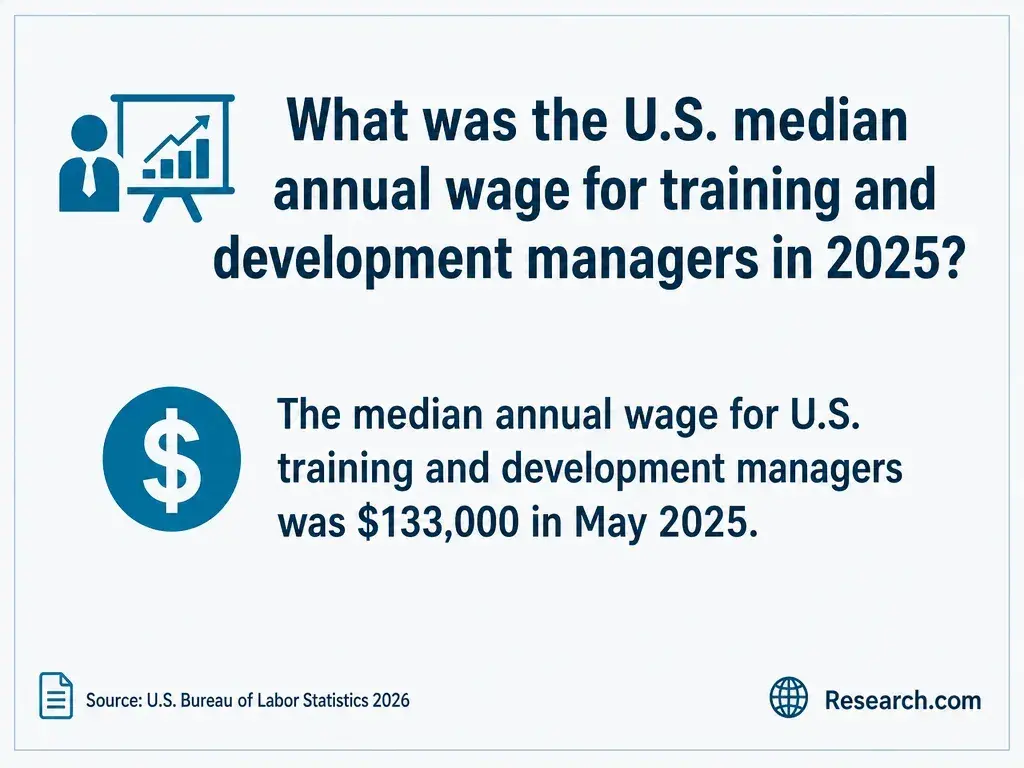
- Neither doctorate guarantees a management role. The U.S. Bureau of Labor Statistics reports a $133,000 median annual salary for training and development managers in May 2025, but that occupational figure is not an Ed.D. graduate salary.
- Before enrolling, verify the university's accreditation, required attendance and project format, full cost, and whether the degree meets any role-specific credential requirements.
What Is an Online Ed.D. in Leadership and Learning in Organizations?
An Ed.D. is a Doctor of Education. In a leadership and learning program, the subject is how people learn, develop, and lead change within organizations - not necessarily how to administer a school. Students may examine employee development, leadership pipelines, organizational culture, or the effectiveness of a learning initiative in businesses, nonprofits, government agencies, healthcare organizations, and educational institutions.
"Online" describes where much of the instruction occurs, not a universal curriculum or schedule. One program may use live cohort meetings and a team project; another may emphasize independent coursework and a dissertation in practice. Likewise, a program with a higher-education focus may address different governance and student-learning problems than a cross-sector organizational leadership program. Readers targeting universities can compare Ed.D. learning and organizational improvement pathways in universities while checking each program's actual requirements.
How Does an Education Doctorate Differ From a Management Doctorate?
The most useful distinction is the problem you want doctoral study to help you solve. A management doctorate usually means a Doctor of Business Administration (DBA), although schools vary considerably. The table compares typical emphases, not requirements shared by every program.
| Pathway | Typical central question | Best fit when your goal is... |
| Leadership and learning Ed.D. | How can an organization improve learning, development, or change in practice? | Leading and evaluating workforce learning or organizational improvement |
| DBA | How can evidence inform business or management decisions? | Investigating strategy, operations, markets, or management practice |
| Research-oriented PhD | What new knowledge can rigorous research contribute to a discipline? | Developing a sustained scholarly research agenda |
The boundaries are not absolute: a DBA can examine employee learning, and an Ed.D. can examine strategy or budgets. Compare required methods courses, faculty expertise, the final project, and examples of questions students are permitted to study. If you primarily need to manage an existing team more effectively, an MBA, executive education, or a supervised leadership assignment may be more direct than either doctorate.
What Careers Can an Ed.D. in Leadership and Learning Prepare You For?
For an established learning and development professional, an Ed.D. can strengthen the ability to diagnose performance problems, design leadership development, and evaluate whether an initiative worked. It may also support organizational development consulting or learning-focused leadership in a university, nonprofit, or public agency. Moving into those roles still depends on relevant experience, sector knowledge, and evidence that you have led work beyond the classroom.
For example, a training specialist seeking a manager role should document budget decisions, stakeholder coordination, staff supervision, and results - not rely on the doctorate alone. The Bureau of Labor Statistics projects 6.4% growth for training and development managers from 2025 to 2035. That describes an occupation's projected employment, not the probability that an Ed.D. student will be promoted.
A university employee considering Ed.D. learning and organizational improvement pathways in universities should compare them against the hiring rules for the specific administrative role.
Relevant coursework often connects adult learning and leadership theory to organizational diagnosis, change implementation, and applied research. A useful program should help you distinguish a training gap from a problem caused by incentives, workflow, or governance. It should also teach you to choose appropriate evidence: interviews may clarify why a program is not being used, while outcome measures may help assess whether participation is associated with a meaningful change.
Look closely at the final academic requirement. A team capstone, dissertation in practice, and conventional dissertation are different forms of work, with different expectations for independence, faculty supervision, and organizational access. If the final deliverable affects your choice, compare online Ed.D. programs without a traditional dissertation, then confirm what each program requires instead. A course title alone does not establish that you will receive advanced training in a particular research method.
An online Ed.D. can be a recognized doctoral degree when it is awarded by a properly accredited university. Verify the institution's accreditation with the accreditor and the U.S. Department of Education's accreditation records, and confirm that the university - not an unrelated training provider - awards the stated degree. Ask whether any claimed specialized recognition actually covers the program you are considering.
Accreditation establishes neither employer acceptance for every job nor eligibility for a regulated occupation. If your goal is school administration or another licensed position, obtain the program's licensure disclosure and check the relevant state authority before applying. A broadly focused organizational leadership Ed.D. should not be treated as a principal-preparation program merely because it includes education courses.
Requirements vary by university. Programs may assess a completed graduate degree, professional experience, academic record, recommendations, a statement of purpose, and the applicant's readiness for doctoral inquiry. An education master's, a teaching background, a particular managerial title, and prior publications are not universal prerequisites. An applicant from business, healthcare, public service, or another field can make a strong case by explaining a learning or leadership problem they have helped address and what they still need to investigate.
If you hold an Education Specialist degree, online education doctorate routes for Ed.S. graduates can be a starting point for comparison. Ask the admissions office separately whether prior coursework satisfies entry requirements and whether any credits apply to the doctorate; one does not establish the other.
Completion time depends on the required coursework, enrollment pace, course availability, and final project. A published minimum is less useful if your work schedule prevents you from following its assumed course sequence. Request the program's degree plan and ask how students progress when a project site changes or a required course is unavailable.
For a meaningful cost comparison, obtain an estimate covering required credits, tuition, mandatory fees, travel for any campus convenings, and likely continuation charges during the final project. Compare those figures with employer reimbursement rules and the income or time you would give up. A guide to Ed.D. program costs for prospective doctoral students can help you identify candidates, but the university's charges for your entry term should control your budget.
Online study can reduce routine commuting and expand the range of programs available to a working leader. It does not necessarily remove fixed class times, group meetings, or campus visits. Campus-based study may offer easier informal access to faculty and peers, but it can require relocation or regular travel. Neither format is inherently more rigorous; examine the actual teaching, advising, and project supervision.
Before choosing online delivery, ask for a sample term schedule, live-attendance rules, residency dates, and the expected pattern of team collaboration. Check whether you could still meet those obligations during a busy work period or after changing employers. Location flexibility is valuable only if the program's attendance and project requirements are workable for you.
There is no general license required simply to hold an Ed.D. or work in organizational learning. A particular job may have separate rules: school principal positions, for example, commonly involve state-specific credentials, while employers may prefer particular experience or certifications for other roles. The degree does not automatically award those credentials.
Work backward from the position you want. Check the job posting, any applicable state licensing authority, and the university's written disclosure. Treat a professional certification as a separate credential with its own eligibility and renewal rules, rather than an automatic benefit of doctoral study.
How Can You Choose a Reputable Online Ed.D. Program?
Start with your intended work: improving organizational learning, investigating a business-management problem, or producing academic research. Then compare programs against that objective rather than selecting the least expensive or most convenient-looking doctorate. Listings of affordable online doctorates in education can broaden your search, but a low advertised tuition rate is not a substitute for a suitable curriculum and workable completion requirements.
Ask each finalist for the information needed to test its fit:
- The exact degree awarded, institutional accreditation, and any licensure disclosures relevant to your target role
- Required courses, available electives, faculty interests, and the form of the final project
- Live-session, residency, group-work, and project-site requirements
- A complete cost estimate, funding conditions, and a realistic course sequence for your intended pace
- Published completion or career outcomes, including how the university defines and measures them
Finally, speak with faculty or the program coordinator about a plausible problem from your workplace. Their response can reveal whether the program supports the kind of inquiry you hope to undertake - and whether a shorter qualification or more leadership experience would serve your goal better.
Other Things You Should Know About EdD Leadership
Yes. An Ed.D. is a doctoral degree, and graduates may use the title where appropriate. In professional settings, stating the degree can help avoid confusion with medical credentials.
Possibly. Colleges set hiring requirements by position and discipline. Relevant professional expertise may help with practice-oriented teaching, while research-intensive faculty roles may require a different scholarly record.
Discuss the constraint with the program before relying on that employer as a project site. Faculty may be able to advise on another approved setting or a feasible question that does not require restricted data.
Publication may be possible, but academic approval does not override employer confidentiality, participant protections, or agreements governing the data. Confirm the program's publication rules and obtain any required permissions before sharing findings.
- Programmatic Accrediting Agencies | ed.gov http://www.ed.gov/laws-and-policy/higher-education-laws-and-policy/college-accreditation/programmatic-accrediting-agencies
- About Online Learning | ucdavis.edu https://cpe.ucdavis.edu/areas-study/online-programs/about-online-learning
- EdD & PhD Careers: Salaries & Career Opportunities | Goodwin College of Professional Studies https://drexel.edu/soe/resources/career-path/doctorate/
- Doctor of Education in Leadership for Educational Equity, Learning Design | University of Colorado Denver https://www.ucdenver.edu/programs/edd-leadership-educational-equity-learning-design
- UNC EdD Online: Organizational Learning and Leadership https://online.unc.edu/online-doctoral-programs/online-edd-organizational-learning-and-leadership/
- Academics: Section 4: Academic Calendar, Admission, and Enrollment: Admission Requirements https://academics.waldenu.edu/handbook/registration-admission-enrollment/admission-requirements
- Careers Leaders Can Pursue with an Ed.D. | Peabody Online | VU-EDU https://peabodyonline.vanderbilt.edu/edd-in-organizational-learning/edd-careers/
- What Topics Do EdD Students Research in the EdD Program? | Fairfield University https://www.fairfield.edu/news/insights/education-human-development/what-topics-do-edd-students-research.html
- DBA vs Ph.D.: What are the Differences? | Bellevue University https://www.bellevue.edu/articles/dba-vs-phd/
- Doctoral dissertation or capstone: how to choose the right program | PhD/Doctorate | Capella University Blog https://www.capella.edu/blog/phd-doctorate/the-difference-between-a-dissertation-and-doctoral-capstone/