2027 Online Ed.D. in Leadership and Learning in Organizations: Degree Fit for Leaders Tackling A Manufacturer Moving to Cross-Skilled Teams
Audited and Verified:
Our Editorial and Data Verification Process
Research.com uses government datasets, official education statistics and primary institutional information to support its career and degree guides. Our review process checks factual accuracy, occupational definitions, source dates and the requirements associated with the credentials discussed.
How This Article Was Fact-Checked
Our editorial team verifies salary estimates, employment projections, education requirements and program information against original data providers and official organizations. Salary figures are checked against the relevant occupational definitions and reporting periods. Information about licensure, accreditation and required in-person training is reviewed separately.
Fact-checked and verified on:

Co-Founder and Chief Data Scientist
A manufacturer moving from specialized jobs to cross-skilled teams needs more than a training calendar. Leaders must determine which tasks can be shared safely, how people will learn them, and whether scheduling, incentives, and supervision support the change.
For operations, workforce-development, and learning leaders, an online Ed.D. in leadership and learning may offer a way to study those problems systematically, but it is not a prerequisite for solving them. This guide shows where doctoral study could add value, where a faster intervention may be better, and what to verify before enrolling.
Key Things You Should Know
- An Ed.D. fits best when you have authority to lead sustained organizational change and want to investigate how cross-skilling, supervision, and learning transfer work together, not merely deliver training.
- Start with a bounded operational diagnosis: separate skill gaps from equipment, staffing, safety, scheduling, and incentive problems before choosing an educational solution.
- Training and development managers had a $133,000 US median annual salary in May 2025, but that occupational figure is not an Ed.D. graduate salary or a forecast of a promotion.
What Is an Online Ed.D. in Leadership and Learning in Organizations?
An Ed.D. in leadership and learning in organizations is a practice-oriented doctorate concerned with how adults learn, how organizations change, and how leaders use evidence to improve practice.
"Online" describes where much of the instruction occurs; it does not establish that classes are self-paced or that campus visits are unnecessary. Exact degree titles, curricula, and final-project requirements vary by university.
For a manufacturing leader, its value lies in connecting workforce learning to operating systems. An operator may complete training yet rarely use a newly learned task because the shift schedule offers no practice time or a supervisor cannot release them.
A leadership-and-learning approach examines those conditions alongside instruction. This differs from a technical manufacturing credential, an MBA focused on broader business management, or a research-oriented PhD aimed principally at producing academic scholarship.
The degree is not limited to school administration. Readers whose goal is instead campus management can explore organizational leadership Ed.D. program selection for university staff; that is a different career decision from improving a production workforce.
Is an Online Ed.D. Suitable for Leaders Moving Manufacturers to Cross-Skilled Teams?
Cross-skilling means preparing employees to perform additional tasks or roles to an agreed standard, not simply rotating them through stations. Its value depends on safe task boundaries, sufficient practice, reliable coverage, and a reason for employees and supervisors to maintain proficiency.
The same symptom can call for different remedies. This comparison helps identify whether doctoral-level leadership and learning study addresses the likely problem or sits too far from it.
| Observed issue | What needs examination | Likely value of an Ed.D. |
| Employees cannot perform a second task reliably | Instruction, practice opportunities, assessment, and refresher intervals | Potentially useful for designing and evaluating a learning system |
| Qualified employees are seldom assigned across tasks | Scheduling rules, supervisor authority, staffing, and incentives | Useful if the leader can study and change these systems, not just training |
| Output suffers despite verified proficiency | Equipment, materials, workflow, and production constraints | Limited as a direct remedy; operations or engineering expertise takes priority |
| Teams disagree about who may perform a task | Safety authorization, job boundaries, and labor agreements | May support stakeholder engagement, but cannot replace required approvals |
A credible starting point is a small, authorized pilot rather than a plant-wide claim that cross-skilling will improve performance. Before proposing one, a leader should:
- Identify the tasks, shifts, safety restrictions, and decision-makers within scope.
- Establish a baseline using available measures such as demonstrated task proficiency, coverage gaps, quality, and rework; check whether the measures are reliable.
- Agree on training, supervised practice, assessment, and the conditions under which an employee may work independently.
- Review results alongside workflow changes and unintended effects, rather than attributing every difference to training.
An Ed.D. is most compelling if this kind of diagnosis and evaluation will be a recurring leadership responsibility and the employer can support ethical workplace inquiry.
If the immediate need is a skills matrix, trainer preparation, or a redesigned shift schedule, targeted operational support and employer-sponsored development may be faster and less costly. A pilot's apparent improvement alone would not prove that cross-skilling caused it.
What Careers Can an Ed.D. in Leadership and Learning in Organizations Prepare You For?
For an experienced manufacturing leader, the most plausible next moves are broader workforce-development, organizational-development, training-management, or change-leadership responsibilities.
The degree can strengthen applied evaluation and leadership judgment; employers will still look for evidence that you managed people, budgets, implementation, and operational trade-offs. A documented cross-skilling initiative may be more persuasive than the credential alone.
Moving into organizational consulting is possible when the leader can translate plant experience into a clear diagnostic method and communicate its limits across clients. Moving into higher-education workforce partnerships is a more substantial sector change that may require knowledge of academic governance and public funding.
If that is the intended transition, investigate low-cost higher education leadership doctoral funding options as part of a separate comparison; they are not automatically a better fit for a manufacturing role.
The most relevant studies combine adult learning and learning transfer with organizational diagnosis, change leadership, and applied research. For cross-skilling, learning transfer is the test of whether employees can use a skill correctly during actual production, not whether they liked a course.
Program evaluation helps a leader examine proficiency, sustained use, coverage, quality, and unintended consequences without confusing a training-completion count with an operational result.
Look for opportunities to study frontline and supervisor perspectives, assess measures critically, and revise an intervention when evidence challenges the original diagnosis. Research-methods instruction should also prepare students to handle employee information responsibly.
Employer permission to access records is distinct from faculty approval of a doctoral project; a university may require additional ethical review. Do not assume a course project can use identifiable personnel data.
Final requirements vary: a dissertation in practice, another applied project, or a dissertation may involve different scopes and approvals. Compare actual program rules with education doctorates with applied final projects rather than assuming that "applied" means no substantial research or writing.
Online study can let a plant leader remain employed and investigate a local workplace problem. Its constraint is that live seminars, group meetings, and any required convenings may conflict with rotating shifts or production emergencies. Campus-based study may make scheduled faculty and cohort interaction easier, but travel or relocation can reduce workplace access.
Ask each program for its actual meeting times, attendance policy, campus dates, group-work expectations, and policy if a student changes employers before the final project. A shorter advertised pathway is useful only if its course sequence and project milestones fit those obligations. Compare fast-track doctoral study in education against the time you can realistically protect during shutdowns, peak production, and project-data collection.
Requirements are program-specific. Universities may examine prior graduate study, academic performance, professional experience, recommendations, a statement of purpose, and readiness for doctoral research. A manufacturing applicant should not assume that an education master's degree is universally required or that a management title by itself demonstrates qualifying leadership.
Prepare a concrete account of decisions you have owned: which workforce problem you addressed, whose cooperation was needed, how you assessed progress, and what remained uncertain. Frame cross-skilling as a proposed area of inquiry, not as a completed success story.
Ask admissions staff whether your degree and experience meet their rules, and ask the program separately what workplace access its final project requires. Prior graduate credits used to establish eligibility do not necessarily transfer into doctoral requirements.
There is no reliable universal completion time or price for this degree. Required credits, course availability, enrollment pace, and the final project determine the timeline.
Compare each school's published tuition basis and required fees, then account for convening travel, books or technology, and any time away from work. An employer's reimbursement policy may depend on continued employment or satisfactory progress; it should not be counted until its terms are confirmed.
Request a written program-specific cost estimate and degree plan for your intended entry term. Check what happens financially if project approvals, data access, or production demands delay completion. Reviewing budget-conscious Ed.D. degree options can help build a shortlist, but a lower advertised tuition figure is not necessarily the lowest total cost for a working plant leader.
Confirm the university's current institutional accreditation through the accreditor and the US Department of Education's recognized-accreditor information, then confirm that the advertised Ed.D. is the degree the university will award.
Ask the university whether your state of residence affects online enrollment or required in-person activities. Accreditation of an institution does not, by itself, establish that a particular program meets a state's professional-licensure requirements.
For a manufacturing leadership goal, the practical question is usually whether the institution is recognized and the curriculum fits the work, not whether it is approved for school-administrator licensure. If you later intend to pursue a regulated education role, obtain program-specific guidance and check directly with the relevant state authority before enrolling.
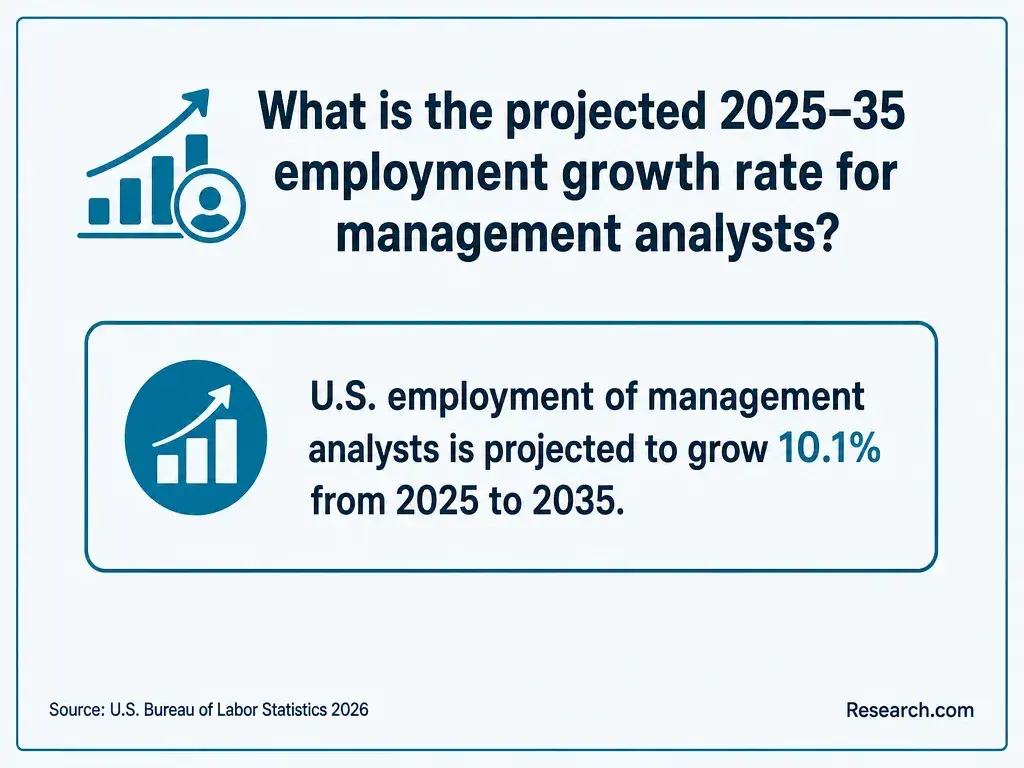
The US Bureau of Labor Statistics reports a May 2025 median annual salary of $133,000 for training and development managers and projects 6.4% employment growth for that occupation from 2025 to 2035. Those figures describe an occupation across education levels and industries; they do not predict a manufacturing Ed.D. graduate's pay or demonstrate that the doctorate is required.
Before treating the degree as a financial investment, compare the roles you could pursue now with roles that specifically value doctoral-level evaluation and change leadership. Weigh likely employer support and total study costs against the experience you could gain by leading a cross-skilling initiative without enrolling.
Does This Ed.D. Require a License or Professional Certification?
A general organizational leadership and learning Ed.D. does not ordinarily require an educator license to study manufacturing workforce development, and the degree itself does not confer a manufacturing or professional certification.
Particular jobs may have separate requirements. Safety-critical tasks may also require documented training or authorization under applicable workplace rules; a doctorate does not substitute for those controls.
Confirm any credential required for your intended position with the employer or responsible regulator. Treat school-administrator licensure as a separate, state-specific question that only an appropriately approved pathway may address.
Other Things You Should Know About EdD Leadership Programs
Do not assume so. Review the collective bargaining agreement and involve the appropriate labor-relations representatives before changing job assignments, training obligations, or pay practices.
Record demonstrated proficiency and its assessment date separately from training completion. Set task-specific reassessment rules with supervisors and safety personnel rather than treating an old sign-off as permanent authorization.
That depends on company policy, job classifications, and any labor agreement. Resolve the pay question early: unclear incentives can undermine participation even when the training is sound.
Yes, if each shift has comparable instruction, supervised practice, and assessment. Track shift conditions separately so differences in staffing or equipment are not mistaken for differences in learning.
- Evaluate Training: Measuring Effectiveness | cdc.gov https://www.cdc.gov/training-development/php/about/evaluate-training-measuring-effectiveness.html
- Maximizing the Impact and ROI of Leadership Development | nih.gov https://pmc.ncbi.nlm.nih.gov/articles/PMC11505461/
- HRD Degree Plan | txst.edu https://www.txst.edu/clas/apce-hrd/degree-plan.html
- Doctoral dissertation or capstone: how to choose the right program | PhD/Doctorate | Capella University Blog https://www.capella.edu/blog/phd-doctorate/the-difference-between-a-dissertation-and-doctoral-capstone/
- How Long Does It Take to Get an EdD in Education Leadership? | regiscollege.edu https://www.regiscollege.edu/blog/education/how-long-to-get-edd-in-education-leadership
- What Topics Do EdD Students Research in the EdD Program? | Fairfield University https://www.fairfield.edu/news/insights/education-human-development/what-topics-do-edd-students-research.html
- EdD vs. PhD in Education: What's the Difference? | Campus Insider https://insider.augusta.edu/edd-vs-phd-education/
- Doctoral Learning and Resources - Section 7. Learning Modalities and Resources - Academics at Walden University https://academics.waldenu.edu/handbook/learning-modalities/doctoral-research-resources
- Online Ed.D. - Teachers, Schools, and Society | Student Services https://education.ufl.edu/curriculum-teaching/prospective-students/edd/
- Organizational Learning, Leadership, and Policy MS | Drexel University Catalog https://catalog.drexel.edu/2027-2028/graduate/education/organizational-learn-lead-policy/