2027 Paying for an Online Ed.D. in Leadership and Learning in Organizations: Graduate Loan Payments from an Earlier Degree
Audited and Verified:
Our Editorial and Data Verification Process
Research.com uses government datasets, official education statistics and primary institutional information to support its career and degree guides. Our review process checks factual accuracy, occupational definitions, source dates and the requirements associated with the credentials discussed.
How This Article Was Fact-Checked
Our editorial team verifies salary estimates, employment projections, education requirements and program information against original data providers and official organizations. Salary figures are checked against the relevant occupational definitions and reporting periods. Information about licensure, accreditation and required in-person training is reviewed separately.
Fact-checked and verified on:

Co-Founder and Chief Data Scientist
An online Ed.D. can be difficult to finance when you are still paying for an earlier graduate degree. Tuition is only part of the decision: enrolling may change when your existing loans require payments, while interest and new borrowing can increase your eventual balance.
This guide is for working professionals considering a leadership and learning doctorate alongside graduate debt. It explains how to build a realistic budget, check your loans' enrollment rules, compare funding options, and decide whether the degree is worth taking on now.
Key Things You Should Know
- Budget for both the Ed.D. and your earlier loans; a temporary pause in payments does not necessarily stop interest from accruing. Federal loans may qualify for in-school deferment at eligible half-time enrollment, but private-loan terms and income-driven repayment rules differ.
- Confirm your status with each servicer before changing payments. Compare the degree's full cost and likely career use, not just its monthly tuition bill.
- The Bureau of Labor Statistics reports a $133,000 median annual wage for training and development managers, not an expected salary for Ed.D. graduates.
What Is an Online Ed.D. in Leadership and Learning in Organizations?
It is a practice-oriented doctorate focused on how people learn, lead, and implement change in organizations. Students may study adult learning, leadership, organizational systems, and applied inquiry while continuing to work.
"Online" describes where much instruction occurs; it does not establish that classes are self-paced or that campus visits are unnecessary.
Programs with similar names can have different requirements and purposes. Use this guide to understanding different Ed.D. degree formats and focuses, then verify the exact degree, curriculum, and final project at each school. A general organizational leadership Ed.D. is not automatically a school-administrator licensure program.
For a borrower with an earlier graduate degree, the degree makes the strongest financial case when its applied work supports a defined responsibility or advancement path, not merely when it adds another credential.
How Much Does an Online Ed.D. in Leadership and Learning in Organizations Cost?
There is no reliable single price for an online Ed.D. Tuition may be charged per credit, term, or program, and the advertised figure may exclude fees or required travel. Ask each school for a written estimate covering the credits and time you would actually need.
The following cost categories help distinguish a program's quoted price from the amount your household must finance:
| Cost category | What to verify | Why earlier loan payments matter |
| Tuition and required fees | Billing method, required credits, annual increases, and continuation charges | These expenses compete with payments already due. |
| Attendance and project costs | Technology, books, campus convenings, travel, and approved project expenses | Irregular costs can strain a budget built around fixed monthly debt payments. |
| Time and employment costs | Reduced hours, unpaid leave, caregiving, and changes to employer support | Lower earnings may be more consequential than a difference in tuition. |
A lower-priced program is not necessarily the cheaper option if its schedule requires lost wages or repeated travel. Readers specifically comparing higher-education leadership doctorates can also explore paying for a doctorate in higher education leadership; verify that any listed funding applies to the program and entry term you are considering.
How Do Graduate Loan Payments Affect the Cost of an Online Ed.D.?
Your earlier debt affects the decision in two ways: required payments reduce the cash available for doctoral study, and interest can increase what you owe even if payments pause.
For eligible federal loans, at least half-time enrollment at an eligible school may trigger in-school deferment. Interest generally continues accruing on unsubsidized and PLUS loans; private lenders set their own enrollment and deferment rules. A deferred payment is therefore not the same as a waived cost.
Before accepting an offer, compare these scenarios using your servicers' actual balances, rates, and terms:
- Keep paying: Add existing required loan payments to tuition, fees, living costs, and a reserve for unexpected expenses.
- Use an available deferment: Check which loans qualify, what interest accrues, and what the projected balance and payment will be afterward.
- Change an eligible repayment arrangement: Request a current federal repayment-plan estimate or discuss private-loan options with the lender rather than assuming a lower payment is available.
If you are pursuing Public Service Loan Forgiveness (PSLF), an in-school deferment can also affect whether months count toward the program's 120 qualifying payments.
Ask your servicer about your specific loans, employment, and repayment status before relying on a pause; do not assume doctoral enrollment advances forgiveness. Likewise, borrowing new loans to free up cash for old payments may lower today's pressure while increasing total debt.
If the earlier debt came from unfinished doctoral study, online Ed.D. options for all-but-dissertation applicants may be worth investigating before starting a new degree. Eligibility and any credit recognition require a written school evaluation; neither is assured.
Start with the school's financial aid office and your employer. An eligible doctoral student may be considered for federal graduate borrowing through the FAFSA, subject to applicable rules and individual eligibility.
School scholarships, assistantships, and departmental awards vary; a professional Ed.D. should not be assumed to carry the funding often associated with a research PhD.
Employer tuition assistance can be especially valuable when you already have loan payments, but its details determine whether it solves a cash-flow problem. Ask whether support is paid upfront or reimbursed after a passing grade, whether doctoral study is eligible, and whether you must repay the employer if you leave. Check any scholarship's renewal and enrollment conditions as well.
Use grants, scholarships, and assistance you can document before deciding how much to borrow. Then compare the resulting loan payments with a lower-cost alternative, such as a focused graduate certificate or employer-sponsored leadership development, if your goal does not require a doctorate.
Online study may protect earnings by reducing commuting or relocation, which matters when earlier loans remain payable. Campus-based study may offer more in-person access but impose travel or schedule costs.
Neither format is automatically cheaper or more flexible: online cohorts can require live evening classes, group meetings, and campus convenings.
Compare schedules alongside cost. Confirm attendance rules, required visits, time zones, project deadlines, and whether you could remain enrolled after a job change.
A compressed timetable may limit the number of months you incur school-related costs, but short-duration online Ed.D. programs can also demand a heavier weekly workload. Faster completion is only a financial advantage if the pace does not force you to reduce earnings or borrow more for living expenses.
Depending on the program, coursework may cover adult learning, organizational change, leadership, program evaluation, and qualitative or quantitative inquiry. Many programs also require an applied project or dissertation in practice, but the deliverable, supervision, and organizational access requirements differ.
Evaluate courses against the work you want to do. A learning and development professional seeking to assess training effectiveness needs more than a course title mentioning "analytics"; review the methods sequence, evaluation assignments, and faculty guidance.
If those skills alone would meet your goal, targeted training may cost less than adding doctoral debt.
Requirements vary by institution but may include a completed master's degree, transcripts, a statement of purpose, recommendations, and evidence of relevant professional experience.
Some programs specify graduate grades, interviews, or research preparation. Check the rules for your entry term rather than assuming that prior graduate study guarantees eligibility.
Also separate admission credit from degree credit. A master's degree may satisfy an entry requirement without reducing the Ed.D. courses you must pay for.
If you hold an education specialist degree, advanced study options after an Ed.S. can help frame questions for admissions, but only the receiving institution can confirm whether any coursework applies to its doctorate. Request that decision in writing before counting on savings.
Confirm that the institution holds recognized institutional accreditation and that the accreditation covers the institution awarding the degree. This is a basic check for academic legitimacy and can matter for aid eligibility and how other institutions or employers evaluate the credential.
Do not infer professional eligibility from accreditation alone. If you need principal, superintendent, teacher, or another regulated credential, ask the program for its licensure disclosures and check with the relevant state authority. For a borrower, discovering after enrollment that the degree does not meet a required credential goal is an avoidable financial risk.
The degree may support experienced professionals working in learning and development, organizational development, workforce training, consulting, higher education, government, or nonprofit leadership.
The work can include diagnosing learning needs, leading change, evaluating programs, and developing other leaders. Hiring decisions still depend on sector knowledge, management experience, and evidence of results.
Before borrowing, identify a specific next role and examine its actual requirements. If your employer promotes primarily on demonstrated responsibility, an internal project and mentorship may be a more direct route.
If you want to lead complex evaluation or organization-wide learning work, an Ed.D. may offer useful depth, provided you can apply that learning in a suitable setting.
What Salaries and Job Outlook Can Ed.D. Graduates Expect?
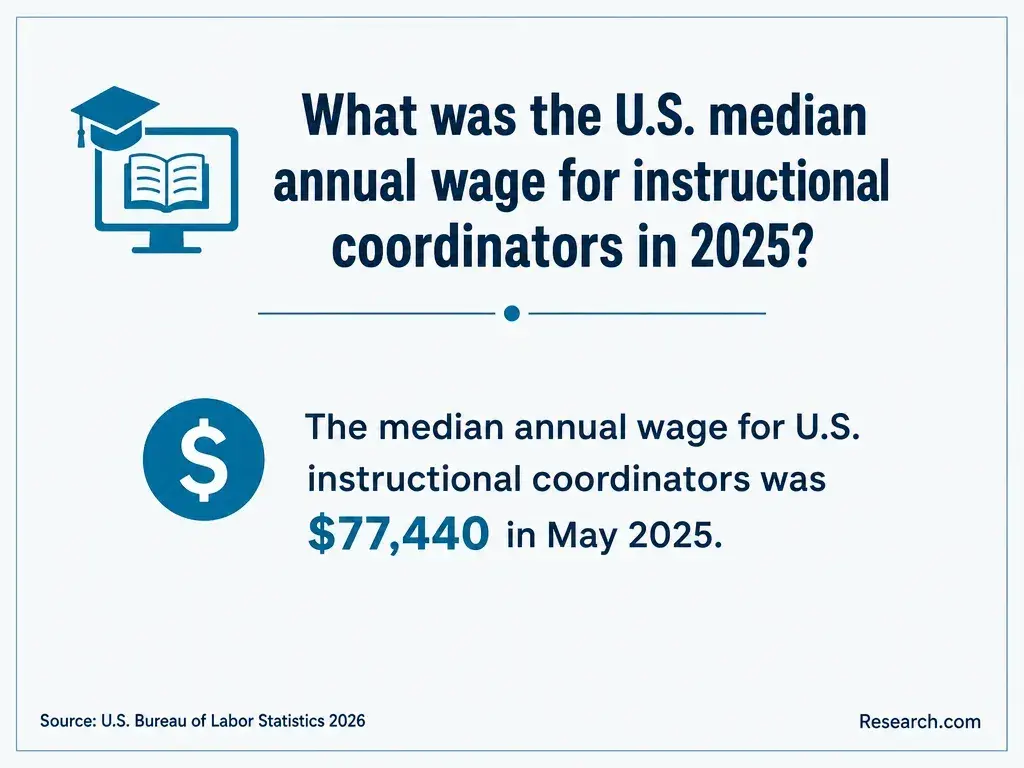
No occupational median is a reliable forecast of an individual Ed.D. graduate's earnings. The U.S. Bureau of Labor Statistics reports a May 2025 median annual wage of $133,000 for training and development managers, with employment projected to grow 6.4% from 2025 to 2035. Those figures describe an occupation across workers with varied credentials and experience, not the return on this degree.
For your decision, compare the compensation and hiring criteria of roles you could realistically pursue with your current experience.
A possible future manager's salary should not be used to justify borrowing if the role first requires leadership responsibilities you have not held. Build your repayment plan around earnings you can sustain, not an assumed promotion.
Other Things You Should Know About EdD Leadership
It can. Ask the school's financial aid office and your loan holder what steps are required to restore eligibility before relying on federal aid in your budget.
Do not assume so. Education loans are awarded for eligible costs of attendance, not as a general-purpose refinancing product. Ask the financial aid office how permitted expenses and refunds are handled.
Enrollment-based loan benefits generally attach to the borrower's own eligible enrollment, not a spouse's. Household income or tax filing choices may affect some repayment calculations; check the applicable plan rules.
Yes. A lender may consider outstanding balances and required payments when assessing affordability. Ask a mortgage lender how it treats loans in repayment or deferment before assuming a temporary payment pause improves your application.
- Cost of Attendance (Budget) | 2025-2026 Federal Student Aid Handbook https://fsapartners.ed.gov/knowledge-center/fsa-handbook/2025-2026/vol3/ch2-cost-attendance-budget
- Tips for paying off student loans more easily | consumerfinance.gov https://www.consumerfinance.gov/paying-for-college/repay-student-debt/student-loan-debt-tips/
- How Enrollment Affects Your Federal Student Loans | The University of Iowa https://financialaid.uiowa.edu/types-aid/loans/how-enrollment-affects-your-federal-student-loans
- Online EdD in Organizational Leadership | Pepperdine University https://gsep.pepperdine.edu/doctorate-organizational-leadership/
- Ed.D. Tuition and Financial Aid - Peabody | VU-EDU https://peabodyonline.vanderbilt.edu/edd-in-organizational-learning/tuition-and-financial-aid/
- Doctoral Degree (EdD) in Educational Leadership - UK Online https://online.uky.edu/doctoral/educational-leadership/edd
- Doctor of Education in Leadership and Learning in Organizations | Vanderbilt University https://www.vanderbilt.edu/online-learning/program/edd-in-organizational-learning/
- EdD in Organizational Change and Leadership | USC Rossier https://rossier.usc.edu/programs/doctoral/organizational-leadership/
- Tuition and Fees - Peabody College - Vanderbilt University https://peabody.vanderbilt.edu/admissions/funding-your-education/tuition-and-fees/