2027 Is an Online Ed.D. in Leadership and Learning in Organizations a Good Fit for Financial Services Training Directors?
Audited and Verified:
Our Editorial and Data Verification Process
Research.com uses government datasets, official education statistics and primary institutional information to support its career and degree guides. Our review process checks factual accuracy, occupational definitions, source dates and the requirements associated with the credentials discussed.
How This Article Was Fact-Checked
Our editorial team verifies salary estimates, employment projections, education requirements and program information against original data providers and official organizations. Salary figures are checked against the relevant occupational definitions and reporting periods. Information about licensure, accreditation and required in-person training is reviewed separately.
Fact-checked and verified on:

Co-Founder and Chief Data Scientist
A financial services training director may already know how to deliver programs but need stronger ways to diagnose performance problems, develop leaders, and show whether learning transfers to work. An online Ed.D. in leadership and learning could build those capabilities, but it is a substantial commitment, not a standard requirement for the role.
This guide examines what the degree can add to your existing experience, where its limits matter in a regulated business, and how to decide whether doctoral study is a better investment than a more focused alternative.
Key Things You Should Know
- An online Ed.D. is most useful if you already lead training and want to direct broader organizational learning, change, or evidence-based leadership initiatives, not simply qualify for your current job.
- The U.S. median annual pay for training and development managers was $133,000 in May 2025; that occupational figure is not a predicted salary for Ed.D. graduates.
- Confirm the program's applied-project rules, live attendance, total cost, and whether your employer will authorize access to appropriate workplace data.
Is an online Ed.D. in leadership and learning a good fit for financial services training directors?
It can be a good fit when your next goal is broader learning and organizational leadership, not a credential needed to remain a training director. Financial services training directors often coordinate onboarding, product and systems education, manager development, and training tied to changing policies.
An Ed.D. focused on leadership and organizational learning offers a practice-oriented way to study how adults learn, why change efforts succeed or stall, and how to evaluate improvement.
The distinction is especially important in a regulated workplace. If employees repeatedly make an error, the cause may be unclear procedures, incentives, system design, supervision, or a learning gap.
Doctoral study may strengthen your ability to investigate that distinction; it does not make another course the right answer by default. Nor does it replace compliance, legal, risk, or business-unit authority.
The degree is most compelling if you can identify a consequential problem you have authority to help address, expect to use applied inquiry throughout your career, and can sustain doctoral work alongside your job.
If your immediate need is better instructional design, a new learning platform, or a specific regulatory-training skill, targeted development or a supervised cross-functional project may be faster and less expensive. An MBA or DBA may fit better if your intended advancement centers on business strategy or business research rather than learning and change.
What does an online Ed.D. in leadership and learning organizations prepare graduates to do?
A relevant Ed.D. can prepare an experienced director to diagnose learning problems, lead organizational change, and evaluate workplace initiatives. That might mean examining why branch-manager coaching practices vary, designing support for a new operating process, or evaluating whether training is used on the job. The work requires collaboration with operations, compliance, risk, HR, and technology teams, not just authority over a training calendar.
Applied research is a potential advantage, provided the project is feasible. A director might propose using approved, aggregated training and performance measures alongside interviews to understand an implementation problem.
The program must approve the academic scope, and the employer must authorize any data access or participation. Employee and customer information, confidentiality obligations, and institutional research-review rules may limit what can be collected or reported. A workplace evaluation is not automatically an approved dissertation or capstone.
Graduation demonstrates completion of a particular program's requirements. It does not by itself establish expertise in financial regulation, confer executive authority, or prove that a workplace intervention improved performance.
What career outcomes can financial services training directors expect after earning an Ed.D.?
The most plausible outcome is greater scope within an existing career: leading enterprise learning strategy, manager development, talent initiatives, or cross-functional change work. A director who can show credible needs assessments, implementation decisions, and appropriately interpreted evaluations has more useful evidence for advancement than a degree title alone.
Other possibilities include organizational development or consulting, but those roles may demand business development, change-delivery, or sector experience the Ed.D. does not supply.
Higher education is a separate transition with its own hiring expectations; readers considering it can explore organizational leadership doctorates for university leadership work. A financial services director should not assume that sector's roles follow the same promotion path as corporate learning leadership.
Before treating the degree as a career investment, review roles you would realistically pursue. Note whether postings emphasize doctoral education, enterprise leadership experience, financial services knowledge, analytics, or a combination. If the main gap is responsibility for larger initiatives, seek sponsorship to lead one while you evaluate whether doctoral study would add value.
Delivery format changes how you participate, not necessarily the academic standard. The comparison that matters to a working director is whether either program permits sustained study and an approved applied project without undermining job responsibilities.
| Consideration | Online Ed.D. | Campus-based doctorate |
| Attendance | May combine scheduled live sessions with independent work; online does not necessarily mean self-paced. | May offer more in-person contact but require regular travel or relocation. |
| Collaboration | Team meetings and faculty consultation may occur remotely, sometimes outside work hours. | In-person interaction may be easier to arrange, depending on the schedule. |
| Workplace project | May be practical to pursue while employed, subject to program and employer approval. | May also permit workplace inquiry; location alone does not determine project rules. |
Ask each program for its actual live-session schedule, campus-convening requirements, group-work expectations, and final-project policy. If you previously completed doctoral coursework, resuming doctoral education through an Ed.D. completion route is a distinct option to investigate; eligibility and accepted credits require an individual institutional review.
Course titles and requirements vary, but the most relevant curriculum combines adult learning and learning transfer with organizational leadership, change, and applied research. For a financial services director, useful methods study should extend beyond learner satisfaction to questions about measurement, implementation, and alternative explanations for observed results.
Examine the sequence rather than the catalog labels alone. Determine whether you can study performance diagnosis before proposing an intervention, learn qualitative and quantitative approaches before collecting data, and receive faculty guidance while completing the required project. Look for substantive treatment of ethics and data governance when workplace inquiry is part of the degree.
A course on leadership development is not proof of a formal concentration. If a named focus matters to your employer or career plan, compare the awarded credential, required courses, and available electives using Ed.D. specialization choices for professional goals as a starting point, then confirm the current curriculum with each institution.
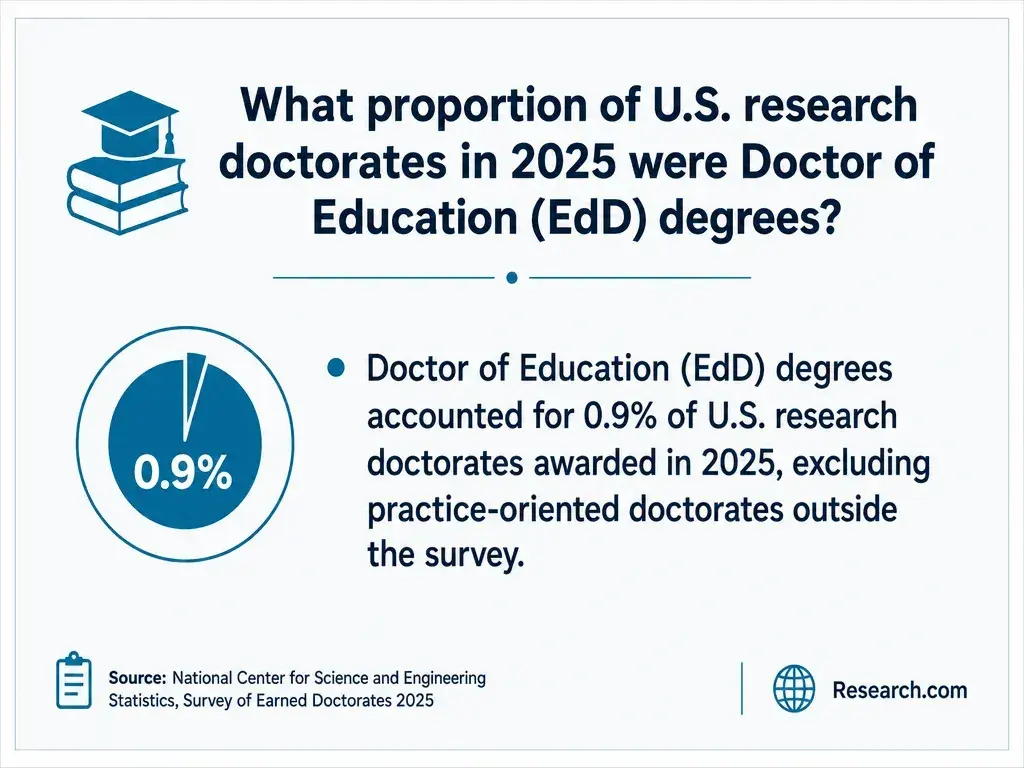
Requirements are program-specific. Schools may ask for a completed master's degree, transcripts, recommendations, a statement of purpose, evidence of professional leadership, or an interview. A master's in education is not universally required: business, HR, finance, and other backgrounds may be relevant when paired with substantial organizational responsibility.
For a training director, the strongest application evidence is specific. Describe decisions you have owned, stakeholders you have coordinated, and a learning or performance problem you want to investigate, without claiming results you have not measured. Ask admissions staff how the program evaluates professional experience and whether access to a workplace project site is needed at entry or later.
Prior graduate study can raise separate eligibility and credit questions. Education specialist graduates considering a doctorate should obtain a written evaluation rather than assume earlier courses will shorten the Ed.D.; the same caution applies to applicants with other graduate credits.
There is no reliable single duration or price for online Ed.D. programs. Required credits, course sequencing, enrollment pace, and the time needed for an approved capstone or dissertation determine completion. Published tuition may also exclude fees, books, technology, travel for required convenings, and costs associated with taking leave from work.
Request a program-specific cost estimate covering the full curriculum and ask what happens financially if the applied project takes longer than planned. Compare that estimate with your employer's written education-assistance policy, including annual limits, eligible charges, grade conditions, continued-employment rules, and repayment obligations. Reimbursement is not guaranteed funding, and a future promotion should not be counted as certain income.
Funding guidance for paying for a doctorate in higher education leadership can suggest questions to ask, but its program costs and aid terms should not be assumed to apply to an organizational learning Ed.D. Compare actual written offers before committing.
Training and development director roles generally do not have a state educator-licensure requirement, and an organizational leadership Ed.D. does not automatically confer one. Employers may prefer particular professional certifications or financial services experience, but those are hiring criteria distinct from the doctoral degree.
Financial services training can involve regulated activities. If your responsibilities include giving advice, supervising licensed personnel, or performing another regulated function, not merely teaching about it, check the applicable role requirements with your employer's compliance team and the relevant regulator. Do not assume the Ed.D. substitutes for an occupation-specific license or certification.
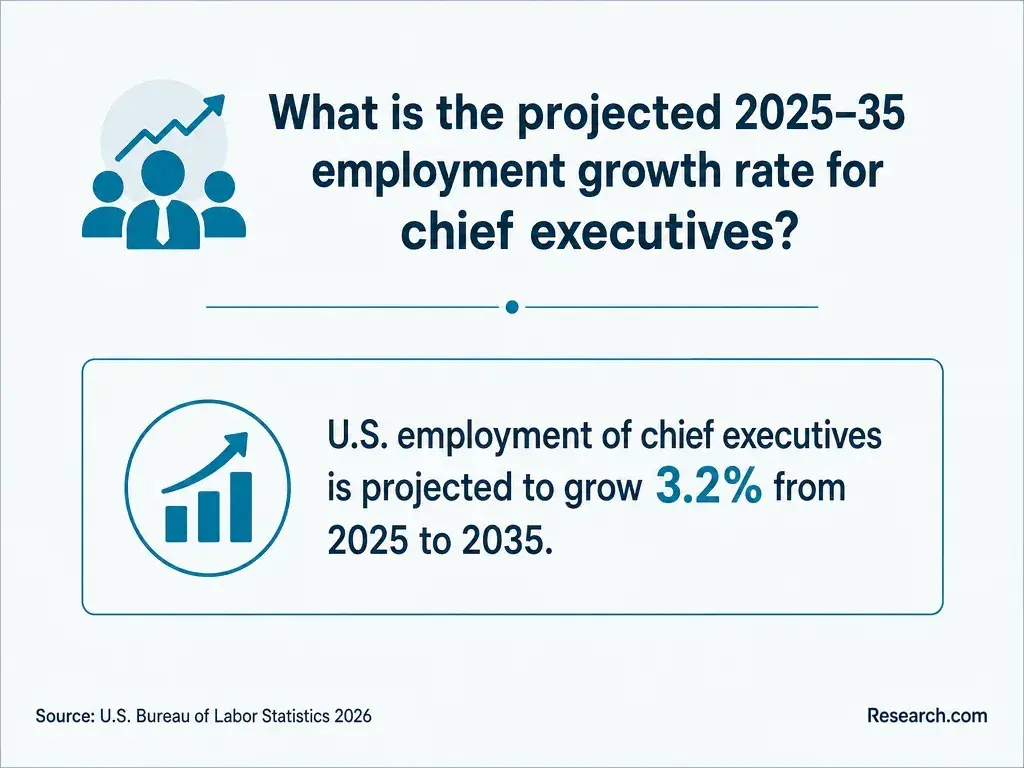
The U.S. Bureau of Labor Statistics reports a $133,000 median annual salary for training and development managers in May 2025 and projects 6.4% employment growth from 2025 to 2035. These figures describe an occupation across industries, not financial services training directors specifically or people who earned an Ed.D.
Use the figures as labor-market context, not an estimate of your return on tuition. Your compensation prospects depend on the size and scope of the role, location, employer, and experience. The most useful comparison is between your current position and identifiable internal or external jobs whose responsibilities you could credibly meet after the degree.
How can financial services professionals choose an accredited online Ed.D. program?
Begin with institutional accreditation and program fit. Verify the institution's current accreditation through the accreditor and the institution, then confirm the exact degree awarded. Accreditation establishes institutional standing; it does not establish that a program teaches financial services compliance or qualifies graduates for a regulated role.
A useful shortlist should survive a direct comparison against your intended work. Ask program staff to clarify the following before you apply:
- Which required courses develop organizational diagnosis, adult learning, evaluation, and change-leadership skills?
- What are the live-session, group-work, campus-visit, and attendance requirements?
- What final project is required, and can an employer-approved financial services problem qualify?
- Who approves project scope, data access, and research ethics, and what happens if your job or project site changes?
- What is the full estimated cost at your intended pace, and what student support is available during the final project?
Seek written answers to material policy questions and speak with your employer about project sponsorship before enrollment. Choose the program whose requirements you can actually complete and whose learning outcomes address a documented gap, not simply the one with the most convenient "online" label.
Other Things You Should Know About EdD Leadership Programs
Adult learning, evaluation, and change-leadership skills can transfer across sectors. A move still depends on demonstrating knowledge of the new sector and meeting its employers' specific requirements.
Possibly, subject to your program's academic-integrity rules and your employer's data-security policies. Do not enter confidential employee or customer information into a tool without authorization, and verify AI-generated analysis against the underlying evidence.
Only to the extent your employer and program permit. A redacted description of the question, methods, your responsibilities, and appropriately shareable conclusions may be more suitable than internal records or identifiable data.
No. The better test is whether the curriculum and approved project options support your intended work. Sector-specific expertise will still come largely from your professional practice and employer context.
- Cost of Attendance (Budget) | 2025-2026 Federal Student Aid Handbook https://fsapartners.ed.gov/knowledge-center/fsa-handbook/2025-2026/vol3/ch2-cost-attendance-budget
- Qualified Ed expenses | Internal Revenue Service https://www.irs.gov/credits-deductions/individuals/qualified-ed-expenses
- Can You Work Full-Time While Earning a Graduate Degree? | UGA Online https://online.uga.edu/news/can-you-work-full-time-while-earning-a-graduate-degree/
- Careers Leaders Can Pursue with an Ed.D. | Peabody Online | VU-EDU https://peabodyonline.vanderbilt.edu/edd-in-organizational-learning/edd-careers/
- Doctoral Learning and Resources - Section 7. Learning Modalities and Resources - Academics at Walden University https://academics.waldenu.edu/handbook/learning-modalities/doctoral-research-resources
- What's the Difference Between Asynchronous and Synchronous Learning? | Ohio State Online https://online.osu.edu/content-hub/blogs/whats-the-difference-between-asynchronous-and-synchronous-learning/
- The Application Process - LaFetra College of Education https://education.laverne.edu/edd/requirements/
- EdD vs. PhD in Education: Choosing the Right Program | Goodwin College of Professional Studies https://drexel.edu/soe/resources/career-path/edd-vs-phd/