2027 Online Ed.D. in Leadership and Learning in Organizations: Moving from Public Agency Management to Workforce Policy Work
Audited and Verified:
Our Editorial and Data Verification Process
Research.com uses government datasets, official education statistics and primary institutional information to support its career and degree guides. Our review process checks factual accuracy, occupational definitions, source dates and the requirements associated with the credentials discussed.
How This Article Was Fact-Checked
Our editorial team verifies salary estimates, employment projections, education requirements and program information against original data providers and official organizations. Salary figures are checked against the relevant occupational definitions and reporting periods. Information about licensure, accreditation and required in-person training is reviewed separately.
Fact-checked and verified on:

Co-Founder and Chief Data Scientist
Managing a public agency gives you experience with budgets, staff, and implementation, but workforce policy jobs may require a different kind of evidence: labor-market analysis, program evaluation, and recommendations that hold up across agencies. An online Ed.D. in Leadership and Learning in Organizations could help you build those capabilities, but it is not the only route.
This guide explains where your management experience transfers, which gaps the doctorate can address, and how to decide whether its time and cost serve the policy work you want to do.
Key Things You Should Know
- An Ed.D. can strengthen applied evaluation and change leadership, but workforce policy employers may value direct policy and analytical experience more than the doctorate itself.
- Public agency management transfers most directly to workforce program implementation; legislative analysis or labor economics may require additional preparation.
- The U.S. Bureau of Labor Statistics reports a $101,860 median annual salary for management analysts in 2025, but that broad occupation is not a salary forecast for workforce policy jobs or Ed.D. graduates.
What is an online Ed.D. in Leadership and Learning in Organizations?
An online Ed.D. in Leadership and Learning in Organizations is a practice-oriented doctorate focused on how organizations lead change, develop people, and use evidence to improve performance.
Programs with similar names can differ substantially: one may emphasize adult learning and organizational development, while another focuses on educational administration. Online describes where much of the instruction occurs, not necessarily a self-paced schedule.
For a public agency manager, the degree is most relevant when workforce policy means improving training systems, evaluating services, or coordinating change across employers and public partners. It is less direct preparation for work centered on economic modeling or drafting legislation.
Compare actual courses and projects rather than relying on a program title; different education doctorate specialization pathways may lead to quite different preparation. Confirm whether any advertised concentration is formally awarded or is simply a set of electives.
How can an Ed.D. support a transition from public agency management to workforce policy?
The strongest bridge from public agency management to workforce policy is implementation knowledge. You may already understand procurement, performance reporting, frontline service delivery, and the consequences of rules written without operational input.
An Ed.D. can help you turn that experience into defensible evaluations and recommendations, particularly for training and workforce-development programs.
"Workforce policy" covers several kinds of work. The distinctions below help identify where your experience provides an immediate advantage and where you may need preparation beyond a leadership doctorate.
| Policy work | Relevant management experience | Likely preparation gap |
| Program implementation and improvement | Managing services, staff, contracts, and performance targets | Evaluating whether a change improves outcomes |
| State or local workforce strategy | Coordinating agencies and community partners | Labor-market data, funding rules, and employer engagement |
| Legislative or economic policy analysis | Explaining operational effects of proposed rules | Policy writing, economic analysis, and legislative processes |
Before enrolling, identify policy vacancies you would pursue and compare their required skills with your record. Seek a project you can responsibly describe, such as assessing a workforce program's referral process or the transfer of staff training into practice.
Establish the decision the project will inform, available baseline evidence, and permission to use data. An Ed.D. cannot substitute for access to relevant policy work or for the technical skills a particular vacancy requires.
What careers can you pursue with an Ed.D. in Leadership and Learning in Organizations?
Possible destinations include workforce program manager, state or local policy analyst, program evaluator, workforce-development director, and consultant advising public-service organizations.
These are not interchangeable roles. A manager owns delivery and budgets; an analyst develops options and briefs decision-makers; an evaluator examines evidence about a program; a consultant works within a client's scope and contract.
Movement into policy is usually most credible through an adjacent assignment: join a cross-agency workforce initiative, contribute to an evaluation, or take responsibility for a policy briefing before seeking a full-time policy post.
Senior director roles generally require a record of workforce decisions and partnerships, not just a doctoral credential. Federal, state, and local employers may also use different classifications, hiring rules, and pay schedules.
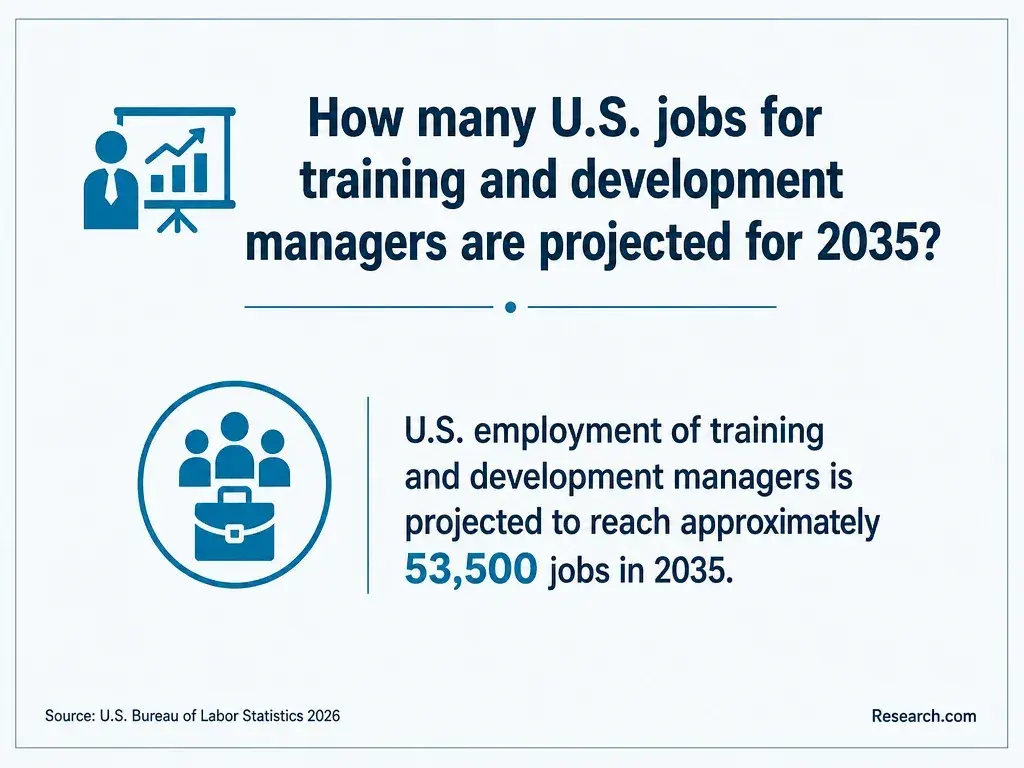
The Bureau of Labor Statistics projects 10.1% employment growth for management analysts from 2025 to 2035. Some organizational consulting work fits that occupation, but the projection does not measure demand for workforce policy analysts specifically. Use actual vacancy descriptions and public-sector pay schedules, not a broad occupational median, to assess your prospects.
For this transition, prioritize coursework in organizational change, adult learning, program evaluation, research methods, and ethical use of organizational data. Adult learning can inform workforce training design; evaluation helps assess whether a service is reaching its intended population.
Qualitative and quantitative methods help you interpret stakeholder accounts alongside administrative measures. None of those courses, by itself, establishes expertise in labor economics or statutory analysis.
Examine the required culminating work closely. A policy-relevant project might investigate an implementation bottleneck and present feasible options to agency leaders. Its academic requirements may differ from a dissertation, a dissertation in practice, or a team capstone. Ed.D. programs emphasizing applied culminating work can be worth comparing, but "without a dissertation" does not mean without substantial research or a final project.
If you hope to study your agency, ask who authorizes data access and whether institutional review, consent, confidentiality protections, or a data-use agreement applies. Publicly available workforce statistics are not equivalent to identifiable participant or employee records. A useful portfolio can present methods and appropriately cleared findings without exposing restricted information.
Online study can let you keep your agency position while testing a move into policy work. That advantage matters if your job supplies relevant questions, collaborators, and professional contacts. Campus study may offer easier in-person access to faculty or a regional policy network, but its value depends on the specific program and location.
Neither format determines flexibility. Ask whether classes meet live, when group work occurs, whether campus convenings are mandatory, and what happens if your agency changes your schedule or you change employers. Confirm whether a project must be based at your current workplace; losing access midway could alter your completion plan.
If you previously completed doctoral coursework without finishing a degree, compare ABD education students comparing online doctoral pathways with ordinary Ed.D. admission and transfer rules rather than assuming earlier work will shorten a new program.
Admission requirements vary by institution. Programs commonly review prior graduate education, transcripts, professional experience, recommendations, and a statement connecting an organizational problem to doctoral study.
Some require interviews or particular academic preparation; others do not. A public administration background can be relevant even without an education degree, but the admissions office decides eligibility under its published rules.
Your application should show decisions you made, stakeholders you coordinated, and evidence you used, not merely a managerial title. Describe a genuine workforce-learning or implementation problem and what you still need to investigate.
Ask the program whether prior graduate credits count only toward admission or can also satisfy degree requirements; those are separate decisions, and neither guarantees less time or tuition.
Completion time and cost depend on the program's required credits, course sequence, enrollment pace, and final project. Request the published curriculum and a written estimate for your expected entry term rather than relying on an advertised "as little as" timeline. A project delayed by agency approvals or a change of employer can also affect the schedule.
Compare total expense, not tuition alone: mandatory fees, books and software, required travel and lodging, and any unpaid time away from work may matter. Ask whether your agency's education benefit covers a doctorate, whether reimbursement requires particular grades or continued employment, and whether leaving for a policy job would trigger repayment.
Readers considering organizational leadership doctoral study on a budget should compare the full cost with the program's workforce-policy relevance; the cheapest suitable degree is not necessarily the one with the lowest advertised tuition.
Loans or institutional aid may be available, but professional doctorates should not be assumed to carry PhD-style funding. If a lower-cost policy analysis course, MPA coursework, or an employer-supported evaluation assignment closes your actual skills gap, a full Ed.D. may be unnecessary.
Check that the institution awarding the Ed.D. holds recognized institutional accreditation, and confirm the status with the institution and the U.S. Department of Education's accreditation records. Then verify that the advertised online degree, not merely a similarly named campus program, is the one you would enter.
Institutional accreditation is important for degree credibility and may affect aid or employer reimbursement, but it does not certify a specialization in workforce policy or establish eligibility for a regulated job. Ask whether any programmatic recognition the school mentions applies to this exact program. Evaluate curriculum, faculty expertise, and project supervision separately from accreditation.
Workforce policy analysis and program management generally do not require a license conferred by an Ed.D. Employers may instead specify public-sector experience, analytical skills, a particular degree, or eligibility under their hiring system. A voluntary certification might help with a defined evaluation or project-management task, but it is not a substitute for the qualifications in a vacancy announcement.
Do not confuse this organizational leadership degree with a state-approved educator or school-administrator preparation program. If you also want a licensed education role, obtain written confirmation from the program and the relevant state licensing authority before enrolling.
How do you choose a reputable online Ed.D. in Leadership and Learning program?
Choose a program by working backward from the workforce policy work you want to perform. An attractive leadership curriculum is not enough if it offers little evaluation preparation, no feasible policy-relevant project, or a schedule that conflicts with agency responsibilities.
Use this sequence to test fit before committing to an application or deposit.
- Collect target vacancy announcements and identify recurring policy, data, partnership, and writing requirements.
- Map required courses, available electives, faculty expertise, and culminating-project rules against those requirements.
- Ask how working students secure project sites, approvals, data access, and guidance if they change employers.
- Confirm live attendance, convenings, total charges, aid conditions, and your agency's reimbursement terms in writing.
- Request clearly defined completion and career-outcome information, and ask how many students those figures represent.
If you are also comparing education-sector leadership options, resources on financial aid for higher education leadership doctoral students can suggest funding questions to ask. Do not assume a higher education leadership program has the workforce-policy curriculum you need. The best choice may be an Ed.D., a more policy-focused graduate program, or a targeted assignment that builds demonstrable policy experience without another degree.
Other Things You Should Know About EdD Leadership Programs
Only if the specific vacancy's qualification rules recognize your degree and other credentials. Review the announcement and applicable federal hiring guidance; a doctorate does not replace required specialized experience.
Possibly. Public, aggregated data can help frame a question, but check its definitions, coverage, and limitations. A project still needs to meet your program's academic and ethical requirements.
Possibly, subject to applicable post-employment ethics, procurement, and conflict-of-interest rules. Obtain guidance from the relevant ethics office before pursuing a contract.
That depends on program rules, organizational permissions, and data restrictions. Separate evidence-supported findings from advocacy, disclose relevant limitations, and secure permission before releasing workplace information.
- Workforce Development | eda.gov https://www.eda.gov/resources/comprehensive-economic-development-strategy/content/workforce-development
- Workforce Development Solutions | dol.gov https://www.dol.gov/agencies/eta/employers/workforce-development-solutions
- Types of Financial Aid: Grants, Work-Study, and Loans | studentaid.gov https://studentaid.gov/understand-aid/types
- General Schedule Qualification Policies | U.S. Office of Personnel Management https://www.opm.gov/policy-data-oversight/classification-qualifications/general-schedule-qualification-policies/
- Cost of Attendance (Budget) | 2025-2026 Federal Student Aid Handbook https://fsapartners.ed.gov/knowledge-center/fsa-handbook/2025-2026/vol3/ch2-cost-attendance-budget
- 7 High-Impact Government and Public Service Careers for MPA Graduates - Cornell Brooks Public Policy https://publicpolicy.cornell.edu/masters-blog/7-high-impact-government-and-public-service-careers-for-mpa-graduates/
- Online Ed.D. in Leadership and Learning in Organizations | VU-EDU https://peabodyonline.vanderbilt.edu/edd-in-organizational-learning/
- Key Skills You'll Gain in a Master of Public Administration Program | UIC Online MPA https://onlinempa.uic.edu/news-stories/key-skills-master-public-administration/
- UNC EdD Online: Organizational Learning and Leadership https://online.unc.edu/online-doctoral-programs/online-edd-organizational-learning-and-leadership/
- Online EdD - Organizational Leadership and Development | American International College https://online.aic.edu/programs/online-edd/organizational-leadership