2027 What Can You Do With a Doctoral Degree in Behavioral Health Leadership?

Co-Founder and Chief Data Scientist
Integrated healthcare environments are important for human well-being. Thus, skilled healthcare leaders, such as those in the field of behavioral health, are essential to running well-rounded healthcare facilities efficiently. Mental healthcare professionals aiming to transition to administrative or management roles in the hope of making a bigger impact may benefit from behavioral health leadership degree programs.
To help your search for advanced degrees, I created this in-depth guide to behavioral health leadership degree programs. Explore available specializations, job opportunities, salary potential, industry demand, and available certifications below.
What are the benefits of getting a doctoral degree in behavioral health leadership?
- A doctoral degree in behavioral health leadership can equip you with knowledge and skills that are essential to becoming an efficient leader in the field of mental health. These skills include strategic planning and management, teaching of psychology, and advanced research.
- A behavioral health leadership degree program at the doctorate level may take 3 to 5 years to finish. Some programs offer a part-time-enrollment option, which enables students to attend to other obligations during the length of the program.
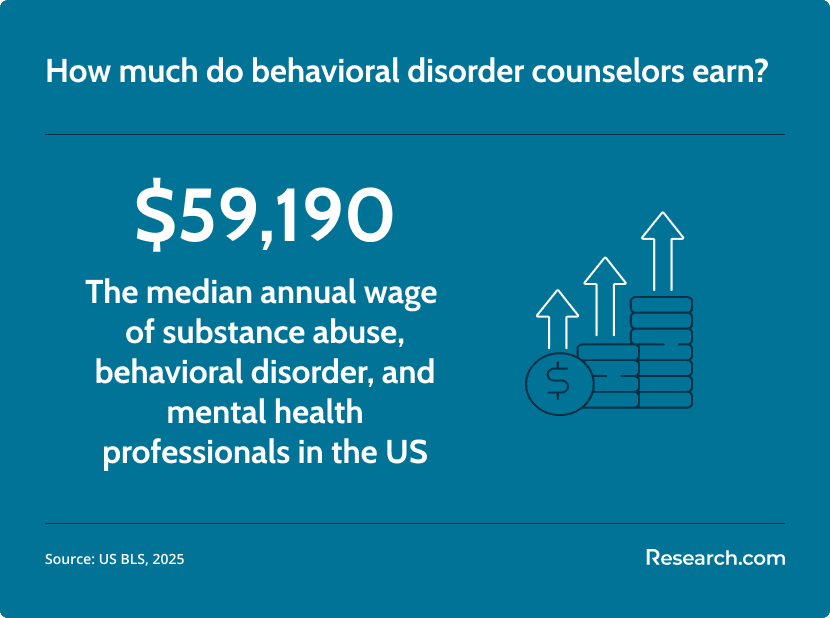
- In May 2024, substance abuse, behavioral disorder, and mental health counselors employed in the US had a median annual wage of $59,190 (US BLS, 2025).
- What specializations are offered by doctoral degree programs in behavioral health leadership? Specializations
- What jobs can I get with a behavioral health leadership degree? Typical Jobs
- How much can I earn with a behavioral health leadership degree? Earnings
- How can a doctoral degree in behavioral health leadership help increase my income potential? Income Potential
- Which industries have a demand for professionals with a behavioral health leadership degree? Industry Demand
- What skills learned in behavioral health leadership degree programs are essential for career advancement? Key Skills
- What certifications can I pursue with a behavioral health leadership degree? Certifications
- What is the job outlook for behavioral health leadership professionals? Job Outlook
- What are the alternative career paths available to graduates of behavioral health leadership degree programs? What are the alternative career paths available to graduates of behavioral health leadership degree programs?
- What alternative degrees can I take up instead of a behavioral health leadership degree? What alternative degrees can I take up instead of a behavioral health leadership degree?
- Can combining clinical training with leadership skills boost my career outcomes? Can combining clinical training with leadership skills boost my career outcomes?
A doctoral degree in behavioral health leadership is designed for professionals who want to move beyond direct service delivery into program leadership, healthcare administration, policy, quality improvement, or executive-level roles in mental and behavioral health settings. It can be especially relevant for clinicians, counselors, healthcare managers, public health professionals, and nonprofit leaders who already understand patient or community needs but want stronger skills in strategy, operations, workforce management, finance, and evidence-based program design.
This guide explains what behavioral health leadership doctoral programs typically cover, which specializations and careers they may support, how salary and job outlook data compare across related occupations, and what factors to evaluate before choosing this degree path. It also highlights alternatives, certifications, common mistakes, and practical questions to ask before enrolling.
Quick Answer: Is a Doctorate in Behavioral Health Leadership Worth Considering?
A doctorate in behavioral health leadership may be worth considering if your goal is to lead behavioral health programs, manage clinical or community-based services, improve care quality, or move into senior roles in healthcare, government, education, nonprofit, or counseling-related organizations. It is not usually necessary for every counseling or therapy role, and it may not replace state licensure requirements for clinical practice. The strongest fit is typically for experienced professionals who want to combine behavioral health knowledge with executive leadership, healthcare operations, policy, and population health skills.
| Best fit | May not be the best fit |
| Professionals seeking director, administrator, program manager, or executive roles in behavioral health settings | Students who mainly want an entry-level counseling or therapy credential |
| Clinicians who want to supervise programs, improve systems, or influence policy | Applicants who have not checked whether the program supports required licensure in their state |
| Healthcare or nonprofit managers who want behavioral health expertise | Students looking for a purely clinical psychology doctorate such as a PsyD |
| Working adults who need flexible doctoral study, including options such as the fastest doctorate in behavioral health leadership online | Students who have not compared cost, accreditation, transfer credit, and career outcomes |
What specializations are available in doctoral behavioral health leadership programs?
Doctoral behavioral health leadership programs often let students focus their coursework on a specific population, setting, or leadership function. The right specialization depends on whether you want to lead clinical programs, manage healthcare operations, improve workplace well-being, or shape community health initiatives.
- Health Psychology: This concentration examines how mental, emotional, behavioral, and physical health influence one another. It is useful for leaders who want to design prevention programs, support chronic disease management, improve patient engagement, or build interventions that address both psychological and medical needs.
- Healthcare Management: This option emphasizes administration, organizational planning, staffing, compliance, budgeting, and operational improvement. It is a strong fit for professionals aiming for director, administrator, or executive roles in clinics, hospitals, treatment centers, or behavioral health organizations.
- Industrial and Organizational Psychology: This track applies behavioral science to work settings. Students study motivation, team dynamics, leadership, employee well-being, change management, and organizational effectiveness, which can be valuable in healthcare systems, human services agencies, and workforce development roles.
- Public Health: This specialization focuses on prevention, access, community-level interventions, and policy. It prepares professionals to address behavioral health disparities, expand services, design outreach programs, and influence systems that affect mental and behavioral healthcare delivery.
| Specialization | Best for students who want to... | Common career direction |
| Health Psychology | Connect behavioral health strategies with physical health outcomes | Integrated care, wellness programs, patient behavior initiatives |
| Healthcare Management | Run programs, manage teams, and improve service delivery | Healthcare administration, behavioral health operations, executive leadership |
| Industrial and Organizational Psychology | Improve workplace behavior, culture, and employee well-being | Organizational consulting, workforce development, healthcare HR leadership |
| Public Health | Address community-level behavioral health needs and prevention | Public agencies, nonprofit leadership, population health programs |
What jobs can you get with a behavioral health leadership degree?
A behavioral health leadership degree can support advancement into supervisory, administrative, program development, and policy-focused positions. Career options depend heavily on your previous education, clinical credentials, work experience, state licensure status, and the type of employer. In many cases, the degree strengthens leadership qualifications rather than serving as a stand-alone license for clinical practice.
- Medical and Health Services Managers: These professionals coordinate healthcare operations, supervise staff, oversee budgets, implement policies, and improve care delivery in hospitals, clinics, mental health facilities, outpatient centers, and related organizations.
- Health Education Specialists: These specialists create and evaluate programs that promote wellness, prevention, mental health awareness, and healthier decision-making among individuals and communities.
- Marriage and Family Therapists: Licensed therapists with leadership training may continue providing counseling while also supervising teams, developing family therapy programs, or helping manage behavioral health services.
- Psychologists: Psychologists who also develop leadership and management expertise may contribute to clinical services, research-informed program design, organizational strategy, and service improvement. Related options also overlap with applied psychology jobs, where psychological principles are used in healthcare, education, business, human resources, and community settings.
- Substance Abuse, Behavioral Disorder, and Mental Health Counselors: These counselors support people facing addiction, behavioral disorders, emotional challenges, and mental health conditions. With advanced leadership preparation, experienced professionals may direct treatment programs, manage teams, or help shape service policies.
| Role | How behavioral health leadership training may help | Important caution |
| Medical and Health Services Manager | Builds skills in operations, staffing, quality improvement, compliance, and finance | Employers may expect healthcare management experience |
| Health Education Specialist | Supports program planning, community outreach, evaluation, and prevention work | Some roles may prefer public health or health education credentials |
| Marriage and Family Therapist | Adds supervision, program leadership, and administrative preparation | Clinical practice requires meeting state licensure rules |
| Psychologist | Strengthens program development, organizational leadership, and systems-level thinking | Psychologist licensure has separate doctoral, internship, and state requirements |
| Mental Health or Substance Abuse Counselor | Can support advancement into treatment program leadership or policy roles | Counselor licensure requirements vary by state and role |
The chart below visualizes 2023 US employment levels for occupations related to behavioral health leadership, based on 2025 data from the US BLS.
How much can you earn with a behavioral health leadership degree?
Salary potential varies by role, employer, location, licensure, seniority, and management responsibility. For one of the most closely related leadership occupations, medical and health services managers, the US median annual wage was $117,960 in May 2024. That was more than twice the $49,500 median annual wage for all US occupations during the same period. The wage threshold for the lowest 10% of medical and health services managers was $69,680, which was also above the national median for all occupations (US BLS, 2025).
Other careers connected to behavioral health leadership reported the following May 2024 median annual wages (US BLS, 2025):
- Psychologists: $94,310
- Substance Abuse, Behavioral Disorder, and Mental Health Counselors: $59,190
- Marriage and Family Therapists: $63,780
- Health Education Specialists: $63,000
When reviewing these salaries, compare them with adjacent fields such as applied sciences salary paths in healthcare, public health, and human services. Behavioral health leadership often sits at the intersection of clinical knowledge, applied science, organizational management, and public service, but individual earnings are never guaranteed.
| Occupation | Median annual wage in May 2024 | What may influence pay |
| Medical and Health Services Managers | $117,960 | Management level, facility type, region, budget responsibility, years of experience |
| Psychologists | $94,310 | Licensure, specialty, practice setting, clinical or research focus |
| Marriage and Family Therapists | $63,780 | Licensure, caseload, employer, supervisory duties |
| Health Education Specialists | $63,000 | Program scope, public health experience, employer type |
| Substance Abuse, Behavioral Disorder, and Mental Health Counselors | $59,190 | Licensure level, treatment setting, specialization, leadership duties |
How can a doctorate in behavioral health leadership improve income potential?
A doctorate can improve income potential when it helps you qualify for senior responsibilities, broader management scope, or more competitive leadership roles. However, the degree itself does not automatically raise pay. Salary growth is usually tied to a combination of experience, credentials, employer needs, measurable leadership results, and the complexity of the role.
The typical entry-level education for medical and health services managers is a bachelor’s degree, but doctoral-level study may help experienced professionals deepen their expertise in executive leadership, healthcare systems, population health, quality improvement, and organizational strategy. In May 2024, the highest 10% of medical and health services managers earned over $219,080, compared with the occupation’s median annual wage of $117,960 (US BLS, 2025).
Education level is also associated with wage differences across the broader labor market. In 2022, full-time workers ages 25 to 34 with master’s or more advanced degrees had median wages of $80,200, which was 20% higher than the $66,600 median wages of workers with bachelor’s degrees only (US Census Bureau, 2023).
If you are comparing doctoral leadership options, review what you can do with a doctorate degree in organizational leadership. Some management and executive pathways overlap, but organizational leadership programs usually apply across many industries, while behavioral health leadership is more focused on mental health, healthcare, counseling, prevention, and human services systems.
When the degree is most likely to support higher earnings
- You already have substantial experience in healthcare, counseling, public health, nonprofit management, or behavioral health services.
- You are targeting roles with budget, staffing, compliance, quality, or program accountability.
- Your employer values doctoral-level leadership preparation for promotion or executive hiring.
- You combine the degree with relevant licensure, certifications, or measurable leadership outcomes.
- You choose an accredited program with a curriculum aligned to your target role.
Which industries hire behavioral health leadership professionals?
Behavioral health leadership graduates may work in clinical, administrative, public sector, nonprofit, education, and community-based environments. The strongest employment fit often depends on whether your background is clinical, managerial, public health-oriented, or policy-focused.
Among the 562,700 medical and health services managers employed in the US in 2023, the largest industry shares were distributed as follows (US BLS, 2025):
- Hospitals (State, Local, and Private): 30%
- Offices of Physicians: 12%
- Nursing and Residential Care Facilities: 9%
- Government: 7%
- Outpatient Care Centers: 7%
Pay also differs by work setting. In May 2024, medical and health services managers employed by the government had a median annual wage of $132,620, while those working in hospitals had a median annual wage of $130,690 (US BLS, 2025).
The following sectors also reported median annual wages for medical and health services managers in May 2024 (US BLS, 2025):
- Outpatient Care Centers: $106,990
- Offices of Physicians: $100,780
- Nursing and Residential Care Facilities: $99,250
| Industry | Why behavioral health leadership matters there | Potential leadership focus |
| Hospitals | Behavioral health services often intersect with emergency care, chronic illness, discharge planning, and integrated care | Care coordination, compliance, quality improvement, interdisciplinary teams |
| Government | Public agencies may fund, regulate, or operate behavioral health programs | Policy, program oversight, community access, population health |
| Outpatient Care Centers | Many behavioral health services are delivered outside inpatient settings | Service expansion, staffing models, patient flow, treatment outcomes |
| Physician Offices | Integrated behavioral health can support primary care and specialty care | Collaborative care, referral systems, patient engagement |
| Nursing and Residential Care Facilities | Residents may need behavioral, mental health, and substance use support | Program management, staff training, resident well-being |
The chart below shows the US industries that employed the largest shares of medical and health services managers in 2023, according to 2025 data from the US BLS.
What skills from behavioral health leadership programs are most useful for advancement?
Behavioral health leadership programs are most valuable when they teach skills that employers can connect to better outcomes, more efficient services, stronger teams, and responsible use of resources. The most useful skills combine healthcare knowledge with management discipline.
- Population-based Health Management: Students learn to look beyond individual cases and evaluate trends across groups, communities, or service populations. This skill supports prevention planning, disparity reduction, and data-informed intervention design.
- Behavioral Healthcare Management: This skill area focuses on running behavioral health programs, coordinating services, maintaining regulatory compliance, supervising staff, and improving care delivery across teams.
- Financial Management in Healthcare: Leaders need to understand budgets, reimbursement pressures, resource allocation, staffing costs, and long-term sustainability. This is especially important for organizations trying to expand behavioral health access without weakening financial stability.
- Healthcare Information Management: Students build familiarity with patient records, health informatics, privacy expectations, and data systems that support quality monitoring and decision-making.
- Healthcare Quality Management: This area teaches leaders to use evidence-based practices, outcome measures, process improvement, and safety standards to strengthen behavioral healthcare services.
These competencies also apply to adjacent advanced practice careers. For example, professionals exploring women's health careers with a DNP may use similar skills in quality improvement, population health, finance, and program leadership when addressing maternal health, reproductive care, and women’s wellness services.
Current trends shaping behavioral health leadership
- Integrated care: Behavioral health is increasingly connected with primary care, chronic disease management, substance use treatment, and whole-person care models.
- Telehealth and hybrid service delivery: Leaders must understand access, privacy, staffing, patient engagement, and quality monitoring in virtual and blended care environments.
- Workforce pressure: Behavioral health organizations often need leaders who can improve retention, reduce burnout, support supervision, and build sustainable staffing models.
- Data-driven quality improvement: Employers increasingly expect leaders to use outcomes, dashboards, compliance measures, and patient feedback to guide decisions.
- Equity and access: Behavioral health leaders are often asked to address service gaps, cultural responsiveness, community partnerships, and barriers to treatment.
What certifications can behavioral health leadership professionals pursue?
Certifications can help demonstrate specialized knowledge, but they should be evaluated carefully. A certification is not the same as state licensure, and not every credential carries the same value with employers. Before paying for any certification, confirm eligibility rules, renewal requirements, exam expectations, employer recognition, and whether the credential aligns with your target role.
- The Joint Commission’s Clinical Certifications: The Joint Commission offers multiple clinical and non-clinical certification options. Behavioral health leaders may consider the Behavioral Health Home (BHH) Certification when it fits their organization’s service model and quality goals.
- The Joint Commission’s Non-clinical Certifications: Professionals may also review non-clinical options such as the Sustainable Healthcare Certification and the Excellent Health Outcomes for All Certification, particularly if their work involves organizational improvement, equity, or systemwide outcomes.
- Certified Behavioral Health Specialist (CBHS): The CBHS credential from National Performance Specialists (NPS) is designed to indicate knowledge and skills associated with behavioral health specialist work.
| Certification option | Possible value | What to verify first |
| Behavioral Health Home (BHH) Certification | May support organizations focused on coordinated behavioral health and whole-person care | Whether your employer or program model uses this certification framework |
| Sustainable Healthcare Certification | May be useful for leaders involved in long-term organizational improvement | Relevance to your role, employer goals, and quality initiatives |
| Excellent Health Outcomes for All Certification | May align with equity, access, and outcomes-focused leadership | Whether the credential supports your organization’s priorities |
| Certified Behavioral Health Specialist (CBHS) | May help document behavioral health knowledge for specialist-oriented roles | Employer recognition, renewal rules, and fit with your career level |
What is the job outlook for behavioral health leadership professionals?
The outlook is strongest for roles tied to healthcare management and behavioral health services. From 2023 to 2033, employment for medical and health services managers in the US is projected to grow by 29%, much faster than the average growth rate for all US occupations. About 61,400 openings per year are projected on average over the decade (US BLS, 2025).
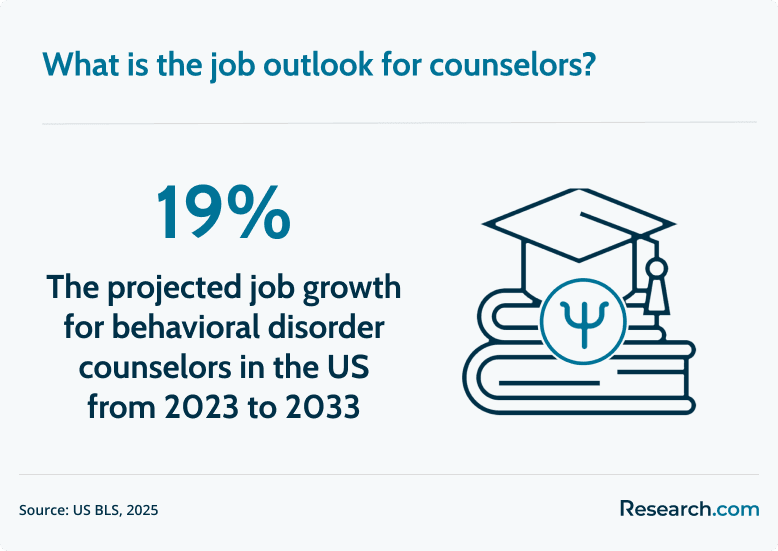
Behavioral health service roles also show strong projected growth. Employment for substance abuse, behavioral disorder, and mental health counselors is projected to rise by 19% from 2023 to 2033, while employment for marriage and family therapists is projected to grow by 16% during the same period (US BLS, 2025).
Psychologists and health education specialists are each projected to see 7% employment growth from 2023 to 2033, which is faster than the average for all US occupations. The US BLS projected about 13,000 annual openings for psychologists and around 6,700 annual openings for health education specialists on average over the decade (US BLS, 2025). Students who want to enter psychology-related fields through flexible study may also compare accredited options such as the shortest accredited online school psychology programs.
| Occupation | Projected employment growth, 2023 to 2033 | Average projected annual openings |
| Medical and Health Services Managers | 29% | 61,400 |
| Substance Abuse, Behavioral Disorder, and Mental Health Counselors | 19% | Not stated |
| Marriage and Family Therapists | 16% | Not stated |
| Psychologists | 7% | 13,000 |
| Health Education Specialists | 7% | 6,700 |
What alternative career paths are available to behavioral health leadership graduates?
Behavioral health leadership training can transfer to several related careers, but some alternatives require different degrees, supervised experience, medical training, or state licensure. Do not assume a leadership doctorate automatically qualifies you for clinical, school-based, or medical practice roles.
- School and Career Counselors and Advisors: These professionals help students navigate academic, social, emotional, college, and career planning needs. Behavioral health leadership skills may support program supervision, student support initiatives, and systems-level planning in educational settings.
- Psychiatrists: Psychiatry requires medical training. Professionals who pursue this path diagnose and treat mental health disorders and may combine clinical care with leadership in hospitals, behavioral health systems, or academic medicine.
- Social Workers: Social workers support individuals, families, and communities facing personal, social, behavioral, and structural challenges. Leadership preparation can be useful for managing programs, shaping policy, and directing community initiatives. Professionals focused on substance use issues may also explore related training options such as the shortest online addiction psychology programs.
| Alternative path | How it connects to behavioral health leadership | Additional requirement to investigate |
| School and Career Counselor or Advisor | Student support, program planning, prevention, and mental health awareness | School counseling credential or state-specific education requirements |
| Psychiatrist | Clinical mental health treatment combined with organizational leadership | Medical school, residency, board requirements, and licensure |
| Social Worker | Community services, case management, advocacy, and program administration | MSW, supervised hours, and state licensure for clinical roles |
The chart below shows 2024 median annual wages for alternative career paths available to graduates of behavioral health leadership programs, based on 2025 data from the US BLS.
What degrees can you choose instead of behavioral health leadership?
If your career goal is not specifically behavioral health administration or systems leadership, another graduate degree may be a better match. Compare each option by licensure outcomes, curriculum, cost, time to completion, accreditation, and the type of role you want after graduation. Students still exploring the field may also review options such as the fastest behavioral health science degree online programs.
- Master of Social Work (MSW): An MSW is often a better fit for students who want social work practice, community services, case management, advocacy, or a pathway toward clinical social work licensure where available.
- Master of Public Health (MPH): An MPH is suitable for students interested in prevention, epidemiology, community health, health promotion, public policy, and population-level behavioral health initiatives.
- Doctor of Psychology (PsyD): A PsyD is usually more appropriate for students focused on clinical psychology practice. It emphasizes assessment, diagnosis, intervention, and applied psychological care. Students interested in workplace behavior and applied psychology may also compare accelerated online master's in industrial organizational psychology programs.
| Degree | Best for | Less ideal if |
| Doctorate in Behavioral Health Leadership | Program directors, healthcare administrators, behavioral health executives, quality improvement leaders | You mainly need an entry-level clinical license |
| MSW | Social work practice, clinical social work pathways, advocacy, human services leadership | You want healthcare administration as your primary focus |
| MPH | Population health, prevention, policy, public health programming | You want direct therapy or counseling practice as your main goal |
| PsyD | Clinical psychology practice and applied psychological assessment or treatment | You want a primarily administrative or systems leadership doctorate |
What do professionals with a behavioral health leadership degree say about their careers?
- Amy: "The degree helped me move from frontline work into leading a community mental health team. I became more confident making staffing decisions, improving care processes, and supporting both clients and employees in a demanding environment."
- Daniel: "My behavioral health leadership program prepared me for a director position at a rehabilitation center. The most useful part was learning how to connect administrative decisions with patient-centered, evidence-informed care."
- James: "After completing the degree, I advanced within a nonprofit focused on mental wellness. The program strengthened my communication, planning, and organizational leadership skills, which helped me guide initiatives with broader community impact."
Can combining clinical training with leadership skills improve career outcomes?
Combining clinical preparation with leadership training can strengthen career options when your target role requires both patient-care insight and organizational decision-making. Leaders who understand clinical workflows, ethical care, documentation, staffing challenges, quality metrics, and patient needs are often better prepared to design realistic programs and supervise multidisciplinary teams.
However, clinical and leadership preparation serve different purposes. Clinical training may support licensure or direct practice, while leadership training is more useful for management, strategy, quality improvement, and program oversight. Students who want advanced clinical psychology preparation with flexible study options may compare PsyD online programs before deciding whether a clinical doctorate or a leadership-focused doctorate is the stronger fit.
How to choose a behavioral health leadership doctoral program
The best program is not always the fastest or the most recognizable. It is the one that fits your career goal, budget, schedule, licensure needs, and professional background. Use the following steps before applying.
- Clarify your target role. Decide whether you want to lead a clinic, direct a nonprofit program, move into healthcare administration, influence policy, teach, consult, or supervise behavioral health services.
- Check accreditation. Confirm institutional accreditation and review whether any programmatic expectations apply to your field or employer.
- Verify licensure alignment. If you want to practice clinically, ask whether the program meets educational requirements in your state. Do not rely on assumptions.
- Compare curriculum depth. Look for courses in behavioral health systems, finance, healthcare law and ethics, informatics, population health, quality improvement, leadership, and research methods.
- Review faculty expertise. Faculty experience in healthcare administration, behavioral health policy, clinical systems, public health, or nonprofit leadership can affect mentorship quality.
- Ask about the dissertation or capstone. Applied doctoral projects can be valuable if they let you solve a real workplace or community problem.
- Calculate total cost. Include tuition, fees, travel, residencies, books, technology, lost work time, and financing costs.
- Evaluate flexibility. Working professionals should compare online, hybrid, part-time, and accelerated formats carefully.
- Ask about career support. Strong programs should be able to explain how they support leadership advancement, networking, applied projects, and employer connections.
Common mistakes to avoid before enrolling
| Mistake | Why it can hurt you | Better approach |
| Choosing a program without checking accreditation | It can affect transfer credit, employer recognition, financial aid eligibility, and credibility | Confirm institutional accreditation before applying |
| Assuming the doctorate leads to clinical licensure | Leadership degrees do not automatically meet counseling, psychology, social work, or therapy licensure requirements | Contact your state licensing board and ask the school for written clarification |
| Focusing only on tuition | The cheapest program may not offer the right curriculum, support, or career alignment | Compare total cost, outcomes, flexibility, faculty, and employer relevance |
| Ignoring transfer and residency rules | Unexpected in-person requirements or limited transfer credit can increase time and cost | Ask for a written degree plan before enrolling |
| Relying only on rankings | Rankings may not reflect your licensure needs, specialization, budget, or local employer preferences | Use rankings as one input, not the final decision tool |
| Assuming salary outcomes are guaranteed | Pay depends on role, experience, employer, location, and credentials | Compare job postings in your target market and speak with professionals in the field |
Questions to ask admissions advisors before you apply
- Is the institution accredited, and by which accreditor?
- Does the program meet any licensure-related educational requirements, or is it strictly a leadership degree?
- What types of roles do graduates typically pursue?
- Can working professionals complete the program part time?
- Are there required campus visits, residencies, internships, practicums, or synchronous sessions?
- How many transfer credits can be accepted?
- What is the total estimated cost, including fees and required materials?
- What kind of dissertation, capstone, or applied research project is required?
- Does the curriculum include finance, healthcare law, quality improvement, informatics, and population health?
- What career services, alumni networks, or employer partnerships are available?
References
- US Bureau of Labor Statistics. (2025, April 18). Health Education Specialists. Occupational Outlook Handbook. https://www.bls.gov/ooh/community-and-social-service/health-educators.htm
- US Bureau of Labor Statistics. (2025, April 18). Marriage and Family Therapists. Occupational Outlook Handbook. https://www.bls.gov/ooh/community-and-social-service/marriage-and-family-therapists.htm
- US Bureau of Labor Statistics. (2025, April 18). Medical and Health Services Managers. Occupational Outlook Handbook. https://www.bls.gov/ooh/management/medical-and-health-services-managers.htm
- US Bureau of Labor Statistics. (2025). May 2024 OEWS Profiles. Occupational Employment and Wage Statistics (OEWS) Profiles. https://data.bls.gov/oesprofile/#footnote5
- US Bureau of Labor Statistics. (2025, April 18). Psychologists. Occupational Outlook Handbook. https://www.bls.gov/ooh/life-physical-and-social-science/psychologists.htm
- US Bureau of Labor Statistics. (2025, April 18). School and Career Counselors and Advisors. Occupational Outlook Handbook. https://www.bls.gov/ooh/community-and-social-service/school-and-career-counselors.htm
- US Bureau of Labor Statistics. (2025, April 18). Substance Abuse, Behavioral Disorder, and Mental Health Counselors. Occupational Outlook Handbook. https://www.bls.gov/ooh/community-and-social-service/substance-abuse-behavioral-disorder-and-mental-health-counselors.htm
- US Census Bureau. (2023, October). Current Population Survey (CPS), Annual Social and Economic Supplement, 2006 through 2023. US Department of Commerce. https://nces.ed.gov/programs/digest/d23/tables/dt23_502.30.asp
Key Insights
- A doctorate in behavioral health leadership is best suited for experienced professionals who want to manage programs, lead teams, improve systems, or influence behavioral health policy and service delivery.
- The degree may support advancement, but it does not automatically replace state licensure requirements for counseling, psychology, social work, therapy, or medical practice.
- Medical and health services managers earned a median annual wage of $117,960 in May 2024, and employment in that occupation is projected to grow by 29% from 2023 to 2033 (US BLS, 2025).
- Common specializations include health psychology, healthcare management, industrial and organizational psychology, and public health. Choose the one that matches your target work setting.
- Before enrolling, verify accreditation, total cost, transfer policies, residency requirements, licensure alignment, and whether the curriculum includes finance, quality improvement, informatics, population health, and healthcare leadership.
- Alternative degrees such as an MSW, MPH, or PsyD may be better choices if your main goal is social work practice, public health, or clinical psychology rather than behavioral health administration.
Other Things You Should Know about Getting a Doctoral Degree in Behavioral Health Leadership
Most Behavioral Health Leadership doctorates require a dissertation or capstone of about 6 to 12 credits, completed after core coursework. Programs often require IRB approval before data collection, and many use a faculty committee for proposal defense, final defense, and formal submission to the graduate school.
Admission requirements typically include a master's degree in a related field, professional experience in behavioral health, a statement of purpose, letters of recommendation, and possibly an interview. Some programs may also require GRE scores or specific academic prerequisites for 2027 entry.
Yes, several universities offer online doctoral programs in Behavioral Health Leadership in 2027. These programs provide flexible learning tailored to the needs of professionals aspiring to advance their expertise, allowing them to balance studies with existing responsibilities while gaining advanced leadership skills applicable to behavioral health settings.