2027 What Can You Do With a Doctorate Degree in Organizational Leadership

Co-Founder and Chief Data Scientist
Earning a Doctorate in Organizational Leadership opens doors to advanced leadership roles across industries, including corporate management, nonprofit administration, education, and government.
Graduates are prepared to influence organizational strategy, drive change initiatives, and shape policy at the highest levels. This degree emphasizes leadership theory, ethical decision-making, and evidence-based management, equipping professionals to tackle complex challenges in dynamic work environments.
With a strong focus on research and practical application, career paths of organizational leadership degree graduates often include executive positions, consulting, or academic roles. In this guide, we explore the opportunities, career paths, and potential impact of a Doctorate in Organizational Leadership.
What are the benefits of pursuing a doctorate in organizational leadership?
- You can use a doctorate organizational leadership degree to pursue executive roles in business, government, or nonprofit sectors.
- Doctoral programs often provide opportunities to conduct original research that shapes leadership practices.
- With an organizational leadership degree, you may qualify for senior academic or consulting positions that influence organizational strategy.
- Graduates can develop expertise in driving change, fostering innovation, and creating long-term organizational impact.
- What jobs can you secure with a doctorate in organizational leadership? Career Paths
- Do you need certification or licensure for leadership-related careers? Certification Requirements
- How can doctorate graduates prepare for certification or professional recognition? Certification Preparation
- Will I get an ROI from a doctorate in organizational leadership? Degree ROI
- Why pursue a career with a doctorate in organizational leadership? Why pursue a career with a doctorate in organizational leadership?
- What are the top industries and employers hiring doctorate graduates in organizational leadership? Industries & Employers
- What is the job outlook for organizational leadership careers for 2027? Job Outlook
- How much can doctorate graduates in organizational leadership earn? Potential Salary
- What are the challenges of building a career with a doctorate in organizational leadership? What are the challenges of building a career with a doctorate in organizational leadership?
- What alternative career paths can doctorate graduates in organizational leadership pursue? What alternative career paths can doctorate graduates in organizational leadership pursue?
- How can a doctorate in organizational leadership drive digital transformation? How can a doctorate in organizational leadership drive digital transformation?
- How can a doctorate in organizational leadership enhance evidence-based decision-making? How can a doctorate in organizational leadership enhance evidence-based decision-making?
Careers with a Doctorate in Organizational Leadership: What You Can Do and How to Choose a Path
A doctorate in organizational leadership is designed for experienced professionals who want to lead change, improve how organizations work, teach leadership at the college level, consult with executives, or move into senior decision-making roles. The degree is not a narrow credential for one occupation. It is a leadership, research, strategy, and organizational change credential that can apply across business, education, healthcare, government, nonprofit work, consulting, and workforce development.
This guide is for professionals comparing whether a doctorate in organizational leadership is worth the time and cost, what jobs it can lead to, whether certification is needed, and how to evaluate career return on investment. You will learn which roles fit this degree best, where doctorate graduates are commonly hired, what salary and outlook figures are available, and how to avoid common career-planning mistakes.
Quick answer: What can you do with a doctorate in organizational leadership?
Graduates can pursue executive leadership, human resources leadership, training and development, management consulting, higher education administration, college teaching, nonprofit leadership, public-sector management, policy advising, executive coaching, and organizational development roles. The best path depends on your prior work experience, industry knowledge, professional network, research focus, and whether you want to lead inside an organization, advise organizations externally, or teach and research leadership.
If you are not ready for a doctorate, a faster graduate pathway such as one of the shortest online organizational leadership master's programs may be a more practical first step before committing to doctoral study.
Common jobs for doctorate graduates in organizational leadership
| Career path | How the doctorate can help | Best fit for |
| Chief Executive Officer (CEO) | Supports high-level strategy, organizational design, governance, change leadership, and decision-making across complex systems. | Experienced senior managers, founders, executives, and professionals with strong industry-specific backgrounds. |
| Chief Learning Officer (CLO) | Builds expertise in leadership development, adult learning strategy, culture change, and workforce capability planning. | Training leaders, HR professionals, talent development specialists, and corporate education professionals. |
| Management Consultant | Strengthens credibility in diagnosing organizational problems, guiding transformation, and using research to support recommendations. | Professionals who want project-based work, client-facing roles, and broad exposure to multiple organizations. |
| University Professor | Provides the doctoral credential commonly expected for teaching leadership, management, or organizational studies and producing scholarly work. | Professionals interested in teaching, research, academic service, curriculum design, and student mentoring. |
| Director of Human Resources | Applies leadership theory, organizational culture research, workforce planning, and employee engagement strategies. | HR managers, employee relations professionals, and organizational development practitioners. |
| Nonprofit Executive Director | Prepares leaders to align mission, operations, funding, stakeholder relationships, and measurable community impact. | Mission-driven professionals with experience in fundraising, programs, public service, or community partnerships. |
| Policy Analyst or Advisor | Uses research, systems thinking, and organizational analysis to inform policy recommendations and implementation strategies. | Professionals in government, education, workforce development, public administration, or advocacy organizations. |
The degree is most powerful when paired with substantial professional experience. Employers rarely hire someone into executive leadership because of the doctorate alone. They usually look for a record of managing people, budgets, operations, strategy, or organizational change.
Do leadership careers require certification or licensure?
Most organizational leadership careers do not require state licensure. Unlike fields such as nursing, teaching in public schools, law, counseling, or accounting, leadership roles are usually employer-driven rather than license-driven. A doctorate can strengthen your qualifications for executive, consulting, academic, and organizational development roles, but it does not automatically replace job-specific experience or professional credentials.
Certifications can still be useful when they match your target role. They can signal specialized competence, help meet employer preferences, and show that your doctoral training connects to practical workplace standards.
| Credential | When it may help | Important caution |
| Project Management Professional (PMP) | Useful for leaders managing large initiatives, transformation projects, enterprise programs, or cross-functional teams. | It is not a general leadership license; it is most relevant when project delivery is central to the role. |
| SHRM-CP or SHRM-SCP | Helpful for HR leadership, workforce strategy, employee relations, culture, compliance, and talent management roles. | Choose the level that fits your HR experience and responsibilities. |
| Certified Management Consultant (CMC) | Can support credibility for independent consultants and advisory professionals. | Consulting success still depends heavily on client results, referrals, positioning, and industry expertise. |
| Executive coaching certifications | Relevant for leadership coaching, executive development, succession planning, and professional development practices. | Quality varies; review the accrediting organization, supervised practice requirements, and market recognition. |
Professionals comparing degree levels often ask, what can you do with a master's degree in organizational leadership? A master's degree can already support leadership roles in business, nonprofit organizations, education, and government. A doctorate generally adds advanced research capacity, stronger academic credibility, and preparation for more senior strategic roles.
According to UpGrad, there are over 400,000 PMP professionals in the United States. This places the US in second place with the largest number of certified PMPs, as China has over 580,000.
How doctorate graduates can prepare for certification or professional recognition
Doctorate graduates should not collect credentials randomly. The better approach is to identify the role they want, determine which credentials employers actually value in that field, and then use doctoral work, professional experience, and continuing education to build a coherent leadership profile. For professionals who want a shorter advanced education credential before or alongside doctoral-level goals, the fastest online education specialist degrees in leadership may be worth comparing.
- Start with your target role. A future HR executive may benefit from SHRM credentials, while a consultant may prioritize CMC recognition, client case studies, and a strong professional portfolio.
- Map credential requirements before applying. Review eligibility rules, experience requirements, exam content, renewal obligations, and continuing education expectations.
- Use doctoral research strategically. Dissertation work, applied research, consulting projects, or organizational assessments can become evidence of expertise when presented appropriately.
- Join relevant professional associations. Groups such as the Academy of Management or International Leadership Association can support networking, conference participation, publication opportunities, and professional visibility.
- Build proof of impact. Employers and clients want to see results: improved retention, stronger training outcomes, successful change implementation, better performance metrics, or more effective leadership systems.
Is a doctorate in organizational leadership worth it?
A doctorate in organizational leadership can produce a return on investment, but the answer is not automatically yes for every student. The degree tends to make the most sense for professionals who already have leadership experience and need doctoral-level credibility for executive advancement, consulting authority, college teaching, research-driven leadership roles, or organizational development work.
The ROI is usually strongest when the program is affordable, accredited, aligned with your career goals, and flexible enough that you can continue working while studying. The ROI is weaker when students enroll without a clear career plan, borrow heavily, choose a poorly recognized program, or assume the doctorate by itself will lead to an executive job.
How to evaluate ROI before enrolling
| Question to ask | Why it matters |
| Will this doctorate help me qualify for a role I cannot reasonably reach with my current credentials? | If the answer is no, a certificate, master's degree, MBA, EdD, DBA, or professional credential may be more efficient. |
| Does the program match my target field? | A leadership doctorate with a strong education, business, healthcare, HR, or consulting focus may be more useful than a generic program. |
| Can I keep working while enrolled? | Maintaining income can reduce opportunity cost and help you apply doctoral learning immediately. |
| Does the school have recognized accreditation? | Accreditation affects transferability, employer recognition, financial aid eligibility, and academic credibility. |
| What outcomes do graduates actually report? | Look for job titles, advancement patterns, dissertation topics, employer types, faculty expertise, and alumni visibility. |
Financial value is not the only factor. Many graduates value the degree because it deepens their ability to lead change, conduct research, influence culture, and contribute to organizations at a strategic level. Still, prospective students should compare tuition, time commitment, lost income, and career outcomes carefully before applying.
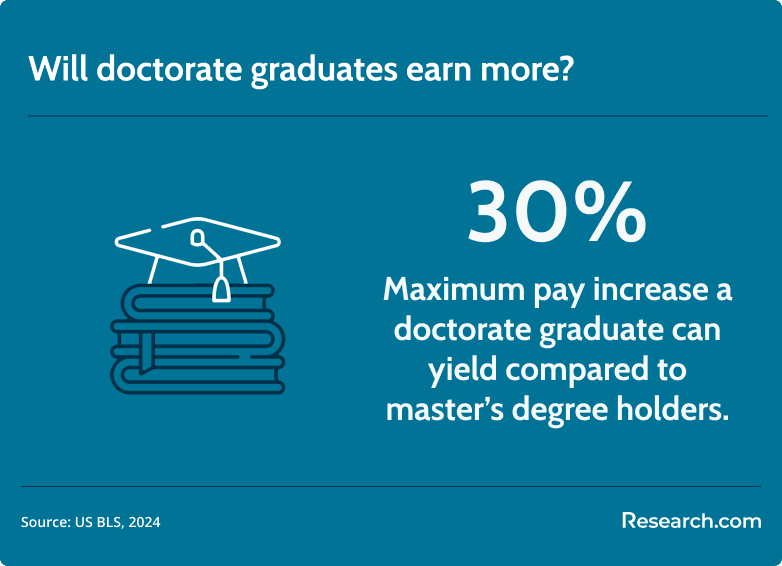
Professionals with a Doctorate in Organizational Leadership often experience significant salary increases compared to those with only a master's degree. For instance, according to Birchwood University, individuals with a Doctor of Business Administration (DBA) typically earn 15 to 30% more than their counterparts with a master's degree.
Why pursue a doctorate-focused leadership career?
A doctorate in organizational leadership is most valuable for professionals who want to influence how institutions make decisions, manage change, develop leaders, resolve complex organizational problems, and improve long-term performance. It can also help professionals move from functional management into broader strategic leadership.
The degree may be especially useful if you want to:
- lead organization-wide transformation or culture change;
- move into executive leadership, senior administration, or consulting;
- teach leadership, management, or organizational behavior;
- conduct applied research that improves workplace systems;
- develop leadership programs, coaching frameworks, or talent strategies;
- work across sectors such as business, healthcare, education, public agencies, or nonprofit organizations.
Some professionals pair leadership expertise with business training. For example, the shortest online entrepreneurship MBA programs may appeal to leaders who want stronger preparation for venture creation, innovation strategy, or business development.
Who should consider a different path?
A doctorate may not be the best choice if your main goal is a quick promotion, a technical management credential, or a lower-cost way to change careers. In those cases, a specialized master's degree, MBA concentration, project management credential, HR certification, or industry-specific graduate certificate may offer a faster and less expensive route.
Top industries and employers hiring organizational leadership doctorate graduates
Doctorate graduates can work anywhere leadership, organizational change, workforce strategy, and evidence-based decision-making are valued. The strongest opportunities often appear where the graduate already has relevant industry experience.
| Industry | Example employers or settings | Common leadership applications |
| Corporate and business management | Fortune 500 companies such as Amazon, Apple, and Deloitte | Executive leadership, internal consulting, organizational development, change management, strategy, and leadership development. |
| Higher education | Universities like Harvard, University of Phoenix, and Arizona State University | Teaching, academic administration, program leadership, student services leadership, and institutional effectiveness. |
| Healthcare administration | Large systems such as Mayo Clinic, Kaiser Permanente, and UnitedHealth Group | Operational leadership, workforce planning, patient experience initiatives, leadership development, and organizational change. |
| Government and public sector | Agencies like the U.S. Department of Labor, Department of Education, and state/local governments | Policy implementation, workforce development, public administration, performance improvement, and leadership training. |
| Nonprofit and international organizations | Groups such as the United Nations, World Bank, and American Red Cross | Mission alignment, stakeholder management, fundraising leadership, program strategy, and organizational effectiveness. |
Healthcare is one area where leadership credentials can be strengthened by sector-specific knowledge. Professionals comparing healthcare administration options may also review MHA degree salary information to understand how healthcare leadership compensation can differ from general management compensation.
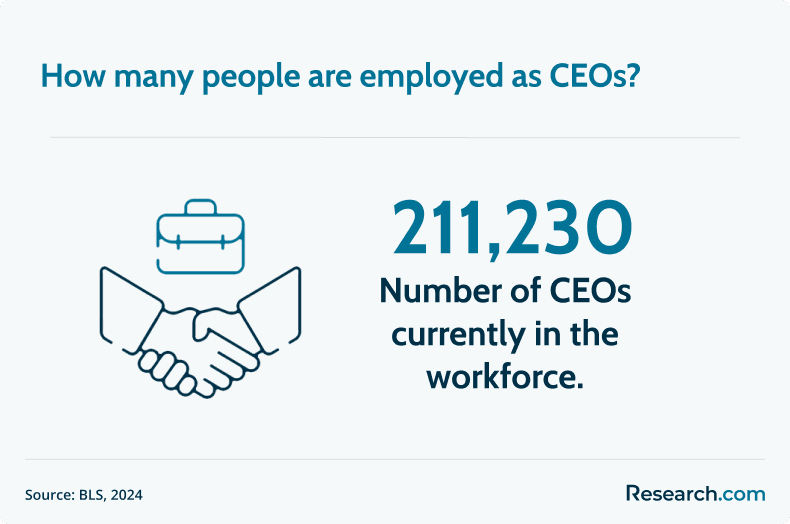
According to the US BLS, the industry with the highest number of CEOs is the local government, employing nearly 17,000 CEOs. This is compared to the CEOs employed for the management of companies and enterprises, which employs 15,560 CEOs.
What is the job outlook for organizational leadership careers in 2026?
The outlook for organizational leadership graduates depends on the occupation they pursue. The degree does not correspond to one single Bureau of Labor Statistics category. Instead, graduates often move into management, consulting, HR, training, higher education, executive, policy, or operations-focused roles.
In 2025, the job outlook for graduates with a doctorate in organizational leadership remains solid. Demand is strong in management consulting, healthcare administration, and operations research, especially in roles requiring advanced leadership and strategic expertise.
Professionals targeting HR leadership may also compare focused graduate business options such as the shortest online MBA programs human resource management, particularly if their goal is to move into employee relations, compensation strategy, organizational culture, or workforce planning.
Management roles overall are expected to grow at approximately 8% from 2021 to 2031, a rate faster than the average across all occupations. More specific projections cited for leadership-adjacent roles include:
| Occupation | Projected growth | Annual openings |
| Operations research analysts | Approximately 23% growth | 9,800 openings per year |
| Management analysts (management consultants) | Estimated to experience 10% growth | 92,900 openings per year |
| Training and development managers | 6% growth | About 3,500 openings per year |
| Human resources managers | 5% growth | 15,500 openings per year |
| Top executives | 3% growth | 311,600 openings per year |
When comparing leadership-related degrees across industries, it can help to review adjacent fields as well. For example, masters in engineering management salary information can be useful for professionals weighing leadership careers in technical, engineering, or operations-heavy environments.
How much can doctorate graduates in organizational leadership earn?
Earnings vary widely because organizational leadership graduates enter different occupations. A senior executive in a large corporation, a university faculty member, a nonprofit director, an HR executive, and an independent consultant can have very different compensation structures. Role, sector, geography, employer size, experience, and prior accomplishments often matter as much as the degree itself.
| Role | Reported median annual salary | What affects pay |
| Chief executives | $258,900 | Organization size, industry, performance incentives, equity, prior executive experience, and scope of responsibility. |
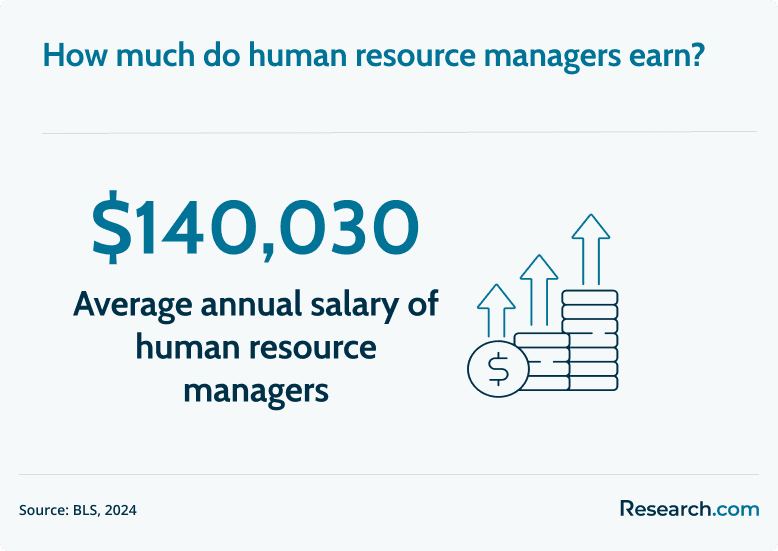
| Human resources managers | $140,030 | Industry, employee headcount, compliance complexity, labor relations, and strategic responsibility. |
| Training and development managers | $115,640 | Leadership development scope, enterprise learning systems, budget ownership, and organizational scale. |
| Education administrators | $97,500 | Institution type, administrative level, department size, and academic leadership responsibilities. |
| Management analysts | $89,760 | Consulting specialization, client base, project complexity, industry knowledge, and independent versus employed status. |
These figures show that leadership-related roles can offer strong earning potential, particularly when doctoral study is combined with senior experience and a clear career strategy. Graduates who are skilled communicators may also consider communication management career paths, especially in roles involving executive messaging, change communication, public relations, and stakeholder engagement.
Challenges of building a career with a doctorate in organizational leadership
A doctorate can strengthen your leadership profile, but it does not remove the realities of a competitive senior-level job market. Many roles that appeal to doctorate graduates require years of prior experience, strong references, measurable accomplishments, and the ability to lead under pressure.
- Senior roles carry high accountability. Executives and directors are responsible for strategy, budgets, people, results, and organizational risk.
- Competition can be intense. Top leadership positions are limited, and candidates often need both credentials and a strong record of impact.
- Employers expect continuous learning. Leaders must understand technology, workforce change, data, organizational culture, and evolving stakeholder expectations.
- Work-life balance can be difficult. Executive and consulting roles often involve long hours, travel, crisis management, and constant decision-making.
- Organizational politics are unavoidable. Advanced leaders must handle conflict, competing priorities, board expectations, employee concerns, and stakeholder pressure.
- The doctorate may be misunderstood. Some employers may not know how to evaluate an organizational leadership doctorate unless you clearly connect it to business outcomes.
Professionals who want a business-focused doctoral path rather than a leadership doctorate may compare options such as the shortest management DBA online programs, especially if their goals center on management practice, business strategy, and executive decision-making.
Alternative career paths for organizational leadership doctorate graduates
Not every graduate wants a traditional executive title. The degree can also support flexible, hybrid, or specialized careers that combine leadership, research, coaching, teaching, and strategy.
| Alternative path | What the work may involve | When it makes sense |
| Independent consulting | Advising organizations on culture, change management, leadership systems, performance improvement, or restructuring. | Best for professionals with a strong network, a clear niche, and evidence of client results. |
| Academia and research | Teaching, publishing, supervising students, developing curriculum, and conducting leadership or organizational studies research. | Best for those who enjoy scholarship, writing, student engagement, and academic service. |
| Entrepreneurship | Launching a consulting firm, coaching practice, training company, leadership platform, or mission-focused venture. | Best for self-directed professionals comfortable with sales, operations, marketing, and risk. |
| Nonprofit or government leadership | Leading agencies, programs, policy initiatives, community organizations, or public-sector transformation efforts. | Best for leaders motivated by public service, social impact, and complex stakeholder environments. |
| Executive coaching and training | Helping leaders improve communication, team effectiveness, decision-making, emotional intelligence, and change readiness. | Best for professionals with facilitation skills, coaching training, and credibility with senior leaders. |
| Corporate strategy and innovation | Managing strategic planning, innovation initiatives, organizational design, or enterprise transformation projects. | Best for leaders who can connect people, processes, technology, and long-term business goals. |
How a doctorate in organizational leadership can support digital transformation
Digital transformation is rarely only a technology project. It usually requires culture change, process redesign, stakeholder alignment, training, communication, and new decision-making habits. Doctorate graduates who understand organizational systems can help leaders move beyond software adoption and address the human side of transformation.
In practice, this may involve leading cross-functional teams, translating strategic goals into implementation plans, reducing resistance to change, improving communication between technical and nontechnical groups, and evaluating whether digital initiatives are producing measurable improvements. Professionals who want stronger project delivery skills may also explore the fastest project management degree online as a complementary pathway.
How the degree strengthens evidence-based decision-making
One of the strongest advantages of doctoral education is training in research design, data interpretation, literature review, and critical analysis. For organizational leaders, those skills matter because major decisions often involve incomplete information, competing priorities, and pressure from multiple stakeholders.
Evidence-based leaders can evaluate performance data, diagnose root causes, test assumptions, assess the quality of research, and avoid relying only on anecdotes or personal preference. This is especially valuable in change management, workforce planning, leadership development, employee engagement, and operational improvement. Professionals who want a broader business toolkit may also compare options such as the best affordable MBA online.
Common mistakes to avoid when planning this career path
- Choosing a program without checking accreditation. Accreditation affects credibility, employer recognition, academic transfer, and financial aid eligibility.
- Assuming the doctorate guarantees an executive job. Senior roles usually require a proven leadership record, not only an advanced degree.
- Ignoring opportunity cost. Tuition is only part of the cost; time, workload, reduced income, and delayed career moves also matter.
- Picking a dissertation topic with no career value. Choose a research focus that connects to your target industry, consulting niche, or leadership problem.
- Relying only on rankings. Rankings can be helpful, but program fit, faculty expertise, schedule flexibility, alumni outcomes, and cost may matter more.
- Overlooking industry specialization. A leadership doctorate is more marketable when paired with knowledge of healthcare, education, business, HR, nonprofit work, technology, or public administration.
- Waiting until graduation to network. Professional visibility should be built during the program through conferences, publications, projects, associations, and applied work.
How to choose the right doctorate in organizational leadership program
- Define your end goal. Decide whether you want executive leadership, consulting, higher education, HR leadership, nonprofit management, or research-focused work.
- Compare curriculum focus. Look for coursework in organizational change, leadership theory, research methods, ethics, strategy, culture, and applied problem-solving.
- Review faculty expertise. Faculty research and professional backgrounds should align with the problems you want to study.
- Ask about dissertation or capstone support. Strong advising, research design guidance, and writing support can affect completion.
- Check delivery format. Online, hybrid, evening, and cohort models can work well for working professionals, but the workload still requires serious time management.
- Evaluate total cost. Compare tuition, fees, residency expenses, books, travel, technology costs, and the number of credits required.
- Investigate outcomes. Ask where graduates work, what roles they move into, whether alumni teach, consult, publish, or advance into senior leadership.
- Confirm employer relevance. If your employer offers tuition assistance, ask whether the program qualifies and whether the doctorate aligns with promotion pathways.
What Doctorate Graduates Say About Their Careers in Organizational Leadership
- Jessie: "Completing the doctorate changed how I approached leadership. It helped me qualify for higher-level responsibilities, but more importantly, it gave me a stronger way to analyze complex problems, guide teams, and connect research with practical decisions in my organization."
- Gideon: "The program pushed me to examine my leadership habits more honestly. I became more thoughtful about ethics, resilience, communication, and how organizational systems shape people’s behavior. That perspective has made me a more effective change leader."
- Mikhail: "The doctorate expanded my career options beyond a single employer. Consulting, coaching, remote advisory work, and senior-level projects became more realistic because I could combine professional experience with doctoral-level research and strategy."
Key Insights
- A doctorate in organizational leadership can lead to executive, consulting, HR, training, higher education, nonprofit, government, policy, and coaching careers, but prior experience strongly affects outcomes.
- Most leadership careers do not require licensure. Optional credentials such as PMP, SHRM-CP, SHRM-SCP, CMC, or executive coaching certifications can help when they match the target role.
- ROI depends on program cost, accreditation, career alignment, work experience, and whether the doctorate helps you reach roles you could not reasonably access otherwise.
- Salary potential can be strong in leadership-related roles, with cited figures including $258,900 for chief executives, $140,030 for human resources managers, and $115,640 for training and development managers.
- The job outlook is strongest in roles tied to consulting, analysis, workforce development, operations, and organizational change, while top executive roles remain competitive.
- The degree is most useful when paired with a clear specialization, such as healthcare, education, HR, public administration, business strategy, organizational development, or leadership coaching.
- Before enrolling, compare accreditation, curriculum, faculty expertise, dissertation support, total cost, flexibility, and graduate outcomes instead of choosing based only on speed or prestige.
References:
- Indeed. (2025). Chief executive officer salary in United States. https://www.indeed.com/career/chief-executive-officer/salaries
- Indeed. (2025). Human resources manager salary in United States. https://www.indeed.com/career/human-resources-manager/salaries
- Indeed. (2025). Management analyst salary in United States. https://www.indeed.com/career/management-analyst/salaries
- Indeed. (2025). Training and development manager salary in United States. https://www.indeed.com/career/training-and-development-manager/salaries
- Indeed. (2025). Education administrator salary in United States. https://www.indeed.com/career/education-administrator/salaries
- Intelligent. (n.d.). Top online doctorate in organizational leadership programs. Intelligent.com. https://www.intelligent.com/top-online-doctorate-in-organizational-leadership-programs
- Mississippi State University, Center for Continuing & Professional Studies. (2024). Applied organizational leadership: The key to a thriving workforce in 2025. https://www.cpcs.msstate.edu/news/2024/12/applied-organizational-leadership-key-thriving-workforce-2025
- Salary.com. (2025). Chief executive officer salary. https://www.salary.com/research/salary/benchmark/chief-executive-officer-salary
- Salary.com. (2025). Human resources manager salary. https://www.salary.com/research/salary/benchmark/human-resources-manager-salary
- Salary.com. (2025). Training and development manager salary. https://www.salary.com/research/salary/benchmark/training-and-development-manager-salary
- US BLS. (2024). Chief executives. Occupational Outlook Handbook. https://www.bls.gov/ooh/management/top-executives.htm
- US BLS. (2024). Human resources managers. Occupational Outlook Handbook. https://www.bls.gov/ooh/management/human-resources-managers.htm
- US BLS. (2024). Management analysts. Occupational Outlook Handbook. https://www.bls.gov/ooh/business-and-financial/management-analysts.htm
- US BLS. (2024). Training and development managers. Occupational Outlook Handbook. https://www.bls.gov/ooh/management/training-and-development-managers.htm
- US BLS. (2024). Education administrators, all other. Occupational Outlook Handbook. https://www.bls.gov/ooh/education-training-and-library/education-administrators.htm
- ZipRecruiter. (2025). Education administrator salary. https://www.ziprecruiter.com/Salaries/Education-Administrator-Salary
- ZipRecruiter. (2025). Management analyst salary. https://www.ziprecruiter.com/Salaries/Management-Analyst-Salary
Other Things to Know About Using a Doctorate in Organizational Leadership Professionally
Most programs require a dissertation proposal, an oral defense, and an approved final manuscript. Students usually complete original research over 12 to 24 months, working with a faculty committee and following university formatting rules, ethics review procedures, and submission deadlines set by the graduate school.
The cost of pursuing a Doctorate in Organizational Leadership in 2026 typically ranges from $50,000 to $100,000, depending on the institution and program specifics. This estimate includes tuition, fees, and related expenses. Planning for potential financial aid options is advisable.