2027 The ROI of an MBA – Calculating the Value of Your MBA

Co-Founder and Chief Data Scientist
Deciding whether to earn an MBA is no longer just a question of prestige. It is a financial, career, and timing decision. The degree can help professionals move into management, consulting, finance, operations, entrepreneurship, technology leadership, healthcare administration, nonprofit leadership, and executive roles. It can also be expensive, time-consuming, and less valuable if the program does not match your goals.
This guide explains how to evaluate MBA return on investment, compare program formats, estimate costs and debt, assess salary potential, and decide whether an MBA is the right move for your career. It is written for working professionals, recent graduates, managers, career changers, and executives who want a practical way to answer the question: “Is an MBA worth it for me?” According to the Bureau of Labor Statistics (BLS), employment for top executives is projected to grow 6% through 2033, but the value of an MBA still depends heavily on program cost, industry, location, prior experience, and how well you use the degree.
Because MBA ROI is personal, no single ranking, salary statistic, or formula can give you a complete answer. Published approaches often compare program cost with future earnings, “value-added” salary outcomes, debt, or payback period. Those models can be useful, but your real MBA value depends on your pre-MBA salary, expected post-MBA role, financing plan, opportunity cost, and career timeline (GMAC, 2025; Miller, 2026).
The ROI of an MBA Table of Contents
- How to Calculate MBA ROI
- Is an MBA Worth the Investment?
- Important Factors Before Choosing an MBA
- Skills Employers Expect from MBA Graduates
- MBA Specializations and Career Paths
- Affordable Ways to Earn an MBA
- Should You Consider an Accelerated MBA?
- Risks and Challenges of Pursuing an MBA
- Hidden Costs in Online MBA Programs
- How an MBA Can Help You Prepare for Industry Disruption
- Accelerated Online MBA Programs vs. Traditional MBAs
- Common MBA Misconceptions
- Affordable MBA Options in Finance
- How to Increase Your MBA ROI
- How to Check MBA Program Credibility
Quick Answer: Is an MBA Worth It?
An MBA can be worth it when the degree helps you reach a higher-paying role, enter a stronger career path, build a useful professional network, or gain business skills you cannot easily develop on the job. It is usually a weaker investment when the program is too expensive for your expected salary gain, lacks recognized accreditation, has poor career support, or does not align with your target industry.
The simplest way to evaluate MBA ROI is to compare total cost with the financial benefit you reasonably expect after graduation. Include tuition, fees, books, travel, lost income if you stop working, loan interest, and time to completion. Then compare those costs with the salary increase, promotion potential, career mobility, and nonfinancial benefits the MBA may provide.
| Question to Ask | Why It Matters for MBA ROI | What to Look For |
| Will the MBA help me reach a specific role? | A clear career target makes ROI easier to estimate. | Relevant concentrations, strong employer connections, and graduates working in your desired field. |
| Can I keep working while enrolled? | Staying employed can reduce opportunity cost. | Online, part-time, executive, evening, or weekend formats. |
| How much debt will I need? | Loan payments can sharply reduce the financial return. | Scholarships, employer tuition support, lower-cost public options, and flexible payment plans. |
| Is the program respected by employers? | Brand strength and accreditation can affect hiring outcomes. | Recognized accreditation, transparent employment outcomes, and active alumni networks. |
| What salary increase is realistic? | ROI depends on actual earnings, not average salaries alone. | Role-specific, region-specific, and industry-specific salary data. |
How to Calculate MBA ROI
An MBA may improve earning potential, but the degree does not create the same financial result for every student. The BLS reports that top executives earned a median salary of $111,330, and earnings can vary by industry and location. At the same time, the average tuition and fees for an MBA are $14,160 for state residents and $50,926 for out-of-state students. These figures are useful starting points, but they are not enough to determine your personal return.
The ROI of master’s-level business management degrees can be evaluated several ways. Common models include:
- Center on Education and the Workforce (CEW) at Georgetown University: This approach compares future returns against the up-front educational investment and examines a college’s “value-added” earnings relative to expected outcomes for similar students and institutions.
- Payscale: This method uses the published “total cost,” including tuition, fees, room and board, books, and supplies, then compares those costs with expected future earnings.
- Brookings Institution: This model looks at a school’s “value-added” earnings outcomes compared with what would be expected based on student characteristics and peer institutions.
- Third Way: This approach uses a “price-to-earnings premium” to estimate how many years it takes for the financial benefit of a degree to offset the cost.
These frameworks are helpful, but they have limits. They may not capture your current salary, debt level, industry goals, local labor market, family obligations, employer tuition benefits, or likelihood of completing the program on schedule. For that reason, the most useful MBA ROI calculation combines published data with your own numbers (Graduate Management Admission Council, 2025; Statista, 2026; U.S. Bureau of Labor Statistics, 2025).
What Costs and Benefits Should You Include?
To answer “How much is an MBA worth?” start with a personalized cost-benefit estimate. Your analysis should reflect whether you plan to study full time, part time, online, or through an executive format. For many students, the choice between a part time MBA vs full time MBA has a larger financial impact than the sticker price alone.
| ROI Factor | What to Include | Common Mistake |
| Direct program cost | Tuition, required fees, books, software, course materials, and graduation fees. | Comparing tuition only and ignoring required fees. |
| Living and incidental expenses | Travel, residencies, commuting, parking, lodging, and a reasonable adjustment for room and board. | Assuming online study eliminates all extra costs. |
| Debt and interest | Loans, interest, origination fees, repayment timeline, and monthly payment burden. | Treating borrowed money as the same as scholarship aid. |
| Opportunity cost | Lost wages if you leave work, delayed promotions, or reduced hours while studying. | Ignoring income you could have earned without enrolling. |
| Expected earnings | Salary increase, bonus potential, promotion prospects, and role-specific compensation. | Using broad MBA averages instead of salaries for your target job and region. |
| Completion risk | Possible delays, part-time pacing, leave of absence, or noncompletion. | Assuming every student finishes on the shortest advertised timeline. |
| Time horizon | Short-term payback period, mid-career compensation, and long-term advancement. | Judging ROI only by the first job after graduation. |
Choosing one of the cheapest online MBA programs can improve affordability, but low tuition does not automatically mean high ROI. The program still needs to support your career goal, provide credible instruction, and help you reach a salary outcome that justifies the investment.
Funding can also change the calculation. Some employers help pay for graduate business education, so it is worth reviewing companies with tuition reimbursement for MBA programs before relying only on loans.
Sample MBA ROI Calculations
The basic MBA ROI formula compares net financial benefit with total cost:
(Net Financial Benefit / Total Cost) * 100 = ROI
The following examples are simplified. They do not account for taxes, bonuses, geographic pay differences, missed income, employer reimbursement, family obligations, or long-term promotion effects. Still, they show why debt can dramatically change the outcome.
Example 1: ROI Without Debt
- Total Cost: $140,000
- Post-MBA Salary Increase: $40,000
- Net Financial Benefit: $40,000 $0 = $40,000, assuming no pre-MBA salary growth
- Payback Period: $140,000 / $40,000 = 3.5 years
- ROI: ($40,000 / $140,000) * 100 = 28.57%
In this scenario, the salary increase is larger than the annualized cost comparison used in the example, producing an ROI of 28.57%. The payback period is 3.5 years, which means the student would need several years of higher earnings to recover the initial investment.
Example 2: ROI With Debt Included
A debt-adjusted version of the formula can be expressed as:
ROI = ((Post-MBA Salary Increase Average Debt) / Total Cost) * 100
- Total Cost: $140,000
- Post-MBA Salary Increase: $81,513
- Average Debt: $83,651
- Net Financial Benefit: $81,513 $83,651 = -$2,138, assuming no pre-MBA salary growth and using average debt
- Payback Period: $140,000 / ($81,513 $83,651) ~ N/A because the value is negative
- ROI: (($81,513 $83,651) / $140,000) * 100 = -1.54%
In the second example, including the average debt among master’s degree holders changes the result to a negative ROI of about -1.54%. This does not mean every debt-financed MBA is a poor investment. It means the borrowing amount, repayment terms, and actual post-MBA salary increase must be evaluated carefully before enrolling.
Use these examples as a framework, not as a prediction. Your actual MBA value will depend on the school, delivery format, scholarship aid, employer support, industry, job market, location, work experience, and how aggressively you pursue promotions or career changes after graduation.
Is an MBA a Good Investment?
Yes, an MBA can be a strong investment for professionals who have a clear career strategy and choose a program that supports that strategy. The degree may improve access to management roles, broaden business knowledge, strengthen leadership skills, and expand a professional network. However, it is not automatically profitable. The investment is strongest when the expected career benefit is specific, measurable, and realistic.
An MBA may be especially valuable if you want to move from a technical or functional role into leadership, change industries, build a business network, qualify for internal promotion, or gain broader training in finance, strategy, operations, marketing, and organizational leadership. Students interested in mission-driven leadership may also compare top non profit management MBA programs.
How Much Do MBA Graduates Make?
Salary outcomes vary widely. According to the BLS, the median annual wage for chief executives was $189,520, while general and operations managers earned $98,100. These figures do not represent guaranteed MBA salaries; they describe occupational earnings that can be influenced by education, experience, industry, geography, company size, and performance.
Industry matters. Manufacturing and professional, scientific, and technical services CEOs earn at least $208,000, while healthcare and social assistance CEOs earn $154,650. General and operations managers in manufacturing earned $119,260, and those in professional, scientific, and technical services earned $127,110. Professionals weighing executive education should also compare degree level, career stage, and executive MBA cost before committing.
Location also affects earnings. California has the highest level of chief executive employment, with a median compensation of $275,040. Texas had the highest employment for general and operations managers, with a median wage of $110,150. These numbers should be interpreted carefully because total compensation can include base salary, bonuses, stock options, equity, profit sharing, and other incentives.
When Is the Best Time to Get an MBA?
The best time to enroll is when the degree connects to a near-term career move or a long-term advancement plan. MBA ROI is usually easier to justify when you know the role you want, understand the credentials employers expect, and can estimate the salary difference between your current path and your MBA-supported path.
There is no single ideal age or experience level for every student. Some professionals enroll early to accelerate career growth. Others wait until they have enough work experience to benefit from case discussions, networking, and executive-level coursework. Market demand also matters. BLS employment projections and industry research can help you identify fields where graduate business training may provide an advantage.
| Your Situation | When an MBA May Make Sense | When to Wait or Choose Another Option |
| You want promotion within your company. | Your employer values the MBA and may help pay for it. | Your company promotes mainly through experience, licensing, or technical certification. |
| You want to change industries. | The program has career coaching, internships, alumni access, and recruiters in the target field. | The school has weak placement in the industry you want to enter. |
| You are already in management. | An executive, part-time, or online MBA can build strategy and leadership skills while you keep working. | You need a narrower technical credential rather than broad management training. |
| You are early in your career. | You have a clear goal and can choose an affordable, reputable program. | You lack work experience and would benefit more from gaining professional responsibility first. |
Important Factors Before Choosing an MBA
Earning a relevant master’s degree requires a serious commitment of time, money, and focus. Before applying, compare program formats, accreditation, cost, career services, specialization options, networking access, admissions requirements, and expected outcomes. The right program should fit your career goal and your life, not just your desire to earn a graduate credential.
How Should Applicants Compare Online and In-Person MBA Programs?
More than 70% of companies consider online education comparable to traditional on-campus education. That means the format itself may not be the main employment issue. The more important question is whether the program is accredited, rigorous, career-relevant, and suited to how you learn.
Campus MBA programs can offer face-to-face discussions, cohort bonding, career fairs, immersion experiences, and stronger informal networking. They may be a good fit for students who can relocate, pause work, or spend significant time on campus. The trade-offs may include commuting, housing costs, less schedule flexibility, and higher total expenses.
If you get your MBA online, you may have more flexibility to continue working while studying. This can reduce opportunity cost and make graduate education more practical for working adults. Some Easy MBA programs to get into may appeal to applicants with nontraditional backgrounds, but admissions accessibility should not replace careful review of quality and outcomes. According to Statista, 31% of online students chose online learning because existing commitments prevented in-person attendance.
Applicants should also consider their preferred learning style. Online programs require self-direction, consistent time management, and comfort with virtual collaboration. Campus programs may offer more spontaneous interaction, but they require more schedule and location flexibility.
| Program Format | Best For | Potential Trade-Offs |
| Full-time campus MBA | Career changers, students seeking internships, and those who can pause full-time work. | Higher opportunity cost and less flexibility. |
| Part-time MBA | Working professionals who want to keep earning while studying. | Longer completion time and heavier work-school balance. |
| Online MBA | Students who need geographic flexibility or cannot attend campus regularly. | Networking may require more intentional effort. |
| Executive MBA | Experienced professionals preparing for senior leadership. | Often designed for applicants with substantial work experience. |
| Accelerated MBA | Students who can handle intensive pacing and want to reduce time away from the workforce. | Less time for internships, reflection, and extended networking. |
How Does an MBA Strengthen Professional Networking?
Networking is one of the most important non-salary benefits of an MBA. A strong program can connect students with classmates, alumni, faculty, executives, recruiters, entrepreneurs, and industry mentors. These relationships can lead to job referrals, business partnerships, mentorship, consulting opportunities, and market insight.
To get real value from MBA networking, students need to participate actively. A network does not become useful just because a student is enrolled.
- Attend program and industry events: Join conferences, employer panels, alumni meetings, workshops, and speaker sessions where you can meet professionals outside your immediate circle.
- Build relationships with classmates: Treat team projects, clubs, and study groups as long-term professional relationship opportunities.
- Use LinkedIn and alumni platforms: Connect with graduates, faculty, recruiters, and industry groups in a professional and consistent way.
- Seek mentors early: Faculty members, alumni, and experienced classmates can help you evaluate career paths and avoid common mistakes.
- Pursue internships, consulting projects, or externships: Practical experiences often create stronger contacts than classroom interaction alone.
- Maintain the network after graduation: Share updates, attend alumni events, offer help, and keep relationships active before you need a favor.
Before enrolling, ask how the program supports networking. Look for active alumni chapters, career events, employer partnerships, student organizations, mentoring programs, and evidence that graduates help one another professionally.
Who Should Choose a Specialized Master’s Instead of an MBA?
An MBA provides broad training across business functions. A specialized master’s degree goes deeper into one field, such as finance, analytics, accounting, supply chain, management, or marketing. Students who already know the exact technical area they want to enter may find a specialized degree more efficient than a general MBA.
For example, a Master of Finance may be better for someone focused narrowly on investment analysis or corporate finance, while a Master of Management online may suit students who want management training without the broader MBA structure. An MBA is often better for professionals seeking leadership, cross-functional decision-making, entrepreneurship, or career mobility across industries.
| Choose an MBA If... | Consider a Specialized Master’s If... |
| You want broad business training across finance, strategy, leadership, marketing, and operations. | You want deep technical preparation in one field. |
| You are targeting management, consulting, entrepreneurship, or executive-track roles. | You are targeting a specialized function where technical depth matters more than general management. |
| You value alumni networks and cohort-based leadership development. | You want a narrower curriculum that may take less time or focus more directly on one discipline. |
| You may change industries or functions later. | You already know your long-term function and do not need broad career flexibility. |
Skills Employers Expect from MBA Graduates
Modern MBA programs are under pressure to prepare graduates for a business environment shaped by analytics, automation, artificial intelligence, remote work, cybersecurity risk, sustainability demands, and fast-changing customer expectations. The strongest programs combine classic leadership training with technical fluency and real-world problem solving.
What Skills Should MBA Students Build Now?
The Graduate Management Admission Council (2025) surveyed 951 global employers and found that 92 percent of companies identified personal grit and adaptability as the most important skills when hiring MBA graduates. Communication also remains essential, with nearly all employers seeking strong communication skills in MBA candidates.
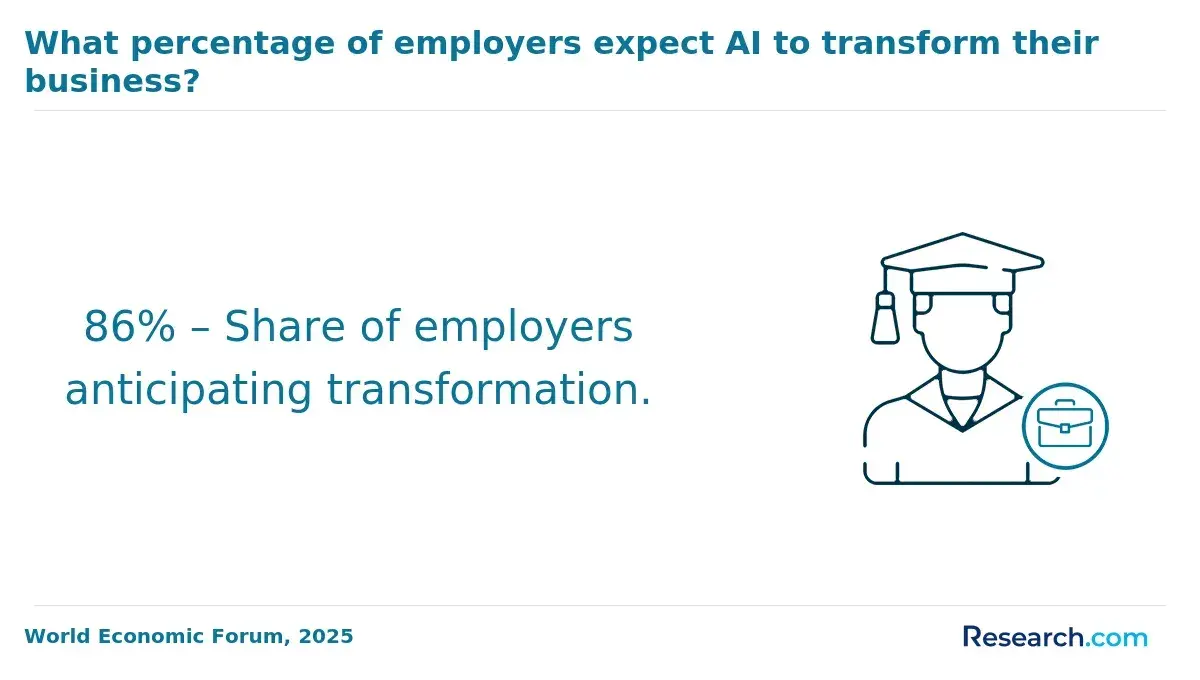
Technical ability is also becoming more important to MBA value. More than half of surveyed employers look for cloud computing skills, 51% seek advanced project management skills, and 42% look for AI integration and data literacy (GMAC, 2025). Employers also value predictive analytics, cybersecurity awareness, digital strategy, and machine learning. In addition, 12% actively seek MBA graduates with specialized hard skills such as software development.
Leadership and teamwork remain central. Employers still need managers who can guide teams, resolve conflict, motivate employees, make decisions under uncertainty, and connect strategy with execution. The best MBA graduates can combine human judgment with data-driven decision-making.
| Skill Area | Why It Matters | How to Build It During an MBA |
| Adaptability and grit | Organizations need leaders who can perform through change and uncertainty. | Choose courses with simulations, live cases, and ambiguous business problems. |
| Communication | Managers must translate complex ideas for teams, executives, clients, and investors. | Practice presentations, executive memos, negotiations, and group facilitation. |
| AI and data literacy | Business decisions increasingly rely on analytics, automation, and digital tools. | Take electives in analytics, AI integration, digital strategy, and data visualization. |
| Project management | Cross-functional work requires planning, coordination, risk management, and accountability. | Lead team projects, pursue project-based courses, and document measurable outcomes. |
| Leadership and collaboration | Promotions often depend on the ability to manage people, conflict, and change. | Use leadership labs, coaching, peer feedback, and student organization roles. |
What Is Often Missing from MBA Curricula?
Some MBA programs have been criticized for not fully reflecting the realities practicing managers face every day. Traditional curricula can overemphasize theory while underdeveloping behavioral competence, ethical judgment, emotional intelligence, and applied leadership. Although newer findings show that programs are increasingly prioritizing strategic leadership, digital fluency, and emotional intelligence, some schools still give too little attention to these managerial capabilities (Graduate Management Admission Council, 2025).
To close the gap, many MBA programs are adding practical projects, experiential learning, ethics-focused decision-making, digital transformation content, and sustainability-related leadership training. Prospective students should look for evidence that the curriculum uses real company problems, current technology, team-based work, and faculty with relevant professional experience (Association of MBAs, 2025).
MBA Specializations and Career Paths
MBA specializations allow students to connect broad business training with a specific industry or function. Traditional areas such as finance, marketing, operations, and entrepreneurship remain common, but newer tracks reflect employer demand in technology, healthcare, sustainability, analytics, cybersecurity, and supply chain strategy.
An MBA Information Technology Management degree, for example, blends management training with technology strategy. Students may study data analytics, cloud computing, enterprise resource planning, cybersecurity management, and digital transformation. This type of MBA can fit professionals who want to lead technology-enabled business change rather than work only in technical execution.
Healthcare management, sustainability, and supply chain analytics are also growing areas of interest because organizations need leaders who understand regulation, cost control, operational resilience, environmental responsibility, and data-supported decision-making. Graduates may pursue roles such as healthcare administrators, sustainability consultants, logistics managers, technology managers, or operations leaders.
| MBA Specialization | Best Fit | Possible Career Direction |
| Finance | Students interested in investments, corporate finance, risk, or capital markets. | Financial management, investment banking, corporate finance, portfolio management. |
| Information technology management | Professionals who want to lead digital transformation or IT strategy. | Technology leadership, cybersecurity management, digital strategy, systems management. |
| Healthcare management | Students interested in healthcare operations, policy, and administration. | Healthcare administration, operations management, service line leadership. |
| Sustainability | Professionals focused on environmental strategy, responsible operations, and ESG-related work. | Sustainability consulting, operations strategy, corporate responsibility roles. |
| Supply chain analytics | Students who like operations, logistics, forecasting, and data-driven process improvement. | Logistics management, supply chain strategy, operations analytics. |
Choose a specialization only after comparing it with your target jobs. A niche track can improve differentiation, but it can also narrow your options if it does not match employer demand in your region or industry.
Affordable Ways to Earn an MBA
Affordability is one of the most important MBA ROI factors because every dollar you do not borrow lowers the salary increase needed to break even. A prestigious school may offer strong networks and recruiting access, but a lower-cost accredited program can be a better financial choice for students who already have a clear career path or plan to remain employed while studying.
Students trying to reduce cost can compare public universities, online MBA options, employer-sponsored programs, scholarships, transfer policies, military or veteran benefits, and accelerated formats. Some students also begin with broader business education options, such as the cheapest online business administration degree, before deciding whether graduate business study is necessary.
Should You Consider an Accelerated MBA?
Accelerated MBA programs compress coursework into a shorter timeline. They can reduce time away from the workforce and may lower opportunity cost, but they require strong time management and a high tolerance for intensive academic pacing. These programs often work best for focused professionals who already have business experience and know what they want from the degree.
When evaluating accelerated formats, review course load, faculty access, cohort structure, internship availability, career services, alumni outcomes, and whether the schedule leaves enough time for networking. Students comparing faster options can review 1 year MBA programs to understand how condensed MBA pathways are structured.
Risks and Challenges of Pursuing an MBA
An MBA has potential upside, but it also carries real risks. The biggest risk is paying more than the degree is likely to return through salary growth, promotion, or career mobility. Debt, lost income, unclear goals, weak program reputation, and poor career support can all reduce MBA value.
Market uncertainty is another factor. Economic conditions, industry hiring cycles, automation, company restructuring, and geographic labor markets can affect post-graduation opportunities. Even a strong MBA cannot guarantee a promotion, executive role, or specific salary.
Program fit also matters. A school may be credible overall but weak in your target industry. Some programs have limited alumni engagement, minimal employer relationships, or little support for career changers. Before enrolling, review accreditation, graduate outcomes, curriculum relevance, career services, and the strength of the network in your intended field.
Experienced professionals who need a flexible and cost-conscious path can compare affordable executive MBA programs as one way to balance cost, schedule, and advancement goals.
Hidden Costs in Online MBA Programs
Online MBA programs can reduce commuting and relocation expenses, but they may still include costs beyond tuition. Students should look for technology fees, proctoring fees, digital resource subscriptions, residency travel, graduation fees, course materials, software requirements, and administrative charges. These expenses can change the true cost of attendance.
Before applying, ask the school for a complete cost breakdown by term. Also confirm whether tuition is charged per credit, per course, per semester, or as a flat program rate. For a deeper review of online MBA expenses, see MBA cost online.
How an MBA Can Help You Prepare for Industry Disruption
Business leaders now need to manage disruption from AI, automation, digital platforms, supply chain instability, sustainability expectations, cybersecurity threats, and changing workforce models. A future-focused MBA can help students build strategic thinking, data literacy, change management ability, and cross-functional leadership skills.
Look for programs that include digital transformation, analytics, technology management, innovation strategy, agile methods, sustainability, and applied consulting projects. Experiential learning is especially valuable because it forces students to solve real business problems rather than only discuss theory. Students who want a faster path with online flexibility can explore 1 year MBA programs online.
Accelerated Online MBA Programs vs. Traditional MBAs
Accelerated online MBA programs can be a practical alternative to traditional formats for students who need flexibility and want to finish quickly. These programs often use compressed courses, year-round enrollment, asynchronous learning, and intensive schedules. The main advantage is speed; the main trade-off is that students may have less time for internships, networking, reflection, and career exploration.
Before choosing an accelerated online MBA, verify accreditation, faculty credentials, student support, workload expectations, alumni outcomes, and career service access. The format should match your learning habits and professional obligations. Students comparing fast options can review accelerated MBA online programs that balance speed with program quality.
Common MBA Misconceptions
Unrealistic expectations can lead to poor MBA decisions. Before enrolling, separate what an MBA can help you do from what it cannot promise.
- Misconception: Every MBA graduate quickly gets a high-paying job. An MBA can improve opportunity, but salary depends on industry, location, prior experience, networking, school reputation, and performance.
- Misconception: The degree guarantees a leadership role. MBA coursework can build leadership ability, but employers still look for results, judgment, communication skills, and experience managing people or projects.
- Misconception: Only elite schools offer value. Top-ranked schools can provide powerful networks, but many regional, public, and online programs can offer strong ROI when costs are lower and outcomes match the student’s goals.
- Misconception: MBAs are only for finance and consulting. MBA graduates work across technology, healthcare, manufacturing, nonprofit organizations, entrepreneurship, operations, and public-sector-adjacent roles.
- Misconception: Online MBAs are automatically easier. Online learning can be flexible, but reputable programs still require rigorous coursework, group work, exams, projects, and disciplined time management.
- Misconception: Rankings tell the whole story. Rankings can provide context, but they do not replace checking cost, accreditation, employer connections, career services, and fit for your target role.
How to Get an MBA
Getting an MBA involves more than submitting applications. The strongest applicants define their career goal, choose the right format, prepare admissions materials, compare funding options, and verify that the program can support the outcome they want.
Step 1: Define Your Career Goal
Start with the role, industry, or advancement goal you want the MBA to support. A student targeting corporate finance should evaluate different programs than a student pursuing healthcare administration, technology strategy, entrepreneurship, or nonprofit leadership.
Step 2: Compare Program Quality and Fit
When reviewing MBA programs, focus on:
- Accreditation and reputation: Confirm that the program is accredited by a recognized accrediting body and has credibility with employers in your field.
- Curriculum and specialization options: Review required courses, electives, concentrations, experiential learning, and whether the content fits your career goal.
- Career services: Ask about coaching, employer relationships, internships, recruiting events, alumni mentoring, and salary outcome reporting.
- Schedule and format: Decide whether full-time, part-time, online, executive, or accelerated study is realistic for your work and personal responsibilities.
- Total cost: Compare the full cost of attendance, not only tuition.
Step 3: Prepare a Strong MBA Application
MBA applications typically ask schools to evaluate your professional experience, leadership potential, academic readiness, goals, and communication skills. To improve your application:
- Show measurable professional achievements, not just job duties.
- Explain why the MBA is necessary for your specific next step.
- Prepare for admissions tests such as the GMAT or GRE if required by your target programs.
- Ask recommenders who can describe your leadership, judgment, collaboration, and growth potential.
- Track deadlines early so transcripts, essays, test scores, and recommendations are submitted on time.
Step 4: Build a Financing Plan
A financing plan should be completed before enrollment, not after admission. Compare scholarships, employer reimbursement, assistantships, savings, payment plans, and loans. If you borrow, estimate monthly payments and compare them with realistic post-MBA income. The goal is to avoid a degree that requires an unrealistic salary jump to become financially sustainable.
Common Mistakes to Avoid
| Mistake | Why It Hurts ROI | Better Approach |
| Choosing a program without checking accreditation. | Employers and licensing-related pathways may not recognize weak credentials. | Verify accreditation before applying. |
| Focusing only on tuition. | Fees, travel, books, technology, and lost wages can change the real cost. | Request the full cost of attendance. |
| Assuming salary outcomes are guaranteed. | Published salaries may not reflect your experience, region, or target role. | Use role-specific and location-specific salary data. |
| Ignoring career services. | A degree with weak employer connections may not help you transition. | Ask about placement support, alumni access, and recruiter engagement. |
| Picking a specialization too early. | A narrow track can limit flexibility if your goals change. | Compare specializations with actual job postings and employer expectations. |
| Borrowing without a repayment plan. | Debt can erase much of the financial benefit. | Estimate monthly payments before enrollment. |
Affordable MBA Options in Finance for High ROI
Finance remains one of the MBA areas where ROI can be attractive, but only when cost and career outcomes are carefully managed. High tuition can reduce the value of even a strong salary increase, so students interested in finance should compare program affordability, recruiting access, faculty expertise, and alumni placement in financial roles.
Why Finance Can Produce Strong MBA ROI
Finance MBA graduates may pursue roles in investment banking, corporate finance, asset management, wealth management, financial planning, or risk management. According to the Bureau of Labor Statistics, financial managers earned a median annual salary of $139,790, which can make finance a financially compelling specialization for students who enter appropriate roles after graduation.
How to Find Affordable Finance MBA Programs
To improve ROI, compare tuition, fees, scholarships, employer support, online flexibility, and career outcomes. Students who need to keep working while studying may consider cheapest online MBA finance programs, especially if the program is accredited and provides meaningful access to finance-focused coursework and career support.
Common Career Paths for Finance MBA Graduates
- Investment Banking: Supporting mergers, acquisitions, capital raising, valuation, and financial transactions.
- Corporate Finance: Managing budgeting, forecasting, capital planning, and financial analysis within companies.
- Wealth Management: Advising high-net-worth clients on financial planning and investment strategies.
- Risk Management: Identifying, measuring, and reducing financial risk for organizations.
How to Increase Your MBA ROI
Maximizing MBA ROI starts before enrollment and continues after graduation. The degree is most valuable when students select the right program, control costs, build marketable skills, use the network actively, and pursue roles where the credential matters.
Choose a Program That Matches Your Target Outcome
Do not choose a program only because it is well known or convenient. Match the school to your career goal. If you want finance, evaluate finance faculty, alumni roles, employer recruiting, and relevant electives. If you want entrepreneurship, review incubators, venture networks, pitch opportunities, and founder alumni. If you want leadership in a current industry, ask whether the curriculum includes strategy, people management, and applied projects in that sector.
Use the Network Intentionally
Networking is not a passive benefit. Attend events, reach out to alumni, join student organizations, participate in case competitions, and ask faculty for introductions when appropriate. Keep track of contacts and follow up professionally. The best networking results often come from consistent, low-pressure relationship building over time.
Gain Practical Experience
Internships, consulting projects, capstones, practicums, and employer-sponsored projects help convert classroom knowledge into resume-ready accomplishments. Whenever possible, choose projects related to your intended career move.
Build Skills Employers Are Actively Seeking
Use electives and projects to strengthen data analytics, AI integration, project management, financial modeling, communication, leadership, digital strategy, and change management. These skills can make the MBA more valuable than the credential alone.
Control the Financial Side
Lowering cost can improve ROI as much as raising salary. Compare scholarships, employer reimbursement, public university options, and flexible formats. Students seeking accredited online affordability can review an AACSB online MBA program as part of their cost-quality comparison.
Negotiate After Graduation
When you receive job offers or promotion opportunities, research salary ranges for your role, industry, and location. Consider base salary, bonus, equity, benefits, remote-work flexibility, relocation support, and advancement potential. A strong negotiation can improve the financial return of the degree.
Track ROI Over Time
Before starting the program, write down your current salary, target role, expected salary range, total expected cost, debt amount, and career goals. Revisit those numbers after graduation and at regular career milestones. ROI is not only measured in the first job; promotions, career mobility, business opportunities, and leadership growth may accumulate over time.
How to Check an MBA Program’s Credibility
Program credibility is central to MBA ROI. Start by verifying accreditation from recognized agencies such as AACSB, AMBA, or EQUIS. Then review independent rankings, but do not rely on rankings alone. Look at graduation rates, employment outcomes, alumni success, employer relationships, faculty experience, and whether the curriculum includes applied business challenges.
Ask the school direct questions about career outcomes in your target field, not just overall employment. Find out how many graduates enter your desired industry, what support career changers receive, and whether online or accelerated students get the same access to services as campus students. Professionals comparing rigorous, time-efficient options can review fastest MBA online programs as part of a broader quality check.
Final Decision: Should You Get an MBA?
An MBA can be valuable if it helps you reach a defined career goal and the total cost is reasonable compared with your expected benefits. It can strengthen business judgment, leadership ability, technical fluency, and professional networks. It can also be a poor investment if you choose an expensive program without a clear career plan, borrow heavily without realistic repayment expectations, or assume the degree alone will produce a promotion.
Before enrolling, calculate your ROI using your own salary, target role, likely debt, program cost, and time horizon. Compare MBA programs with specialized degrees, certifications, employer training, and experience-based advancement. If your goal is a narrower business field, you may also explore specialized options such as an accounting MBA program.
Key Insights
- MBA ROI is personal: Published averages are useful, but your return depends on your current salary, target role, program cost, debt, location, experience, and career execution.
- Debt can change the entire calculation: A sample ROI of 28.57% without debt can become -1.54% when average debt is included, showing why financing decisions matter.
- Career fit matters more than prestige alone: The best MBA is the one that connects directly to your industry, role, schedule, budget, and advancement plan.
- Online and accelerated formats can improve ROI: Flexible formats may reduce opportunity cost, but students must verify accreditation, career support, networking access, and workload expectations.
- Employers want both leadership and technical fluency: Adaptability, communication, AI integration, data literacy, project management, and teamwork all influence MBA value.
- Do not rely only on rankings or salary averages: Ask schools for employment outcomes, alumni access, employer relationships, total cost, and support for your specific career goal.
References:
- Bureau of Economic Analysis. (2025). Human capital and economic growth. https://www.bea.gov/
- Bureau of Labor Statistics. (2025). Education pays: Earnings by educational attainment. https://www.bls.gov/emp/chart-unemployment-earnings-education.htm
- Bureau of Labor Statistics. (2025). Securities, commodities, and financial services sales agents. https://www.bls.gov/ooh/sales/securities-commodities-and-financial-services-sales-agents.htm
- Bureau of Labor Statistics. (2025). Financial managers. https://www.bls.gov/ooh/management/financial-managers.htm
- CareerOneStop. (2025). Business management careers overview. https://www.careeronestop.org/ExploreCareers/
- Congressional Budget Office. (2025). Education, income, and wealth distribution. https://www.cbo.gov/
- Federal Reserve. (2025). Report on the economic well-being of U.S. households. https://www.federalreserve.gov/publications/
- Graduate Management Admission Council. (2025). 2025 Corporate Recruiters Survey Report. https://www.gmac.com/market-intelligence-and-research/research-library/employment-outlook/2025-corporate-recruiters-survey-report
- National Center for Education Statistics. (2025). Digest of education statistics: Business degrees conferred. https://nces.ed.gov/programs/digest/
- O*NET Online. (2025). Chief executives: Skills and abilities. https://www.onetonline.org/link/summary/11-1011.00
- U.S. Department of Education. (2025). College scorecard: Field of study—business administration. https://collegescorecard.ed.gov/
Other Things You Should Know About The ROI of an MBA
ROI calculations for an MBA are typically carried out by comparing the costs associated with the degree, including tuition and lost wages, against the potential salary increase and career advancement post-graduation. This involves estimating the return on investment over several years, analyzing salary data for graduates, and assessing additional benefits like networking opportunities.
According to the Bureau of Labor Statistics (BLS), top executives with an MBA earned a median salary of $98,980. This figure can be significantly higher depending on the industry and location. MBA graduates generally earn higher salaries compared to those without an MBA, with the potential for further increases in industries like finance, healthcare, and technology.
Yes, an MBA can be a good investment in today's job market. The degree offers potentially higher salaries, career advancement opportunities, and diverse career paths. However, the actual value of an MBA depends on individual circumstances, career goals, program selection, and market conditions. Prospective students should carefully evaluate these factors before making a decision.
Modern MBA programs emphasize a combination of technical and leadership skills. Key skills include data analysis, project management, communication, teamwork, critical thinking, problem-solving, and decision-making. Additionally, technical skills like coding, digital marketing, and data management are increasingly important in today's business environment.
When selecting an MBA program, consider factors such as accreditation, reputation, curriculum, specializations, and elective options. Evaluate the program's alignment with your career goals and interests. Research the support services, career resources, and networking opportunities offered by the program. Additionally, consider the format (in-person vs. online) that best suits your needs and schedule.
The best time to pursue an MBA depends on your personal circumstances, career goals, and readiness. Consider factors such as your current work experience, career growth opportunities, and market demand. Evaluating industry trends and determining the optimal time to enhance your career with an MBA is crucial. There is no universal answer, as the best time varies for each individual.
The typical costs associated with obtaining an MBA include tuition, fees, living expenses, books, and incidental costs such as travel. The average tuition and fees for an MBA are $14,160 for state residents and $50,926 for out-of-state students. Additional costs such as room and board, transportation, and personal expenses should also be considered.