
2027 How to Become a Business Consultant: Step-By-Step Guide

Co-Founder and Chief Data Scientist
Business consulting is a career for people who can diagnose business problems, explain practical solutions, and help organizations improve performance. Companies hire consultants when they need outside expertise on operations, strategy, staffing, marketing, finance, technology, compliance, or growth. For professionals with strong business judgment and a record of solving real problems, consulting can offer flexible work, industry variety, and strong earning potential.
This guide explains how to become a business consultant in 2026, what consultants actually do, which skills and credentials matter, how to gain experience, how to choose a niche, and how to evaluate whether this path fits your goals. It also covers salary data, job outlook, certifications, education options, client-building strategies, common challenges, and alternative careers.
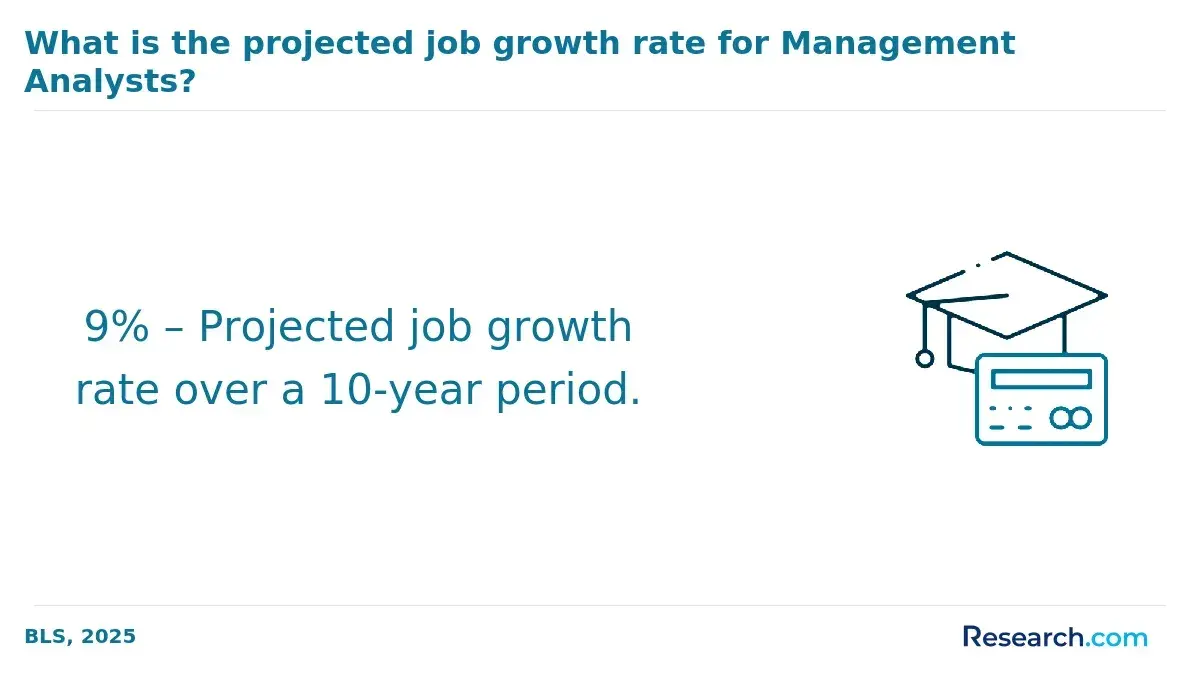
According to the Bureau of Labor Statistics, management analysts are projected to have 98,100 openings each year until 2034, and employment for business consultants or management analysts is expected to grow by 9% from 2024 to 2034. That demand reflects a simple reality: organizations continue to face complex decisions around technology, competition, costs, workforce planning, and market change.
Business Consultant Careers Table of Contents
- Why pursue a career in business consulting?
- Business Consultant Career Outlook
- Required Skills for Business Consultants
- How to Start Your Career as a Business Consultant
- How can I gain practical experience as a business consultant?
- Current Trends Shaping the Future of Business Consulting
- How can I advance my career in business consulting?
- What are affordable education options for aspiring business consultants?
- What strategies can help business consultants attract and retain high-quality clients?
- What legal and ethical considerations should business consultants keep in mind?
- What role does psychology play in successful business consulting?
- How can business consultants leverage digital strategies to enhance their online credibility?
- How do you choose the right niche for business consulting?
- Alternative Career Options for Business Consultants
- What challenges do business consultants face and how can they overcome them?
- What education options are available for advanced business consulting careers?
- How can business consultants measure ROI effectively?
Quick answer: How do you become a business consultant?
Most business consultants start by building expertise in business, management, operations, finance, marketing, technology, human resources, or another specialized area. A bachelor’s degree is commonly useful for credibility and entry into consulting roles, while internships, analyst positions, project work, certifications, and industry experience help prove that you can solve client problems. A certificate alone may not be enough for many consulting jobs, but certifications can strengthen your profile when combined with experience.
A practical path is to earn a relevant degree, gain experience in a business function or industry, develop analytical and communication skills, complete internships or freelance projects, choose a consulting niche, build a portfolio of measurable results, and apply to consulting firms or launch an independent practice.
Why pursue a career in business consulting?
Business consulting can be attractive if you enjoy problem-solving, working with decision-makers, and helping organizations improve how they operate. Consultants are often brought in when a company needs an objective view, specialized expertise, or support for a high-stakes decision. The work can involve diagnosing operational inefficiencies, reviewing financial performance, improving hiring systems, planning expansion, studying competitors, or advising leadership teams.
This career is especially relevant for professionals who already have business experience and want to apply it across multiple organizations instead of staying in one internal role. It can also suit career changers who have built expertise in a specific function, such as sales, technology, marketing, compliance, logistics, or people management.
- Demand is supported by ongoing business change. Organizations continue to adjust to new technologies, evolving consumer behavior, economic pressure, and regulatory expectations. Employment for business consultants or management analysts is expected to increase by 9% from 2024 to 2034.
- Consultants can work across many industries. Some consultants serve small businesses, while others work with corporations, government agencies, financial institutions, nonprofits, or technology companies. Many assignments involve operations improvement, market research and competitive analysis, financial planning, or organizational change.
- The career rewards continuous learning. Effective consultants must keep learning because client problems change. A consultant who advises a sports organization, for example, may benefit from understanding industry-specific education paths such as the top sports management programs, while a marketing consultant may need formal training in consumer behavior and analytics.
- Specialization can increase credibility. General business knowledge helps, but clients usually pay for relevant expertise. A consultant who has solved a specific type of problem before is often more persuasive than someone offering broad advice without proof.
Business Consultant Career Outlook
A business consultant, often grouped with management analysts in labor market data, helps organizations identify problems, evaluate options, and implement improvements. The work may include interviewing employees, reviewing financial statements, analyzing workflows, studying customer data, comparing competitors, recommending process changes, and presenting findings to executives.
Consulting is not one single job. A small-business consultant may help an owner redesign pricing, hiring, or cash-flow systems. A management consultant may improve an enterprise-wide operating model. A technology consultant may guide software implementation. A marketing consultant may help improve customer acquisition and brand positioning. Because the role changes by client and industry, choosing a niche is one of the most important career decisions.
The professional, scientific, and technical services industry has a 34% employment rate of business consultants, with annual pay of $107,790. Government, finance and insurance, and management of companies and enterprises also employ consultants and management analysts.
| Industry | Employment rate | Annual pay |
| Professional, scientific, and technical services | 34% | $107,790 |
| Government | 17% | $94,080 |
| Finance and insurance | 13% | $98,710 |
| Management of companies and enterprises | 4% | $101,560 |
What do business consultants do day to day?
- Clarify the business problem. Consultants define what the client is trying to fix, improve, reduce, or grow before recommending solutions.
- Collect and analyze information. This can include financial reports, sales data, employee interviews, workflow maps, customer feedback, market data, and operational metrics.
- Build recommendations. Consultants translate analysis into practical options, often with costs, risks, timelines, staffing needs, and expected outcomes.
- Present findings to stakeholders. Consultants must explain complex information clearly to executives, managers, employees, investors, or owners.
- Support implementation. Some consultants only advise; others help execute changes, train teams, track performance, and revise the plan when results fall short.
Required Skills for Business Consultants
Business owners and executives do not hire consultants merely for opinions. They expect clear thinking, credible analysis, and recommendations that can be acted on. Strong consultants combine technical business knowledge with communication, judgment, and the ability to influence people who may not immediately agree with them.
Essential technical and business skills
- Business management. Consultants need to understand planning, budgeting, resource allocation, performance management, and organizational structure. These skills also overlap with the path to become a business analyst; students comparing the two careers can review how long it takes to become a business analyst.
- Economics. Business decisions are shaped by pricing, supply and demand, labor costs, inflation, competition, market cycles, and customer behavior. Economic reasoning helps consultants identify why a business problem is happening, not just what the symptoms are.
- Human resources. Many business problems have a people component. Consultants may advise on team structure, hiring workflows, performance issues, retention, labor relations, or leadership development. For small employers, understanding principles behind hiring the right person can be especially valuable.
- Sales and marketing. Consultants are often asked to improve revenue, lead generation, brand positioning, conversion rates, or customer retention. Students who want structured training in this area may compare options such as an associate degree in marketing online.
- Financial analysis. Even non-finance consultants should be comfortable reading budgets, margins, cost structures, revenue trends, and return-on-investment calculations.
- Data interpretation. Consultants do not need to be data scientists in every role, but they must be able to evaluate evidence, spot patterns, and avoid drawing conclusions from weak or incomplete data.
Professional skills that separate strong consultants from average ones
- Critical thinking. Consultants must test assumptions, compare explanations, and avoid accepting the client’s first description of the problem as the full truth. Strong critical thinkers can also generate outside-the-box solutions when standard approaches are not enough.
- Problem-solving. Clients often face messy problems with limited time, incomplete information, and competing priorities. A consultant must break the issue into smaller parts and design a realistic path forward.
- Communication. Consulting depends on interviews, presentations, written reports, workshops, difficult conversations, and executive briefings. The best recommendation can fail if it is not explained clearly.
- Leadership. Consultants frequently influence people without having formal authority over them. Leadership skills help them guide discussions, manage resistance, and keep projects moving. Business consultants with leadership skills are said to earn 22% more than others.
- Ethical judgment. Consultants may handle confidential data, recommend staffing changes, or influence major financial decisions. Integrity is not optional.
How to Start Your Career as a Business Consultant
There is no single required route into business consulting, but most successful consultants develop three things: education, experience, and evidence of results. Employers and clients want proof that you can understand a business problem and contribute to measurable improvement.
- Choose a business foundation. Many consultants start with a degree in business, management, finance, economics, marketing, accounting, information systems, or a related field. If you are comparing academic options, review relevant marketing degrees if your consulting interests involve branding, demand generation, or customer strategy.
- Build experience through internships or early business roles. Entry-level work in operations, sales, project coordination, finance, analytics, or marketing can teach you how organizations actually function. Internships can also help you expand your professional network.
- Learn to analyze and present business problems. Practice building reports, dashboards, workflow maps, financial models, competitor summaries, and recommendation decks.
- Earn certifications when they match your niche. Certifications are not always required, but they can signal seriousness and help you learn accepted frameworks.
- Gain industry-specific credibility. Before advising a business, you need proof that you understand its challenges. This can come from employment, freelance projects, case studies, or years of leadership experience.
- Apply to consulting roles or start with small projects. You may join a consulting firm, work internally as an analyst or improvement specialist, or begin independent consulting with small, well-defined engagements.
| Job Level | Business Operations | Technology | Marketing/Sales |
| Entry Level | Business Consultant ($79,551/year) | Project Manager ($78,563/year) | Sales Consultant ($59,731/year) |
| Associate | Business Process / Management Consultant ($91,134/year) | Management Consultant ($92,949/year) | Marketing Manager ($71,006/year) |
| Middle Management | Senior Business Consultant ($102,786/year) | Product Management Manager ($114,881/year) | Senior Marketing Manager ($105,192/year) |
| Senior Management | Consulting Manager ($131,026/year) | Senior Product Manager ($130,571/year) | Chief Marketing Officer (CMO) ($179,667/year) |
Education paths for business consulting
| Credential | Best fit | What it can support |
| Certificate | Working professionals adding a focused skill | Specialized knowledge in project management, sales, analytics, small-business advising, or another consulting area |
| Associate degree | Students seeking an entry point into business, sales, or operations roles | Early career roles such as sales consultant or business support positions |
| Bachelor’s degree | Most aspiring consultants seeking credibility and broader career options | Business consultant, marketing communications consultant, analyst, operations, or management-track roles |
| Master’s degree | Professionals targeting management consulting, leadership, strategy, or specialized advisory work | Management consultant, solutions architect, senior consultant, or leadership roles |
| Doctorate | Experienced professionals pursuing senior leadership, research, executive consulting, or academic work | Consulting director, executive roles, organizational leadership, or advanced strategy work |
What can I do with an Associate’s Degree in Business Consulting?
Sales Consultant
A sales consultant helps a company identify potential buyers, understand customer needs, and communicate the value of a product or service. This role can be a practical starting point for future consultants because it builds client-facing communication, market awareness, and revenue-focused thinking.
Median annual pay: $59,731
What can I do with a Bachelor’s Degree in Business Consulting?
Business Consultant
A business consultant works with owners, executives, or managers to improve performance, solve operational issues, increase productivity, support growth, or strengthen strategy. The role often involves research, interviews, analysis, recommendations, and implementation support.
Median annual pay: $79,551
Marketing Communications Consultant
A marketing communications consultant advises organizations on brand messaging, reputation, campaigns, public-facing communication, and customer engagement. This role may include content strategy, media planning, communications audits, and support during reputation challenges.
Median annual pay: $83,799
Can you get a business consulting job with just a certificate?
A certificate can help, but it is usually not enough by itself for many business consulting jobs. Consulting depends heavily on credibility. Employers and clients want evidence that you understand business operations and can solve real problems. A bachelor’s degree can strengthen your profile, and students evaluating timelines can review how long it takes to get a degree in business. It is also useful to compare long-term outcomes, including typical business major salary considerations.
That said, experienced professionals can move into consulting without following a traditional entry-level route. A supply chain manager, HR leader, sales director, accountant, product manager, or entrepreneur may become a consultant by packaging proven expertise into advisory services.
How can I gain practical experience as a business consultant?
Consulting is learned through practice. Coursework can teach frameworks, but clients judge consultants by whether they can ask better questions, identify causes, recommend realistic options, and help produce results. The best way to prepare is to build a record of projects, even small ones, that show measurable improvement.
Pursue internships in consulting firms or business departments
Internships can expose you to client meetings, research, market analysis, project documentation, financial modeling, and presentation development. Large and small consulting firms may offer internships, but relevant experience can also come from business operations, strategy, finance, HR, marketing, technology, or project management teams inside companies.
Offer pro bono or volunteer consulting carefully
Volunteering for small businesses, nonprofits, campus organizations, or community groups can help you practice consulting skills. Keep the scope narrow. For example, instead of promising to “fix operations,” offer to map a process, analyze customer feedback, build a simple budget dashboard, or recommend improvements to a hiring workflow. Clear scope protects both you and the organization.
Start with freelance projects in an area you already understand
Freelancing can help you build experience across clients, but it works best when your offer is specific. A new consultant is more credible saying “I help local service businesses improve lead follow-up systems” than “I provide business strategy.” Platforms such as Upwork and LinkedIn can help you find early opportunities, but referrals and professional relationships are often more valuable over time.
Find a mentor who can review your work
A mentor can help you avoid common beginner mistakes, such as underpricing, accepting vague scopes, overpromising results, or failing to document client expectations. Look for experienced consultants, former managers, professors, founders, or industry specialists who can critique your analysis and help you improve your professional judgment.
Build a portfolio of proof
Document what you worked on, what data you used, what recommendation you made, and what changed afterward. If confidentiality prevents naming a client, describe the project generally. For example: “Mapped a customer onboarding process for a service business and identified delays in handoff between sales and operations.”
If you want a less complex starting point in management education, you may compare options such as the easiest management degree. Always check accreditation and program quality before choosing a school.
Current Trends Shaping the Future of Business Consulting
The consulting market is changing because client problems are changing. Consultants who can connect business fundamentals with technology, workforce realities, compliance expectations, and measurable results are better positioned than those who rely only on broad strategy language.
Digital transformation and technology integration
Companies continue to seek help with cloud tools, automation, AI-supported processes, cybersecurity awareness, data analytics, software adoption, and system integration. Consultants do not always need to build the technology themselves, but they must understand how digital changes affect workflow, staffing, cost, training, and customer experience.
AI and analytics expectations
Clients increasingly expect consultants to use data, not just interviews and opinions. AI can speed up research, summarize documents, support forecasting, and automate parts of reporting, but consultants still need human judgment to validate inputs, interpret results, protect confidential information, and translate findings into responsible recommendations.
Sustainability and ESG consulting
Organizations are under pressure from stakeholders to consider environmental, social, and governance practices. Consultants working in this area may help with sustainability reporting, governance processes, supply chain review, stakeholder communication, and operational changes aligned with ethical or regulatory expectations.
Employee experience and organizational change
Workforce issues remain central to business performance. Consultants may be asked to improve employee engagement, leadership practices, remote or hybrid work models, inclusion efforts, communication systems, or change management. Technical solutions often fail when people do not adopt them, making employee experience a practical consulting priority.
Specialization as a competitive advantage
Clients often prefer consultants who understand their industry or problem type. Professionals evaluating lucrative paths can compare business jobs that pay well to understand where specialized expertise may lead. Strong niches can include financial consulting, IT systems, operational efficiency, marketing analytics, healthcare administration, small-business growth, compliance, or organizational leadership.
Global and cross-cultural consulting
Companies operating across regions may need help with international expansion, supplier relationships, cultural differences, market entry, and regulatory complexity. Consultants who understand cross-cultural communication and region-specific business practices can provide additional value in global projects.
How can I advance my career in business consulting?
Career advancement in consulting usually comes from deeper expertise, stronger client results, better project leadership, and broader business judgment. Additional education can help, but it should match your target role. A master’s degree may support movement into strategy or management consulting, while a doctorate may be relevant for senior leadership, research-driven consulting, or academic pathways. You can also compare roles across the broader business management careers list.
What can I do with a Master’s in Business Consulting?
Management Consultant
A management consultant evaluates business operations, organizational structure, workflows, costs, and performance gaps. A master’s degree may help build strategic, analytical, and leadership skills that support more complex consulting assignments.
Median annual pay: $92,949
Solutions Architect
A solutions architect works at the intersection of business needs and technology architecture. This professional analyzes complex problems, designs technology-based solutions, tests systems, and helps ensure that software, infrastructure, and processes support business goals.
Median annual pay: $124,913
What kind of job can I get with a Doctorate in Business Consulting?
Consulting Director
A consulting director leads consulting teams, oversees strategy, manages client relationships, develops new initiatives, and monitors progress on projects designed to improve revenue, performance, branding, or operations.
Median annual pay: $162,726
Chief Marketing Officer (CMO)
A chief marketing officer leads marketing and sales strategy at the executive level. The role may include brand direction, campaign oversight, market analysis, customer growth strategy, and performance measurement.
Median annual pay: $179,667
Which certification is best for business consulting?
No single certification is best for every consultant. The right credential depends on your niche, experience level, and client base. Certifications can help you learn frameworks, show commitment, and connect with professional networks, but they do not replace experience or results.
| Certification | Best for | What to know |
| Certified Management Consultant (CMC) | Management consultants seeking a recognized professional designation | Issued through the International Council of Management Consulting Institutes (ICMCI). The organization has 45 national member institutes that work with government bodies to support professional standards. |
| Certified Sales Professional (CSP®) | Sales consultants, account managers, sales representatives, and professionals advising on revenue growth | Offered by the Sales and Marketing Institute (SMI), this credential focuses on sales protocols and professional values. |
| Project Management Professional (PMP®) | Consultants who manage implementation projects, transformation work, or complex cross-functional initiatives | Offered by the Project Management Institute. The institution currently has more than 1.2 million PMP® holders worldwide (PMI, n.d.). |
| Accredited Small Business Consultant (ASBC) | Consultants focused on entrepreneurs and small-business clients | Issued by the Association of Accredited Small Business Consultants (AASBC). Candidates must first become a member of the AASBC. |
What are affordable education options for aspiring business consultants?
You do not need to choose the most expensive program to prepare for consulting. A cost-effective path can include community college coursework, transfer credits, public universities, accredited online programs, employer tuition support, certificate programs, and targeted professional training. The key is to avoid confusing low price with good value. A cheaper program is only useful if it is accredited, respected enough for your goals, and strong in the skills you need.
When comparing programs, look at total tuition, fees, transfer-credit policies, faculty experience, career support, business curriculum, internship access, and whether the program teaches practical tools such as analytics, accounting, operations, project management, and communication. Students looking for budget-conscious options can start with Research.com’s guide to the cheapest online business degree.
What strategies can help business consultants attract and retain high-quality clients?
Client acquisition starts with clarity. High-quality clients need to understand who you help, what problem you solve, how your process works, and what evidence supports your claims. A vague promise such as “I help businesses grow” is less persuasive than a focused offer tied to a specific audience and result.
- Define a clear value proposition. State your target client, the problem you address, and the business outcome you support.
- Create proof before scaling your marketing. Case studies, testimonials, before-and-after metrics, sample analyses, and project summaries are more convincing than general credentials alone.
- Use thought leadership strategically. Publish useful articles, guides, presentations, or videos that answer the questions your target clients are already asking.
- Build referral relationships. Accountants, attorneys, software vendors, HR professionals, lenders, and industry groups may refer clients if they understand your niche.
- Manage expectations from the first conversation. Clear scope, timeline, deliverables, fees, and limitations reduce misunderstandings and improve retention.
- Keep learning. Some consultants use additional education to strengthen credibility; accelerated options such as the fastest online business degree may appeal to professionals who need a structured credential quickly.
What legal and ethical considerations should business consultants keep in mind?
Business consultants often receive sensitive information about finances, employees, customers, operations, vendors, technology, and strategy. That creates legal and ethical responsibilities. At minimum, consultants should use clear written agreements, protect confidential data, avoid misleading claims, respect intellectual property, disclose conflicts of interest, and follow laws and regulations relevant to the client’s industry.
A consulting agreement should define the scope of work, deliverables, payment terms, timeline, responsibilities, confidentiality expectations, ownership of work products, cancellation terms, and limits of liability. Consultants should not promise guaranteed outcomes, especially when results depend on market conditions, client execution, staffing, budgets, or third-party systems.
Ethics also affect credibility. Consultants should be honest when a problem falls outside their expertise, avoid recommending unnecessary services, and separate objective advice from personal financial incentives. Advanced education, including options such as the cheapest online MBA, can help some professionals build stronger business, legal, and ethical decision-making foundations.
What role does psychology play in successful business consulting?
Consulting is not only analytical. It is also human. Even the best recommendation can fail if leaders distrust it, employees resist it, or teams do not understand why change is needed. This is where business psychology becomes useful: it helps consultants understand behavior, motivation, communication, decision-making, and resistance inside organizations.
- Understanding client behavior. Consultants must listen beyond the stated problem, notice competing incentives, and identify what stakeholders may be reluctant to say directly.
- Diagnosing organizational issues. Low morale, weak accountability, poor communication, burnout, unclear roles, and conflict can all damage performance even when the formal process looks sound.
- Improving change management. People often resist change because of fear, uncertainty, workload, mistrust, or past failed initiatives. Consultants who understand these reactions can design better implementation plans.
- Coaching leaders and teams. Consultants may help managers communicate expectations, develop employees, resolve conflict, and improve decision-making habits.
How can business consultants leverage digital strategies to enhance their online credibility?
A strong digital presence helps potential clients verify your expertise before they contact you. At minimum, consultants should have a professional website or profile that explains their niche, services, credentials, process, and evidence of results. Search-optimized articles, LinkedIn posts, webinars, case studies, and client testimonials can also build trust over time.
Digital credibility is strongest when it is specific. Instead of posting generic business advice, publish insights that demonstrate how you think: process audits, market breakdowns, hiring checklists, pricing frameworks, transformation lessons, or industry-specific guides. Consultants who want graduate-level business training may also compare options such as the fastest online MBA programs to support professional positioning.
How do you choose the right niche for business consulting?
The best consulting niche sits at the intersection of your expertise, client demand, and willingness to pay. A niche should be specific enough that clients recognize themselves, but broad enough to support a steady pipeline of work.
| Question | Why it matters | Example |
| What problems have I solved before? | Past results are the fastest path to credibility. | Reducing onboarding delays, improving sales follow-up, restructuring reporting systems |
| Who has this problem urgently? | Urgency affects whether clients will pay for outside help. | Growing small businesses, regulated companies, teams implementing new software |
| Can I measure the outcome? | Measurable results make your value easier to prove. | Cost savings, time reduction, revenue growth, error reduction, employee retention |
| Is the niche too crowded? | A broad field may require sharper positioning. | Instead of “marketing consultant,” focus on retention campaigns for local service firms |
| Do I want to keep learning this area? | A niche requires ongoing study and market awareness. | AI operations, ESG reporting, healthcare administration, project management |
Targeted education can also help refine a niche. Programs such as 12 month MBA programs may appeal to professionals who want a faster route to broader strategic training, but the program should still match your intended consulting market.
Alternative Career Options for Business Consultants
Consulting skills transfer well because they involve analysis, communication, client service, project management, and business judgment. If you enjoy some parts of consulting but not the uncertainty of client acquisition or project-based work, related careers may offer a better fit. Consulting can also support personal development by exposing professionals to new industries and leadership challenges.
What else can a business consultant do?
- Account manager. Account managers maintain relationships between a company and its clients. They identify client needs, coordinate internal support, resolve concerns, and help preserve long-term business relationships.
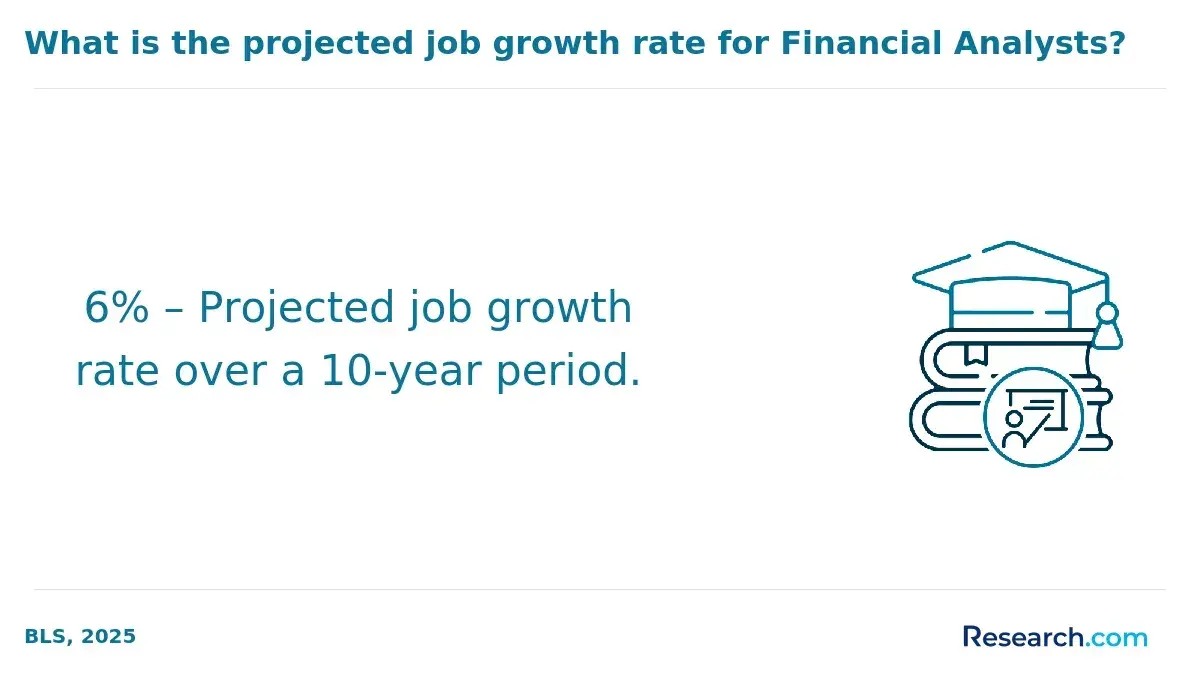
- Financial analyst. Financial analysts advise on financial performance, investments, risk, market conditions, portfolios, and business decisions involving money. Those working in the securities and commodity contract industry earn as much as $124,050 per year. If you like statistics and risk analysis but are unsure about finance consulting, you can also explore how to be an actuary.
- Compliance manager. Compliance managers help organizations follow laws, regulations, standards, and internal policies. This role can suit consultants who are detail-oriented and interested in risk management.
- Digital marketer. Digital marketers design and manage campaigns across online platforms. Business consultants who enjoy customer acquisition, analytics, and brand strategy may benefit from taking up a digital marketing degree.
What challenges do business consultants face and how can they overcome them?
Consulting can be rewarding, but it is not an easy career. Consultants must manage uncertain client expectations, incomplete information, shifting timelines, and pressure to show value. Independent consultants also have to sell their services, manage contracts, and handle cash flow.
Common consulting challenges and better responses
| Challenge | Why it happens | Better response |
| Clients expect quick fixes | Leaders may underestimate the complexity of operational, staffing, or financial problems. | Set realistic milestones, explain dependencies, and separate short-term wins from long-term fixes. |
| The project scope keeps expanding | New issues appear once the work begins, or the original agreement was vague. | Use written scopes, change-order terms, and clear deliverables before starting work. |
| You lack industry-specific knowledge | A business problem may involve regulations, workflows, or customer behavior you do not fully understand. | Research the sector, interview subject-matter experts, and decline work when the risk is too high. |
| Market conditions change during the project | Technology, regulation, competition, and consumer behavior can shift quickly. | Build flexible recommendations and monitor assumptions throughout the engagement. |
| You have too many clients at once | Consultants may overbook to stabilize income or please clients. | Prioritize work, use project management systems, delegate where appropriate, and protect quality. |
| Results are difficult to prove | Outcomes may depend on client execution, external markets, or long timelines. | Define metrics early and track baselines, leading indicators, and final outcomes. |
Common mistakes new consultants should avoid
- Choosing education without checking accreditation. A degree or certificate is most useful when it comes from a credible institution or organization.
- Focusing only on tuition. Total cost includes fees, materials, time away from work, travel, and opportunity cost.
- Assuming a credential guarantees clients. Clients hire consultants for results, relevance, and trust, not credentials alone.
- Offering services that are too broad. A narrow, credible offer is often easier to sell than a general promise to improve business performance.
- Skipping contracts. Informal agreements can lead to payment disputes, scope creep, and confidentiality problems.
- Promising outcomes outside your control. Consultants can recommend and support implementation, but they should be cautious about guaranteeing revenue, savings, or growth.
- Ignoring implementation. A polished report has limited value if the client cannot execute it.
What education options are available for advanced business consulting careers?
Advanced education can help consultants move into leadership, executive advising, research-based consulting, organizational transformation, or academic roles. The right option depends on whether you want to lead consulting teams, specialize in strategy, work with complex organizations, teach, publish research, or advise executives.
An online PhD organizational leadership may be relevant for professionals who want deeper training in leading complex organizations, managing change, understanding organizational dynamics, and developing high-level leadership strategies. This type of degree can support senior consulting roles, executive work, or academic opportunities, but it should be evaluated carefully for cost, accreditation, faculty expertise, research expectations, and career fit.
How can business consultants measure ROI effectively?
Consultants strengthen credibility when they can show the business impact of their work. Return on investment should be defined before the project begins, not after the final presentation. The consultant and client should agree on the baseline, target metrics, data sources, timeline, and factors that may affect results.
- Start with baseline data. Measure the current state before making changes, such as costs, cycle time, revenue, conversion rate, error rate, turnover, or customer satisfaction.
- Connect recommendations to measurable outcomes. Each recommendation should have a reason, expected effect, and method for tracking progress.
- Use appropriate financial analysis. Cost-benefit analysis, net present value assessments, and industry-specific benchmarking can help translate consulting work into business value.
- Track leading and lagging indicators. Some results, such as revenue growth, take time. Earlier indicators may include adoption rates, process completion time, or qualified leads.
- Report honestly. Explain what improved, what did not, what changed in the business environment, and what the client must continue doing after the engagement.
Professionals who want deeper analytical and executive-level training may explore programs such as the cheapest AACSB online DBA, especially if they plan to work on advanced strategy, leadership, or research-driven consulting projects.
Is business consulting the right career for you?
Business consulting may be a strong fit if you enjoy diagnosing problems, working with leaders, analyzing information, and turning ideas into practical action. It is especially suitable for professionals who have built expertise in a function or industry and want to use that expertise to help multiple organizations.
It may not be the best fit if you dislike ambiguity, client-facing work, selling your value, frequent deadlines, or being judged by outcomes. Consulting can involve travel, variable workloads, difficult stakeholders, and pressure to produce results quickly. Independent consulting also requires business development, pricing discipline, and careful contract management.
Questions to ask before choosing this path
- What business problems am I qualified to solve?
- Do I have evidence of results, or do I need more experience first?
- Which industry or client type understands the value of my expertise?
- Do I want to work for a consulting firm, become an internal consultant, or build an independent practice?
- What education or certification would strengthen my credibility without creating unnecessary debt?
- Can I communicate recommendations clearly to executives, managers, and employees?
- Am I comfortable with uncertainty, feedback, and accountability for results?
Key Insights
- Business consulting is expertise applied to real business problems. The role is not just giving advice; it involves diagnosis, analysis, stakeholder communication, recommendations, and often implementation support.
- Demand is strong, but competition favors specialists. Management analysts are projected to have 98,100 openings each year until 2034, and employment is expected to grow by 9% from 2024 to 2034. Consultants with a clear niche and measurable results are better positioned.
- A bachelor’s degree is commonly useful, but experience is critical. A certificate can add credibility, but clients and employers usually want proof that you can solve business problems.
- Consulting salaries vary by role, industry, and seniority. The professional, scientific, and technical services industry has a 34% employment rate of business consultants, with annual pay of $107,790, while senior roles such as Consulting Director and CMO list median annual pay of $162,726 and $179,667.
- The best niche combines skill, demand, and measurable value. Do not choose a niche only because it sounds profitable. Choose one where you have evidence, interest, and a market that pays for solutions.
- Technology, AI, ESG, and employee experience are reshaping consulting. Consultants who understand both business fundamentals and current organizational pressures can offer more relevant advice.
- Ethics and contracts matter. Protect client data, define scope clearly, avoid conflicts of interest, and do not guarantee outcomes you cannot control.
- ROI should be planned from the start. Strong consultants define success metrics early, track baselines, and report results honestly.
References:
- Association of Accredited Small Business Consultants (n.d.). Become a part of the highly esteemed group of AASBC members. https://www.aasbc.com/aasbc-certification
- Bureau of Labor Statistics (2025, August 28). Financial Analysts. Occupational Outlook Handbook. https://www.bls.gov/ooh/business-and-financial/financial-analysts.htm#tab-5
- Bureau of Labor Statistics (2025, August 28). Management Analysts. Occupational Outlook Handbook. https://www.bls.gov/ooh/business-and-financial/management-analysts.htm#tab-1
- International Council of Management Consulting Institutes (n.d.). Certified Management Consultant. https://www.cmc-global.org/content/cmc
- International Council of Management Consulting Institutes (n.d.). Member Institutes. https://www.cmc-global.org/content/member-institutes
- Payscale (2026). Average Marketing Manager Salary. https://www.payscale.com/research/US/Job=Marketing_Manager/Salary
- Payscale (2026). Average Product Management Manager Salary. https://www.payscale.com/research/US/Job=Product_Management_Manager/Salary
- Payscale (2026). Average Consulting Manager Salary. https://www.payscale.com/research/US/Job=Consulting_Manager/Salary
- Payscale (2026). Average Business Consultant Salary. https://www.payscale.com/research/US/Job=Business_Consultant/Salary
- Payscale (2026). Average Business Process / Management Consultant Salary. https://www.payscale.com/research/US/Job=Business_Process_%2F_Management_Consultant/Salary
- Payscale (2026). Average Chief Marketing Officer (CMO) Salary. https://www.payscale.com/research/US/Job=Chief_Marketing_Officer_(CMO)/Salary
- Payscale (2026). Average Management Consultant Salary. https://www.payscale.com/research/US/Job=Management_Consultant/Salary
- Payscale (2026). Average Project Manager, (Unspecified Type / General) Salary. https://www.payscale.com/research/US/Job=Project_Manager%2C_(Unspecified_Type_%2F_General)/Salary
- Payscale (2026). Average Sales Consultant Salary. https://www.payscale.com/research/US/Job=Sales_Consultant/Salary
- Payscale (2026). Average Senior Business Consultant Salary. https://www.payscale.com/research/US/Job=Senior_Business_Consultant/Salary
- Payscale (2026). Average Senior Marketing Manager Salary. https://www.payscale.com/research/US/Job=Senior_Marketing_Manager/Salary
- Payscale (2026). Average Senior Product Manager Salary. https://www.payscale.com/research/US/Job=Senior_Product_Manager/Salary
- Project Management Institute (n.d.). Project Management Professional (PMP)®. https://www.pmi.org/certifications/project-management-pmp
- Sales and Marketing Institute International (n.d.). CSP® Program. https://smiglobal.org/certification/csp-program
Other Things You Should Know About Becoming a Business Consultant
To become a business consultant in 2027, you'll typically need a bachelor's degree in business or a related field. Some roles may require advanced degrees or certifications like the Certified Management Consultant (CMC) credential. Practical experience and strong analytical skills are also critical.
Business consultants can join the Institute of Management Consultants USA (IMC USA), which offers the Certified Management Consultant credential, and the Institute of Consulting in the UK. Membership usually requires a degree or equivalent experience, plus documented consulting practice and references from clients or employers.
Essential skills for business consultants include business management, economics, human resources, sales, and marketing. Additionally, critical thinking, problem-solving, communication, and leadership skills are vital for success in this field.
While having a certificate can be beneficial, becoming a business consultant typically requires experience and a robust skill set. Certificates can enhance your credentials, but hands-on industry experience and expertise are often more crucial in 2027 for a successful consulting career.
In 2027, business consultants may need to comply with industry-specific regulations based on the consulting field. For instance, financial consultants must adhere to standards set by the Financial Industry Regulatory Authority (FINRA) in the U.S. It's crucial to check sector-specific governing bodies for updated rules.
The top industries for business consultants include professional, scientific, and technical services, government, finance and insurance, and management of companies and enterprises. These industries offer diverse opportunities and competitive salaries.
Advancing your career in business consulting involves continuous learning, obtaining advanced degrees (such as a master’s or doctorate), gaining certifications, and staying updated with industry trends. Building a strong professional network and gaining varied experience across different industries can also enhance your career prospects.


