
2027 How to Become a Business Analyst: Step-By-Step Guide

Co-Founder and Chief Data Scientist
Becoming a business analyst is a practical career move for people who like solving business problems, improving processes, and using data to guide decisions. The role sits between business teams and technical teams, which means business analysts help organizations define what needs to change, why it matters, and how a solution should work.
This guide explains how to become a business analyst in 2026, including degree options, core skills, entry-level paths, certifications, salary expectations, career growth, and common mistakes to avoid. It is designed for students comparing business-related majors, working professionals planning a career change, and early-career employees who want to move into analytics, operations, technology, consulting, or strategy roles.
The opportunity is substantial. Zippia’s database reports over 272,851 business analysts currently employed in the United States. The career also overlaps with related fields such as analytics, operations research, management consulting, product work, and systems improvement. If you are also comparing this path with a degree in data analytics, the key difference is that business analysis focuses more heavily on translating organizational needs into practical solutions, while data analytics often focuses more deeply on statistical analysis, modeling, and technical data work.
How to Become a Business Analyst Table of Contents
- Why becoming a business analyst can be worthwhile
- Business analyst salary and job outlook
- Skills employers expect from business analysts
- How to start a business analyst career
- How to move into senior business analyst roles
- Industry trends changing business analysisCareer advancement considerations
- Advanced education and long-term career growth
- AACSB-accredited online MBA options for analysts
- Networking and mentorship for business analysts
- Digital transformation and emerging technologiesMentorship and professional relationships
- Whether an advanced degree is worth it
- Regulatory compliance and industry standards
- 12-month MBA programs for business analysts
- Common business analyst challenges
- Alternative careers for business analysts
- Self-paced and online learning optionsFinal steps for becoming a business analyst
Quick Answer: How do you become a business analyst?
Most business analysts start by earning an associate or bachelor’s degree in business, business analytics, information systems, finance, economics, computer science, or a related field. A bachelor’s degree is often the most common route, but some candidates enter through certificates, internships, entry-level operations roles, data analyst positions, or administrative roles that involve reporting and process improvement.
To become competitive, build skills in Excel, SQL, data visualization, requirements gathering, communication, problem-solving, and stakeholder management. Many business analysts later add certifications such as the Entry Certificate in Business Analysis (ECBA), Certification of Capability in Business Analysis (CCBA), or Certified Business Analysis Professional (CBAP). Advanced degrees, including MBAs and master’s degrees in business analytics, can help experienced analysts move into consulting, management, product, strategy, or executive-track roles.
What does a business analyst do?
A business analyst studies how an organization works and recommends ways to improve performance, reduce inefficiencies, clarify requirements, or support better decision-making. The work may involve mapping processes, interviewing stakeholders, analyzing data, documenting system needs, building dashboards, writing business requirements, testing solutions, or helping teams manage change.
The role is not limited to one department. Business analysts may support finance, marketing, operations, technology, healthcare administration, supply chain, human resources, customer experience, or executive strategy. Some work closely with software development teams, while others focus on management consulting, process design, compliance, reporting, or operational improvement.
Business analysts often need to understand both detailed business activity and broader economic context. For example, knowing how to compare microeconomics and macroeconomics can help analysts interpret customer demand, pricing, market conditions, and company-level decision-making more clearly.
Why pursue a career as a business analyst?
A business analyst career can be a strong fit if you want a role that combines business judgment, data interpretation, communication, and structured problem-solving. Analysts help organizations identify what is not working, define what should change, and build a case for action.
The career is also flexible. Skills gained in business analysis can transfer into project management, product management, business architecture, consulting, systems analysis, operations leadership, strategy, and data-focused roles. Zippia reports that the top industries employing business analysts include technology (27%), Fortune 500 companies (24%), finance (13%), professional services (10%), and healthcare (5%).
Another advantage is visibility. Business analysts frequently work with managers, technical teams, clients, vendors, finance teams, and end users. This exposure can help professionals understand how different parts of an organization operate and where they may want to specialize. For analysts interested in legal, governance, or compliance-heavy work, a program such as a master in business law may broaden their understanding of risk, contracts, and organizational obligations.
The role is not ideal for everyone. Business analysis can involve unclear requirements, conflicting stakeholder priorities, tight deadlines, and the need to communicate complex findings to nontechnical audiences. People who prefer narrowly defined tasks or limited collaboration may find the work frustrating. Those who enjoy ambiguity, investigation, and cross-functional communication are more likely to thrive.
Business Analyst Career Outlook
Business analyst career prospects depend on the specific role, industry, technical depth, and education level. The broader field connects to several occupational categories, including operations research analysts, management analysts, market research analysts, budget analysts, data scientists, economists, and executive roles. Students comparing types of business degrees and salaries should pay attention to the difference between entry-level business support roles and more analytical or strategic roles that require stronger quantitative and technical skills.
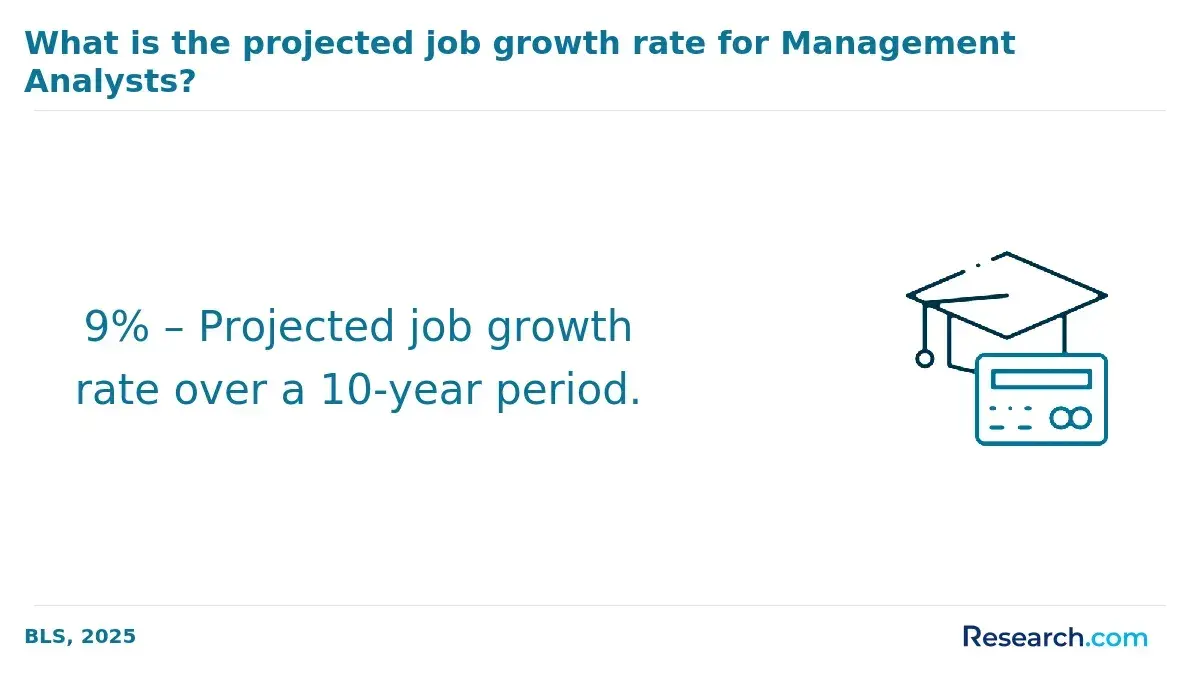
Job growth for common business analysis-related roles such as Operations Research Analysts, Management Analysts, and Data Scientists ranges from 9% to 34% through 2034. Salaries also vary widely. Professionals in roles connected to business analysis can see average annual salaries ranging from $91,290 to $112,590, depending on occupation and qualifications. Those with a bachelor’s degree may pursue positions such as data scientists and operations research analysts, while graduate education can support pathways into roles such as Economists and Chief Executives, with median annual salaries of $115,440 and $206,420, respectively.
| Related Role | Salary | Demand |
| Bookkeeping Clerks | $45,560 | -5% |
| Accounting Clerks | $45,560 | -5% |
| Auditing Clerks | $45,560 | -5% |
| Market Research Analysts | $63,920 | 19% |
| Budget Analysts | $79,940 | 3% |
| Operations Research Analysts | $82,360 | 23% |
| Management Analysts | $93,000 | 11% |
| Data Scientists | $100,910 | 36% |
| Economists | $105,630 | 6% |
| Chief Executive Officers | $179,520 | -7% |
Use salary data carefully. A “business analyst” title can describe different jobs across companies. One employer may use it for a junior reporting role, while another may use it for a senior technology, product, or consulting position. Always compare job descriptions, required tools, industry, location, and experience level instead of relying on title alone.
How to Become a Business Analyst Required Skills
Business analysts need a mix of technical, analytical, and interpersonal skills. The strongest candidates can work with data, understand processes, ask precise questions, document requirements, and explain recommendations in a way that decision-makers can act on.
Technical Skills for Business Analysts
- Microsoft Excel. Excel remains a core business analysis tool because analysts use it to clean data, build models, compare scenarios, create charts, summarize findings, and prepare reports for managers and stakeholders.
- SQL. SQL helps analysts retrieve, filter, join, and examine data stored in relational databases. Familiarity with tools and environments such as Microsoft SQL Server, Oracle DB, MySQL, and SQLite can strengthen a candidate’s ability to work with business data directly.
- Data Visualization. Tools such as Tableau, PowerBI, and QlikView help analysts turn raw data into dashboards, visuals, and reports that make patterns easier to understand. Strong visualization skills are especially valuable when leaders need fast, clear evidence for a decision.
- Basic Programming. Knowledge of R or Python can help analysts automate repetitive tasks, work with larger datasets, test assumptions, and perform more advanced analysis. Not every business analyst job requires programming, but technical fluency can make a candidate more competitive for analytics-heavy roles.
General Skills for Business Analysts
- Analytical Skills. Business analysts must identify patterns, separate symptoms from root causes, and evaluate possible solutions. These skills apply across industries, whether analyzing business performance, enrollment trends in the best sports management programs, or operational data inside a company.
- Communication Skills. Business analysis depends on clear communication. Grammarly’s 2024 State of Business Communication report noted that 88% of professionals spend their entire workweek communicating, and 84% of business leaders said they are communicating through more channels than ever before. Analysts must be able to interview stakeholders, write requirements, summarize findings, and explain trade-offs to both technical and nontechnical audiences.
- Problem-Solving. Analysts are expected to evaluate messy business situations, clarify options, and recommend practical next steps. This requires logic, curiosity, persistence, and the ability to test assumptions before proposing a solution.
- Negotiation Skills. Many projects involve competing priorities. Business analysts often help stakeholders agree on scope, timelines, budget limits, reporting needs, or system requirements. Good negotiation keeps projects realistic without ignoring the needs of users, clients, or leadership.
Students who want a narrower business specialty can also explore options such as a finance certificate program online or an associate degree in marketing, especially if they want to apply business analysis skills in finance, marketing, sales operations, or customer research.
How to Start Your Career as a Business Analyst
The most common path begins with education, but the right route depends on your current background. A student may start with a business or analytics degree, while a working professional may move into business analysis after gaining experience in operations, accounting, customer support, IT, sales operations, project coordination, or reporting.
When comparing schools, look for institutional accreditation and relevant business accreditation. Programs may also be reviewed by organizations such as the Accreditation Council for Business Schools and Programs. Accreditation matters because it can affect transfer credit, graduate school eligibility, employer recognition, and financial aid access.
An associate degree in business can help candidates qualify for entry-level business support roles, including bookkeeping, accounting, auditing, administrative, or operations positions. These roles may not be business analyst jobs immediately, but they can help students gain experience with records, reports, financial data, process documentation, and internal systems.
A bachelor’s degree in business administration, business analytics, information systems, finance, economics, statistics, or a related field is often the stronger route for analyst roles. The International Institute of Business Analysis (IIBA) reported that 48% of business analysts hold a bachelor’s degree as their highest level of education. If you are asking how long does it take to get your business degree, a bachelor’s degree commonly takes four years, though online, accelerated, summer, AP credit, transfer credit, and work-experience credit options may shorten the timeline for some students.
| Career Stage | Business Path | Teaching Path |
| Typical Focus | Studies processes, interprets data, gathers requirements, and recommends changes that help organizations make better decisions. | Teaches business analysis concepts, tools, and methods to students or professionals. |
| Entry Level Jobs | Associate Business Analysts ($65,372) | Associate Business Instructors ($53494) |
| Junior Management Jobs | Junior Business Analysts ($69,083) | Business Instructors ($67,554) |
| Middle Management Jobs | Business Analysts ($73,282) | Business Administration Professors ($108,481) |
| Senior Management Jobs | Senior Business Analysts ($88,975) | Head of Business Administration Professors ($130,809) |
| *Values are estimates. |
Step-by-step path to becoming a business analyst
- Choose a relevant education path. Consider business administration, business analytics, information systems, finance, economics, computer science, or a related program.
- Build a portfolio of practical work. Create sample dashboards, process maps, requirements documents, SQL queries, case analyses, or Excel models that show how you solve business problems.
- Get hands-on experience. Look for internships, co-ops, campus projects, volunteer consulting projects, operations roles, reporting roles, or entry-level analyst jobs.
- Learn core tools. Prioritize Excel, SQL, visualization software, documentation tools, and basic statistics before moving into more advanced programming or machine learning.
- Practice stakeholder communication. Business analysts must ask good questions, confirm assumptions, summarize decisions, and document requirements clearly.
- Apply for adjacent roles if needed. Job titles such as operations analyst, reporting analyst, project coordinator, data analyst, systems analyst, or business support specialist can lead into business analysis.
- Add certification when it fits your stage. Early-career professionals may start with ECBA, while experienced analysts may consider CCBA or CBAP.
What can I do with an Associate’s Degree in Business Analytics?
Bookkeeping Clerks
Bookkeeping clerks maintain financial records, record transactions, organize debits and credits, prepare reports, reconcile accounts, support payroll, issue invoices, track overdue accounts, and help managers understand routine financial activity.
Median salary: $45,560
Auditing Clerks
Auditing clerks review financial documents, check figures for accuracy, confirm coding, correct minor mistakes, and escalate larger discrepancies to accountants, auditors, or senior staff for additional review.
Median salary: $45,560
What can I do with a Bachelor’s Degree in Business Analytics?
Operations Research Analysts
Operations research analysts use mathematical, analytical, and logical methods to help organizations improve decisions. Their work may involve scheduling, pricing, resource allocation, supply chains, production planning, or process improvement. They often begin by defining the business problem, collecting data, and interviewing people connected to the process under review.
Median salary: $82,360
Management Analysts
Management analysts recommend ways to improve efficiency, reduce expenses, raise revenue, or strengthen organizational performance. Some are employed internally, while others work as consultants. Areas of specialization may include inventory control, restructuring, healthcare operations, telecommunications, or other industry-specific functions.
Median salary: $93,000
Data Scientists
Data scientists identify data sources, collect information, clean raw datasets, transform data into usable formats, and build models or algorithms that support analysis, prediction, or machine learning. This path usually requires stronger technical and statistical preparation than many general business analyst positions.
Median salary: $100,910
Can you get a business analyst job with just a certificate?
It is possible to get a business analyst job with a certificate, especially if you already have relevant work experience, technical skills, or industry knowledge. However, many employers still prefer candidates with a degree for full-time analyst roles. A certificate is usually strongest when it supplements experience, a degree, a strong portfolio, or demonstrated skill with tools such as SQL, Excel, Tableau, PowerBI, Python, or project documentation platforms.
Online vs. campus business analyst preparation
| Option | Best For | What to Check Before Enrolling |
| Campus degree program | Students who want face-to-face instruction, campus recruiting, structured schedules, and in-person networking. | Accreditation, internship access, business analytics coursework, career services, total cost, and employer partnerships. |
| Online degree program | Working adults, transfer students, military learners, and students who need schedule flexibility. | Accreditation, technology requirements, live versus asynchronous classes, transfer policies, faculty access, and project-based coursework. |
| Certificate or bootcamp | Professionals who want targeted skill development in tools, requirements analysis, SQL, dashboards, or agile methods. | Employer recognition, portfolio outcomes, instructor qualifications, job placement claims, and whether the credential replaces or only supplements a degree. |
| Self-study plus portfolio | Career changers who already have business, operations, finance, IT, or project experience. | Whether your portfolio proves real skills, whether you can explain business impact, and whether job postings in your target market accept nondegree routes. |
How can I advance my career as a business analyst?
Career advancement usually comes from three things: deeper technical skill, stronger business judgment, and proven ability to influence decisions. Early-career analysts often focus on reporting, documentation, user requirements, and process mapping. More experienced analysts may lead discovery sessions, manage complex stakeholders, recommend strategy, guide product decisions, or oversee teams.
A graduate degree can help when your target roles require leadership, advanced analytics, consulting credibility, or specialized business knowledge. Zippia reports that a master’s degree is the second most common degree among business analysts, with 18% holding this qualification. Common graduate options include a master’s in business analytics and an MBA, which typically take one to two years to complete. Doctoral programs may be relevant for those pursuing research, academic, senior consulting, government, or executive-level work.
| Advancement Goal | What Helps Most | Possible Next Role |
| Move from entry-level to analyst | Excel, SQL, dashboards, process documentation, internships, and project experience. | Business Analyst, Operations Analyst, Reporting Analyst |
| Move into technology projects | Requirements gathering, systems analysis, agile methods, testing, user stories, and technical documentation. | Systems Analyst, Product Analyst, IT Business Analyst |
| Move into leadership | Stakeholder management, strategy, budgeting, communication, and team leadership. | Senior Business Analyst, Business Analysis Manager |
| Move into consulting or executive-track work | Industry expertise, advanced degree, client communication, financial analysis, and measurable business results. | Management Consultant, Strategy Analyst, Director-level role |
What can I do with a Master’s in Business Analytics?
Economists
Economists study fiscal and monetary issues, collect and evaluate statistical data, prepare reports, and examine how goods and services are produced, distributed, and consumed. Their work may include forecasting, studying historical patterns, analyzing policy questions, and using software tools to evaluate data in areas such as business, healthcare, or the environment.
Survey Researchers
Survey researchers design surveys, collect responses, and analyze data about opinions, preferences, beliefs, behavior, employment, wages, and social issues. They may work in politics, health, education, culture, economics, social science, or public opinion research.
Median salary: $59,740
What kind of job can I get with a Doctorate in Business Analytics?
Chief Executive Officers
Chief executive officers guide an organization’s overall direction. They shape policy, supervise operations, work with other senior leaders, report to boards of directors, and take responsibility for meeting major organizational goals.
Median salary: $179,520
Which certification is best for business analysts?
The best certification depends on your experience level. Certifications are not always required, but they can help document business analysis knowledge, show commitment to the field, and strengthen a resume when paired with practical experience. IIBA credentials commonly considered by business analysts include:
- Entry Certificate in Business Analysis (ECBA). A common option for people starting in business analysis or trying to show foundational knowledge.
- Certification of Capability in Business Analysis (CCBA). A better fit for professionals with more applied experience who want to validate intermediate-level capability.
- Certified Business Analysis Professional (CBAP). A credential generally associated with more experienced business analysts who handle complex projects and stakeholder environments.
Key Industry Trends Shaping the Business Analyst Role
Business analysis is changing because organizations now expect faster decisions, better use of data, stronger digital workflows, and closer collaboration across business and technology teams. Analysts who understand these shifts can position themselves for more valuable roles.
- Advanced analytics is becoming more common. Analysts are increasingly asked to interpret dashboards, evaluate patterns, and support predictive thinking, even if they are not full data scientists.
- Artificial intelligence is changing workflows. AI tools can help draft documentation, summarize meetings, detect patterns, and speed up analysis, but analysts still need to validate outputs, understand business context, and manage stakeholder decisions.
- Cloud-based systems create more connected data. As organizations move operations into cloud platforms, analysts may need to understand how data flows across customer relationship management, enterprise resource planning, finance, marketing, and product systems.
- Hybrid roles are expanding. Many employers now blend business analysis with product management, data analytics, project management, systems analysis, or agile delivery.
- Communication is becoming more important, not less. Remote and hybrid work require analysts to document decisions clearly, run effective virtual meetings, and keep stakeholders aligned across channels.
Professionals considering long-term earning potential can also compare business analysis with some of the highest paying business jobs to understand which skills and credentials support higher-level opportunities.
What opportunities exist for advanced education and career growth?
Advanced education can be useful for business analysts who want to move into leadership, consulting, strategy, research, or organizational transformation. For professionals interested in leading teams and shaping change across departments, an online PhD organizational leadership may support deeper study of decision-making, organizational behavior, leadership systems, and change management.
Before enrolling in any advanced program, compare the curriculum with your career goal. A business analytics master’s may be stronger for technical analytics roles. An MBA may be stronger for management, finance, operations, or executive-track roles. A doctorate may make sense for academic, research, or high-level organizational leadership goals.
Is pursuing an AACSB accredited online MBA beneficial for business analysts?
An AACSB accredited online MBA can be valuable for analysts who want to move beyond reporting and requirements work into strategy, financial decision-making, operations leadership, or management. The advantage is not simply the credential; it is the combination of business cases, leadership training, financial analysis, and cross-functional decision-making.
An MBA is less necessary for someone who wants a highly technical analytics role. In that case, a master’s in business analytics, data science, statistics, information systems, or computer science may be a better fit. The right choice depends on whether your next step is leadership-oriented or technically specialized.
How can networking and mentorship accelerate your career as a business analyst?
Networking helps business analysts learn how different companies define the role, what tools employers use, and which skills lead to promotion. Mentorship can also help early-career analysts improve stakeholder communication, avoid documentation mistakes, prepare for interviews, and understand how to present business impact.
Useful networking options include professional associations, alumni groups, industry meetups, LinkedIn groups, project management communities, analytics events, and internal company mentorship programs. If you want to strengthen your education while expanding your professional network, an accelerated business degree online may help you move faster while still building a formal business foundation.
How are emerging technologies and digital transformation reshaping the business analyst role?
Digital transformation has made business analysts more important in many organizations because new systems often fail when business needs are unclear. Analysts help teams define the problem, document the workflow, evaluate user needs, test assumptions, and measure whether a new tool actually improves performance.
AI, machine learning, cloud computing, automation, real-time dashboards, and integrated business platforms require analysts to become more technically fluent. That does not mean every analyst must become a software engineer. It does mean analysts need to understand data quality, system limitations, user adoption, privacy, workflow design, and measurable outcomes. For professionals who want a broader leadership foundation, affordable online MBA programs may offer a way to combine analytics, management, and strategic planning.
Should I pursue an advanced degree to boost my business analyst career?
An advanced degree can help, but it is not automatically the best investment for every analyst. It may be worthwhile if your target jobs require graduate education, if you want to move into leadership or consulting, or if you need structured training in analytics, finance, strategy, or organizational management. It may be less useful if you lack practical experience, have not built core technical skills, or can reach your next role through a certificate, portfolio, or internal promotion.
Professionals considering doctoral-level business education should compare cost, accreditation, research requirements, time commitment, and career outcomes. If affordability is the main concern, reviewing the cheapest online DBA options may help you understand the range of doctoral business pathways available.
Is Understanding Regulatory Compliance and Industry Standards Critical for Business Analysts?
Regulatory knowledge can be essential for business analysts in industries such as healthcare, finance, insurance, education, government, technology, and data-intensive services. Analysts may need to document requirements that protect privacy, meet audit expectations, support accessibility, reduce risk, or align with industry standards.
Compliance does not replace business analysis skill, but it changes how solutions are designed and evaluated. A recommendation that improves efficiency may still fail if it creates legal, privacy, data governance, or reporting risks. Analysts who want leadership training with a faster format may compare options such as the fastest online MBA, especially if they want to combine compliance awareness with broader management preparation.
Can a 12 Month MBA Program Accelerate Your Business Analyst Career?
A 12 month MBA program may help experienced business analysts gain management, strategy, finance, and leadership skills in a compressed timeline. This can be useful for professionals who already have workplace experience and want to move into senior analyst, consulting, product, operations, or management roles more quickly.
The trade-off is intensity. Accelerated MBA programs can leave less room for internships, extended networking, or slower skill development. Before choosing one, confirm the workload, accreditation, format, employer recognition, career support, and whether the curriculum includes applied projects relevant to business analysis.
How can internships and practical experience impact your career as a business analyst?
Practical experience is one of the strongest ways to become employable as a business analyst. Employers want evidence that you can analyze real problems, communicate with stakeholders, and produce useful deliverables—not just complete coursework.
- Skill application. Internships let students use Excel, SQL, visualization tools, documentation methods, and process analysis in real business settings.
- Problem-solving practice. Real projects teach analysts how to work with incomplete information, changing priorities, and stakeholder disagreement.
- Professional contacts. Internships, co-ops, and project work can connect students with mentors, references, hiring managers, and future employers.
- Resume evidence. A resume is stronger when it includes dashboards built, processes improved, reports created, requirements documented, or business questions answered.
If you cannot find a formal internship, build experience through campus consulting projects, nonprofit volunteer work, freelance reporting tasks, operations improvement projects, or internal assignments at your current employer.
What are the common challenges faced by business analysts?
Business analysis can be rewarding, but the work is often difficult because analysts operate between people, systems, data, and decisions. Understanding these challenges early can help you prepare for the realities of the role.
- Managing stakeholder expectations. Different stakeholders may want different outcomes. Analysts must clarify priorities, document trade-offs, and help teams agree on realistic requirements.
- Turning data into business action. Analysis alone is not enough. Analysts must connect findings to company goals, cost, risk, user needs, and operational constraints.
- Keeping technical skills current. Tools and platforms change quickly. Some professionals pursue 1 year masters programs to build expertise faster, but shorter training, certificates, and self-study can also help when the goal is targeted skill improvement.
- Working with unclear requirements. Projects often begin with vague goals. Analysts need to ask follow-up questions, test assumptions, and define the real problem before teams build a solution.
- Adapting to organizational change. Leadership changes, budget shifts, new systems, or revised strategy can alter project scope. Business analysts must stay flexible while protecting the purpose of the work.
Common mistakes to avoid when becoming a business analyst
| Mistake | Why It Hurts | Better Approach |
| Choosing a program without checking accreditation | It can affect transfer credits, financial aid, graduate admissions, and employer confidence. | Verify institutional accreditation and review business-related accreditation when relevant. |
| Focusing only on tuition | Fees, books, software, lost work time, and limited career support can change the real cost. | Compare total cost, completion time, scholarships, transfer credits, and career services. |
| Assuming a certificate guarantees a job | Employers usually look for experience, communication ability, tool proficiency, and business judgment. | Pair certificates with projects, internships, portfolios, and measurable work examples. |
| Ignoring communication skills | Analysts who cannot explain findings or manage stakeholders may struggle even with strong technical skills. | Practice writing requirements, presenting recommendations, and facilitating discussions. |
| Applying only to “Business Analyst” titles | Many relevant entry points use different job titles. | Search for operations analyst, reporting analyst, project coordinator, data analyst, systems analyst, and process analyst roles. |
| Relying only on rankings | Rankings may not reflect your career goals, transfer situation, schedule, or local employer needs. | Use rankings as one input, then compare curriculum, outcomes, accreditation, cost, and support services. |
Alternative Career Options for a Business Analyst
Business analysts develop transferable skills in analysis, documentation, communication, technology, and process improvement. Zippia’s resume database reports that 29% of business analysts majored in Business, while 10% majored in Computer Science. This mix of business and technical preparation can support movement into several related careers.
- Computer and Information Systems Managers. These professionals, often called IT managers, plan and oversee technology activities, set information technology goals, and help organizations implement computer systems and digital tools.
- Business Consultants. Consultants evaluate operations, strategy, management practices, processes, and performance. They recommend improvements that help organizations solve problems and reach business goals.
- Scrum Masters. Scrum masters support agile teams by facilitating Scrum practices, removing barriers, coaching team members, and improving collaboration during product or software development.
Empowering Your Path to Success with Self-Paced and Online Learning
Online and self-paced programs can make business analyst preparation more accessible for working adults, parents, military learners, career changers, and students who need flexibility. The main benefit is control over schedule, but quality still matters. A flexible program should still provide rigorous coursework, feedback, applied projects, and relevant technical practice.
A self paced online college can help learners build foundations in business processes, data analysis, decision-making, and communication without following a traditional weekly classroom schedule. This format can be especially useful if you need more time for difficult technical topics or want to move faster through familiar business content.
When evaluating online options, ask whether the program includes practical work with SQL, Tableau, PowerBI, Excel, Python, process mapping, requirements documentation, or capstone projects. Also confirm accreditation, transfer credit rules, instructor access, student support, and whether the program’s outcomes match business analyst roles in your target industry.
Questions to Ask Before Choosing a Business Analyst Path
- What type of business analyst role do I want? A technology business analyst, operations analyst, management analyst, product analyst, and data-focused analyst may need different preparation.
- Do job postings in my target market require a bachelor’s degree? If most do, a certificate alone may not be enough.
- Which tools appear most often in local or remote job postings? Look for Excel, SQL, Tableau, PowerBI, Python, Jira, Salesforce, ERP systems, or other platforms.
- Will the program help me build a portfolio? Employers value evidence of applied skill.
- Is the school accredited? Accreditation can affect credibility, transfer options, and financial aid.
- What is the total cost, not just tuition? Include fees, software, books, commuting, lost work time, and exam costs.
- Does the program offer internships, employer projects, or career services? Experience can be the difference between completing coursework and getting hired.
Support Business Success as an Analyst
There is no single required route to becoming a business analyst. Some professionals begin with a bachelor’s degree in business administration, analytics, information systems, finance, or economics. Others start with an associate degree, certificate, internship, operations role, reporting role, or technical background and then build business analysis skills on the job.
The best path is the one that matches your starting point and target role. If you need a formal credential, compare accredited programs carefully. If you already have a degree, a certificate, portfolio, internship, or employer-sponsored project may be a faster next step. If you want flexible and lower-cost options, explore the most affordable online degrees in business analytics or business administration and compare them by accreditation, curriculum, cost, transfer policies, and career support.
Key Insights
- Business analysis is a bridge role. Business analysts connect organizational problems, stakeholder needs, data, processes, and technology solutions.
- A bachelor’s degree is a common route, but not the only one. Many employers prefer degrees, yet certificates, internships, portfolios, and related work experience can also support entry into the field.
- Technical tools matter, but communication is equally important. Excel, SQL, visualization tools, and basic programming help analysts work with data, while stakeholder communication turns analysis into action.
- Career outcomes vary by specialization. Related roles include Operations Research Analysts at $82,360, Management Analysts at $93,000, Data Scientists at $100,910, Economists at $105,630, and Chief Executive Officers at $179,520.
- Experience is a major differentiator. Internships, co-ops, portfolio projects, process improvement work, and real business deliverables can make a candidate more competitive than coursework alone.
- Advanced education should match the goal. An MBA may support leadership and strategy roles, a master’s in analytics may support technical roles, and doctoral study may fit research, teaching, or executive-level ambitions.
- Do not choose a program based only on speed, price, or rankings. Check accreditation, total cost, curriculum, hands-on projects, transfer credit, career support, and whether the program aligns with your target job postings.
References:
- Grammarly. (2024). 2024 State of Business Communication. https://go.grammarly.com/2024-state-of-business-communication-report
- O*NET OnLine. (n.d.). Management Analysts. https://www.onetonline.org/link/summary/13-1111.00
- US BLS. (2025). Bookkeeping, Accounting, and Auditing Clerks. https://www.bls.gov/ooh/office-and-administrative-support/bookkeeping-accounting-and-auditing-clerks.htm
- US BLS. (2025). Budget Analysts. https://www.bls.gov/ooh/business-and-financial/budget-analysts.htm
- US BLS. (2025). Chief Executives. https://www.bls.gov/ooh/management/top-executives.htm
- US BLS. (2025). Data Scientists. https://www.bls.gov/ooh/math/data-scientists.htm
- US BLS. (2025). Economists. https://www.bls.gov/ooh/life-physical-and-social-science/economists.htm
- US BLS. (2025). Management Analysts. https://www.bls.gov/ooh/business-and-financial/management-analysts.htm
- US BLS. (2025). Market Research Analysts. https://www.bls.gov/ooh/business-and-financial/market-research-analysts.htm
- US BLS. (2025). Operations Research Analysts. https://www.bls.gov/ooh/math/operations-research-analysts.htm
- US BLS. (2025). Survey Researchers. https://www.bls.gov/ooh/life-physical-and-social-science/survey-researchers.htm
- Zippia. (2025). Business Analyst Demographics and Statistics in the US. https://www.zippia.com/business-analyst-jobs/
Other Things You Should Know About Becoming a Business Analyst
In 2027, business analysts are expected to see a positive career outlook, with a growing demand in various industries like technology and finance. The role is crucial in data-driven decision-making, potentially leading to increased job opportunities and competitive salaries.
Essential skills for a business analyst include proficiency in Microsoft Excel, SQL, data visualization tools like Tableau and PowerBI, basic programming knowledge in languages such as R and Python, strong analytical skills, effective communication, problem-solving abilities, and negotiation skills.
Transitioning into a business analyst role in 2027 requires a mix of education and practical experience. Acquiring relevant certifications, such as the Certified Business Analysis Professional (CBAP), and gaining experience in related fields through internships or entry-level positions can effectively pave the way. Networking and continuous learning are also crucial.
While it is possible to get a business analyst job with a certificate, most employers prefer candidates with at least a bachelor’s degree. However, obtaining relevant certifications can enhance your skills, make you more competitive, and help you stay updated with industry trends.
Alternative career options for business analysts include roles such as computer and information systems managers, business consultants, and scrum masters. These positions leverage the analytical, problem-solving, and strategic skills gained in business analysis.
Some of the highest paying roles for business analysts include data scientists, with an average annual salary of $100,910, and chief executive officers, with a median annual salary of $179,520. Advanced roles such as economists and management analysts also offer lucrative salaries.
Beneficial certifications for business analysts include the Entry Certificate in Business Analysis (ECBA), Certification of Capability in Business Analysis (CCBA), and Certified Business Analysis Professional (CBAP). These certifications validate your skills and knowledge, making you more competitive in the job market.


