
2027 How to Become a Human Resource Coordinator

Co-Founder and Chief Data Scientist
If you want to work in human resources but keep running into “entry-level” postings that still ask for experience, the human resource coordinator role is often the most practical place to start. HR coordinators help companies hire, onboard, support, and retain employees while learning the systems, policies, and people skills needed for long-term HR careers.
This guide explains how to become a human resource coordinator, what education and experience employers typically expect, which certifications may help, how long the path can take, and what salary and career growth may look like. It is designed for students, career changers, administrative professionals, and early-career workers who want a realistic plan for entering HR.
Quick Answer: How do you become a human resource coordinator?
To become a human resource coordinator, most candidates earn a bachelor’s degree in human resources, business administration, or a related field; gain experience through internships or administrative HR roles; build skills in recruiting, employee records, payroll, compliance, and HR software; and then apply for coordinator-level positions. According to Zippia, 65% of human resource coordinators have a bachelor’s degree, and the average salary for human resource coordinators in 2025 is $44,074 per year.
Key Things You Should Know About Becoming a Human Resource Coordinator
- 65% of human resource coordinators have a bachelor's degree, making it the most common route into the occupation.
- The path usually takes about four years, although candidates with strong administrative or HR support experience may qualify sooner.
- Zippia reports an average human resource coordinator salary of $44,074 per year in 2025.
- The market can be competitive because HR coordinator jobs are common entry points into HR; Fortune 500 companies employ 27% of HR coordinators, while professional organizations account for 10%.
- Certifications such as SHRM-CP and PHR can strengthen a resume, with listed exam costs ranging from $300 to $475 before some application or membership-related fees.
- Steps to become a human resource coordinator
- How long it takes to become a human resource coordinator for 2027
- What human resource coordinators do
- Skills employers look for in HR coordinators
- HR certifications that may help you get hired
- Entry-level jobs that can lead to HR coordinator roles
- How to choose an HR degree program
- Human resource coordinator salary for 2027
- Networking and mentorship in HR career growth
- Whether an online associate degree in HR is worth considering
- Common HR coordinator challenges and how to handle them
- Career paths after becoming an HR coordinator
- How competitive the HR coordinator job market is
- HR trends shaping the field for 2027
- How business administration can support an HR career
- How advanced education can improve HR career options
- Whether to pursue an MBA in human resources
What are the steps to becoming a human resource coordinator?
The most reliable path to an HR coordinator job combines education, practical exposure, and job-ready skills. Many employers prefer candidates with an human resources degree or a related business degree, but experience with records, payroll, recruiting, or office operations can also help you compete.
- Choose the right education path. A bachelor’s degree is the most common credential among HR coordinators. Useful majors include human resources, business administration, psychology, organizational leadership, and management. Look for coursework in employment law, compensation, benefits, recruiting, employee relations, HR technology, and organizational behavior.
- Get experience before you graduate if possible. Internships, campus HR assistant jobs, office administration roles, recruiting support jobs, and payroll or benefits support positions can make your first full-time HR application stronger.
- Learn core HR systems and processes. Employers often want candidates who can update employee records, schedule interviews, use applicant tracking systems, support onboarding, maintain confidentiality, and follow compliance procedures.
- Build a resume around HR outcomes. Instead of listing only general office tasks, show how you improved organization, supported hiring, handled sensitive documents, helped employees, or worked with payroll, benefits, or scheduling.
- Consider an entry-level certification. A certification such as the aPHR can help demonstrate foundational HR knowledge, especially if your degree or prior work experience is not directly in HR.
- Apply strategically. Target HR coordinator, HR assistant, recruiting coordinator, people operations coordinator, payroll assistant, and benefits coordinator roles. Use job descriptions to identify repeated skill requirements, then adjust your resume for each application.
| Step | What to focus on | Why it matters |
| Education | Human resources, business, employment law, HR technology, organizational behavior | Shows you understand the legal, administrative, and people-focused parts of HR |
| Experience | Internships, office administration, recruiting support, payroll or benefits exposure | Helps overcome the “entry-level but experience required” problem |
| Skills | Communication, confidentiality, HRIS, ATS, organization, problem-solving | Matches the daily work of HR coordination |
| Certification | aPHR, PHR, SHRM-CP, CPP, or talent acquisition credentials | Can validate HR knowledge and signal commitment to the profession |
| Job search | Tailored resumes, HR keywords, networking, interview preparation | Improves your ability to stand out in a competitive applicant pool |
The chart below shows the most common education levels among HR coordinators, as reported by Zippia in 2025.
How long does it take to become a human resource coordinator for 2027?
For many students, becoming a human resource coordinator takes about four years because a bachelor’s degree is the most common preparation. Students who complete internships or HR-related part-time work during school may be ready to apply for coordinator roles shortly after graduation.
The timeline can be shorter for candidates who already have administrative experience, especially in payroll, recruiting, benefits, scheduling, employee records, or office operations. In that case, the next step may be targeted HR coursework, a certification, or an internal transfer rather than starting a full degree from scratch.
| Candidate starting point | Likely timeline | Best next move |
| High school graduate with no HR experience | Usually about four years through a bachelor’s degree path | Choose an HR or business-related program and complete an internship |
| Current college student | May qualify by graduation if experience is added during school | Work in HR support, recruiting, payroll, or administration while studying |
| Administrative assistant or office coordinator | May transition faster with relevant HR exposure | Volunteer for onboarding, records, scheduling, compliance, or payroll tasks |
| HR assistant or recruiting coordinator | Often a direct feeder role into HR coordination | Document measurable responsibilities and learn HR software |
| Experienced professional changing careers | Depends on transferable skills and credential gaps | Use prior management, customer service, training, or operations experience as leverage |
Some professionals later pursue a 1 year online masters in human resources, but a master’s degree is not usually required for HR coordinator jobs. It is more relevant when you are preparing for specialist, manager, or strategic HR roles.
If your long-term goal is recruiting leadership, the guide on how to become a hiring manager can help you understand one possible progression after you gain HR coordination experience.
What does a human resource coordinator do?
A human resource coordinator supports the day-to-day operations of an HR department. The role is part administrative, part employee-facing, and part compliance-focused. In smaller organizations, HR coordinators may handle a broad mix of tasks; in larger companies, they may focus more heavily on recruiting, onboarding, benefits, payroll support, records, or HR systems.
- Recruiting support: Writing or posting job ads, screening applications, scheduling interviews, communicating with candidates, and preparing offer or onboarding documents.
- Onboarding: Collecting new-hire paperwork, coordinating orientation, helping employees understand policies, and making sure required forms are completed.
- Employee records: Maintaining confidential employee files, updating HR systems, tracking changes, and supporting audits or compliance reviews.
- Payroll and benefits support: Assisting with time records, benefits enrollment, employee questions, and coordination with payroll or benefits vendors.
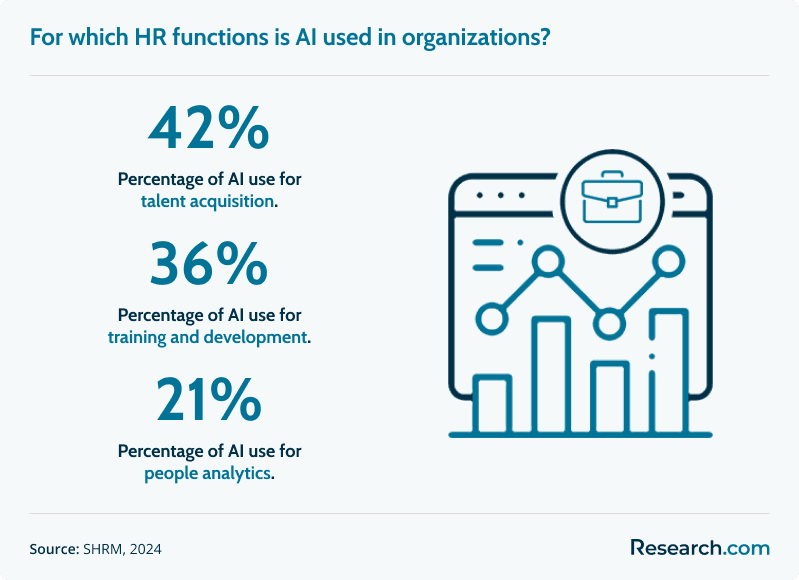
- Training and development: Helping schedule training sessions, track participation, and support employee development programs. About 70% of HR professionals enter the field to help employees grow.
- Employee relations: Answering routine employee questions, escalating sensitive issues, and supporting policies that balance employee needs with business requirements. Around 67% of HR professionals focus on aligning company goals with employee well-being.
- Operational improvement: Supporting policy updates, compliance processes, employee communications, and workplace practices that help organizations run efficiently. About 50% of HR professionals work to maximize company profitability.
As HR professionals gain experience, they may move into recruiting specialization. For example, the guide on how to become an executive recruiter explains a more advanced talent acquisition path focused on senior-level hiring.
| HR coordinator task | What it looks like in practice | Skill being developed |
| Scheduling interviews | Coordinating candidates, hiring managers, calendars, and follow-up messages | Communication and organization |
| Maintaining employee files | Updating records, storing documents, and protecting confidential information | Attention to detail and confidentiality |
| Supporting onboarding | Preparing forms, orientation materials, system access, and first-day instructions | Process management and employee support |
| Helping with benefits | Answering basic questions and directing employees to the right resources | Benefits literacy and service orientation |
| Tracking training | Recording participation and supporting learning programs | Data management and employee development |
What skills do you need to be a successful human resource coordinator?
HR coordinators need a combination of interpersonal judgment, administrative accuracy, technology comfort, and basic HR knowledge. The best candidates can communicate clearly, protect sensitive information, keep processes moving, and learn new systems quickly.
Soft skills
- Professional communication: HR coordinators interact with applicants, employees, managers, vendors, and executives, so tone and clarity matter.
- Organization: Interview schedules, employee records, onboarding checklists, benefits forms, and deadlines all require careful tracking.
- Problem-solving: Many HR issues are not solved by a script; coordinators need to know when to resolve, document, or escalate concerns.
- Confidentiality: HR staff may see private employee, compensation, health, and performance information.
- Adaptability: Policies, systems, staffing needs, and workplace expectations can shift quickly.
Technical skills
- HR software: Familiarity with applicant tracking systems, payroll platforms, HR information systems, and digital document tools is valuable.
- HR and talent analytics: Only 46% of HR professionals have deep experience with data-driven decision-making, so learning basic analytics can help you stand out.
- Payroll and benefits administration: Even when payroll is handled by another team, HR coordinators often answer questions and verify information.
- Employment law awareness: Coordinators do not need to be attorneys, but they should understand why accurate documentation and consistent procedures matter.
- Diversity and inclusion support: Only 31% of HR professionals have extensive experience in this area, making it a useful area for continued development.
HR-specific skills
- Talent management: With 80% of HR professionals reporting talent management experience, this is one of the most important areas for growth.
- Recruiting and onboarding: Coordinators often help candidates become employees, then help employees become productive team members.
- Employee relations support: HR coordinators need tact when answering employee questions or documenting concerns.
- Performance management support: Coordinators may help organize review cycles, collect forms, or track development plans.
- Policy implementation: Applying policies consistently is essential for fairness, compliance, and trust.
Industry knowledge can also matter. An HR coordinator in a game studio, for instance, may need to understand creative and technical job families. Researching roles such as those described in this video game designer career guide can help HR staff recruit and support specialized talent more effectively.
What certifications help you get hired as an HR coordinator?
Certifications are not always required for HR coordinator roles, but they can help when your experience is limited, your degree is not in HR, or you want to show employers that you understand HR fundamentals. Some professionals also pursue certifications after completing graduate-level business training, including programs discussed in this guide to the best business master's degrees.
| Certification | Best for | Listed cost | How to apply |
| Associate Professional in Human Resources (aPHR) | Entry-level candidates with little or no HR experience | $300 exam cost plus a $100 application fee | Create an HRCI account, submit the application and fee, then schedule the exam online or at a testing center |
| Professional in Human Resources (PHR) | HR professionals with qualifying experience | $395 exam cost plus a $100 application fee | Confirm eligibility through the HR Certification Institute PHR page, register, pay the required fees, and schedule the test |
| Society for Human Resource Management Certified Professional (SHRM-CP) | HR professionals with some experience who want a widely recognized credential | $495 for SHRM members and $595 for non-members | Review eligibility guidance, apply through SHRM, pay the exam fee, and choose a testing date |
| Certified Payroll Professional (CPP) | HR coordinators whose work includes payroll responsibilities | $419 for APA members and $609 for non-members | Meet the payroll experience requirement, apply through the Certified Payroll Professional credential page, and schedule the exam |
| Talent Acquisition Specialty Credential | HR professionals focusing on recruiting and hiring | $1,855 for SHRM members and $2,130 for non-members | Register with SHRM, complete the required coursework, and pass the final exam |
When choosing a certification, compare the exam cost, eligibility rules, renewal expectations, and relevance to the jobs you want. For a first HR coordinator role, an entry-level credential may be more practical than an advanced or highly specialized one.
The chart below shows SHRM-CP pass rates from 2022 to 2024.
What entry-level jobs prepare you for an HR coordinator role?
You do not always need to start with the exact title “human resource coordinator.” Several support roles can help you build the same skills employers want in coordinator candidates.
| Entry-level role | How it prepares you for HR coordination | Skills to highlight on your resume |
| HR Assistant | Provides exposure to employee records, onboarding, paperwork, and routine HR questions | Confidentiality, organization, documentation, HR support |
| Recruiting Coordinator | Builds experience with job postings, interview scheduling, candidate communication, and applicant tracking systems | Scheduling, ATS use, candidate experience, communication |
| Payroll Specialist | Develops knowledge of wages, time records, deductions, benefits, and payroll deadlines | Accuracy, compliance, payroll systems, data entry |
| Benefits Administrator | Teaches how employees use health insurance, retirement plans, leave policies, and other benefits | Employee support, benefits knowledge, vendor coordination |
| Administrative Assistant in an HR department | Introduces daily HR operations, filing, scheduling, policy communication, and internal processes | Office coordination, records management, professionalism |
HR coordinators work across many industries, but large employers often have more defined HR teams and more entry-level openings. Fortune 500 companies employ 27% of HR coordinators because large workforces require ongoing support for hiring, records, onboarding, benefits, and compliance. Professional organizations account for 10%, and HR coordinator roles are also common in healthcare, retail, hospitality, technology, staffing, and nonprofit settings.
What factors should you consider when choosing an HR degree program?
An HR degree program should prepare you for real workplace responsibilities, not just introduce general business concepts. Before enrolling, compare accreditation, curriculum, internship options, online flexibility, transfer credit policies, faculty experience, career services, and whether the program teaches current HR tools.
| Factor | What to check | Why it matters |
| Accreditation | Whether the school and program meet recognized quality standards | Accreditation can affect credit transfer, employer perception, and financial aid eligibility |
| Curriculum | Courses in employment law, recruiting, compensation, benefits, HR analytics, and employee relations | These subjects connect directly to HR coordinator work |
| Internships | Whether the program helps students find HR-related placements | Experience can make a major difference in entry-level hiring |
| Format | Online, hybrid, evening, accelerated, or campus-based options | The best format depends on your schedule, work obligations, and learning style |
| Career support | Resume help, employer connections, mock interviews, alumni outcomes | Career services can help bridge the gap between coursework and employment |
| Efficiency | Transfer credits, prior learning policies, and program length | Students looking for a faster path may compare options such as the easiest human resources degree |
How much do human resource coordinators make for 2027?
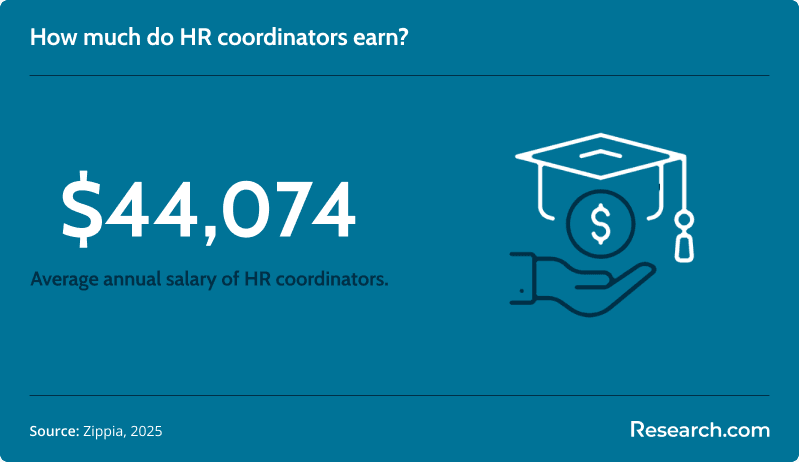
According to Zippia, human resource coordinators earn an average annual salary of $44,074 in 2025. Entry-level salaries start around $36,000, while coordinators with several years of experience can earn up to $55,000 or more. Pay depends on location, company size, industry, responsibilities, and prior experience.
Large companies and employers in technology, finance, and healthcare may offer higher compensation than some retail or hospitality employers, although actual pay varies by role and market. Benefits, schedule flexibility, promotion potential, and training opportunities should also be considered when comparing offers.
| Salary factor | How it can affect earnings |
| Experience | Candidates with payroll, recruiting, benefits, or HRIS experience may qualify for stronger offers |
| Industry | Technology, finance, and healthcare roles may pay more than some service-sector roles |
| Company size | Larger employers may have more structured pay bands, benefits, and promotion ladders |
| Location | Major labor markets may offer higher salaries, often alongside higher living costs |
| Education and credentials | Relevant degrees and certifications can support advancement, but they do not guarantee a specific salary |
Some HR professionals pursue an AACSB accredited online MBA when they want to move beyond coordinator-level work into HR management, business leadership, or strategic people operations roles. Advanced education should be weighed against tuition, time, career goals, and likely promotion opportunities.
How can networking and mentorship accelerate my HR career?
Networking can help you learn which HR skills employers value, find referrals, understand company cultures, and discover openings before they are widely advertised. Mentorship can be especially useful in HR because many career decisions involve judgment: when to specialize, when to pursue certification, how to handle sensitive workplace issues, and how to move from administrative work into strategic roles.
- Join HR associations, campus business groups, alumni networks, or local professional organizations.
- Ask HR professionals about their first roles, the software they use, and which skills helped them advance.
- Attend webinars or events on recruiting, benefits, employee relations, compliance, and HR analytics.
- Look for mentors in HR operations, talent acquisition, payroll, benefits, or people analytics depending on your target path.
- Use informational interviews to understand what different HR roles actually involve before choosing a specialty.
If you are still deciding where an HR degree can lead, Research.com’s guide on what you can do with a human resource management degree outlines related career options.
Should I pursue a human resources associate degree online?
An online associate degree in human resources can make sense if you want a lower-cost, shorter academic path into HR support or administrative roles. It may cover labor law basics, recruiting processes, employee documentation, office systems, and business communication. However, because 65% of HR coordinators have a bachelor’s degree, an associate degree may be best viewed as a starting credential rather than the final step for long-term advancement.
| An online HR associate degree may be a good fit if... | You may want a bachelor’s degree path instead if... |
| You want to enter HR support work sooner | You are targeting employers that prefer bachelor’s degrees for coordinator roles |
| You need flexibility because of work or family responsibilities | You want stronger preparation for HR specialist or management roles |
| You plan to transfer credits later | You want deeper coursework in analytics, strategy, labor relations, or leadership |
| You are testing whether HR is the right field | You already know you want a long-term HR career with advancement potential |
Students comparing flexible entry points can review online options for a human resources associates degree online and ask each school about transfer pathways into a bachelor’s program.
What challenges do HR coordinators face and how can they overcome them?
Human resource coordinators often work at the center of competing needs: employees want fast answers, managers need staffing support, payroll and benefits require accuracy, and compliance rules leave little room for mistakes. The role can be rewarding, but it requires discipline and good judgment.
| Common challenge | Why it happens | Better approach |
| Too many administrative tasks | HR coordinators often support multiple processes at once | Use checklists, templates, calendar reminders, and clear escalation rules |
| Confidential information | Employee records, pay data, and performance concerns are sensitive | Follow document controls, limit access, and avoid informal discussions |
| Unclear employee questions | Employees may ask about policies, benefits, complaints, or workplace concerns | Answer only within your authority and escalate complex issues to senior HR staff |
| Changing HR technology | Employers continue adopting HR systems, analytics, and automation tools | Build comfort with HRIS, ATS, payroll platforms, reporting, and data quality |
| Compliance pressure | HR processes are tied to employment law and internal policy | Document consistently, follow approved procedures, and ask for guidance early |
Professionals who want to move into more advanced HR work can also explore roles connected to masters HR careers, especially if they are interested in strategy, analytics, leadership, or organizational development.
What career paths can you take after working as an HR coordinator?
Human resource coordinator experience can lead to several HR specializations. Your best path depends on which parts of the job you enjoy most: hiring, employee relations, payroll, benefits, compliance, analytics, training, or business strategy.
| Next career path | What the role focuses on | Best fit for HR coordinators who enjoy... |
| HR Specialist | Benefits, payroll, employee relations, compliance, or another HR function | Becoming an expert in one area of HR |
| HR Manager | Leading HR staff, policies, hiring processes, compliance, and employee support | Supervision, decision-making, and department operations |
| Talent Acquisition Manager | Recruiting strategy, employer branding, hiring pipelines, and workforce planning | Candidate communication, interviewing, and recruiting metrics |
| HR Business Partner | Aligning people strategies with department or company goals | Consulting with leaders and solving workforce problems |
| HR Director or VP of HR | Overseeing broad HR strategy, culture, compliance, and people operations | Executive leadership and long-term organizational planning |
Some HR professionals who want executive-level leadership roles consider an online doctorate in organizational leadership. This is not necessary for most HR coordinator or manager roles, but it may be relevant for professionals interested in senior leadership, consulting, research, or organizational transformation.
How competitive is the job market for human resource coordinators?
The HR coordinator job market is competitive because the role is a common entry point for new HR professionals. Companies need HR support, but many recent graduates, career changers, and administrative professionals apply for the same openings.
Large employers, healthcare organizations, staffing firms, technology companies, retailers, hospitality employers, and professional organizations may offer more opportunities than small businesses with limited HR departments. Remote HR coordinator jobs exist, but entry-level candidates may find that many employers still prefer in-office or hybrid support because onboarding, employee questions, and document coordination often involve close collaboration.
How to stand out in HR coordinator applications
- Show direct experience with scheduling, records, recruiting, onboarding, payroll, benefits, or HR systems.
- Use HR keywords from the job posting, but only when they accurately describe your experience.
- Quantify support tasks when possible, such as number of candidates scheduled, employee files maintained, or onboarding processes supported.
- Demonstrate confidentiality and professionalism in your resume and interviews.
- Consider a relevant certification if you lack HR-specific work experience.
- Build comfort with HR analytics, payroll software, applicant tracking systems, and diversity initiatives.
The chart below lists the highest positions that many HR professionals aspire to, as reported in 2024 by the Talent Strategy Group.
What trends are shaping human resources for 2027?
HR coordinator jobs are changing as employers adopt new technology, compete for talent, and respond to evolving employee expectations. Coordinators who understand these changes can become more valuable because they help translate HR strategy into daily processes.
- AI and automation: Employers are using more tools for recruiting, onboarding, performance tracking, and employee communications. HR coordinators should learn how to use these systems responsibly while protecting fairness and data quality.
- Employee experience and well-being: Companies continue focusing on retention, engagement, mental health, flexibility, and workplace culture. Coordinators often support the programs and communications behind these efforts.
- Diversity, equity, and inclusion: Inclusive hiring, policy consistency, and employee support remain important areas where HR coordinators may assist with documentation, training logistics, and process tracking.
- Upskilling and career development: Organizations use learning programs to retain employees and close skill gaps. HR coordinators may help schedule training, track completion, and support development resources.
- Hybrid and remote work: Flexible work models require updated onboarding, communication, timekeeping, policy guidance, and compliance awareness.
How HR coordinators can adapt to changing workforce needs
One practical way to stay relevant is to understand the roles your company hires for. For example, an HR coordinator at an architecture firm may need to support hiring for design, project management, and technical roles. Knowing how candidates build qualifications, including options such as the best online architecture degree programs, can improve recruiting conversations and employee development planning.
Can a business administration background enhance an HR coordinator career?
Yes. A business administration background can strengthen an HR coordinator career because HR decisions are tied to budgets, operations, staffing plans, productivity, compliance risk, and organizational goals. Candidates with business training may be better prepared to understand how workforce decisions affect the larger company.
Business administration can be especially useful if you want to move from HR coordination into HR management, people operations, workforce planning, or HR business partner roles. If you are still deciding whether business is the right academic path, Research.com’s guide on whether business administration is a good major can help you compare the trade-offs.
How can advanced education boost my HR coordinator career?
Advanced education can help HR coordinators move beyond administrative support into strategic HR, analytics, leadership, employee development, or executive advisory work. It is most useful when your target roles require stronger business judgment, people analytics, organizational change knowledge, or leadership preparation.
Before enrolling in a graduate program, compare tuition, time commitment, employer tuition assistance, career outcomes, accreditation, and whether the curriculum matches your goal. If you want HR leadership training in a business context, compare online MBA programs in human resource management and review whether they include courses in employment law, compensation, analytics, leadership, and organizational strategy.
Should I pursue an MBA in human resources?
An MBA in human resources may be worth considering if your goal is HR management, HR business partner work, organizational leadership, consulting, or executive-level people strategy. It may be less necessary if you only want to qualify for an HR coordinator role, since coordinator jobs usually focus more on foundational HR skills, administrative accuracy, and practical experience.
| An MBA in HR may make sense if... | It may not be the right next step if... |
| You want to move into HR leadership or strategic people operations | You are still trying to land your first HR support role |
| Your employer values graduate business education for promotions | You can reach your next goal through experience or certification instead |
| You want broader training in finance, strategy, analytics, and leadership | The cost would create debt without a clear career plan |
| You are interested in management beyond the HR department | You prefer a more specialized HR master’s program |
For a deeper decision framework, review Research.com’s article on the advantages of MBA in human resources. Also revisit the advanced education section and the HR trends section before deciding whether graduate study fits your timing.
Common mistakes to avoid when preparing for an HR coordinator career
- Choosing a program without checking accreditation. Accreditation can affect financial aid, transfer credits, and employer confidence.
- Focusing only on tuition. A cheaper program may not be the better option if it lacks internships, career support, or transfer-friendly policies.
- Waiting until graduation to get experience. Internships and HR support roles can make a major difference in entry-level applications.
- Assuming every HR certification is equally useful. Match the credential to your experience level and target job.
- Ignoring HR technology. Applicant tracking systems, HRIS platforms, payroll tools, and reporting skills are increasingly important.
- Using a generic resume. HR hiring teams look for evidence of confidentiality, accuracy, communication, employee support, and process management.
- Assuming salary outcomes are guaranteed. Pay varies by employer, location, industry, responsibilities, and experience.
Questions to ask before choosing this career path
- Do I enjoy helping people while also following policies and documentation rules?
- Am I comfortable handling confidential information?
- Do I prefer a broad HR role or a future specialty such as recruiting, payroll, benefits, training, or employee relations?
- Can I gain HR-related experience before applying for full-time coordinator jobs?
- Which degree path fits my timeline, budget, and career goals?
- Would a certification make my application stronger, or would experience be more valuable right now?
- Am I willing to keep learning new HR systems, compliance practices, and workplace technologies?
Key Insights
- The human resource coordinator role is one of the most practical starting points for an HR career because it builds experience in recruiting, onboarding, records, benefits, payroll support, and employee communication.
- A bachelor’s degree is the most common education path, with 65% of HR coordinators holding one, but administrative experience and HR support roles can also help candidates enter the field.
- The typical timeline is about four years for students pursuing a bachelor’s degree, though candidates with relevant office, payroll, recruiting, or benefits experience may transition faster.
- Zippia reports an average HR coordinator salary of $44,074 in 2025, with entry-level salaries around $36,000 and experienced coordinators earning up to $55,000 or more.
- Certifications such as aPHR, PHR, SHRM-CP, CPP, and talent acquisition credentials can help, but the best choice depends on your experience level and target role.
- To stand out, build hands-on experience, learn HR software, show confidentiality and accuracy, and tailor your resume to the exact HR functions listed in job postings.
- Long-term career options include HR specialist, HR manager, talent acquisition manager, HR business partner, HR director, VP of HR, consulting, training, and organizational leadership roles.
References:
- Society for Human Resource Management (SHRM). (2022). 2022 Workplace Learning & Development Trends. SHRM report.
- Society for Human Resource Management (SHRM). (2024a). SHRM State of the Workplace Report. SHRM workplace report.
- Society for Human Resource Management (SHRM). (2024b). Talent Trends. SHRM talent trends.
- Society for Human Resource Management (SHRM). (2025). SHRM Exam Details and Fees. SHRM Certification. SHRM certification fees.
- Talent Strategy Group. (2024). Global Human Resources Census. Talent Strategy Group census.
- Zippia. (2025a). Human Resources Coordinator Demographics and Statistics in the US. Zippia demographics.
- Zippia. (2025b). Human Resources Coordinator Salary. Zippia salary data.
Other Things You Should Know About Becoming a Human Resources Coordinator
In 2027, an HR coordinator should ideally have a bachelor’s degree in human resources or a related field. Essential skills include strong communication, organization, and problem-solving abilities. Understanding HR software and staying updated with labor laws also remain critical for success.
No. SHRM-CP is not required for most human resource coordinator jobs in 2027, but some employers prefer it. The credential is offered by the Society for Human Resource Management and usually suits candidates with HR education or experience who want to strengthen their qualifications.


