2027 How to Become a Clinical Director: Salary & Career Paths

Co-Founder and Chief Data Scientist
Clinical director is a common next-step goal for experienced healthcare professionals who want to move from direct patient care into department-level leadership, quality improvement, compliance, staffing, and strategy. The role can be financially attractive: as of May 2023, medical and health services managers earned a median annual wage of $110,680, with the top 10% making over $216,750.
This guide explains how to become a Clinical Director, what education and experience matter most, which credentials may strengthen your profile, how long the path can take, what it may cost, and how to decide whether this leadership track fits your career goals.
Quick answer: Is becoming a clinical director a strong career move?
- Clinical Directors earn a median annual salary of approximately $97,125 in the United States.
- Employment for Clinical Directors is projected to grow by 29% from 2023 to 2033, much faster than average.
- The role can lead to senior healthcare leadership positions, including Chief Medical Officer, Director of Clinical Operations, Director of Case Management, or healthcare administration roles.
- What does a clinical director do?
- How do I become a clinical director for 2027?
- What skills and experience matter most for clinical directors?
- What licenses and certifications do clinical directors need?
- What degree should I earn to become a clinical director?
- How long does it take to become a clinical director?
- How much does it cost to become a clinical director?
- How do clinical directors use healthcare technology?
- How can entry-level clinical roles help me become a Clinical Director?
- How can mentorship and networking support career growth?
- How can interdisciplinary education strengthen clinical leadership?
- What trends are changing the clinical director role?
- What online degree options can help aspiring Clinical Directors?
- How much can I earn as a clinical director?
- How can an online Pharm.D. support clinical leadership?
- What career paths are available after becoming a clinical director?
- Is becoming a clinical director worth it?
- How do I choose online certifications for clinical leadership?
What does a clinical director do?
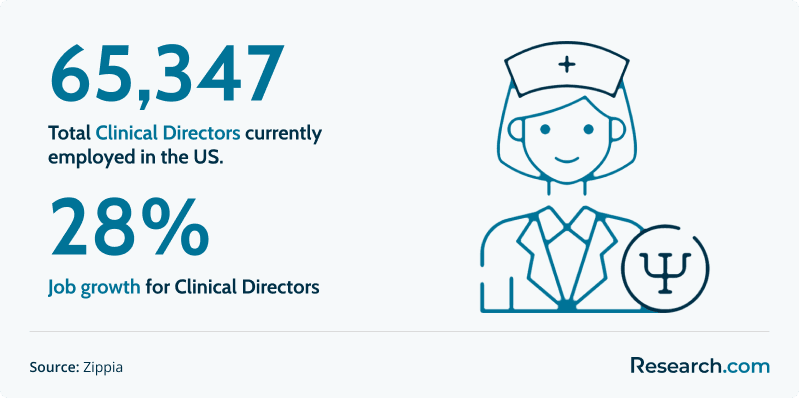
A Clinical Director is a senior healthcare leader who manages the clinical operations of a department, program, clinic, hospital unit, or healthcare organization. According to Zippia, there are over 65,000 Clinical Directors currently employed in the United States.
The role sits between frontline clinical work and executive administration. A Clinical Director is expected to understand patient care, supervise clinical teams, maintain regulatory standards, improve service quality, and make operational decisions that affect patients, staff, budgets, and outcomes. A healthcare business degree can be useful for professionals who already have clinical experience but need stronger training in healthcare finance, operations, compliance, and organizational leadership.
Common clinical director responsibilities
| Responsibility | What it means in practice |
| Clinical policy development | Creating, updating, and enforcing procedures that guide safe, consistent patient care. |
| Staff supervision | Hiring, onboarding, training, scheduling, evaluating, and coaching nurses, therapists, counselors, physicians, assistants, or other clinical employees. |
| Regulatory compliance | Making sure the organization follows applicable healthcare laws, documentation standards, accreditation rules, and internal policies. |
| Budget and resource planning | Managing staffing levels, supplies, equipment needs, vendor costs, and department spending. |
| Quality improvement | Reviewing patient care processes, identifying performance gaps, and leading initiatives to improve safety, outcomes, efficiency, and satisfaction. |
| Care coordination | Helping departments, providers, and support teams work together so patients receive timely and appropriate services. |
The strongest Clinical Directors usually combine clinical credibility with management judgment. They understand what happens at the bedside or in the treatment room, but they can also lead meetings, interpret performance data, resolve staff conflict, and defend operational decisions to senior administrators.
The image below shows the total employed clinical director in the US and the job growth in this career.
How do I become a clinical director for 2027?
Most Clinical Directors reach the role after building a foundation in healthcare practice, then adding supervisory experience, management education, and credentials relevant to their specialty. The exact route depends on whether you come from nursing, counseling, social work, medicine, psychology, behavioral health, rehabilitation, or healthcare administration.
- Earn a relevant bachelor's degree. Common starting points include nursing, psychology, social work, healthcare administration, or a related health field. Your degree should match the clinical environment you want to lead.
- Build hands-on clinical experience. Employers typically want leaders who understand real patient care workflows. Roles such as registered nurse, therapist, counselor, social worker, case manager, or clinical specialist can help you develop that foundation.
- Move into supervision before directorship. Look for charge nurse, team lead, program coordinator, clinical supervisor, unit manager, or department manager roles. These positions help you demonstrate staff oversight, scheduling, documentation review, compliance, and performance management.
- Consider graduate education if your target roles require it. A master's degree in healthcare administration, nursing, business administration, public health, counseling, social work, or a related field may improve your competitiveness, especially for larger organizations or executive-track roles.
- Develop leadership skills deliberately. Volunteer for quality improvement projects, policy committees, accreditation preparation, workflow redesign, staff education, or electronic health record implementation. These experiences are directly relevant to clinical director interviews.
- Earn credentials that match your specialty. Certifications such as Certified Professional Counselor (CPC), Certified Clinical Supervisor (CCS), or Certified Medical Manager (CMM) may strengthen your profile depending on your background and workplace setting.
- Stay current on regulation, technology, and care delivery models. Clinical Directors must adapt to changing reimbursement rules, digital health tools, staffing pressures, and quality reporting expectations.
Specialized education can help, but it should align with your leadership goal. For example, neonatal nurse schooling can prepare someone for deep expertise in neonatal care, but moving into a broader Clinical Director role may require additional exposure to budgeting, compliance, quality improvement, and cross-department management.
| Career stage | Main goal | Examples of useful roles or actions |
| Early career | Learn patient care and healthcare operations | Registered nurse, therapist, social worker, counselor, medical assistant, case coordinator |
| Mid-career | Develop management credibility | Clinical supervisor, unit manager, program coordinator, charge nurse, department lead |
| Pre-director stage | Show strategic and operational leadership | Lead quality initiatives, manage budgets, prepare for audits, supervise multidisciplinary teams |
| Director level | Oversee clinical services and outcomes | Clinical Director, Director of Clinical Operations, Director of Case Management |
What skills and experience matter most for clinical directors?
Clinical Directors need more than seniority. They are evaluated on whether they can keep care safe, teams productive, documentation compliant, and operations financially sustainable. Zippia resume data shows that around 10.9% of Clinical Director resumes emphasize experience with patients, which reflects the importance of direct care experience even in leadership roles.
| Skill area | Why it matters | How to build evidence |
| Patient care judgment | Clinical leaders must understand quality, safety, risk, and patient needs. | Document years of direct care, specialty experience, patient population expertise, and care coordination outcomes. |
| People leadership | Directors supervise staff, resolve conflict, coach employees, and maintain accountability. | Seek charge, supervisor, preceptor, committee chair, or project lead responsibilities. |
| Regulatory knowledge | Healthcare organizations must meet documentation, privacy, safety, licensing, and accreditation expectations. | Participate in audits, compliance reviews, policy updates, or accreditation preparation. |
| Communication | Clinical Directors translate priorities between executives, providers, staff, patients, and families. | Lead staff meetings, write policies, present quality data, and manage interdisciplinary communication. |
| Problem-solving | The role often involves staffing shortages, workflow bottlenecks, patient complaints, and performance gaps. | Track examples of process improvements, turnaround projects, or measurable operational fixes. |
| Financial awareness | Directors often manage budgets, staffing ratios, equipment requests, and productivity expectations. | Ask to assist with scheduling, purchasing, utilization review, or budget planning. |
A family nurse practitioner role can be a strong bridge into clinical leadership because FNPs often develop broad patient assessment, care planning, collaboration, and decision-making skills. However, clinical expertise alone is rarely enough; employers also look for evidence that you can lead teams and manage systems.
What licenses and certifications do clinical directors need?
Licensing requirements vary by profession, state, employer, and healthcare setting. Many Clinical Directors must hold an active license tied to their clinical background, such as a Registered Nurse (RN) license or another professional license relevant to counseling, social work, therapy, medicine, or behavioral health.
Certifications are not always mandatory, but they can help show readiness for supervision, compliance, and practice management. Useful options may include:
- Certified Professional Counselor (CPC): Often relevant for professionals in counseling or behavioral health settings.
- Certified Clinical Supervisor (CCS): Supports credibility for roles that involve overseeing clinical staff and services.
- Certified Medical Manager (CMM): Signals preparation in medical practice management and administrative leadership.
Certification costs vary. For example, the Certified Medical Manager (CMM) certification typically involves application fees ranging from $385 to $525.
| Credential decision | Ask this before enrolling |
| State license | Is an active clinical license required for the director role in my state or specialty? |
| Specialty certification | Does this certification match the population or service line I want to lead? |
| Management certification | Will this credential help me demonstrate practice management, compliance, or supervisory ability? |
| Employer recognition | Do job postings in my target market specifically request or prefer this credential? |
| Renewal requirements | What continuing education, fees, and renewal deadlines will I need to maintain? |
Before paying for any certification, compare job descriptions in your target specialty. A credential that is valuable in behavioral health may not carry the same weight in hospital administration, long-term care, outpatient clinics, or pharmacy-related leadership.
What degree should I earn to become a clinical director?
A bachelor's degree is typically the minimum academic requirement for Clinical Director roles, although many employers prefer or require a graduate degree for higher-level positions. Common fields of study among Clinical Directors include Nursing (23%), Psychology (16%), and Social Work (13%).
Public health can also be a useful academic path, especially for professionals interested in population health, prevention, program evaluation, policy, or administrative leadership. For students considering medical school, public health coursework can provide context in health systems and population-level care that may be useful in both clinical and management settings.
| Degree field | Best fit for | Leadership value |
| Nursing | Hospitals, clinics, long-term care, care coordination, advanced practice settings | Strong patient care foundation and credibility with clinical teams. |
| Psychology | Behavioral health, mental health programs, counseling-related environments | Useful for understanding behavior, assessment, treatment planning, and patient support systems. |
| Social Work | Community health, case management, behavioral health, family services, care navigation | Builds strengths in advocacy, systems thinking, care coordination, and client support. |
| Healthcare Administration | Operations, compliance, finance, department management, executive-track roles | Directly develops management, policy, finance, and organizational leadership skills. |
| Public Health | Population health, program management, prevention, policy, quality improvement | Helps leaders analyze health trends, outcomes, and program effectiveness. |
The chart below breaks down the typical majors seen on the resumes of clinical directors.
How long does it take to become a clinical director?
Becoming a Clinical Director typically requires between 4 to 6 years, depending on educational and professional pathways. This estimate can include completing a bachelor's degree, which takes about four years, followed by relevant clinical or administrative experience.
The timeline may be longer for professionals who pursue graduate education, licensure, advanced practice training, or specialty certifications. A Master of Science in Nursing (MSN), for example, can improve qualifications for some clinical leadership roles but adds more time before reaching director-level positions.
| Pathway | Typical time factor | When it may make sense |
| Bachelor's degree plus experience | Often the fastest route into smaller-program or department-level leadership | Best for professionals who gain supervisory experience early. |
| Graduate degree plus clinical experience | May extend the timeline but improve competitiveness | Useful for larger systems, executive-track positions, or roles with complex compliance and budget responsibility. |
| Advanced clinical role first | Can add time but build strong clinical authority | Helpful for professionals who want to lead specialized care teams. |
Experience as an FNP can also help. The benefits of being a family nurse practitioner include advanced clinical decision-making, patient management, and interdisciplinary collaboration—skills that can transfer well into Clinical Director responsibilities.
How much does it cost to become a clinical director?
The cost depends heavily on the school, degree level, state residency status, delivery format, and whether you already hold transfer credits or professional credentials. On average, the total annual cost for a four-year college program in the United States is approximately $38,270, including tuition, fees, books, supplies, and living expenses.
Here is a breakdown of potential costs to consider:
- Tuition and fees: Public in-state institutions average around $9,750 annually, while private colleges can average $32,410 per year.
- Room and board: Housing and meals can add approximately $13,877 annually.
- Books and supplies: Students typically spend about $1,200 per year.
Graduate degrees, such as a Master's in Healthcare Administration, add separate costs that vary widely by institution. Financial aid, employer tuition assistance, scholarships, grants, transfer credits, and part-time enrollment can change the total investment substantially.
| Cost factor | Why it matters | How to evaluate it |
| Tuition | This is usually the largest direct education expense. | Compare total program cost, not only cost per credit. |
| Fees | Technology, clinical placement, graduation, and online course fees can add up. | Ask for a full published fee schedule before enrolling. |
| Books and supplies | Healthcare programs may require textbooks, software, equipment, or lab materials. | Request estimated annual supply costs from the program. |
| Lost work time | Full-time study or clinical requirements can reduce income. | Compare full-time, part-time, online, and employer-supported options. |
| Graduate education | Advanced degrees can improve competitiveness but increase total cost. | Check whether your target jobs require, prefer, or merely value a master's degree. |
The chart below compares the tuition and fees of the common majors for clinical directors.
How do clinical directors use healthcare technology?
Clinical Directors increasingly rely on technology to monitor quality, coordinate care, reduce administrative friction, and support evidence-based decisions. Common tools include electronic health records, telehealth platforms, data dashboards, scheduling systems, remote patient monitoring tools, and billing or documentation systems.
The goal is not simply to adopt more software. A strong Clinical Director evaluates whether a tool improves patient outcomes, protects privacy, reduces duplicate work, supports compliance, and fits staff workflows. Backend training in areas such as medical billing and coding online can also help leaders understand how documentation, reimbursement, coding accuracy, and administrative efficiency connect to clinical operations.
How can entry-level clinical roles help me become a Clinical Director?
Entry-level healthcare roles can be valuable because they expose future leaders to patient flow, documentation, team communication, scheduling pressures, and the practical realities of care delivery. A Clinical Director who has worked close to patients often has a better understanding of what staff need to perform safely and efficiently.
For someone just starting, an affordable training route such as the cheapest medical assistant program may provide an initial foothold in healthcare. That first role will not usually qualify someone for directorship by itself, but it can help build clinical familiarity before pursuing additional education, licensure, supervisory duties, and leadership training.
How can mentorship and networking support career growth?
Mentorship can shorten the learning curve for aspiring Clinical Directors because experienced leaders can explain how hiring decisions are made, which credentials matter, how budgets are handled, and what mistakes new supervisors commonly make. Networking also helps professionals learn about openings, committees, fellowships, and leadership development opportunities that may not be obvious from job boards alone.
Early career training, including a medical assistant accelerated program, can also introduce students to instructors, supervisors, clinical staff, and peers who may later become references or professional contacts. The key is to treat every healthcare role as a chance to build both competence and reputation.
How can interdisciplinary education strengthen clinical leadership?
Clinical leadership often requires decisions that cross traditional department lines. Knowledge of public health, psychology, rehabilitation, finance, informatics, nutrition, and operations can help a Clinical Director understand patient needs more broadly and collaborate with different professional groups.
For example, accredited online kinesiology degree programs may be useful for learners interested in movement, injury prevention, rehabilitation support, wellness, and human performance. This type of background may complement clinical leadership in settings where mobility, recovery, preventive care, or health optimization are central to patient outcomes.
What trends are changing the clinical director role?
The Clinical Director role is becoming more data-driven, technology-enabled, and compliance-focused. Digital health tools, telemedicine, remote monitoring, artificial intelligence, workforce shortages, changing reimbursement expectations, and stricter quality measurement are all influencing how clinical departments operate.
Directors now need to understand not only patient care standards but also how technology changes access, documentation, productivity, staff training, and risk management. Related knowledge areas, such as nutritionist certification requirements, may also matter in interdisciplinary environments where patient education, preventive care, chronic disease support, and wellness programming are part of the service model.
What online degree options can help aspiring Clinical Directors?
Online education can be practical for working healthcare professionals who need to continue earning income while building leadership qualifications. The right online degree should be accredited, relevant to your target role, accepted by employers, and realistic for your schedule.
Some learners may begin with science-focused programs, such as cheap online biology bachelor's degree programs, to build a foundation in human biology and healthcare-related science. Others may choose nursing, healthcare administration, public health, social work, psychology, or business programs depending on the clinical setting they plan to enter.
| Online option | Best for | Important caution |
| Online healthcare administration | Students focused on operations, compliance, finance, and management | May not provide clinical licensure by itself. |
| Online nursing pathway | Licensed nurses seeking leadership advancement | Clinical requirements and state authorization must be checked carefully. |
| Online public health | Professionals interested in population health, policy, and program leadership | May need additional clinical experience for director roles in care delivery settings. |
| Online psychology or social work | Behavioral health and human services leadership | Licensure requirements vary and may include supervised field experience. |
| Online biology | Learners seeking a broad science foundation | Usually needs to be paired with clinical, administrative, or graduate preparation. |
How much can I earn as a clinical director?
Clinical Director pay varies by employer, specialty, location, education, credentials, years of experience, and scope of responsibility. Salary reports also differ by platform because each source uses different data collection methods, job titles, and compensation definitions.
Reported Clinical Director salary figures include:
- Payscale: Average salary per year is $87,235.
- Zippia: Reported average annual salary is higher at approximately $96,497.
- Glassdoor: Reported average salary is $124,997 per year.
- ZipRecruiter: Average annual salary is $100,124 at $48 per hour.
- Salary.com: A base salary range from $307,426 to $368,914, with total compensation potentially reaching $453,570 when including bonuses and incentives.
Location can make a major difference. Clinical Directors in California and New York often earn higher salaries compared to those in other states. Education can also affect compensation, especially for roles with broader administrative responsibilities. For example, MBA hospital adminstration salary outcomes tend to reflect stronger preparation in management, finance, strategy, and organizational leadership.
| Salary factor | How it can affect earnings |
| Employer type | Hospitals, specialty clinics, behavioral health centers, long-term care organizations, and large systems may pay differently. |
| Geography | High-cost or high-demand states and metro areas may offer higher compensation. |
| Scope of role | Managing one program is different from overseeing multiple departments, service lines, or locations. |
| Credentials | Licensure, graduate education, and leadership certifications can strengthen candidacy for higher-level positions. |
| Experience | Direct supervisory, budget, compliance, and quality improvement experience can support advancement. |
How can an online Pharm.D. support clinical leadership?
Pharmacy-related leadership roles often require deep understanding of medication therapy, patient safety, regulatory requirements, formularies, documentation, and interdisciplinary care. For professionals whose leadership goals involve pharmacy operations, medication management, or clinical therapeutics, advanced pharmacy education can strengthen both clinical judgment and administrative credibility.
A cheap online Pharm.D. program may be worth exploring for qualified learners who want to combine pharmaceutical expertise with broader leadership responsibilities. As with any advanced clinical program, students should confirm accreditation, eligibility requirements, experiential components, licensure implications, and employer recognition before enrolling.
What career paths are available after becoming a clinical director?
Clinical Director experience can lead to broader healthcare leadership roles. The best next step depends on whether you want to manage operations, oversee care coordination, move into executive leadership, or consult with organizations.
| Career path | Primary focus | Reported salary information |
| Director of Clinical Operations | Oversees clinical services, operational efficiency, staffing, compliance, and service delivery. | The average annual salary for a Director of Clinical Operations is approximately $130,421, with potential earnings ranging from $85,000 to $198,000. |
| Director of Case Management | Coordinates patient care plans, utilization, transitions of care, and department collaboration. | The average salary stands at about $109,803 per year, with a range between $74,000 and $161,000. |
| Chief Medical Officer (CMO) | Leads medical strategy, clinical policy, physician leadership, quality, and organization-wide care standards. | They earn somewhere between $413,988 and $550,041. |
| Healthcare Consultant | Advises organizations on efficiency, compliance, quality improvement, patient care, and operations. | Their salaries range typically between $69,845 and $86,367. |
An MBA in Healthcare Management may help professionals pursue administrative and executive roles. The career prospects after an MBA in Healthcare Management can include Hospital Administrator, Healthcare Financial Manager, and Public Health Administrator, among other leadership positions.
These paths can offer both higher compensation and broader influence, but they also come with greater accountability for budgets, staffing, compliance, patient outcomes, and organizational performance.
Is becoming a clinical director worth it?
Becoming a Clinical Director can be worth it for healthcare professionals who want leadership responsibility, stronger earning potential, and influence over patient care systems. The average annual salary for Clinical Directors in the United States is approximately $96,497, while the average annual cost for a four-year college program is around $38,270, including tuition, fees, books, and living expenses.
However, the decision should not be based on salary alone. Some Clinical Director roles involve long hours, staffing pressure, compliance risk, difficult personnel decisions, and responsibility for outcomes beyond direct patient care. Certification costs also matter. For example, obtaining relevant certifications, such as the Certified Medical Director (CMD) credential, may involve costs ranging from $1,500 to $2,000.
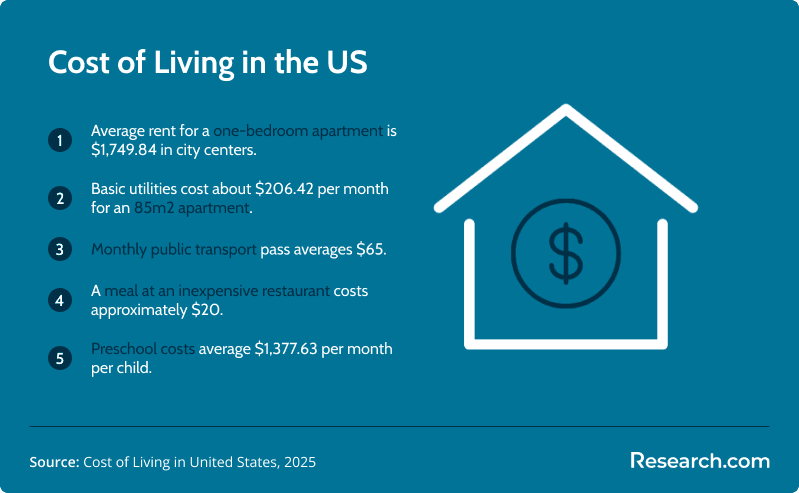
Considering the average monthly living expenses for a single person in the U.S. are estimated at $1,177.10, excluding rent, Clinical Director compensation can support financial stability for many professionals. Still, actual affordability depends on student debt, housing costs, family obligations, local wages, and career progression.
| Becoming a Clinical Director may be worth it if... | You may want another path if... |
| You enjoy leading teams, solving operational problems, and improving systems. | You prefer direct patient care and do not want management responsibility. |
| You are willing to learn budgeting, compliance, policy, staffing, and quality improvement. | You dislike administrative work, documentation oversight, or performance management. |
| You want a path toward executive healthcare leadership. | You want a role with predictable boundaries and minimal after-hours decision-making. |
| You can justify the cost of education or training based on your target salary and advancement plan. | You would need to take on high debt without clear employer demand or promotion opportunities. |
The image below shows the cost of living in the US to give you an idea if working as a clinical director would be financially reasonable.
How do I choose online certifications for clinical leadership?
The best online certification is not necessarily the cheapest, fastest, or most advertised. It should match your professional license, specialty, employer expectations, and long-term leadership goal. Start by reviewing job postings for Clinical Director roles in your target setting, then identify which credentials appear repeatedly.
When comparing medical certifications online, focus on accreditation or professional recognition, curriculum relevance, cost, renewal requirements, instructor qualifications, flexibility, and whether the credential is respected in your region or specialty.
Common mistakes to avoid when preparing for clinical director roles
- Choosing a program without checking accreditation. Accreditation can affect credit transfer, graduate admission, employer acceptance, and licensure eligibility.
- Looking only at tuition. Fees, books, clinical requirements, travel, lost work time, and certification costs can change the real price.
- Assuming all online programs meet licensure requirements. Healthcare licensure is state-specific, and online programs may not meet every state's rules.
- Relying only on rankings. A highly ranked program is not useful if it does not match your specialty, schedule, budget, or credentialing needs.
- Ignoring supervised leadership experience. A degree may help, but employers often want proof that you have managed people, budgets, quality measures, or compliance work.
- Assuming salary outcomes are guaranteed. Pay depends on employer, location, job scope, experience, education, and market conditions.
Questions to ask before choosing a degree or certification
- Does this program align with the clinical setting I want to lead?
- Will it satisfy licensure, certification, or employer requirements in my state?
- What is the total cost, including fees, books, supplies, and travel?
- Can I complete the program while working full time or part time?
- Does the curriculum include healthcare finance, compliance, quality improvement, leadership, and data use?
- Will my current credits, licenses, or professional training transfer?
- Do graduates move into supervisory, management, or director-level roles?
- What support is available for clinical placements, career advising, and networking?
What graduates say about becoming Clinical Directors
- Moving into a Clinical Director position gave me the chance to guide a team and improve patient care at a broader level. The work is challenging, but seeing better outcomes makes it meaningful. Shery
- Online learning helped me keep working while preparing for leadership. That same flexibility now helps me manage competing priorities as a Clinical Director. Leonard
- Clinical leadership expanded my professional skills and improved my financial stability. The role carries pressure, but the compensation reflects the responsibility involved. Bernard
Key Insights
- Clinical Director is a leadership role for healthcare professionals who can combine clinical knowledge with operations, compliance, staffing, quality improvement, and communication skills.
- The average annual salary for Clinical Directors in the U.S. is approximately $96,497, but reported salaries vary widely by source, location, employer, and job scope.
- A bachelor's degree is typically the minimum requirement, and common majors include Nursing, Psychology, and Social Work.
- Advanced degrees, such as an MBA in Healthcare Management, can improve preparation for broader healthcare administration and executive-track roles.
- Certifications can strengthen credibility, but they should be chosen based on specialty relevance, employer recognition, cost, and renewal requirements.
- Online education can help working professionals advance, but students should verify accreditation, licensure alignment, transfer policies, total cost, and clinical or fieldwork requirements.
- The path is most worthwhile for professionals who want to lead teams and systems—not only provide direct patient care.
References:
- College Tuition Compare. Health/Health Care Administration/Management.
- College Tuition Compare. Nursing Administration.
- College Tuition Compare. Psychology.
- College Tuition Compare. Registered Nursing/Registered Nurse.
- College Tuition Compare. Social Work.
- Education Data Initiative. Average Cost of College.
- Education Data Initiative. Private vs Public College Tuition.
- Glassdoor. Clinical Director Salaries.
- Numbeo. Cost of Living in United States.
- Payscale. Clinical Director Salary.
- Salary.com. Clinical Director Salary.
- Zippia. Clinical Director Jobs.
- Zippia. Clinical Director Certifications.
- Zippia. Clinical Director Education.
- Zippia. Clinical Director Salaries.
- Zippia. Clinical Director Skills.
- ZipRecruiter. Clinical Director Salary.
Other Things You Should Know About Becoming a Clinical Director
Most Clinical Director roles require an active state license in the clinician’s profession, such as RN, LCSW, LPC, or clinical psychologist, plus any facility-specific credentialing. Many employers also expect the license to be in good standing with no disciplinary actions and to meet state board renewal rules.
Certifications such as the Certified Health Executive (CHE) or Fellow of the American College of Healthcare Executives (FACHE) in 2027 can enhance a Clinical Director's credentials, demonstrating expertise and commitment to the field. These certifications require meeting specific educational and professional criteria.
To become a Clinical Director in 2027, candidates typically need a master's degree in a relevant field such as healthcare administration, psychology, or social work. Additionally, several years of clinical experience and sometimes a doctoral degree may be required, depending on the specific healthcare setting.