
2027 Easiest Human Resources Degree Programs

Co-Founder and Chief Data Scientist
Choosing a human resources degree is not just about finding a program that accepts you. It is about deciding whether an HR education will help you build a practical career in recruiting, employee relations, compensation, workforce development, or HR leadership. For students comparing accessible programs, online formats, costs, and career outcomes, the right choice depends on accreditation, curriculum quality, flexibility, total price, and how well the degree connects to real HR roles.
This guide explains what to expect from human resources degree programs, which accessible programs are worth comparing, how long they take, what they cost, what financial aid may be available, and what career paths graduates commonly pursue. It also covers online versus campus study, certifications, specialization choices, accreditation, graduate education, digital HR trends, and the questions students should ask before enrolling.
Quick Answer: Is a Human Resources Degree Worth Considering?
A human resources degree can be a strong option for students who want a business-focused career centered on hiring, employee development, compliance, compensation, organizational culture, and workforce strategy. It can prepare graduates for roles such as human resources specialist, compensation, benefits, and job analysis specialist, and, with experience, human resources manager.
- In 2023, human resources specialists in the US earned a median annual wage of $67,650, according to the US Bureau of Labor Statistics (BLS, 2024).
- Compensation, benefits, and job analysis specialists earned a 2023 median annual wage of $74,530.
- Human resources managers earned a 2023 median annual wage of $136,350.
- Students should compare programs by accreditation, total cost, online flexibility, transfer credit policies, internship access, career services, and alignment with HR certification or graduate study goals.
What Can I Expect From a Human Resources Degree?
A human resources degree combines general business education with training in how organizations hire, manage, support, compensate, and develop employees. At the bachelor’s level, students typically study management, organizational behavior, business ethics, employment law, labor relations, compensation systems, recruiting, training, and employee engagement.
Many programs also include applied learning through internships, case studies, group projects, simulations, or capstone assignments. These experiences matter because HR work is rarely theoretical. Professionals must interpret policies, communicate with employees, document workplace issues, evaluate candidates, support managers, and make decisions that affect both people and business outcomes.
Students should also expect growing exposure to HR technology. Modern HR teams use applicant tracking systems, human resource information systems, analytics dashboards, digital onboarding platforms, and tools that support hybrid or remote teams. A strong program should help students understand not only HR policies, but also the systems used to manage workforce data responsibly.
Benefits of Earning a Human Resources Degree
- Career flexibility: HR graduates can pursue recruiting, employee relations, training, compensation, benefits, compliance, HR operations, and HR management roles.
- Business relevance: HR is tied directly to workforce planning, employee retention, organizational culture, risk management, and leadership strategy.
- Transferable skills: Students build communication, conflict resolution, documentation, problem-solving, data interpretation, and policy analysis skills that apply across industries.
- Pathway to advancement: A degree can support entry-level HR roles and provide a foundation for certifications, graduate business study, or future management positions.
- Workplace impact: HR professionals help connect employees and leadership, improve collaboration, strengthen employee experience, and support fair and compliant workplace practices.
Where Can I Work With a Human Resources Degree?
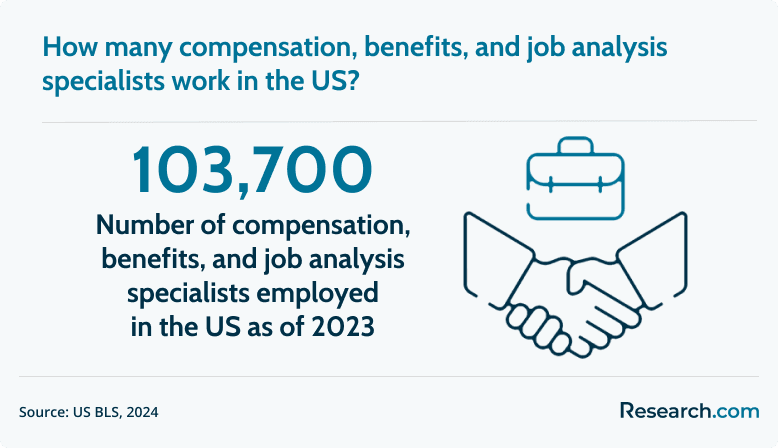
Human resources graduates can work in nearly any industry because most organizations need people who can recruit employees, administer policies, manage benefits, support compliance, and improve workplace processes. In 2023, 933,700 human resources specialists were employed in the US. According to the US BLS (2024), the largest employment settings for these professionals included:
| Industry | Share of HR Specialist Employment | What HR Work May Involve |
| Employment Services | 16% | Recruiting, staffing, candidate screening, placement support, and workforce coordination. |
| Professional, Scientific, and Technical Services | 14% | Hiring skilled professionals, supporting project-based teams, compliance, and employee development. |
| Healthcare and Social Assistance | 10% | Staffing clinical and nonclinical roles, credential tracking, scheduling support, and employee relations. |
| Government | 9% | Public-sector hiring, civil service procedures, benefits administration, and policy compliance. |
| Manufacturing | 7% | Workforce planning, safety-related HR coordination, labor relations, onboarding, and shift staffing support. |
How Much Can I Make With a Human Resources Degree?
Salary outcomes vary by role, location, employer, industry, experience, education level, and professional credentials. A degree does not guarantee a specific wage, but BLS data provides useful benchmarks for common HR-related occupations.
| Occupation | 2023 Median Annual Wage | Typical Career Stage |
| Human Resources Specialist | $67,650 | Common entry-level or early-career HR pathway. |
| Compensation, Benefits, and Job Analysis Specialist | $74,530 | Specialized HR role often requiring analytical and compliance skills. |
| Human Resources Manager | $136,350 | Leadership role generally requiring HR experience and management ability. |
- Accessible Human Resources Degree Programs to Compare for 2027
- How long does it take to complete a human resources degree program?
- How does an online human resources degree compare to an on-campus program?
- What is the average cost of a human resources degree program?
- What are the financial aid options for students enrolling in human resources degree programs?
- What are the prerequisites for enrolling in a human resources degree program?
- What courses are typically in a human resources degree program?
- What types of specializations are available in human resources degree programs?
- How do professional certifications affect HR advancement?
- Why does accreditation matter for a human resources degree?
- Can an MBA strengthen an HR career path?
- How are HR programs responding to digital transformation?
- Is a human resources degree a cost-effective investment?
- Should HR professionals consider doctoral study?
- How should I choose among accessible human resources degree programs?
- What career paths are available for HR degree graduates?
- Could an Executive MBA support HR leadership goals?
- Can a human resources degree help future entrepreneurs?
- What is the job market for human resources graduates?
- Should I combine business education with HR training?
- How can accelerated MBA programs support HR professionals?
- Can finance skills improve HR decision-making?
Accessible Human Resources Degree Programs to Compare for 2027
Students searching for the easiest human resources degree programs should look beyond admissions convenience. A program may be easier to access because it offers online study, clear transfer pathways, flexible scheduling, transparent requirements, or broad admission options. However, students should still verify academic quality, accreditation, total cost, curriculum depth, and employer relevance.
The programs below were selected using the Research.com methodology. Data was gathered and reviewed from the IPEDS database, Peterson's database, the College Scorecard database, and the National Center for Education Statistics. Use this list as a starting point, then confirm current admissions rules, tuition, fees, transfer policies, and delivery format directly with each institution.
| School | Degree Option | Format or Location | Credits or Length | Accreditation Listed |
| University of Michigan-Dearborn | BBA in Human Resource Management | Contact the university for current delivery options | 120 credits; 4 years | HLC; AACSB |
| Ohio State University | BS in Human Resources | Contact the university for current delivery options | 4 years; contact the university for required credits | HLC; AACSB |
| Western Illinois University | BB in Human Resources Management | Online and Macomb campus | 120 semester hours; 4 years | HLC; AACSB International |
| Texas A&M University | BS in Human Resource Development | College Station and McAllen campuses | 120 credits; 4 years | SACSCOC; AACSB |
| University of North Carolina at Chapel Hill | BA in Human and Organizational Leadership Development | Contact the university for current delivery options | 120 credits; 4 years | SACSCOC; AACSB International |
1. University of Michigan-Dearborn
The University of Michigan-Dearborn offers a Bachelor of Business Administration in human resource management. The curriculum includes 29 credits in prerequisite coursework, 37 to 38 credits in core courses, and 21 credits in major requirements. Students interested in graduate study can also consider the university’s Master of Business Administration, which includes concentration options such as human resource management, healthcare management, accounting, finance, and marketing.
- Program Length: 4 years
- Full-time Block Tuition (12+ credits): $7,620 (Resident); $16,248 (Non-resident)
- Required Credits to Graduate: 120 credits
- Accreditation: Higher Learning Commission (HLC); Association to Advance Collegiate Schools of Business (AACSB)
2. Ohio State University
Ohio State University provides a Bachelor of Science in human resources. Students complete principles courses, business core requirements, and major coursework in areas such as business skills and environment, management and human resources, HR practices, and law. Graduate students can also review the Master of Human Resource Management offered through the Fisher College of Business.
- Program Length: 4 years
- Tuition: $13,244 (Resident); $40,022 (Non-resident)
- Required Credits to Graduate: Contact the university for information on required credits.
- Accreditation: HLC; AACSB
3. Western Illinois University
Western Illinois University offers a Bachelor of Business in human resources management. Degree requirements include 37 semester hours of general education, 33 semester hours of core courses, 18 semester hours of core courses, electives, and additional required coursework. The program is available online and in person at the Macomb campus, making it a practical option for students comparing flexible formats.
- Program Length: 4 years
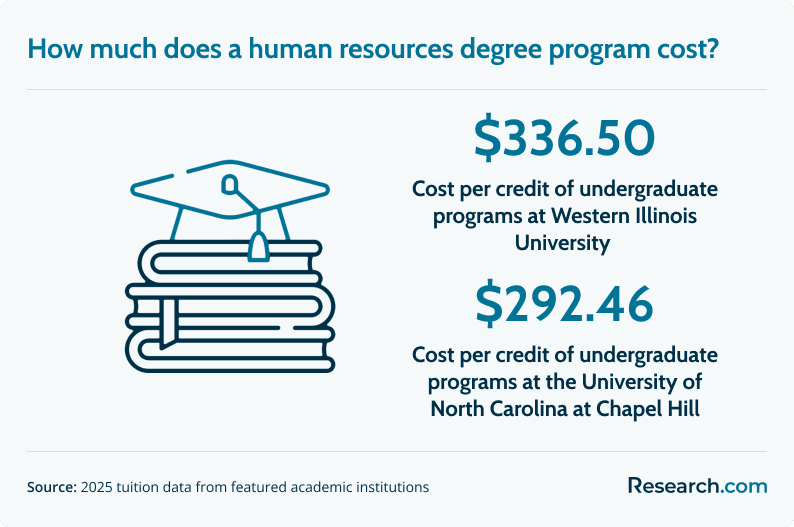
- Cost per Credit: $336.50 per credit hour (US students)
- Required Credits to Graduate: 120 semester hours
- Accreditation: HLC; AACSB International
4. Texas A&M University
Texas A&M University offers a Bachelor of Science in human resource development through its College Station and McAllen campuses. The curriculum includes general education, major coursework, and business administration courses, which can be useful for students who want HR training with a broader organizational development focus.
- Program Length: 4 years
- Tuition: Use the university’s tuition calculator for current undergraduate cost estimates.
- Required Credits to Graduate: 120 credits
- Accreditation: Southern Association of Colleges and Schools Commission on Colleges (SACSCOC); AACSB
5. University of North Carolina at Chapel Hill
The University of North Carolina at Chapel Hill offers a Bachelor of Arts in human and organizational leadership development. The program emphasizes organizational and leadership theory, social science research methods, and data-informed decision making. Students must earn a grade of C or higher in all courses to satisfy degree requirements for the program.
- Program Length: 4 years
- Cost per Credit: $292.46 per credit (Resident); $1,634.50 per credit (Non-resident)
- Required Credits to Graduate: 120 credits
- Accreditation: SACSCOC; AACSB International
How Long Does It Take to Complete a Human Resources Degree Program?
A bachelor’s degree in human resources usually takes 4 years of full-time study. Many programs require about 120 to 128 credit hours, including general education, business foundations, and HR major coursework. Students who follow a full-time plan and complete courses in sequence can often finish within the standard 4-year timeline.
Completion time can change based on enrollment status and transfer credits. Part-time students may need 5 or more years, especially if they work full time or take fewer courses each term. Students with prior college credits, associate degrees, military training, or approved professional learning may be able to reduce their time to graduation if the school has generous transfer policies.
| Student Situation | Likely Timeline | What to Check Before Enrolling |
| First-time, full-time bachelor’s student | Usually 4 years | Course sequencing, internship requirements, and credit load per term. |
| Part-time student | Often 5 or more years | Maximum time limits, course availability, and financial aid eligibility. |
| Transfer student | Potentially shorter than 4 years | How many credits apply to the major, not just to electives. |
| Online student | Varies by pace and format | Whether courses are asynchronous, synchronous, accelerated, or cohort-based. |
How Does an Online Human Resources Degree Compare to an On-Campus Program?
Online and on-campus HR degrees can cover similar academic content, but the learning experience differs. The better choice depends on your schedule, learning preferences, need for in-person networking, and access to internships or employer connections.
| Factor | Online Human Resources Degree | On-Campus Human Resources Degree |
| Schedule | Often better for working adults, caregivers, and students who need location flexibility. | Best for students who prefer fixed class meetings and a structured weekly routine. |
| Interaction | Uses discussion boards, video meetings, digital assignments, and online group work. | Offers face-to-face discussion, campus events, and in-person collaboration. |
| Career Support | May include virtual advising, online resume help, and remote networking tools. | May provide campus recruiting, student organizations, and in-person career fairs. |
| Learning Style | Requires strong time management and self-direction. | Provides more immediate access to classmates, faculty, and campus services. |
| Cost Considerations | May reduce commuting or housing expenses, but tuition and fees vary by school. | May involve housing, transportation, parking, and campus-related costs. |
The chart below shows the number of human resources degrees conferred in the US by degree level in the academic year 2021-2022, based on 2023 data from the National Center for Education Statistics (NCES).
What Is the Average Cost of a Human Resources Degree Program?
The cost of a human resources degree depends on the institution, residency status, delivery format, fees, transfer credits, and how long it takes to graduate. For example, Western Illinois University lists a cost of $336.50 per credit hour for undergraduate students from the US. The University of North Carolina at Chapel Hill lists $292.46 per credit for resident undergraduate students and $1,634.50 per credit for non-resident students.
Tuition is only one part of the total price. Students should also account for books, course materials, technology fees, student fees, transportation, housing, required software, and lost income if they reduce work hours. Online programs may reduce commuting or housing costs, but they can still include technology costs and fees.
Cost comparisons are also relevant across other online degree fields. For example, students asking whether an online PhD in public health can be cheaper than an on-campus option should still consider technology, internet access, computer maintenance, and home study expenses. The same logic applies when comparing online HR programs.
| Cost Factor | Why It Matters | Question to Ask |
| Tuition per credit | Determines the base academic cost. | Is the listed rate different for online, resident, or non-resident students? |
| Required credits | A lower per-credit price may not mean lower total cost if more credits are required. | How many credits are needed to graduate? |
| Transfer credits | Accepted credits can reduce both cost and time. | How many prior credits will apply to major requirements? |
| Fees and materials | Technology, course, student, and graduation fees can add up. | What is the full estimated cost of attendance? |
| Work schedule | Full-time study may shorten the timeline but reduce income. | Can I complete the program while maintaining employment? |
Financial aid, scholarships, transfer credit, and employer tuition reimbursement may help reduce out-of-pocket expenses. Before enrolling, compare net price rather than tuition alone.
What Are the Financial Aid Options for Students Enrolling in Human Resources Degree Programs?
Students in HR degree programs may qualify for several types of financial support. The same is true for students considering related professional education, including the best online leadership and management courses. Aid availability depends on the school, enrollment status, financial need, academic record, and employer policies.
- Federal financial aid: Students can complete the Free Application for Federal Student Aid (FAFSA) to be considered for federal grants, loans, and work-study. Grants such as the Pell Grant do not need to be repaid, while federal loans must be repaid under the terms of the loan.
- Scholarships: Colleges, private organizations, foundations, and professional associations may offer scholarships based on merit, need, identity, location, or career interest. The Society for Human Resource Management (SHRM), for example, provides scholarships for HR students.
- Employer tuition reimbursement: Working students should ask whether their employer offers tuition assistance for job-related degrees. This can be especially useful for employees already working in administration, recruiting, payroll, operations, or management support.
| Funding Option | Best For | Important Caution |
| Federal grants | Eligible students with financial need. | Availability depends on FAFSA results and enrollment status. |
| Federal loans | Students who need to spread costs over time. | Borrow only what you can reasonably repay. |
| Scholarships | Students with strong academics, need, HR interest, or other qualifying criteria. | Deadlines and eligibility rules vary widely. |
| Employer reimbursement | Working adults pursuing a relevant credential. | Some employers require continued employment after reimbursement. |
What Are the Prerequisites for Enrolling in a Human Resources Degree Program?
Admission requirements vary by school and degree level, but bachelor’s programs in human resources usually expect applicants to meet general undergraduate admission standards. Students should always confirm current requirements with each institution.
- High school diploma or equivalent: Applicants generally need a high school diploma or GED certificate. Coursework in English, business, social science, communications, and mathematics can help demonstrate readiness.
- Minimum GPA: Some programs require a minimum GPA, often around 2.5 or higher, while more selective schools may use higher academic standards or holistic review.
- Standardized test scores: Some colleges request SAT or ACT scores, while others use test-optional policies. If scores are optional, strong results may still support an application.
Students who want to combine HR with technical skills may also compare business and technology pathways. For example, the easiest information technology degree programs may interest future HR professionals who want to work with HR analytics, digital recruiting tools, workforce systems, or employee data platforms.
What Courses Are Typically in a Human Resources Degree Program?
Human resources programs are designed to build both business knowledge and people-management expertise. Course names differ by school, but many bachelor’s programs include the following subjects:
- Introduction to Human Resource Management: This course explains the main HR functions, including recruiting, onboarding, training, employee relations, compliance, and performance management.
- Employment Law and Labor Relations: Students study workplace laws, labor rights, policy compliance, and the legal responsibilities employers must consider when managing employees.
- Compensation and Benefits: This course covers pay structures, benefits administration, job evaluation, equity considerations, and legal issues related to employee rewards.
- Organizational Behavior: Students examine how individuals and teams behave at work, including motivation, leadership, communication, group dynamics, and organizational culture. Students interested in applied behavior analysis can also review options for online BCBA programs.
- Training and Development: This class focuses on assessing employee learning needs, designing training programs, measuring results, and supporting career development.
What Types of Specializations Are Available in Human Resources Degree Programs?
Specializations allow students to focus on a specific HR function. They are especially common in graduate programs, but some bachelor’s programs also offer electives, certificates, or concentration-like pathways.
| Specialization | What You Study | Best Fit For |
| Talent Acquisition and Recruitment | Workforce planning, sourcing, interviewing, selection methods, employer branding, and recruiting technology. | Students who want roles in recruiting, staffing, campus recruitment, or talent strategy. |
| Compensation and Benefits Management | Pay systems, benefits design, job analysis, legal compliance, and compensation data. | Students who enjoy analytics, policy, compliance, and pay equity work. |
| Employee Training and Development | Learning design, performance improvement, training assessment, career development, and coaching support. | Students interested in learning and development, employee growth, and organizational capability. |
Communication skills are also valuable in HR because professionals often write policies, mediate conflicts, interview candidates, and explain sensitive decisions. Students interested in strengthening that area can compare options for an affordable online master's degree in communications.
How Do Professional Certifications Affect HR Career Advancement?
Professional certifications can strengthen an HR career by showing employers that a candidate has studied recognized HR practices beyond a degree program. Certifications may be useful for professionals who want to move from general administrative roles into HR, specialize in areas such as benefits or talent acquisition, or prepare for management responsibilities.
Certifications do not replace experience, and they do not guarantee promotion. Their value depends on the credential, the employer, the role, and the professional’s ability to apply HR knowledge in real workplace situations. Students planning a long-term HR career should ask whether a program’s curriculum aligns with certification content, whether faculty have HR industry experience, and whether career services support certification planning. For a broader career roadmap, review Research.com’s guide on how to become a human resources manager.
Why Does Accreditation Matter for a Human Resources Degree?
Accreditation is one of the most important quality checks when comparing HR programs. Institutional accreditation helps confirm that a college or university has been reviewed against recognized academic standards. For business-related HR programs, business school accreditation may also signal additional review of curriculum quality, faculty qualifications, and institutional processes.
Students should verify accreditation before applying because it can affect credit transfer, graduate school eligibility, employer perception, and access to some forms of financial aid. When comparing a human resources degree, confirm both the institution’s accreditation and any business-school accreditation listed by the program.
Can an MBA Strengthen an HR Career Path?
An MBA can be useful for HR professionals who want to move into leadership roles that require broader business judgment. HR managers often need to understand budgeting, operations, strategy, organizational change, executive communication, and workforce planning. An MBA may help connect HR decisions to larger business goals.
However, an MBA is not necessary for every HR role. Students should consider one if they already have HR experience, want management responsibility, or need stronger business training for advancement. Cost matters, so students comparing graduate options may want to review the most affordable online MBA programs.
How Are HR Degree Programs Responding to Digital Transformation?
HR work increasingly relies on digital systems. Degree programs are adapting by adding coursework and projects involving human resource information systems, workforce analytics, digital communication, remote team management, and responsible handling of employee data. Students should look for programs that teach not only HR concepts, but also how HR decisions are supported by data and technology.
This shift is especially important as employers use digital tools for recruiting, onboarding, performance tracking, benefits administration, training, and employee engagement. Students who want a broader strategic business perspective in a technology-enabled workplace may also compare an online MBA with HR-related electives or concentrations.
Is a Human Resources Degree a Cost-Effective Investment?
A human resources degree can be cost-effective when the program’s price, completion time, career support, and expected career path fit the student’s goals. The degree may be especially practical for students who want a business career but prefer working with people, workplace systems, policy, and organizational improvement rather than sales or accounting.
To evaluate value, compare total program cost with likely entry-level roles, local employer demand, internship access, and advancement options. Students should also consider whether adding credentials later, such as accelerated MBA programs, would make sense for leadership goals. The strongest ROI usually comes from choosing an accredited, affordable program that helps students gain relevant experience before graduation.
Should HR Professionals Consider Doctoral Study?
A doctoral degree is not required for most HR careers. It may make sense for professionals who want to teach, conduct organizational research, consult at a high level, lead complex change initiatives, or pursue senior strategic roles that benefit from advanced research and management training.
Doctoral study requires a major time and cost commitment, so HR professionals should be clear about the purpose before enrolling. A DBA or related doctorate may be useful for those focused on applied research, strategic management, organizational behavior, and executive-level problem solving. Professionals comparing flexible advanced options can review affordable DBA programs.
How Should I Choose Among Accessible Human Resources Degree Programs?
The best HR degree program is not automatically the cheapest, fastest, or easiest to enter. It is the program that matches your career goal, budget, schedule, learning needs, and long-term credential plans. Use the criteria below before making a decision.
- Confirm accreditation first: Check institutional accreditation and, when relevant, business school accreditation from organizations such as the Accreditation Council for Business Schools and Programs (ACBSP) or AACSB. Also review whether the curriculum aligns with Society for Human Resource Management (SHRM) expectations.
- Review the curriculum carefully: A strong program should cover recruiting, employment law, compensation, benefits, training, organizational behavior, employee relations, and HR technology.
- Compare total cost, not just tuition: Include fees, materials, travel, technology, transfer credit limits, and the cost of extra semesters if you attend part time.
- Check flexibility: Online, hybrid, evening, and part-time options may help working students complete the degree without leaving employment.
- Ask about internships and career services: HR is practical work. Programs with employer connections, internship support, resume help, and interview preparation may provide stronger career value.
- Look at transfer rules: If you have previous credits, ask how many will count toward the HR major rather than only general electives.
| Common Mistake | Why It Can Hurt You | Better Approach |
| Choosing a school only because admission looks easy. | The program may not offer enough career support, HR depth, or recognition. | Compare accreditation, curriculum, cost, and graduate outcomes together. |
| Looking only at tuition. | Fees, materials, housing, technology, and extra terms can change the real cost. | Request the full cost of attendance and estimate net price after aid. |
| Assuming all online programs are equally flexible. | Some require live class meetings, set login times, or campus visits. | Ask whether courses are asynchronous, synchronous, hybrid, or cohort-based. |
| Ignoring internship access. | Graduating without HR-related experience can make entry-level job searches harder. | Ask how online and campus students find internships or HR projects. |
| Assuming credits will transfer automatically. | Credits may transfer as electives but not satisfy major requirements. | Request a written transfer evaluation before committing. |
What Career Paths Are Available for Graduates of Human Resources Degree Programs?
HR degree graduates can pursue roles across recruiting, employee relations, compensation, benefits, training, HR operations, and management. Entry-level roles often focus on coordination, documentation, hiring support, onboarding, or benefits administration. With experience, professionals may move into specialist, generalist, manager, or director-level positions.
- Human Resources Specialist: HR specialists help recruit, interview, hire, and onboard employees. They may post jobs, screen applicants, maintain employee records, explain policies, and support compliance processes. In 2023, HR specialists in the US had a median annual wage of $67,650 (US BLS, 2024).
- Compensation, Benefits, and Job Analysis Specialist: These professionals evaluate jobs, analyze pay data, support benefits programs, and help organizations maintain fair and legally compliant compensation practices. In 2023, compensation, benefits, and job analysis specialists in the US had a median annual wage of $74,530 (US BLS, 2024).
- Human Resources Manager: HR managers lead HR teams and oversee functions such as recruiting, employee relations, workforce planning, compliance, and organizational policy. In 2023, the annual median HR manager salary in the US was $136,350 (US BLS, 2024).
Students who want to compare HR with other business operations careers can also explore Research.com’s guide to logistics careers.
The chart below compares 2023 median annual wages for selected human resources occupations in the US, using 2024 data from the US BLS.
Could an Executive MBA Support HR Leadership Goals?
An Executive MBA may benefit experienced HR professionals who already manage teams or influence organization-wide decisions. EMBA programs are typically designed for working professionals and emphasize executive decision-making, finance, strategy, operations, and leadership. For HR leaders, this training can support roles that require translating workforce needs into business strategy.
An EMBA is usually not the right next step for someone just entering HR. It is better suited for mid-career or senior professionals who can connect the coursework to real leadership responsibilities. Students comparing flexible and cost-conscious options can review the cheapest EMBA program options.
Can a Human Resources Degree Help Future Entrepreneurs?
A human resources degree can support entrepreneurship because new ventures need effective hiring, team design, culture building, compliance awareness, compensation planning, and conflict resolution. Founders who understand HR can make better early decisions about roles, employee expectations, onboarding, workplace policies, and performance management.
HR training is not a substitute for finance, marketing, or operations knowledge, but it can be a useful foundation for building and managing teams. Students interested in business ownership may also find value in Research.com’s guide, What jobs can you get with a degree in entrepreneurship?.
What Is the Job Market for Human Resources Graduates?
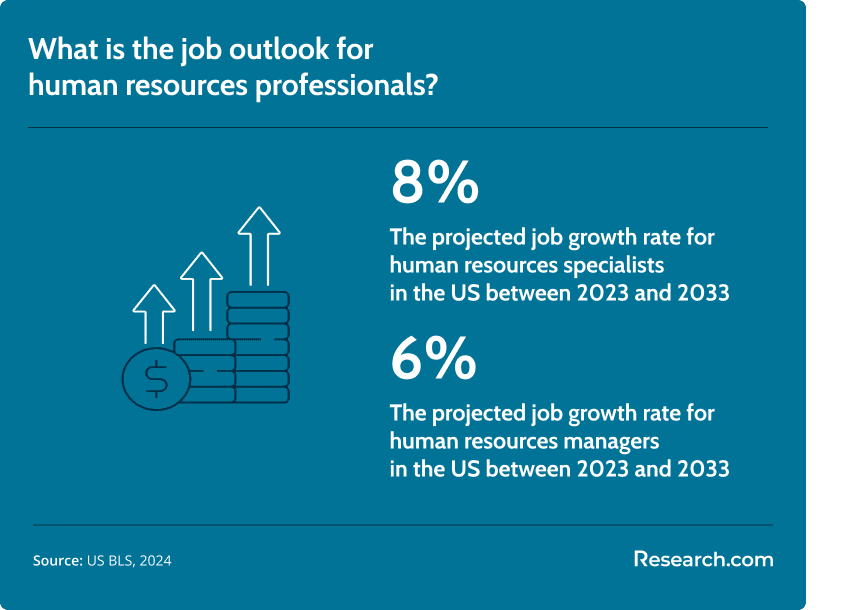
The job market for HR graduates is supported by ongoing employer needs in hiring, retention, compliance, compensation, employee relations, and workforce development. According to the US BLS, projected employment growth and annual openings from 2023 to 2033 show continued opportunities across several HR occupations. Students comparing business-related career paths may also consider options such as online accounting certificate programs.
| Occupation | Projected Growth | Projected Annual Openings | What Drives Demand |
| Human Resources Specialists | 8% | Approximately 86,200 job openings annually over the decade | Recruiting, onboarding, employee relations, and talent retention needs. |
| Compensation, Benefits, and Job Analysis Specialists | 7% | Around 8,200 job openings each year | Demand for pay analysis, benefits management, job evaluation, and compliance support. |
| Human Resources Managers | 6% | About 17,400 job openings annually | Need for experienced leaders who can manage HR strategy, culture, and workforce planning. |
Should I Combine Business Education With HR Training?
Combining business education with HR training can be a smart choice for students who want to move beyond administrative HR tasks and into strategic roles. HR professionals increasingly need to understand budgets, operations, finance, marketing, performance metrics, and organizational strategy.
This path is especially useful for students who want roles such as HR business partner, HR manager, talent development leader, or workforce planning specialist. If speed is a major factor, students may compare options for the fastest way to get a business degree while building HR-related knowledge.
How Can Accelerated MBA Programs Support HR Professionals?
Accelerated MBA programs may help HR professionals build business leadership skills in a shorter format than traditional graduate study. Coursework in finance, operations, strategy, and management can complement HR experience and prepare professionals to participate in executive-level decisions.
This option is most useful for HR professionals with clear advancement goals and enough experience to apply MBA concepts to workplace challenges. Graduates may use the business perspective from MBA fast track programs to pursue leadership roles, but outcomes depend on experience, employer needs, and performance.
Can Finance Skills Improve HR Decision-Making?
Finance skills can make HR professionals more effective strategic partners. Compensation planning, benefits design, workforce budgeting, retention initiatives, training investments, and headcount planning all involve financial trade-offs. HR professionals who understand financial data can explain the business case for people-related decisions more clearly.
Finance training is particularly useful for HR managers, compensation professionals, HR business partners, and leaders involved in workforce planning. Students who want formal finance preparation can compare options such as a fastest online finance degree.
Questions to Ask Before Enrolling in a Human Resources Degree Program
- Is the institution accredited by a recognized accreditor?
- Does the business school or program hold additional accreditation such as AACSB, ACBSP, or another relevant credential?
- How many credits are required, and how many of my transfer credits will apply to major requirements?
- What is the total estimated cost, including tuition, fees, technology, books, and materials?
- Are courses online, on campus, hybrid, synchronous, asynchronous, or accelerated?
- Does the program include internships, projects, case studies, or employer-connected learning?
- Does the curriculum cover employment law, compensation, recruiting, employee relations, training, and HR technology?
- What career services are available to online and campus students?
- Does the program help students prepare for HR certifications or graduate study?
- What entry-level HR roles have recent graduates pursued?
Key Insights
- A human resources degree is best for students who want a business career focused on people, workplace systems, compliance, employee development, and organizational performance.
- Program accessibility should not be the only deciding factor. Accreditation, curriculum quality, total cost, transfer policies, internships, and career support are more important for long-term value.
- Most bachelor’s programs take 4 years and require about 120 to 128 credit hours, though part-time enrollment can extend the timeline and transfer credits may shorten it.
- Costs vary substantially. Western Illinois University lists $336.50 per credit hour for undergraduate students from the US, while the University of North Carolina at Chapel Hill lists $292.46 per credit for resident students and $1,634.50 per credit for non-resident students.
- Common HR courses include introduction to human resource management, employment law and labor relations, compensation and benefits, organizational behavior, and training and development.
- In the academic year 2021–2022, 6,234 bachelor’s degrees in human resources were conferred in the US, according to the National Center for Education Statistics (2023).
- In 2023, HR specialists in the US earned a median annual wage of $67,650, and employment for HR specialists is projected to grow by 8%, with approximately 86,200 job openings annually over the decade (US BLS, 2024).
- Students who want leadership roles should consider building skills in HR technology, analytics, finance, communication, and business strategy, not just traditional personnel administration.
References:
- National Center for Education Statistics. (2023, December). Table 318.30. Bachelor's, master's, and doctor's degrees conferred by postsecondary institutions, by sex of student and field of study: Academic year 2021-22. Digest of Education Statistics. https://nces.ed.gov/programs/digest/d23/tables/dt23_318.30.asp
- US Bureau of Labor Statistics. (2024, August 29). Compensation, Benefits, and Job Analysis Specialists. Occupational Outlook Handbook. https://www.bls.gov/ooh/business-and-financial/compensation-benefits-and-job-analysis-specialists.htm
- US Bureau of Labor Statistics. (2024, August 29). Human Resources Managers. Occupational Outlook Handbook. https://www.bls.gov/ooh/management/human-resources-managers.htm
- US Bureau of Labor Statistics. (2024, August 29). Human Resources Specialists. Occupational Outlook Handbook. https://www.bls.gov/ooh/business-and-financial/human-resources-specialists.htm
- ZipRecruiter. (2025, January). Chief Human Resources Officer Salary. https://www.ziprecruiter.com/Salaries/Chief-Human-Resources-Officer-Salary
Other Things You Should Know About Human Resources Degree Programs
Most ask for a high school diploma or GED, a completed application, and official transcripts. Some associate programs require a minimum 2.0 GPA, while bachelor’s programs may ask for placement-test scores or SAT/ACT results only if the school uses them for first-year admission.
In 2027, Human Resources degree programs are available in several formats, including traditional on-campus study, fully online programs, and hybrid models blending the two. These options offer flexibility in terms of scheduling and learning preferences for students.


