2027 Choosing an Online Ed.D. in Leadership and Learning in Organizations for Leadership in Franchise Networks
Audited and Verified:
Our Editorial and Data Verification Process
Research.com uses government datasets, official education statistics and primary institutional information to support its career and degree guides. Our review process checks factual accuracy, occupational definitions, source dates and the requirements associated with the credentials discussed.
How This Article Was Fact-Checked
Our editorial team verifies salary estimates, employment projections, education requirements and program information against original data providers and official organizations. Salary figures are checked against the relevant occupational definitions and reporting periods. Information about licensure, accreditation and required in-person training is reviewed separately.
Fact-checked and verified on:

Co-Founder and Chief Data Scientist
Leading learning across a franchise network is different from managing training inside one company. A franchisor may set standards, but independently owned locations make decisions under different staffing, market, and operating conditions. If you oversee franchise operations, field support, or learning and development, an online Ed.D. could strengthen your approach to change and evaluation - but it may be more education than your goal requires. This guide explains what to look for in a program, how to assess the investment, and when a more direct development path makes sense.
Key Things You Should Know
- An Ed.D. is most relevant when your role involves improving learning and change across a franchise network, not simply delivering a new training course.
- Check whether a program supports applied work involving independent franchisees; access to locations or performance data is not automatic.
- The U.S. Bureau of Labor Statistics reports a $133,000 median annual salary for training and development managers in 2025, but that occupational figure is not an expected Ed.D. graduate salary.
What is an online Ed.D. in Leadership and Learning in Organizations?
An Ed.D. in leadership and learning in organizations is a practice-oriented doctorate concerned with how people learn, how organizations change, and how leaders use evidence to improve practice. "Online" describes where much of the instruction takes place; it does not establish that classes are self-paced or that campus visits are unnecessary.
The exact degree name and curriculum vary by institution. Some programs emphasize workplace learning and organizational change, while others concentrate on education systems. A prospective franchise leader should examine required courses and the final project rather than assume that "leadership" in the title means franchise operations. Reviewing Ed.D. specializations and degree fit can help distinguish a formally offered concentration from a few relevant electives.
How can an Ed.D. in organizational leadership prepare you for franchise networks?
The strongest fit is a role with responsibility for how a network learns and improves - not just for creating course materials. A franchisor's standards and a franchisee's day-to-day authority may differ, so a useful leader must diagnose a problem, work across that boundary, and evaluate a response without assuming every location has the same cause of poor performance.
The following distinctions show where doctoral study could add value and where an operational fix might be the better first move.
| Network issue | What leadership and learning study could address | Important limitation |
| Inconsistent adoption of a service standard | Learning transfer, field-coach support, and differences between locations | Training cannot by itself resolve inadequate equipment or conflicting incentives. |
| Uneven franchisee participation | Stakeholder engagement, communication, and change implementation | Franchisees' contractual rights and local business priorities still govern what can be required. |
| Unclear results from a training rollout | Program evaluation and interpretation of operational measures | A change in sales or compliance after training does not, by itself, prove training caused it. |
An applied doctoral project might examine onboarding support or field-coach practices across willing locations. That possibility depends on program approval, franchisee participation, access to appropriate data, and any required ethical review. It should not be treated as permission to inspect independent businesses or use confidential records.
Is an online Ed.D. in leadership and learning worth the investment?
It may be worthwhile if you already lead substantial network-wide learning or change work, want to investigate recurring problems systematically, and can use the degree's methods in your current or intended role. The case is weaker if your immediate objective is a promotion that primarily requires operating results, franchise relationship experience, or commercial expertise.
Compare the doctorate with the shortest credible route to your goal. An MBA may better address finance and growth strategy; targeted evaluation training may be enough to assess a training program; and an employer-led cross-functional project can build evidence of network leadership without another degree. A PhD is generally a better comparison if your main goal is sustained academic research rather than practice-focused improvement.
Before applying, ask your employer whether it will support study time, tuition, and an approved workplace project - and what happens to reimbursement if you change jobs. Compare complete costs rather than advertised tuition alone. Ed.D. program costs for prospective doctoral students can provide a starting point, but obtain a program-specific cost estimate before deciding.
Relevant study may include adult learning, organizational change, leadership, research methods, and evaluation. For franchise work, the key test is whether coursework helps you connect a learning intervention to an operational decision: identifying who needs support, distinguishing a skills gap from a process problem, and selecting measures that are credible across varied locations.
Look closely at the final-project requirement. A course assignment, capstone, dissertation in practice, and research dissertation are not interchangeable, and programs differ in whether students may work with an external organization or collaborate on a project. Online Ed.D. final project format comparisons are useful for narrowing options; confirm the actual deliverable and approval process with each program.
Course exposure also has limits. Studying evaluation does not establish access to franchisee data or make a proposed survey a validated measure. Faculty guidance and permission to use information matter as much as the topic's relevance.
An online format can let a field leader remain employed and study from a location near the network they serve. A campus-based format may make scheduled in-person discussion and faculty contact easier. Neither format is inherently more practical: the deciding factors are attendance requirements, project supervision, and whether the schedule fits franchise travel and peak operating periods.
Request the actual weekly timetable, including live sessions and group meetings, plus dates and costs for any campus convenings. Ask how faculty advise applied projects involving outside organizations and what happens if travel or an employer change interrupts your plan. A program marketed as online may still require attendance at specific times.
Requirements vary. A program may ask for a completed graduate degree, transcripts, recommendations, a statement of purpose, and evidence of professional experience; it may also set its own academic or testing rules. An education master's is not a universal prerequisite. Franchise operations, training, consulting, and business leadership experience can be relevant when the applicant explains the decisions they have made and the problems they are prepared to study.
Use your application to distinguish a responsibility you held from an outcome you can document. For example, describe your authority in a network-wide onboarding initiative, whose participation you could secure, and what remains unknown about its effectiveness. Do not imply that proposed doctoral research or franchisee access has already been approved.
If you hold an education specialist degree, ask the admissions and registrar offices separately whether it supports eligibility and whether any coursework can apply to doctoral requirements. Ed.D. pathways building on education specialist study may identify programs to investigate, but only the institution can provide a binding evaluation of your record.
Time to completion depends on required coursework, enrollment pace, course availability, and progress on the approved final project. The most useful timeline is the program's published sequence together with its rules for pauses, extensions, and project milestones - not a general estimate for all online doctorates.
Build a personal cost estimate from required credits or terms, tuition, fees, books, technology, any travel and lodging, and time away from paid work. Check when employer reimbursement is paid and whether it depends on grades or continued employment. Ask the program for the charges and completion requirements that apply to your intended entry term.
If you previously began a doctorate, do not assume that completed coursework eliminates the new program's final-project requirements. Education doctorate ABD program options may be relevant, but a school must determine whether your prior work qualifies and whether its pathway fits your franchise leadership goal.
For an experienced franchise professional, plausible paths include leading network learning and development, directing field-support programs, overseeing leadership development, or consulting on training and organizational change. Responsibilities may include setting development priorities, supporting field coaches, coordinating franchisee participation, and evaluating whether a program works as intended.
The degree can strengthen an established practitioner's methods and credibility, but it is not a substitute for franchise operating knowledge, commercial judgment, or a record of working with independently owned businesses. If you are entering franchising from another sector, seek a role or project that builds that context before relying on a doctorate to make the transition.
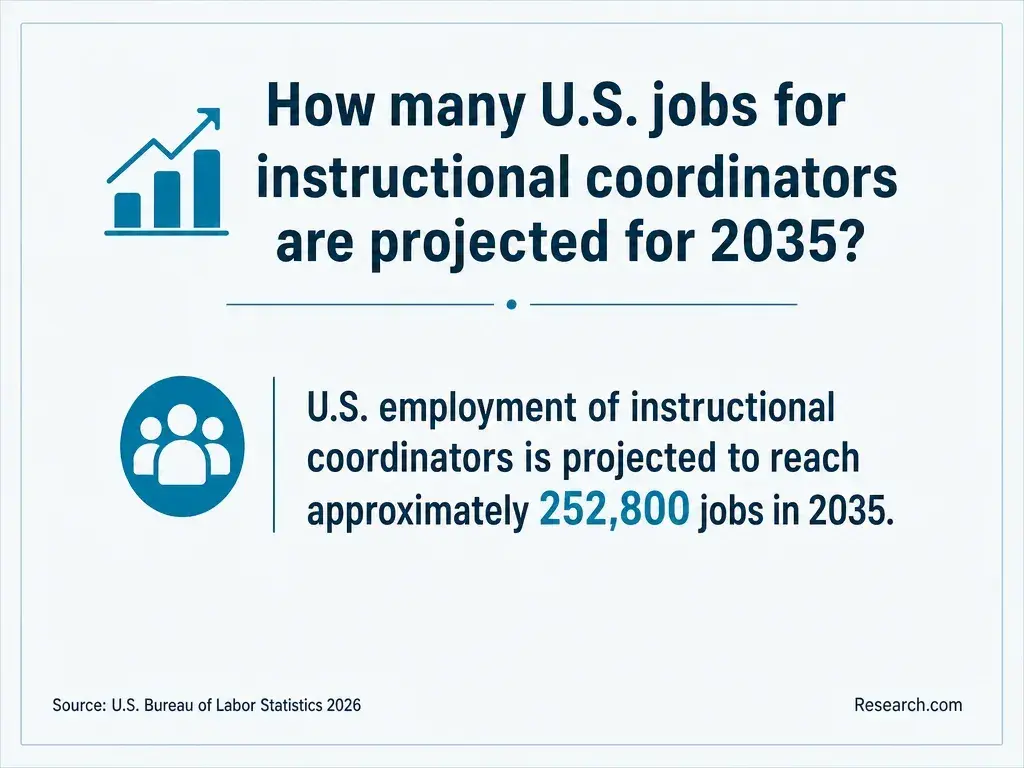
There is no single Ed.D. graduate salary: franchise leadership roles span training, operations, consulting, and executive work, and employers set different requirements. As one relevant benchmark, the U.S. Bureau of Labor Statistics reports a 2025 median annual salary of $133,000 for training and development managers and projects 6.4% employment growth for that occupation from 2025 to 2035. Those figures describe an occupation, not the earnings or prospects of people with this doctorate.
Use a target job posting and your own experience level to judge whether the degree is valued. An employer's preference for demonstrated multi-location results may matter more than the credential, especially for a franchise operations position.
How can you evaluate accreditation, licensure, and program quality?
Confirm the university's institutional accreditation through the accreditor and institution, then verify the exact Ed.D. name, required curriculum, delivery mode, and final-project rules with the program. Institutional accreditation does not establish that a leadership doctorate qualifies someone for teacher or school-administrator licensure; that requires checking the specific program and relevant state authority.
For franchise-network use, ask to see how the program supports applied projects, what faculty supervision involves, and whether students can work with independent organizations. Request any published completion or career-outcome information together with its definitions. Most importantly, explain your proposed franchise setting to the program and ask what approvals would be needed before treating it as a viable project site.
Other Things You Should Know About EdD Leadership
Not necessarily. Confirm who can authorize participation and data use under the relevant agreements, and obtain the program's approval before proceeding.
Possibly, if the program permits external projects and an appropriate organization agrees to participate. Access, supervision, confidentiality, and project continuity still need to be settled.
Do not assume so. Check academic submission rules and any agreements governing confidential business information, data, and public disclosure before collecting information.
Participation cannot be presumed. Discuss a smaller approved scope or an alternative project setting with your faculty advisor before the project depends on those locations.
- Maximizing the Impact and ROI of Leadership Development | nih.gov https://pmc.ncbi.nlm.nih.gov/articles/PMC11505461/
- Cost of Attendance (Budget) | 2025-2026 Federal Student Aid Handbook https://fsapartners.ed.gov/knowledge-center/fsa-handbook/2025-2026/vol3/ch2-cost-attendance-budget
- What Is a Capstone Project? Types, Examples, and Tips | SCU https://www.scu.edu/business/blog/business-concepts/what-is-a-capstone-project/
- What's the Difference Between Asynchronous and Synchronous Learning? | Ohio State Online https://online.osu.edu/content-hub/blogs/whats-the-difference-between-asynchronous-and-synchronous-learning/
- EdD vs. PhD in Education: Choosing the Right Program | Goodwin College of Professional Studies https://drexel.edu/soe/resources/career-path/edd-vs-phd/
- UNC EdD Online: Organizational Learning and Leadership https://online.unc.edu/online-doctoral-programs/online-edd-organizational-learning-and-leadership/
- Doctoral dissertation or capstone: how to choose the right program | PhD/Doctorate | Capella University Blog https://www.capella.edu/blog/phd-doctorate/the-difference-between-a-dissertation-and-doctoral-capstone/
- Walden University's Guide to Doctoral Capstone Projects https://www.waldenu.edu/online-doctoral-programs/resource/guide-to-doctoral-capstone-projects