2027 Online Ed.D. in Leadership and Learning in Organizations: How to Evaluate a Professional Development Plan
Audited and Verified:
Our Editorial and Data Verification Process
Research.com uses government datasets, official education statistics and primary institutional information to support its career and degree guides. Our review process checks factual accuracy, occupational definitions, source dates and the requirements associated with the credentials discussed.
How This Article Was Fact-Checked
Our editorial team verifies salary estimates, employment projections, education requirements and program information against original data providers and official organizations. Salary figures are checked against the relevant occupational definitions and reporting periods. Information about licensure, accreditation and required in-person training is reviewed separately.
Fact-checked and verified on:

Co-Founder and Chief Data Scientist
A professional development plan can make an online Ed.D. worthwhile - or reveal that a shorter course and more leadership experience would serve you better. For learning and development professionals and emerging organizational leaders, the key is connecting doctoral study to a real responsibility, not simply adding a credential.
This guide shows you how to assess your goals, the evidence you can gather, the support you need, and the program commitments involved. You can use those findings to decide whether to pursue an Ed.D. and to compare programs against the work you actually want to do.
Key Things You Should Know
- Evaluate the plan against a specific leadership or organizational learning decision, with evidence of current capability, a feasible project, and a way to assess progress.
- Confirm that the program's coursework, faculty guidance, schedule, and applied-project rules support the plan; an online format alone does not guarantee flexibility or workplace access.
- Test the financial case against realistic career options: the US median pay for training and development managers was $133,000 in May 2025, but that occupational figure is not an expected Ed.D. graduate salary.
What Is an Online Ed.D. in Leadership and Learning in Organizations?
An online Doctor of Education (Ed.D.) in leadership and learning in organizations is a practice-oriented doctorate concerned with how people learn, how organizations change, and how leaders use evidence to improve practice.
Depending on the institution, its exact name, courses, and final project may differ. Online delivery describes where much of the instruction occurs; it does not establish that attendance is self-paced or entirely remote.
For a training manager, the relevant outcome might be leading a better-supported workforce development initiative. For an organizational leader, it might be diagnosing why a change effort has stalled. Neither outcome follows automatically from earning the degree.
An Ed.D. is generally a better fit when sustained inquiry and implementation are central to the goal; a focused certificate, employer leadership program, or supervised project may be more direct when the gap is narrower. Applicants who already hold an education specialist degree can separately investigate Ed.S. progression into an online Ed.D., without assuming prior credits will apply.
How Do You Evaluate an Online Ed.D. Professional Development Plan?
Treat the professional development plan as a decision document, not a list of courses or a promise of promotion. Its audience may include you, a mentor, an employer sponsor, and a prospective program adviser.
It should show what responsibility you want to take on, what you can already do, what you need to learn, and how you will judge whether the learning changed your practice.
Use the following sequence to draft or review a plan. Keep proposed activities distinct from approved doctoral requirements and authorized workplace research:
- Define the next responsibility: Name a decision or initiative you want to lead - for example, selecting and evaluating a manager-development approach - rather than a title you hope to obtain.
- Establish a credible starting point: Record relevant work, feedback, and available aggregate performance information. Identify gaps in adult learning, organizational diagnosis, evaluation, influence, or implementation without claiming a cause you have not investigated.
- Match each gap to an activity and evidence: Pair coursework or mentoring with a feasible work product, such as an approved needs assessment, an evaluation design, or a documented stakeholder briefing. Specify what a reviewer could examine and when you will revisit it.
- Check access and support: Identify who controls project scope, data, staff time, and permissions. Ask the program what faculty approval and ethical review its final project requires; an employer's interest alone does not authorize data collection or satisfy an academic requirement.
- Apply a go/no-go test: Compare the expected learning with the time, full cost, and opportunity cost. If the immediate goal is a discrete skill or your organization cannot support the proposed work, revise the plan or choose a smaller development route.
A strong plan also specifies a review point: if responsibilities, employer access, or the organizational problem change, what evidence will you retain and what will you redesign?
Before treating a proposed project as degree-eligible, compare the institution's actual education doctorate capstone and project pathways. A course assignment, workplace initiative, capstone, and dissertation in practice are not interchangeable.
Which Accreditation Should an Online Ed.D. Program Hold?
Verify that the degree-granting US institution holds recognized institutional accreditation, and check that the status covers the school and proposed enrollment period.
Ask whether the particular program makes any additional accreditation claims and what those claims cover. Institutional accreditation supports an important quality check, but it does not certify that your professional development plan is sound or that a project will be approved.
If your plan depends on a regulated school leadership role, obtain the program's licensure disclosure and confirm eligibility with the relevant state authority. A general organizational leadership Ed.D. should not be assumed to qualify you for principal or superintendent licensure.
For corporate, nonprofit, or other nonregulated roles, compare the curriculum and demonstrated work you could produce with employers' actual requirements rather than treating accreditation as a career outcome.
Look for a sequence that supports the gaps identified in your plan. Depending on the program, useful areas may include adult learning and learning transfer, organizational diagnosis, change leadership, qualitative and quantitative inquiry, and program evaluation.
Check required courses and available electives individually: a course title does not establish how deeply a method is taught or whether an elective will run during your enrollment.
Then inspect how students practice those skills. Can they develop a defensible question, select appropriate measures, address alternative explanations, and communicate limitations to a decision-maker?
Ask how faculty supervise applied work and whether the final deliverable can address your proposed organizational setting. If the curriculum is strong in leadership theory but offers little preparation for evaluating learning initiatives, you may need supplementary methods training - or a different program.
Requirements vary by institution. Programs may assess a completed graduate degree, academic record, professional experience, recommendations, a statement of purpose, and readiness for doctoral inquiry.
Your plan can strengthen an application by showing a well-bounded problem, relevant responsibility, and a realistic reason for doctoral study. A senior title, education master's, or publication record should not be treated as a universal requirement.
Ask admissions staff to separate eligibility from competitiveness: which credentials are mandatory, which experience is preferred, and whether the proposed professional goal fits the program.
If you have unfinished doctoral study, examine doctoral completion options for ABD education students and request a written evaluation. Previous graduate work considered for admission is not necessarily transferable into Ed.D. degree requirements.
Completion time depends on required credits, course sequence, enrollment pace, and progress through the final project. Request the program's published curriculum and an individualized completion estimate; find out what happens if project access is delayed or your employment changes. A plan that assumes uninterrupted access to one workplace may be especially vulnerable to delay.
For a meaningful cost comparison, calculate required tuition and fees alongside books or technology, any campus travel, and time away from paid work. Confirm whether employer assistance is paid upfront or reimbursed later, and whether continued employment or a minimum grade is required.
Investigate funding for higher education leadership doctorates, but use each school's current aid terms in your budget. Do not count a possible promotion or salary increase as guaranteed repayment of the investment.
Both formats can support a rigorous professional development plan. The useful distinction is whether you can participate consistently and get the guidance your proposed work requires. Compare the actual requirements of specific programs, not the delivery labels alone:
| Consideration | Online program | Campus-based program |
| Participation | May include live classes, group meetings, and campus convenings | Usually requires scheduled travel to campus for instruction and meetings |
| Workplace inquiry | May let you remain near your organization, subject to project approval | May offer local faculty or partner access, subject to the same approval questions |
| Plan risk | Time-zone conflicts and remote collaboration can affect progress | Commuting or relocation can limit employment continuity |
Request sample weekly schedules, attendance rules, residency dates, and project-supervision arrangements. When comparing affordable Doctor of Education degrees, include travel and scheduling costs; a lower advertised tuition figure may not mean a lower feasible cost for your plan.
Potential paths include training and development management, organizational development, workforce development, consulting, and leadership roles in education, government, healthcare, or nonprofits.
The most credible next step usually builds on responsibility you already hold. A learning specialist who has led evaluations may be preparing for broader program ownership; someone new to the field may first need direct design, facilitation, or management experience.
Use the plan to identify evidence relevant to a target role: decisions made, stakeholders engaged, methods used appropriately, and implementation constraints addressed.
Check job descriptions and speak with people in the role before enrolling. An Ed.D. can deepen practice but does not confer an executive appointment, professional certification, or an occupation-specific license.
There is no reliable salary figure that applies to all graduates of this degree. Pay depends on occupation, sector, location, experience, and level of responsibility.
The US Bureau of Labor Statistics reports a May 2025 median annual salary of $133,000 for training and development managers. That is an occupational median across workers with varied education and experience, not a starting salary or predicted return for Ed.D. graduates.
For your plan, compare compensation for the specific jobs you could realistically pursue with and without the doctorate. In an organization with fixed pay bands or limited openings, stronger capability may have professional value without producing an immediate salary change.
What Is the Job Outlook for Education Leadership Professionals?
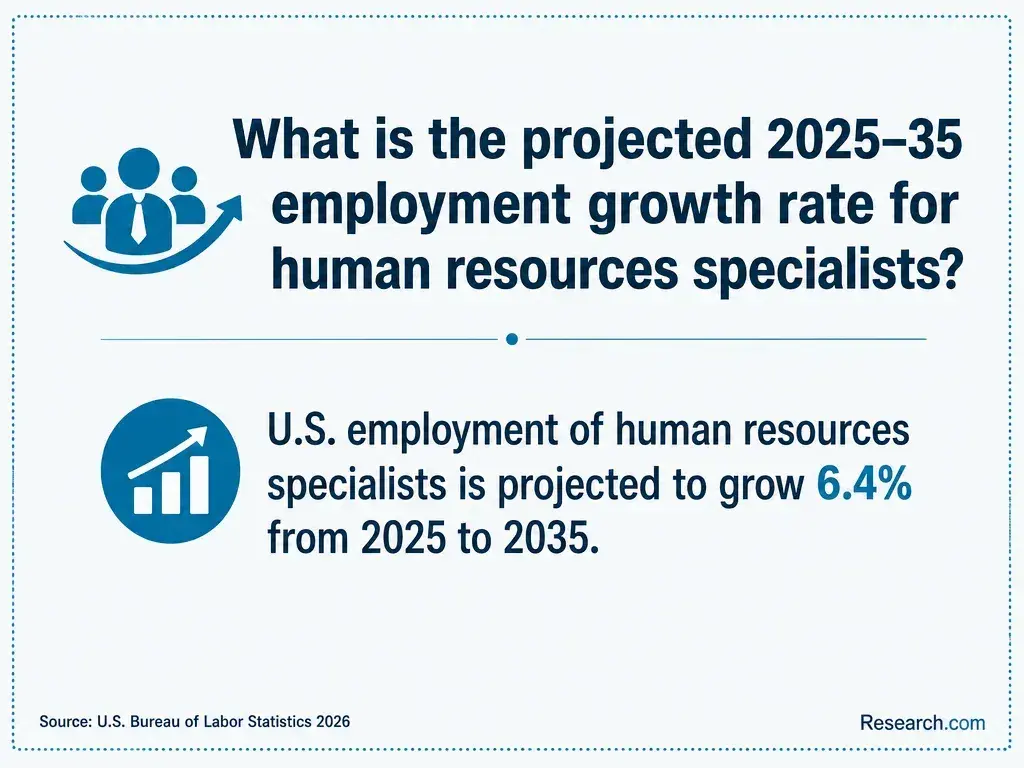
Outlook varies substantially by role. The Bureau of Labor Statistics projects 10.8% US employment growth for training and development specialists from 2025 to 2035. That projection indicates demand for the occupation, not for Ed.D. holders specifically; many specialist positions do not require a doctorate.
Prospects for education administration and other leadership jobs follow different hiring patterns and may depend heavily on prior sector experience.
Test your plan against local vacancies, internal advancement rules, and the responsibilities employers specify. If your target opportunities require a record of managing people or budgets, build that evidence alongside any doctoral study rather than expecting coursework to substitute for it.
Other Things You Should Know About EdD Leadership
Not necessarily. An employer's signature matters if its sponsorship policy or a proposed workplace project requires it. Ask the program and employer what each approval actually authorizes.
Often, but first check confidentiality, intellectual property, and permission-to-share rules. A redacted account of your role and method may be safer than sharing internal records.
Ask prospective programs whether an external partner, different project setting, or another approved deliverable is possible. Do not assume an outside arrangement will meet degree requirements.
Review it when your responsibilities, available evidence, project access, or career goal changes. Keep earlier versions so you can explain why the scope or learning priorities shifted.
- Assessing the Costs and Benefits of Interventions - NCBI - NIH https://www.ncbi.nlm.nih.gov/books/NBK219358/
- CDC Program Evaluation Framework, 2024 - PMC - NIH https://pmc.ncbi.nlm.nih.gov/articles/PMC11444645/
- Elements of an Evaluation Plan | Agency for Healthcare Research and Quality https://www.ahrq.gov/talkingquality/assess/evaluation-plan.html
- CDC Approach to Program Evaluation https://www.cdc.gov/evaluation/php/about/index.html
- Section 5. Developing an Evaluation Plan - Community Tool Box https://ctb.ku.edu/en/table-of-contents/evaluate/evaluation/evaluation-plan/main
- 2026 UNC Online EdD in Organizational Learning & Leadership https://online.unc.edu/online-doctoral-programs/online-edd-organizational-learning-and-leadership/
- Ed.D. in Organizational Improvement for Educational Leaders | University of Delaware https://www.education.udel.edu/doctoral/edd/
- Online Ed.D. in Leadership and Learning in Organizations | VU-EDU https://peabodyonline.vanderbilt.edu/edd-in-organizational-learning/