2027 Paying for an Online Ed.D. in Leadership and Learning in Organizations: A Monthly Tuition Payment Plan
Audited and Verified:
Our Editorial and Data Verification Process
Research.com uses government datasets, official education statistics and primary institutional information to support its career and degree guides. Our review process checks factual accuracy, occupational definitions, source dates and the requirements associated with the credentials discussed.
How This Article Was Fact-Checked
Our editorial team verifies salary estimates, employment projections, education requirements and program information against original data providers and official organizations. Salary figures are checked against the relevant occupational definitions and reporting periods. Information about licensure, accreditation and required in-person training is reviewed separately.
Fact-checked and verified on:

Co-Founder and Chief Data Scientist
A monthly tuition payment plan can make an online Ed.D. easier to fit into a household budget, but it does not make the degree less expensive. For working leaders and learning professionals, the decision is whether each installment - and the full program cost - fits alongside employment, other obligations, and a realistic career goal. This guide explains how to calculate the monthly bill, account for costs the plan may exclude, and compare payment terms before committing to an online doctorate.
Key Things You Should Know
- A monthly plan generally spreads a term's bill across installments; it does not reduce tuition or necessarily cover every month of the degree.
- Estimate each installment as the term balance after aid already applied, divided by the scheduled payments; then add any plan fee and budget separately for travel and other excluded costs.
- Get the school's written payment schedule and full-degree cost estimate before enrolling. Employer reimbursement or expected aid is not cash available for a due date until its timing is confirmed.
What Is an Online Ed.D. in Leadership and Learning?
An online Doctor of Education (Ed.D.) in leadership and learning is generally a practice-oriented doctorate focused on how people learn, how organizations develop, and how leaders use evidence to improve practice. Depending on the program, students may study adult learning, organizational change, leadership development, and applied research while completing a capstone or dissertation.
It may suit an established training manager, organizational development professional, or education-sector leader whose work calls for deeper evaluation and change-leadership skills. It is not the same as a research-focused PhD, and a broadly focused leadership Ed.D. does not automatically qualify someone for school-administrator licensure. Before pricing a program, confirm its exact degree title and whether its curriculum serves your intended work.
How Much Does an Online Ed.D. Cost With Monthly Tuition Payments?
There is no reliable universal monthly price. Schools may charge by credit, term, or program, and installment plans usually divide a term's billed balance rather than the entire doctorate into equal payments. Request a cost estimate for your expected course load and a sample installment agreement for your entry term.
The comparison below separates the amount a school bills from costs you may need to pay another way. That distinction matters more than an advertised monthly installment.
| Cost or payment item | Effect on the monthly budget |
| Tuition and mandatory institutional fees | Usually form the term balance divided into installments; confirm whether the quoted amount includes both. |
| Payment-plan enrollment or service fee | May be charged separately and can change the effective cost of paying monthly. |
| Books, technology, and project expenses | May fall outside the school's plan even when needed for coursework. |
| Required campus convenings | Travel, lodging, and time away from work may require savings before the event. |
| Employer reimbursement or financial aid | Reduces an installment only if it is approved and applied before that payment is due. |
For a useful estimate, take the school's term tuition and mandatory fees, subtract only aid confirmed to arrive before the due dates, divide the remaining balance by the number of installments, and add any plan fee as the agreement specifies. Repeat for every term on your proposed course schedule; then add expenses outside the plan. A lower monthly bill obtained by taking fewer courses can mean more terms of fees and a later completion date.
Ask whether the plan is interest-free, when registration closes, what happens if aid is delayed, and whether a missed installment creates a late fee or registration hold. Compare the resulting full-degree estimate - not just the installment - with online Ed.D. fees and cost comparisons. Published comparisons are a starting point; your school's bill and written terms control what you owe.
Is an Online Ed.D. in Leadership and Learning Accredited?
Online delivery does not determine accreditation. Verify that the degree-granting institution holds recognized institutional accreditation and that its status covers the period in which you expect to study. Check the institution's official accreditation information and the accreditor's directory; do not infer the status of a particular degree from a similarly named school or program.
Also ask whether a claimed programmatic accreditation applies to this exact Ed.D. Some leadership programs have no separate programmatic accreditation. Accreditation alone does not establish eligibility for principal or superintendent licensure, which depends on the specific program and state requirements.
Requirements vary by institution. Programs may request graduate transcripts, evidence of relevant professional experience, recommendations, a statement connecting your goals to a leadership or learning problem, and an interview. A master's degree or particular amount of graduate study may be required by one program but not another; an education major or senior job title is not a universal condition.
If you have prior graduate coursework, ask two separate questions: whether it satisfies admission requirements and whether any credits can apply to the Ed.D. curriculum. Only the school's evaluation can establish either outcome. For a financially sound application, also find out when the enrollment deposit and first installment would be due relative to an admission and aid decision.
Completion time depends on required credits, course availability, enrollment pace, and the time needed for the doctoral project. A payment plan normally operates term by term; it does not turn the degree into a month-to-month subscription or ensure that tuition stays unchanged throughout study.
Ask for a term-by-term course map showing when tuition is billed, whether summer enrollment is expected, and what charges continue during project work or an approved leave. If you already hold an education specialist degree, Ed.S. progression into an online Ed.D. is worth investigating - but obtain a written credit evaluation before assuming it will shorten the program or lower its cost.
Curricula commonly connect leadership and organizational learning with research methods and practice. Relevant study might include adult learning, organizational change, program evaluation, qualitative or quantitative inquiry, and ethical use of workplace evidence. Check which subjects are required rather than assuming a course title signals a formal concentration or advanced technical training.
The final project can have a substantial effect on both scheduling and cost. Some programs require a dissertation in practice; others use a differently structured capstone. Compare the school's actual requirements with education doctorate capstone and project pathways, then ask about faculty supervision, project-site approvals, data access, and enrollment charges during completion. An employer's interest in a project is not the same as academic approval or permission to use organizational data.
Online study can reduce routine commuting without eliminating live classes, group meetings, or required campus convenings. Campus-based study may make in-person access easier but can require more frequent travel or a work-schedule change. Neither format is automatically the cheaper choice for a working student.
Compare total costs for the same expected pace: tuition and fees, travel, lodging, caregiving, and time away from paid work. When considering differently named degrees as alternatives, organizational leadership doctorate tuition comparisons can help identify options to investigate. Confirm that any alternative offers the learning focus and doctoral project you actually want before comparing prices.
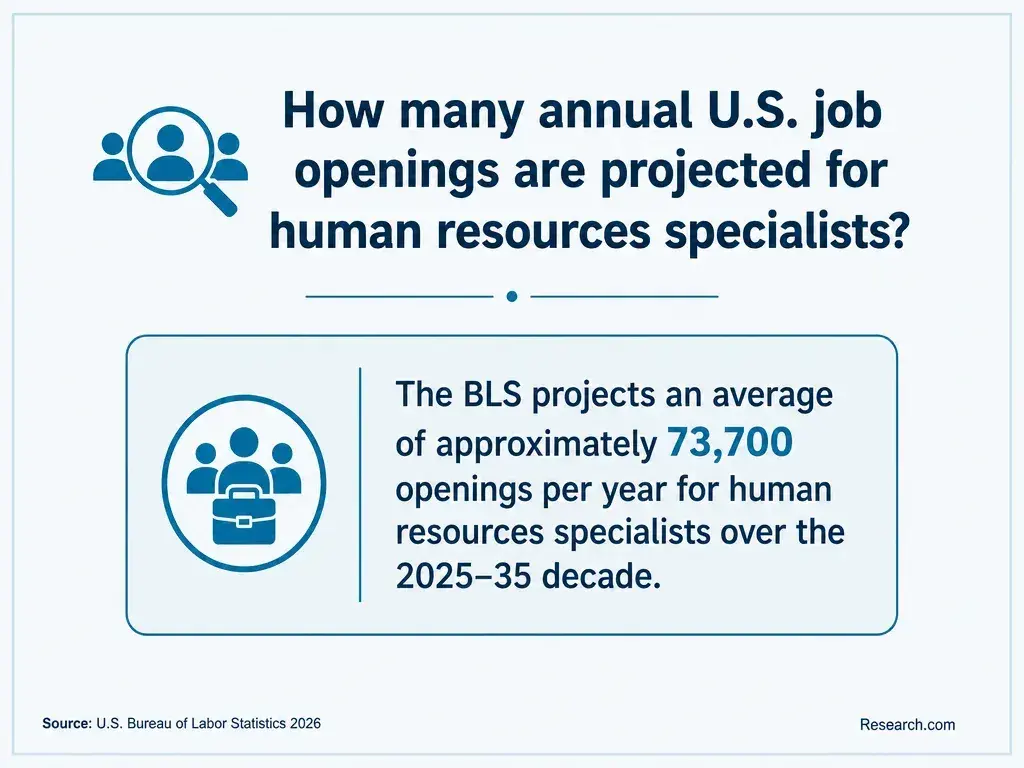
The degree may support experienced professionals pursuing broader responsibilities in learning and development, organizational development, workforce training, consulting, or education administration. The work differs: a training manager oversees programs and staff, while an organizational consultant diagnoses problems and advises clients. Employers will also weigh sector knowledge, leadership results, and the ability to evaluate and implement change.
If your goal is a specific promotion, examine the job requirements before taking on doctoral costs. An employer-sponsored leadership assignment, targeted graduate study, or supervised organizational project may be a more direct route when the missing qualification is experience rather than a doctorate. An Ed.D. alone does not confer an executive position or educator license.
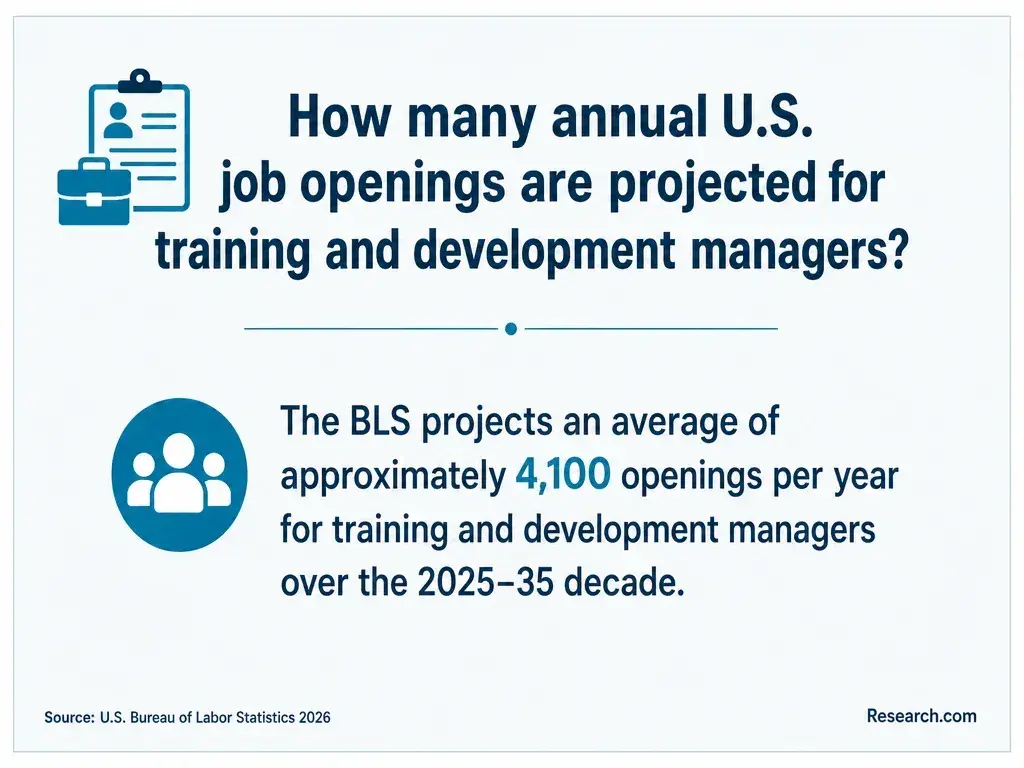
There is no dependable salary figure for all graduates of these programs. The U.S. Bureau of Labor Statistics reports a May 2025 median annual salary of $133,000 for training and development managers. That is an occupational median across workers with different backgrounds - not a starting salary, a measured Ed.D. graduate outcome, or a basis for assuming a promotion.
For a personal affordability decision, use your current compensation and credible opportunities in your own organization or job market. Compare any potential gain with the full cost of study and the possibility that advancement may not occur on your preferred timetable. Do not commit to installments that require an unconfirmed raise to remain affordable.
What Should You Check Before Choosing an Online Ed.D. Program?
Request written answers from admissions, the bursar, and financial aid before accepting an offer. The most useful checks connect the academic plan to the dates money must actually leave your account.
- Obtain the degree's required credits, likely course sequence, project requirements, and estimated charges for every expected term.
- Request the installment agreement, including due dates, plan fees, late-payment consequences, and the treatment of withdrawals or leaves.
- Confirm when approved aid is applied and whether an employer pays the school directly or reimburses you after grades are posted.
- Budget separately for convenings, materials, childcare, and any reduction in paid work; identify how you would cover a delayed reimbursement.
- Verify accreditation, live attendance requirements, and the school's written assessment of any proposed transfer credits.
Use education doctorate fees and total study costs to broaden your comparison, but decide from institution-specific estimates. A manageable installment is a good sign only if the complete degree remains affordable without relying on uncertain funding or salary gains.
Other Things You Should Know About EdD Leadership
Possibly. Ask the bursar whether due dates are fixed or whether a plan can align with your pay schedule before you enroll in it.
Schools may permit an authorized third party to pay, but account-access and payment rules vary. Ask how the payer can submit funds without receiving access to protected student information.
That depends on the school's payment processor. Check accepted methods and any card-processing fee; carrying a card balance can add interest even if the school's installment plan does not.
It may, if the student and institution meet applicable rules and the expense qualifies. Check the plan administrator's requirements and the school's eligibility before scheduling a withdrawal.
- Types of Financial Aid: Grants, Work-Study, and Loans | studentaid.gov https://studentaid.gov/understand-aid/types
- Disbursing Title IV Funds | 2025-2026 Federal Student Aid Handbook https://fsapartners.ed.gov/knowledge-center/fsa-handbook/2025-2026/vol4/ch2-disbursing-title-iv-funds
- What are the different ways to pay for college or graduate school? | Consumer Financial Protection Bureau https://www.consumerfinance.gov/ask-cfpb/what-are-the-different-ways-to-pay-for-college-or-graduate-school-en-545/
- Tuition & Fees | ou.edu http://www.ou.edu/bursar/tuition_fees.html
- Tuition Payment Plan | arizona.edu https://bursar.arizona.edu/payment/plan
- Monthly Payment Plan | Student Financial Services https://sfs.columbia.edu/content/monthly-payment-plan
- Leadership and Learning in Organizations Online Ed.D. | Peabody College of Education and Human Development https://peabody.vanderbilt.edu/academics/edd-programs/online-leadership-learning-organizations/
- Ed.D. Tuition and Financial Aid - Peabody | VU-EDU https://peabodyonline.vanderbilt.edu/edd-in-organizational-learning/tuition-and-financial-aid/
- Payment Plans - The Hub - Colorado State University https://thehub.colostate.edu/billing/payment-plans/
- Payment Plan Overview - Washington, DC | American University https://www.american.edu/finance/studentaccounts/payment-plan-overview.cfm