2027 Online Ed.D. in Leadership and Learning in Organizations: Degree Fit for Leaders Tackling Too Many Approval Layers Slowing Routine Decisions
Audited and Verified:
Our Editorial and Data Verification Process
Research.com uses government datasets, official education statistics and primary institutional information to support its career and degree guides. Our review process checks factual accuracy, occupational definitions, source dates and the requirements associated with the credentials discussed.
How This Article Was Fact-Checked
Our editorial team verifies salary estimates, employment projections, education requirements and program information against original data providers and official organizations. Salary figures are checked against the relevant occupational definitions and reporting periods. Information about licensure, accreditation and required in-person training is reviewed separately.
Fact-checked and verified on:

Co-Founder and Chief Data Scientist
Routine decisions stall when employees must secure approvals that add little value - or when no one knows who has authority to act. For leaders responsible for improving that process, an online Ed.D. in Leadership and Learning in Organizations may offer useful training in organizational diagnosis, change, and applied inquiry. It is not, however, a substitute for changing a policy you already have the authority to change. This guide helps experienced leaders distinguish a governance problem from a learning problem, decide whether doctoral study fits their role, and identify what to verify before enrolling.
Key Things You Should Know
- Diagnose before prescribing: Extra approvals may reflect unclear authority, risk controls, incentives, or outdated policy - not a need for more employee training.
- Choose an Ed.D. for sustained leadership work: It fits leaders who need to investigate and implement organizational change across stakeholders; a focused process-improvement project may be faster for a single workflow.
- Do not price the degree against a promised promotion: The US median annual pay for training and development managers was $133,000 in May 2025, but that occupational figure is not an Ed.D. graduate salary.
What is an online Ed.D. in Leadership and Learning in Organizations?
An Ed.D. is a practice-oriented doctorate. Programs with a leadership and learning focus examine how people develop, how organizations make decisions, and how leaders use evidence to improve practice. The exact degree title and curriculum vary by university; "Leadership and Learning in Organizations" should not be assumed to be a formal concentration at every school.
For an approval bottleneck, the relevant doctoral work is not simply learning to lead meetings. It may involve studying decision rights, interviewing affected groups, evaluating whether a revised approval process works, and managing change without removing necessary safeguards. Programs differ in whether the culminating work is a dissertation, dissertation in practice, capstone, or another approved project. Leaders considering online education doctorates with alternative final projects should confirm what the project requires and whether their organization can support it.
A research-oriented PhD generally better fits someone whose primary goal is to produce scholarly research. Neither degree gives its holder automatic authority to rewrite an employer's governance rules.
Is an online Ed.D. right for leaders facing too many approval layers?
Potentially - but only if the bottleneck is part of a broader leadership and organizational learning challenge you expect to address over time. Multiple signatures are a symptom, not a diagnosis. A required compliance review, an obsolete rule, managers' reluctance to delegate, and employees' uncertainty about thresholds call for different responses.
A useful first step is to examine one recurring decision, such as approving a routine purchase or updating a training resource. The sequence below helps separate necessary controls from avoidable delay without presuming that fewer approvals are always safer.
- Map who initiates, reviews, approves, and records the decision; note which steps are required by law, policy, or contract.
- Collect an authorized baseline, such as elapsed time by step, return-for-revision frequency, and exceptions; distinguish waiting time from actual review time.
- Ask decision-makers and affected employees what risk each approval addresses, where authority is unclear, and what information reviewers need.
- Test a proportionate change, such as clearer spending thresholds or delegated authority for low-risk cases, with an accountable owner and a way to monitor errors as well as speed.
If the issue is one documented workflow and you can convene its owners now, process-improvement support, legal or compliance advice, or a targeted leadership course may be more direct than a doctorate. If the same pattern spans departments, reflects conflicting incentives, and requires sustained evaluation and coalition-building, an Ed.D. may develop capabilities you can reuse. Doctoral study does not replace permission from the people who own the policy or data.
The distinction matters when choosing a credential. These routes solve different parts of the problem.
| Route | Strongest fit | Important limitation |
| Focused process-improvement project or executive training | A bounded approval workflow with an identifiable owner | May not develop deep research or cross-organizational change skills |
| Practice-oriented Ed.D. | Recurring governance and learning challenges requiring applied inquiry and implementation | Substantial study commitment; no automatic decision authority |
| MBA or MPA | Broader business management or public administration responsibilities | Curricular depth in adult learning and applied doctoral inquiry varies |
| Research-oriented PhD | A primary goal of scholarly research or an academic research career | May be less directly structured around improving a current workplace process |
What careers can you pursue with an Ed.D. in organizational leadership?
Leaders who already manage teams, learning programs, or cross-functional change may use an Ed.D. to strengthen their case for broader responsibilities. Relevant paths include organizational development, training and development management, internal consulting, workforce development, nonprofit leadership, and some higher-education administration roles. The work differs: a training manager directs employee development, while an organizational consultant may diagnose workflows and help clients implement changes.
Employers will still look for evidence that you have led decisions, managed stakeholders, and delivered improvements - not just completed coursework. A carefully documented approval-redesign project can demonstrate those skills if you can describe your responsibilities and share results without exposing confidential information. Public-sector and education employers may also have formal hiring classifications or promotion rules that a doctorate does not override.
If higher-education administration is your target, examine its job requirements before borrowing for a degree. Guidance on paying for a doctorate in higher education leadership can help frame the funding decision, but financial support and eligibility must be confirmed with each institution and employer.
For approval-layer problems, the most useful curriculum connects organizational diagnosis with implementation. Look for coursework or supervised work in systems thinking, organizational change, stakeholder engagement, decision-making, adult learning, and program evaluation. Research methods should help you distinguish an appealing explanation from evidence: a faster process, for example, is not an improvement if errors or unreviewed risks rise.
Learning theory matters when employees genuinely lack guidance about delegated authority or reviewers need new decision criteria. It is less likely to fix a mandatory signature imposed by policy. Ask whether students can investigate governance and workflow questions in applied projects, what methods support they receive, and whether the program requires access to an employer or other project site. A course title alone does not establish the depth of that preparation.
Any proposed use of approval records, employee interviews, or performance data requires appropriate organizational permission and privacy safeguards. The university must determine applicable academic and research-review requirements; a workplace improvement project should not be assumed automatically exempt from review.
Online study can let a working leader remain employed and investigate a local organizational problem. It does not necessarily mean self-paced study: programs may require live classes, cohort meetings, group work, or campus convenings. Campus-based study may make in-person faculty and peer interaction easier but can require relocation or regular travel.
Compare actual calendars rather than delivery labels. Ask when live sessions occur, how group projects are scheduled, which visits are mandatory, and what happens if a job change removes access to a proposed project site. If speed is a priority, compare the published course sequence and completion rules for short-duration online Ed.D. programs; an accelerated schedule is only useful if it leaves enough time to secure approvals and complete credible applied work.
Requirements differ by institution. Programs commonly evaluate prior graduate study, professional experience, recommendations, a statement of purpose, and readiness for doctoral-level writing and inquiry. Some require a completed master's degree or particular graduate credits; others define eligibility differently. Credits used to qualify for admission are not necessarily credits that transfer into the Ed.D.
For this topic, strong application evidence would describe decisions you actually influenced: the process you managed, the stakeholders involved, the limits of your authority, and a question you want to investigate. Do not claim that approval layers caused a measured loss unless you have defensible evidence. Ask admissions staff how the program defines relevant leadership experience, then ask program faculty whether a proposed workplace inquiry is feasible; admission does not itself approve a project site.
Time to completion depends on required credits, course sequencing, enrollment pace, and the final project. Workplace access can also affect progress: a promising approval-process study may need sponsor agreement, data authorization, and academic review before collection begins. Request the program's published completion expectations and ask how interruptions or a change of employer affect progression.
For cost, compare the required credits or terms with the school's actual tuition schedule, then add fees, books, technology, travel for any convenings, and costs associated with taking time away from work. Check employer reimbursement limits and repayment conditions before counting that benefit. A guide to planning tuition for an online Ed.D. can organize the comparison, but obtain a program-specific estimate in writing. The financially relevant question is whether the degree builds capabilities your role needs that a shorter intervention cannot provide - not whether a hypothetical promotion would pay for it.
Check the institution's accreditation through the accreditor and the US Department of Education's recognized-accreditor information, then confirm the exact degree, delivery format, and requirements on the university's current program pages. Institutional accreditation does not establish that a particular Ed.D. prepares students for educator licensure or has a specific organizational leadership concentration.
Quality for this decision also means access to faculty guidance in organizational inquiry, methods appropriate to workplace data, and a final-project structure compatible with your authority and setting. Ask for the current handbook, course sequence, project-site rules, required convenings, and any clearly defined completion outcomes. When comparing education doctoral degrees by tuition level, keep academic fit and documented support alongside price; the least expensive option is not necessarily the best setting for a complex governance project.
Pay depends on the occupation, employer, location, and experience - not the degree alone. The US Bureau of Labor Statistics reports a May 2025 median annual salary of $133,000 for training and development managers. That figure describes workers in the occupation, not new Ed.D. graduates, and the role generally calls for demonstrated management and learning-development experience.
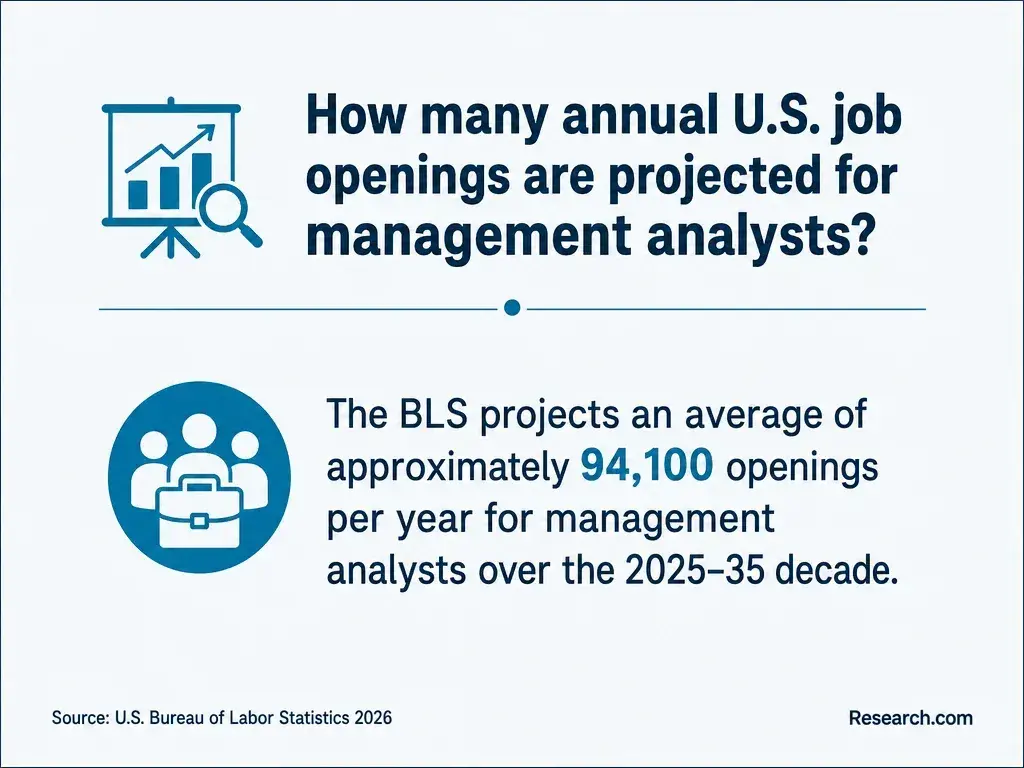
For a different route, BLS projects 10.1% US employment growth for management analysts from 2025 to 2035. That outlook can inform a leader considering organizational consulting, but it does not measure demand for Ed.D. holders specifically. Compare vacancies you would realistically pursue with your present qualifications, and identify which requirements the degree would - and would not - help you meet.
Do Ed.D. graduates need licenses or professional certifications?
Organizational development and most corporate learning leadership roles do not have a universal Ed.D.-specific license. An employer may value a relevant professional certification, but certification is distinct from the doctorate and from demonstrated ability to lead change.
Regulated education positions are different. A general leadership and learning Ed.D. should not be treated as preparation for teacher, principal, or superintendent licensure. If a specific school-system role is your goal, confirm the program's licensure disclosure and the relevant state authority's requirements before enrolling. For approval-process work, legal, procurement, financial, or safety rules may also govern who can authorize changes, regardless of anyone's credential.
Other Things You Should Know About EdD Leadership
No. A review may be necessary for legal compliance, safety, spending control, or accountability. The aim is to make each approval's purpose and authority clear, then remove or redesign steps that do not serve that purpose.
Possibly. The program must accept the setting, and the partner organization must authorize the proposed work and any data access. Confirm both before relying on an external project site.
Document the competing interpretations and take them to the policy owner or governing authority. Training employees on a decision-rights chart will not resolve a conflict that leadership has not settled.
Usually, the leader can discuss their role, approach, and shareable outcomes. They should first check employer confidentiality and intellectual-property rules and avoid disclosing restricted records or identifiable employee information.
- Change Management: From Theory to Practice - PMC https://pmc.ncbi.nlm.nih.gov/articles/PMC9462626/
- Doctor of Education in Educational Leadership | National University https://www.nu.edu/degrees/educational-leadership/programs/doctor-of-education-in-educational-and-organizational-leadership/
- Courses | SEMO https://semo.edu/student-support/academic-support/registrar/catalog/courses/
- EdD in Educational Leadership - The University of Alabama | UA Online https://online.ua.edu/degrees/edd-in-educational-leadership/
- 5 Critical Steps in the Change Management Process | Harvard Business School https://online.hbs.edu/blog/post/change-management-process
- Online Doctor of Education in Leadership and Innovation | Purdue Global https://www.purdueglobal.edu/degree-programs/education/doctor-education-leadership-innovation/
- Online Doctorate in Education and Leadership (Ed.D.) | Rockhurst University https://onlinedegrees.rockhurst.edu/online-edd-programs
- Education Leadership | Organization and Leadership | Columbia University https://www.tc.columbia.edu/catalog/academics/departments/organization-and-leadership/education-leadership/
- FAQ: Earning Your Ed.D. in Educational Leadership Online | STU https://online.stu.edu/degrees/education/innovation-leadership/edd-administration/faq-edd-leader-online/
- Action Research: A Methodology for Organizational Change | ufl.edu https://ask.ifas.ufl.edu/publication/4H424