2027 Is an Online Ed.D. in Leadership and Learning in Organizations a Good Fit for Behavioral Health Program Administrators?
Audited and Verified:
Our Editorial and Data Verification Process
Research.com uses government datasets, official education statistics and primary institutional information to support its career and degree guides. Our review process checks factual accuracy, occupational definitions, source dates and the requirements associated with the credentials discussed.
How This Article Was Fact-Checked
Our editorial team verifies salary estimates, employment projections, education requirements and program information against original data providers and official organizations. Salary figures are checked against the relevant occupational definitions and reporting periods. Information about licensure, accreditation and required in-person training is reviewed separately.
Fact-checked and verified on:

Co-Founder and Chief Data Scientist
Behavioral health program administrators often lead teams, improve services, train staff, and answer to funders or regulators at the same time. An online Ed.D. in Leadership and Learning could strengthen that work, but it may be an expensive detour if your goal requires clinical credentials or specialized healthcare management training instead. This guide examines where the degree fits, what it does not qualify you to do, and how to compare programs against your responsibilities, budget, and next career move.
Key Things You Should Know
- An online Ed.D. is most useful when you already manage behavioral health programs and want to lead workforce learning, organizational change, or evidence-informed improvement - not obtain clinical practice authority.
- Compare the degree with an MHA, MPH, targeted certificate, or employer-sponsored development before committing; the best route depends on the role you want next.
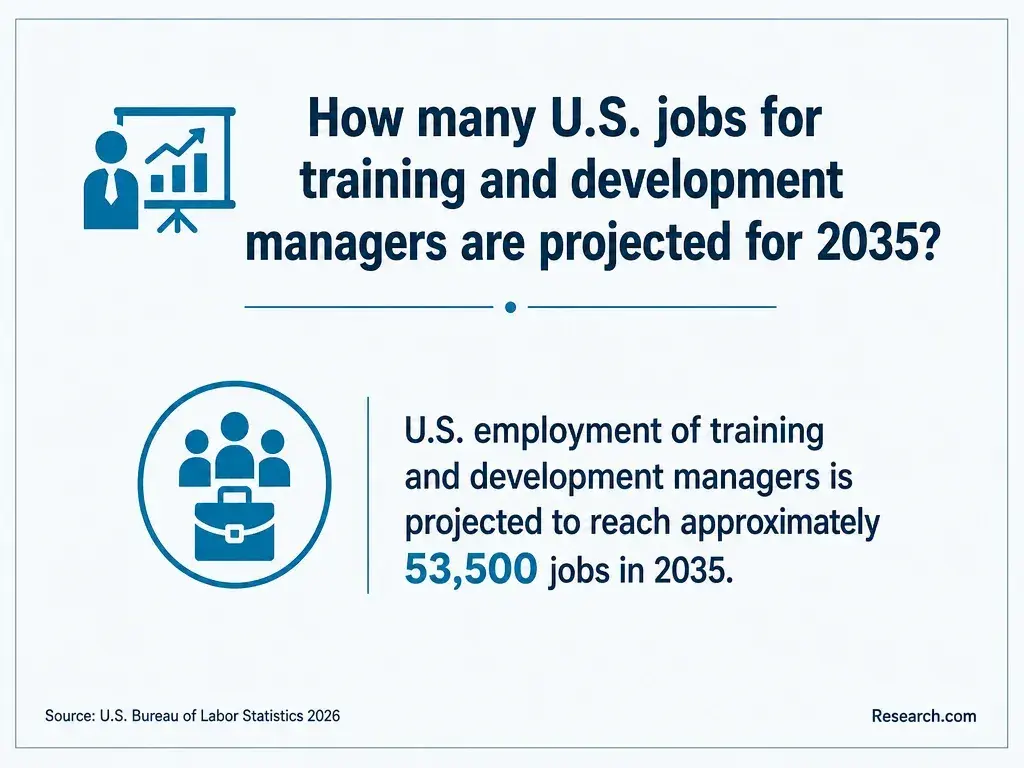
- The U.S. Bureau of Labor Statistics reports a $133,000 median annual salary for training and development managers in May 2025, but that occupational figure is not a salary forecast for behavioral health administrators or Ed.D. graduates.
Is an online Ed.D. in Leadership and Learning a good fit for behavioral health administrators?
Yes, potentially - if your next step centers on leading people and improving how an organization learns. A practice-oriented Ed.D. may help an experienced administrator examine why staff training fails to transfer into practice, evaluate a supervisor-development initiative, or coordinate change across clinical and operational teams. Those are leadership and learning problems, not substitutes for clinical expertise.
The fit is strongest when you have decision-making responsibility, can apply coursework to a real organizational challenge, and expect to use evaluation findings. For example, an administrator might investigate whether onboarding prepares new case managers for their roles. The first task would be to distinguish a training gap from problems such as staffing, workflow, or supervision - not to assume another course will fix performance.
An MHA may be more direct for healthcare finance and operations; an MPH may better fit population-health work; and supervised experience or a focused certificate may suffice for a narrower management goal. If price could rule out doctoral study, include cost-focused selection of a Doctor of Education program in your comparison before choosing by degree title alone.
Decision test: Identify the role you want, a leadership problem you have authority to address, and the skills missing from your current practice. If the gap is primarily clinical qualification, reimbursement expertise, or a promotion contingent on experience, an Ed.D. is unlikely to be the most direct solution.
What careers can an Ed.D. in Leadership and Learning prepare behavioral health administrators for?
The degree can complement existing behavioral health experience rather than create it. The distinctions below show where doctoral learning could add value - and where employers will still look for a different qualification.
| Potential direction | Relevant work | What still matters beyond the Ed.D. |
| Program or service-line leadership | Improving operations, supervision, and service delivery | Behavioral health experience, budget authority, and applicable employer requirements |
| Workforce development leadership | Designing onboarding, supervisor development, and learning evaluation | Demonstrated training and implementation results |
| Quality improvement or organizational consulting | Diagnosing processes and evaluating changes across teams | Methods competence, stakeholder trust, and a credible project record |
Build evidence alongside the credential: document the problem you addressed, your specific authority, the measures used, and what changed or remained uncertain. Moving from behavioral health into university administration is a separate transition with its own hiring expectations; online Ed.D. study connecting organizations and higher education is more relevant if that is your intended direction.
What accreditation should an online Ed.D. program have?
Start with institutional accreditation from an accreditor recognized by the U.S. Department of Education. Confirm the institution's status in the department's database and ask whether the specific Ed.D. is offered by that accredited institution. Accreditation is a baseline check, not proof that a program fits behavioral health work or qualifies graduates for a regulated occupation.
Next, review the program's published curriculum, doctoral project requirements, student support, and any licensure disclosures. Do not assume that accreditation of a school of education, or a course on leadership, establishes a behavioral health specialization or clinical eligibility. If an employer requires a particular credential, get its acceptance criteria in writing before enrolling.
Delivery format changes access and scheduling, but degree purpose matters more. This comparison separates those two decisions; individual programs may differ substantially from the patterns shown.
| Path | Likely advantage | Issue to verify |
| Online, practice-oriented Ed.D. | Potential to remain employed while studying an organizational problem | Live meetings, campus visits, group work, and project-site rules |
| Campus-based, practice-oriented Ed.D. | In-person faculty and cohort interaction | Commute, attendance, and compatibility with full-time work |
| Research-oriented PhD, online or campus-based | Deeper preparation for a research-centered goal | Research expectations, funding, and time away from work |
Online does not necessarily mean self-paced. A behavioral health administrator covering evenings or crisis-response shifts should request the actual class schedule and residency calendar, then ask how team meetings and project work are handled. If you previously began doctoral study, ABD education students comparing online doctoral pathways have a different decision: whether a new program will recognize prior progress, not merely whether classes are online.
Programs vary, but relevant coursework may cover organizational leadership, adult learning, change implementation, research methods, and program evaluation. For a behavioral health administrator, the useful question is whether those subjects connect to decisions you actually make: developing supervisors, improving onboarding, assessing staff learning, or coordinating changes across service teams.
Look beyond course titles. Ask whether students learn to separate training needs from operational barriers, choose credible measures, interpret qualitative and quantitative evidence, and communicate findings to clinicians and executives. Check the required sequence, available electives, and exact dissertation or capstone format. A single evaluation course does not establish advanced research expertise, and an elective is not necessarily a formally awarded concentration.
Requirements are institution-specific. Schools may ask for a completed master's degree, transcripts, recommendations, a statement of purpose, and evidence of relevant professional experience; some also use interviews or writing samples. An education master's is not universally required. A behavioral health administrator can make a strong case by describing actual leadership decisions and a feasible organizational learning problem, rather than relying on a managerial title alone.
Ask admissions staff which prior degrees and graduate credits satisfy entry requirements, then ask separately whether any credits would apply to the doctorate. Those are different decisions. Holders of an education specialist degree can investigate Ed.S. progression into an online Ed.D., but should obtain a program-specific written credit evaluation before expecting a shorter or less expensive path.
Neither timeline nor total price is uniform. Required credits, course pacing, dissertation or capstone progress, and any breaks in enrollment affect completion. Published tuition may omit fees, required travel, lodging, materials, or costs associated with extending a project. Request a term-by-term estimate for your intended enrollment pace rather than relying on a headline tuition figure.
When planning a budget for doctoral study in education, compare the full expected cost with the value of the specific responsibilities you hope to take on. Ask your employer whether tuition support covers doctoral study, whether reimbursement depends on grades or continued employment, and whether protected time is available for coursework. Do not count an unconfirmed promotion or salary increase as a return on investment.
An Ed.D. in Leadership and Learning does not itself grant a clinical license. Whether you need one depends on the job and state: an operations-focused administrator may have different requirements from a clinical director who supervises licensed services. Employers, contracts, and state regulators may also set role-specific qualifications.
Before applying for a target position, read its duties and credential language, then confirm any regulated scope of practice with the relevant state board. If your goal is independent treatment or a position requiring a particular clinical license, choose the approved professional training and supervised pathway for that credential rather than assuming doctoral leadership coursework will count.
There is no defensible single Ed.D.-graduate salary for behavioral health program administrators. Pay depends on the position, employer, location, responsibilities, and clinical or managerial qualifications - not simply the degree awarded.
For context, the U.S. Bureau of Labor Statistics reports a $133,000 median annual salary for training and development managers in May 2025. That occupation is relevant to someone moving into workforce-development leadership, but it is not a proxy for every behavioral health administrator. For a realistic comparison, review compensation for the exact roles you could pursue and check whether employers require or merely prefer a doctorate.
What job outlook exists for behavioral health program administrators?
Employment prospects vary by function; there is no single job-growth figure that describes every behavioral health program administrator. For one adjacent path, the Bureau of Labor Statistics projects 10.1% employment growth for management analysts from 2025 to 2035. That suggests opportunities in organizational consulting, but it does not predict openings for administrators at a particular behavioral health employer.
Use job postings to test demand more precisely. Compare the responsibilities, required sector experience, credentials, and project skills in positions you would actually accept. If the postings emphasize operational experience or clinical authority over doctoral study, gaining that experience may improve your prospects more directly than enrolling now.
Other Things You Should Know About EdD Leadership
Only with the necessary organizational permission and academic oversight. Client records, identifiable employee information, privacy obligations, consent, and possible research review require separate attention; access through your job is not automatic permission to use data for a degree.
Ask the program in advance whether you can change sites or project scope and what new approvals would be needed. Keep a project plan that does not depend entirely on one employer's continued cooperation.
It may support teaching practice-oriented leadership subjects, but hiring requirements vary. Clinical courses may require a relevant clinical credential, while research-intensive faculty positions may favor a PhD and publication record.
Do not assume so. Your licensing board determines acceptable continuing education, and graduate credit does not automatically satisfy its subject, provider, or documentation rules.
- Behavioral Health Career Descriptions | samhsa.gov https://www.samhsa.gov/about/careers/behavioral-health-workforce/careers-by-state/descriptions
- Implementing School-Based Mental Health Services - PMC https://pmc.ncbi.nlm.nih.gov/articles/PMC8948726/
- Cost of Attendance (Budget) | 2026-2027 Federal Student Aid Handbook https://fsapartners.ed.gov/knowledge-center/fsa-handbook/2026-2027/vol3/ch2-cost-attendance-budget
- Understanding College Costs | studentaid.gov https://studentaid.gov/resources/prepare-for-college/students/choosing-schools/consider-costs
- NYS Mental Health Counseling: License Requirements | nysed.gov https://www.op.nysed.gov/professions/mental-health-counselors/license-requirements
- EdD in Educational Leadership | Online Doctorate Degree | Capella University https://www.capella.edu/online-education-degrees/doctor-of-education-program/edd-education-leadership/
- Doctor of Education in Organizational Leadership, Culture and Change | Thomas Edison State University https://www.tesu.edu/degrees-programs/doctoral/edd.php
- Walden University's Guide to Doctoral Capstone Projects https://www.waldenu.edu/online-doctoral-programs/resource/guide-to-doctoral-capstone-projects
- Online Doctorate in Education and Leadership (Ed.D.) | Rockhurst University https://onlinedegrees.rockhurst.edu/online-edd-programs
- Behavioral Health Pathways | Colorado Community College System https://cccs.edu/workforce-development/workforce-programs/behavioral-health/