2027 Online Ed.D. in Leadership and Learning in Organizations After a Master's in International Development: Admission and Credit Questions
Audited and Verified:
Our Editorial and Data Verification Process
Research.com uses government datasets, official education statistics and primary institutional information to support its career and degree guides. Our review process checks factual accuracy, occupational definitions, source dates and the requirements associated with the credentials discussed.
How This Article Was Fact-Checked
Our editorial team verifies salary estimates, employment projections, education requirements and program information against original data providers and official organizations. Salary figures are checked against the relevant occupational definitions and reporting periods. Information about licensure, accreditation and required in-person training is reviewed separately.
Fact-checked and verified on:

Co-Founder and Chief Data Scientist
A master's in international development may have prepared you to lead programs, evaluate outcomes, and work across organizations, but it does not automatically answer whether you qualify for an online Ed.D. or whether any credits will count toward it. Those distinctions matter before you spend time applying or budget for a shorter doctorate.
This guide explains how to assess your degree, document relevant experience, request an authoritative credit evaluation, and decide whether a leadership and learning Ed.D. fits your work in development, nonprofits, or other sectors.
Key Things You Should Know
- A completed master's in international development can meet a program's degree-level admission requirement if that program accepts graduate degrees outside education; relevant leadership and research experience may also matter.
- Credits used to establish admission eligibility are not necessarily transferable. Ask for a written ruling on each proposed course, its Ed.D. requirement, and any effect on remaining tuition or study time.
- Compare the doctorate against your intended work. Organizational learning and change may fit an Ed.D., while a targeted evaluation credential or additional leadership experience may be more direct.
What Is an Online Ed.D. in Leadership and Learning in Organizations?
An Ed.D. in leadership and learning in organizations is a practice-oriented doctorate focused on how people learn, lead, and implement change at work.
Programs may serve professionals in nonprofits, government, healthcare, business, or education rather than exclusively preparing school administrators. "Online" describes where much instruction occurs; it does not establish that classes are self-paced or that campus visits are unnecessary.
For an international development graduate, the useful overlap may be leading dispersed teams, strengthening staff learning, or evaluating how an organizational change is implemented. Check the exact degree name and curriculum: a school's schools offering online Ed.S.-to-Ed.D. routes serve a different prior-credential scenario, and an Ed.S. pathway should not be assumed to apply to your master's.
Can You Apply With a Master's in International Development?
A completed master's outside education is not inherently disqualifying. Some Ed.D. programs accept a master's in any field; others specify relevant graduate study, a minimum amount of prior coursework, or professional experience. Admissions staff must determine whether your particular degree meets their published rule.
Your application is stronger when it connects development work to the doctorate's purpose. Describe decisions you actually made about staff development, partner coordination, organizational change, or program evaluation. Distinguish managing a project budget from leading an organization-wide learning initiative; neither a degree title nor a job title proves the scope of your responsibility.
If the master's was awarded outside the United States, ask whether the school requires a credential evaluation and how it determines US degree equivalence. Request its English-language testing policy if applicable. These are program-specific questions, not automatic conditions attached to the subject of your master's.
How Many Credits Can You Transfer Into an Online Ed.D.?
There is no reliable universal transfer-credit number. An Ed.D. may consider your master's for admission yet apply none of its courses toward doctoral requirements. Other programs may permit selected graduate courses, subject to limits on level, grades, recency, content equivalence, and credits that must be earned at the awarding institution.
The distinctions below prevent a common budgeting mistake: treating every previously earned credit as a reduction in the Ed.D.
| Credit decision | What it establishes | What it does not establish |
| Admission eligibility | Prior study satisfies an entry condition. | That any course replaces doctoral coursework. |
| Transfer approval | A specified number of prior credits may enter the doctoral record. | That every required course has been satisfied. |
| Degree-requirement application | An approved course fulfills a named requirement or elective. | That the program's sequence, project, or completion date changes. |
Gather official transcripts, course descriptions or syllabi, grading information, and any research-methods coursework. If credits came from multiple institutions, an unfinished graduate program, or quarter-based study, ask how each source is evaluated.
Request a written degree audit identifying accepted credits, the requirements they fulfill, remaining required courses, and the office that can approve exceptions. Prior doctoral work is a separate case: returning to Ed.D. study after reaching ABD status may involve completion policies rather than ordinary master's-credit transfer.
Requirements vary by institution and entry term. Common application materials include transcripts, a résumé, recommendations, a statement of purpose, and evidence of relevant professional work.
Some programs also specify grades, an interview, a test policy, or research preparation. Read the program's requirements before assuming that a master's thesis, education degree, or particular leadership title is mandatory.
For this background, the most persuasive statement usually identifies a real organizational learning problem rather than a broad desire to "make an impact."
For example, you could explain an unresolved challenge in transferring training into field practice, what evidence you could reasonably examine, and why doctoral study would help you investigate it. Do not present a proposed project as approved research or claim access to partner data you have not secured.
Ask admissions whether your degree meets its formal entry rule; ask the program director how it evaluates development-sector leadership and methods preparation. If you have been away from academic study, identify any statistics, qualitative inquiry, or academic-writing preparation you may need even if no bridging course is required.
Confirm that the institution holds recognized institutional accreditation and that the Ed.D. is an officially awarded degree covered by that institution's authority. Check the accreditor's status through the accreditor or the US Department of Education's accreditation records, then ask the school which requirements apply to your intended entry term. Institutional accreditation alone does not establish specialized certification or school-administrator licensure.
Quality checks should focus on what you will actually experience: faculty guidance in applied inquiry, access to research support, required live meetings, the final project's form, and published policies for progression and completion. Ask for specific information about student outcomes and how those outcomes were measured rather than relying on promotional claims.
If financial support affects your choice, verify it with the school's aid office. Resources on funding for higher education leadership doctorates can help frame questions, but availability for a different leadership and learning program must be confirmed separately.
Relevant curricula may combine adult learning, organizational change, leadership, research methods, and evaluation. For a development professional, the critical distinction is between designing a training activity and determining whether learning transfers into day-to-day practice or whether governance, resources, or incentives are the larger obstacle.
Compare required courses, available electives, and the final project against your preparation. Prior monitoring and evaluation work might support applied inquiry, but it does not automatically replace doctoral research methods.
Conversely, someone whose immediate goal is to improve a specific evaluation technique may benefit more from targeted methods training than a full Ed.D. Ask how faculty supervise projects involving external organizations and what approvals are required before using workplace or partner data.
Duration and total cost depend on the school's required credits, course sequence, enrollment pace, fees, and final-project rules. A transfer approval saves money or time only if it reduces billable requirements or permits a shorter approved path; a course substitution may do neither. Request a term-by-term estimate based on your individual degree audit, not an advertised minimum completion time.
Budget for tuition and mandatory fees alongside books or technology, any required travel and lodging, and time away from paid work. Compare written employer-reimbursement terms before counting that support.
Lists of affordable distance learning Ed.D. degrees can help identify schools to investigate, but your relevant comparison is the remaining cost after the school evaluates your credits and confirms attendance requirements.
Online study can remove routine commuting while retaining scheduled classes, group work, and campus convenings. Campus study may make in-person collaboration easier but require relocation or regular travel. Neither format is inherently faster or less expensive for a student whose credit evaluation and project access remain unresolved.
Ask each program for live-session times, attendance rules, residency dates, group-work expectations, and options if your development work involves travel or changing time zones. Then compare the complete attendance and cost picture.
A search for lower-tuition pathways to an education doctorate is most useful when paired with those format details, rather than treated as proof that the lowest listed tuition is the lowest total expense.
The degree may support progression into organizational learning, workforce development, nonprofit leadership, training management, or organizational consulting when paired with relevant experience.
Your development background can be valuable for stakeholder engagement, cross-cultural collaboration, and evaluation; employers will still look for evidence that you have led the kind of people, systems, or change initiatives the role requires.
Choose the pathway by the work you want to perform. If you aim to lead learning strategy across an organization, an applied Ed.D. may complement substantial leadership practice.
If you primarily want a technical monitoring and evaluation position, focused analytical training and a project portfolio may be more direct. A general leadership Ed.D. does not itself confer educator licensure, an executive appointment, or eligibility for every academic post.
What Salaries and Job Outlook Can Ed.D. Graduates Expect?
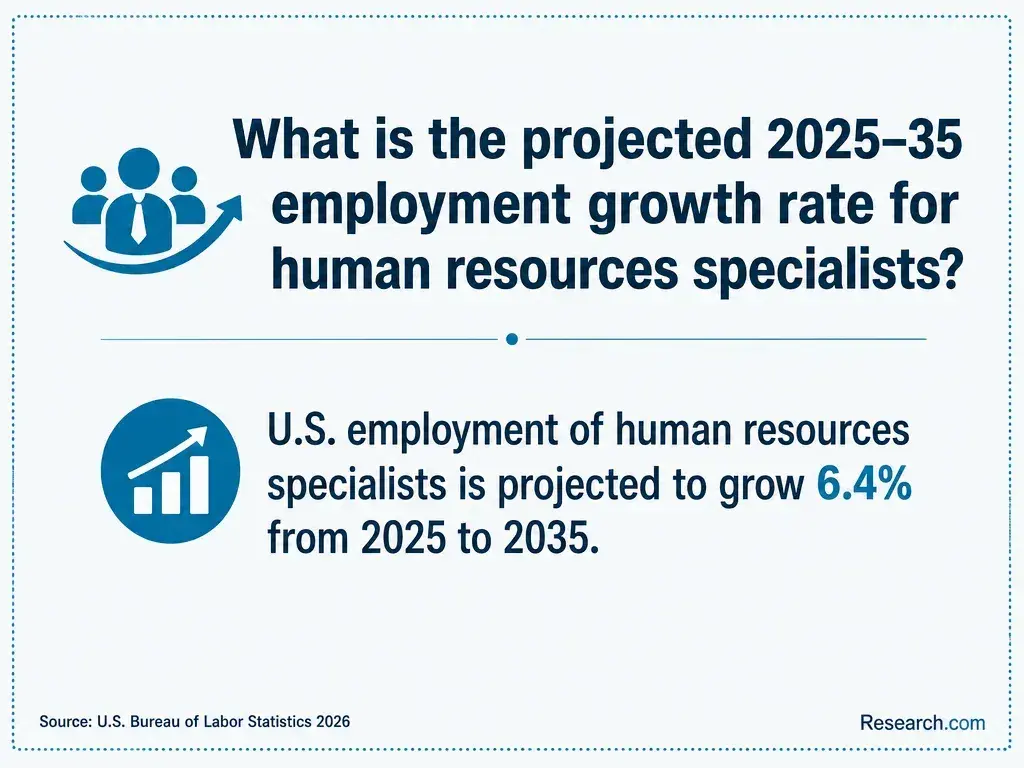
There is no single salary or employment outlook for Ed.D. graduates because the degree connects to different occupations and career stages. The US Bureau of Labor Statistics reports a May 2025 median annual salary of $133,000 for training and development managers and projects 6.4% employment growth for that occupation from 2025 to 2035.
This is an occupational benchmark, not a starting salary, a return on tuition, or an outcome attributable to the doctorate.
Use the occupation that matches your intended responsibilities when evaluating earnings. A development-sector applicant moving into management should compare actual job postings, required experience, location, and employer pay practices with the cost of study.
If the doctorate will not materially improve your ability to perform or qualify for the target role, its financial case may be weak even when the occupation's median pay is attractive.
Other Things You Should Know About EdD Leadership Programs
Possibly. Confirm that the program permits that project setting and that the organization can authorize the work and any necessary data access. Faculty approval, organizational permission, confidentiality protections, and research review are separate considerations.
Ask the university whether it enrolls students in your location and whether required live sessions or campus visits are feasible. Online enrollment does not itself provide a US visa or work authorization.
Yes, if you can describe your responsibilities without disclosing restricted information. Use appropriately generalized examples and obtain permission before sharing documents or identifying partner data.
Ask the program how a job change would affect any workplace-based project, access agreement, or required sponsorship. An alternative project site may be possible, but it requires approval rather than an assumed automatic transfer.
- Recognition of Foreign Qualifications | ed.gov http://www.ed.gov/about/initiatives/international-affairs/recognition-of-foreign-qualifications
- Distance Education Policy Guidance for Institutions Serving International Students | nysed.gov https://www.nysed.gov/college-university-evaluation/news/distance-education-policy-guidance-institutions-serving
- Program Eligibility, Written Arrangements, and Distance Education | 2024-2025 Federal Student Aid Handbook https://fsapartners.ed.gov/knowledge-center/fsa-handbook/2024-2025/vol2/ch2-program-eligibility-written-arrangements-and-distance-education
- Rule 3359-60-06.4 | Doctoral degree requirements. https://codes.ohio.gov/ohio-administrative-code/rule-3359-60-06.4
- Evaluation of Foreign Degrees - United States Department of State https://www.state.gov/global-community-liaison-office/family-member-employment/family-member-employment-in-the-d-c-area/evaluation-of-foreign-degrees
- Leadership and Learning in Organizations Online Ed.D. | Peabody College of Education and Human Development https://peabody.vanderbilt.edu/academics/edd-programs/online-leadership-learning-organizations/
- English Language Proficiency Requirement - Graduate School https://gradschool.cornell.edu/admissions/application-steps/required-tests/english-language-proficiency-requirement-2/
- UNC Charlotte Academic Policy: Ed.D. Degree Requirements https://provost.charlotte.edu/policies-procedures/academic-policies-and-procedures/edd-degree-requirements/
- Ed.D. Admissions - Peabody | Vanderbilt University Online https://peabodyonline.vanderbilt.edu/edd-in-organizational-learning/admissions/
- Ph.D. Program Requirements | UW College of Education https://education.uw.edu/foryou/students/degree-info/phd-requirements