2027 Online Ed.D. in Leadership and Learning in Organizations: How to Evaluate Career Services for Online Doctoral Students
Audited and Verified:
Our Editorial and Data Verification Process
Research.com uses government datasets, official education statistics and primary institutional information to support its career and degree guides. Our review process checks factual accuracy, occupational definitions, source dates and the requirements associated with the credentials discussed.
How This Article Was Fact-Checked
Our editorial team verifies salary estimates, employment projections, education requirements and program information against original data providers and official organizations. Salary figures are checked against the relevant occupational definitions and reporting periods. Information about licensure, accreditation and required in-person training is reviewed separately.
Fact-checked and verified on:

Co-Founder and Chief Data Scientist
An online Ed.D. may help you develop as a leader, but its career center may offer anything from tailored doctoral coaching to the same job board available to every student. That difference matters if you want to advance in learning and development, move between sectors, or turn an applied project into credible evidence of your skills. This guide shows working professionals how to test the usefulness of career services before enrolling, interpret career claims, and decide whether a doctorate - or a more direct development path - fits the goal.
Key Things You Should Know
- Prioritize career services that support your specific move: internal advancement, a cross-sector transition, consulting, or leadership in an education or public-service organization.
- Request evidence of actual access - doctoral-level appointments, relevant employer contacts, alumni support, and defined outcome measures - rather than relying on a list of advertised services.
- The U.S. Bureau of Labor Statistics reports a $133,000 median annual salary for training and development managers in May 2025; that occupational figure is not an expected salary for Ed.D. graduates.
What Is an Online Ed.D. in Leadership and Learning in Organizations?
An Ed.D. in leadership and learning in organizations is generally a practice-oriented doctorate focused on how organizations develop people, use evidence, and implement change. Depending on the program, students may study adult learning, leadership, organizational development, and applied inquiry. Online describes where much of the instruction occurs, not whether attendance is self-paced: live classes, group work, campus convenings, and a substantial final project may still be required.
The precise degree title and requirements vary by institution. A broadly focused organizational Ed.D. is not automatically a school-administrator licensure program. If your goal is university administration, compare its curriculum and career support with organizational leadership Ed.D. study for higher education leaders, then confirm which positions require institution-specific or state-specific qualifications.
The career-services question follows from the degree's purpose: can the school help you explain and apply doctoral learning in the workplaces you hope to lead? An established learning professional seeking broader responsibility needs different support from a career changer trying to establish credibility in a new function.
How Do Career Services Support Online Ed.D. Students and Graduates?
Useful services connect academic work with a defined professional objective. A coach might help an experienced training manager present evidence of budget responsibility and change leadership, while helping an instructional designer distinguish design expertise from the management experience required for a director role. For a career changer, the first task may be identifying a functional experience gap that coursework alone will not close.
Support can include individual coaching, résumé and executive-profile reviews, interview preparation, networking events, alumni introductions, and help communicating an applied project. Ask whether staff have experience with midcareer and doctoral-level searches, not just entry-level recruiting. Also ask whether appointments and events are available remotely and outside standard working hours.
Career services cannot grant a promotion or supply missing professional experience. Their value is greatest when they help you identify a realistic next role, document work you have actually done, and build relationships with people who hire for it.
What Career Outcomes Can Online Ed.D. Graduates Pursue?
Potential paths include learning and development management, organizational development, talent or workforce development, consulting, and some higher-education or nonprofit leadership roles. The attainable next step depends more on prior responsibilities and sector knowledge than on the doctorate alone. An L&D specialist with program-evaluation experience may be positioned differently from a school administrator moving into corporate training.
Compare career support against the work you want to do. A future training manager needs evidence of leading people, resources, and learning strategy; an organizational consultant needs a credible way to diagnose problems, manage clients, and communicate recommendations. A public-sector applicant may also face hiring classifications or experience rules that private-sector coaching does not address.
Ask each program for outcomes specific to its online Ed.D. students: roles before and after enrollment, sectors, reporting period, cohort size, and response rate. If those figures are unavailable, do not interpret broad alumni success stories as evidence that the program commonly produces your target outcome. For an internal promotion, employer mentorship or a stretch assignment may be more decisive than external recruiting access.
Compare eligibility, relevance, availability, and evidence. A service is less valuable if online doctoral students cannot book it, appointments conflict with work, or its employer network does not reach your target field. Request the same information from every school so that attractive service descriptions do not obscure practical differences.
These questions make the comparison concrete before you commit to a program:
- Who provides one-to-one coaching, and have they advised experienced leaders or doctoral students pursuing my target role?
- How many appointments can online students book, at what hours, and can graduates continue using the service?
- Which employers, professional associations, and alumni networks are active in my sector and geographic market?
- Can staff help me present an applied project without disclosing confidential organizational information?
- What outcomes are reported specifically for this Ed.D. cohort, and how were they measured?
Ask for a sample event calendar, the online-student service policy, and the method behind any placement claim. If you work in higher education, weigh financial counseling alongside career support; resources on higher education leadership doctoral grants and aid can help frame questions, but the institution and your employer must confirm actual eligibility and terms.
Employer access may come through recruiting platforms, virtual events, alumni introductions, faculty relationships, or projects involving outside organizations. These routes are not equivalent. A job-board account provides vacancies; a relevant introduction may help you understand how an employer evaluates leadership experience. Neither implies an interview or offer.
Ask the career office for examples of recent types of engagement relevant to your goal: employers attending doctoral-level events, alumni willing to discuss their roles, or organizations that accept experienced applicants from outside education. Confirm whether virtual students can participate fully and whether connections extend beyond the university's local market.
An employer-sponsored applied project can also make your skills visible, but it is not automatically a recruiting arrangement. Faculty approval, organizational permission, data access, and permission to share any resulting work are separate decisions. If a program advertises partnerships, ask what students can actually access rather than assuming every partner offers projects or jobs.
For career purposes, look for coursework that helps you move from designing learning activities to diagnosing organizational needs, implementing change, and evaluating results. Adult learning and instructional design address how people learn; organizational development and leadership address the systems, stakeholders, and decisions that determine whether learning transfers into practice. Research and evaluation courses should help you judge evidence without overstating what a workplace project proves.
Match the curriculum to your gap. An experienced facilitator may need stronger measurement and strategic leadership preparation; a manager entering L&D may need adult-learning and needs-assessment foundations. Check required courses, available electives, faculty guidance, and the actual capstone or dissertation requirements rather than inferring depth from course titles.
Career coaching is most useful when it helps translate this work into evidence an employer can assess - for example, your decision-making role and the limitations of an evaluation, not simply the project's academic title. When comparing the fastest online Ed.D. formats, also check whether the schedule leaves enough room for an appropriate project and sustained career development.
Verify that the degree-granting institution holds recognized institutional accreditation and that the Ed.D. is an authorized degree it awards. Check the accreditor's current record and the institution's official program information; do not assume that a familiar university name, online delivery, or a career-center partnership establishes the status of a particular degree.
Programmatic recognition may matter for a specific professional goal, but it should not be presumed necessary for every organizational leadership doctorate. If you seek principal, superintendent, teacher, or another regulated role, ask the program and the relevant state authority whether this exact pathway meets the applicable requirements. Career advisers can help plan a search; they cannot confer licensure eligibility.
Requirements vary, but schools may review prior graduate education, transcripts, professional experience, recommendations, a statement of purpose, and evidence of readiness for applied doctoral work. Some may request an interview or particular academic preparation. Confirm the entry-term requirements with the admissions office rather than assuming that every Ed.D. requires an education master's degree, a specific job title, or the same number of years in leadership.
For this career-services decision, describe your current responsibilities and intended transition when speaking with both admissions and the career center. Their answers should reveal whether the program serves people with your background. Applicants who already hold an education specialist degree can separately investigate Ed.S. progression into an online Ed.D.; meeting an admission condition does not, by itself, mean prior credits will shorten the doctorate.
Costs and completion schedules depend on the institution's required credits, tuition structure, fees, enrollment pace, and final-project requirements. Include technology charges, any required travel and lodging, and the time you may need away from paid work. An online format can remove a relocation expense while retaining live sessions and group commitments.
Request a written estimate based on your proposed course sequence, including charges if a capstone takes longer than planned. Ask whether career services remain available during reduced enrollment, a leave, or after graduation. Employer reimbursement may help, but verify payment limits, grade conditions, and any obligation to repay the employer if you leave. A guide to evaluating the cost of an online education doctorate can organize the comparison; the school's current charges and your employer's policy control your actual budget.
If your immediate goal is a promotion requiring demonstrated project leadership rather than a doctorate, compare the full Ed.D. commitment with a supervised stretch assignment, employer development program, or targeted graduate coursework.
What Salaries and Job Outlook Can Ed.D. Graduates Expect?
There is no single Ed.D. salary. The U.S. Bureau of Labor Statistics reports pay and projected employment change by occupation, not by membership in an online doctoral cohort. The selected U.S. occupations below show why your target role and existing experience matter more than a generic graduate earnings claim.
| Occupation | Median annual salary, May 2025 | Projected employment change, 2025-2035 |
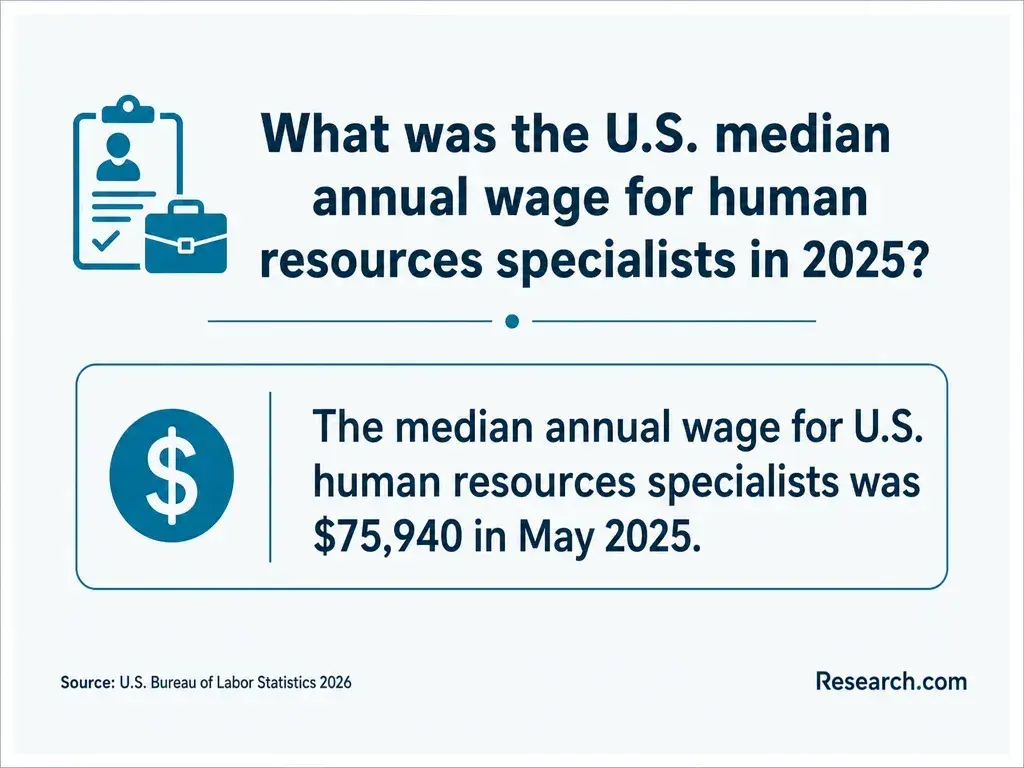
| Training and development managers | $133,000 | +6.4% |
| Management analysts | $101,860 | +10.1% |
| Training and development specialists | $69,280 | +10.8% |
| Postsecondary education administrators | $104,590 | +1.8% |
These medians include workers with many educational backgrounds and levels of experience. Faster projected growth for specialists or analysts does not establish that an Ed.D. improves an individual applicant's hiring chances. Evaluate a program's career services by whether they help you reach a plausible next role - not by treating an occupational median as a return-on-investment forecast.
Other Things You Should Know About EdD Leadership
Ask the program to arrange a conversation with an online student or graduate whose career goal resembles yours. Their experience can reveal how accessible services were, though one account cannot establish typical outcomes.
Only if your employer's rules and any project agreements permit it. Ask about approval before sharing data, internal documents, findings, or the organization's name; a redacted description of your methods and responsibilities may be possible.
Not necessarily. Titles, training, and services differ. Ask who will advise you and what expertise they have with your intended occupation, especially if you need specialized transition support.
Ask whether career services cover client development, positioning, and professional networking, rather than only employee job searches. Experience delivering projects and managing client relationships will still matter; a doctorate alone does not establish a consulting practice.
- Making strides in doctoral-level career outcomes reporting | nih.gov https://pmc.ncbi.nlm.nih.gov/articles/PMC12671987/
- Rule 3362-2-22 - Ohio Administrative Code https://codes.ohio.gov/ohio-administrative-code/rule-3362-2-22
- Academic Job Market Preparation | Division of Student Success | University of Tennessee, Knoxville https://studentsuccess.utk.edu/resources-for-graduate-students/plan-and-apply/
- Careers Leaders Can Pursue with an Ed.D. | Peabody Online | VU-EDU https://peabodyonline.vanderbilt.edu/edd-in-organizational-learning/edd-careers/
- What Can You Do With an EdD in Leadership? Top Careers | University of the Cumberlands https://www.ucumberlands.edu/blog/what-can-you-do-with-an-edd-in-leadership
- Resources for Connecting with Alumni | Columbia Career Education https://www.careereducation.columbia.edu/news/march-2023/resources-connecting-alumni
- Balancing Work, Life, and an EdD: What to Expect in an Educational Leadership Doctorate | Fairfield University https://www.fairfield.edu/news/insights/education-human-development/what-to-expect-in-an-educational-leadership-doctorate.html
- How returning adult students can benefit from an alumni network | wisc.edu https://dcs.wisc.edu/blog/how-returning-adult-students-can-benefit-from-an-alumni-network/
- Capstone Research Projects | Neumann University https://www.neumann.edu/academics/grad/bol/capstone
- Findings and Recommendations | Career Services | Illinois State https://careerservices.illinoisstate.edu/about/academics-careers-council/findings-recommendations/